Birth | Born in Pingyang County, Hedong Commandery; his father was Huo Zhongru and his mother was Wei Shao’er.
140 BCE–117 BCE
Generalmilitary strategist
Huo Qubing
霍去病
Huo Qubing was a nephew of Wei Qing, was enfeoffed as Marquis of Champion, became famous for performing the sacrificial rites at Mount Langjuxu, and died at only twenty-four after a celebrated military career.
140 BCE–117 BCEWestern Han
PROFILE
Huo Qubing was a nephew of Wei Qing, was enfeoffed as Marquis of Champion, became famous for performing the sacrificial rites at Mount Langjuxu, and died at only twenty-four after a celebrated military career.
- Alternate Name
- Marquis of Champion Huo Qubing
- Period
- Western Han
- Date of Birth
- 140 BCE(1st year of Emperor Wu)
- Date of Death
- 117 BCE(6th year of Emperor Wu)
- Dynasty/Polity
- Western Han
- Identity
- General, military strategist
- Ethnicity/Ethnic Affiliation
- Not reliably confirmed in the available sources
- Native Place
- Pingyang County, Hedong Commandery (present-day Linfen, Shanxi)
- Place of Birth
- Unknown
- Major Achievements
- Nephew of Wei Qing; enfeoffed as Marquis of Champion; famed for the sacrificial rites at Mount Langjuxu; died at the age of twenty-four after a legendary military career
- Highest Office
- Grand Marshal and General of Swift Cavalry
- Noble Title
- Marquis of Champion
- Posthumous Title
- Marquis Jinghuan
- Tomb
- Buried beside Maoling; the mound was shaped after the Qilian Mountains
LIFE TIMELINE
First command | Campaigned against the Xiongnu with Wei Qing, led 800 cavalry deep into enemy territory, and was enfeoffed as Marquis of Champion for his victories.
Hexi campaigns | Led spring and summer attacks against the Xiongnu in Hexi, achieving the principal victories of the Hexi campaigns.
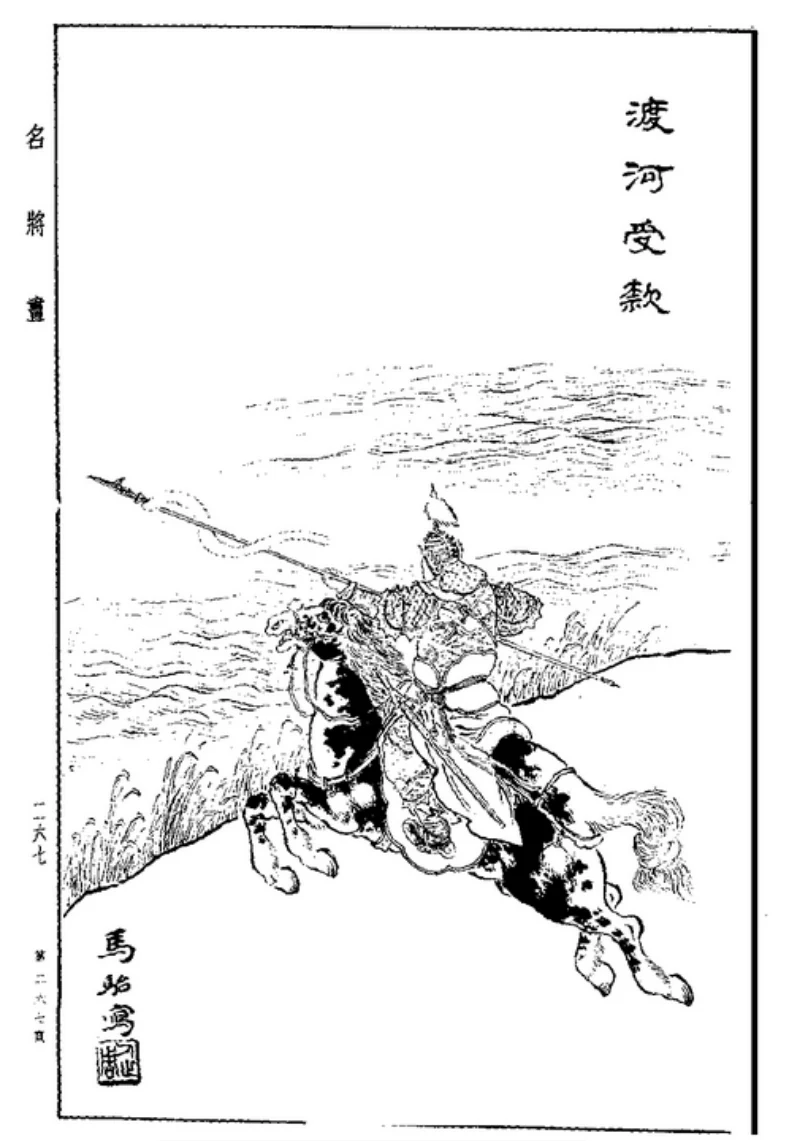
Receiving surrender | Ordered to receive King Hunye’s followers; dealt with those attempting to flee and brought the remainder into Han submission.
Battle of Mobei | Led troops out of Dai Commandery into Mobei, defeated the Xiongnu Left Worthy Prince’s forces, and performed the feng rite at Mount Langjuxu and the shan rite at Mount Guyan.
Military conflict | After Li Gan injured Wei Qing, Huo shot Li Gan during a hunt at Ganquan Palace; Emperor Wu claimed publicly that Li Gan had been injured by a deer.
Political activity | Memorialized to request the enfeoffment of imperial sons as princes; Emperor Wu subsequently enfeoffed three sons.
Death | Died of illness; Emperor Wu built a mound shaped after the Qilian Mountains, gave him the posthumous title Marquis Jinghuan, and buried him beside Maoling.
A Xiongnu lament was said to mourn: “We have lost our Qilian Mountains | A Xiongnu lament was said to mourn: “We have lost our Qilian Mountains, and our six kinds of livestock no longer multiply; we have lost our Yanzhi Mountain, and our women have lost their color.” ### Battle of Mobei In the spring of 119 BCE, the fourth year of the Yuanshou era, Emperor Wu ordered Wei Qing and the twenty-two-year-old Huo Qubing each to lead fifty thousand cavalry, accompanied by “several hundred thousand infantry and transport troops following in succession,” out respectively from Dingxiang and Dai Commanderies deep into Mobei to seek and destroy the main Xiongnu forces.
Huo's conflict with Li Gan was a blemish on his career: in 118 BCE | Huo's conflict with Li Gan was a blemish on his career: in 118 BCE, the fifth year of the Yuanshou era, after Li Gan injured Huo's uncle Wei Qing, Huo shot and killed Li Gan during a hunt at Ganquan Palace.
Early Death In 117 BCE | ### Early Death In 117 BCE, the sixth year of the Yuanshou era, Huo suddenly died at only twenty-four.
Death | ### Early Death In 117 BCE, the sixth year of the Yuanshou era, Huo suddenly died at only twenty-four.
BIOGRAPHY
Biography
Family Background and Early Years Huo Qubing was born in 140 BCE, the first year of the Jianyuan era. He was the illegitimate son of Wei Shao'er, a female servant in the household of the Marquis of Pingyang, and Huo Zhongru, a minor official of Pingyang County. While serving in the marquis's household, Huo Zhongru had an illicit relationship with Wei Shao'er. After completing his service he returned to Pingyang County and lost contact with Wei Shao'er, who was in Chang'an. Huo Qubing therefore did not know who his father was while growing up and only met him after becoming General of Swift Cavalry. The Book of Han, in the “Biography of Huo Guang,” records this background: “His father Zhongru was a man of Pingyang in Hedong. As a county clerk he served in the household of the Marquis of Pingyang and had an illicit relationship with the attendant Wei Shao'er, producing Qubing. When Zhongru's service ended he returned home, married a wife, and fathered Guang, after which they ceased to hear from one another.” In 139 BCE, the second year of the Jianyuan era, Huo's maternal aunt Wei Zifu gained the favor of Emperor Wu of Han, Liu Che. A little over a year later, Wei Zifu's entire family rose in status. Wei Shao'er had previously had an illicit relationship with Chen Zhang, great-grandson of Chen Ping, Marquis of Quni, and later married him. In 128 BCE, the first year of the Yuanshuo era, Wei Zifu was made empress, and Huo Qubing therefore entered one of the most powerful imperial-in-law families of the time while still young and lived among the elite. Huo was already “skilled in riding and archery” in his youth. Emperor Wu favored him and made him a close palace attendant. The emperor once wanted to teach him the military methods of Sun Wu and Wu Qi personally, but Huo declined, saying, “What matters is how the strategy fits the situation; there is no need to study ancient military methods.” The remark reflected his emphasis on practical warfare rather than rigid adherence to older doctrines. ### First Campaign and Enfeoffment In 123 BCE, the sixth year of the Yuanshuo era, the eighteen-year-old Huo was appointed Piaoyao Commandant by Emperor Wu and ordered to campaign against the Xiongnu under General-in-Chief Wei Qing. After receiving the command, Wei Qing assigned Huo a group of brave soldiers. Huo then took eight hundred light cavalry several hundred li away from the main army to seek opportunities to strike the Xiongnu. In his first independent command he achieved a result in which “the number killed and captured exceeded his own losses.” His captives and casualties inflicted included Xiongnu chancellors, danghu officials, and other senior figures; he also killed Chan, Marquis of Jiruo, from the generation of Chanyu Yizhixie's grandfather and captured Luogubi, an uncle of the chanyu. In both tallies of merit he ranked first in the army. After the campaign, Emperor Wu carved out Luyang Township in Rang County and the Linyao settlement in Wan County of Nanyang Commandery, in the area northwest of present-day Dengzhou, Henan, to form the fief of the Marquis of Champion. Huo was enfeoffed with that title to honor his courage as surpassing the three armies. The Records of the Grand Historian and the Book of Han differ on the number of households originally granted to him, giving figures of 1,600 and 2,500 respectively.
Hexi Campaigns In 121 BCE, the second year of the Yuanshou era, Emperor Wu appointed the twenty-year-old Huo General of Swift Cavalry and had him lead two campaigns, in spring and summer, against the forces of King Hunye and King Xiutu occupying Hexi, corresponding to the Hexi Corridor and the Huangshui River basin. In the spring offensive, Huo led ten thousand cavalry out of Longxi, “crossed Wuli, attacked Supu, and passed Hunu,” fought through five polities in Hexi, carried substantial supplies and manpower, treated those who submitted with leniency, and fought the chanyu's son, nearly capturing him alive. He then crossed Yanzhi Mountain, campaigned for six days, and force-marched more than a thousand li before engaging the Xiongnu below Gaolan Mountain, south of present-day Lanzhou. He inflicted heavy losses, killed the Xiongnu kings Zhelan and Luhou, destroyed their elite forces, and captured the son of King Hunye as well as chancellors, commandants, and other officials. Han forces took 8,960 heads and captured King Xiutu's golden image used in sacrifices to Heaven. Huo's own army also suffered significant losses, described in the Book of Han as having been “reduced by seven tenths.” After the victory, Huo received an additional 2,200 households in his fief.
In the summer offensive of the same year, Huo and Gongsun Ao, Marquis of Heqi, advanced by separate routes from Beidi Commandery, in the area of present-day Huan County, Gansu. Gongsun Ao lost his way and arrived late, failing to join Huo. Huo therefore advanced alone deep into enemy territory, crossed the marshes south of Junji Mountain, passed Juyan Lake in present-day Ejin Banner, Alxa League, Inner Mongolia, went beyond the Lesser Yuezhi, and attacked as far as the Qilian Mountains; another interpretation identifies the location with the eastern Tianshan near present-day Hami, Xinjiang. He captured King Danhuan and King Qiutu and accepted the surrender of 2,500 men below the ranks of chancellor and commandant. Han troops took 30,200 Xiongnu heads, captured five Xiongnu kings and the mothers of five kings, as well as the chanyu's consort and fifty-nine princes, together with sixty-three chancellors, generals, danghu officials, and commandants. The campaign inflicted a major blow on Xiongnu power, while Huo's own force lost roughly three tenths of its strength. After receiving the report, Emperor Wu added 5,400 households to Huo's fief. Commandants who had accompanied him as far as the Lesser Yuezhi were all granted the rank of Left Shuzhang, while his subordinates Zhao Ponu, Gao Buzhi, and Pupeng were enfeoffed as marquises. Chanyu Yizhixie was angered by the repeated defeats of King Hunye and King Xiutu and intended to summon them to the chanyu's court and execute them. Learning of this, King Hunye joined King Xiutu and others in planning to surrender to Han and sent an envoy to the Han court. Emperor Wu feared that the offer might be a feigned surrender and therefore ordered Huo to lead a large force in autumn to receive King Hunye and his followers. After the Han army crossed the Yellow River and approached King Hunye's camp, some among the surrendering force changed their minds and plotted to flee. In the emergency, Huo led his troops directly into the Xiongnu force, met King Hunye, killed eight thousand men who attempted to escape, and “secured the submission of thirty-two kings of foreign states.” Huo then first sent King Hunye alone to Chang'an before leading more than forty thousand of his followers, who were said to number one hundred thousand, into Han territory. After this surrender, Xiongnu raids on the northwestern frontier nearly ceased. Emperor Wu therefore reduced the garrison troops in Longxi, Beidi, and Shang Commanderies by half, easing corvée burdens on the population. From this point Han controlled the Hexi region, laying the foundation for opening routes from the interior to the Western Regions. A Xiongnu lament was said to mourn: “We have lost our Qilian Mountains, and our six kinds of livestock no longer multiply; we have lost our Yanzhi Mountain, and our women have lost their color.” ### Battle of Mobei In the spring of 119 BCE, the fourth year of the Yuanshou era, Emperor Wu ordered Wei Qing and the twenty-two-year-old Huo Qubing each to lead fifty thousand cavalry, accompanied by “several hundred thousand infantry and transport troops following in succession,” out respectively from Dingxiang and Dai Commanderies deep into Mobei to seek and destroy the main Xiongnu forces. Huo led fifty thousand cavalry, with generals including Li Gan serving as senior commanders, out from Dai and Youbeiping Commanderies. He advanced more than two thousand li north, crossed Lihou Mountain and the Gonglu River, engaged the forces of the Xiongnu Left Worthy Prince, and routed them. He captured the kings Tuntou and Han and one other king, together with eighty-three generals, chancellors, danghu officials, commandants, and other officers. Huo pursued the defeated enemy to Mount Langjuxu, in present-day Mongolia, where he performed the feng sacrifice to Heaven. At Mount Guyan, north of present-day Khentii in Mongolia, he performed the shan sacrifice to Earth, and his army advanced as far as the Northern Sea, also called the Hanhai and identified here with present-day Lake Baikal in Russia. Han forces took 70,443 heads, while Huo's army lost three tenths of its strength according to the Records of the Grand Historian, or two tenths according to the Book of Han. After this battle, Han forces cleared the Xiongnu from the region south of the desert, the chanyu withdrew north, and “the Xiongnu fled far away, and south of the desert there was no royal court.” Xiongnu power greatly declined. After the battle, the Xiongnu lost control of the northeast. Huo moved Wuhuan groups of the northeast beyond the frontier of the five commanderies of Shanggu, Yuyang, Youbeiping, Liaoxi, and Liaodong so that they could observe Xiongnu movements for Han. The Han court required their tribal leaders to attend court annually and established a Commandant for the Protection of the Wuhuan to prevent contact between the Wuhuan and Xiongnu. After the campaign, Emperor Wu additionally appointed Huo Grand Marshal and General of Swift Cavalry, giving him joint authority over military and political affairs with Wei Qing. Huo's official salary was made equal to that of General-in-Chief Wei Qing. ### Early Death In 117 BCE, the sixth year of the Yuanshou era, Huo suddenly died at only twenty-four. Neither the Records of the Grand Historian nor the Book of Han gives a detailed cause of death. The former records only that “he died in the sixth year of Yuanshou,” while the latter says that “he died in the sixth year of Yuanshou.” A memorial by his younger brother Huo Guang, however, states: “My elder brother, General of Swift Cavalry Qubing, had merit from his campaigns, died of illness, and was granted the posthumous title Marquis Jinghuan,” indicating that he died from illness. Emperor Wu was deeply grieved. He mobilized armored troops from five frontier commanderies and arranged them in formation from Chang'an to Maoling. Huo's tomb was constructed in the shape of the Qilian Mountains, combining the principles of martial valor and territorial expansion in his commemoration, and he received the posthumous title Marquis Jinghuan. His tomb still stands northeast of Maoling, and the stone sculpture of a horse trampling a Xiongnu figure before it symbolizes the lasting military service attributed to him.
Huo Qubing was born about 140 BC, the son of Wei Shao'er, a slave woman of the household of the marquis of Pingyang, by Huo Zhongru, a clerk serving there. Huo Zhongru went home when his term of service ended, married and had sons, and lost touch with Wei Shao'er, so that Huo Qubing did not know who his father was until, as general of the cavalry, he learned it on campaign. In 139 BC Wei Shao'er's younger sister Wei Zifu entered the palace and found favour with the emperor; within a year or so the Wei family was great and honoured, and in 128 BC Wei Zifu was made empress, so that Huo Qubing grew up as a member of the foremost consort kin of the day and lived in the highest society. He was a good rider and archer as a boy, and Emperor Wu, liking him, made him an attendant of the palace. The emperor once wished to teach him the art of war of Sun Wu and Wu Qi, and Huo Qubing declined, saying that what mattered was the measure and the plan, and that there was no need to study the old books of war.
In 123 BC, at eighteen, he was made colonel of Piaoyao and went out with Wei Qing against the Xiongnu. Wei Qing, on the emperor's order, gave him picked men, and Huo Qubing with eight hundred light riders left the main army several hundred li behind to strike at the Xiongnu, his first command. In that action he took heads and prisoners in excess of his own losses — a total of two thousand and twenty-eight — among them the chancellor of the Xiongnu and other high officers, and he killed Jiruo Hou Chan, great-uncle of the chanzu, and took the chanyu's uncle Luogu Bi prisoner, for which he was enfeoffed as marquis of the champion.
In 121 BC, as general of the cavalry, he led ten thousand riders out of Longxi, passed Mount Yanzhi and rode more than a thousand li, fighting the Xiongnu repeatedly about the Qilian mountains and carrying off the golden image in which the king of Xiutu sacrificed to Heaven; in the summer he went out again by the northern road, fought the main Xiongnu force, took many heads and prisoners, and forced the king of Hunye to surrender with his people, so that the Hexi corridor came under Han control. In 119 BC he and Wei Qing led fifty thousand riders each by separate routes against the Xiongnu; Huo Qubing went out from Daijun more than two thousand li into the northern desert, climbed Mount Langjuxu and built an altar to Heaven there, sacrificed at the Gushan hill and went on to the Hanhai lake before turning back, with more than seventy thousand heads and prisoners taken, so that the Xiongnu fled far away and no royal court remained south of the desert.
Besides his campaigns, two sayings of his are well known. When Emperor Wu had a mansion built for him and told him to look at it, he answered that while the Xiongnu were not destroyed he had no use for a household; and he said that a general should consider the measure and the plan, and need not study the old books of war. They show a man who valued resource and practice and was not bound by precedent. The matter of his father is a curious story: marching against the Xiongnu by way of Hedong, he was met outside the city by its governor, and at the post house at Pingyang he sent for Huo Zhongru, knelt and said that he had not known in time that he was his father's own flesh; Huo Zhongru replied that it was Heaven's doing that he should be able to entrust his life to the general. Huo Qubing bought his father lands, houses and slaves and left, and passing that way again on his return took his half-brother Huo Guang, then in his teens, back to Chang'an and made him a gentleman attendant.
Huo Qubing died in 117 BC at about twenty-four, and was given the posthumous name marquis Jinghuan and buried among the attendants at Maoling, his tomb shaped like the Qilian mountains in honour of his opening of the Hexi. His early death grieved Emperor Wu greatly, and the court gave him a splendid funeral.
The histories record both praise and blame of him. The Records of the Grand Historian calls him sparing of speech and daring, a commander who penetrated deep and won his victories by surprise; and it also says that he was little considerate of his soldiers: on the march the emperor sent him dozens of cartloads of imperial food, and on returning there was still fine grain and meat left on the carts while the soldiers went hungry; and when the grain ran out in the desert he had a pitch for a ball game laid out in camp. These things stand in the record beside his victories. Whatever the judgment, the campaigns of a few short years dealt the Xiongnu a heavy blow, the four commanderies of the Hexi region were closely bound up with him, and his tomb and the name of Langjuxu have since stood as symbols of frontier achievement.
In the autumn of 121 BC the king of Hunye, beaten again and again by the Han, planned to surrender, and Emperor Wu sent Huo Qubing with troops to receive him. Huo Qubing crossed the Yellow River and came within sight of Hunye's people, whose subordinate chiefs, seeing the strength of the Han army, were unwilling to submit and began to slip away; Huo Qubing at once rode into the Xiongnu camp to meet the king, killed eight thousand of those who would have fled, sent the king ahead by post carriage to the imperial headquarters and brought his people across the river himself, several tens of thousands of Xiongnu surrendering, said to be a hundred thousand in all. The Hexi region thus passed into the Han realm, and the four commanderies of Wuwei, Zhangye, Jiuquan and Dunhuang were set up there in succession, their establishment closely bound up with his campaigns.
After the campaign of 119 BC the court created the office of grand marshal, Huo Qubing and Wei Qing holding it together with equal rank and stipend, so that his position was now that of the general-in-chief. Not long after he was caught up in the aftermath of Li Guang's death: Li Gan, Li Guang's son, blaming Wei Qing for his father's suicide in the desert campaign, had struck and wounded him, and when Huo Qubing and Li Gan were hunting together at the Ganquan palace, Huo Qubing shot him dead. The emperor, to cover the matter, gave out that Li Gan had been killed by a deer. The episode is often mentioned in later accounts of him as showing both how deep his favour ran and how decisive he was in action.
Huo Qubing's manner of war was to strike deep with light cavalry and fall on the Xiongnu where they least expected it. His troops included many surrendered Xiongnu who served as guides, so that he could find his targets on unfamiliar grassland, and he was not bound by the ancient books of war but took matters as they came, in contrast to Wei Qing's more cautious style. The histories say he commonly beat many with few and won great victories, but that he did not, as Wei Qing did, spread kindness among his troops — a point the Records of the Grand Historian makes plainly.
His tomb lies east of Maoling, its mound built of stones in the shape of the Qilian mountains, with a group of large stone sculptures before and about it, including a horse trampling a Xiongnu, a rearing horse and a crouching tiger. They are among the earliest and best preserved of China's great tomb sculpture groups, and together with the mound they remain the chief monument to his opening of the Hexi region.
The record of Huo Qubing is found chiefly in the Records of the Grand Historian's life of the generals Wei and the cavalry general and in the Han History's life of Wei Qing and Huo Qubing, the two agreeing in substance with small differences of detail. Later judgment of him turns on two things: his achievements against the Xiongnu and in opening the Hexi, and the style of a young man of high birth who was little considerate of his soldiers; the tomb and stone sculptures Emperor Wu had made for him have left traces of that history in another form. He lived at the moment when the Han turned from defence to attack against the Xiongnu, and the repeated campaigns of Wei Qing and himself changed the balance between the two powers; the Han management of the Hexi and the Western Regions afterward rested largely on the position established in those years.
In 121 BCE, at twenty, Huo Qubing was made general of agile cavalry and twice in that spring and summer led troops against the Xiongnu of the Hexi region. In the spring he took a myriad of horsemen out of Longxi, crossed the Wulu and the Huhu waters, fought through five kingdoms, and refused to plunder the abundant baggage and weary people; he engaged the Shanyu's son and nearly took him alive, crossed the Yanzhi mountains for more than a thousand li, came to close quarters below Gaolan, killed the kings of Zheilan and Luhou, wiped out their armored elite, captured the Hunye prince, the chancellor and the commandants, took 8,960 heads, and seized the golden image in which the Xiutu king sacrificed to heaven. The Han force itself lost heavily — the histories say seven parts in ten — and Huo was rewarded with 2,200 more households.
That summer he marched again with the marquis of Heqi, Gongsun Ao, by separate roads; Gongsun Ao lost his way and failed to join him, so Huo drove deep alone as far as Juyan and the Qilian mountains, and received the surrender of the Qiutu king and 2,500 of his officers and men. The campaign broke the Xiongnu hold on the Hexi corridor and prepared the way for the four commanderies and for the passage of the Silk Road. Huo's warfare was one of light cavalry and rapid long-range raids, and all his victories were won between the ages of nineteen and twenty-two; six campaigns against the Xiongnu in all, they match the record of a youth who rose high young and declined to study the ancient military manuals, and made him a representative commander of the expansionist reign of Emperor Wu.
Major Activities
Military Contributions Huo campaigned against the Xiongnu six times in his life and was credited with killing more than 110,000 enemies, making him one of the most successful commanders in the Western Han wars against the Xiongnu. His principal military achievements included: - Battle north of Dingxiang (6th year of the Yuanshuo era, 123 BCE): At eighteen, Huo led eight hundred cavalry deep into the desert, killed or captured 2,028 enemies, twice ranked first in merit in the army, and was enfeoffed as Marquis of Champion.
- Hexi campaigns (2nd year of the Yuanshou era, 121 BCE): In spring and summer offensives, he destroyed nearly forty thousand enemy troops and recovered the Hexi Corridor, bringing the region fully under Han control and laying the foundation for routes from the interior to the Western Regions.
- Reception of King Hunye's surrender (autumn of the 2nd year of the Yuanshou era, 121 BCE): He rode directly into the Xiongnu force, killed eight thousand men attempting to flee, and brought more than forty thousand followers of King Hunye into Han submission, after which the northwestern frontier became comparatively peaceful.
- Battle of Mobei (4th year of the Yuanshou era, 119 BCE): He led fifty thousand cavalry more than two thousand li north, heavily defeated the forces of the Xiongnu Left Worthy Prince, took 70,443 heads, performed the feng rite at Mount Langjuxu and the shan rite at Mount Guyan, and reached the Hanhai, after which “the Xiongnu fled far away, and south of the desert there was no royal court.” ### Political Activities In 117 BCE, the sixth year of the Yuanshou era, Huo submitted a memorial asking Emperor Wu to enfeoff three of his sons as regional kings. Because such kings were required to “go to their states,” meaning to reside in their fiefs, the proposal in effect asked the emperor to settle the status of his other three sons and have them leave Chang'an, thereby helping protect the position of Crown Prince Liu Ju, son of Empress Wei. Ministers including Zhuang Qingdi, Zhang Tang, Gongsun He, and Ren An jointly submitted memorials in support. In the fourth month of the same year, Emperor Wu issued an edict enfeoffing the three sons as kings. ### Travels and Campaigns Huo's military movements took him across areas corresponding to present-day Gansu, Inner Mongolia, Mongolia, and Russia. He led troops across Wuli, attacked Supu, passed Hunu, crossed Yanzhi Mountain, reached Gaolan Mountain, crossed Juyan Lake, passed the Lesser Yuezhi, attacked the Qilian Mountains, performed the feng rite at Mount Langjuxu, the shan rite at Mount Guyan, and reached the Hanhai, identified here with Lake Baikal. He is described as one of the earliest Chinese military commanders to have reached Lake Baikal. ### Relations with Contemporaries Huo had a close relationship with his maternal uncle Wei Qing, who assigned him brave soldiers on his first campaign. After the Battle of Mobei, Huo and Wei jointly held military and political authority. Huo was also close to subordinates such as Zhao Ponu, Gao Buzhi, and Pupeng, all of whom received marquisates for military merit earned while campaigning with him. Huo's conflict with Li Gan was a blemish on his career: in 118 BCE, the fifth year of the Yuanshou era, after Li Gan injured Huo's uncle Wei Qing, Huo shot and killed Li Gan during a hunt at Ganquan Palace. Emperor Wu afterward closed the matter by claiming that “Li Gan was killed by a deer.” ### Reunion with His Father and Advancement of Huo Guang After becoming General of Swift Cavalry, Huo passed through Hedong during a campaign against the Xiongnu and specially sent officials to bring his biological father Huo Zhongru to meet him. He purchased extensive fields, houses, servants, and slaves for his father before departing. On his victorious return, he again stopped there and brought his paternal half-brother Huo Guang, then in his early teens, back to Chang'an, where Huo Guang was appointed a gentleman attendant. Huo Guang was later heavily employed by Emperor Wu, became a principal minister entrusted with assisting the young Emperor Zhao, and ranked first among Emperor Xuan's Eleven Meritorious Officials of the Qilin Pavilion.
Personal Relations
- Mother: Wei Shao'er (female servant in the household of the Marquis of Pingyang; later married Chen Zhang)
- Maternal aunt: Wei Zifu (empress of Emperor Wu of Han)
- Maternal uncle: Wei Qing (Grand Marshal and General-in-Chief)
- Paternal half-brother: Huo Guang (Grand Marshal and General-in-Chief; principal minister entrusted with assisting the young ruler)
- Son: Huo Shan, inherited the Marquisate of Champion and died young in 110 BCE, the first year of the Yuanfeng era
- Grandsons through a concubine line: Huo Shan and Huo Yun (held high office after Huo Guang's death and were forced to commit suicide for rebellion in 69 BCE) ### Ruler and Subject - Emperor Wu of Han, Liu Che: Huo Qubing's ruler, who greatly favored him and once wished to teach him military methods personally ### Colleagues and Conflicts - Wei Qing: maternal uncle and superior, with whom Huo had a close relationship
- Gongsun Ao: lost his way and arrived late during the Hexi campaign, failing to join Huo
- Li Gan: shot and killed by Huo after Li Gan injured Wei Qing
- Zhao Ponu, Gao Buzhi, and Pupeng: subordinates, all enfeoffed as marquises for military merit
Historical Assessment
Han Dynasty / Contemporaries - Emperor Wu of Han stated: “General of Swift Cavalry Qubing led his army, personally commanded the captured Xiongnu fighters, traveled with light baggage, crossed the great desert, passed Zhangqu, struck Bicheqi, turned to attack the Left Great General, seized banners and drums, passed Lihou, crossed the Gonglu, captured King Tuntou, King Han, and another king, together with eighty-three generals, chancellors, danghu officials, and commandants, performed the feng rite at Mount Langjuxu and the shan rite at Guyan, and climbed to look out over the Hanhai.” This edict is quoted in the “Biographies of General Wei and General of Swift Cavalry” in the Records of the Grand Historian.
- Sima Qian wrote: “The General of Swift Cavalry was a man of few words who did not disclose matters, with spirit and courage to take responsibility. The Son of Heaven once wished to teach him the military methods of Sun and Wu, but he replied, ‘What matters is how the strategy fits the situation; there is no need to study ancient military methods.’ The emperor built a residence for the General of Swift Cavalry and ordered him to inspect it, but he replied, ‘The Xiongnu have not yet been destroyed; I have no use for a home.’ From this the emperor loved and valued him even more.” (Records of the Grand Historian, “Biographies of General Wei and General of Swift Cavalry”)
- A Xiongnu lament said: “We have lost our Qilian Mountains, and our six kinds of livestock no longer multiply; we have lost our Yanzhi Mountain, and our women have lost their color.” (Former Affairs of the Western River) ### Song and Yuan Periods - Sima Guang wrote: “Qubing, the son of the empress's elder sister, became a Palace Attendant at eighteen and was skilled in riding and archery. On his second campaign under the General-in-Chief against the Xiongnu, he served as Piaoyao Commandant and with eight hundred light cavalry went several hundred li directly away from the main army in pursuit of advantage, killing and capturing more than his own losses.” (Comprehensive Mirror in Aid of Governance)
- Su Zhe criticized Huo for failing to care for his soldiers: “Qubing became honored while young and did not attend to his men. When he campaigned, the emperor sent several dozen wagons of provisions from the imperial kitchens. On his return, the heavy wagons still carried abandoned grain and meat, while some soldiers went hungry. Beyond the frontier, when the troops lacked food and some could not support themselves, Qubing still marked out a field and played cuju.” (Ancient History) ### Ming and Qing Periods - Wang Fuzhi wrote: “Huo Qubing's ability was beyond Wei Qing's. Qing was cautious and generous by nature but short on strategic planning; Qubing was heroic, keen, and decisive, with the bearing of a great general of antiquity.” (Reflections on Reading the Comprehensive Mirror)
- Huang Daozhou wrote: “Huo, General of Swift Cavalry, won merit beyond the passes. His kills exceeded his losses, and he was enfeoffed Champion. Twice he fought in Hexi and filled his captures with the golden image. Hunye came to surrender, and the chanyu lost his strength. He penetrated deep into Mobei and performed the rite at Langjuxu.” (Expanded Biographies of Famous Generals) ### Modern Period - Mao Zedong described Huo Qubing as a “famous general of the Western Han and a national hero,” while the accomplishment associated with Mount Langjuxu became, in later memory, one of the highest honors attributed to military commanders.
- Modern historians generally regard Huo's military ability and battlefield achievements as among the foremost of Western Han commanders and consider his recovery of the Hexi Corridor and opening of the route later associated with the Silk Road to have had a profound influence on Chinese history.
- Some scholars have also noted his failure to care adequately for soldiers, the privileged habits of a young aristocrat, and the arbitrary killing of Li Gan, regarding his character as combining heroic qualities with arrogance.
FIGURES ASSOCIATED WITH THIS DYNASTY
Bibliography
- Records of the Grand Historian*, “Biographies of General Wei and General of Swift Cavalry”
- Records of the Grand Historian*, “Biographies of the Xiongnu”
- Records of the Grand Historian*, “Hereditary Houses of Imperial In-Laws”
- Book of Han*, “Biography of Wei Qing and Huo Qubing”
- Book of Han*, “Biography of Huo Guang”
- Book of the Later Han*, “Biographies of the Wuhuan and Xianbei”