Birth | Born in Yaoshan, Xingzhou (present-day Longyao, Hebei).
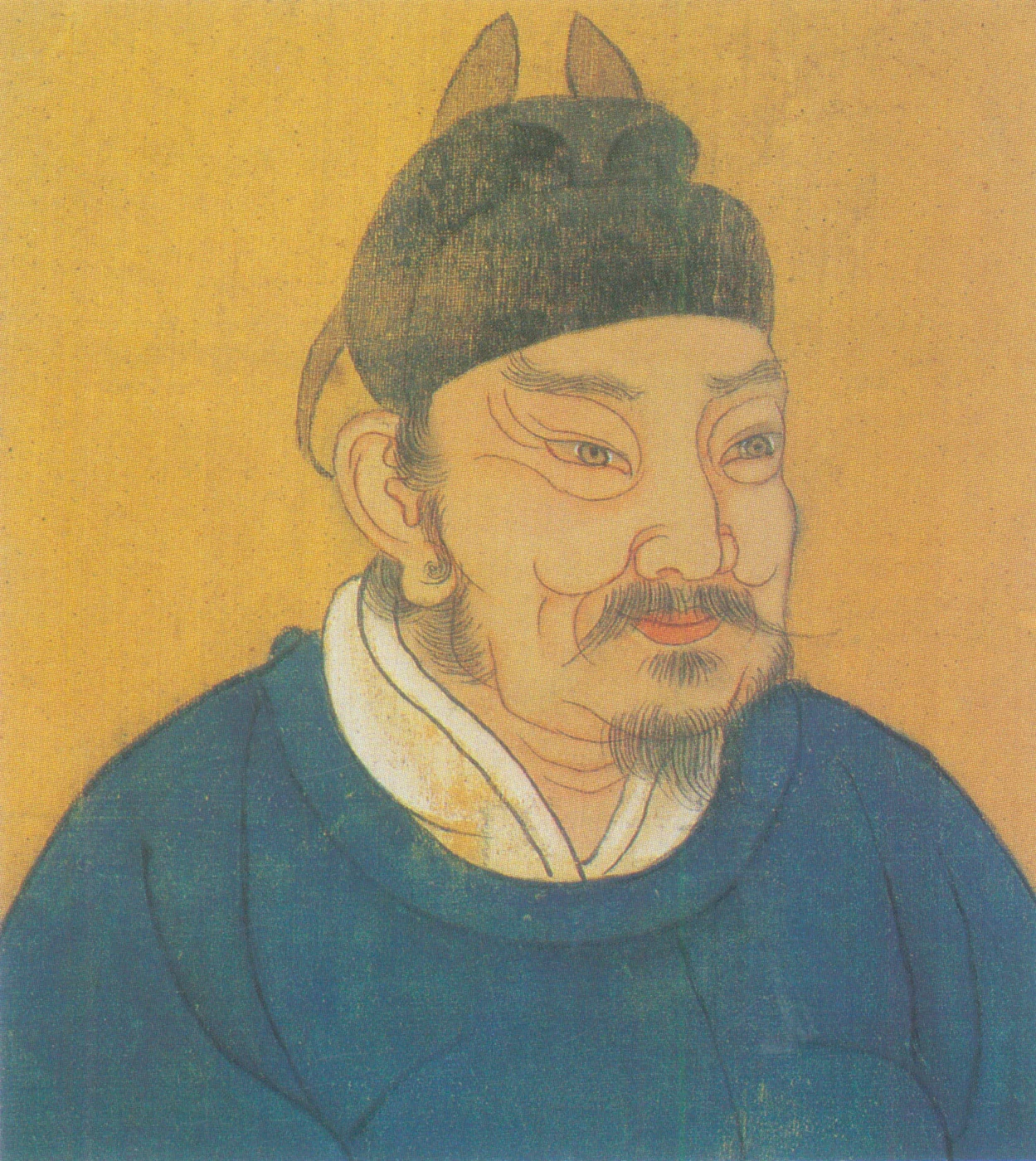
904 CE–954 CE
Emperor
Guo Wei
郭威
Guo Wei (904–954), courtesy name Wenzhong and childhood name Guo Que'er, was a native of Yaoshan in Xingzhou (present-day Longyao, Hebei). He was the founding emperor of Later Zhou during the Five Dynasties period, with the temple name Taizu, and is historically known as Emperor Taizu of Later Zhou. Born to humble circumstances, Guo entered the army when young and rose through military service to become Military Affairs…
904 CE–954 CELater Zhou
PROFILE
Guo Wei (904–954), courtesy name Wenzhong and childhood name Guo Que'er, was a native of Yaoshan in Xingzhou (present-day Longyao, Hebei). He was the founding emperor of Later Zhou during the Five Dynasties period, with the temple name Taizu, and is historically known as Emperor Taizu of Later Zhou. Born to humble circumstances, Guo entered the army when young and rose through military service to become Military Affairs Commissioner of Later Han. In 950 (third year of the Qianyou era), Emperor Yin of Later Han, Liu Chengyou, grew suspicious of him and Guo's family was massacred. Guo then rebelled, entered Kaifeng, and in the following year was acclaimed by the army, who draped him in a yellow banner. He replaced Later Han with Later Zhou. During his reign he emphasized frugality, abolished harsh policies, welcomed displaced people, and restored production, laying foundations for the stability and prosperity of Later Zhou and, later, Northern Song. None of Guo Wei's biological sons survived, so his adopted son Guo Rong, that is Chai Rong, succeeded him as Emperor Shizong of Later Zhou.
- Other name
- Emperor Taizu of Later Zhou
- Courtesy name
- Wenzhong
- Period
- Later Zhou
- Dynasty/Regime
- Five Dynasties · Later Zhou
- Identity
- Emperor
- Ethnicity
- Not recorded in historical sources
- Native place
- Yaoshan, Xingzhou (present-day Longyao, Hebei)
- Date of birth
- 904
- Place of birth
- Yaoshan, Xingzhou (present-day Longyao, Hebei)
- Date of death
- 954
- Reign
- 951-954
- Predecessor
- Emperor Yin of Later Han (Liu Chengyou)
- Successor
- Emperor Shizong of Later Zhou (Chai Rong)
- Era name
- Guangshun (951-953), Xiande (954)
- Temple name
- Taizu
- Posthumous title
- Not recorded in historical sources
- Major achievements
- Founding emperor of Later Zhou; rose from humble origins through military merit; replaced Later Han with Zhou; pursued frugal and relatively lenient policies toward the people; brought up Chai Rong
LIFE TIMELINE
Age three | Moved to Taiyuan; his father Guo Jian was killed, and Guo Wei was raised by his maternal aunt Lady Han.
About age twenty | Entered the service of Li Jitao at Luzhou; convicted after killing a butcher while drunk, but released because Li Jitao valued him.
Age forty-four | Liu Zhiyuan founded Later Han; Guo Wei became military governor of Yedu (present-day Daming, Hebei).
Age forty-five | As Military Affairs Commissioner, suppressed the three rebellions of Li Shouzhen at Hezhong, Zhao Siwan at Yongxing, and Wang Jingchong at Fengxiang.
Age forty-seven | Emperor Yin of Later Han massacred Guo's family in Kaifeng; Guo rebelled, Emperor Yin was killed, and Guo was subsequently draped in a yellow banner and founded Later Zhou.
Age forty-eight | Formally proclaimed emperor, adopted Guangshun as the era name, and made Bianjing (present-day Kaifeng, Henan) the capital.
Age fifty | Enfeoffed his adopted son Guo Rong as Prince of Jin, establishing him as heir.
Age fifty-one | Changed the era name to Xiande in the first lunar month; died soon afterward and was succeeded by his adopted son Guo Rong.
BIOGRAPHY
Biography
Family Background and Early Life
Guo Wei was born in 904 (first year of the Tianyou era of Tang) and traced his native place to Yaoshan in Xingzhou (present-day Longyao, Hebei). Historical sources differ regarding his family background. The Old History of the Five Dynasties states that his original surname was Chang and that he took the surname Guo after his mother remarried Guo Jian during his childhood. The New History of the Five Dynasties, by contrast, says that his mother had originally been Guo Jian's wife and later remarried a man surnamed Chang. Whichever account is followed, Guo clearly did not come from a distinguished aristocratic family. His father Guo Jian had served as prefect of Shunzhou and was killed when Guo was three. Guo moved with his family to Taiyuan and was thereafter raised by his maternal aunt Lady Han.
As a youth Guo Wei was tall and strong, practiced martial skills, was combative, and did not engage in productive work. At the time Li Jitao was recruiting soldiers at Luzhou (present-day Changzhi, Shanxi), and Guo enlisted. His physical courage won Li's favor. According to an anecdote, Guo once quarreled in a marketplace with a butcher who bullied local people and killed him while drunk. Under the law Guo should have been executed, but Li Jitao valued his courage and talent, secretly arranged his release, and later recruited him into his staff. Although the episode is anecdotal, the source text treats it as reflecting Guo's early forceful and chivalrous temperament.
Military Rise and Service as a Senior Later Han Official
Guo Wei gradually rose to prominence during the Later Tang and Later Jin. At the end of Later Jin, Khitan forces moved south and destroyed the dynasty, plunging the Central Plains into disorder. The Shatuo leader Liu Zhiyuan took advantage of the crisis to rise at Taiyuan and establish Later Han. Guo Wei became an important commander under him and was appointed military governor of Yedu (present-day Daming, Hebei), responsible for the defense of Hebei.
Liu Zhiyuan died less than a year after becoming emperor, and his son Liu Chengyou succeeded him as Emperor Yin of Later Han. Because the emperor was young, court affairs were dominated by Yang Bin, Shi Hongzhao, Wang Zhang, and other senior ministers. In 948 (first year of the Qianyou era), three regional commanders rebelled in succession: Li Shouzhen at Hezhong (present-day Yongji, Shanxi), Zhao Siwan at Yongxing (present-day Xi'an, Shaanxi), and Wang Jingchong at Fengxiang. Emperor Yin appointed Guo Wei Military Affairs Commissioner and ordered him to command the campaign. Guo used a strategy of dividing his opponents and defeating them one by one. Zhao Siwan surrendered, while Li Shouzhen and Wang Jingchong ultimately died by self-immolation. The campaign greatly increased Guo's prestige and made him the most powerful minister in Later Han.
Family Massacre and the Founding of Later Zhou
In 950 (third year of Qianyou), Emperor Yin became suspicious of Guo Wei and other senior ministers. While Guo was away, the emperor ordered the massacre of Guo's family in Kaifeng, including his two biological sons Guo Tong, originally named Qingge, and Guo Xin, originally named Yige, as well as nephews Guo Shouyun, Guo Fengchao, Guo Dingge, and others. The emperor also sent trusted men to Yedu with the intention of killing Guo himself.
Wei Renpu, an official of the Bureau of Military Affairs, advised Guo to strike first. Guo then raised troops under the slogan of “clearing the emperor's side” and marched south. Emperor Yin was killed by his own subordinate Guo Yunming while fleeing. Guo Wei entered Kaifeng and asked Empress Dowager Li Sanniang to preside over court affairs. He initially intended to enthrone Liu Chengxun, a son of Liu Zhiyuan, but the Empress Dowager rejected the proposal on the grounds of Liu Chengxun's poor health. Officials then moved to welcome Liu Yun, Liu Zhiyuan's adopted son and then military commissioner of Xuzhou, as emperor.
At that moment the Khitan took advantage of the crisis to move south, and Guo led an army north. When the army reached Chanzhou (present-day Puyang, Henan), the soldiers mutinied, tore down a yellow banner, draped it over Guo, and shouted “Long live the emperor.” Guo then presented himself as yielding to Heaven's will, returned to Kaifeng, compelled the Empress Dowager to appoint him regent, demoted Liu Yun to Duke of Xiangyin, and later had him killed.
In 951 (first year of the Guangshun era), Guo Wei formally proclaimed himself emperor. He named the state Zhou, historically Later Zhou, adopted the era name Guangshun, and established the capital at Bianjing, present-day Kaifeng.
Government and Later Years
After ascending the throne, Guo Wei responded to the repeated wars and severe social disruption of the Five Dynasties by adopting a series of relatively lenient policies. He ordered reductions in taxes and abolished harsh measures and cruel punishments inherited from Later Han. He personally promoted frugality, publicly smashing luxurious palace curios and treasures to distinguish himself from extravagant rulers of the past. He prohibited local governments from presenting rare goods and sought to reduce burdens on the people.
Guo also made extensive use of civil officials, including Fan Zhi, Wang Pu, Li Gu, and Wei Renpu, thereby moderating the dominance of military strongmen that had characterized politics since the late Tang. At the same time, he encouraged displaced people to return, promoted the reclamation of farmland, and increased the registered population by more than thirty thousand households, contributing to some economic recovery.
In 953 (third year of the Guangshun era), Guo enfeoffed his adopted son Guo Rong—Chai Rong, a nephew of Guo's first wife Empress Chai—as Prince of Jin. In the first lunar month of 954, the first year of the Xiande era, the era name was changed to Xiande. On the sixteenth day of that month, Guo died at Bianjing at the age of fifty-one. Before his death, he instructed Guo Rong to keep the funeral simple and not disturb the people. Guo Rong succeeded him as Emperor Shizong of Later Zhou.
His Forebears, His Orphaned Childhood, and the Story of His Birth
Guo Wei's forebears were soldiers for several generations: his great-great-grandfather Guo Jing, his great-grandfather Guo Chen, his grandfather Guo Yun and his father Guo Jian, the last of whom served Jin as governor of Shunzhou and was killed when Liu Rengong took the city. When the northern and Xu regions were at war in the Xiantong era his earlier ancestors took the field and were known for courage; his ancestor of the Yi generation served the military sovereign of the Later Tang as a trusted man in his tent, and in the Qianning era followed the campaigns into Ze, Lu, Xing and Luo and rose to be military commandant of horse and foot; and his ancestor of the Qing generation was a favourite general of the inner guard of the military sovereign with sole charge of the household troops, "in siege and field alike high in the rank of valour," and in the Tianfu era when the sovereign's troops marched out north of the Juyong mountains and won, was made a governor. His father Guo Jian having died, Guo Wei was left an orphan and attached himself to the Chang family of Luzhou; his mother lady Wang died on the road, and he was brought up by his mother's sister, the lady Han. Another account has it that he was by birth a son of the Chang family and took the surname Guo when his mother remarried into the Guo household. He is recorded to have been born on the evening of the twenty-eighth day of the seventh month of 904 at the family's old house at Yaoshan in Xingzhou, and that on the night of the birth "red light shone in the room; at first there was a sound like charcoal splitting in a stove, and sparks flew in all directions," at which his mother lady Wang was frightened and told the messenger not to speak of it outside. His mother was later given the posthumous name of Empress Zhangde.
Enlisting at Luzhou, the Killing of the Butcher, and His Transfer to the Clerks
Li Jitao, acting commander of Luzhou, was recruiting brave men as soldiers, and Guo Wei, then eighteen, enlisted on the strength of his valour; he was by temper proud and given to drinking, and Li Jitao thought him remarkable and often indulged his small faults. He is recorded to have been of powerful build and of strength beyond other men, fond of fighting and of gambling and of drink, yet sometimes ready to take up the cause of the wronged. Once, loitering in the market where a butcher was used to overawe the townsmen by his courage, Guo Wei, being drunk, called the butcher to him, had him come up and cut meat, and when he cut it not as he wished, shouted at him; and the butcher, opening his clothes and showing his belly, said that if he were a brave man he could kill him, whereupon Guo Wei stepped forward, took up a knife and stabbed him dead, "and the whole market was astonished, while Guo Wei was quite at his ease." He was seized by the constables, but Li Jitao, pitying his courage, secretly let him escape and soon afterwards called him back into his following. Li Jitao rebelled against Jin and went over to Liang; and when the Later Tang founder destroyed Liang and Li Jitao was killed, his troops were all attached to the Congma guard, where Guo Wei, knowing letters and arithmetic, was made a military clerk. He loved to read the Spring and Autumn Beyond the Frontier and so knew a little of the art of war, and later became a clerk of the guard. When Liu Zhiyuan, the founder of the Later Han, was commandant of the palace guards he was particularly fond of him, and wherever he was posted he took Guo Wei with him.
His Part in Founding the Later Han and His Plan to Absorb the Taiyuan Troops
When the Qidan destroyed the Later Jin, Guo Wei with Shi Hongzhao and others urged Liu Zhiyuan to take the imperial title, and so became a founding minister of the Later Han. At the beginning of the state he advised Liu Zhiyuan on every side and brought the new regime quickly to steadiness. There was then a body of troops stationed at Taiyuan, strong and with much property, which Liu Zhiyuan both wished to take for himself and wished to be rid of, lest they should rebel again and go over to the Qidan, but he had no good means to do it; and Guo Wei proposed that he find a charge against their chief, put him to death, and then take over both the property and the troops, whereby a fickle force would be removed and the army's needs supplied at once, and Liu Zhiyuan did as he advised and got what he wanted. As a weighty minister Guo Wei was named one of the guardians appointed at Liu Zhiyuan's death, and on the accession of the Hidden Emperor he was made commissioner of the privy council with military and political power in his hands. In his learning he differed from the common run of soldiers: he saw the power of knowledge, and of military books especially, and was always reading in his spare time, so that Li Qiong, who was something of a scholar, recommended him the Spring and Autumn Beyond the Frontier, saying that it governed the state by the upright and used arms by the unexpected, and that it recorded many instances of survival and ruin, order and disorder, wisdom and folly, success and failure.
The Pacification of the Three Garrisons and the Method of Encircling Camps
In the third month of 948 Li Shouzhen at Hezhong, Zhao Sican at Yongxing and Wang Jingchong at Fengxiang rebelled one after another, and the Hidden Emperor first sent Bai Wenke, Guo Congyi and Chang Si against them separately, "and for a long time none of them achieved anything." The emperor asked Guo Wei whether he might trouble him, and Guo Wei answered that he dared neither to ask for it nor to decline it but awaited the imperial command, whereupon he was made concurrently a joint manager of the department of state affairs and sent west to oversee the generals. In camp he received guests in loose robes and broad girdle, but in the field and on the march he wore a plain headcloth and short jacket like any soldier; and what the court gave him he shared at archery contests with his officers, letting them take what they would and dividing the rest among the soldiers, so that officers and men were all delighted. Reaching Hezhong he made his own palisade east of the city, Chang Si's to the south and Bai Wenke's to the west, and called out twenty thousand labourers from five counties to build a continuous line of ramparts protecting the three camps; and when the generals all said that Li Shouzhen was a cornered bandit who would fall at any moment and that the people should not be so laboured, Guo Wei would not hear of it. Thereafter Li Shouzhen several times sent troops out to break the ramparts, and Guo Wei each time rebuilt them, and each time Li Shouzhen came out he lost men; and by and by, with soldiers and food alike exhausted in the city, Guo Wei said that the time had come, prepared his engines, fixed the day and attacked on four sides, broke the outer wall, and Li Shouzhen burned himself to death with his wife and children, Zhao Sican and Wang Jingchong surrendering one after the other, so that the tottering Later Han was turned from danger to safety. Guo Wei afterwards moved his troops north against the Qidan, beat them heavily, and was promoted for his merit.
His Yielding of Credit, His Standing, and the Post at Yedu
After the pacification Guo Wei did not use the occasion to demand high office and rich pay but to raise his own standing: when the Hidden Emperor would have rewarded him he said that the destruction of the rebels was not his merit alone, that the ministers at court who had steadied the government and supplied the army had also done service, and asked that Shi Hongzhao and the others be rewarded; and he added that the great officers had merit too, and that the commanders of the garrisons and the officials of the prefectures and counties also deserved commendation — "and Guo Wei, taking no credit, greatly raised his own standing." The weighty post of the guard at Yedu was then given him; and before he left, a dispute arose at court over whether he should carry the office of privy commissioner out of the capital with him, and the two factions of ministers came to blows over it. Though some insisted that the emperor allow him to hold the privy commission while in office outside, Guo Wei was uneasy about affairs at court and said earnestly at parting that Su Fengji and Shi Hongzhao were old ministers of the late emperor, loyal to the state, and that he hoped the emperor would trust them with his whole heart, since then nothing would go wrong, and that as to the frontier he would require the trust reposed in him with all his loyalty. The Hidden Emperor was himself reluctant to let him leave the capital, and told him that in a dream he had seen Guo Wei turned into a donkey carrying him up to heaven, and that when he came down Guo Wei had turned into a dragon and gone away south; at which Guo Wei clapped his hands and laughed. As matters stood, the emperor seems by then to have feared Guo Wei's threat to his throne, and so killed Shi Hongzhao and the others while Guo Wei was away, and afterwards sent men to kill him too.
His Rising, the Mutiny at Chanzhou, and the Founding of Zhou
After the Hidden Emperor had killed Shi Hongzhao and the rest, he ordered Li Hongyi to go to Yedu and kill Guo Wei; but Li Hongyi did not wish to harm him and showed the edict secretly to Wang Yin, who sent word to Guo Wei in haste. Guo Wei, seeing that matters were urgent, took his adviser's plan, forged an edict with his own seal declaring that Liu Chengyou had ordered Guo Wei to kill the generals, and so roused his officers, who obeyed him and marched on the capital in the name of removing the wicked ministers from the emperor's side. On the fourteenth day of the eleventh month of 950 Guo Wei crossed the river with his troops, and Liu Chengyou sent the governor of Kaifeng and others against him and a eunuch to watch his movements; and the eunuch, being taken by Guo Wei's men, was told to memorialize asking that Li Ye and the others be bound and sent to the army. Liu Chengyou showed Guo Wei's memorial to Li Ye and the rest, and they all said that his treason was now plain, whereupon every member of Guo Wei's household in the capital was put to death, among them a son still in swaddling clothes. The Later Han army was heavily beaten at Qilipo, the Hidden Emperor was killed by mutinous troops as he fled, and Su Fengji took his own life. Guo Wei entered Kaifeng with little trouble but did not at once take the throne; he had the empress dowager Li preside over affairs to settle men's minds, forbade the soldiers to plunder or disturb the capital and restored public order there. He then had his generals send false intelligence that the Qidan were about to come south, and so, by the empress dowager's order, led his troops out of the city; and at Chanzhou several thousand officers and men mutinied and "put a yellow banner on him," proclaiming him emperor. Before taking the title he had Wang Jun kill Liu Yun on the road. His dynastic name was the Great Zhou, since he claimed descent from the Zhou house, and it is known as the Later Zhou to distinguish it from the former; and he kept Kaifeng as the capital. Liu Chong thereby became the Later Zhou's mortal enemy and joined the Qidan in attacking it.
The Abolition of the Cattle Rent and the Military Farms, and the Lightening of Penalties
Having taken the throne Guo Wei at once set about governing the state, and since he had suffered much in youth and knew the people's hardships at first hand, he began by lightening their burdens. In this he did two principal things. First, he abolished the unreasonable cattle rent: in earlier years, when Zhu Wen campaigned in Huainan, he had given the more than ten thousand plough oxen he captured to the people to use and then collected a rent for them, and decades later, in the Later Zhou, the rent was still being collected though the oxen had long since died, and Guo Wei ordered this obsolete and burdensome tax abolished. Second, he abolished the military farm service, an agricultural office set up after the end of the Tang in the central plain and managed directly by the ministry of revenue, whose peasants bore very heavy burdens; and having abolished it he gave the fields, houses, oxen and other implements the people had been using to them in perpetuity. When someone proposed selling off the better military farms for several hundred thousand strings of cash to fill the treasury, Guo Wei said that for the people to profit was as if the state profited, and asked what he wanted the money for. He also issued an edict forbidding local officials to add to the people's taxes on any pretext and abolishing the miscellaneous levies that had grown up alongside the regular taxes. In criminal law, where the Later Han had put a man to death for stealing a single cash and had often extended guilt to kinsmen for offences that were not grave, the Later Zhou provided that kinsmen should no longer be involved except in treason and the murder of relatives and other monstrous crimes. Where the Later Han had made wine and yeast a state monopoly and put to death anyone who bought or sold privately in any quantity, the Later Zhou greatly lightened the penalty and fixed it precisely: eighty strokes with the rod for one ounce to a catty, three years' penal servitude for more than a catty up to five, and death above five. Where the Later Han had forbidden private keeping or trading of hides and put a man to death for dealing in a single inch, the Later Zhou provided that only those with forty qing of land should pay a hide in kind and that the rest might buy and sell freely. To restore agriculture he also gave waste land to the hundreds of thousands of starving people of Youzhou who had come back to the central plain, remitting their taxes and labour service, gave land to sitting tenants in perpetuity so that registered households increased by more than thirty thousand, and let farmers reclaim unowned waste land as their own. He further abolished the extra exactions of the Later Han and the "surplus" contributions local officials had made since the middle Tang, did away with some extremely cruel punishments of the Later Jin and Later Han, allowed the people and the foreign tribes to trade privately as they pleased, disbanded the retainers and attendants levied by the prefectures, relaxed the severe prohibitions of salt, wine and leather, and closed the unregistered Buddhist and Daoist monasteries in the capital.
His Honour for Confucius, His Frugality, and His Order for a Plain Burial
In letters he went in person to the tomb of Confucius, ordered the temple repaired, forbade the cutting of wood and destruction of the grove, sought out the descendants of Confucius and promoted them to office, declaring that he would honour the sage and govern the realm by the teaching of the scholars, which laid the intellectual basis of Later Zhou government. He loved frugality and was kind to the people, and told his chancellor Wang Jun that he was a poor man who had come by fortune to the throne and dared not enrich himself at the people's expense. Not only did he lighten their taxes, he led the way in thrift, forbade the regions to send in delicacies and treasures, and had the rare vessels and luxurious furnishings of the palace smashed before the company, saying that what use had an emperor for such things. In the first month of 954 he fell gravely ill, and knowing he would not recover he charged Chai Rong to build his tomb quickly and not let the coffin lie long in the palace, to keep the tomb plain and not disturb or injure the people, to use few craftsmen, set no palace women to guard it and raise no stone men or beasts before it; after burial he might call out thirty households of the neighbourhood, remit their labour service and have them keep the tomb; and he was to set a stone before it inscribed with a few words saying that he had been used to frugality all his life and had ordered by his testament that he be buried in paper clothes in a tile coffin. He said further that on his western campaign he had seen all eighteen tombs of the Tang emperors dug open and robbed, and that this was because of the gold and silver buried in them, whereas Emperor Wen of Han, having always been frugal, was buried simply at Baling and his tomb was still intact; and he told Chai Rong not to forget to bury a set of sword and armour at Yedu and elsewhere, a court cap and crimson gauze robe at Chanzhou, and a flat crown and dragon robe at the eastern capital. He then enfeoffed his ministers and named Chai Rong his successor, saying that in literary talent of the day none surpassed Fan Zhi and Wang Pu, and that with the two of them as chancellors he would close his eyes in peace. That night Guo Wei died in the Zide hall of the palace at Bianjing at the age of fifty-one, with the posthumous name of the holy, divine, reverent, solemn, accomplished, martial and filial emperor and the temple name Taizu, and was buried at Songling in the fourth month.
Major Activities
Suppression of the Three Regional Rebellions
In 948, Li Shouzhen at Hezhong, Zhao Siwan at Yongxing, and Wang Jingchong at Fengxiang simultaneously rebelled against Later Han. As Military Affairs Commissioner, Guo Wei led the campaign. He combined containment with attacks on reinforcements and a strategy of dividing the rebels, first defeating Zhao Siwan, then besieging Li Shouzhen at Hezhong until Li burned himself to death, after which Wang Jingchong also died by self-immolation. The campaign stabilized Later Han and established Guo's dominant authority in the army.
The Yellow Banner and the Founding of Later Zhou
At the end of 950, after Guo had risen in rebellion, his troops mutinied at Chanzhou. Soldiers climbed into his camp and voiced fear over the restoration of the Liu house. Before Guo could respond, they pulled down a yellow banner and wrapped it around him while shouting “Long live the emperor.” Guo outwardly declined, then agreed with the soldiers on three rules before returning to Kaifeng. The source text regards the episode as another characteristic Five Dynasties case of an army elevating a commander to the throne and compares it directly with Zhao Kuangyin's later Chenqiao Mutiny.
Lenient Policies Toward the People
During his reign of a little over three years, Guo worked to remove abuses inherited from earlier Five Dynasties governments. He abolished onerous taxes such as the Later Han “cattle rent,” ordered palace women released, ended regional tribute of luxury goods, and personally promoted frugality by smashing costly palace objects. He also paid attention to agriculture and resettled displaced people, allowing the economy of the Central Plains to recover to some extent. The Qing historian Zhao Yi wrote that rulers in the Five Dynasties treated human life “like grass,” making Guo's comparatively lenient rule especially notable in an age of disorder.
Establishing an Heir
All of Guo Wei's biological sons were killed in the family massacre of 950. After becoming emperor, he adopted Chai Rong, the nephew of his first wife Empress Chai, and carefully prepared him as successor. In 953, he enfeoffed Chai Rong as Prince of Jin and appointed him mayor of Kaifeng, effectively establishing him as heir. Before his death Guo transmitted the throne to Chai Rong, Emperor Shizong of Later Zhou, ensuring a stable succession for the Later Zhou regime.
The Direction of His Institutional Reforms, Their Results, and the Succession to Chai Rong
Guo Wei's way of government aimed through reform at the unification of China, and his reforms, being many-sided, had marked results; taken together they were chiefly the promotion of frugality, the ordering of official discipline, the lightening of oppression and exploitation, the summoning and settling of refugees and the organization of production, the control of river floods and irrigation of good land, and preparation for unification together with the wars of unification. In the use of men, though able himself, he modestly relied on talented and virtuous civil ministers and by his conduct changed the ugly image of military government since the Later Liang, telling them that he had grown up in camps and knew neither learning nor the great plans of statecraft, so that any officer, civil or military, with a policy good for state and people should memorialize directly, and must not write mere empty words glossing over a peaceful age. In particular business he repeatedly issued edicts lightening taxes and punishments, as set out above, and by his handling of the cattle rent and the military farms he settled the ownership of land and oxen on those who worked them, so raising the farmers' will to produce. In historical place he was born in a time of disorder and reared in the camps, brave and strong, generous and proud, with some knowledge of the art of war and a gift for winning his soldiers, rising by military merit to the privy council and in the end displacing the Later Han by military strength, so that he is a representative figure of the military monopoly of power in the Five Dynasties; yet in frugality, in the severe punishment of corrupt officials and in forbidding the army to disturb the people he also carried out useful measures, so that the extremely disordered north of the period after the late Tang began to move towards order. His careful government made the Later Zhou show signs of a rich state and a strong people within a very short time, laying the foundation for the unification carried out by his adopted son, Emperor Shizong Chai Rong, and by the Song founder Zhao Kuangyin. The succession deserves particular notice: partly to commemorate his dead wife and partly because he saw real ability in Chai Rong, he left the throne to a sister's son by marriage with no blood tie to himself — Chai Rong, whose surname was Chai, being the nephew of the empress Shengmu — which is unique in Chinese history, and history has shown his choice to have been right. The line of Later Zhou therefore ran: Taizu Guo Wei, four years on the throne, dying at fifty-one; his adopted son Chai Rong, prince of Jin and governor of Kaifeng, succeeding as Shizong, six years, dying at thirty-nine; and his son the prince of Liang as Gongdi, one year, abdicating to the Great Song — the Later Zhou lasting from the founding in the xinhai year to the gengshen year of Gongdi, three reigns and three sovereigns in ten years.
Personal Relations
- Guo Jian: father, prefect of Shunzhou, died early.
- Lady Wang: mother.
- Lady Han: maternal aunt who raised Guo Wei.
- Empress Chai: first wife, died early.
- Consort Yang: later wife.
- Noble Consort Zhang: later wife.
- Consort Dong: concubine.
- Guo Tong: eldest son, originally named Qingge; killed at the end of Later Han.
- Guo Xin: second son, originally named Yige; killed at the end of Later Han.
- Guo Rong: adopted son, Chai Rong, later Emperor Shizong of Later Zhou.
- Li Chongjin: nephew, son of Princess Fuqing.
- Zhang Yongde: son-in-law, husband of Princess Shou'an.
- Li Jitao: military commissioner of Luzhou who valued and released Guo in his youth.
- Wei Renpu: official of the Bureau of Military Affairs who advised Guo to strike first; later a senior Later Zhou official.
- Fan Zhi: Later Zhou chancellor.
- Wang Pu: Later Zhou chancellor.
- Li Gu: senior Later Zhou official.
- Liu Zhiyuan: Emperor Gaozu of Later Han, Guo Wei's former lord.
- Liu Chengyou: Emperor Yin of Later Han, who massacred Guo's family and was later killed.
- Liu Yun: adopted son of Liu Zhiyuan, deposed and killed by Guo Wei.
- Li Shouzhen, Zhao Siwan, and Wang Jingchong: the three regional rebels defeated by Guo Wei.
Historical Assessment
Five Dynasties / Contemporary Period
- Chai Rong, Emperor Shizong of Later Zhou, honored Guo with the temple name Taizu, continued his policies, and built on the foundation for later unification.
- Later Zhou officials such as Wang Pu recorded Guo's frugality and concern for the people in the Wudai Huiyao, describing him as “diligent in government when attending court.”
- Popular stories of his early chivalry, such as the drunken killing of the butcher, circulated at the time and contributed to a folk image of him as a bold hero.
Song and Yuan Periods
- Xue Juzheng wrote in the Old History of the Five Dynasties: “Taizu, possessing a divinely martial bearing, rose in an age of disorder, was generous and benevolent toward the people, and had great magnanimity.”
- Ouyang Xiu wrote in the New History of the Five Dynasties that Guo “was frugal and did not indulge in music or women,” while praising his abolition of cruel punishments and reduction of taxes.
- Sima Guang's Comprehensive Mirror in Aid of Governance records Guo's career and frequently praises his frugality and diligence, treating the rise of Later Zhou as beginning with Guo Wei.
Ming and Qing Periods
- Zhao Yi, in Notes on the Twenty-Two Histories, praised Guo's lenient rule when discussing the disorder of the Five Dynasties, while also noting that the episode of the yellow banner resembled the later Chenqiao Mutiny and therefore reflected the continuing custom of soldiers elevating commanders to the throne.
- Wang Fuzhi, in the Du Tongjian Lun, criticized Guo on the grounds that although his uprising began as self-preservation, it ended in usurpation; he considered Guo morally deficient but acknowledged that his government was superior to that of preceding rulers.
Modern Period
- The modern historian Fan Wenlan wrote in A Concise General History of China that Guo Wei was one of the more capable rulers of the Five Dynasties and that his reforms laid foundations for the unification policies of Emperor Shizong and Northern Song.
- Lü Simian argued in History of the Sui, Tang and Five Dynasties that although Guo came from a military background, his willingness to employ civil officials and remove abusive policies made him one of the relatively enlightened rulers of the Five Dynasties and Ten Kingdoms period.
- Contemporary scholars generally regard Guo's lenient policies, frugality, use of civil officials, and choice of Chai Rong as heir as key reasons Later Zhou became strong and the Northern Song was eventually able to complete political unification.
FIGURES ASSOCIATED WITH THIS DYNASTY
Bibliography
- Xue Juzheng, Old History of the Five Dynasties, "Book of Zhou," "Annals of Taizu."
- Ouyang Xiu, New History of the Five Dynasties, "Annals of Zhou."
- Lü Simian, History of the Sui, Tang and Five Dynasties.
- Fan Wenlan, A Concise General History of China.