Age 1 | Born in Juchao of the Chu state; lived content in obscurity during his early years, mastering military strategy and statecraft
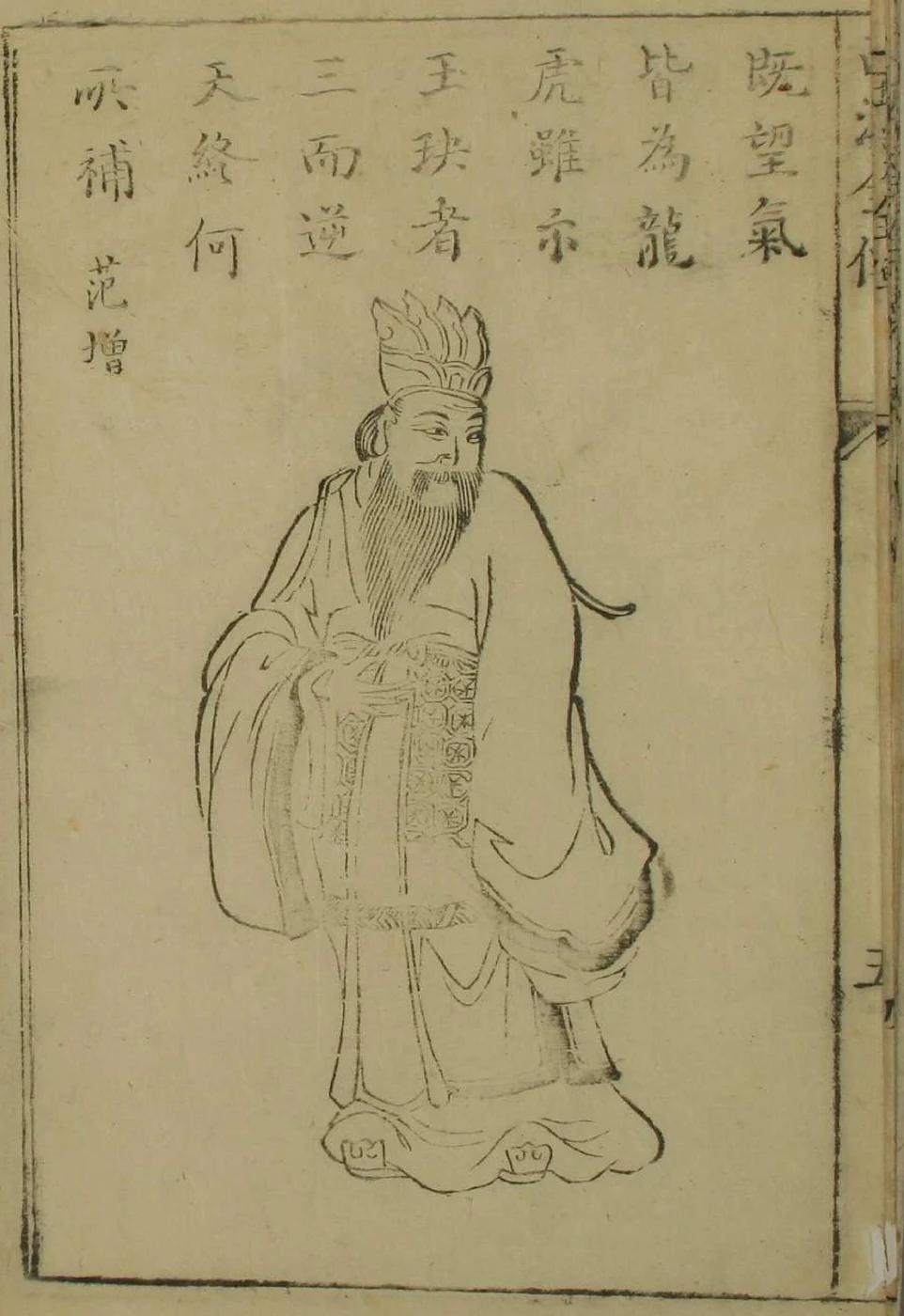
277 BCE–204 BCE
Strategistchief advisor to the Hegemon-King of Western Chu(honored as Ya Fu)
Fan Zeng
范增
Fan Zeng(277 BC-204 BC), a native of Juchao(present-day Chaohu, Anhui Province), was a celebrated strategist and chief advisor to Xiang Yu, the Hegemon-King of Western Chu, during the Qin-Han transition and the Chu-Han Contention. Xiang Yu revered him with the honorific title of "Ya Fu"(Respected Father) and enfeoffed him as the Marquis of Liyang. In his early life, Fan Zeng lived as a recluse in his home region. Even past…
277 BCE–204 BCEMa Chu
PROFILE
Fan Zeng(277 BC-204 BC), a native of Juchao(present-day Chaohu, Anhui Province), was a celebrated strategist and chief advisor to Xiang Yu, the Hegemon-King of Western Chu, during the Qin-Han transition and the Chu-Han Contention. Xiang Yu revered him with the honorific title of "Ya Fu"(Respected Father) and enfeoffed him as the Marquis of Liyang. In his early life, Fan Zeng lived as a recluse in his home region. Even past the age of seventy, he did not seek official appointments, yet he possessed a profound understanding of geopolitical dynamics and was fond of devising unexpected stratagems. Following the collapse of the Chen Sheng and Wu Guang uprising, the seventy-year-old Fan Zeng sought an audience with Xiang Liang in Xue County. He incisively pointed out that Chen Sheng had failed because he did not restore the royal house of Chu. He persuaded Xiang Liang to enthrone Xiong Xin, the grandson of King Huai of Chu, as the new King of Chu to rally popular allegiance, thereby establishing himself as the chief military advisor within the Xiang clan forces. After Xiang Liang fell in battle, Fan Zeng assisted Xiang Yu in leading Chu's core forces north to achieve a decisive victory in the Battle of Julu, pressing west toward the Guanzhong region. During the Chu-Han Contention following the collapse of the Qin dynasty, Fan Zeng was the earliest to perceive that Liu Bang harbored immense imperial ambition and possessed the "aura of the Son of Heaven." At the famous Feast at Hong Gate, Fan Zeng repeatedly raised his jade pendant to signal for Liu Bang's execution and ordered Xiang Zhuang to perform a sword dance to strike Liu Bang down. However, the plan was thwarted by Xiang Yu's hesitation and Xiang Bo's covert protection. Fan Zeng subsequently accompanied Xiang Yu to establish the capital at Pengcheng and oversaw operations at the Xingyang front, cutting off the Han army's walled supply corridors and repeatedly pushing Liu Bang to the brink of defeat. In 204 BC(3rd year of Han), Liu Bang adopted Chen Ping's stratagem of sowing discord. Xiang Yu grew suspicious that Fan Zeng was colluding with the Han camp and stripped him of his military authority. In bitter indignation, Fan Zeng requested permission to retire to his hometown, but succumbed to back carbuncles en route to Pengcheng, dying with age at death unconfirmed. Reflecting on his victory, Liu Bang remarked: "Xiang Yu possessed a single Fan Zeng yet failed to employ him; this is why he was captured by me."
- Aliases
- Ya Fu(Second Father / Respected Father), Marquis of Liyang
- Era
- Late Warring States period to Qin-Han transition
- Dynasty/Regime
- Chu, Western Chu
- Identity
- Strategist, chief advisor to the Hegemon-King of Western Chu(honored as Ya Fu)
- Date of Birth
- 277 BCE(30th year of King Zhaoxiang)
- Date of Death
- 204 BCE(4th year of San Nian / Xi Chu Ba Wang)
- Ethnicity
- Huaxia(Han)
- Ancestral Home
- Juchao(present-day Chaohu, Anhui Province)
- Place of Birth
- Juchao(present-day Chaohu, Anhui Province)
- Place of Death
- En route to Pengcheng(present-day Xuzhou, Jiangsu or Dingyuan, Anhui)
- Age at Death
- Unconfirmed; not explicitly stated in the
- Peerage / Official Post
- Grand Master of Western Chu, Marquis of Liyang, Ya Fu
- Predecessor
- None(not applicable for strategist role)
- Successor
- None(not applicable for strategist role)
- Tomb
- Ya Fu Mound(Fan Zeng Tomb on Mount Yafu, present-day Chaohu, Anhui Province)
- Major Achievements
- Joined the rebellion at the age of seventy; urged Xiang Liang to enthrone Xiong Xin, grandson of King Huai of Chu, to align with public sentiment and cement the anti-Qin coalition; acutely discerned Liu Bang's imperial ambitions at the Feast at Hong Gate and repeatedly signaled for his assassination; assisted Xiang Yu in enfeoffing the eighteen feudatories; cut off Han supply causeways and besieged Liu Bang at Xingyang; honored by Xiang Yu as "Ya Fu"; resigned in indignation following Chen Ping's discord stratagem and died of carbuncles on his journey home.
LIFE TIMELINE
Fan Zeng(277 BC-204 BC) | Fan Zeng(277 BC-204 BC), a native of Juchao(present-day Chaohu, Anhui Province), was a celebrated strategist and chief advisor to Xiang Yu, the Hegemon-King of Western Chu, during the Qin-Han transition and the Chu-Han Contention.
Age 69 | Chen Sheng and Wu Guang initiated the Dazexiang Uprising; Xiang Liang and Xiang Yu took up arms in Kuaiji in response
Age 70 | Traveled to Xue County to meet Xiang Liang; advised him to enthrone Xiong Xin, grandson of King Huai of Chu, to win the hearts of the Chu populace, and was welcomed as an esteemed advisor
Age 71 | Following Xiang Liang's death at Dingtao, assisted Xiang Yu in commanding the Chu forces to achieve total victory in the Battle of Julu, crushing Qin's main army
Age 72 | Xiang Yu advanced to Hongmen; Fan Zeng recognized Liu Bang's imperial aura and urged Xiang Yu to attack; repeatedly signaled for assassination at the Feast at Hong Gate, and smashed the jade cup in fury, declaring "this young knave is not worth plotting with"
Age 72 | Assisted Xiang Yu in enfeoffing the eighteen feudatories; Xiang Yu styled himself Hegemon-King of Western Chu, honored Fan Zeng as "Ya Fu," and granted him the title Marquis of Liyang
Age 73 | Liu Bang conquered the Three Qins and launched a surprise assault on Western Chu's capital Pengcheng; Xiang Yu and Fan Zeng led elite cavalry to crush the Han coalition in the Battle of Pengcheng
Age 74 | Xiang Yu and Fan Zeng besieged Liu Bang at Xingyang and severed his supply causeways; when Liu Bang sought peace due to grain shortages, Fan Zeng adamantly advised an immediate and crushing offensive
Age 74 | Chen Ping executed the discord stratagem by treating Chu envoys with disrespect upon learning they served Xiang Yu rather than Fan Zeng; Xiang Yu grew deeply distrustful of Fan Zeng and stripped his military command
Age 74 | Discerning Xiang Yu's suspicions, Fan Zeng indignantly resigned to return home; died of an outbreak of back carbuncles en route to Pengcheng with age at death unconfirmed
In 204 BC(3rd year of Han) | In 204 BC(3rd year of Han), Xiang Yu and Fan Zeng joined forces to encircle Liu Bang at Xingyang, constructing walled causeways to cut off his supply lines.
BIOGRAPHY
Biography
Seclusion in Juchao and Emergence at Seventy Fan Zeng was born in Juchao of the State of Chu(present-day Chaohu, Anhui Province) during the late Warring States period. In his early years, amidst the warfare of the seven warring states, he read extensively and delved deeply into military strategy, statecraft, and unorthodox stratagems. Possessing a proud and uncompromising character, he refrained from currying favor for minor official posts and remained in seclusion in his village for decades, living as a commoner into his old age. In the autumn of 209 BC(1st year of Second Emperor of Qin), Chen Sheng and Wu Guang launched an uprising at Dazexiang and founded the Zhangchu regime, eliciting widespread support across the commanderies suffering under Qin tyranny. However, within months, Chen Sheng was defeated and killed by the Qin general Zhang Han due to his arrogance and the alienation of his commanders. At the same time, Xiang Liang, son of the famed Chu general Xiang Yan, and his nephew Xiang Yu rose in rebellion in Wuzhong(present-day Suzhou, Jiangsu), leading eight thousand Jiangdong warriors north across the Yangtze River and gathering tens of thousands of troops. Upon learning that Xiang Liang had garrisoned his troops in Xue County(present-day Tengzhou, Shandong), the seventy-year-old Fan Zeng recognized the turning point in the realm and set out with his staff to seek an audience with Xiang Liang. ### Strategy at Xue County and the Enthronement of King Huai In the military camp at Xue County, Fan Zeng engaged Xiang Liang in a penetrating discussion on the rise and fall of political regimes. Fan Zeng incisively identified the root cause of Chen Sheng's rapid downfall: "Chen Sheng's defeat was fully warranted! When Qin extinguished the six states, Chu was the most blameless. Ever since King Huai entered Qin and was never returned, the people of Chu have mourned him to this day. Thus Master Nangong of Chu said: 'Though Chu have but three clans left, it is Chu that must destroy Qin.' Now Chen Sheng took the lead in rebelling against Qin, yet instead of establishing a descendant of the King of Chu, he proclaimed himself king; his rule was destined not to endure. Now you, General, have risen in Jiangdong, and all the chieftains swarming across Chu rush to attach themselves to you precisely because your house has produced generals of Chu for generations, and the world looks to you to restore the Chu royal house to console the hearts of the people." Xiang Liang was profoundly impressed by this counsel. Following Fan Zeng's plan, he searched the countryside and found Xiong Xin, a grandson of King Huai of Chu, who was herding sheep for others in the valleys. Xiang Liang brought him back, proclaimed him King Huai of Chu, and established the capital at Xuyi, satisfying the Chu people's yearning for restoration and vengeance. This move vastly enhanced the political legitimacy and rallying power of the anti-Qin coalition, bringing various insurgent armies under the Chu royal banner and establishing Fan Zeng as the core strategic brain of the Chu army. ### The Triumph at Julu and the Crisis at Hongmen In the ninth lunar month of 208 BC(2nd year of Second Emperor of Qin), Xiang Liang was ambushed and killed at Dingtao by the Qin general Zhang Han after growing overconfident. King Huai relocated the capital to Pengcheng and assumed direct control of Xiang Yu's troops. Later, when Qin forces besieged Zhao at Julu, King Huai appointed Song Yi as supreme commander, Xiang Yu as secondary commander, and Fan Zeng as junior commander to relieve Zhao. Xiang Yu decisively executed the inactive Song Yi, took command of the entire army, and achieved a resounding victory in the Battle of Julu by crossing the river and sinking the boats, wiping out the main Qin force under Wang Li and forcing the surrender of Zhang Han's two hundred thousand soldiers. Throughout this period, Fan Zeng assisted Xiang Yu in maintaining operational command and military supremacy. In 206 BC(1st year of Han), when Xiang Yu led the allied forces of four hundred thousand to Hangu Pass, Liu Bang, the Magistrate of Pei, had already breached the pass, occupied Xianyang, and garrisoned troops at the entrance. Enraged, Xiang Yu forced his way through and camped at Hongmen(northeast of present-day Lintong, Shaanxi). The seventy-two-year-old Fan Zeng acutely sensed the grave danger posed by Liu Bang, sternly warning Xiang Yu: "When the Magistrate of Pei was in Shandong, he was greedy for wealth and fond of wine and women. Now that he has entered the Pass, he has taken no treasures and favored no women; his ambition is far from small! I have had men observe his aura, and it forms the shape of dragons and tigers in five colors—this is the aura of the Son of Heaven! We must attack him immediately and without delay!" At the subsequent Feast at Hong Gate, Fan Zeng repeatedly lifted the jade pendant he wore, urging Xiang Yu to execute Liu Bang on the spot. Yet Xiang Yu, arrogant and hesitant, refused to act. Growing desperate, Fan Zeng exited the banquet and summoned Xiang Zhuang: "Our King is too soft-hearted! Go in, offer a toast, and when the toast is finished, request to perform a sword dance, and strike down the Magistrate of Pei at his seat! If you do not, all of you will become his prisoners!" Xiang Zhuang entered and danced with his sword, but Xiang Bo, allied with Liu Bang, drew his sword to parry the blows and shielded Liu Bang. With Fan Kuai bursting into the tent with his shield, Liu Bang seized the pretext of using the latrine to slip away to his camp at Ba River. Zhang Liang then entered the tent to present white jade discs to Xiang Yu and jade flagons to Fan Zeng. While Xiang Yu accepted the jade discs and placed them by his seat, Fan Zeng drew his sword in fury, smashed the jade cups to powder, and lamented bitterly to heaven: "This young knave is not worth plotting with! He who seizes the King's empire will surely be the Magistrate of Pei! We shall all end up as his captives!" ### The Chu-Han Contention and the Siege of Xingyang Following the Feast at Hong Gate, Xiang Yu marched into Xianyang, executed Ziying, enfeoffed eighteen feudatories across the realm, proclaimed himself Hegemon-King of Western Chu, and honored Fan Zeng as "Ya Fu," granting him the title Marquis of Liyang. However, Xiang Yu's unequal distribution of lands triggered swift rebellion. Liu Bang secretly crossed the river to conquer the Three Qins, and while Xiang Yu was campaigning in the north against Tian Rong, Liu Bang led a fifty-six-thousand-strong coalition army in a surprise attack on Western Chu's capital Pengcheng. Facing catastrophe, Xiang Yu and Fan Zeng led thirty thousand elite cavalry in a blistering counter-assault, routing the Han army at Pengcheng, drowning over one hundred thousand Han soldiers, and shattering Liu Bang's momentum. In 204 BC(3rd year of Han), Xiang Yu and Fan Zeng joined forces to encircle Liu Bang at Xingyang, constructing walled causeways to cut off his supply lines. Fan Zeng formulated a strategy of cutting communications, starving the stronghold, and delivering a decisive strike. With the Han supply lines severed, Liu Bang's troops were starved and exhausted. In desperation, Liu Bang dispatched Li Yiji to negotiate peace with Xiang Yu, proposing to divide the realm along Xingyang, with the west going to Han and the east to Chu. Xiang Yu was inclined to accept, but Fan Zeng stepped forward and rebuked him: "Han is easy to deal with now! If we release them and do not strike, we will surely regret it! The Magistrate of Pei harbors boundless ambitions; now that he is trapped, Heaven has decreed the destruction of Han! How can we leave the cancer unchecked and return the tiger to the mountain?" Xiang Yu broke off negotiations and intensified the siege of Xingyang. ### Chen Ping's Discord Stratagem and Death from Carbuncles Besieged and facing annihilation, Liu Bang consulted his strategist Chen Ping. Knowing that Xiang Yu was inherently suspicious and that Fan Zeng was uncompromisingly proud, Chen Ping proposed a lavish stratagem of sowing discord. Drawing forty thousand catties of gold from the Han treasury, Chen Ping dispatched agents into the Chu camp to spread rumors: "The Ya Fu Fan Zeng, along with generals like Zhongli Mo, have rendered immense service without receiving territorial kingdoms; they have secretly allied with the Magistrate of Pei to overthrow the Xiang house and partition Chu among themselves." When these rumors reached Xiang Yu's ears, he harbored growing suspicion. Soon afterward, Xiang Yu dispatched an envoy to the Han camp to probe the situation. Chen Ping set an elaborate trap: he ordered a lavish banquet prepared with supreme cattle offerings. When the Chu envoy entered, Chen Ping feigned astonishment: "I presumed this was an envoy sent by the Ya Fu Fan Zeng; it turns out to be an envoy of King Xiang!" He immediately ordered the banquet removed, had coarse and unpalatable food served instead, and left the room in cold disdain. Upon returning to camp, the envoy reported everything faithfully to Xiang Yu. Enraged, Xiang Yu concluded that Fan Zeng was indeed secretly aligned with the Han king and stripped him of his military and strategic authority. Fan Zeng soon sensed the drastic change in Xiang Yu's attitude and the stripping of his authority. The seventy-four-year-old advisor refused to endure such public humiliation. He marched straight into Xiang Yu's tent and tendered his resignation: "The affairs of the world are broadly settled; let Your Majesty manage them yourself! I beg you to grant me my bones so that I may return to the ranks of commoners!" Instead of consoling or retaining him, Xiang Yu coldly assented. Fan Zeng laughed bitterly to the heavens and walked out of the camp. On his journey home toward Pengcheng, overwhelmed by indignation and grief, a severe case of back carbuncles broke out. The abscess ruptured, and he passed away in anguish with age at death unconfirmed. Months after Fan Zeng's death, Xiang Yu, deprived of his foremost strategist, suffered repeated setbacks at Haichun and Guling, culminating in his catastrophic defeat at the Battle of Gaixia and suicide at the Wujiang River. After founding the Han dynasty, Liu Bang hosted a banquet in the Southern Palace of Luoyang and reflected on the contest for the realm: "In planning strategies within the tent and determining victory a thousand li away, I am not the equal of Zifang(Zhang Liang). In pacifying the state, soothing the people, securing food supplies, and keeping the transport routes unbroken, I am not the equal of Xiao He. In commanding an army of a million men, winning every battle, and seizing every objective, I am not the equal of Han Xin. These three are all men of outstanding ability, and because I was able to employ them, I gained the world. Xiang Yu had only one Fan Zeng yet failed to employ him; this is why he was captured by me!"
Major Activities
Formulating the Xue County Strategy and Restoring Chu Legitimacy At a time when anti-Qin forces were adrift and lacked a unified purpose, Fan Zeng demonstrated extraordinary political foresight by proposing to enthrone a descendant of King Huai of Chu. This strategy tapped into the deep emotional resonance of the Chu people's belief that "though Chu have but three clans left, it is Chu that must destroy Qin," resolved the fragmentation of the rebel forces, and established the moral and political legitimacy of the Xiang house as the supreme leader of the rebellion. ### Discernment of Liu Bang and the Confrontation at Hongmen While other commanders were basking in the euphoria of overthrowing the Qin dynasty, Fan Zeng alone saw through Liu Bang's humble facade, declaring that he bore the "aura of dragons and tigers" and aimed for universal dominion. The sword dance he orchestrated at the Feast at Hong Gate was the closest attempt in Chu-Han history to preemptively eliminate Liu Bang. His furious smashing of the jade cups accurately prophesied the eventual downfall of Western Chu, demonstrating unmatched strategic foresight. ### Severing Supply Lines and the Siege of Xingyang Along the pivotal front at Pengcheng and Xingyang, Fan Zeng demonstrated exceptional operational brilliance. Seizing upon the Han army's vulnerability in operating far from its Guanzhong base with tenuous supply lines, he implemented the strategy of constructing walled corridors to cut off their grain supplies, driving Liu Bang's army into an untenable crisis. Had Chen Ping's discord stratagem not intervened to alienate sovereign and minister, the Chu-Han Contention might well have concluded at Xingyang.
Personal Relations
- Xiang Yu: Monarch; Hegemon-King of Western Chu, who honored Fan Zeng as "Ya Fu" but later distrusted him due to Chen Ping's discord stratagem
- Xiang Liang: Lord; Xiang Yu's uncle, Lord of Wuxin, who initially adopted Fan Zeng's counsel to enthrone King Huai of Chu
- Liu Bang: Political rival; Emperor Gaozu of Han, whom Fan Zeng recognized as the greatest threat to Western Chu and repeatedly sought to eliminate
- Zhang Liang: Counterpart / Rival; Han strategist who neutralized Fan Zeng's trap at the Feast at Hong Gate and presented the jade cups
- Chen Ping: Counterpart / Rival; Han strategist who devised the discord stratagem that estranged Xiang Yu from Fan Zeng, leading to Fan Zeng's dismissal
- Xiang Bo: Colleague / Traitor; Xiang Yu's uncle, who drew his sword to shield Liu Bang during the sword dance at Hongmen and leaked military secrets
- Xiang Zhuang: Subordinate; Xiang Yu's cousin, dispatched by Fan Zeng to assassinate Liu Bang during the sword dance at Hongmen
- Xiong Xin: Nominal sovereign; King Huai of Chu(Emperor Yi), located and enthroned upon Fan Zeng's counsel, later secretly assassinated on Xiang Yu's orders
Historical Assessment
Early Han Reflections and the Grand Historian's Verdict Upon securing the realm, Liu Bang famously concluded at the Southern Palace of Luoyang: "Xiang Yu possessed a single Fan Zeng yet failed to employ him; this is why he was captured by me," identifying the failure to employ Fan Zeng as Xiang Yu's single most fatal error. In the Records of the Grand Historian(Shiji, "Annals of Xiang Yu"), Sima Qian incisively observed: "That Xiang Yu could rise from Jiangdong and extinguish Qin within three years, covering the realm with his achievements, was largely due to Fan Zeng's brilliant stratagems; and that he died at Gaixia with his state ruined was likewise caused by his suspicions of Fan Zeng and the destruction of his own pillar." ### Song and Ming Commentaries and Su Shi's Essay on Fan Zeng The renowned Song dynasty scholar Su Shi analyzed Fan Zeng's departure in his celebrated essay On Fan Zeng(Fan Zeng Lun): "Fan Zeng was a master debater of the realm. He saw the inevitable defeat of Chen Sheng and knew the inevitable ruin of Xiang Yu... Matter must first decay before worms breed; a man must first doubt before slander penetrates. However clever Chen Ping might have been, how could he alienate a sovereign and subject bound together for twenty years? Fan Zeng's departure was not solely due to Chen Ping's discord, but because his mind had already been made up at Hongmen." Wang Fuzhi of the late Ming and early Qing dynasties similarly remarked in On the Comprehensive Mirror for Aid in Government(Du Tongjian Lun): "Fan Zeng's insight surpassed all generals; yet his fault lay in knowing that Xiang Yu could not be a true Hegemon-King and nevertheless striving to assist him, which ultimately led to tragedy." ### Modern Historiographical Perspectives Modern historians of the Qin and Han periods view Fan Zeng as a classical synthesis of the Warring States itinerant strategist and the emerging feudal scholar-bureaucrat. Strategically, he displayed transcendent insight—proposing the restoration of King Huai, detecting Liu Bang's imperial aura, and cutting supply corridors at Xingyang. Politically, however, he retained the proud spirit of the pre-Qin itinerant scholar who "served when appreciated and departed when doubted." Lacking the psychological mastery over autocratic monarchs demonstrated by Han strategists such as Zhang Liang and Chen Ping, his tragic destiny marked the poignantly grand conclusion of the Warring States wandering strategist tradition at the dawn of Western Han centralized autocracy.
FIGURES ASSOCIATED WITH THIS DYNASTY
Bibliography
- Sima Qian: Records of the Grand Historian(Shiji), Volume 7, "Annals of Xiang Yu"
- Sima Qian: Records of the Grand Historian(Shiji), Volume 8, "Annals of Emperor Gaozu"
- Ban Gu: Book of Han(Hanshu), Volume 31, "Biographies of Chen Sheng and Xiang Ji"
- Ban Gu: Book of Han(Hanshu), Volume 40, "Biographies of Zhang, Chen, Wang, and Zhou: Chen Ping"