Birth in Yueyang
Born as the eldest son and heir apparent of Duke Xiao of Qin.
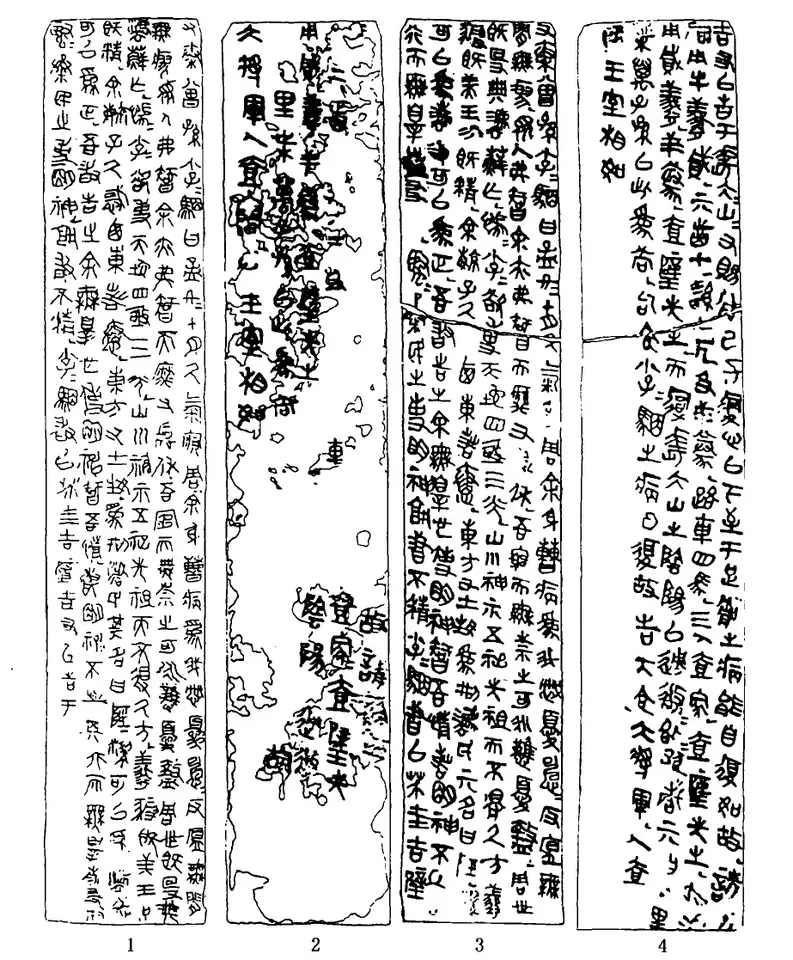
337 BCE–311 BCE
嬴驷
Ying Si (嬴驷, 356–311 BCE), of the ancestral Ying lineage and Zhao clan, native of Yueyang (modern Yanliang, Xi'an, Shaanxi), was the sovereign of the State of Qin during the mid-Warring States period (reigned 338–311 BCE), historically celebrated as King Huiwen of Qin. The son of Duke Xiao of Qin and father of King Zhaoxiang of Qin, Ying Si ascended the throne in 338 BCE. Upon taking power, he executed reformer Shang Yang to…
Ying Si (嬴驷, 356–311 BCE), of the ancestral Ying lineage and Zhao clan, native of Yueyang (modern Yanliang, Xi'an, Shaanxi), was the sovereign of the State of Qin during the mid-Warring States period (reigned 338–311 BCE), historically celebrated as King Huiwen of Qin. The son of Duke Xiao of Qin and father of King Zhaoxiang of Qin, Ying Si ascended the throne in 338 BCE. Upon taking power, he executed reformer Shang Yang to placate aggrieved conservative nobles, yet resolutely preserved Shang Yang's legalist institutional reforms, ensuring political centralization and agricultural-military mobilization. In diplomacy and warfare, King Huiwen rejected isolationism, utilizing the brilliant strategist Zhang Yi to execute horizontal alliances (Lianheng) that effectively neutralized the vertical coalitions (Hezong) organized by the eastern six states. Militarily, he adopted general Sima Cuo's grand strategy to conquer and absorb the rich agricultural kingdoms of Ba and Shu (modern Sichuan), transforming the Chengdu plain into Qin's permanent strategic breadbasket. Along the eastern front, Qin armies commanded by Gongsun Yan and Prince Chuliji breached Hangu Pass, reclaiming the Hexi corridor and fifteen counties of Shangjun from Wei. In the south, Qin routed the massive armies of Chu at the Battle of Danyang in 312 BCE, capturing Hanzhong Commandery and linking Guanzhong, Hanzhong, and Sichuan into an impregnable territorial redoubt. In 324 BCE, Ying Si formally proclaimed himself King, becoming the first sovereign in Qin history to assume the royal title. King Huiwen passed away in 311 BCE at age forty-six and was interred in Gongling Mausoleum.
Born as the eldest son and heir apparent of Duke Xiao of Qin.
Succeeded as ruler; executed Shang Yang while maintaining all legalist administrative codes.
Envoys from Chu, Han, Zhao, and Shu arrive in Xianyang to pay court at the start of his reign.
King Xian of Zhou dispatched sacrificial meats, officially recognizing Qin's hegemony; first minting of round bronze coins in Qin.
Undergoes the formal adulthood capping ceremony at age twenty-two and assumes direct command of state affairs.
Appoints Strategist Gongsun Yan as Da Liangzao to direct eastern military offensives against Wei.
Establishes Yiqu County on the northwestern frontier as the King of Yiqu submits as a vassal to Qin.
Recognizes the royal titles of Han and Wei while dispatching Zhang Yi to fortify Shaan.
Launches a major northwestern offensive that captures twenty-five fortified settlements from the Yiqu Rong.
General Gongsun Yan crushed Wei forces at Diaoyin, forcing Wei to cede all territory west of the Yellow River.
Appointed Zhang Yi as Chancellor; Wei ceded fifteen counties of Shangjun to Qin.
Formally assumed the title of King (Wang) and proclaimed the First Year of the Second Era.
Chuliji annihilated the five-state allied army at Xiuyu, capturing eighty thousand enemy heads.
Deployed Sima Cuo to annex the southern states of Ba and Shu, securing agricultural hegemony.
Crushed Chu forces at Danyang and Lantian, annexing Hanzhong Commandery.
Passed away in Xianyang, succeeded by his eldest son King Wu of Qin (Ying Dang).
Ying Si was born in 356 BCE, precisely as Shang Yang's initial legal reforms were enacted across Qin. During his youth as crown prince, Ying Si violated the newly promulgated penal code. When conservative courtiers resisted enforcement, Shang Yang declared that laws fail when the ruling clan flouts them. Since the heir apparent could not be physically mutilated under ancestral custom, Shang Yang punished his royal tutors, Prince Qian and Gongsun Jia, cutting off Prince Qian's nose. The incident humiliated the crown prince, instilling lasting resentment.
In 338 BCE, Duke Xiao died, and Ying Si succeeded to supreme power. Prince Qian and traditional aristocrats immediately accused Shang Yang of treason. King Huiwen ordered Shang Yang's arrest and execution by dismemberment. However, displaying profound statecraft, King Huiwen recognized that the legalist statutes were the foundation of Qin's wealth and military power. He strictly enforced Shang Yang's agrarian regulations, universal military conscription, and bureaucratic reward system, ensuring that the structural gains of the reforms remained intact.
With internal governance stabilized, King Huiwen turned outward. In 330 BCE, Qin field armies under Gongsun Yan shattered Wei forces at Diaoyin, compelling Wei to surrender the entire Hexi territory. Over the next decade, Qin secured fifteen counties of Shangjun, establishing permanent military staging grounds along the northern and eastern loop of the Yellow River.
In 316 BCE, a diplomatic crisis erupted when the states of Shu and Ba engaged in mutual warfare, both petitioning Qin for military intervention. At the court assembly, Chancellor Zhang Yi argued for an immediate invasion of Han to threaten the Zhou capital Luoyang. However, general Sima Cuo forcefully advocated for the southern annexation of Ba and Shu, demonstrating that conquering vast fertile lands without provoking eastern coalitions would provide immense grain supplies and navigable river transport down the Yangtze. King Huiwen adopted Sima Cuo's counsel. Within months, Qin forces swept through the Jiameng Pass, conquered Shu, annexed Ba, and captured the kings of both realms, turning Sichuan into Qin's primary logistical granary.
On the northwestern frontier, the semi-nomadic Yiqu Rong tribes repeatedly raided Qin borderlands. King Huiwen combined punitive raids with administrative incorporation, compelling the King of Yiqu to submit as a vassal in 327 BCE and capturing twenty-five Yiqu fortresses in 315 BCE.
In the south, King Huiwen dispatched Zhang Yi to deceive King Huai of Chu with false promises of territory, isolating Chu from its alliance with Qi. When Chu launched a desperate retaliatory invasion in 312 BCE, Qin armies under Wei Zhang routed Chu forces at Danyang, beheading eighty thousand elite troops and annexing the entire Hanzhong region. The annexation linked Qin's native Guanzhong basin directly with its newly conquered Sichuan territories, creating an unassailable continental base. King Huiwen died of illness in 311 BCE, leaving behind an empire that dominated the Warring States landscape.
King Huiwen's most celebrated diplomatic accomplishment was his partnership with political philosopher Zhang Yi. By recognizing the fragility of the mutual trust uniting the eastern six states, King Huiwen funded Zhang Yi's horizontal alliance strategy (Lianheng).
Qin consistently utilized diplomatic deception, trade concessions, and localized military intimidation to shatter successive vertical coalitions (Hezong), preventing the eastern kingdoms from uniting in a concentrated assault on Hangu Pass.
Between 333 BCE and 328 BCE, King Huiwen employed Gongsun Yan and Zhang Yi to defeat Wei at Diaoyin and Puban, recovering all of Hexi and securing the eastern bank of the Yellow River.
In 312 BCE, King Huiwen's generals crushed Chu armies at Danyang and Lantian, establishing Hanzhong Commandery shortly before the king passed away in 311 BCE at age forty-six.
Warring States strategists and early Qin chroniclers credited King Huiwen with elevating Qin to royal status and doubling its territory through the twin pillars of Legalist law and horizontal diplomacy.
In the Records of the Grand Historian and The Faults of Qin, Sima Qian and Jia Yi emphasized that King Huiwen's conquest of Ba, Shu, and Hanzhong gave Qin the strategic depth and economic resources to dominate the six eastern states.
In the Zizhi Tongjian, Sima Guang praised King Huiwen's ability to execute Shang Yang personally while preserving Shang Yang's laws and entrusting state strategy to foreign-born talents such as Zhang Yi and Sima Cuo.
Modern historians regard King Huiwen of Qin as the pivotal consolidator who transformed Duke Xiao's reformist state into an unstoppable territorial superpower across both the Yellow River and Yangtze River basins.
FIGURES ASSOCIATED WITH THIS DYNASTY