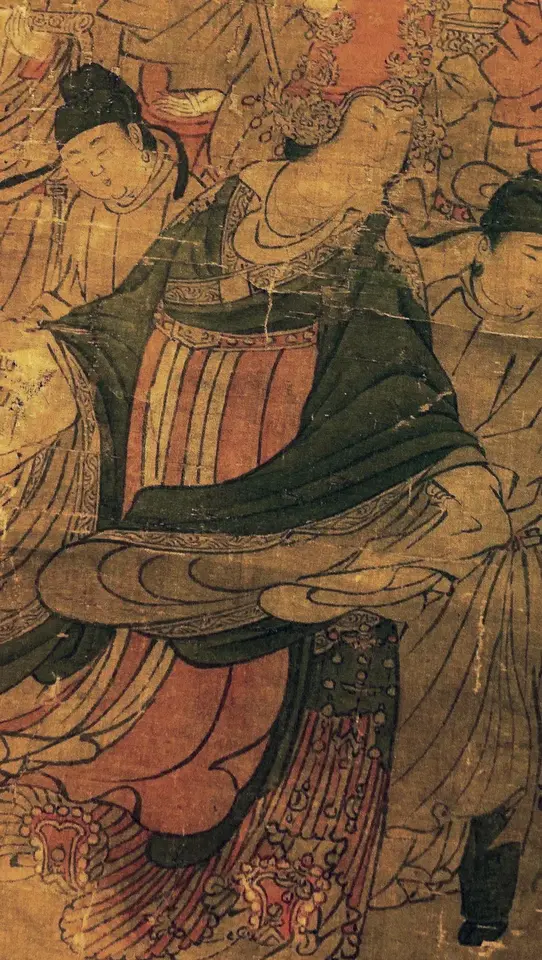
Deposition of Zhongzong and Regency
Empress Dowager Wu deposes Emperor Zhongzong, elevates Emperor Ruizong, assumes supreme imperial regency, reforms administrative titles, and dispatches Li Xiaoyi to suppress Xu Jingye's Yangzhou rebellion.
690 CE–705 CE
武周
The Wu Zhou Dynasty (武周; 690–705 CE) was the only unified imperial dynasty in Chinese history established by a reigning female monarch, Empress Regnant Wu Zetian, with its primary capital at the Divine Capital (Luoyang, the Divine Capital) Luoyang and its western secondary capital at Chang'an, enduring for fifteen years. Following the death of Emperor Gaozong of Tang (Li Zhi), Wu Zetian assumed supreme authority as Empress Dowager and Regent, successively deposing Emperor Zhongzong (Li…
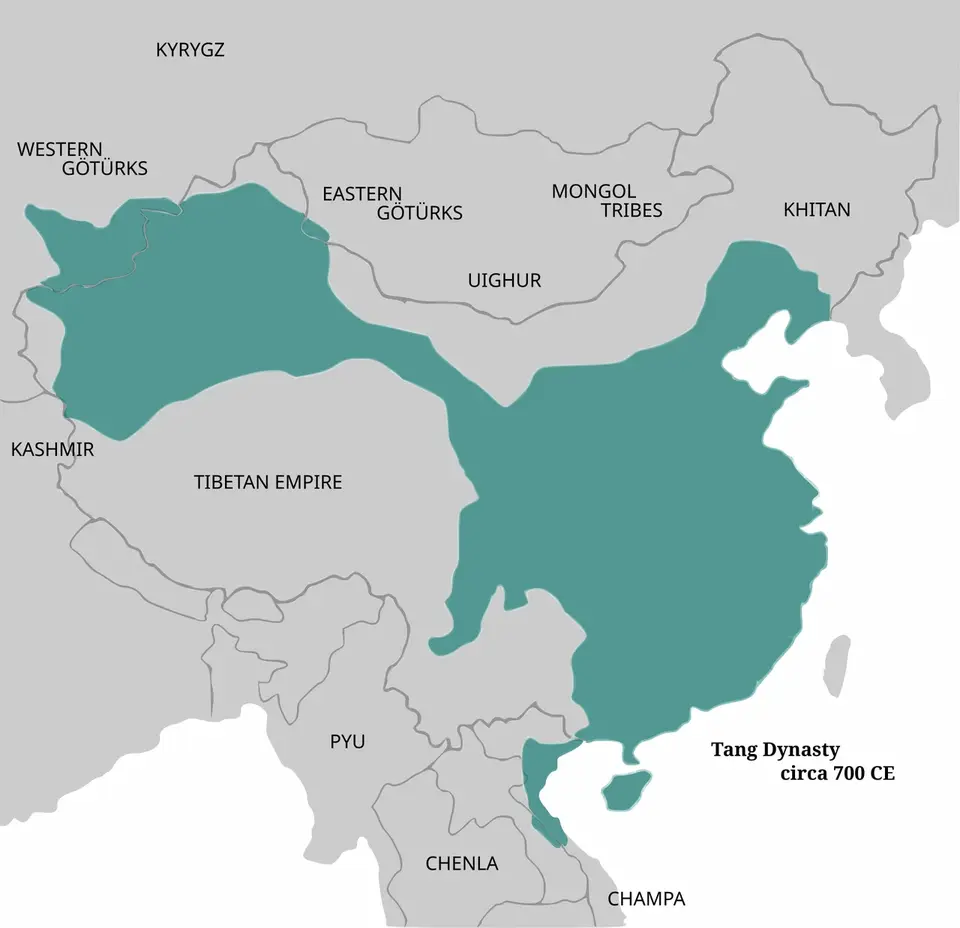
The Wu Zhou Dynasty (武周; 690–705 CE) was the only unified imperial dynasty in Chinese history established by a reigning female monarch, Empress Regnant Wu Zetian, with its primary capital at the Divine Capital (Luoyang, the Divine Capital) Luoyang and its western secondary capital at Chang'an, enduring for fifteen years. Following the death of Emperor Gaozong of Tang (Li Zhi), Wu Zetian assumed supreme authority as Empress Dowager and Regent, successively deposing Emperor Zhongzong (Li Xian) and confining Emperor Ruizong (Li Dan). In the ninth month of the first year of the Tianchou era (690 CE), yielding to widespread organized petitions from civil officials, Buddhist monks, Confucian scholars, and tributary delegations, Wu Zetian ascended the imperial throne, assumed the grandiose title of Holy and Divine Emperor, and altered the dynastic title to Zhou, an interregnum designated by historians as Wu Zhou. Occupying a structural pivot bridging the Rule of Zhenguan and the High Tang Kaiyuan Golden Age, the Wu Zhou Dynasty spearheaded profound socio-political reorganization, institutional innovation, and cultural metamorphosis. In statecraft, Wu Zetian pioneered the Palace Examination and the Military Examination, bypassing hereditary privilege to recruit talented scholars of plebeian background, shattering the centuries-old political monopoly of the Guanlong aristocratic lineages and establishing the inner-court advisory mechanism of the Northern Gate Scholars. Concurrently, she leveraged cruel officials and bronze petition boxes to ruthlessly purge imperial princes and aristocratic opponents, transitioning in her later years toward conciliation and administrative excellence under venerable chancellors such as Di Renjie, Yao Chong, and Song Jing. Militarily, the Wu Zhou court appointed General Wang Xiaojie to recapture the Four Garrisons of Anxi, reestablishing the Anxi Protectorate-General and securing the Silk Road, while containing Khitan rebellions in Yingzhou and stabilizing the northern steppes. Economically, she implemented agrarian incentives, reduced tax obligations, and oversaw substantial demographic growth, filling imperial granaries and fueling an unprecedented commercial expansion in the Central Plains. Culturally, she devised distinctive Zhou characters, promoted Buddhism over Daoism, and sponsored monumental state engineering projects including the Mingtang, the Heavenly Hall, and the colossal Lushena Buddha at Longmen Grottoes, closely intertwining Buddhist chiliastic legitimation with imperial sovereignty. In the first month of 705 CE, Chancellor Zhang Jianzhi led the Shenlong Coup, executing the imperial favorites Zhang Yizhi and Zhang Changzong; Wu Zetian abdicated in favor of Emperor Zhongzong, restoring the Tang dynastic title and peacefully reintegrating the Zhou state into the legitimate imperial lineage of the House of Li.
Empress Dowager Wu deposes Emperor Zhongzong, elevates Emperor Ruizong, assumes supreme imperial regency, reforms administrative titles, and dispatches Li Xiaoyi to suppress Xu Jingye's Yangzhou rebellion.
Empress Dowager Wu commissions the bronze petition box to encourage universal secret denunciations; cruel officials Suo Yuanli and Lai Junchen rise, conducting purges against the Tang nobility.
Acceding to widespread mass petitions in the Divine Capital Luoyang, Wu Zetian proclaims the Zhou Dynasty, inaugurates the Tianchou era, and assumes the title of Holy and Divine Emperor.
Wu Zetian conducts personal imperial examinations of candidates at the Luocheng Hall, pioneering the Palace Examination system and challenging aristocratic civil monopolies.
General Wang Xiaojie leads an expedition of one hundred thousand troops to crush Tibetan armies, recapturing Kucha, Khotan, Kashgar, and Suyab, and reestablishing the Anxi Protectorate-General.
Khitan leaders Li Jinzhong and Sun Wanrong sack Yingzhou and kill Commander Zhao Wenhui; the Zhou court coordinates an alliance with Mochuo Khagan of the Turks to eliminate the insurgency.
Wu Zetian executes the notorious chief inquisitor Lai Junchen and exterminates his lineage, dismantling the machinery of secret informant trials and restoring civil stability.
Heeding the counsel of Di Renjie, Wu Zetian summons Li Xian from exile in Fangzhou and reinstates him as Crown Prince, securing the continuity of the Tang imperial lineage.
Chancellor Di Renjie passes away; Wu Zetian advances distinguished statesmen including Yao Chong, Song Jing, and Zhang Jianzhi to direct the imperial administration.
Wu Zetian establishes the national Military Examination, testing equestrian archery, infantry archery, flat shooting, and lance wielding, opening formal avenues for commoners into officer ranks.
Zhang Jianzhi and conspirators lead the Feather Forest Guard to execute the Zhang brothers and restore Emperor Zhongzong; the Tang dynastic title is reinstated, concluding the Wu Zhou interregnum.
During the late Xianqing era of Emperor Gaozong, the emperor suffered from chronic hypertension, severe dizziness, and deteriorating vision, prompting Empress Wu to actively arbitrate imperial administration. Historical annals observed that the supreme authority of the empire resided with the Inner Palace, with the emperor deferring executive matters, and contemporaries reverently referred to the imperial couple as the Two Sages. Upon Gaozong's death in the first year of the Hongdao era (683 CE), Crown Prince Li Xian ascended the throne as Emperor Zhongzong, while Empress Dowager Wu presided over supreme state policy as regent.
In the second month of the first year of the Sisheng era (684 CE), Emperor Zhongzong attempted to unilaterally appoint his wet nurse's husband and his father-in-law Wei Xuanzhen as Chancellor (President of the Chancellery). Disquieted by this impetuous consolidation of maternal power, Empress Dowager Wu assembled the court at the Qianyuan Hall, abruptly deposed Zhongzong to Prince of Luling, and elevated her youngest son Li Dan to the throne as Emperor Ruizong, keeping him confined within the depths of the inner palace. Empress Dowager Wu assumed direct autocratic authority over the imperial seals. In autumn of that year, Xu Jingye (Li Jingye), Vice Magistrate of Liuzhou, launched a formidable armed rebellion in Yangzhou under the pretext of restoring Zhongzong. The Empress Dowager dispatched General Li Xiaoyi at the head of three hundred thousand imperial troops to crush the insurrection. Capitalizing on her victory, she redesignated Luoyang as the Divine Capital, altered the designations of the Three Departments and Six Ministries to archaic Zhou nomenclatures, promulgated newly devised Zhou written characters, and set in motion an unstoppable momentum toward formal female accession.
During the Chuigong era, royal princes including Li Zhen, Prince of Yue, and his son Li Chong, Prince of Langya, rose in armed defiance against the Empress Dowager's ascendance, only to be systematically suppressed. Exploiting the lingering climate of aristocratic conspiracy, the Empress Dowager commissioned the fabrication of the bronze petition box, decreeing that all subjects throughout the realm were authorized to submit secret denunciations, providing public postal relays and imperial allowances for all prospective informants. Cruel officials such as Suo Yuanli, Lai Junchen, and Zhou Xing flourished, fabricating charges of treason through torturous manuals and gruesome apparatuses. Imperial princes of the Tang royal bloodline and veteran Guanlong aristocratic lineages were methodically purged, eradicating the political foundation of the hereditary elite.
In the ninth month of the first year of the Zaichu era (690 CE), over sixty thousand grandees, Buddhist monks, Confucian scholars, and tributary tribal chieftains under the leadership of Chancellor Pei Judao presented consecutive petitions entreating the Empress Dowager to take the throne. On the Double Ninth Festival (the ninth day of the ninth month), the sixty-seven-year-old Empress Dowager ascended the imperial throne at the Zetian Gate in Luoyang, altering the dynastic title to Zhou, inaugurating the Tianchou reign era, and styling herself Holy and Divine Emperor. Emperor Ruizong was demoted to Imperial Successor and granted the imperial surname Wu, while Luoyang was consecrated as the legitimate imperial capital. Thus, the only legitimate dynasty ruled by an Empress Regnant in Chinese history was formally established.
Upon ascending the throne, Wu Zetian pivoted from political terror toward broad talent recruitment, administrative consolidation, and popular welfare. In the first year of the Tianchou era, she personally examined provincial candidates at the Luocheng Hall, inaugurating the imperial Palace Examination system. In 702 CE (the second year of the Chang'an era), she established the Military Examination, opening meritorious avenues for talented individuals from non-aristocratic backgrounds to enter military command. She allowed low-ranking officials and commoners to self-nominate for office and instituted a probationary appointment mechanism, retaining those demonstrating administrative competence and dismissing the incapable. Illustrious civil servants including Di Renjie, Zhang Jianzhi, Yao Chong, Song Jing, and Jing Hui emerged through these meritocratic pathways, laying the administrative bedrock for the High Tang renaissance.
In external defense, confronting simultaneous pressures from the Tibetan Empire and the resurgent Second Turkic Khaganate, Wu Zetian commissioned General Wang Xiaojie in 692 CE (the first year of the Changshou era) to command a hundred thousand elite troops. Wang decisively crushed the Tibetan forces and recovered the Four Garrisons of Anxi, permanently stationing twenty-four thousand troops at Suyab and Kucha to safeguard the hub of the Silk Road. In 696 CE (the first year of the Wansui Tongtian era), Khitan chieftains Li Jinzhong and Sun Wanrong sacked Yingzhou in open rebellion; after initial imperial military setbacks, Wu Zetian allied with Mochuo Khagan of the Turks, orchestrating a coordinated pincer attack that eliminated the Khitan menace.
In 697 CE (the second year of the Wansui Tongtian era), upon discovering that the cruel official Lai Junchen was plotting to frame Chancellor Li Zhaode, Princess Taiping, and the princes of the Wu clan, Wu Zetian ordered Lai arrested and publicly decapitated, executing his immediate family and dismantling the network of state inquisitors. The political atmosphere decisively cleared, steering the empire into an era of civil stability.
During the Shengli era, the Wu Zhou throne confronted a momentous constitutional dilemma regarding imperial succession. Nephews of the Empress Regnant, including Wu Chengsi, Prince of Wei, and Wu Sansi, Prince of Liang, orchestrated lobbying campaigns urging that an agnatic kinsman of the Wu clan be designated Crown Prince, arguing that ancient tradition never recognized an heir of a differing surname. As Wu Zetian vacillated, Imperial Chancellor Di Renjie famously offered a calm and decisive counsel: "Emperor Taizong braved wind and rain to secure the realm and pass it to his posterity. Between mother and son, if Your Imperial Majesty elevates the Prince of Luling, you shall be venerated in the Imperial Ancestral Temple for ten thousand generations; if a nephew is elevated, history has never witnessed a nephew enthroning his paternal aunt in his ancestral shrine!"
Enlightened by Di's counsel, Wu Zetian dispatched secret envoys to Fangzhou in the third month of 698 CE to escort Li Xian back to the capital, formally restoring him as Crown Prince in the ninth month and settling the ultimate return of imperial sovereignty to the Tang lineage.
In her twilight years, plagued by chronic illness, Wu Zetian increasingly relied on her imperial favorites, Zhang Yizhi and Zhang Changzong, who rapidly monopolized palace communications, alienated the civil administration, and aroused widespread indignation among the court grandees. On the twenty-second day of the first month of 705 CE (the first year of the Shenlong era), while the eighty-two-year-old monarch lay bedridden in the Changsheng Hall, Chancellors Zhang Jianzhi and Cui Xuanwei conspired with Left Feather Forest Guard Grand General Li Duozuo and General Li Zhan to launch a palace coup. The Feather Forest Guard breached the Xuanwu Gate and stormed the Yingxian Court, summarily executing the Zhang brothers.
On the twenty-third day, Zhang Jianzhi and his confederates compelled the Empress Regnant to issue an imperial decree entrusting state supervision to Crown Prince Li Xian. On the twenty-fourth day, Li Xian was formally re-enthroned, marking the restoration of Emperor Zhongzong. On the fourth day of the second month, Zhongzong restored the dynastic title of Great Tang, granting a general amnesty and reinstating the ancestral shrines and institutional titles of the House of Li. On the twenty-sixth day of the eleventh month of that year, Wu Zetian passed away in the Xianju Hall of the Shangyang Palace in Luoyang. Her testamentary edict directed that her imperial title be revoked in favor of Empress Zetian Dasheng, and she was interred alongside Emperor Gaozong at the Qianling Mausoleum beneath a Wordless Stele, leaving her legacy to the judgment of posterity. The fifteen-year Wu Zhou Dynasty reached its conclusion.
As the only female emperor in Chinese history, Wu Zetian demonstrated extraordinary political acuity and symbolic mastery in constructing her imperial legitimacy. She drew ideological support from the Buddhist Dayun Jing (Great Cloud Sutra), which contained prophecies foretelling that a heavenly maiden would incarnate as a universal sovereign ruling over the continent of Jambudvipa. She ordered the distribution of the Great Cloud Sutra across every prefecture, mandating the construction of Dayun Temples throughout the realm. Her imperial titles were repeatedly augmented to reflect both the universal Buddhist monarch (Chakravartin) and the Confucian Son of Heaven, adopting designations such as Holy and Divine Emperor, Golden Wheel Holy and Divine Emperor, and Maitreya Golden Wheel Holy and Divine Emperor.
In ritual architecture, Wu Zetian erected the nearly hundred-meter-tall Hall of Light (Mingtang, also styled the Divine Palace of All Manifestations) and the adjacent Heavenly Hall within the Ziwei Imperial City of Luoyang in 688 CE, serving as the cosmic focal point for imperial audiences, cosmological sacrifices, and the demonstration of harmony between Heaven and humanity. Furthermore, she promulgated nineteen newly created Zhou characters—including zhao (representing the radiance of the sun and moon over the sky), guo, and yue—using script reform as an instrument of autocratic authority to symbolize the reordering of cosmic and political domains.
The most enduring institutional contribution of the Wu Zhou regime was dismantling the bureaucratic monopoly held by the Guanlong military-aristocratic bloc and the aristocratic clans of Shandong, consolidating a merit-based civil service anchored in the imperial examination system. In 690 CE, Wu Zetian pioneered the Palace Examination, personally interrogating candidates on statecraft and policy at the palace court, thereby cultivating the foundational concept of examination graduates as direct disciples of the Son of Heaven. In 702 CE, she established the Military Examination, evaluating physical strength, equestrian skill, and weaponry proficiency, expanding recruitment channels for military commanders beyond hereditary lines.
Wu Zetian pursued radical personnel policies that bypassed aristocratic pedigree, permitting low-ranking officials and commoners to submit petitions for self-nomination and instituting a probationary officeholder system. Candidates demonstrating talent were appointed on probation, with capable performers retained and incompetent individuals dismissed. While this practice temporarily caused an overabundance of probationary censors and court remediators, it dramatically stimulated upward social mobility, elevating a competent generation of civil administrators centered around Di Renjie, Yao Chong, and Song Jing, which provided the administrative infrastructure for the Kaiyuan Golden Age.
In executive administration, Wu Zetian implemented a sophisticated system of counterweights between the inner court and the outer civil bureaucracy. During the reign of Emperor Gaozong, she had assembled a group of talented literati outside the regular bureaucratic apparatus, known as the Northern Gate Scholars, to draft confidential decrees and deliberate state affairs, effectively bypassing the Chancellery and Secretariat. Upon taking the throne, she preserved the basic three-department framework while adorning administrative organs with classical titles: the Chancellery was renamed the Luan Platform, the Secretariat the Feng Pavilion, and the Department of State Affairs the Wenchang Platform, while the Six Ministries were named after the cosmic offices of Heaven (Personnel), Earth (Revenue), Spring (Rites), Summer (War), Autumn (Justice), and Winter (Works).
To neutralize resistance from the Li Tang imperial family and the Guanlong nobility, she established the bronze petition box system and licensed inquisitors such as Suo Yuanli, Lai Junchen, Zhou Xing, and Wan Guojun to persecute suspects. Although the reign of terror inflicted widespread wrongful executions and fear, it systematically demolished the political foundations of aristocratic opposition, solidifying the absolute supremacy of the throne. Once her imperial power was firmly established, Wu Zetian decisively purged the cruel officials, rehabilitated wrongly accused victims, and restored regular bureaucratic jurisprudence.
The Wu Zhou era coincided with a critical evolutionary transition in the Tang military system from the traditional Garrison Militia (Fubing) system toward the Mercenary Standing Army (Mubing) system. Due to accelerating land absorption and the collapse of the equal-field distribution, militia households suffered impoverishment and flight, leading to widespread depletion of combatants in the military protectorates. Confronting simultaneous campaigns against the Tibetan Empire in the west and the Khitans in the northeast, Wu Zetian issued imperial edicts authorizing large-scale recruitment of mercenary expeditionary forces, granting tax exemptions and generous bounties, marking the inception of specialized standing garrisons along the frontiers.
Along critical borders, Wu Zetian reorganized frontier commands, reinforcing the Anxi Protectorate-General, the Hanhai Protectorate-General, and regional military commissions in Hebei, dispatching high-ranking chancellors and generals as grand commanders of expeditionary armies. The establishment of the Military Examination in 702 CE further institutionalized professional military recruitment, enabling prominent commanders such as Guo Ziyi to emerge through military merit.
During the Yifeng and Tiaolu eras of Emperor Gaozong, the expansion of the Tibetan Empire had caused the recurrent loss of the Four Garrisons of Anxi, severing trans-Eurasian trade routes across the Tarim Basin. In 692 CE (the first year of the Changshou era), Wu Zetian commissioned General Wang Xiaojie, a commander intimately familiar with western topography who had spent time among the Tibetans, to lead an expedition of one hundred thousand troops alongside Ashina Zhongjie.
Wang Xiaojie scored decisive victories over the Tibetan forces, recapturing Kucha, Khotan, Kashgar, and Suyab. Wu Zetian restored the Anxi Protectorate-General at Kucha, abandoning the previous practice of token native garrisons by stationing a permanent imperial army of twenty-four thousand troops sustained by state-managed military agricultural colonies (tuntian). The stabilization of the Four Garrisons severed the strategic axis between the Tibetan Empire and the Western Turks, ensuring undisturbed commercial and diplomatic intercourse along the Silk Road.
On the northern and northeastern frontiers, Wu Zhou confronted grave security threats posed by the resurrected Second Turkic Khaganate and nomadic Khitan confederations. Turkic leaders Ilterish Khagan and Qapaghan Khagan repeatedly raided southward into the Central Plains. In 696 CE (the first year of the Wansui Tongtian era), Khitan chieftains Li Jinzhong and Sun Wanrong, driven by the oppressive exactions of Zhao Wenhui, the Zhou Commander of Yingzhou, rebelled and annihilated several imperial armies led by Cao Renshi and Zhang Xuan'yu, seizing Jizhou and Zhaozhou and threatening the northern approaches to Luoyang.
Wu Zetian responded pragmatically, deploying diplomacy to exploit inter-tribal divisions. She conferred the title of Merit-Fostering State-Protecting Khagan upon Qapaghan Khagan of the Turks, granting substantial annual subsidies and returning surrendered families in exchange for an alliance. Qapaghan launched a devastating surprise raid against the Khitan homeland, while Zhou commanders Lou Shide and Shazha Zhongyi pressed the assault, ultimately crushing the Khitan rebellion in 697 CE. However, after neutralizing the Khitans, Qapaghan turned aggressive, regularly raiding Hebei and posing the most persistent frontier challenge of Wu Zetian's later reign.
Wu Zetian placed paramount importance on agrarian productivity. Prior to her formal ascension, she had submitted her famous Twelve Recommendations to Emperor Gaozong, placing the promotion of agriculture and sericulture and the reduction of taxation and corvée duties at the top of the agenda. Upon taking the throne, she promulgated imperial directives establishing the reclamation of uncultivated lands and the increase of registered households as the primary criteria for evaluating and promoting local magistrates, while severely punishing corrupt officials who exploited the peasantry.
The Wu Zhou administration sponsored extensive irrigation and water conservancy projects, constructing over a hundred embankments and canals across the Yellow River, Huai River, and Hai River basins. She encouraged displaced peasants to voluntarily return to their home districts to cultivate reclaimed fields, lightening labor services and allowing the northern agrarian populace to recuperate from late Gaozong-era famines. Although the equal-field land distribution was eroding due to illicit land alienations, imperial census registrations continued to expand. According to historical records in the Tongdian, the registered households of the realm increased from fewer than three million during the Zhenguan era of Emperor Taizong to nearly 6.15 million households by 700 CE (the first year of the Jiushi era), representing an estimated population exceeding thirty million people, realizing an era praised by contemporary annals for domestic tranquility and economic abundance.
Establishing Luoyang as the primary Divine Capital for fifteen years accelerated the economic integration of the Yellow River basin with the agricultural output of the Yangtze and Huai river valleys. Situated at the natural crossroads of the empire, Luoyang leveraged the Tongji Canal of the Grand Canal network to receive millions of bushels of grain transported directly from the southern waterways, completely alleviating the chronic grain deficits and logistical bottlenecks that had plagued Chang'an during the early Tang.
Within Luoyang, the Southern Market, Northern Market, and Western Market thrived with thousands of domestic and foreign merchants, hosting bustling trade in silks, porcelain, tea, lacquerware, and precious metal craftwork alongside continuous caravans of Central Asian Sogdian merchants. The imperial treasury funded grand architectural commissions in the Ziwei Imperial City, including the Mingtang, the Heavenly Hall, and the Tianjin Bridge spanning the Luo River, which invigorated stone quarrying, metallurgy, structural carpentry, and lacquer production. Luoyang became a global metropolis matching and periodically outshining Chang'an in commercial vibrancy.
The cultural sphere of the Wu Zhou era was distinguished by the extraordinary patronage and ideological elevation of Buddhism, which supplanted Daoism at the apex of imperial ritual precedence. Wu Zetian sponsored the construction of Dayun Temples throughout all prefectures and invited Central Indian Tripitaka masters, including Bodhiruci and Siksananda, to Luoyang to undertake the translation of eighty scrolls of the Avatamsaka Sutra (Flower Garland Sutra), personally composing imperial prefaces for the newly translated canonical scriptures.
The Empress Regnant committed immense state resources to monumental Buddhist architecture and sculpture. Contributing twenty thousand strings of cash from her private cosmetic allowance, she sponsored the carving of the colossal Great Lushena Buddha at the Fengxian Temple within the Longmen Grottoes. Exhibiting an aura of serene wisdom, dignified poise, and imperial grandeur, the statue has long been interpreted by art historians as an idealized portrait of Wu Zetian herself, representing the artistic pinnacle of medieval Chinese Buddhist sculpture.
Wu Zetian was an accomplished writer and poet who composed significant texts including the Rules for Officials (Chen Gui) and imperial poetry collections. She maintained imperial academies where literati engaged in competitive poetic compositions, institutionalizing rigorous forms of court poetry (yingshishi) and extended regulated verse. By promoting examination scholars of non-aristocratic lineage, she introduced dynamic literary voices directly into the highest echelons of imperial statecraft.
During her reign, poet Chen Zi'ang mounted the ancient Youzhou Terrace to chant his immortal verse: "Looking ahead, I see not the ancients; looking behind, I see not the generations to come. Contemplating the vastness of heaven and earth, alone I grieve and tears fall." Chen passionately advocated the robust, unadorned spirit of the Han and Wei dynasties, rejecting the decadent and florid court styles inherited from the southern dynasties. The Four Talents of the Early Tang (Wang Bo, Yang Jiong, Lu Zhaolin, and Luo Binwang) gained nationwide acclaim, while court poets Song Zhiwen and Shen Quanqi consolidated the prosodic and tonal rules governing five-character and seven-character regulated verse. Wu Zhou literature served as the immediate herald of the vibrant High Tang poetic renaissance.
Wu Zetian (Holy and Divine Emperor); Imperial Heirs and Ruling Core: Li Xian (Crown Prince), Li Dan (Imperial Successor / Prince of Xiang), Wu Chengsi (Prince of Wei), Wu Sansi (Prince of Liang).
| Ruler / Core Member | Temple Name / Posthumous Title / Princely Title | Reign / Tenure Period | Core Governance Achievements and Historical Impact |
|---|---|---|---|
| Wu Zetian | Holy and Divine Emperor (Empress Zetian Dasheng) | 690–705 CE | Founding sovereign of the Wu Zhou Dynasty and the only legitimate female emperor in Chinese history; pioneered the Palace Examination and Military Examination systems, dismantling aristocratic hegemony; dispatched Wang Xiaojie to recapture the Four Garrisons of Anxi; promoted agricultural productivity, resulting in demographic expansion; eliminated cruel officials in her later years, recalled Li Xian to ensure peaceful dynastic transition, and abdicated following the Shenlong Coup. |
| Li Xian | Emperor Zhongzong of Tang (Crown Prince) | 698–705 CE (as Crown Prince) | Third son of Wu Zetian; deposed as Prince of Luling in 684 CE and exiled in Fangzhou for fourteen years; secretly recalled to Luoyang in 698 CE and invested as Crown Prince, serving as the legitimate dynastic pivot between Zhou and Tang; restored to the imperial throne during the Shenlong Coup in 705 CE, officially reinstating the Tang dynastic title. |
| Li Dan | Emperor Ruizong of Tang (Imperial Successor / Prince of Xiang) | 690–698 CE (as Imperial Successor) | Fourth son of Wu Zetian; demoted to Imperial Successor in 690 CE and granted the surname Wu; lived under strict inner palace surveillance, exercising forbearance to evade deadly entrapment from inquisitors; voluntarily yielded his claim to the imperial succession to his elder brother Li Xian in 698 CE, preserving the continuity of the Li Tang royal lineage. |
| Wu Chengsi | Prince of Wei (Left Chancellor of State Affairs) | 690–698 CE | Son of Wu Zetian's half-brother Wu Yuanshuang; elevated to Prince of Wei upon the founding of the Zhou Dynasty; directed state compilations, weaponized inquisitors against the Tang royal house, and persistently mobilized partisans to demand his installation as Crown Prince; died of deep frustration after the formal restoration of Li Xian in 698 CE. |
| Wu Sansi | Prince of Liang (Minister of Spring) | 690–705 CE | Son of Wu Zetian's half-brother Wu Yuanqing; created Prince of Liang, serving as Minister of Summer and Minister of Spring; adept at court sycophancy, actively working to displace righteous chancellors like Di Renjie; formed alliances with Princess Taiping and the Zhang brothers, later corrupting the court of Emperor Zhongzong until assassinated during Li Chongjun's rebellion in 707 CE. |
Liu Xu observed in the Old Book of Tang (Jiu Tang Shu): "Controlling the life and death of high ministers and wielding the supreme majesty of sovereign power, can it be said that she lacked imperial command? When illness overtook the court, her deportment remained steady; when the imperial mandate transferred back, the will of Heaven was manifest... Employing harsh inquisitors to purge suspicious conspirators, yet acute in observation and decisive in judgment, she attracted peerless talents, maintained stability across the realm, and secured peace for all under heaven, proving herself truly a heroic paragon among women."
Sima Guang assessed her reign in the Comprehensive Mirror in Aid of Governance (Zizhi Tongjian): "Although the Empress Dowager lavishly distributed offices and emoluments to win the hearts of the realm, those who proved incompetent were promptly dismissed or subjected to penal execution. Holding firmly the twin levers of punishment and reward to govern the empire, decisions emanated from herself alone; she was acute in observation and clear in judgment, so that the outstanding minds of the era vied to enter her service. Possessing insight into human character and elevating extraordinary talents, this was the reason she retained the empire for fifteen years without loss."
The Qing dynasty scholar Zhao Yi astutely noted in Notes on the Twenty-Two Histories (Ershi'er Shi Zhaji): "Empress Wu decimated the imperial clan of the House of Li until scarcely any remained; her suspicious cruelty cannot be obscured. Yet her capacity to elevate talent on merit and expand civil examinations produced an abundance of extraordinary administrators—ministers such as Yao Chong and Song Jing all emerged from her selections, heralding the splendor of the Kaiyuan era. The grand ambition and strategic acumen of this female sovereign remain unmatched in ancient and modern times."
Although the Wu Zhou Dynasty endured for only fifteen years, it exerted a transformative influence on the evolution of the imperial Chinese state and bureaucratic society. Structurally, Wu Zetian dealt a fatal blow to the hereditary aristocratic cliques of Guanlong and Shandong that had dominated the central bureaucracy since the Northern and Southern Dynasties. By establishing the Palace Examination, the Military Examination, and the self-nomination system, she reclaimed the prerogative of official selection entirely for the autocratic throne, institutionalizing a civil-bureaucratic ruling class defined by Confucian scholarship and administrative competence. This opened the path for the civilian governance models characteristic of the Song, Ming, and Qing dynasties.
Geopolitically and economically, Wu Zetian's agrarian incentives and the exploitation of the Luoyang Grand Canal network facilitated the transition of the economic center toward the Huai-Yangtze corridor while fostering substantial demographic growth. Her reconquest of the Four Garrisons of Anxi solidified the central artery of trans-Eurasian trade. Sima Guang summarized her contribution by observing that "governance emanated from herself, acute and decisive, and the governance of Kaiyuan was preceded by Empress Wu." The Wu Zhou Dynasty occupies an indispensable structural pivot in Chinese imperial history.
Wu Zetian (Holy and Divine Emperor); Imperial Heirs and Ruling Core: Li Xian (Crown Prince), Li Dan (Imperial Successor / Prince of Xiang), Wu Chengsi (Prince of Wei), Wu Sansi (Prince of Liang).
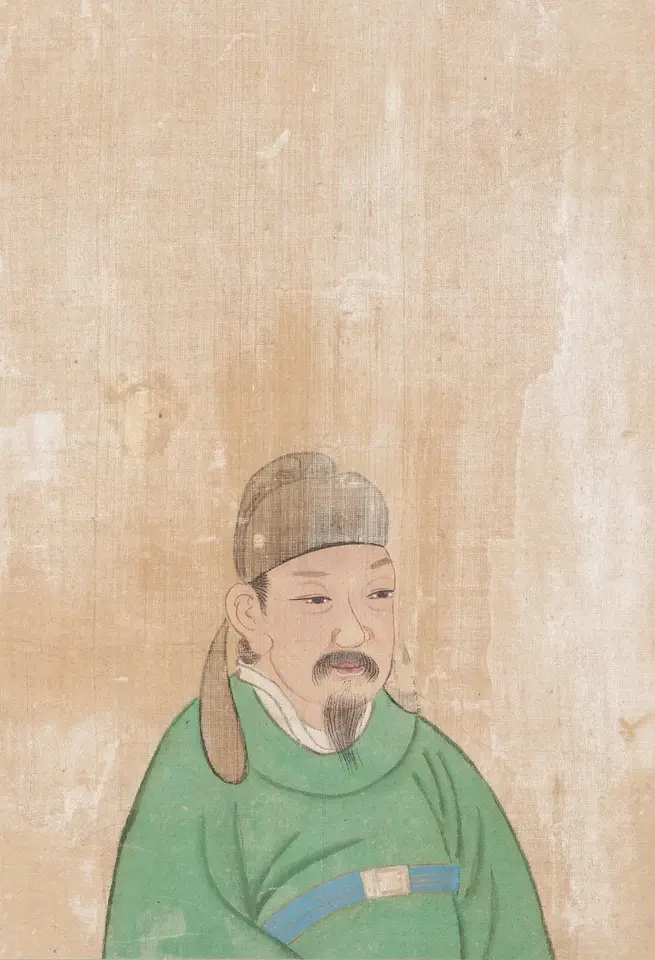 Tang Dynasty, Wu Zhou
Famous Statesman
Yao Chong (姚崇, 650–September 28, 721), originally named Yao Yuanchong and styled Yuanzhi, was a native of Xiashi County, Shanzhou (present-day Shanzhou District, Sanmenxia, Henan). He was an illustrious statesman, reformer, and foundational chief chancellor of the High Tang's Kaiyuan era, celebrated alongside Fang Xuanling, Du Ruhui, and Song Jing as one of the Four Eminent Chancellors of the Tang Dynasty, and widely revered by historians as the Chancellor of National Salvation. Entering civil service through the Filial and Incorrupt category, Yao Chong served across the four reigns of Wu Zetian, Emperor Zhongzong, Emperor Ruizong, and Emperor Xuanzong, holding the chancellorship three times and leaving a lasting legacy through his practical wisdom, decisive administrative clarity, and courageous counsel. During the Wanrui Tongtian era under Wu Zetian, when the Khitan chieftain Li Jinzhong rebelled and military memorials accumulated endlessly, Yao Chong served as Vice Minister of the Summer Bureau, managing complex defense logistics with calm precision and winning Wu Zetian's high praise, which led to his first appointment as chancellor. In 705 (first year of Shenlong), Yao Chong participated in the Shenlong Coup that overthrew the Zhang brothers and restored Emperor Zhongzong; while others rejoiced, Yao Chong alone wept for the deposed Empress Wu Zetian, demonstrating the profound loyalty of an honorable statesman, and was created Marquis of Liang County. During the Jingyun era of Emperor Ruizong, Yao Chong was appointed chancellor for the second time alongside Song Jing, reforming administrative abuses and proposing to reassign royal princes to regional posts and relocate Princess Taiping to Luoyang, for which he was slandered and demoted to prefectural governor. In 713 (first year of Kaiyuan), after Emperor Xuanzong crushed Princess Taiping's faction, he summoned Yao Chong to an audience at Xinfeng. Yao Chong presented his famous Ten Governance Principles—demanding the practice of benevolent governance, abstention from expansionist border warfare, the prohibition of eunuch interference, the eradication of nepotism, and the curbing of Buddhist monastic excesses—which Emperor Xuanzong fully accepted before appointing him chancellor. During his premiership, Yao Chong defied entrenched superstitions to enforce nocturnal fire-trapping of locusts across Henan and Hebei, successfully halting a historic plague and saving millions of lives; he dismissed over thirty thousand corrupt and tax-exempt monks and nuns; cleansed the bureaucracy of venal appointees; and upon retiring, recommended the upright Song Jing as his successor, establishing the complementary dynamic where Yao Chong pioneered flexible reforms while Song Jing maintained legal rigor. Yao Chong passed away in 721 at the age of seventy-two, receiving posthumous honors as Grand Protector and Grand Commander of Yangzhou with the posthumous title of Wenxian.
 Wu Zhou, Tang Dynasty
Imperial in-law
Wu Chengsi (武承嗣; 649 – September 19, 698), courtesy name Fengxian (奉先), was a native of Wenshui County in Bingzhou (present-day Wenshui County, Shanxi Province). He was the son of Wu Yuanshuang (Prince De of Wei), half-brother of Wu Zetian, and thus a maternal nephew of Empress Wu Zetian. A preeminent imperial in-law chancellor, Prince of Wei, and political architect spanning the late Tang and Wu Zhou periods, Wu Chengsi served as the primary ministerial driving force behind the Wu Zhou Revolution and Empress Wu's dynastic usurpation. In his youth, Wu Chengsi shared his father's exile in remote Lingnan. Following the disgrace and demise of Helan Minzhi in 671, Wu Zetian recalled Wu Chengsi to Chang'an in 672 to cultivate her maternal lineage. Initially appointed Chief Steward of the Imperial Wardrobe and subsequently Director of the Palace Library, he inherited the noble title Duke of Zhou originally conferred upon his grandfather Wu Shihuo. When Wu Zetian assumed direct imperial regency in 684, Wu Chengsi was elevated to Minister of Rites, Chief Minister of the Court of Imperial Sacrifices, and Joint Manager of Affairs of the Third Rank, ascending to the supreme prime ministerial collegium. Throughout his tenure, Wu Chengsi aggressively promoted the dynastic supplanting of the Li-Tang imperial house. He initiated imperial petitions to posthumously honor Wu ancestors as monarchs and erect Seven Ancestral Temples for the Wu house; in 688, he secretly commissioned stonecarvers to chisel "The Holy Mother descends to mankind, perpetually prospering the imperial enterprise" onto a white boulder, fabricating celestial portents; in 690, he orchestrated Buddhist promotions around the Great Cloud Sutra to proclaim Wu Zetian as the earthly incarnation of Maitreya. Upon the founding of the Wu Zhou Dynasty, he was created Prince of Wei, granted a hereditary revenue of one thousand households, and appointed Left Prime Minister, commanding supreme executive authority. Seeking to secure his ascension as imperial crown prince, Wu Chengsi relentlessly urged the slaughter of Li-Tang royal scions, colluding with notorious secret-police inquisitors such as Zhou Xing and Lai Junchen to murder dozens of Tang princes—including Li Yuanjia, Li Lingkui, Li Shangjin, and Li Sujie—as well as upright chancellors Li Xiaoyi and Wei Fangzhi. In 691, he orchestrated petitions by Wang Qingzhi to replace the crown prince with himself, but encountered fierce resistance from chancellors Di Renjie, Cen Changqian, and Li Zhaode. Li Zhaode publicly executed Wang Qingzhi and persuaded Empress Wu to strip Wu Chengsi of his prime ministerial portfolio in 692. Following Di Renjie's successful counsel urging the Empress to restore her son Li Xian (Prince of Luling) as imperial heir, Wu Chengsi's hopes of ascending the throne were permanently crushed. On September 19, 698, he died of illness and bitter despondency in his Luoyang residence at the age of fifty, posthumously bestowed the offices of Grand Commandant and Governor of Bingzhou with the posthumous title "Xuan" (Proclaiming).
Imperial Grandson of Tang
Li Chongrun (李重润, 682 – October 8, 701), originally named Li Chongzhao (李重照) and renamed to observe the naming taboo of his grandmother Wu Zetian (Wu Zhao), hailed from Chengji in Longxi (modern Qin'an County, Tianshui, Gansu). He was the eldest grandson of Emperor Gaozong (Li Zhi) and Wu Zetian, and the only primary legitimate son of Emperor Zhongzong (Li Xian) and Empress Wei, posthumously honored as Crown Prince Yide. Born in the first month of 682 in the Eastern Palace, Li Chongrun was deeply cherished by Emperor Gaozong as his first direct legitimate grandson. Upon his one-month celebration, Emperor Gaozong issued an empire-wide amnesty, inaugurated the new reign title Yongchun, and shattered centuries of dynastic ritual protocol by establishing a full administrative office and staff specifically for the infant Imperial Grandson while the Crown Prince was alive. However, his fortunes collapsed abruptly when Emperor Zhongzong was deposed by Empress Dowager Wu Zetian after reigning merely fifty-five days in 684. The two-year-old Li Chongrun was stripped of his titles, reduced to commoner status, and confined alongside his parents in the remote mountain outposts of Fangzhou and Junzhou for over a decade. In 698, after Wu Zetian summoned Li Xian back to Luoyang and restored him as Crown Prince, Li Chongrun was created Prince of Shao. As Wu Zetian favored her courtiers Zhang Yizhi and Zhang Changzong in her old age, the two brothers dominated palace administration, provoking deep indignation among the imperial clan. In October 701, nineteen-year-old Li Chongrun privately lamented the arrogance of the Zhang brothers with his younger sister Princess Yongtai and her husband Wu Yanji. Informants leaked the conversation, and an enraged Wu Zetian ordered their immediate deaths. Following Emperor Zhongzong's restoration in 705, Li Chongrun was posthumously honored as Crown Prince Yide, and in 706 his remains were transferred to Qianling with the supreme burial honors of "treating a tomb as an imperial mausoleum."
Court official and imperial favorite of Wu Zhou
Zhang Yizhi (张易之) (died 705), courtesy name Qibi and popularly known as Wulang, was a native of Yifeng County in Dingzhou (present-day Anguo, Hebei Province). He was an influential courtier and the paramount imperial male favorite of Empress Regnant Wu Zetian during the twilight of the Wu Zhou dynasty. Descended from an aristocratic lineage, he was the grand-nephew of early Tang chancellor Zhang Xingcheng and the son of Administrative Assistant Zhang Xicang. Renowned for his tall, elegant figure, radiant white complexion, and mastery of musical flutes, songs, and literary lyrics, he was introduced into the imperial palace by Princess Taiping and his younger brother Zhang Changzong, securing the exclusive favor of the aging empress. Within the palace, Zhang Yizhi advanced rapidly through high-ranking posts, becoming Vice Minister of the Imperial Guard, Director of the Crane Control Office, Director of Fengchen, and Director of the Palace Library, while receiving the noble title Duke of Heng. Exploiting Wu Zetian's declining health, Zhang Yizhi usurped executive authority. Princes of the Wu lineage and high ministers like Zong Chuke curried favor by holding his reins and greeting him deferentially as "Fifth Master." When dynastic succession was contested, the Zhang brothers heeded advisor Ji Xu's counsel to advocate the recall of Li Xian (Emperor Zhongzong) from exile to preserve their clan. In addition, Zhang Yizhi directed eminent scholars including Li Qiao, Zhang Yue, and Song Zhiwen in compiling the encyclopedic work Pearl Blossom of the Three Teachings, which served to mask palace scandals. In Wu Zetian's final years, as she resided in isolation at the Changsheng Hall of the Yingxian Palace, Zhang Yizhi monopolized imperial communications. He engineered the executions of imperial grandchildren Li Chongrun, Princess Yongtai, and Wu Yanji for questioning his conduct, and framed Chancellor Wei Yuanzhong. His corruption and cruelty provoked widespread outrage. In the first month of 705, Chancellors Zhang Jianzhi, Cui Xuanwei, and Huan Yanfan formed an alliance with Right Feathered Forest Guard General Li Duozuo to launch the Shenlong Coup. Escorting Crown Prince Li Xian into the palace, they executed Zhang Yizhi and Zhang Changzong beneath the eaves of the Jixian Hall, decapitating their corpses and displaying their severed heads at the Tianjin Bridge, terminating their reign of court corruption and restoring the Tang dynasty.
Historical figure
Suo Yuanli (索元礼, d. 691) was a notorious judicial officer and prominent inquisitor (kuli) during the transitional era from the late Tang Dynasty to the Wu Zhou Dynasty. Of non-Han (Hu) ancestry, he possessed deep-set eyes, a prominent nose, and a heavy beard, and was described in historical records as inherently ferocious and calculating. In the first year of Guangzhai (684), following the outbreak of Xu Jingye's insurrection in Yangzhou, Empress Dowager Wu (Wu Zetian) instituted a widespread informant system to terrorize political dissent. Suo Yuanli submitted a secret memorial alerting the court to alleged subversions, winning an audience with Wu Zetian, who elevated him to Roving Strike General and Special Inquisitor. He was commissioned to establish a dedicated prison for political cases within the Luozhou Pastoral Command to prosecute high-level treason cases. During his judicial tenure, Suo Yuanli operated with ruthless cruelty, inventing specialized iron-cage instruments and gruesome torture techniques while pioneering sleep-deprivation methods to coerce confessions. In each proceeding, he expanded the web of treason allegations to fabricate charges against hundreds of innocent individuals, leading to the execution of thousands of royal clansmen, high-ranking ministers, and commoners. He was celebrated alongside Lai Junchen with the joint moniker "Lai-Suo." Suo Yuanli subsequently acknowledged royal favorite Xue Huaiyi as his adoptive father to secure palace backing, while using his judicial authority to extort massive bribes. In 691, with her imperial authority firmly consolidated, Wu Zetian ordered his arrest to appease popular fury. When interrogating clerks threatened him with his own iron torture cage, Suo Yuanli confessed immediately and died in prison.
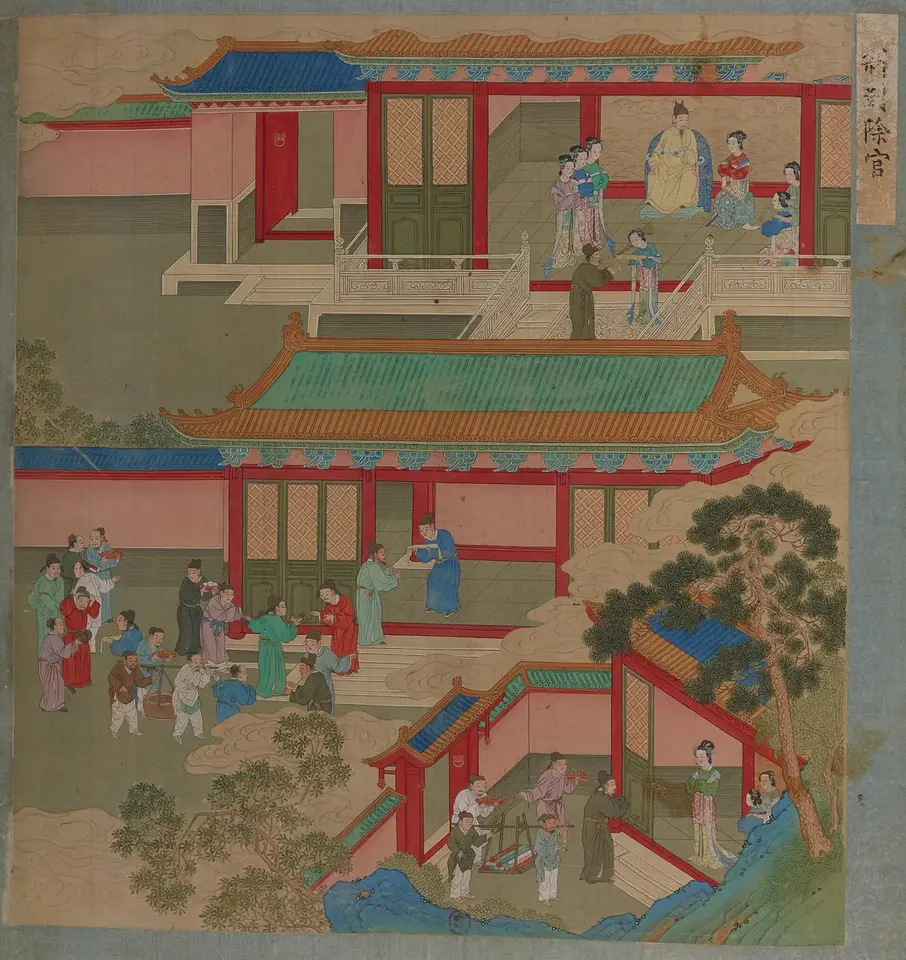
The Restoration of Emperor Zhongzong and Turmoil of Empress Wei (中宗) denotes the tumultuous political cycle spanning from 705 to 710 in the Tang dynasty, encompassing the restoration of Emperor Zhongzong (Li Xian) and the subsequent violent usurpation orchestrated by his consort, Empress Wei. In the spring of 705, octogenarian Empress Wu Zetian fell gravely ill in Luoyang while her courtiers Zhang Yizhi and Zhang Changzong abused imperial authority. Chancellor Zhang Jianzhi led the Shenlong Coup, slaying the favorites and forcing the transfer of the throne to Crown Prince Li Xian, formally restoring the Tang dynastic title. However, bound by emotional promises made during fourteen years of exile in Fangling, Zhongzong yielded full executive leeway to Empress Wei. Wei formed a venal alliance with Prince Wu Sansi, banishing and executing the Five loyalist Kings while marketing thousands of irregular "oblique-sealed appointments" (xiefeng guan) alongside Princess Anle. Following Zhongzong's sudden death in 710—widely attributed to poison administered by Empress Wei—Prince of Linzi Li Longji and Princess Taiping staged the preemptive Tanglong Coup, breaching the imperial palaces to execute Empress Wei, Princess Anle, and Shangguan Wan'er, enthroning Emperor Ruizong and concluding the era of consort domination.
Eastern Capital Luoyang, Western Capital Chang'an (modern Luoyang, Henan and Xi'an, Shaanxi)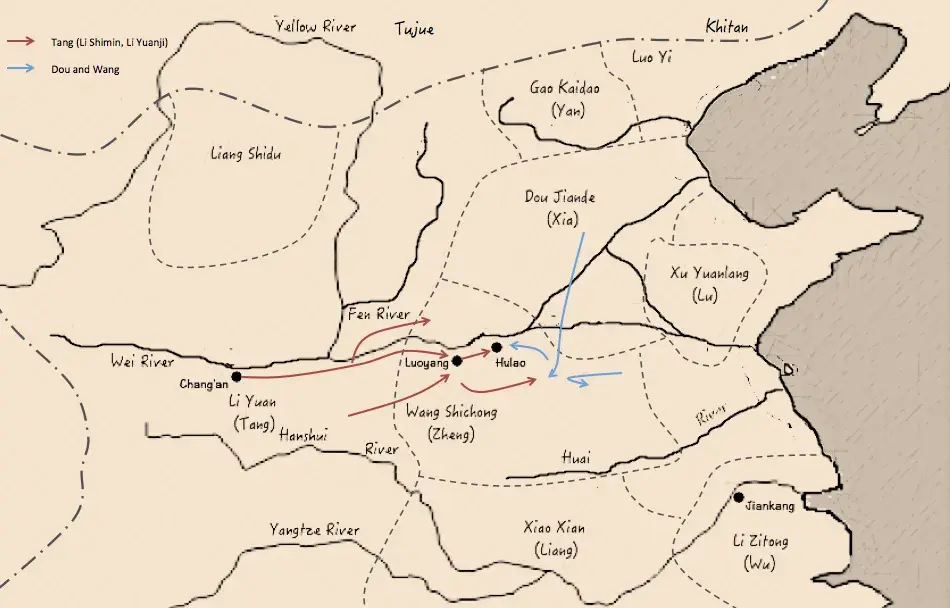
The Establishment of the Four Garrisons of Anxi was a seminal frontier defense program undertaken by the Tang Dynasty and Wu Zhou regimes to govern the Western Regions and protect the continental Silk Road network. Following the conquest of the Kingdom of Gaochang in 640, the Tang established the Protectorate General to Pacify the West at Jiaohe. In 648, after General Ashina She'er subjugated the Kingdom of Kucha, Emperor Taizong relocated the protectorate headquarters to Kucha and officially inaugurated the Four Garrisons of Anxi—comprising the pivotal Tarim Basin oasis hubs of Kucha, Khotan, Kashgar, and Karasahr. Over subsequent decades, the ascendance of the Tibetan Empire triggered twenty years of destructive warfare, leading to several temporary Tibetan occupations of the four hubs. In 692, Empress Wu Zetian dispatched General Wang Xiaojie on a major offensive that routed Tibetan forces, conclusively reclaiming the territory and institutionalizing a permanent garrison system of twenty-four thousand elite imperial troops, with Suyab replacing Karasahr. Serving as the imperial military bastion in Central Asia, the Four Garrisons neutralized the joint threats of nomadic Turks and Tibetans, sustained unprecedented trade across Eurasian caravan routes, and projected Tang administrative law and cultural prestige deep into Transoxiana, consolidating China's historic governance over the Western Regions.
Kucha, Khotan, Kashgar, Suyab / Karasahr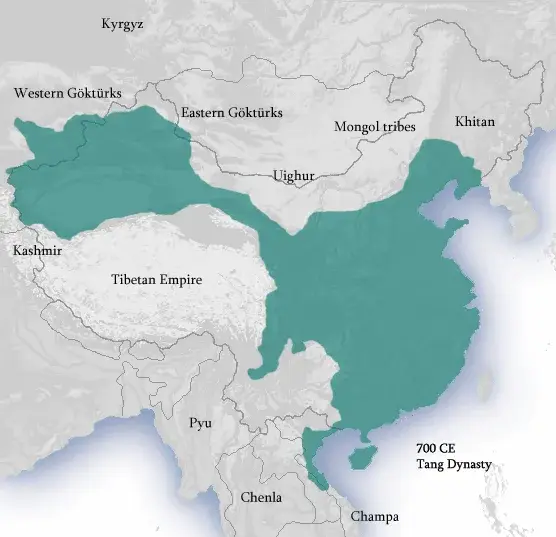
Wu Zhou Dynasty Usurps Tang (武周代唐), historically termed the Wu Zhou Revolution, designates the epochal transformation in 690 when Empress Dowager Wu Zetian formally assumed the imperial dignity, proclaimed the Zhou Dynasty, and designated Shendu Luoyang as her capital. Following the death of Emperor Gaozong, Wu Zetian successively deposed Emperor Zhongzong, elevated Emperor Ruizong, and assumed court regency to concentrate absolute military and administrative jurisdiction within the palace. By crushing Xu Jingye's Yangzhou rebellion and princely uprisings, she dismantled the foundational resistance of the entrenched aristocracy. In July 690, Buddhist monks led by Fa Ming submitted the Commentary on the Great Cloud Sutra, proclaiming Wu Zetian as the earthly incarnation of Maitreya Buddha destined to rule the cosmos. In September, Censor Fu Youyi organized civil crowds, high ministers, royal princes, monks, Daoist priests, and tributary envoys—totaling over sixty thousand individuals—to present petitions pleading for dynastic transformation, while Emperor Ruizong voluntarily requested adoption of the imperial surname Wu. On October 16, 690 (Double Ninth Festival), Wu Zetian ascended the throne at Zetian Gate, declaring herself Holy and Divine Emperor, renaming the realm Zhou, and altering the reign title to Tianshou. The Zhou dynasty lasted fifteen years before the Shenlong Coup of 705 restored Tang rule, standing as the only universally acknowledged female-headed dynasty in Chinese history.
Shendu Luoyang (modern Luoyang, Henan)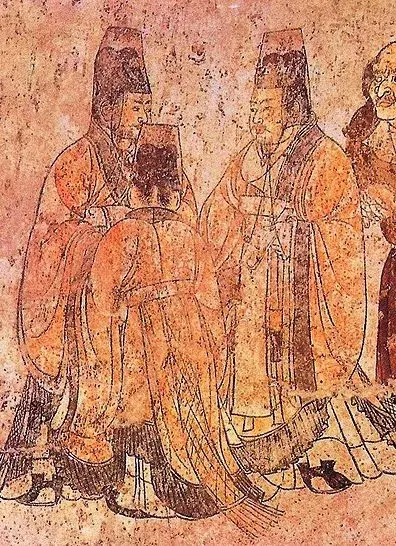
The Shenlong Coup (神龙政变) was a historic palace coup executed in Luoyang in February 705 (the first year of the Shenlong era) that restored the Tang Dynasty. With eighty-two-year-old Empress Wu Zetian gravely incapacitated at Yingxian Palace, her male favorites Zhang Yizhi and Zhang Changzong usurped imperial administration and purged high officials, menacing Crown Prince Li Xian. Chancellor Zhang Jianzhi allied with senior ministers Cui Xuanwei, Jing Hui, Huan Yanfan, and Yuan Shuqi, coordinating with General Li Duozuo to mobilize five hundred Feather Forest Guards. On February 20, the conspirators escorted Crown Prince Li Xian through Xuanwu Gate, executed the Zhang brothers outside Changsheng Hall, and compelled Wu Zetian to yield sovereign power. Crown Prince Li Xian re-ascended the throne as Emperor Zhongzong, formally restoring the Tang title and dynastic rituals.
Yingxian Palace, Changsheng Hall, and Xuanwu Gate, Luoyang (Divine Capital)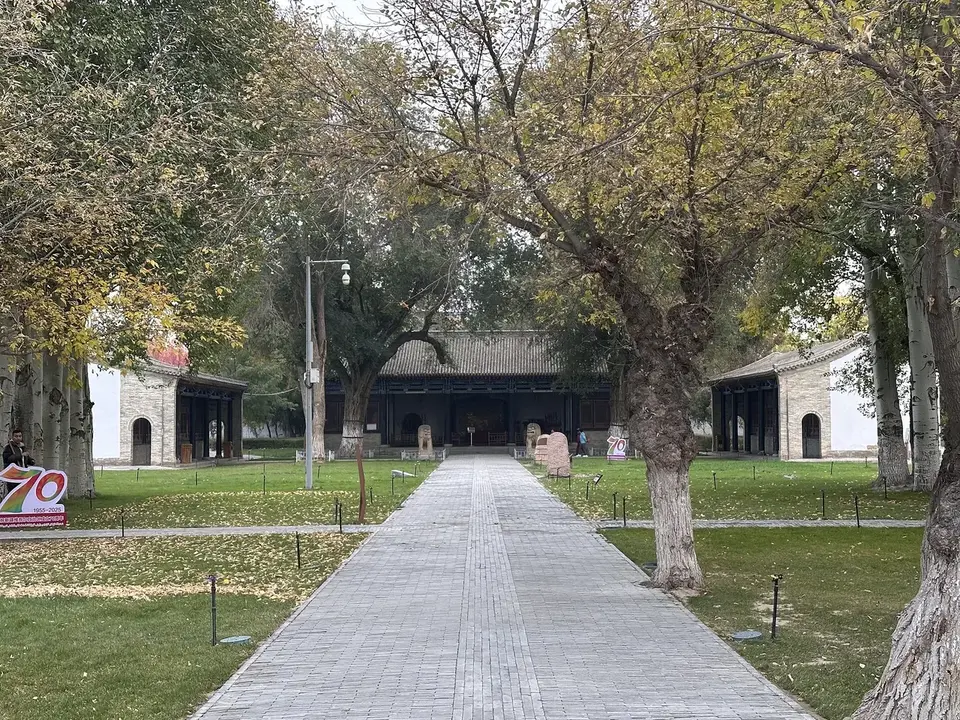
The Establishment of the Beiting Protectorate (设立北庭都护府) was a milestone administrative and military reform undertaken between 702 (Chang'an 2 of Wu Zhou) and 711 (Jingyun 2 of Tang) that created and elevated a premier frontier command north of the Tianshan Mountains. Following the conquest of Karakhoja (Gaochang) in 640 during Emperor Taizong's reign, the Tang Dynasty initially established Tingzhou. However, as the Tibetan Empire expanded into the Tarim Basin, the Anxi Protectorate focused heavily on defending the Four Garrisons of Anxi, leaving the complex nomadic tribes of the Western Turks north of the mountains difficult to supervise. To stabilize the northwestern frontier and deter collusion between the Turgesh and Tibetans, Wu Zetian issued an imperial decree in late 702 establishing the Beiting Protectorate at Tingzhou. Once established, the Beiting Protectorate shared frontier governance with the Anxi Protectorate, divided along the natural spine of the Tianshan Mountains. Beiting held jurisdiction over an expansive region stretching from the Altai Mountains and Barkol Lake in the east across the steppes toward the Aral Sea in the west. In 711, Emperor Ruizong elevated it to the Grand Protectorate of Beiting, later integrating the Beiting Military Commission (Jiedushi) commanding the Hanhai, Tianshan, and Yiwu armies. Under energetic commanders who promoted garrison reclamation and trade, Beiting emerged as the administrative hub and trade nexus of the northern frontier, playing an indispensable role in safeguarding trans-Eurasian communications.
Tingzhou (governed at modern Pochengzi, Jimsar County, Xinjiang / Beiting Ancient City Ruins)
"Please Step into the Vat" (请君入瓮) refers to a celebrated political interrogation and factional purge in the first month of 691 (Tianzhou 2 of Wu Zhou) in the eastern capital of Luoyang. To solidify her ascension and eradicate opposition among Li-Tang loyalists and imperial clans, Empress Wu Zetian established bronze petition boxes that sparked rampant informant denunciations, empowering ruthless inquisitors such as Zhou Xing and Lai Junchen to fabricate treason charges and tortures. However, once the dynastic transition succeeded and prominent loyalists were suppressed, the unchecked cruelty of these inquisitors began turning inward into vicious internecine rivalries. In early 691, following the execution of imperial guard general Qiu Shenji, an informant accused senior inquisitor Zhou Xing of treasonous collusion. Rather than ordering a public arrest, Wu Zetian issued a secret decree empowering Censor Lai Junchen to conduct a covert tribunal. Feigning hospitality, Lai Junchen invited Zhou Xing to dine and innocently asked for advice on breaking stubborn suspects. Without hesitation, Zhou Xing boastfully recommended confining prisoners inside a giant clay vat heated by roaring charcoal fires. Lai Junchen had the blazing vat brought forth at once, displayed the imperial warrant, and invited Zhou Xing to step inside. Petrified, Zhou Xing confessed immediately. The episode evolved into a timeless historical idiom illustrating the poetic justice of poetic retribution.
Luoyang (Court of Inquest inside Lijing Gate)