Xiashi, Shanzhou | Born into an official family; father Yao Shan served as Governor of Fengzhou.
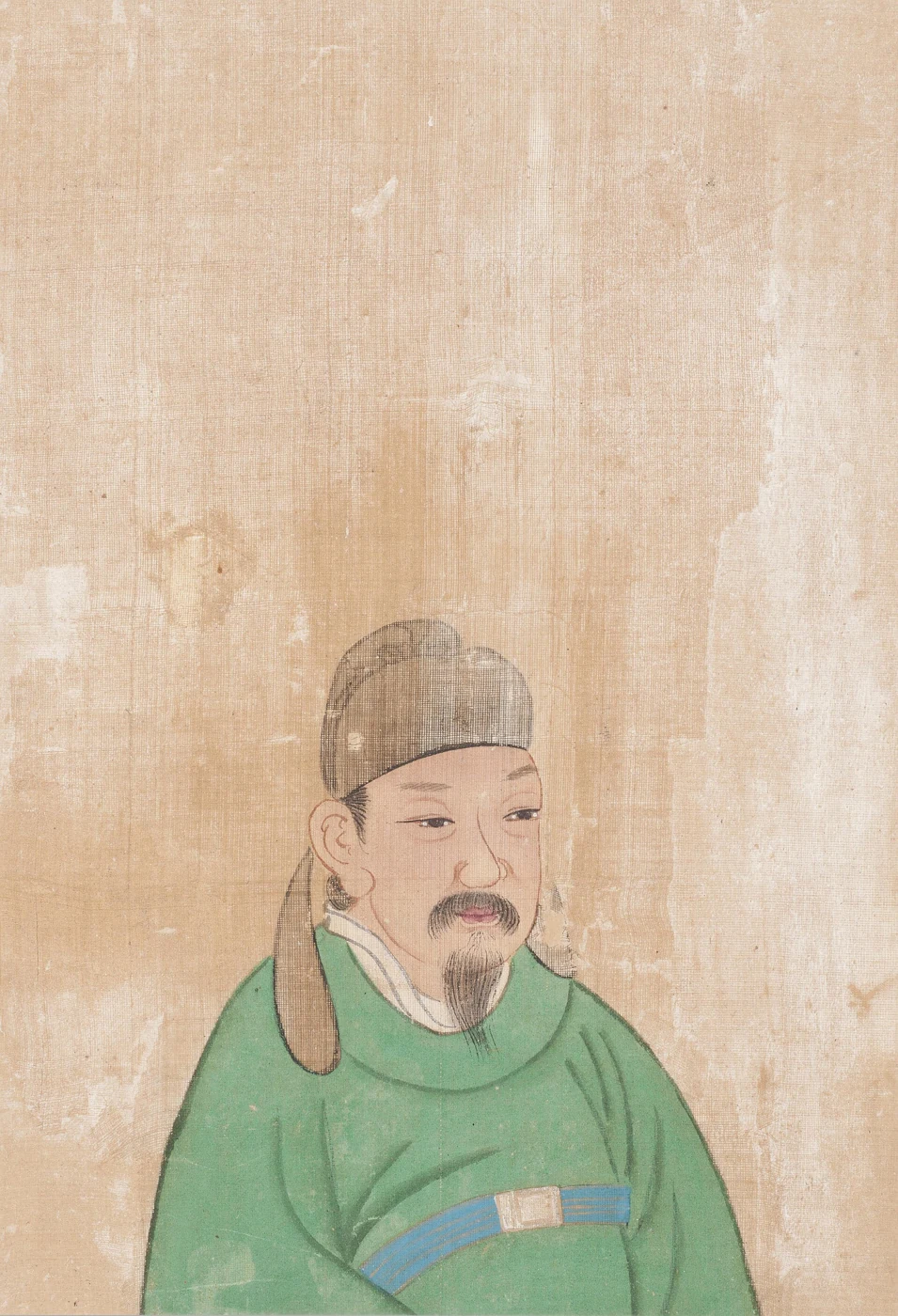
650 CE–721 CE
Historical figure
Yao Chong
姚崇
Yao Chong (650–721 AD), originally named Yuanchong with the courtesy name Yuanzhi, was a native of Xiashi, Shanzhou (modern Shanzhou District, Sanmenxia, Henan Province). He was a paramount chancellor and statesman of the Tang dynasty and the primary architect of the renowned Kaiyuan Prosperity, commemorated alongside Song Jing as the premier administrative partnership "Yao-Song". Born into an official family, he reformed his…
650 CE–721 CETang Dynasty
PROFILE
Yao Chong (650–721 AD), originally named Yuanchong with the courtesy name Yuanzhi, was a native of Xiashi, Shanzhou (modern Shanzhou District, Sanmenxia, Henan Province). He was a paramount chancellor and statesman of the Tang dynasty and the primary architect of the renowned Kaiyuan Prosperity, commemorated alongside Song Jing as the premier administrative partnership "Yao-Song". Born into an official family, he reformed his youthful hedonism in his twenties to master statecraft and classical literature. Under Wu Zetian, he rose through merit during the Khitan crisis, becoming Chancellor (Tong Fengge Luantai Pingzhangshi). In 705 AD, he participated in the Shenlong Coup that deposed Wu Zetian and restored the Tang imperial lineage. Following Emperor Xuanzong's ascension, Yao Chong had an audience at the Xinfeng imperial encampment where he proposed his celebrated "Ten Proposals" covering anti-corruption, financial retrenchment, religious curtailment, and bureaucratic discipline, all of which the Emperor accepted before appointing him Grand Chancellor (Ziwei Ling). As chancellor, Yao relentlessly pruned redundant Buddhist clergy and corrupt officials, and boldly organized China's first large-scale scientific eradication of a catastrophic locust plague. He died in 721 AD at the age of seventy-two and was posthumously honored as Grand Protector and Grand Area Commander of Yangzhou with the posthumous title Wenxian.
- Courtesy / Art Name
- Yuanzhi
- Era
- Ancient times
- Dynasty
- Ancient times
- Identity
- Historical figure
- Date of Birth
- 650
- Date of Death
- September 28 721
- Ethnicity
- Han
- Ancestral Home
- Xiashi, Shanzhou (present-day Shanzhou District, Sanmenxia, Henan)
- Place of Birth
- Xiashi, Shanzhou (present-day Shanzhou District, Sanmenxia, Henan)
- Place of Death
- Unknown
- Lifespan
- 72 years
- Major Offices
- Director of the Purple Micro Court, Minister of War, Joint Manager of Affairs with the Secretariat-Chancellery of the Third Rank, Grand Commander-in-Chief of Yangzhou (posthumously granted), Grand Guardian (posthumously granted)
- Peerage
- Duke of Liang
- Posthumous Name
- Wenxian (Cultured and Exemplary)
- Major Achievements
- Laying the foundation of the Kaiyuan Prosperity, the Ten Proposals, scientific locust extermination, bureaucratic pruning
LIFE TIMELINE
Chang'an | Turned to intense scholarly studies in his twenties, passing civil examinations to enter officialdom.
Luoyang | Transferred to the central administration as Supernumerary Gentleman in the Ministry of War, noted for administrative decisiveness.
Luoyang, Hebei | Khitan armies under Li Jinzhong invaded Hebei; Yao Chong managed logistics and troop movements with exceptional poise, winning promotion to Vice Minister of War.
Luoyang | Appointed Chancellor (Tong Fengge Luantai Pingzhangshi), his first tenure at the apex of imperial administration.
Luoyang | Demoted to Chief Minister of the Court of the Imperial Stud for opposing the corrupt Zhang brothers, but recalled to the chancellorship within months.
Luoyang | Allied with Zhang Jianzhi to launch the Shenlong Coup restoring Emperor Zhongzong; created Duke of Liang; demoted after tearfully mourning Wu Zetian.
Chang'an | Emperor Ruizong assumed the throne; recalled Yao Chong to serve as Minister of War and Chancellor, pruning thousands of illegitimate appointees.
Chang'an, Shenzhou | Warned against Princess Taiping's factional intrigues; banished to provincial posts due to Taiping's pressure on Ruizong.
Xinfeng, Chang'an | Summoned by Emperor Xuanzong following the destruction of Princess Taiping; presented his "Ten Proposals" at Xinfeng and was appointed Grand Chancellor.
Central Plains | Confronted a massive locust plague across Henan and Hebei; defied court superstition to implement nationwide night-burning and trench burial, saving millions from famine.
Chang'an | Resigned gracefully from the chancellorship after subordinate Zhao Hui's bribery scandal, recommending the uncompromising Song Jing as his successor.
Chang'an | Penned his testament condemning ostentatious funerals and religious superstition; died in September at age seventy-two, receiving highest posthumous honours.
Scientific Eradication of the Great Locust Infestation Defying deep-seated cosmologica | ### Scientific Eradication of the Great Locust Infestation Defying deep-seated cosmological superstitions, Yao Chong mobilized imperial resources in 715 AD to eradicate a disastrous locust swarm through systematic night-burning and trench burial, saving millions of lives and setting a historic benchmark for rational disaster management.
In 716 AD | In 716 AD, when his subordinate Zhao Hui was implicated in corruption, Yao Chong chose to avoid political friction and voluntarily stepped down.
In his final illness in 721 AD | In his final illness in 721 AD, Yao Chong composed his Testamentary Admonition on Frugality, forbidding his children from constructing lavish tombs, burying precious treasures, or commissioning lavish Buddhist liturgies.
BIOGRAPHY
Biography
Early Life and Conversion to Serious Study Yao Chong was born in 650 AD in Xiashi, Shanzhou. His ancestral lineage originated from the elite Yao clan of Wuxing in modern Zhejiang, which had settled in the Central Plains across previous generations. His father, Yao Shan, was a distinguished provincial administrator during Emperor Gaozong's reign, serving as Governor of Anzhou and Fengzhou. In his youth, Yao Chong was high-spirited and adventurous, delighting in falconry, horse racing, and hunting across the mountains of Shanzhou, paying little heed to scholarly books. When he reached the age of twenty-four, he experienced a sudden realization of his higher duty to society, remarking that a true gentleman must earn enduring fame through virtuous governance. He secluded himself from all frivolous distractions, immersing himself night and day in the Confucian classics, historical annals, statecraft treatises, and jurisprudence. His progress was astonishing; within a few years, he possessed unmatched clarity in public affairs and legal statutes. Entering the civil administration in 675 AD, he earned early acclaim as an incorruptible and exceptionally efficient magistrate. ### Rise under Wu Zetian and the Khitan Crisis During the reign of Empress Wu Zetian, the northern border exploded into warfare in 696 AD when Khitan chieftains Li Jinzhong and Sun Wanrong revolted, slaughtering the garrison commander at Yingzhou and driving south into Hebei. As panic overwhelmed central ministries in Luoyang, Yao Chong, then serving in the Ministry of War, took charge of coordinating logistics, arms deliveries, and troop deployments. Working day and night, he dispatched hundreds of urgent military decrees with consummate precision and serene composure. Impressed by reports of his performance, Wu Zetian granted him a private audience. Yao dissected border topography and strategic options with stunning brilliance. Astonished, Wu Zetian exclaimed: "I have heard many praise administrative talents, but today I have met a true master of statecraft!" She promoted him to Vice Minister of War, and in 698 AD elevated him to Chancellor. During his initial chancellorship, Yao Chong courageously persuaded Wu Zetian to dismantle the reign of terror operated by secret police informers. He argued that with major plotters eliminated, continuation of frivolous denunciations merely paralyzed honest administrators. Wu Zetian agreed, prohibiting false accusations and restoring stability to the bureaucracy. ### Restoration of the Tang and Shenlong Coup During the early 700s, the Empress’s favorites, Zhang Yizhi and Zhang Changzong, monopolized access to the throne and bullied ministers. Yao Chong boldly defended virtuous officials against the Zhang brothers' trumped-up charges, enduring temporary demotion to the Court of the Imperial Stud. In early 705 AD, as the Empress lay dying at the Yingxian Palace, Yao Chong joined fellow chancellor Zhang Jianzhi and senior military commanders to execute the historic Shenlong Coup. Charging through the Xuanwu Gate with five hundred imperial guards, they executed the Zhang brothers and forced Wu Zetian to abdicate in favor of Crown Prince Li Xian (Emperor Zhongzong). While the entire court celebrated the revival of the Tang dynasty, Yao Chong went alone to the bedside of the ailing Wu Zetian and wept bitterly. When Zhang Jianzhi reprimanded him for risking suspicion, Yao Chong replied: "To overthrow corrupt favorites was my duty as a servant of the dynasty; to weep for my former sovereign is my duty as a moral human being. If I am executed for this, I accept it without regret." Suspicious of his independence, Emperor Zhongzong rewarded him with the title Duke of Liang but swiftly transferred him to provincial governorships. ### The Xinfeng Encounter and the Ten Proposals Following the brief chaotic reigns of Zhongzong and Ruizong, during which Yao Chong returned briefly as chancellor only to be banished again by Princess Taiping, Emperor Xuanzong crushed the Princess's faction in 713 AD. Confronting an empire depleted by decades of corruption and palace coups, Xuanzong urgently sought an extraordinary statesman. In October 713 AD, Xuanzong summoned Yao Chong to his military encampment at Xinfeng. Instead of thanking the emperor for the appointment, Yao Chong stood before the throne and declared that he would only accept the chancellorship if the Emperor committed to ten foundational principles of governance:
- Prioritize benevolence and abandon autocratic cruelty.
- Cease opportunistic military campaigns on the frontiers.
- Enforce the laws strictly against aristocrats and commoners alike.
- Bar eunuchs from exercising political authority.
- Forbid all unbudgeted local tributes and gifts to the court.
- Prohibit imperial princes and maternal relatives from holding vital military commands.
- Treat ministers with dignity and embrace dissenting counsel.
- Uphold institutional examination and civil service vetting procedures.
- Halt lavish palace building and temple construction projects.
- Curb religious abuses and eliminate tax-exempt false Buddhist monks. Xuanzong exclaimed that these ten items were the exact remedies he desired for the realm, instantly appointing Yao Grand Chancellor (Ziwei Ling). ### Eradicating the Great Locust Plague In 715 AD (3rd year of Kaiyuan), an unprecedented plague of locusts struck Henan and Hebei, darkening the sky and threatening complete agricultural devastation. Traditional Confucian superstition dictated that locusts were celestial warnings that could only be mitigated by prayer and ritual penitence; senior ministers vehemently opposed killing them, warning of divine wrath. Yao Chong firmly rejected this superstition, arguing that ancient classics recorded the duty of rulers to protect crops from pests. When Xuanzong worried about the spiritual karma of mass killing, Yao passionately declared: "A mediocre physician endangers a single patient; an incompetent chancellor destroys an entire empire! If Heaven must punish anyone for killing these insects, let all curses fall upon my body alone, so long as the lives of millions of peasants are preserved!" Backed by the Emperor, Yao Chong dispatched imperial inspectors across the affected provinces, teaching farmers to dig trenches and light massive fires at night, drawing millions of locusts into the flames before burying them. Over tens of thousands of bushels of locusts were exterminated, saving the Central Plains harvest from annihilation. This marked China’s first centrally coordinated, scientific campaign against agricultural pests. ### Pruning False Monasteries and Recommending Song Jing Yao Chong systematically cleaned up religious tax evasion, forcing more than thirty thousand fraudulent monks and nuns back into secular life to farm and pay taxes, and converting twelve thousand unregulated shrines into public granaries and academies. In 716 AD, when his subordinate Zhao Hui was implicated in corruption, Yao Chong chose to avoid political friction and voluntarily stepped down. When Xuanzong asked who could maintain the momentum of reform, Yao wholeheartedly recommended Song Jing, despite their frequent personal disagreements. Song Jing upheld and consolidated Yao Chong's policies, inaugurating the golden age of the "Yao-Song Administration". In his final illness in 721 AD, Yao Chong composed his Testamentary Admonition on Frugality, forbidding his children from constructing lavish tombs, burying precious treasures, or commissioning lavish Buddhist liturgies. He died in September 721 AD at the age of seventy-two.
Major Activities
The Ten Proposals for Good Governance Yao Chong's "Ten Proposals" at Xinfeng in 713 AD served as the comprehensive blueprint for Emperor Xuanzong’s reign, establishing fiscal conservatism, legal supremacy, frontier stability, and institutional honesty that sparked the Kaiyuan Prosperity. ### Scientific Eradication of the Great Locust Infestation Defying deep-seated cosmological superstitions, Yao Chong mobilized imperial resources in 715 AD to eradicate a disastrous locust swarm through systematic night-burning and trench burial, saving millions of lives and setting a historic benchmark for rational disaster management. ### Bureaucratic and Religious Rectification Yao Chong purged thousands of irregular bureaucratic appointments inherited from previous reigns and defrocked over 30,000 tax-evading Buddhist clerics, returning extensive lands and revenue streams to the imperial treasury. ### The Yao-Song Dynamic and Ideological Legacy By mentoring talented administrators and selflessly recommending his rival Song Jing to succeed him, Yao established a political standard celebrated by historians as the zenith of Tang governance, combining practical flexibility (tong) with unbending principle (fa).
Personal Relations
- Father: Yao Shan (Governor of Fengzhou)
- Sons: Yao Yi, Yao Yi, Yao Yi (all served as esteemed officials)
- Sovereigns: Empress Wu Zetian, Emperor Zhongzong, Emperor Ruizong, Emperor Xuanzong
- Colleague & Successor: Song Jing (fellow architect of the Kaiyuan Prosperity)
- Allies: Lu Huaishen, Zhang Jianzhi, Cui Xuanwei
- Adversaries: Zhang Yizhi, Zhang Changzong, Princess Taiping
Historical Assessment
- Emperor Xuanzong: "Your ten proposals are the grand strategy of the dynastic altars; I shall wear them upon my heart as eternal admonitions."
- *Old Book of Tang (Jiu Tang Shu)*: "Yao Chong brought peace through flexibility; Song Jing maintained order through law. The peak of Tang virtue was reached in the Kaiyuan era, truly the accomplishment of these two masters."
- *New Book of Tang (Xin Tang Shu)*: "When Xuanzong ascended the throne, he gained Yao Chong and Song Jing. Working with one heart, their administration was upright and dignified."
- Sima Guang: "Yao Chong excelled in responding to crisis; Song Jing excelled in upholding statutes. Working in perfect harmony, they achieved the Kaiyuan reign; even Fang Xuanling and Du Ruhui could not surpass them!"
- Su Shi: "Among the famous chancellors of the Tang, Yao and Song stand supreme."
- Wang Fuzhi: "Yao Chong's ten proposals could only have been uttered by someone who genuinely understood the machinery of state; his boldness in rejecting astrological superstitions to exterminate locusts proved his extraordinary courage."
FIGURES ASSOCIATED WITH THIS DYNASTY
Bibliography
- Liu Xu et al., Old Book of Tang (Jiu Tang Shu), Volume 96, Biography 46: Yao Chong
- Ouyang Xiu, Song Qi et al., New Book of Tang (Xin Tang Shu), Volume 124, Biography 49: Yao Chong
- Dong Gao et al., Complete Tang Prose (Quan Tang Wen), Volume 201: Writings of Yao Chong