Birth | Born in Taiyuan, Bingzhou; the exact month and day are not reliably recorded.
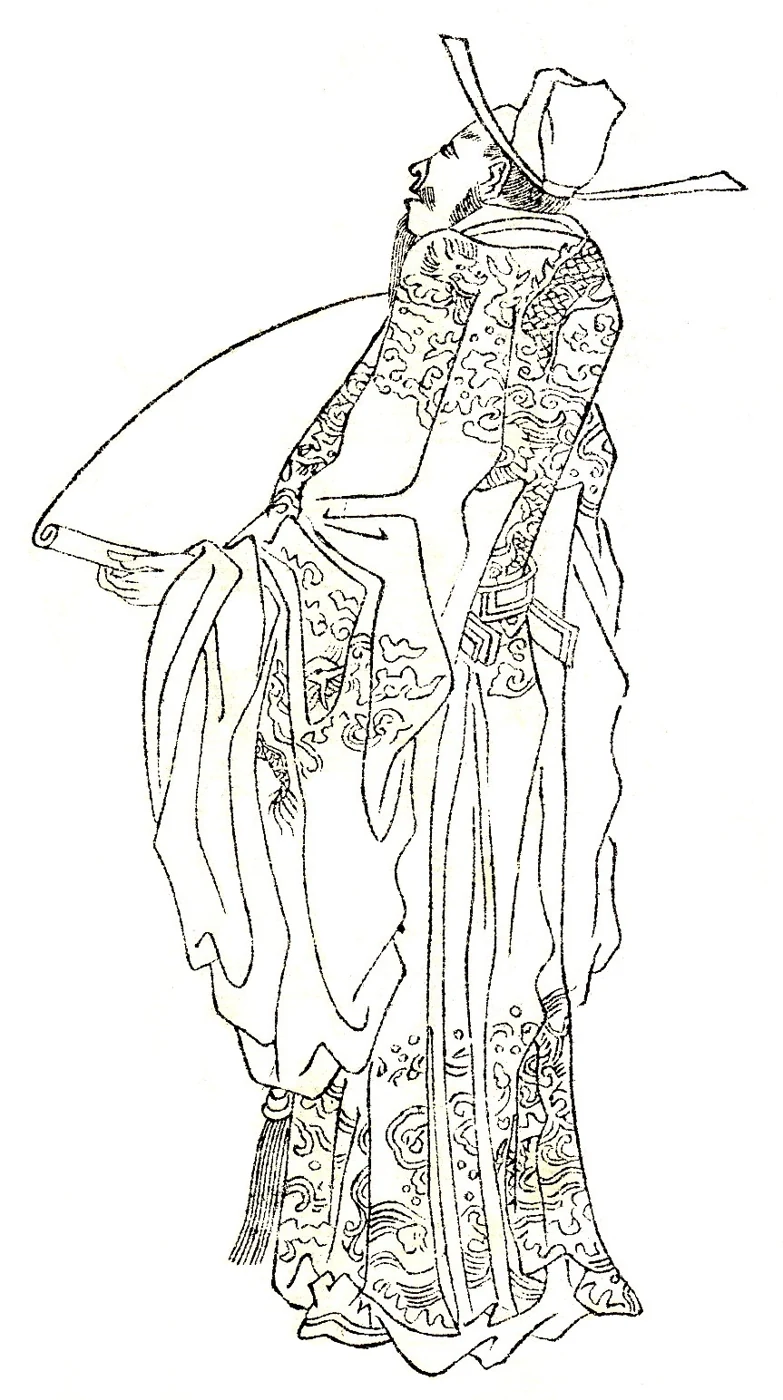
630 CE–700 CE
Tang statesman and Grand Councilor
Di Renjie
狄仁杰
Di Renjie was born in 630, the fourth year of the Zhenguan era, and died in 700, the first year of the Jiushi era of Wu Zhou. His courtesy name was Huaiying. A native of Taiyuan in Bingzhou, he was an official under the Tang and Wu Zhou and ultimately rose to Director of the Secretariat. He entered official service through the Mingjing examination and successively served in local administration, censorship, and judicial…
630 CE–700 CETang Dynasty
PROFILE
Di Renjie was born in 630, the fourth year of the Zhenguan era, and died in 700, the first year of the Jiushi era of Wu Zhou. His courtesy name was Huaiying. A native of Taiyuan in Bingzhou, he was an official under the Tang and Wu Zhou and ultimately rose to Director of the Secretariat. He entered official service through the Mingjing examination and successively served in local administration, censorship, and judicial posts. At the Court of Judicial Review he handled accumulated cases, and on several occasions he remonstrated against disproportionate punishments and burdensome corvée. During the Wu Zhou period he twice served as Grand Councilor. After being falsely accused by Lai Junchen, he was demoted, but later returned to office and took part in matters concerning the Khitan war, the pacification of Hebei, and court appointments. He advocated leniency for people implicated in the case of Li Zhen, Prince of Yue, recommended the surrendered Khitan commanders Li Kaigu and Luo Wuzheng, and urged Wu Zetian to recall Li Xian and make him imperial heir. His decision to serve Wu Zhou while also contributing to the restoration of the Tang line has long been assessed in different ways.
- Also known as
- Duke Liang
- Courtesy name
- Huaiying
- Art name
- Qixi
- Period
- Tang
- Date of Birth
- 630 CE(4th year of the Zhenguan era, Tang;month and day unknown)
- Date of Death
- 700 CE(9th month of the 1st year of the Jiushi era, Wu Zhou;one account gives the xinchou day)
- Dynasty / polity
- Tang Dynasty
- Identity
- Tang statesman and Grand Councilor
- Ethnicity / group
- Not reliably established in surviving sources
- Native place
- Taiyuan, Bingzhou (present-day Taiyuan, Shanxi)
- Place of birth
- Taiyuan, Bingzhou (present-day Taiyuan, Shanxi)
- Place of death
- Unknown
- Highest office
- See Biography and Major Activities
- Major achievements
- Prominent Grand Councilor under Wu Zhou; renowned in later tradition for judicial ability; strongly urged Wu Zetian to name Li Xian, Prince of Luling, as crown prince
- Age at death
- 71 (as recorded in the New Book of Tang);Director of the Secretariat (the Wu Zhou title was Neishi)
- Major offices
- Adjudication Assistant of Bianzhou; Judicial Officer of the Bingzhou Area Command; Assistant Director of the Court of Judicial Review; Attendant Censor; Inspector of Ningzhou; Inspector of Yuzhou; Vice Minister of the Ministry of Revenue; Vice Director of the Chancellery; Director of the Chancellery; Director of the Secretariat;Wenhui
- Posthumous honors
- Posthumously appointed Minister of Works under Emperor Zhongzong of Tang; received a posthumous investiture as Duke of Liang under Emperor Ruizong of Tang; later posthumously appointed Grand Preceptor under the Later Jin
LIFE TIMELINE
Entry into official service | Passed the Mingjing examination and was appointed Adjudication Assistant of Bianzhou.
Service in Bingzhou | After being falsely accused by a subordinate clerk, his case was examined by Yan Liben, who recommended him for appointment as Judicial Officer of the Bingzhou Area Command.
Judicial office | Promoted to Assistant Director of the Court of Judicial Review.
Judicial work and direct remonstrance | Handled accumulated cases and remonstrated against Emperor Gaozong of Tang's intention to execute Quan Shancai and Fan Huaiyi.
Transfer to central office | Served as Gentleman of the Directorate of State Finance and as an official responsible for imperial stopping places; persuaded the authorities not to open a new imperial road merely to avoid the shrine of the Jealous Woman.
Local administration | Served as Inspector of Ningzhou and was later recommended by Guo Han for promotion to Vice Minister of Works.
Inspection and local office | Inspected the Jiangnan region and petitioned for the demolition of unauthorized shrines; later served as Inspector of Yuzhou and requested clemency for people implicated in Li Zhen's case.
First appointment as Grand Councilor | Served as Vice Minister of the Ministry of Revenue and Joint Manager of Affairs with the Secretariat and Chancellery.
False accusation and imprisonment | Falsely accused of treason by Lai Junchen and others; released and then demoted to magistrate of Pengze.
Return to service and frontier appointment | Served as Inspector of Weizhou and later Area Commander of Youzhou; the sources state that the Khitan forces withdrew after hearing of his measures.
Second appointment as Grand Councilor | Served as Vice Director of the Chancellery, Joint Manager of Affairs with the Secretariat and Chancellery, and in other posts, and took part in the pacification of Hebei.
Frontier policy and succession question | Served as Deputy Marshal of the Hebei Circuit Expeditionary Army and in other posts, and urged Wu Zetian to make Li Xian imperial heir.
Court policy | Accompanied Wu Zetian on an imperial progress to Mount Song and submitted a memorial proposing abolition of the Protectorate General to Pacify the East.
Final year and death | Served as Director of the Secretariat, remonstrated against construction of a large Buddhist image, and died of illness at his private residence in Luoyang in the ninth lunar month.
Posthumous appointment | After Emperor Zhongzong of Tang returned to the throne, Di Renjie was posthumously appointed Minister of Works.
Posthumous investiture | Received a posthumous investiture as Duke of Liang under Emperor Ruizong of Tang.
Posthumous honor | Enshrined for joint worship in Emperor Zhongzong of Tang's ancestral temple.
In 747 | In 747, the sixth year of the Tianbao era, Di was enshrined for joint worship in Emperor Zhongzong's ancestral temple.
BIOGRAPHY
Biography
Family Background and Early Career Di Renjie came from an official family. Both state that his great-great-grandfather Di Zhan had served as Inspector of Jingzhou under Northern Qi, his grandfather Di Xiaoxu as Left Vice Director of the Department of State Affairs under the Tang, and his father Di Zhixun as Chief Secretary of Kuizhou. His ancestral home is recorded as Gaolu in Fengyi, while his birthplace is recorded as Taiyuan in Bingzhou; these are different categories and should not be conflated. The two sources do not reliably establish his ethnicity or ethnic affiliation, so none is inferred from his surname or later claims. Di Renjie entered official service through the Mingjing examination. In 659, the fourth year of the Xianqing era, he passed the examination and was appointed Adjudication Assistant of Bianzhou. In 661, the first year of the Longshuo era, he was falsely accused by a subordinate clerk. Yan Liben, serving as an inspection commissioner on the Henan Circuit, investigated the case, concluded that Di Renjie possessed ability and judgment, described him as “a bright pearl of the river bend and a treasured talent of the southeast,” and recommended him for appointment as Judicial Officer of the Bingzhou Area Command. In that office Di learned matters of local administration and justice. The New Book of Tang also records two personal episodes from this period: his remembrance of his parents while looking back from the Taihang Mountains, and his request to substitute for colleague Zheng Chongzhi on a distant assignment. They are discussed under “Anecdotes and Allusions.” ### Judicial Office and Local Administration In 675, the second year of the Shangyuan era, Di Renjie was promoted to Assistant Director of the Court of Judicial Review. In 676, the first year of the Yifeng era, he handled a large backlog of cases; the sources state that they involved seventeen thousand people and that no wrongful grievance remained. This figure describes the scale of the cases in the historical and encyclopedic sources and should not be interpreted as seventeen thousand separate cases each personally tried by him. In the same year, Emperor Gaozong of Tang intended to execute Quan Shancai and Fan Huaiyi for accidentally cutting cypress trees at the Zhaoling Mausoleum. Di cited the existing penal law and precedents of remonstrance by Zhang Shizhi and Xin Pi, arguing that punishments had to correspond to different degrees of offense and opposing the use of capital punishment for an offense not carrying the death penalty. Emperor Gaozong ultimately spared the two men, after which Di was promoted to Attendant Censor. While serving as Attendant Censor, Di Renjie impeached Wang Benli for exploiting imperial favor. Emperor Gaozong initially intended to pardon him, but Di argued that personal favor should not undermine the law, and Wang was ultimately handed over for investigation. In 679, the first year of the Tiaolu era, Di served as Gentleman of the Directorate of State Finance and as the official responsible for imperial stopping places, accompanying the emperor on a progress to Fenyang Palace. Li Chongxuan, Chief Secretary of Bingzhou, planned to conscript tens of thousands of laborers to open a new imperial road because of a folk story associated with the shrine of the Jealous Woman. Di considered the project unnecessary and persuaded him to stop the corvée; Emperor Gaozong commended the decision. Unlike his judicial remonstrance, this episode shows his concern with the demands that imperial travel projects could place on the population. In 686, the second year of the Chuigong era, Di Renjie became Inspector of Ningzhou. The region contained a mixture of population groups. The histories state that he pacified the people and handled local affairs in a way that won popular support. When the censor Guo Han reached Ningzhou on an inspection tour and heard praise from residents along the route, he recommended Di to the court, after which Di was promoted to Vice Minister of Works. In 688, the fourth year of the Chuigong era, Di was ordered to inspect Jiangnan. Regarding local shrines in the Wu and Chu regions that were not part of the state sacrificial register, he petitioned for the demolition of more than 1,700, while retaining four shrines dedicated to Yu the Great, Wu Taibo, Jizha, and Wu Zixu. This action belonged to the contemporary administration of state sacrifices and local customs and should not be simplified into a general prohibition of popular religion. In the ninth lunar month of the same year, Di Renjie became Inspector of Yuzhou. After the failed uprising of Li Zhen, Prince of Yue, six or seven hundred implicated people were sentenced, and more than five thousand people were subject to confiscation. The judicial authorities pressed for the sentences to be carried out. Di believed that many had merely been implicated or coerced rather than having participated voluntarily, so he delayed enforcement and secretly petitioned for clemency. Wu Zetian ordered that they be spared death and instead exiled to Fengzhou. When the exiles passed through Ningzhou, local elders went out to welcome them; after the exiles reached their destination, they erected a stele in Di's honor. In handling the Li Zhen case, Di did not deny that a rebellion had taken place; he opposed extending responsibility indiscriminately to people who had been coerced and to their families. While in Yuzhou, Di Renjie also clashed with Zhang Guangfu, commander of the army that had suppressed Li Zhen. After the rebellion, Zhang's subordinates demanded goods and allowed troops to harass the population. Di openly criticized Zhang for tolerating his men and creating new resentment. After returning to court, Zhang impeached Di for disrespectful speech, and Di was demoted to Inspector of Fuzhou. The episode appears in the Old Book of Tang and one account. This article preserves the central conflict but does not treat the rhetoric of later reconstructed dialogue as a verbatim record of the scene. ### First Appointment as Grand Councilor, Imprisonment, and Return to Office In 690, the first year of the Tianshou era, Wu Zetian proclaimed herself emperor and changed the state name to Zhou. In the ninth lunar month of 691, the second year of the Tianshou era, Di Renjie was promoted from Marshal of Luozhou to Vice Minister of the Ministry of Revenue and Joint Manager of Affairs with the Secretariat and Chancellery, becoming a Grand Councilor for the first time. Wu Zetian mentioned that while he had served in Runan someone had slandered him and asked whether he wished to know the informer's name. Di replied that if he had been at fault he should correct himself, while if he had not been at fault there was no need to pursue the accuser. The exchange is recorded in the historical sources and reflects his unwillingness to use the ruler's authority to pursue a personal grievance. In 692, the first year of the Changshou era, Lai Junchen and other harsh officials falsely accused Di Renjie of treason and imprisoned him. Knowing that torture could be fatal, Di first confessed to treason in order to avoid immediate torture. He then removed silk from his bedding, wrote out a statement of injustice, hid it in a padded garment, and arranged for it to be carried out. His son Di Guangyuan presented the statement to the court. After Wu Zetian summoned Di and discovered that the purported “statement thanking the court before death” had been forged, Di was released but demoted to magistrate of Pengze. In prison, the adjudicator Wang Deshou had asked him to implicate Yang Zhirou in exchange for a reduction of his own punishment. Di refused to falsely accuse another person and struck his head against a pillar in resistance. This episode, recorded in the Old Book of Tang and one account, is a specific example of his refusal to give false evidence. While serving at Pengze, Di encountered drought and agricultural losses. He submitted a memorial requesting relief and remission of the relevant taxes and levies, and Wu Zetian accepted his proposal. He also encouraged agriculture and sericulture. The people of Pengze later established a shrine to him during his lifetime. The available material is sufficient to show that he requested relief and encouraged production, but not to quantify the long-term economic effects of those measures. In 696, the first year of the Wansui Tongtian era, a Khitan uprising captured Jizhou and created a crisis in Hebei. Wu Zetian appointed Di Renjie Inspector of Weizhou. His predecessor had ordered residents into the city to prepare defensive works, but on arriving Di judged that the enemy was still far away and allowed the people to return home and farm. The sources state that the Khitan forces withdrew after hearing of his measures. He later became Area Commander of Youzhou. In 697, the first year of the Shengong era, he took part in the postwar pacification of Hebei, received displaced people, and promoted the restoration of production. In the same year he again became Grand Councilor, serving as Vice Director of the Chancellery, Joint Manager of Affairs with the Secretariat and Chancellery, Director of the Chancellery, and in other offices. ### Frontier Policy, Recommendations, and the Succession Question After the Khitan commanders Li Kaigu and Luo Wuzheng surrendered, some court officials argued that they should be executed because they had previously fought Tang forces. Di Renjie considered both men capable commanders and argued that if they were pardoned and given office they could instead serve the court. He therefore requested clemency and recommended them for service. Wu Zetian accepted the proposal and appointed them to command forces against the remaining Khitan troops; the sources state that those forces were subsequently suppressed. Di's recommendation thus concerned both the treatment of surrendered enemies and a specific military outcome and should not be reduced to the abstract label of “recognizing talent.” Di Renjie also repeatedly recommended officials to the court. The relevant sources list Zhang Jianzhi, Huan Yanfan, Jing Hui, Yao Chong, and others, as well as the surrendered Khitan commanders Li Kaigu and Luo Wuzheng. Zhang Jianzhi later took part in the political changes of the Shenlong era. The source phrase “several dozen men” is an approximate count; the surviving material does not provide a complete name-by-name list, so this article does not add unverified names. Wu Zetian once asked why Di had not recommended Zhang Jianzhi earlier, and Di replied that he had already done so but the court had not appointed him. The histories differ in some details concerning the number and timing of these recommendations. In 698, the first year of the Shengli era, Wu Zetian considered naming her nephew Wu Sansi Crown Prince. Di Renjie urged her to recall Li Xian, then Prince of Luling, citing dynastic ancestral succession and public sentiment. He argued that choosing a son would sustain the ancestral line of the ruling house, whereas making a nephew heir lacked a corresponding precedent in ritual institutions. Wu Zetian subsequently recalled Li Xian to the palace and made him imperial heir. This was important to the continuation of the Li Tang dynastic line, but it should not be simplified into a claim that Di single-handedly “created the Tang restoration”; the court decision and the later court coup involved other people and circumstances as well. In the same year, Di participated in military and pacification affairs in Hebei. After military conflict between Wu Zhou and the Turks, he served as Deputy Marshal of the Hebei Circuit Expeditionary Army and in related posts. Afterward he petitioned for pardons for civilians who, amid the fighting, had submitted to the Turks or fled into the hills, and he advocated reducing taxation and corvée, providing relief to the hungry, restoring production, and preventing military harassment. Wu Zetian accepted the relevant proposals. In another matter involving Imperial University students who sought an audience with the emperor, Di argued that routine affairs should be handled by the responsible offices according to established procedure rather than personally answered by the emperor one by one. Wu Zetian accepted this advice. The episode is one example of his participation in administrative division of labor and procedure. ### Final Years and Posthumous Honors In 699, the second year of the Shengli era, Di Renjie accompanied Wu Zetian on an imperial progress to Mount Song and submitted a memorial discussing abolition of the Protectorate General to Pacify the East and a reorganization of northeastern frontier policy. Wu Zetian considered the proposal impractical and did not adopt it. In 700, the first year of the Jiushi era, Di served as Director of the Secretariat. During an imperial progress to Sanyang Palace, a foreign monk asked the emperor to travel to view the burial of Buddhist relics. Di argued that the emperor should not make such a journey for this purpose, and after his remonstrance Wu Zetian turned back partway. The episode records one specific court remonstrance and does not support an inference that Di generally opposed Buddhism. In the same year, Wu Zetian planned to construct a large Buddhist image. The project was expected to consume very substantial resources, and money was also to be collected from monks and nuns. Di argued that the construction would exhaust wealth and labor and noted that the frontiers were unsettled and disasters occurred from time to time, so the state should preserve resources for emergencies. Wu Zetian ultimately stopped the project. Di Renjie died of illness at his private residence in Luoyang in the ninth lunar month of that year. Wu Zetian suspended court for three days, posthumously appointed him Right Chancellor of the Wenchang Administration, and granted the posthumous title Wenhui. As to the year of death, the main account in one account and the Old Book of Tang and New Book of Tang cited there use 700. another account also presents a 704 date derived from an epitaph and historical chronology, and notes that some scholars have estimated 705. This article follows the main the source chronology and records 700, while the alternative views and their basis are preserved in the source comparison. After Di Renjie's death, Emperor Zhongzong of Tang posthumously appointed him Minister of Works in 705, the first year of the Shenlong era. Emperor Ruizong of Tang posthumously enfeoffed him as Duke of Liang in 710, the first year of the Jingyun era. In 747, the sixth year of the Tianbao era, Di was enshrined for joint worship in Emperor Zhongzong's ancestral temple. During the Tianfu era of the Later Jin, he was further posthumously appointed Grand Preceptor. These were all posthumous honors and should not be confused with offices he held during his lifetime or with his highest office under Wu Zhou.
His Family and Early Years
Di Renjie, courtesy name Huaiying, styled Qixi, was a man of Di village in Taiyuan in Bingzhou, his ancestral home being Tianshui; born into a family of officials, he studied hard from boyhood and, having passed the examination on the classics, held in turn the posts of assistant judge of Bianzhou, director of expenditure, inspector of Fuzhou and master of horse of Luozhou. By later inquiry into his family, the Di of Tianshui came of powerful Qiang tribal stock, and the offices held by Di Zhan and others under the Eastern Wei and Northern Qi were of a like kind, showing that their origin always counted and that they bore the task of keeping their own people quiet for the court; and even when Di Renjie was made inspector of Ningzhou early in the Tang, "he soothed the Rong and the Chinese and won their hearts, so that the people of the commandery set up a stele in praise of his virtue," which may likewise have been helped by his family's history. That the Di rose from Qiang tribal chiefs to be a great house represented by so famous a minister is a model instance of the great fusion of the Chinese peoples. While serving as a judicial officer at Bingzhou, when his colleague Zheng Chongzhi was to be sent on business to a far country and his mother was old and ill, Di Renjie himself asked to go in his place, saying that he should not leave his kin anxious ten thousand li away; and he went to the senior secretary Lin Renji to ask leave, and Lin, much moved, thought of his own quarrel with the master of horse Li Xiaolian and was so ashamed that he made it up with him, saying often to others that of the worthy men south of the Plough Di alone was the one. By his family records his eldest son Di Guangsi was a judicial clerk early in the Shengli period, and when the empress Wu ordered each chief minister to recommend one gentleman of the secretariat, Di Renjie recommended his own son, who was made a vice-director of revenue; and in the seventh year of Kaiyuan Di Guangsi, transferred from inspector of Bianzhou to senior secretary of the Yangzhou governor-general's office, was degraded for taking bribes to be assistant of Shezhou and died.
His Unbending Justice
When the master of the left bureau Wang Benli, trusted and employed, terrified the court, Di Renjie memorialised against him and asked that he be handed to the judicial office, and Gaozong pardoned him; and Di Renjie said that the state might want for talent but could hardly want such men as Wang Benli, and asked why the emperor grudged a criminal and injured the law, and that if he must pardon Wang Benli he should banish him to a deserted land as a warning to loyal men of the future; and Wang Benli was punished after all. When the minister of agriculture Wei Ji, holding also the two offices of works and of the minor treasury, was charged by Gaozong with finishing the lower chamber of the Gongling tomb, which was too small for the funeral train, and built four side chambers about the passage and the palaces of Suyu, Gaoshan and Shangyang, "none of them but magnificent," Di Renjie memorialised that this was excessive, and Wei Ji was dismissed, at which the court was awed. When the great general of the left guard Quan Shancai and the right gate lieutenant Fan Huaiyi, having mistakenly felled a cypress of the Zhaoling, were by law to be dismissed but Gaozong decreed their execution, Di Renjie memorialised that they should not die, and the emperor in anger said that it made him an unfilial son and they must be killed; and Di Renjie answered that in Han a man had stolen the jade ring of the temple and Emperor Wen wished to destroy his kin, and Zhang Shizhi argued in court that had he taken a handful of earth from the Changling no greater penalty could be added, and so the sentence was only exposure in the market; that the emperor's law hung on the gate towers and had degrees, and how could a fault not deserving death be made to die, and that to kill two ministers for the mistaken felling of one cypress would make later ages ask what sort of sovereign he was; at which the emperor's mind eased and they were spared. And when the students of the imperial college asked for urgent orders and the request was approved, Di Renjie said that the sovereign kept the power of life and death in his own hand but that registers and appointments were the business of the officers, and that the applications of students were the clerks' business, and that to approve them would require endless decrees for the thousands of noble sons, and that an ordinance should simply be made and shown them; and the empress adopted his words.
His Government at Ningzhou, Yuzhou and Runan
Transferred to be inspector of Ningzhou he "soothed the Rong and the Chinese, and men were pleased, so that the people of the commandery set up a stele in praise of his virtue." When the censor Guo Han toured Longyou, and everywhere he went impeached men, on entering the borders of Ningzhou "the elders who sang the inspector's virtue filled the roads"; and Guo Han, having taken lodging, called the officers of the prefecture and said that in entering a man's borders his government could be known, and that he would rather complete the governor's merit and not stay long; and the people dispersed, and Guo Han recommended him to the court, and he was summoned to be vice-minister of works. By the Extensive Records, in the empress Wu's time Di Renjie was inspector of Ningzhou and his house was always unlucky, more than ten inspectors before him having died there; and when he first arrived the officers said plainly that the official residence had long been haunted and none had dared live in it, and asked him to lodge elsewhere, and Di Renjie said that an inspector did not leave his own house and asked what other house there was, and ordered the seals taken off and the place repaired, and lived there without doubt. For several nights strange things happened beyond telling, and Di Renjie in anger told the spirit that he was the inspector and this was his house, that the spirit was wrong and he was right, and asked why it did not understand reason and used evil against good; that if it were a god it should hear his clear instruction, and if a ghost, how it dared meddle, for he had no fear of it; and that if it must appear it should come with propriety. Presently a man in cap and robes came forward and said that he was an officer of a former dynasty buried under the tree west of the hall steps, whose body was pierced by the roots and suffered intolerable pain, and that several governors before had meant to tell of it but died before they could, so that his way in the shades was blocked until now; and that if the governor would truly move the grave he would not linger; and having spoken he vanished. The next day Di Renjie had the place opened, found it as he had said, and had the grave moved, after which nothing more was seen. In the rebellion of the prince of Yue, when the chief minister Zhang Guangfu led the army to put it down, the officers and men, relying on their merit, made many demands which Di Renjie refused; and Zhang Guangfu in anger asked whether the prefectural officer slighted the marshal, and Di Renjie said that the man who had thrown Henan into disorder was one prince of Yue alone, and that now one Li Zhen was dead and ten thousand were born; and when Zhang Guangfu pressed him on the words, he said that the duke commanded three hundred thousand troops and had put down one rebellious minister, yet did not restrain his soldiers' edge but let them run violent, so that innocent men's brains were spilled on the ground, and was not that the birth of ten thousand Li Zhens; and that the duke suffered men greedy for merit to kill those who had surrendered, so that cries of injustice rose to heaven, and that if he could get the imperial sword of execution and lay it on the duke's neck he would die content. At that time, the prince of Yue having risen in Runan and been defeated, six or seven hundred were implicated by kinship and five thousand households confiscated, and the judicial officers pressed the executions; but Di Renjie, pitying their involvement, delayed the cases and secretly memorialised that to memorialise openly would seem to plead for rebels, while to know and not speak would go against the emperor's care for the people, and that the memorial written he had destroyed it again and again, unable to settle his mind, and that these men had not acted of their own will, and he begged pity for their involvement; and a special edict pardoned them and sent them into exile at Fengzhou. The prisoners passing through Ningzhou, the elders met and comforted them, saying that their governor Di had saved their lives, and taking one another's hands they wept beneath the stele and fasted three days before going on; and reaching their place of exile they set up a stele together in praise of Governor Di's virtue.
His Chancellorship, His Imprisonment and His Degradation to Pengze
Made master of horse of Luozhou, in the ninth month of the second year of Tianshou, 691, he was transferred to be vice-minister of revenue, judge of the secretariat and a participant in the government, becoming chief minister. The empress Wu told him that he had governed well at Runan and asked whether he wished to know who had slandered him; and Di Renjie thanked her and said that if she thought him at fault he would mend it, and if she knew him guiltless he was fortunate, and that he did not wish to know the slanderer but would count him a friend, at which the empress greatly admired him. Soon after, falsely accused by Lai Junchen, he was thrown into prison; and by the law then, one who confessed treason at the first questioning might have his death commuted, and Lai Junchen pressed him to confess at once, and Di Renjie sighed that in the great Zhou revolution all things were new, and that an old minister of Tang was willing to be executed, and that the treason was true, at which Lai Junchen relaxed somewhat. The confession made, the officers only waited for the day of execution and guarded him less closely; and Di Renjie asked the guard for brush and inkstone, tore a piece of silk from the collar of his quilt and wrote his wrongs on it, hidden in his wadded coat, telling Wang Deshou that the weather being hot he asked that it be sent to his family to have the wadding taken out, and Wang Deshou not noticing it, his son Di Guangyuan got the letter and used it to inform against the accusers. The empress Wu reading it was astonished and questioned Lai Junchen, who said he had not used torture and had not even stripped them of their caps and belts, and that if there had been no treason how should they confess; and the empress sent the master of guests Zhou Chen to look at them, and Lai Junchen first had them dressed and capped and then let Zhou Chen in, and Zhou Chen, fearing him, only murmured assent without even looking at them, and Lai Junchen had a clerk forge in their names a memorial of thanks for death and had Zhou Chen present it. The empress Wu deciding to inquire herself summoned Di Renjie and asked why he had confessed, and he answered that had he not confessed he would already have died under the lash; and asked why he had written the memorial of thanks for death, he said he had written none; and the memorial being shown him, it was known to be forged, so that he escaped death and was degraded to be magistrate of Pengze. Wu Chengsi memorialised again and again for his execution, but the empress said that she loved life and hated killing and sought to be sparing of punishment, and that the word once given could not be recalled. In prison the clerk Wang Deshou had told him that he would surely have his death commuted, and that he wished for a small promotion and asked Di Renjie to bring in Yang Zhirou; and Di Renjie cried out to heaven and earth that he should do such a thing, and dashed his head against a pillar so that the blood covered his face, and Wang Deshou in fear apologised.
His Recall at Weizhou, the Pacification of Hebei, and His Remonstrances against the Great Image
In the Wansui Tongtian period, when the Khitan took Jizhou and Hebei was shaken, Di Renjie was summoned to be inspector of Weizhou. His predecessor Dugu Sizhuang, fearing the rebels, drove all the people into the city and prepared defences; and Di Renjie on arriving sent them all back to their fields, saying that the rebels were still far off and there was no need for this, and that if they came he would meet them himself and the people should not be troubled; and the rebels hearing of it withdrew of themselves, and the people sang his praises and set up a stele together to record his kindness. He was presently transferred to be commander of Youzhou and given a purple robe and a tortoise belt, and afterwards had twelve gold characters made on the robe in token of his loyalty. In the first year of Shengong, 697, he was made vice-president of the Luan terrace and a participant in the government, with the rank of grand master of silver and the green seal and the office of director of speech. Holding that the people sent west to garrison the four towns of Shule and the rest were utterly reduced, he memorialised that they should be left outside his care, and advised that the frontier troops be ordered to keep their guard and store their strength to await the enemy, so that "with ease against toil the soldiers' strength is doubled, as host against guest we have the advantage, and with strong walls and cleared fields the enemy finds nothing"; and he asked also that the protectorate of Andong be abolished and the Gao restored as rulers, the transport from Jiangnan stopped and the exhaustion of Hebei relieved, which was not carried out but approved by the discerning. Early in the Shengli period the Turks raided Zhao and Ding and the court made Di Renjie commander of Hebei with full discretion; and the Turks killed more than ten thousand of their captives and went off by the Wuhui road, and Di Renjie with a hundred thousand troops pursued and could not catch them. He was then made commissioner of consolation for Hebei, and the people of Heshuo, mostly forced by the Turks, feared punishment after their withdrawal and many hid; and Di Renjie memorialised that all the prefectures of Hebei be graciously pardoned and nothing asked, which was granted. He also remonstrated against the empress's going at a foreign monk's invitation to watch the burial of relics, saying that the Buddha was a god of the barbarians and not worth the lord of the realm stooping to, that the monk was crafty and wished only to draw the imperial carriage to bemuse men near and far, and that the mountain roads were narrow and could not hold the guards, and were no place for the sovereign; and the empress turned back halfway, saying that she did it to complete his spirit as a straight minister. Afterwards, when she would have had a great image of the Buddha made at a cost of millions, the treasury being unable to meet it, and decreed that the monks of the realm should each give a cash a day to help, Di Renjie remonstrated that work cannot be done by ghosts but must use men, and that things do not fall from heaven but come from the earth, so that the loss must fall on the people, and that with the frontier unquiet the levies should be eased and unnecessary business dropped, and that to spend the public wealth and exhaust men's strength would leave nothing to relieve a disaster; and the empress gave up the work. And when the senior secretary of Bingzhou, Li Chongxuan, because the road passed the shrine of the Jealous Woman and it was said that any who passed in fine dress would bring storm and thunder, levied tens of thousands to open another imperial road, Di Renjie said that when the Son of Heaven travelled with a thousand carriages and ten thousand horse the wind god swept the dust and the rain god sprinkled the road, and what harm could a jealous woman do; and he at once had the work stopped, at which Gaozong sighed that he was a true great man.
His Recommendation of Talent, the Restoration of the Prince of Luling, and His Death
The empress Wu once asked him who was fit to be made a good officer, and he answered that for literary refinement Su Weidao and Li Qiao were the men, but that if she would have a man of outstanding talent there was the senior secretary of Jingzhou, Zhang Jianzhi, who though old was chief minister material; and the empress promoted Zhang Jianzhi to be master of horse of Luozhou. When she afterwards asked him again for recommendations he said that the Zhang Jianzhi he had recommended had not yet been employed, and that he was fit to be chief minister and not to be a master of horse, and she made him chief minister. He also recommended the vice-minister of war Yao Yuanchong, the investigating censor Huan Yanfan and the inspector of Taizhou Jing Hui and several dozen others, who all became famous ministers; and when someone told him that all the talent of the realm was at his gate, he said that to recommend the worthy was for the state and not for himself. When the Khitan generals Li Kaigu and Luo Wuzheng, who had raided the Tang frontier and beaten its armies several times, at last surrendered, and the judicial officers asked that they be punished for their late coming, Di Renjie said that they were brave beyond all others, and that having served their own cause with all their strength they would serve him too, and that if treated with kindness they would be his; and against the advice of his friends he asked that they be pardoned, saying that if it profited the state he would not consider himself. The empress took his words, pardoned them and gave them office to attack the remnant of the Khitan; and when they had cleared the Khitan and presented their captives in the Han-shu hall, the empress feasted her ministers, and raising her cup to Di Renjie told him it was his merit, and he answered that it was the majesty of the empress and the effort of the generals, and what merit had he. As to Lou Shide: Lou Shide had recommended Di Renjie for the chancellorship, of which Di Renjie knew nothing, and he had rather pushed Lou Shide out several times, so that he was at last sent abroad; and when the empress asked whether Lou Shide was worthy, Di Renjie said that as a general he was careful in his duties but that he did not know about his worth; and asked whether he understood men, he said that he had been his colleague and had never heard that he did; and the empress showing him Lou Shide's memorial recommending him, said that it was Lou Shide who had recommended him, and that he did indeed understand men, at which Di Renjie was greatly ashamed and sighed that Lou's virtue was great, and that he had been borne with without knowing it, and that he was far behind him. In the matter of restoring the Tang, the empress once told him that she had dreamed several times of losing at backgammon, and Di Renjie with Wang Fangqing answered with one voice that to lose at backgammon meant to have no son, and that heaven meant it as a warning, for the heir was the root of the realm and if the root were shaken the realm was in danger; and when she said she had dreamed of a great parrot with both wings broken, he answered that Wu was her surname and the two wings her two sons, and that if she raised her two sons the wings would be whole. And he would say to her from time to time that the civilizing emperor had toiled in wind and rain and braved arrows and stones to settle the realm and hand it to his sons, and that the late emperor had entrusted her with his two sons, and asked whether she would now transfer it to another clan, which would not be heaven's will; and whether aunt and nephew or mother and son were closer, for if she set up a son he would sacrifice to her in the ancestral temple for ever, whereas no nephew who became Son of Heaven had ever sacrificed to his aunt in the temple. And when the empress said that this was her family matter and no concern of his, Di Renjie said that a king took the four seas for his house and all within them were his subjects, so that what was not his family matter; that the sovereign was the head and the minister the limbs, of one body, and that he, holding the place of chief minister, could not but be concerned. Afterwards the empress, coming to understand, sent envoys to Fangzhou to bring Li Xian back secretly to Luoyang and hid him behind a curtain, and summoning Di Renjie spoke deliberately of the prince of Luling, and Di Renjie pleading earnestly wept so that he could not stop; and the empress brought the prince out, saying that she restored his heir to him; and Di Renjie bowed and knocked his head and said that the heir returning was unknown to any, and that with talk everywhere how should men believe it, and the empress therefore lodged the prince first at Longmen and then brought him in with ceremony, at which all within and without rejoiced. In her later years the empress trusted and esteemed Di Renjie beyond all her ministers, calling him the old man of the state and never his name; and he asking again and again on the ground of age and illness to resign, she would not allow it, and when he came before her she often stopped his bowing, saying that whenever she saw him bow she felt pain in her own body, and she excused him from night duty and warned his colleagues to trouble him with nothing but great affairs of state and war. In the third year of Shengli, 700, when the empress visited the Sanyang palace and all the princes and officials attended, Di Renjie alone was given a mansion, his favour being then beyond compare; and in the ninth month of that year he died of illness, and the empress mourned for him and suspended court three days, conferring on him the post of president of the right of the department of prosperity and the posthumous name Wenhui, and he was buried southeast of the White Horse temple. Among the eight enshrined in the temple of the Zhongzong emperor, Di Renjie was included by decree of the twelfth day of the first month of the sixth year of Tianbao with the titles of minister of works and duke Wenhui of Liang.
Major Activities
Judicial Adjudication and Opposition to Excessive Punishment While serving at the Court of Judicial Review, Di Renjie handled accumulated cases that the sources say involved seventeen thousand people and resulted in no wrongful grievances. In the case of Quan Shancai and Fan Huaiyi, he stressed that punishment had to be proportionate to the offense and prevented Emperor Gaozong of Tang from executing men who had accidentally cut cypress trees at the Zhaoling Mausoleum. As Attendant Censor, he also insisted that Wang Benli be investigated. The two matters respectively illustrate opposition to disproportionate punishment and opposition to allowing imperial favor to shield a person from due examination; they should not be merged into the vague claim that he “administered justice miraculously.” In the Lai Junchen case, he refused Wang Deshou's demand that he implicate Yang Zhirou and did not fabricate another person's guilt to reduce his own punishment. ### Clemency for Implicated People and Protection of Public Resources After the case of Li Zhen, Prince of Yue, Di Renjie requested commutation of the death sentences of six or seven hundred implicated people and opposed extending confiscation to innocent family members; Wu Zetian changed the punishment to exile. As magistrate of Pengze, he requested relief and tax remission for people affected by drought. While responsible for imperial stopping places, he prevented the conscription of a large labor force merely to build another road around the shrine of the Jealous Woman. In 700, the first year of the Jiushi era, he opposed the large Buddhist image project on the grounds of frontier needs and the burden on the population. These episodes respectively concern judicial clemency, disaster relief, corvée, and fiscal expenditure and should not all be reduced to a single generic label such as “love of the people.” ### Frontier Administration and Treatment of Surrendered Commanders While serving in Weizhou, Di Renjie allowed the people to return to their fields instead of continuing to concentrate them in the city for defensive construction; the sources state that the Khitan army subsequently withdrew. After the fighting in Hebei, he participated in pacifying displaced refugees and restoring production and recommended lenient treatment of civilians who had submitted to the Turks during the war. In the cases of the surrendered Khitan commanders Li Kaigu and Luo Wuzheng, he urged that they be pardoned and given military office; they later commanded forces that suppressed the remaining Khitan troops. His frontier policies therefore included both military appointments and postwar administration, combining security considerations with measures intended to avoid expanding burdens on the population. ### Recommendation of Talent and Advice on the Succession Di Renjie recommended officials including Zhang Jianzhi, Huan Yanfan, Jing Hui, and Yao Chong. The sources connect these recommendations with appointments in the late Wu Zhou period and subsequent Tang politics. The histories differ concerning the timing and number of his recommendations of Zhang Jianzhi and concerning the roles of individuals in the later political changes, so this article does not attribute the entire Shenlong Coup to Di Renjie. In 698, the first year of the Shengli era, he urged Wu Zetian to recall Li Xian and make him imperial heir, citing ancestral succession and public sentiment. This advice was an important part of his political activity, but the Tang restoration was not accomplished by him alone.
His Recommendation of Talent and His Pardon of Surrendered Generals
Di Renjie spared no effort to advance the worthy: he recommended Zhang Jianzhi as chief minister material, and the vice-minister of war Yao Yuanchong, the investigating censor Huan Yanfan and the inspector of Taizhou Jing Hui and several dozen others, who all became famous ministers; and when one praised the abundance of his pupils and friends he answered that to recommend the worthy was for the state and not for himself. For the Khitan generals Li Kaigu and Luo Wuzheng he asked with all his force that they be pardoned and employed, against the advice of his friends, holding that they were brave beyond all others and that having served their own cause with all their strength would serve him too, and that kindness would make them his; and he said that if it profited the state he would not consider himself, so that the two generals afterwards cleared the remnant of the Khitan and presented their captives in the Han-shu hall, where the empress raising her cup told him it was his merit and he answered that it was her majesty and the generals' effort, and what merit had he. In the old cases arising from the rebellion of the prince of Yue, where six or seven hundred had been implicated and five thousand households confiscated, he pitied their involvement, delayed the executions and secretly memorialised for their pardon, so that they escaped death and were exiled; and passing through Ningzhou they were met by the elders, who wept with them beneath his stele and fasted three days before going on, and at their place of exile set up a stele in praise of his virtue.
The Restoration of the Tang, His Worship after Death, and His Surviving Calligraphy
In the years of the Zhou usurpation Di Renjie pleaded again and again on the natural affection of mother and son until the prince of Luling was brought back and made heir, and afterwards recommended Zhang Jianzhi and others, who destroyed the wicked and accomplished the restoration. His worship continued: among the eight enshrined in the temple of the Zhongzong emperor he was included by decree of the sixth year of Tianbao with the titles of minister of works and duke Wenhui of Liang; and later ages set up steles and shrines to him, as at Yaojia village in Huangling township of Pengze county, where by the Pengze gazetteer the site was the old prison of the county, and Di Renjie as magistrate of Pengze having commuted the death sentences of the prisoners, they heaped earth beside the prison into a mound called the mound of the released prisoners, on which later men built a shrine to him. Of his calligraphy there are surviving works: the epitaph of Yuan Gongyu, written in the tenth month of the first year of Jiushi of the Zhou, 700, is accepted as in his hand and is generally called his last writing; and afterwards the research team of the Qian Tang Zhi Zhai museum at Luoyang, having completed their examination of the inscriptions, confirmed that the epitaph of Yuan Chengjia in their collection was written and composed by Di Renjie himself, the second surviving specimen of his calligraphy, the two epitaphs being those of father and son reburied on the same day of the same year.
Personal Relations
- Di Zhan: great-great-grandfather; Inspector of Jingzhou under Northern Qi and holder of the title Founding Viscount of Zhuyang County.
- Di Xiaoxu: grandfather; Left Vice Director of the Department of State Affairs under the Tang Dynasty.
- Di Zhixun: father; Chief Secretary of Kuizhou.
- Di Guangyuan: son; after Di Renjie was falsely imprisoned, he presented his father's statement of injustice to the court.
- Di Guangsi: son; served as a bureau director in the Department of State Affairs and received praise from Wu Zetian.
- Emperor Gaozong of Tang: ruler during Di Renjie's early career; accepted his remonstrance in the case of Quan Shancai and Fan Huaiyi.
- Wu Zetian: emperor of Wu Zhou; Di Renjie twice served as her Grand Councilor and discussed Li Xian's succession and numerous matters of government with her.
- Yan Liben: inspection commissioner on the Henan Circuit; after investigating the false accusation against Di Renjie, recommended him for office in Bingzhou.
- Zheng Chongzhi: colleague in Bingzhou; Di Renjie volunteered to take his place on a distant assignment because Zheng's mother was elderly and ill.
- Lin Renji: Chief Secretary of Bingzhou; after Di Renjie's offer to substitute for Zheng Chongzhi, he reconciled with Li Xiaolian, the prefectural marshal.
- Li Xiaolian: prefectural marshal of Bingzhou; had been estranged from Lin Renji and later resumed relations with him following the Di Renjie episode.
- Wang Benli: official under Emperor Gaozong of Tang; impeached by Di Renjie for exploiting imperial favor.
- Quan Shancai and Fan Huaiyi: Tang commanders sentenced to death for accidentally cutting cypress trees at the Zhaoling Mausoleum; spared after Di Renjie's remonstrance.
- Zhang Guangfu: commander who suppressed the rebellion of Li Zhen, Prince of Yue; impeached Di Renjie after disputes over his troops' harassment of the population and Di's criticism of him.
- Lai Junchen: harsh official under Wu Zhou; participated in falsely accusing Di Renjie of treason and imprisoning him.
- Yang Zhirou: Wu Zhou official whom Wang Deshou asked Di Renjie to implicate; Di refused.
- Lou Shide: Wu Zhou official who had recommended Di Renjie as Grand Councilor; Di later learned of this and acknowledged that he was not as broad-minded as Lou.
- Li Kaigu and Luo Wuzheng: surrendered Khitan commanders whom Di Renjie petitioned to pardon and recommended for service; they later commanded forces that suppressed the remaining Khitan troops.
- Li Xian: Emperor Zhongzong of Tang; Di Renjie urged Wu Zetian to recall him and make him imperial heir.
- Zhang Jianzhi: Wu Zhou official recommended by Di Renjie; later participated in the restoration of Emperor Zhongzong of Tang.
- Huan Yanfan, Jing Hui, and Yao Chong: officials of Wu Zhou and the early Tang restoration period who appear in accounts of Di Renjie's recommendations.
Anecdotes
The New Book of Tang, “Biography of Di Renjie,” records that while Di was serving as a judicial officer in Bingzhou, his parents lived in Heyang. Looking back from the Taihang Mountains, he saw a lone cloud drifting away and said, “My parents’ home is beneath it.” He gazed toward it for a long time and left only after the cloud moved on. Later usage made “white clouds over one’s parents’ home” an allusion to longing for one’s parents while away; the account here reports the episode in the historical text without treating later allusive usage as a contemporary fact. The same biography says that Zheng Chongzhi, a fellow staff member in Bingzhou, was assigned to travel far away while his mother was elderly and ill. Di asked Bingzhou Chief Secretary Lin Renji to let him take Zheng’s place, saying that Zheng should not leave his mother to worry over a journey of thousands of li. Lin, who had been at odds with Military Secretary Li Xiaolian, reportedly said that they should feel ashamed before Di’s sense of duty; the two then resumed their former cordial relations. This is presented as a personal choice and its reported immediate effect, not as an institutional achievement.
Historical Assessment
Historical Records The Old Book of Tang records that after Di Renjie died, Wu Zetian suspended court for three days and also records his posthumous appointments and posthumous title. The New Book of Tang preserves Yan Liben's description of him as “a bright pearl of the river bend and a treasured talent of the southeast.” These passages respectively reflect posthumous honors from the court and an early appraisal by an official who recognized his talent; they are not equivalent to conclusions of modern scholarship. Historical sources also record Lin Renji praising him as “the one worthy man south of the Northern Dipper.” That praise is connected to the episode in which Di volunteered to substitute for Zheng Chongzhi and should not be generalized into a unanimous contemporary judgment. ### Later Assessments and Controversies Later narratives often connect Di Renjie with the continuation of the Li Tang dynastic line, especially emphasizing his advice that Wu Zetian make Li Xian heir and his recommendation of Zhang Jianzhi. At the same time, later commentators have disagreed over whether his service under Wu Zhou should be interpreted through the lens of “loyalty to Tang” and over who should receive credit for the restoration of the Tang. The later assessments collected in another account include both praise for his political balancing and criticism of his service under Wu Zhou or doubts about the extent of his role in restoring the Tang. An assessment of his historical role should therefore distinguish his actual service in the Wu Zhou government, his specific remonstrances and recommendations, and later disagreements over his motives and accomplishments, rather than treating a moral judgment as an uncontested fact.
FIGURES ASSOCIATED WITH THIS DYNASTY
Bibliography
- Liu Xu et al., Old Book of Tang, vol. 89, “Biography of Di Renjie.”
- Ouyang Xiu, Song Qi, et al., New Book of Tang, vol. 115, “Biography of Di Renjie” (text checked at).
- Sima Guang, Comprehensive Mirror in Aid of Governance, relevant Tang annals (Di Renjie's advice on appointing Li Xian as heir and his recommendation of surrendered commanders, among other matters).
- Wang Pu, Institutional History of Tang, vol. 18 (record of Di Renjie's enshrinement in Emperor Zhongzong of Tang's ancestral temple).