Succession Restored
Di Renjie convinces Wu Zetian to recall Li Xian from exile, restoring him as crown prince.
Tang Dynasty (唐朝) · HISTORICAL EVENT
神龙政变
The Shenlong Coup (神龙政变) was a historic palace coup executed in Luoyang in February 705 (the first year of the Shenlong era) that restored the Tang Dynasty. With eighty-two-year-old Empress Wu Zetian gravely incapacitated at Yingxian Palace, her male favorites Zhang Yizhi and Zhang Changzong usurped imperial administration and purged high officials, menacing Crown Prince Li Xian. Chancellor Zhang Jianzhi allied with senior ministers Cui Xuanwei, Jing Hui,…
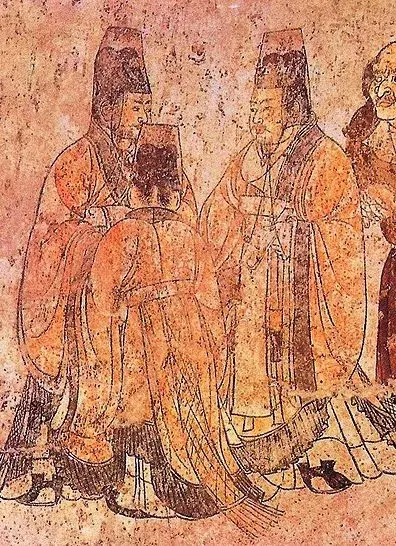
The Shenlong Coup (神龙政变) was a historic palace coup executed in Luoyang in February 705 (the first year of the Shenlong era) that restored the Tang Dynasty. With eighty-two-year-old Empress Wu Zetian gravely incapacitated at Yingxian Palace, her male favorites Zhang Yizhi and Zhang Changzong usurped imperial administration and purged high officials, menacing Crown Prince Li Xian. Chancellor Zhang Jianzhi allied with senior ministers Cui Xuanwei, Jing Hui, Huan Yanfan, and Yuan Shuqi, coordinating with General Li Duozuo to mobilize five hundred Feather Forest Guards. On February 20, the conspirators escorted Crown Prince Li Xian through Xuanwu Gate, executed the Zhang brothers outside Changsheng Hall, and compelled Wu Zetian to yield sovereign power. Crown Prince Li Xian re-ascended the throne as Emperor Zhongzong, formally restoring the Tang title and dynastic rituals.
Di Renjie convinces Wu Zetian to recall Li Xian from exile, restoring him as crown prince.
Zhang brothers orchestrate the deaths of Prince Li Chongrun and Princess Yongtai, inflaming court enmity.
Zhang Jianzhi becomes chancellor, secretly coordinating with guard commanders to organize the coup.
Conspirators escort Li Xian through Xuanwu Gate, execute the Zhang brothers, and confront Wu Zetian.
Wu Zetian issues an edict transferring administrative control of state affairs to Crown Prince Li Xian.
Wu Zetian formally yields the imperial throne to Li Xian and relocates to Shangyang Palace.
Li Xian ascends the throne at Tongtian Palace as Emperor Zhongzong; coup leaders are ennobled as princes.
Imperial edict abolishes the Zhou dynastic name, restoring the Great Tang and all classical institutions.
Wu Zetian dies at Shangyang Palace, buried with Emperor Gaozong at Qianling as empress.
In 690, Wu Zetian deposed her son Emperor Ruizong (Li Dan) and ascended the imperial throne as sovereign of Great Zhou (Wu Zhou), establishing the Divine Capital at Luoyang as China's sole recognized female emperor. Throughout her reign, succession remained bitterly contested between the Li imperial lineage and the Wu matriarchal clan. Princes Wu Chengsi and Wu Sansi actively conspired to secure appointment as crown prince, purging numerous Tang loyalists.
In 698, Prime Minister Di Renjie submitted a famous memorial: "Should Your Majesty designate your own son, your spirit shall share ancestral sacrifices in the imperial temple for ten thousand generations; but none have heard of a nephew worshiping an imperial aunt in ancestral shrines." Persuaded by Di Renjie, Wu Zetian recalled her exiled son Li Xian (Prince of Luling) and invested him as crown prince, reaffirming the succession rights of the Tang dynastic line.
In her twilight years, Wu Zetian's physical condition deteriorated severely. She withdrew into Changsheng Hall inside Yingxian Palace, neglecting administrative audiences and relying exclusively on her male favorites, brothers Zhang Yizhi and Zhang Changzong. The Zhang brothers exploited imperial favor to dominate appointments, extract bribes, and subvert state affairs.
In 701, the crown prince's eldest son Li Chongrun (Prince of Shao), daughter Li Xianhui (Princess Yongtai), and her husband Wu Yanji privately criticized the Zhang brothers' overreach. The favorites informed the empress, who forced all three imperial youths to commit suicide. This tragedy sent shockwaves through both the Li and Wu lineages, convincing ministers that unless the favorites were eliminated before the sovereign's demise, catastrophic purges would follow.
By the winter of 704, Wu Zetian remained bedridden for months. The Zhang brothers established alliances with guard commanders, preparing to seize supreme authority. Recognizing that the empire faced mortal peril, chancellor ministers resolved to launch a preemptive strike.
In late 704, octogenarian statesman Zhang Jianzhi, recommended to high office by Di Renjie before his death, became chancellor. Dedicated to restoring the House of Tang, Zhang Jianzhi recognized that controlling the northern and southern palace guards was essential to executing a successful coup.
Zhang Jianzhi covertly enlisted four trusted confederates: Chancellor Cui Xuanwei, Right Vice Director Jing Hui, Vice Minister of Judicial Review Huan Yanfan, and Princely Companion Yuan Shuqi. Zhang Jianzhi secured the allegiance of General Li Duozuo of the Right Feather Forest Guard, invoking his loyalty: "The late emperors Gaozong and Taizong showered Your Excellency with boundless favors. Today, treacherous favorites endanger the dynastic altars; how can you stand idly by?" Li Duozuo wept and swore fealty to the coup. Zhang Jianzhi subsequently appointed Jing Hui and Huan Yanfan to field commands within the Feather Forest Guards, gaining operational control over imperial security.
At dawn on February 20, 705 (the twenty-second day of the first month), Zhang Jianzhi, Cui Xuanwei, Huan Yanfan, and Jing Hui assembled more than five hundred heavily armed Feather Forest Guards at the Xuanwu Gate of Ziwei City.
The success of the coup required the personal presence of Crown Prince Li Xian to provide constitutional legitimacy. Huan Yanfan and Li Duozuo arrived at the Eastern Palace to escort him. However, Li Xian was paralyzed by indecision and dread, hesitating: "The favorites deserve death, but Her Majesty is gravely ill; will this not distress her sacred person? Let us await another day."
Li Duozuo stepped forward in tears, pleading: "The late emperor entrusted the realm to Your Highness! Today the ministers and generals have pledged their lives and stand waiting at Xuanwu Gate. If Your Highness refuses to march, five hundred soldiers will have no choice but to die on the spot, and the altars of Tang will perish! We implore Your Highness to mount your chariot immediately!" Realizing that events were unstoppable, Li Xian reluctantly boarded his carriage and proceeded to Xuanwu Gate.
With the arrival of the crown prince, troop morale soared. Zhang Jianzhi gave the signal to advance. Feather Forest soldiers shattered iron chains with battleaxes, forced open Xuanwu Gate and Chongguang Gate, and surged into the inner palace grounds surrounding the crown prince.
Hearing the tumult, Zhang Yizhi and Zhang Changzong ran from Yingxian Palace to investigate. Meeting the vanguard along the corridor, the brothers were surrounded. General Li Duozuo gave the order, and palace guards cut down both favorites, severing their heads on the palace steps.
Following the execution, Zhang Jianzhi and his confederates escorted the shaken crown prince directly to Changsheng Hall, where Empress Wu Zetian lay ill, surrounding the imperial bedchamber with spear-bearing troops.
The heavy doors swung open, awakening the bedridden empress. Seeing bloodstained swords and her son Li Xian standing behind the ministers, the formidable sovereign immediately understood the situation.
Wu Zetian demanded sharply: "Who is responsible for this revolt?" Zhang Jianzhi stepped forward, bowing respectfully: "This is not revolt, Your Majesty! Zhang Yizhi and Zhang Changzong plotted treason. By order of the crown prince, we have executed the traitors according to dynastic law. We beg forgiveness for disturbing Your Majesty's sacred person." Fixing her gaze upon Li Xian, the empress snapped: "So it is you! Since those boys are dead, you may return to the Eastern Palace." Huan Yanfan stepped forward, his hand on his sword hilt, declaiming: "How can the crown prince return to the Eastern Palace? The late Emperor Gaozong entrusted his son to Your Majesty, and the realm has long yearned for the return of the Tang. The crown prince is of mature years and virtue; he must ascend the imperial throne. We pray Your Majesty follow the mandate of heaven, retire to rest, and yield power to ensure the tranquility of the realm!"
Confronted with resolute ministers and armed guards, the eighty-two-year-old empress recognized that her reign was finished. She lay back upon her pillow and closed her eyes in silence, signaling her capitulation.
The transfer of authority proceeded swiftly: On February 21, Wu Zetian issued an imperial decree appointing Crown Prince Li Xian as regent; On February 22, Wu Zetian officially abdicated; On February 23, Li Xian ascended the throne at Tongtian Palace, formally resuming the title of Emperor Zhongzong; On March 3, 705, Emperor Zhongzong promulgated a general amnesty, changed the era name to Shenlong, and officially abolished the Zhou dynastic name, restoring the Great Tang. All imperial temples, official hierarchies, banners, and administrative titles were reverted to Tang standards.
Wu Zetian was granted the honorific title "Emperor Zetian Dasheng" and escorted to Shangyang Palace to live out her remaining days in imperial dignity. Emperor Zhongzong rewarded the architects of the coup: Zhang Jianzhi was ennobled as Prince of Hanyang, Cui Xuanwei as Prince of Boling, Jing Hui as Prince of Pingyang, Huan Yanfan as Prince of Qiao, and Yuan Shuqi as Prince of Nanyang, remembered historically as the "Five Princes." In December 705, Wu Zetian died at Shangyang Palace at age eighty-two, her testamentary edict relinquishing the title of emperor to be buried alongside Emperor Gaozong at Qianling as Empress Zetian Dasheng.
The coup accomplished a nearly bloodless restoration of the Tang Dynasty, terminating fifteen years of Wu Zhou rule and reestablishing orthodox Confucian succession without widespread civil conflict.
First, it permanently restored the political legitimacy of the Li Tang dynasty, guaranteeing institutional and territorial continuity for the Tang Empire. Second, because conspirators failed to eradicate surviving members of the Wu clan such as Wu Sansi, royal favorites subsequently allied with Empress Wei and Princess Anle to purge the Five Princes, triggering another wave of palace instability that lasted until Li Longji's Tanglong Coup in 710. Third, by stabilizing civil administration and reinstating traditional bureaucratic procedures, the Shenlong Coup established the foundational framework that enabled the High Tang prosperity of the Kaiyuan era.
In the Zizhi Tongjian, Sima Guang praised: "Zhang Jianzhi, Cui Xuanwei, and their companions bore the solemn trust of the state. Seizing the crucial moment, they executed the treacherous favorites and restored the dynastic shrines. Their loyalty matches any in antiquity!"
In the New Book of Tang, Ouyang Xiu remarked: "The stratagems of Shenlong were flawlessly devised. The Five Princes led the elite soldiers of the Feather Forest, fixing the heavenly mandate in a single breath. Without supreme wisdom and courage, how could such miraculous deeds be achieved?"
Song scholar Fan Zuyu wrote in Tang Mirror: "Zhang Jianzhi's undertaking answered both heaven and the populace. The altars of Tang were severed yet reunited; the glory of the Five Princes has few parallels across history."