Conquest of Gaochang and Creation of Tingzhou
General Hou Junji pacifies Karakhoja, establishing Tingzhou to anchor initial Tang authority north of Tianshan.
Wu Zhou Dynasty (武周) · HISTORICAL EVENT
设立北庭都护府
The Establishment of the Beiting Protectorate (设立北庭都护府) was a milestone administrative and military reform undertaken between 702 (Chang'an 2 of Wu Zhou) and 711 (Jingyun 2 of Tang) that created and elevated a premier frontier command north of the Tianshan Mountains. Following the conquest of Karakhoja (Gaochang) in 640 during Emperor Taizong's reign, the Tang Dynasty initially established Tingzhou. However, as the Tibetan Empire expanded into the Tarim…
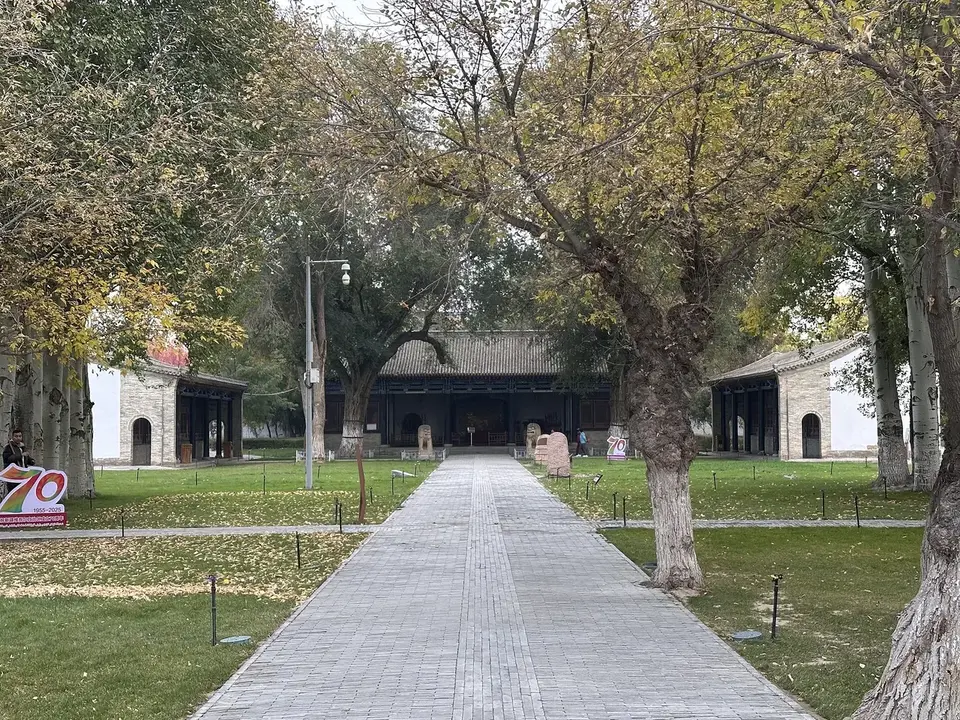
The Establishment of the Beiting Protectorate (设立北庭都护府) was a milestone administrative and military reform undertaken between 702 (Chang'an 2 of Wu Zhou) and 711 (Jingyun 2 of Tang) that created and elevated a premier frontier command north of the Tianshan Mountains. Following the conquest of Karakhoja (Gaochang) in 640 during Emperor Taizong's reign, the Tang Dynasty initially established Tingzhou. However, as the Tibetan Empire expanded into the Tarim Basin, the Anxi Protectorate focused heavily on defending the Four Garrisons of Anxi, leaving the complex nomadic tribes of the Western Turks north of the mountains difficult to supervise. To stabilize the northwestern frontier and deter collusion between the Turgesh and Tibetans, Wu Zetian issued an imperial decree in late 702 establishing the Beiting Protectorate at Tingzhou. Once established, the Beiting Protectorate shared frontier governance with the Anxi Protectorate, divided along the natural spine of the Tianshan Mountains. Beiting held jurisdiction over an expansive region stretching from the Altai Mountains and Barkol Lake in the east across the steppes toward the Aral Sea in the west. In 711, Emperor Ruizong elevated it to the Grand Protectorate of Beiting, later integrating the Beiting Military Commission (Jiedushi) commanding the Hanhai, Tianshan, and Yiwu armies. Under energetic commanders who promoted garrison reclamation and trade, Beiting emerged as the administrative hub and trade nexus of the northern frontier, playing an indispensable role in safeguarding trans-Eurasian communications.
General Hou Junji pacifies Karakhoja, establishing Tingzhou to anchor initial Tang authority north of Tianshan.
Wu Zetian partitions Anxi territory north of Tianshan, establishing the Beiting Protectorate at Tingzhou.
Ashina Huaidao coordinates with Beiting authorities to conciliate the Ten Tribes and resolve Turgesh border disputes.
Emperor Ruizong issues an edict upgrading the protectorate, elevating its institutional rank and official staff.
Guo Qianjuan implements military agriculture; the court creates the Beiting Jiedushi commanding twenty thousand soldiers.
Since early Tang campaigns in the Western Regions, the empire had pacified the Eastern and Western Turks, Karakhoja, and Kucha, establishing the Anxi Protectorate to coordinate civil and military administration across the vast west. However, the Western Regions were geographically vast and naturally bifurcated by the formidable Tianshan range: the south encompassed the agrarian oasis city-states of the Tarim Basin, whereas the north contained sweeping grasslands stretching from the Dzungarian Basin to the Chu River valley, historically inhabited by nomadic pastoralists. During the late seventh century, the Tibetan Empire pushed north from the Qinghai-Tibetan Plateau into the Tarim Basin, capturing and threatening the Four Garrisons repeatedly. Stationed at Kucha, Anxi had to dedicate its entire strategic focus southward against Tibet, leaving northern grasslands vulnerable to external exploitation.
Toward the end of the seventh century, the Turgesh chieftain Wuzhile arose in the Chu River valley, subjugating the remnants of the Western Turkic Ten Tribes and assembling tens of thousands of mounted warriors. Concurrently, the Second Turkic Khaganate raided south into the Altai Mountains and Hexi Corridor, while Tibet sought alliances with northern nomadic leaders to flank Tang defenses. Situated at the northern foot of the Tianshan Mountains, Tingzhou controlled four strategic districts—Jinman, Luntai, Pulei, and Xiquan—straddling the overland crossroads connecting the Hexi Corridor with Central Asia. Tang strategists recognized that a simple prefecture administration could no longer direct the diverse nomadic commanderies, necessitating a paramount protectorate to secure the northern steppe.
In the twelfth month of 702, Empress Wu Zetian acted upon strategic proposals from border commanders and central ministers by formally issuing an edict creating the Beiting Protectorate, headquartered at the walled city of Tingzhou (near modern Pochengzi, Jimsar County, Xinjiang). The protectorate was headed by a Protector-General (Duhu), who typically held concurrent appointment as the Prefect of Tingzhou, assisted by vice-protectors, deputy commissioners, chief administrators (Sima), administrative secretaries, and directors across six executive bureaus. The imperial court vested the Protector-General with supreme military command, civil coordination, and judicial authority across the entire northern frontier.
Wu Zetian appointed seasoned frontier officials to head the administration and invested the Western Turkic prince Ashina Huaidao as Khagan of the Ten Tribes to facilitate peaceful coordination with tribal leaders like Wuzhile. In its initial stage, the protectorate standardized fiscal administration and tax collection throughout Tingzhou, deployed elite cavalry regiments from Longyou, reconciled pasture disputes, and brought fragmented frontier garrisons under centralized imperial oversight.
Following Beiting's establishment, the central government instituted a durable bipartite administrative model across the Western Regions, using the Tianshan Mountains as the formal boundary. The Anxi Protectorate, centered at Kucha, focused on the Tarim Basin, the Pamir passes, and southern Silk Road realms; meanwhile, the Beiting Protectorate exercised full civil and military governance over the northern expanse. Beiting's jurisdiction stretched eastward from the Altai range and Barkol Lake, connecting southeastward with Yizhou and Shazhou along the Hexi Corridor, extending westward through former Wusun lands, the Chu River, and Talas toward the Aral Sea, and bordering the Altai foothills to the north.
Beiting governed four directly administered core agricultural districts—Jinman, Luntai, Pulei, and Xiquan—while overseeing more than twenty loose-rein (jimi) area commanderies and prefectures, including Jinmanzhou and Shatouzhou, that encompassed the Dulu and Nushibi confederacies. The protectorate routinely dispatched envoys to arbitrate nomadic feuds, invest chieftains, and collect horse and livestock tributes, successfully restoring order along the Northern Silk Road.
Following the Tang restoration under Emperor Zhongzong and Emperor Ruizong, the court deepened its frontier security apparatus. In the first month of 711, recognizing Beiting's triumphs in containing Second Turkic raids and integrating the Turgesh, Emperor Ruizong elevated the command into the "Grand Protectorate of Beiting" (Beiting Da Duhu Fu), raising the protector-general's court rank to junior second or senior third grade and assigning two grand vice-protectors to amplify its prestige.
In 713, early in Emperor Xuanzong's reign, renowned general Guo Qianjuan was appointed Protector-General of Beiting. The court subsequently instituted the post of Beiting Military Commissioner (Jiedushi), held concurrently by the Grand Protector-General, uniting command over the Hanhai, Tianshan, and Yiwu armies alongside line beacon stations. The Hanhai Army of twelve thousand troops garrisoned the walls and environs of Beiting, while the Tianshan Army of five thousand defended the Xizhou pass, and the Yiwu Army of three thousand fortified Yizhou. This consolidated command gave Beiting over twenty thousand standing imperial troops, transforming the northern theater into an offensive and defensive bastion.
With the garrison army expanding significantly, self-sufficient logistics became the paramount concern for the northern frontier. General Guo Qianjuan and succeeding commanders reorganized active troops into agricultural soldier units (tianzu), launching ambitious irrigation projects across Tingzhou, Luntai, and Jinman to channel glacial meltwater from the Tianshan Mountains into fertile alluvial plains. Historical records indicate that dozens of agricultural colonies (tuntian) yielded hundreds of thousands of bushels of barley and wheat annually, completely satisfying local garrison needs and permitting grain transfers to neighboring Xizhou and the Anxi garrisons.
Extensive military cultivation stimulated local farming, animal husbandry, and metalworking. The provincial seat at Tingzhou expanded into a formidable triple-walled citadel containing government halls, Buddhist monasteries, barracks, granaries, and bustling caravanserais. Stationed along well-provisioned courier routes and beacon towers toward Suyab and Lake Issyk-Kul, merchant caravans, Sogdian traders, and pilgrims traveled securely, making Beiting the preeminent political, military, economic, and cultural metropolis of the northern Western Regions during the High Tang era.
The founding of the Beiting Protectorate and its subsequent elevation into a Grand Protectorate resolved the chronic strategic challenge of overextended frontier defenses. Anxi was enabled to concentrate fully on the Tarim Basin and the southern routes against Tibetan encroachments from the Qinghai-Tibetan Plateau; meanwhile, Beiting held firm control over the Dzungarian Basin and Chu River valley, securing tribal tribute and forming an unyielding defensive screen over two thousand li along the northern Tianshan foothills.
The creation of Beiting marked a mature stage in imperial frontier administration characterized by regional bifurcation, combined civil-military governance, and agricultural-military colonization. Institutionally, the synthesis of the Grand Protectorate, the Jiedushi command, and garrison armies established a standard administrative blueprint for managing mixed nomadic and agrarian frontier territories. Economically, dozens of productive state farms introduced advanced farming to the northern slopes and preserved the safety of the Northern Silk Road for a century, profoundly reinforcing intercultural ties and territorial unity.