Sun Quan proclaimed himself emperor and established the state of Wu.
229 CE–280 CE
Sun Wu
Concurrent polity孙吴
Wu, also known as Eastern Wu, was one of the three major states of the Three Kingdoms period and was established by the Sun family in the Jiangdong region. Its foundations can be traced to the late Eastern Han, when Sun Jian and Sun Ce fought across the south and secured the six commanderies of Jiangdong. Sun Quan succeeded them, recruited capable officials, and consolidated the state. In 229 he proclaimed himself emperor, founded the state of Wu with its capital at Jianye, and stood alongside…
229 CE–280 CECapital · See entry
ERA OVERVIEW
Wu, also known as Eastern Wu, was one of the three major states of the Three Kingdoms period and was established by the Sun family in the Jiangdong region. Its foundations can be traced to the late Eastern Han, when Sun Jian and Sun Ce fought across the south and secured the six commanderies of Jiangdong. Sun Quan succeeded them, recruited capable officials, and consolidated the state. In 229 he proclaimed himself emperor, founded the state of Wu with its capital at Jianye, and stood alongside Wei and Shu in the three-state balance. The Wu region was dense with rivers and lakes, and the Sun regime became especially skilled in naval warfare, relying on the Yangtze as a major defensive barrier against northern enemies. In the later period political deterioration increased, rulers lost authority, and national power declined. Western Jin destroyed Wu in 280, bringing the Three Kingdoms period to an end.
Time span229 CE–280 CE
CapitalSee entry
ERA TIMELINE
Zhuge Ke attacked the Shanyue of Danyang; after three years of pressure, about 100,000 people came out of the mountains, including roughly 40,000 able-bodied men who were enrolled as soldiers, while the remainder became registered households.
after Sun Quan's death, Wu entered a period of increasing weakness.
Shu Han was destroyed by Cao Wei, leaving Wu as the remaining southern rival to the northern state.
Yang Hu was appointed to command military affairs in Jing Province and was stationed at Xiangyang to prepare for an invasion of Wu.
in the fourth year of Tianji, Western Jin destroyed Wu; Sun Hao surrendered and the Three Kingdoms were reunified.
FULL ENTRY
Overview
Wu, also known as Eastern Wu, was one of the three major states of the Three Kingdoms period and was established by the Sun family in the Jiangdong region. Its foundations can be traced to the late Eastern Han, when Sun Jian and Sun Ce fought across the south and secured the six commanderies of Jiangdong. Sun Quan succeeded them, recruited capable officials, and consolidated the state. In 229 he proclaimed himself emperor, founded the state of Wu with its capital at Jianye, and stood alongside Wei and Shu in the three-state balance. The Wu region was dense with rivers and lakes, and the Sun regime became especially skilled in naval warfare, relying on the Yangtze as a major defensive barrier against northern enemies. In the later period political deterioration increased, rulers lost authority, and national power declined. Western Jin destroyed Wu in 280, bringing the Three Kingdoms period to an end.
Historical Development
Establishment: The foundations of Wu lay in the late Eastern Han. Sun Jian first rose in campaigns against Dong Zhuo and died in Jing Province. His son Sun Ce crossed the Yangtze and established control in Jiangdong. After Sun Ce's death, his younger brother Sun Quan inherited his forces and expanded the regional base. In 229 Sun Quan formally proclaimed himself emperor, adopted the state name Wu and the Huanglong era name, and established the regime later known as Eastern Wu.
Height: In the early part of Sun Quan's rule, he employed figures including Zhang Zhao, Zhou Yu, Lu Su, Lü Meng, and Lu Xun. At the Battle of Red Cliffs, the Sun–Liu alliance defeated Cao Cao and secured Wu's ability to hold the lower Yangtze. Sun Quan later resisted Cao Wei in the north and seized Jing Province from Liu Bei's forces to the west. At the Battle of Yiling, Wu defeated Shu Han's eastern campaign. Territory and state power reached their height in this period.
Turning point: In Sun Quan's later years, suspicion and repeated changes in the designation of an heir led to a succession struggle between rival palace factions and destabilized the court. His successors Sun Liang and Sun Xiu had short reigns amid continued political change, and central rule became less stable.
Decline: The last ruler, Sun Hao, was portrayed as extravagant and harsh, using severe punishments and losing support among officials and the population. Although Wu still possessed the Yangtze defenses, internal divisions weakened its capacity to resist external attack.
Fall: After Cao Wei destroyed Shu Han in 263, Wu remained the only southern rival to the northern state. In 280, following preparations that began in 279 according to one account, Emperor Wu of Western Jin Sima Yan launched a major southern campaign. Wang Jun's tower ships advanced downstream toward Jianye, Sun Hao surrendered, Wu fell, and the Three Kingdoms were reunited.
Politics and Institutions
Central government: Wu maintained offices including Grand Councilor and General-in-Chief, along with senior posts such as Grand Tutor and Grand Marshal. Local government was headed by provincial governors, commandery administrators, and county magistrates. Details of rank and duties are treated in the relevant entries.
Local administration: Wu used a province–commandery–county administrative system inherited from Han. Special arrangements were also used to govern the Shanyue and other frontier populations; details are treated in the relevant entries.
Recruitment: Sun Wu broadly continued Han recommendation and appointment practices. Powerful Jiangdong families and descendants of meritorious officials occupied many important posts. Details are treated in the relevant entries.
Law: Wu inherited Han legal traditions but at times relied heavily on ruler-directed punishments, especially under Sun Hao, whose reign became associated with severe criminal penalties. Details are treated in the relevant entries.
Supervision: Censorial institutions existed to investigate officials, although their effectiveness varied with political conditions and declined in the final years. Details are treated in the relevant entries.
Military and Diplomacy
Sun Wu relied on a strong navy and the strategic protection of the Yangtze. Its fleets and warships were among the most important military resources of the Three Kingdoms. The state repeatedly confronted Wei and Shu along its frontiers, and battles such as Red Cliffs and Yiling combined naval and land operations. Diplomatically, Sun Quan often followed a policy of allying with Shu against Wei, using cooperation with Shu Han to balance Cao Wei. After establishing the capital at Jianye, Wu also developed maritime contacts through the south, sending expeditions and extending connections toward Yizhou (present-day Taiwan), Jiaozhou, and the South Seas. In Sun Hao's later years, military readiness weakened and the state could no longer withstand the Jin campaign of unification.
Economy and Commerce
Jiangdong was an important rice-growing region and suffered less sustained warfare than many areas of the Central Plains, allowing agriculture and handicrafts to continue developing. Rivers and canals supported transport and trade. Silk production, ceramics, shipbuilding, and metalworking were all significant. The state also organized large-scale maritime activity that contributed to overseas exchange. This economic base helped support long-term regional rule, although heavy levies and labor demands damaged the population in the final years.
Culture and Society
Jiangdong developed a distinctive cultural environment and produced many scholars and writers. Classical studies, literature, calligraphy, and music all had active traditions. Society included powerful Jiangdong clans alongside ordinary households, while Confucian and Daoist thought coexisted with popular beliefs in spirits and geomancy. Although the late political history of Sun Quan and Sun Hao was troubled, Wu culture formed an important early stage in the longer development of Jiangnan cultural traditions.
Rulers and Governing Core
Sun Quan, Sun Liang, Sun Xiu, Sun Hao.
> This section explains the place of rulers in the evolution of the polity; complete biographies are carried by the corresponding person entities.
Historical Assessment and Legacy
Contemporary assessment: Under Sun Quan, Wu was widely regarded as a major force in Jiangdong, and Sun Quan himself was credited with considerable political and military ability. Under Sun Hao, contemporaries and later writers often portrayed the ruler as violent and unprincipled and attributed the fall of Wu to failures of government. These are historical assessments rather than celebratory statements.
Later historical assessment: Later historians generally treat Sun Wu as one of the three principal states of the Three Kingdoms, praising its use of river defenses and naval strength while criticizing political decline in the final decades. Its role in the development of Jiangnan and expansion of maritime activity is often viewed as an important part of the long-term history of southern China. This section reflects general historical interpretation rather than a direct quotation from a primary source.
Rulers
Sun Quan, Sun Liang, Sun Xiu, Sun Hao.
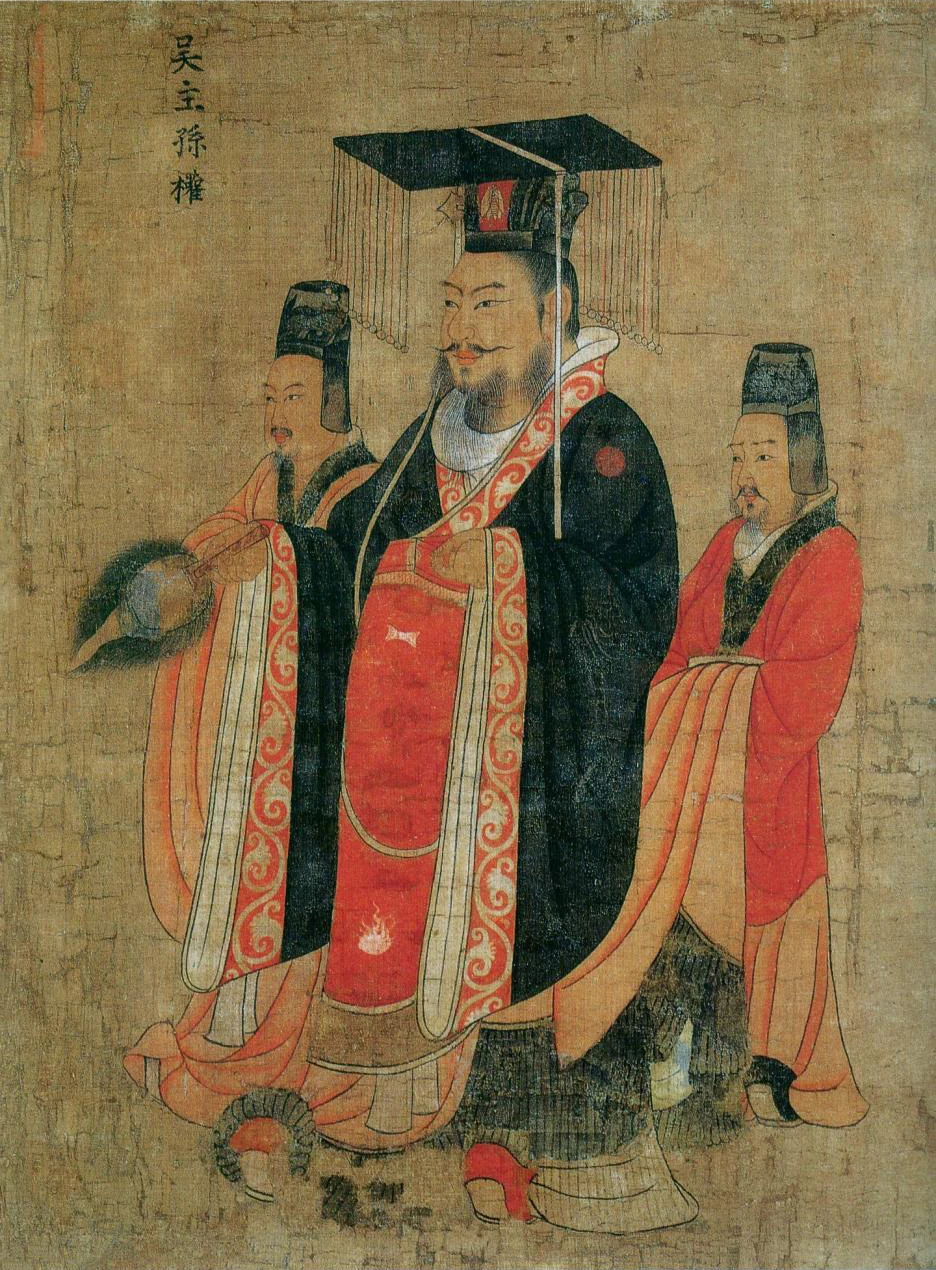 Sun Wu
Emperor
Sun Quan
Sun Quan (182 – May 21, 252), courtesy name Zhongmou, was a native of Fuchun in Wu Commandery (present-day Fuyang District, Hangzhou, Zhejiang) and was born in Xiapi (present-day Pizhou, Jiangsu). He was the founding emperor of Sun Wu during the Three Kingdoms period, reigning from May 23, 229 to May 21, 252, and was a statesman and military commander. Sun Quan inherited the foundations laid by his father and elder b
Sun Wu
Emperor
Sun Liang
Sun Liang (243–260), courtesy name Ziming, was from Fuchun in Wu Commandery (present-day Fuyang, Hangzhou, Zhejiang). He was the second emperor of Sun Wu during the Three Kingdoms period, the seventh son of Sun Quan, Emperor Da of Eastern Wu, and the son of Empress Pan. He was made crown prince in 250, the thirteenth year of the Chiwu era. After Sun Quan died in 252, the first year of the Shenfeng era, Sun Liang succ
Sun Wu
Emperor
Sun Xiu
Sun Xiu (235 – September 3, 264), courtesy name Zilie, was a native of Fuchun County in Wu Commandery, in present-day Fuyang, Zhejiang. He was the third emperor of Sun Wu during the Three Kingdoms period and the sixth son of Emperor Da of Eastern Wu, Sun Quan. His mother was Lady Wang. The source states that Sun Xiu and the young emperor Sun Liang were both sons of Lady Wang and were full brothers. In 252, the second
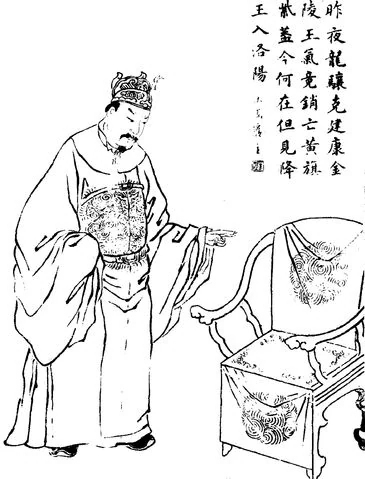 Sun Wu
Emperor
Sun Hao
Sun Hao (242–284), courtesy name Yuanzong and childhood name Pengzu, was from Fuchun County in Wu Commandery (present-day Fuyang District, Hangzhou, Zhejiang). He was a grandson of Sun Quan, Emperor Da of Eastern Wu, and a son of the deposed crown prince Sun He. He was the fourth and final emperor of Sun Wu during the Three Kingdoms period, reigning for sixteen years from 264 to 280. At the beginning of his reign, Su
KEY PEOPLE
Eastern Han
Consort of Sun Wu
Bu Lianshi
Bu Lianshi (d. 238 CE), a native of Huaiyin in Linhuai Commandery, was the preeminent consort of Sun Quan, the founding Emperor of Eastern Wu, and the biological mother of Princesses Sun Luban and Sun Luyu. During the turbulence of the late Eastern Han dynasty, she relocated with her mother to Lujiang Commandery before crossing the Yangtze River following Sun Ce's conquest in 199 CE. Captured by her exceptional grace
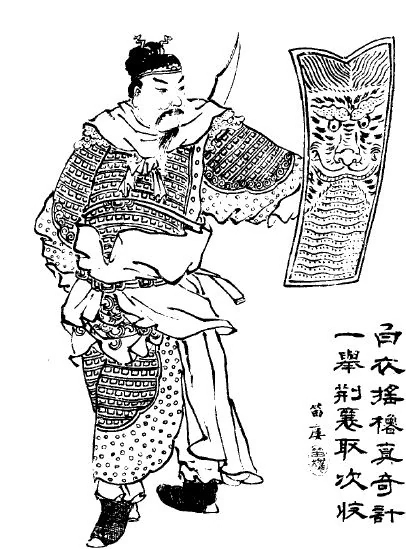 Sun Wu
Military commander
Lü Meng
Lü Meng (178–early 220), courtesy name Ziming, was a native of Fupo in Runan, present-day Funan in Anhui. He was a prominent commander in the Sun Wu camp in the late Eastern Han and rose to offices including Left Protector of the Army, General of Tiger Might, and Administrator of Nan Commandery; he was enfeoffed as Marquis of Chanling. Born into poverty, Lü crossed south as a youth to join his brother-in-law Deng Dan
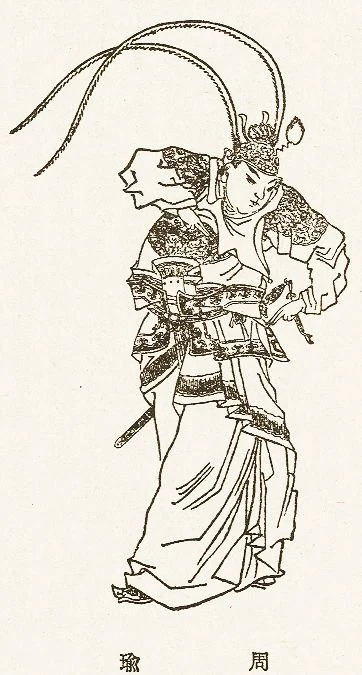 Sun Wu
Military commander
Zhou Yu
Zhou Yu (175–210), courtesy name Gongjin, was a native of Shu County in Lujiang Commandery (present-day Lujiang or Shucheng County, Anhui). He was a prominent general, strategist, and political figure of Eastern Wu in the late Eastern Han. Born into the distinguished Zhou clan of Lujiang, he befriended Sun Ce in youth and helped him establish control over Jiangdong. After Sun Ce was assassinated, Zhou Yu and Zhang Zh
 Sun Wu
General
Lu Xun
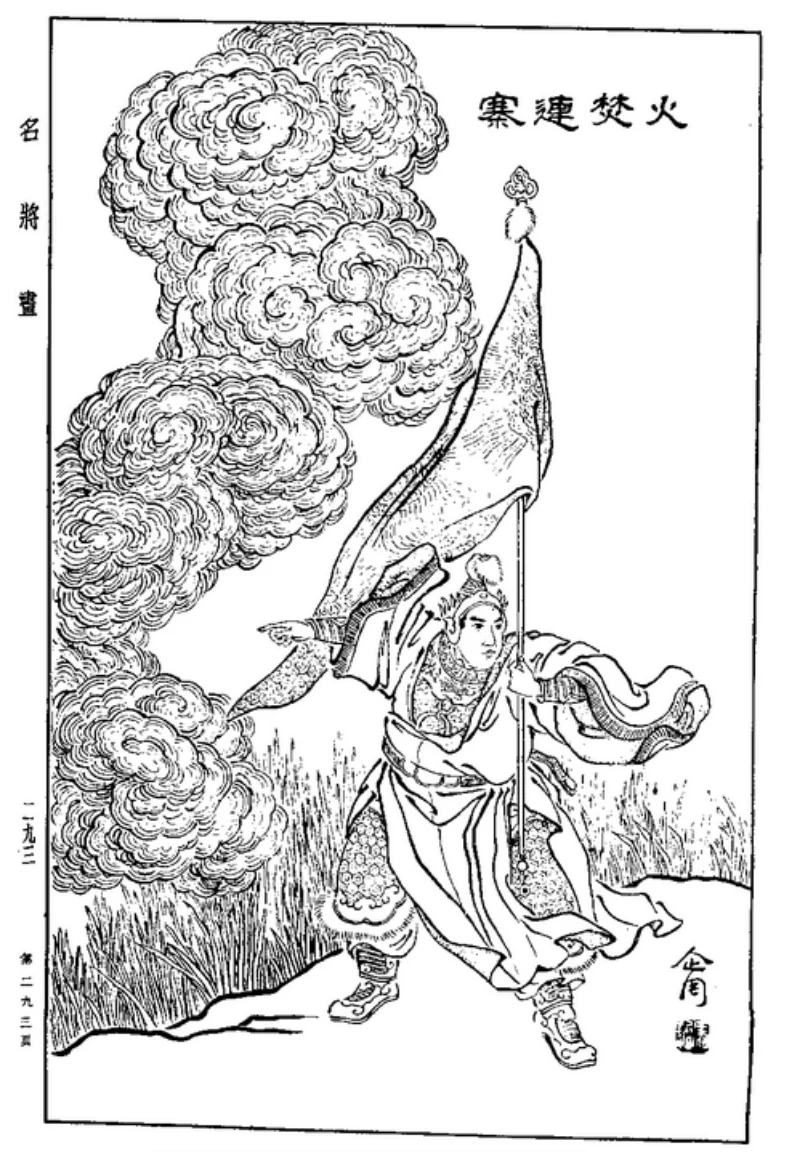
Lu Xun (183–19 March 245), originally named Lu Yi and courtesy name Boyan, was a native of Wu County in Wu Commandery (present-day Suzhou, Jiangsu), with ancestral origins in Luxiang, present-day Dezhou in Shandong. He was a politician and military commander of Wu in the late Eastern Han and Three Kingdoms periods and eventually became Grand Councilor. Born into the prominent Lu clan of Wu Commandery, he lost his fat
 Sun Wu
Regional warlord
Sun Ce
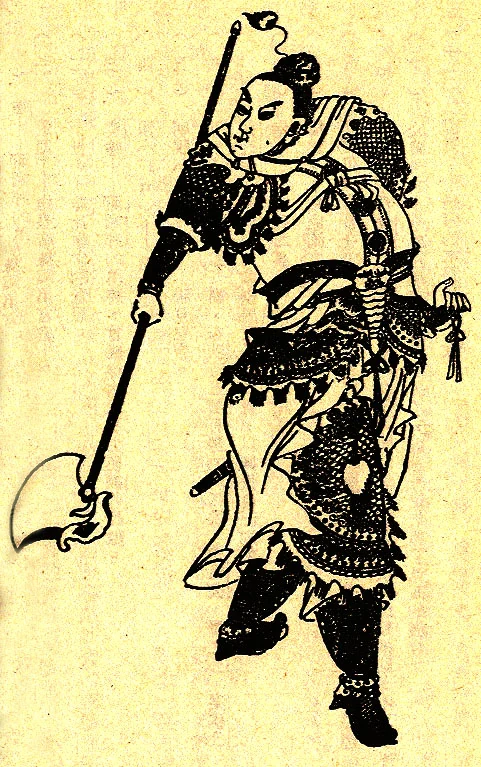
Sun Ce (175–May 5, 200), courtesy name Bofu, was a native of Fuchun County in Wu Commandery, present-day Fuyang District, Hangzhou, Zhejiang. He was one of the regional warlords of the late Eastern Han and a founder of the power base that later became Sun Wu. He was the eldest son of Sun Jian, General Who Breaks the Caitiffs, and the elder brother of Sun Quan, later Emperor Da of Wu. Building on the troops left by hi
Sun Wu
Powerful minister
Sun Chen
Sun Chen (231–January 18, 259), courtesy name Zitong, was a native of Fuchun in Wu Commandery, present-day Fuyang District, Hangzhou, Zhejiang. He was a member of the Sun imperial clan and a powerful minister of Sun Wu during the Three Kingdoms period. He was a great-grandson of Sun Jing, younger brother of Sun Jian; grandson of Sun Gao; son of Sun Chuo; a younger cousin of Sun Jun; and elder brother of Sun Ju, Sun E
 Sun Wu
Senior minister and politician of Eastern Wu
Zhang Zhao
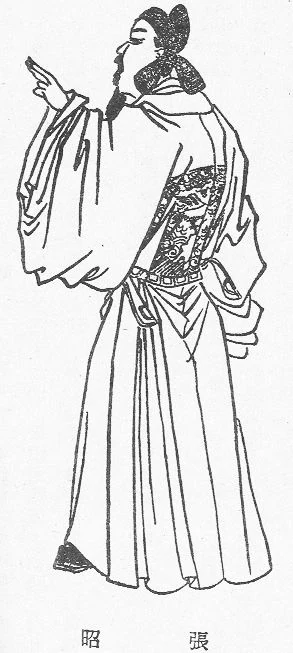
Zhang Zhao was the first leading civil minister of Eastern Wu, a senior official entrusted with the succession, and a forceful and outspoken remonstrator who played a central role in court deliberations.
 Sun Wu
General
Lu Su
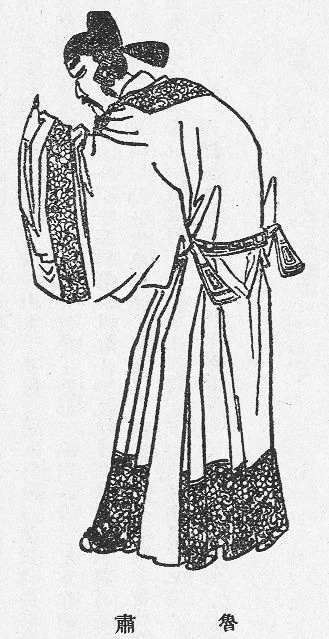
Lu Su (172–217), courtesy name Zijing, was from Dongcheng in Linhuai, now Dingyuan County in Anhui. He was a strategist, diplomat, and military commander of Eastern Wu in the late Eastern Han. Born into a very wealthy household, he was generous by temperament and formed a close friendship with Zhou Yu in his youth. In 200, the fifth year of the Jian'an era, he presented Sun Quan with the "Bedside Plan," outlining a s
Eastern Han
Senior minister and Chancellor of Eastern Wu
Gu Yong
Gu Yong (168–243), courtesy name Yuantan, a native of Wu County, Wu Commandery (present-day Suzhou, Jiangsu), was born into the Gu clan of Wu Commandery, one of the four great clans of Jiangdong, and became a senior minister of Eastern Wu. In his youth he studied the zither and calligraphy under the celebrated scholar Cai Yong, who gave him his name (Yong, homophonous with the master's Yong) and, pleased with his pro
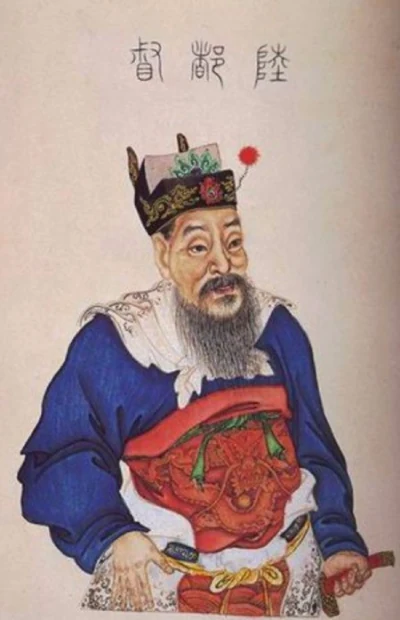 Sun Wu
General
Lu Kang
Lu Kang (226–274), courtesy name Youjie, was a general of Wu during the Three Kingdoms period, from Wu County in Wu Commandery (present-day Suzhou, Jiangsu). He was Lu Xun's second son and a maternal grandson of Sun Ce. Lu Kang inherited the title Marquis of Jiangling County and began his career as Commandant Who Establishes Martial Might, taking command of five thousand of his father's troops. He later served as Gen
Eastern Han
At about twenty he married Princess Teng
Teng Yin
Teng Yin (c. 200–256), courtesy name Chengsi, was an eminent statesman, imperial relative, and regent of Eastern Wu during the Three Kingdoms period. A native of Ju County, Beihai, his uncle Teng Dan and father Teng Zhou crossed the Yangtze to serve Sun Quan. Orphaned at age twelve, Teng Yin cultivated austere discipline and distinguished himself through striking personal elegance and exemplary decorum. In his youth,
Eastern Han
Imperial statesman of Eastern Wu
Yan Jun
Yan Jun, courtesy name Mancai, a native of Pengcheng in Xuzhou (modern Xuzhou, Jiangsu Province), was a distinguished statesman, revered classicist, and pioneering scholar of Eastern Wu during the Three Kingdoms period. Fleeing the northern warlord chaos at the end of the Eastern Han, Yan Jun crossed the Yangtze River into Jiangdong, forming deep lifelong bonds with Zhuge Jin and Bu Zhi; together, they were acclaimed
Related entries
Bibliography
- 《三国志》
- 《晋书》
- 《资治通鉴》