Birth | He was a native of Shanyin County in Kuaiji Commandery.
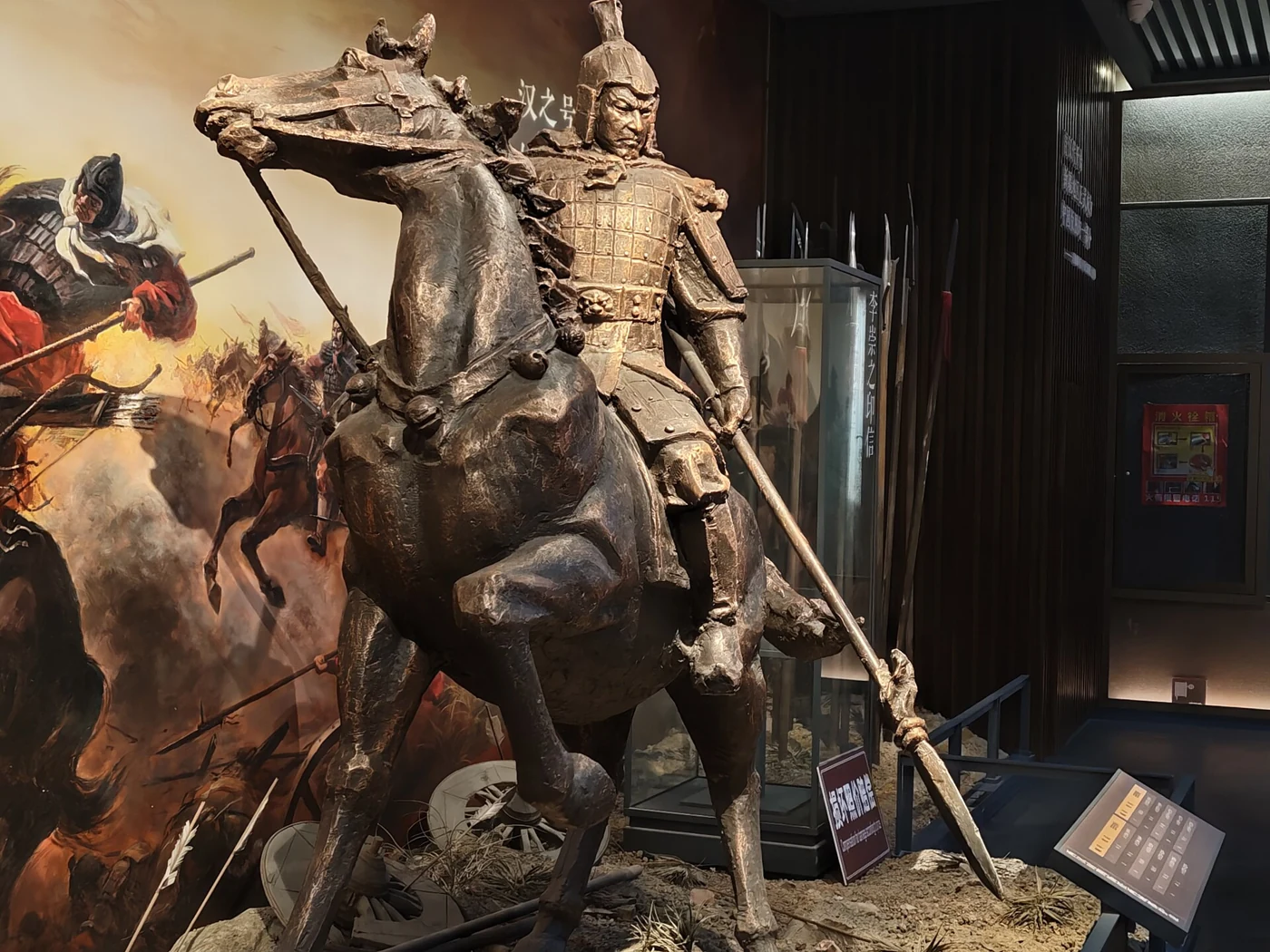
前?–49 BCE
General and diplomat
Zheng Ji
郑吉
Zheng Ji (d. 49 BCE), from Shanyin County in Kuaiji Commandery, present-day Shaoxing in Zhejiang Province, was a general and diplomat of the Western Han and the founder and first holder of the Protector-Generalship of the Western Regions. He entered military service as an ordinary soldier and took part in repeated expeditions to the Western Regions, earning promotion to gentleman official through military merit. During the…
前?–49 BCEWestern Han
PROFILE
Zheng Ji (d. 49 BCE), from Shanyin County in Kuaiji Commandery, present-day Shaoxing in Zhejiang Province, was a general and diplomat of the Western Han and the founder and first holder of the Protector-Generalship of the Western Regions. He entered military service as an ordinary soldier and took part in repeated expeditions to the Western Regions, earning promotion to gentleman official through military merit. During the reign of Emperor Xuan of Han, Zheng Ji served as an attendant while conducting tuntian agriculture at Quli, defeated Cheshi, and received the surrender of the Xiongnu Rizhu King, greatly increasing Han prestige in the Western Regions. In 59 BCE, the third year of the Shenjue era, he was enfeoffed as Marquis of Anyuan and formally appointed Protector-General of the Western Regions, establishing the protectorate at Wulei. Han commands in the Western Regions began with Zhang Qian and were brought to completion by Zheng Ji.
- Other names
- Protector-General of the Western Regions
- Era
- Western Han
- Dynasty/Regime
- Western Han
- Identity
- General and diplomat
- Date of Birth
- Not recorded in historical sources
- Date of Death
- 49 BCE(1st year of the Xihanchuyuan era)
- Ethnicity
- Not reliably established in surviving sources
- Ancestral home
- Shanyin County, Kuaiji Commandery (present-day Shaoxing, Zhejiang Province)
- Place of birth
- Unknown
- Place of death
- Unknown
- Highest office
- See Biography and Major Deeds
- Major achievement
- First Protector-General of the Western Regions under the Western Han; pacified states of the Western Regions by force and was given responsibility for the southern route
- Courtesy / Art Name
- Marquis of Anyuan
- Dynasty
- Western Han Dynasty
- Native Place
- Shanyin, Kuaiji (modern Shaoxing, Zhejiang)
- Place of Birth
- Unconfirmed; the source gives a native place, not an explicit birthplace
- Place of Death
- Chang'an
- Lifespan
- Unknown
- Highest Office
- Protector General of Western Regions , Cavalry Commandant
- Major Offices
- Palace Attendant, Guard Sima, Cavalry Commandant, Protector General
- Peerage
- Marquis of Anyuan
- Posthumous Name
- Miao Hou
- Major Achievements
- Subduing Cheshi and receiving surrender of Xiongnu Prince Rizhuo, establishing Protectorate of Western Regions, extending Han imperial authority to Central Asia
LIFE TIMELINE
Native place | A native of Shanyin County, Kuaiji Commandery; an exact birthplace is unconfirmed.
Entered the army from the ranks | Served repeatedly in the Western Regions and was promoted to gentleman official for merit
Stationed at Quli for agricultural garrison duty | When the autumn harvest was completed, led troops against Cheshi and captured Jiaohe
Promoted for merit to Commandant of the Guard | Took responsibility for protecting the states southwest of Shanshan
Civil conflict among the Xiongnu | The Rizhu King sent an envoy to Quli requesting surrender
Mobilized fifty thousand troops to receive the Rizhu King | The king entered Han territory with twelve thousand followers and twelve lesser kings and commanders and was settled at Hequ
Escorted the Rizhu King to the capital | Han enfeoffed the Rizhu King as Marquis of Guide and abolished the Xiongnu office of Tongpu Commandant
Enfeoffed as Marquis of Anyuan | Formally appointed Protector-General of the Western Regions and established the protectorate at Wulei
Led troops to Chigu, capital of Wusun | Rescued Princess Jieyou, Wei Ruyi, and others
BIOGRAPHY
Biography
Family Background and Early Life Zheng Ji was from Shanyin County in Kuaiji Commandery, present-day Shaoxing in Zhejiang Province. Historical sources preserve little about his family background, recording only that he entered the army from the ordinary ranks, which suggests that he did not come from a highly distinguished household. Zheng Ji was described as strong-willed and familiar with affairs beyond the Han frontier, qualities that laid the groundwork for his later activities in the Western Regions. After Zhang Qian opened routes to the Western Regions and Li Guangli campaigned against Dayuan, the Western Han began stationing military officials and agricultural garrisons at Quli, creating the institutional background for Zheng Ji's later work in the region. ### Tuntian at Quli and Defeat of Cheshi During the reign of Emperor Xuan of Han, Zheng Ji served as an attendant official and directed tuntian agricultural activity at Quli, accumulating grain supplies. In the autumn of 68 BCE, the second year of the Dijie era, Zheng Ji was ordered to mobilize thirty thousand troops from the various states together with fifteen hundred agricultural-garrison soldiers to attack Cheshi in the west. The king of Cheshi submitted to Han, and Zheng Ji captured Jiaohe, west of present-day Turpan. For this achievement he was promoted to Commandant of the Guard and appointed envoy responsible for protecting the southern route west of Shanshan. This became an early stage in the Western Han system of envoys and military officials based at Luntai. ### Receiving the Surrender of the Rizhu King and Establishing the Protectorate-General of the Western Regions In September 60 BCE, the second year of the Shenjue era, internal conflict broke out among the Xiongnu. In October, the Rizhu King Xianxianchan sent an envoy to Quli and informed Zheng Ji that he wished to lead his followers in surrendering to Han. Zheng Ji mobilized the agricultural troops at Quli and forces from Kucha and other states, totaling fifty thousand men, and went to receive him. The Rizhu King arrived with twelve thousand followers and twelve lesser kings and commanders. Zheng Ji settled them at Hequ, in the area of present-day Qinghai. When some followers fled, Zheng Ji sent troops after them and had them killed, then escorted the Rizhu King and the others to the capital Chang'an. Emperor Xuan of Han enfeoffed the Rizhu King as Marquis of Guide and kept him at Chang'an. The Xiongnu office of Tongpu Commandant that had controlled the Western Regions was subsequently abolished. After defeating Cheshi and securing the surrender of the Rizhu King, Zheng Ji's reputation spread across the Western Regions. The Han court established the Protectorate-General of the Western Regions at Wulei, in present-day Luntai County, Xinjiang, and appointed Zheng Ji Protector-General of the Western Regions. He was also given responsibility for the northwestern route west of Cheshi; because he protected both the northern and southern routes of the Western Regions, he bore the title Protector-General of the Western Regions. The protectorate system began with Zheng Ji. The Protector-General was the Western Han's highest military and administrative official in the Western Regions, directly subordinate to the central government. In addition to commanding Han forces stationed there, he could, with court approval, mobilize troops from the states of the Western Regions to maintain local order and protect the Silk Road. From this point, the Western Regions were formally incorporated into the Western Han realm. ### Enfeoffment and Later Years Emperor Xuan rewarded Zheng Ji's achievements with an edict declaring: “Zheng Ji, Protector-General of the Western Regions and Commandant of Cavalry, has pacified the outer peoples, proclaimed Han power and credibility, received the people of the Rizhu King, cousin of the Xiongnu Chanyu, and captured Douzi city of Cheshi. His achievements are outstanding. Enfeoff Zheng Ji as Marquis of Anyuan with a fief of one thousand households.” Zheng Ji then established his headquarters in the central Western Regions, built Wulei, and governed the various states through both punitive and conciliatory measures. Han commands in the Western Regions began with Zhang Qian and were brought to completion by Zheng Ji. In 53 BCE, the first year of the Ganlu era, Zheng Ji led forces to Chigu, the capital of Wusun, located southwest of Lake Issyk-Kul at Ishtik, and rescued Princess Jieyou, Wei Ruyi, and others who had been besieged after a failed attempt to assassinate the Wusun king Nimi. Zheng Ji died in 49 BCE, the first year of the Huanglong era, and received the posthumous title Marquis Miu. His son Zheng Guang inherited the title. Zheng Guang later died without a son, and the fief was abolished. During the Yuanshi era, when the Han court restored enfeoffments to descendants of meritorious officials whose lines had not ended through criminal punishment, Zheng Ji's great-grandson Zheng Yong was again enfeoffed as Marquis of Anyuan.
Major Activities
Agricultural Garrison at Quli As an attendant official, Zheng Ji directed agricultural garrison activity at Quli and accumulated grain supplies for Han military operations in the Western Regions. At its height the Luntai agricultural-garrison zone contained as many as three thousand soldiers, making Luntai one of the best-known Han grain bases in the region. Tuntian reduced the burden on both the Western Han government and local populations, supplied the army, and strengthened Han defensive capacity in the Western Regions. ### Defeat of Cheshi In the autumn of 68 BCE, the second year of the Dijie era, Zheng Ji was ordered to mobilize thirty thousand troops from the states of the Western Regions and fifteen hundred agricultural-garrison soldiers to attack Cheshi. He captured Jiaohe and forced the king of Cheshi to submit to Han. This was one of Zheng Ji's major military achievements and helped pave the way for his later appointment as Protector-General of the Western Regions. ### Receiving the Rizhu King's Surrender In 60 BCE, the second year of the Shenjue era, internal conflict among the Xiongnu prompted the Rizhu King Xianxianchan to seek surrender to Han. Zheng Ji mobilized fifty thousand troops from Quli, Kucha, and other states to receive him. The Rizhu King entered Han territory with twelve thousand followers and twelve lesser kings and commanders. Zheng Ji escorted him to the capital, where the Han court enfeoffed him as Marquis of Guide. The event led to the abolition of the Xiongnu Tongpu Commandant in the Western Regions and to the region's formal incorporation into the Han realm. ### Establishment of the Protectorate-General of the Western Regions Because he had “defeated Cheshi, secured the surrender of the Rizhu King, and awed the Western Regions,” Zheng Ji was appointed Protector-General of the Western Regions and established the protectorate at Wulei. This was the highest Han military-administrative institution in the Western Regions and marked the region's formal incorporation into the Han realm. Zheng Ji became the first Western Han Protector-General of the Western Regions. ### Rescue of Princess Jieyou In 53 BCE, the first year of the Ganlu era, Zheng Ji led troops to Chigu, the capital of Wusun, and rescued Princess Jieyou, Wei Ruyi, and others who had been besieged after a failed attempt to assassinate the Wusun king Nimi, demonstrating Zheng Ji's military influence in the Western Regions.
Personal Relations
- Zheng Yong: Zheng Ji's great-grandson, who was re-enfeoffed as Marquis of Anyuan during the Yuanshi era.
- Zheng Hong: collateral descendant of Zheng Ji who served as Defender-in-chief under Emperor Zhang of the Eastern Han. ### Ruler and Subject - Emperor Xuan of Han: Zheng Ji's ruler, who rewarded his achievements and enfeoffed him as Marquis of Anyuan.
- Rizhu King Xianxianchan: Xiongnu Rizhu King who surrendered to Han in the second year of the Shenjue era and was received and escorted by Zheng Ji. ### Contemporaries - Zhang Qian: pioneer of Western Han engagement with the Western Regions; Zheng Ji's achievements were regarded as bringing Zhang Qian's work to completion.
- Princess Jieyou: Western Han imperial princess in a heqin marriage alliance with Wusun, rescued by Zheng Ji's troops in the first year of the Ganlu era.
Historical Assessment
Han Period / Contemporary View - An edict of Emperor Xuan of Han stated: “Zheng Ji, Protector-General of the Western Regions and Commandant of Cavalry, has pacified the outer peoples, proclaimed Han power and credibility, received the people of the Rizhu King, cousin of the Xiongnu Chanyu, and captured Douzi city of Cheshi. His achievements are outstanding.”
- Ban Gu's Book of Han states: “Han commands were promulgated throughout the Western Regions: they began with Zhang Qian and were brought to completion by Zheng Ji.”
- Ban Gu's Book of Han also states: “Ji was strong-willed and familiar with affairs of foreign lands.” ### Wei, Jin, and Northern and Southern Dynasties - Fan Ye's Book of the Later Han records Zheng Ji's deeds and treats him as an important figure in Han administration of the Western Regions.
- Scholars of the Wei and Jin periods often paired Zheng Ji with Zhang Qian and regarded them as two key figures in the Han opening of the Western Regions. ### Tang and Song Periods - Tang historians discussing administration of the Western Regions often traced the institutional system back to Zheng Ji's establishment of the Protectorate-General of the Western Regions.
- Song scholars discussing northwestern frontier affairs frequently cited Zheng Ji's career as a precedent. ### Modern Period - Modern historians generally regard Zheng Ji as a central figure in Western Han administration of the Western Regions and see the establishment of the protectorate as marking the formal incorporation of the Western Regions into the Han realm.
- Studies of the Protector-General system generally identify Zheng Ji as the first holder of the office and affirm his pioneering role in regional administration.
FIGURES ASSOCIATED WITH THIS DYNASTY
Bibliography
- Ban Gu, Book of Han, vol. 70, “Biographies of Fu, Chang, Zheng, Gan, Chen, and Duan,” no. 40
- Fan Ye, Book of the Later Han