Age one | Born in Jizhou
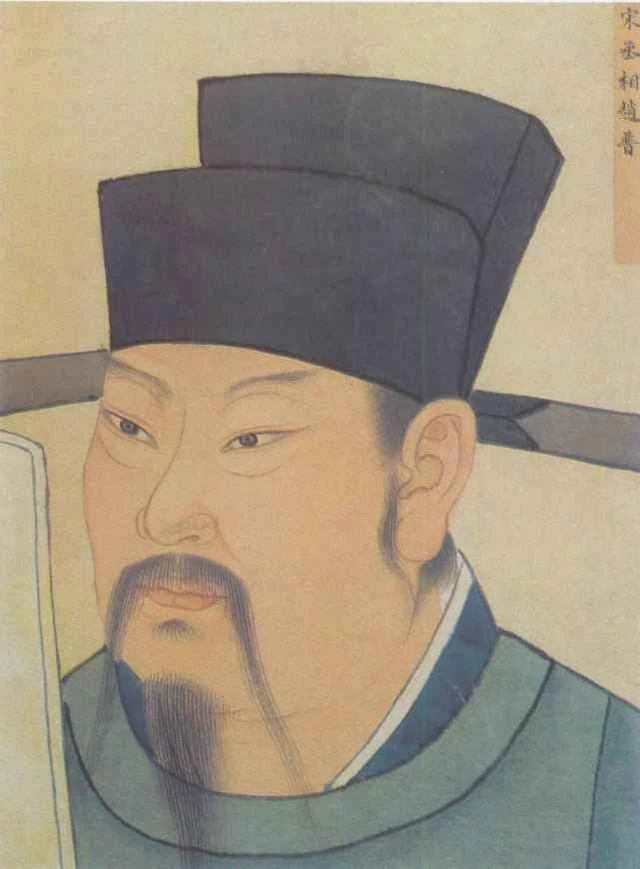
922 CE–992 CE
Politicianchancellor
Zhao Pu
赵普
Zhao Pu (922–August 14, 992), courtesy name Zeping, was a prominent politician of the early Northern Song and its first founding chancellor. Born into a family of minor officials, he entered Zhao Kuangyin's staff during the Later Zhou and became one of his principal advisers. In 960, the seventh year of the Xiande era, Zhao Pu participated in planning the Chenqiao Mutiny and helped Zhao Kuangyin ascend the throne and…
922 CE–992 CENorthern Song
PROFILE
Zhao Pu (922–August 14, 992), courtesy name Zeping, was a prominent politician of the early Northern Song and its first founding chancellor. Born into a family of minor officials, he entered Zhao Kuangyin's staff during the Later Zhou and became one of his principal advisers. In 960, the seventh year of the Xiande era, Zhao Pu participated in planning the Chenqiao Mutiny and helped Zhao Kuangyin ascend the throne and establish the Song dynasty. He later proposed the guiding policy of “gradually stripping them of their authority, controlling their revenues, and taking away their elite troops,” helping Emperor Taizu of Song resolve the problem of regional military separatism and strengthen central authority. Zhao Pu served as chancellor three times. During the reign of Emperor Taizong of Song, he fabricated the alleged golden-coffer succession agreement, helping Zhao Guangyi stabilize the legitimacy of his succession. He became famous through the saying that “half the Analects could govern the realm” and was a key architect of the political order of the early Northern Song. During the reign of Emperor Lizong of Song, his portrait was installed in Zhaoxun Pavilion and placed first among the twenty-four meritorious officials.
- Also known as
- Zhao, Prince of Han
- Courtesy name
- Zeping
- Era
- Northern Song
- Dynasty/Regime
- Northern Song
- Identity
- Politician, chancellor
- Date of Birth
- 922
- Date of Death
- August 14 992
- Ethnicity
- Not recorded in historical sources
- Native place
- Not recorded in historical sources
- Place of birth
- Jizhou
- Place of death
- Not recorded in historical sources
- Highest office
- See Biography and Major Activities
- Major achievements
- First chancellor of the founding era; associated with the saying that “half the Analects could govern the realm”; assisted both Taizu and Taizong; many major military and state policies were attributed to his planning
LIFE TIMELINE
Age twenty-one | His entire family moved to Luoyang
Age twenty-seven | First served as an inspector in Longzhou
Age thirty-four | Recruited as a staff officer by Liu Ci, Military Commissioner of Yongxing
Age thirty-five | Recommended by Fan Zhi and appointed military judge of Chuzhou; in the tenth lunar month, joined Zhao Kuangyin's staff in the post recorded as jiedu tuiguan
Age thirty-eight | Promoted to administrative secretary of the Guide Military Commission
Age thirty-nine | Participated in planning the Chenqiao Mutiny; for his role in founding the dynasty, appointed Right Grand Master of Remonstrance and Direct Academician of the Bureau of Military Affairs
Age forty | Received the title recorded as jianjiao taibao and was appointed Military Affairs Commissioner
Age forty-three | In the first lunar month, appointed Vice Director of the Chancellery and Participant in Determining Government Matters, becoming chancellor for the first time
Age fifty-two | In the eighth lunar month, removed as chancellor and appointed Military Commissioner of the Three Cities of Heyang
Age sixty | In the ninth lunar month, fabricated the alleged golden-coffer succession agreement, became chancellor for the second time, and was enfeoffed as Duke of Liang
Age sixty-two | In the tenth lunar month, removed as chancellor and appointed Military Commissioner of Wusheng
Age sixty-five | Submitted the memorial Remonstrance against the Yongxi Northern Expedition, forcefully urging an end to the campaign
Age sixty-seven | Became chancellor for the third time
Age sixty-nine | Requested retirement and became Keeper of the Western Capital and Intendant of Henan
Age seventy-one | In the third lunar month, appointed Grand Preceptor and enfeoffed as Duke of Wei; on the fourteenth day of the seventh lunar month, died of illness in Luoyang
Posthumous | Posthumously enfeoffed as Prince of Han
Posthumous | Enshrined in Emperor Taizu's ancestral temple
BIOGRAPHY
Biography
Family Background and Early Life
Zhao Pu's great-grandfather Zhao Ji served as magistrate of Sanhe County in the late Tang. His grandfather Zhao Quanbao served as judicial officer of Chanzhou, and his father Zhao Jiong served as judicial officer of Xiangzhou, present-day Anyang, Henan, during the Five Dynasties. Zhao Pu was born in Jizhou, in the area of present-day Jizhou, Tianjin. Late in the Later Tang, Zhao Jiong moved the entire family to Hengzhou, present-day Zhengding, Hebei. In 942, the seventh year of the Tianfu era under Later Jin, they moved again to Luoyang. Zhao Pu came from a lower-ranking official family rather than an eminent lineage, a background that directly influenced his later pragmatic political style.
In his early career Zhao Pu served as an inspector in Longzhou and won the appreciation of Wang Xun, Military Commissioner of Longzhou. In the seventh lunar month of 955, the first year of the Xiande era under Later Zhou, Liu Ci, Military Commissioner of Yongxing, recruited Zhao Pu as a staff officer, where he worked alongside Chu Zhaofu and Wang Renshan. Before his death, Liu Ci recommended Zhao Pu to the court as a talented man fit for appointment. In the second lunar month of 956, the third year of the Xiande era, Fan Zhi, Left Vice Director of the Department of State Affairs, submitted a recommendation and Zhao Pu became military judge of Chuzhou. In the sixth lunar month of the same year, he was transferred to serve as military judge of Weizhou, present-day Pingliang, Gansu.
Entry into Zhao Kuangyin's Staff and the Chenqiao Mutiny
In the tenth lunar month of 956, Zhao Kuangyin, then Military Commissioner of Kuangguo and commander-in-chief of the Palace Army, recommended Zhao Pu for the post recorded as jiedu tuiguan. Zhao Pu thereby entered Zhao Kuangyin's staff and became one of his principal strategists. In the sixth lunar month of 959, Emperor Shizong of Later Zhou, Chai Rong, died and his young son Chai Zongxun ascended the throne. In the seventh lunar month, Zhao Kuangyin was reassigned as Military Commissioner of Guide, and Zhao Pu was promoted to administrative secretary of the commission, becoming one of Zhao Kuangyin's most trusted aides.
On the first day of the first lunar month in 960, the seventh year of the Xiande era, Zhao Kuangyin led troops north to resist a joint Northern Han and Khitan force. When the army reached Chenqiao Station, Zhao Pu, Zhao Kuangyi—the future Emperor Taizong of Song—and others secretly planned a mutiny and placed the imperial yellow robe on Zhao Kuangyin. Zhao Pu played a key role, contacting commanders and stabilizing morale in the army. After Zhao Kuangyin ascended the throne and established the Song dynasty, Zhao Pu was rewarded for assisting the founding with appointment as Right Grand Master of Remonstrance and Direct Academician of the Bureau of Military Affairs. In the third lunar month of the same year, after contributing to the suppression of Li Yun's rebellion, he was promoted to Vice Minister of War and Deputy Military Affairs Commissioner. In the eighth lunar month of 961, he was granted the merit title “Meritorious Supporter for Loyalty and Good Governance”; in the tenth lunar month he received the title recorded as jianjiao taibao and was appointed Military Affairs Commissioner, becoming the dynasty's highest military administrator.
First Chancellorship and Politics under Taizu
In the first lunar month of 964, the second year of the Qiande era, Emperor Taizu of Song dismissed the chancellors Fan Zhi, Wang Pu, and Wei Renpu and intended to appoint Zhao Pu as chancellor. With no chancellor then remaining at court to sign the appointment edict, a procedural difficulty arose. At the suggestion of Hanlin Academician Dou Yi, Zhao Guangyi, who held a military commissionership with the title Participant in Determining Government Matters, signed the edict, resolving the problem. This was the first time since the late Tang that a military commissioner with chancellorial status exercised chancellorial authority. Zhao Pu was consequently appointed Vice Director of the Chancellery, Participant in Determining Government Matters, and Grand Secretary of the Jixian Academy, formally becoming chancellor.
After becoming chancellor, Zhao Pu was Emperor Taizu of Song's most trusted minister. He advised the emperor to weaken the military and fiscal powers of regional commanders and employ civil officials in order to resolve the problem of military strongmen that had persisted since the Five Dynasties. His guiding formula—“gradually stripping them of their authority, controlling their revenues, and taking away their elite troops”—directly shaped a series of institutional reforms in the early Song. In personnel matters Zhao Pu was extremely persistent: if a candidate he believed suitable was rejected once, he submitted the recommendation again and again until Taizu approved it.
Zhao Pu was conservative by temperament, became increasingly dominant in power, and opposed calls for reform. Behind the screen at his seat he placed two large jars; “whenever anyone submitted a document on benefit or harm, he placed it inside, and when the jars were full he burned their contents in the public thoroughfare,” thereby controlling the flow of information. He once named a newly built city gate “Gate of Mingde.” Emperor Taizu of Song pointed to the inscription and asked what purpose the character zhi served. Zhao replied that it was a grammatical particle. The emperor laughed: “What help can all these zhi, hu, zhe, and ye possibly give?” The anecdote was taken to show that although Zhao Pu was a civil official, his learning was not particularly deep. Whenever he encountered a difficult problem, Zhao returned home, shut his doors, and read; the next day he could usually propose a solution. Later people discovered that the book he repeatedly read was only the Analects.
After becoming chancellor, Zhao Pu made decisions autocratically. Emperor Taizu of Song suspected him of excessive dominance and wished to appoint Xue Juzheng and Lü Yuqing as chancellors, but Zhao did not wish them to rank alongside him and had them made only Assistant Grand Councilors. Zhao Pu also had repeated disagreements with Zhao Guangyi and once secretly submitted a memorial warning Taizu to be cautious of him. In the sixth lunar month of 973, the sixth year of the Kaibao era, Lei Youlin accused Zhao Pu of protecting officials of the chancellery who accepted bribes and manipulated affairs. Emperor Taizu of Song was furious. In the eighth lunar month, Zhao Pu was removed as chancellor and sent out as Acting Grand Commandant, Military Commissioner of the Three Cities of Heyang, and Participant in Determining Government Matters.
The Taizong Reign and the Alleged Golden-Coffer Succession Agreement
In the tenth lunar month of 976, the ninth year of the Kaibao era, Emperor Taizu of Song died suddenly, and Zhao Guangyi ascended the throne as Emperor Taizong of Song. In the third lunar month of 977, the second year of the Taiping Xingguo era, Zhao Pu entered court, was reassigned as Junior Guardian of the Heir Apparent, and remained in the capital. In the twelfth lunar month of 978, he was promoted to Grand Guardian of the Heir Apparent. In the second lunar month of 979, he accompanied the campaign against Northern Han.
In the ninth lunar month of 981, the sixth year of the Taiping Xingguo era, Zhao Pu fabricated the alleged golden-coffer succession agreement, claiming that Empress Dowager Du, before her death, had ordered Emperor Taizu of Song to pass the throne to his younger brother, Emperor Taizong of Song, and that Zhao Pu had drafted the sworn document and placed it in a golden coffer. This claim provided crucial support for the legitimacy of Taizong's succession. Emperor Taizong was deeply grateful and, when summoning Zhao Pu, said: “Who is without fault? Before reaching fifty, I have already recognized the errors of forty-nine years.” Zhao Pu was therefore promoted to Minister of Education and Palace Attendant, appointed Participant in Determining Government Matters and Grand Secretary of the Zhaowen Academy, enfeoffed as Duke of Liang, and became chancellor for the second time.
During his second chancellorship, Zhao Pu actively helped Emperor Taizong suppress Zhao Tingmei, Prince of Qin. Six staff members and minor officials of the prince's establishment were executed; Zhao Tingmei was demoted to Duke of Fuling County and sent to Fangzhou, where he eventually died in fear and distress. Lu Duoxun and his entire family were exiled to Yazhou, in the northwest of present-day Yaxian, Hainan. In the tenth lunar month of 983, the eighth year of the Taiping Xingguo era, Zhao Pu was removed as chancellor and sent out as Military Commissioner of Wusheng, Acting Grand Commandant, and Palace Attendant.
Third Chancellorship and Later Years
In the spring of 986, the third year of the Yongxi era, Emperor Taizong launched a northern campaign against the Liao and did not return for a long time. Zhao Pu submitted the memorial Remonstrance against the Yongxi Northern Expedition, strongly urging an end to the fighting and withdrawal of the troops. In the second lunar month of 987, the fourth year of Yongxi, he became Military Commissioner of Shannan East Circuit and was re-enfeoffed as Duke of Xu. In the second lunar month of 988, the first year of the Duangong era, Zhao Pu became chancellor for the third time, receiving the titles Grand Protector and Palace Attendant, Participant in Determining Government Matters, Grand Secretary of the Zhaowen Academy, and Supervisor of the Compilation of the National History, with Lü Mengzheng serving as his deputy. Since the founding of the dynasty, only Zhao Pu and Lü Mengzheng had entered the chancellorship three times. Soon after taking office, Zhao Pu had Houmochen Liyong, Training Commissioner of Zhengzhou, executed.
In the first lunar month of 990, the first year of the Chunhua era, Zhao Pu requested retirement and was appointed Keeper of the Western Capital, Intendant of Henan, Grand Protector, and Secretariat Director. In the spring of 992, the third year of the Chunhua era, he submitted three memorials seeking retirement on account of “old age and long illness,” and Emperor Taizong finally agreed. In the third lunar month Zhao was made Grand Preceptor and enfeoffed as Duke of Wei. On the fourteenth day of the seventh lunar month of that year, Zhao Pu died of illness in Luoyang at the age of seventy-one. Emperor Taizong wept upon hearing the news, posthumously appointed him Prefect of the Masters of Writing, enfeoffed him as Commandery Prince of Zhending, and granted the posthumous name Zhongxian. He was buried at Mount Mang near Luoyang in the second lunar month of the following year. In the fourth lunar month of 997, the third year of the Zhida era, he was posthumously enfeoffed as Prince of Han and granted the merit title “Meritorious Supporter Who Preserved the Dynasty, Advanced Loyalty, and Displayed Obedience.” In the second lunar month of 999, the second year of the Xianping era, he was enshrined in Emperor Taizu's ancestral temple.
His Family and His First Meeting with Zhao Kuangyin
Zhao Pu, courtesy name Zeping, was a man of Ji in Youzhou. Zhao Dejun, military governor of Youzhou under the Later Tang, having kept the army in the field year after year so that the people's strength was worn out, Zhao Pu's father Zhao Hui moved the whole clan to Changshan and then to Luoyang in Henan. Zhao Pu was a plain and honest man of few words, and the great family Wei of Zhenyang thought well of him and gave him their daughter. In the seventh year of Tianfu of the Later Jin, 942, Zhao Hui moved the family again to Luoyang and settled there for good, and since the old home now lay within Khitan territory he thereafter called himself a man of Changshan. By the genealogical note in the Record of Court and Country since Jianyan, the duke of Qi, Zhao Jiong, had four sons, of whom the eldest was Zhao Pu. By his biography in the History of Song, early in the Xiande period of the Later Zhou the military commissioner of Yongxing army, Liu Ci, took him as his retainer, and at his death his testament recommended Zhao Pu to the court; and when Shizong was at war on the Huai and Taizu took Chuzhou, the chief minister Fan Zhi memorialised making Zhao Pu a judge of military affairs. His father, the Xuan ancestor, lying ill at Chuzhou, Zhao Pu waited on him day and night with medicines, and the ancestor therefore treated him as of his own clan; and Taizu, talking with him, thought him remarkable. At that time more than a hundred robbers had been taken and by law must be executed in the market, but Zhao Pu doubting that some were innocent asked Taizu to interrogate them, and many were afterwards saved. The Huai being pacified he was made judge of military affairs at Weizhou; and Taizu, holding the commission of Tongzhou, took him as his judge, and on being transferred to Songzhou made him his recording secretary. Zhao Pu remained in Zhao Kuangyin's secretariat, and Liu Ci's former retainers Chu Zhaofu and Wang Renshan also entered it one after the other and became his confidants.
The Coup at Chenqiao and the Politics of Jianlong
By the History of Song, when Taizu went north to Chenqiao and, having drunk, lay in his tent, the troops acclaiming him, Zhao Pu with Taizong pushed open the door to tell him, and Taizu stretched and rose slowly while the troops in armour with bared blades pressed shouting about his standard; and on his taking the throne Zhao Pu was given the post of grand master of remonstrance of the right and made a Hanlin academician of the privy council. After his accession Taizu, to steady the situation, kept the Later Zhou chief ministers in office; and among the staff of his own establishment who were afterwards advanced, Zhao Pu, who stood second, was made academician of the privy council. In the risings of Li Yun and Li Chongjin Zhao Pu asked to go with the army and on the march proposed to march by double stages and take them unprepared, which Taizu gladly took, advancing swiftly and destroying the rising at one stroke; and when Li Chongjin afterwards rose at Yangzhou and Taizu asked his ministers how to take him, Zhao Pu, analysing the state of Huainan, where the soldiers' hearts were divided, plans were unheeded, relief from without was cut off and stores within were lacking, advised that he be taken quickly, and Taizu taking his advice went in person and quickly put down the revolt. In the third year of Jianlong, 962, Zhao Pu was made privy councillor and acting junior guardian; and in the second year of Qiande, 964, Fan Zhi and two other chief ministers being dismissed the same day, Zhao Pu was made vice-president of the chancery, chancellor and grand academician of the Jixian hall. The secretariat having no chief minister to sign decrees, Zhao Pu spoke of it, and Taizu asked whether he should sign them himself; and Zhao Pu said that this was the business of the officers and no affair of an emperor's, whereupon the Hanlin academicians were ordered to search out the precedents and Dou Yi said that the emperor's younger brother, being governor of Kaifeng and concurrently a participant in the government, held the office of chief minister, and he was ordered to sign for Zhao Pu — the only occasion since the institution of the concurrent chancellorship in the middle Tang when such a one exercised a chief minister's functions. Having become chief minister he was regarded by Taizu as his right hand, "all matters great and small being referred to him for decision"; and that day he was given charge of the history of the state, and Xue Juzheng and Lü Yuqing were made assistant administrators of government under him, who did not receive a patent, ranked after the chief minister, did not hold the seal and took no part in memorialising, but merely carried out the decrees.
The Reduction of the Military Governors and the Recall of Military Power
At the end of the first year of Jianlong, 960, Taizu asked Zhao Pu why, since the end of the Tang, in several decades, the throne had changed through eight surnames and twelve sovereigns and the fighting never ceased, and how he might put an end to the realm's wars and plan for the lasting good of the state. Zhao Pu answered that the root of the matter was that the military commands were too heavy and the sovereign weak while his ministers were strong, and that there was no cunning remedy: let their power but be taken, their revenues controlled and their best troops recalled, and the realm would of course be at peace. Toward the famous generals such as Shi Shouxin he urged the policy of recalling military power to avoid a possible coup: at first Taizu, taking Shi Shouxin and the rest for old friends, gave it no thought, and Zhao Pu told him several times that he did not fear their treason but that looking closely at them, none was fit to command and they might not be able to control their men, and that if a mutiny arose they would not be free agents; which was in truth to warn against a repetition of Chenqiao. So Taizu took his advice and as early as the second year of Jianlong, 961, began to take measures to relieve the palace generals of their troops. But the drinking party that relieved them of command was only the first step in dealing with the long-standing abuse of the military governors since the middle Tang and the new abuse of those holding the palace armies; the key was to work Zhao Pu's twelve words into the structure of civil and military office at court and in the provinces, so that power could no longer stand alone but must turn upon the sovereign's. With Zhao Pu's counsel this system of mutual checks was at last devised: at the centre the chief minister's power was divided to balance one office against another, the privy councillor was directly under the emperor with the power of command, and the palace and cavalry and infantry commanders of the guards had charge of training and protection; so that the military governors lost the base of their power, and on the other hand the picked men of the provincial troops and the strong levied in lean years were made palace troops, so that the realm's best soldiers were all under the privy council's command. He further advised Taizu to send envoys to the roads to register the able-bodied and send their names to the capital for the reserve of the guards, and to set up an assistant prefect in every prefecture with charge of grain and money, so that the troops were good, the grain sufficient and the treasury full. In the winter of the second year of Kaibao, 969, Zhao Pu fell ill and Taizu came in his carriage to the secretariat to see him; and in the spring of the next year he went again to his house to comfort him, gave him money and increased his salary.
The Counsel in the Snow and His Arbitrary Conduct as Chief Minister
Taizu often went about in plain dress to the houses of his meritorious ministers, and Zhao Pu, leaving court, never dared dress carelessly. By the notes of Song writers, one evening when snow fell suddenly Zhao Pu thought the emperor would not come out; but after a while hearing a knock he hurried out and found Taizu standing in the wind and snow, and bowing in alarm was told that the prince of Jin had been asked to come as well. Presently Zhao Guangyi arrived, and Zhao Pu spread thick mats on the floor and seated them in the hall, roasting meat over a glowing brazier, and when Zhao Pu's wife offered wine Taizu called her sister-in-law; and then he discussed with Zhao Pu the campaign against Taiyuan. Zhao Pu said that Taiyuan stood on the western and northern fronts, and that if it were taken his state would have to hold both those fronts alone, so that it were better first to pacify the other states, when Taiyuan, a mere pellet of black, could not escape; and Taizu laughing said that this had been his own thought and that he had come to test him. Yet as chief minister he was arbitrary and feared by the other ministers: the government forbidding the private sale of the great timber of Shaanxi and Gansu, Zhao Pu once sent a clerk to buy timber in the market and float great rafts of it to the capital to build a house, and the clerk stole timber and sold it in the capital under Zhao Pu's name, which the commissioner of the three finance offices reported to Taizu, who in great anger ordered an investigation and meant to banish Zhao Pu, and only Wang Pu's plea saved him. He exchanged vacant land for the imperial vegetable plot to enlarge his house and kept an inn for profit; and when the Hanlin academician then in office informed against the hall clerks Hu Zan and Li Kedu for taking bribes and perverting the law, and against Liu Wei for forging a commission, Wang Dong for taking Li Kedu's bribes and Zhao Fu for pleading illness instead of taking up his post in Xichuan, all of whom Zhao Pu protected, Taizu in anger had the censorate try them and they were all punished. From that time the emperor's favour to Zhao Pu waned and he decreed that the assistant administrators should take turns with him in holding the seal, leading the officials and memorialising, to divide his power.
His Second Chancellorship under Taizong and the Case of Zhao Tingmei
Under Taizong Zhao Pu became chief minister again. In the seventh year of Taiping Xingguo, 982, came the case of Zhao Tingmei: he was falsely accused of conspiring with the chief minister Lu Duoxun, and Taizong ordered him confined to his house; and Zhao Pu, holding that it was not well for Tingmei to be confined in the western capital and fearing he might rise again, had Li Fu, the prefect of Kaifeng, memorialise that Tingmei showed no repentance and was resentful and should be moved to a distant commandery against any change, whereupon Taizong degraded him to duke of Fuling county and settled him at Fangzhou while Lu Duoxun was banished to the south; whence the saying that "Tingmei's ruin and Duoxun's southern exile were Zhao Pu's doing." By rule the prince of Qin, Zhao Tingmei, ranked above the chief minister, but now, because Zhao Pu was an old and meritorious minister and chief minister, he memorialised asking to rank below him, which Taizong granted, so that Zhao Pu held the highest chancellorship of the early Northern Song and became first minister. He bore deep resentment against his opponents: when Hu Dan had Zhai Mazhou memorialise slandering the government, Zhao Pu had Zhai Mazhou banished and Zhao Changyan and others dismissed; and the training commissioner of Zhengzhou, Chen Liyong, being overbearing and lawless, Zhao Pu investigated and memorialised the matter in full, so that Chen Liyong was banished to Shangzhou while Zhao Pu again and again asked that he be put to death. In the case of Cao Bin, Mi Dechao falsely accused him of treason and Taizong, half believing it, raised Mi Dechao to be vice-privy councillor; but soon after, Zhao Pu becoming chief minister again, he defended Cao Bin again and again until Taizong saw the truth, drove out Mi Dechao and treated Cao Bin as before. And when for some days after Taizong showed his shame at having believed slander, Zhao Pu comforted him, saying that the emperor had known Mi Dechao's ability and employed him, and knowing Cao Bin innocent had cleared him, so that the deserving were raised and the guilty punished, without favour to any, and by deciding promptly he had shown his wisdom and virtue the more.
His Remonstrance against the Northern Campaign, His Last Years and His Death
In the Yongxi period, when Taizong wished to march in force against the Khitan, Zhao Pu memorialised against it, saying that in the spring the armies had gone out to recover the lands beyond the passes and he had often heard of victories with great satisfaction, but that time passed and summer came, the military business grew daily and the war never ceased, so that the troops were worn out and the money spent with no profit; and he quoted the saying that a long war breeds change and asked that an edict be sent at once to bring the army home and not to underrate the enemy. Taizong's answering edict said that he had inherited the work of a hundred kings and had but lately given the realm some peace, and that considering the people's suffering on the frontier he would save them from fire and water and did not wish to exhaust the realm in war, praising Zhao Pu's bitter good counsel thrice repeated; and Zhao Pu memorialised his thanks, saying that he had never had great ambitions and was now old, and that though he had no merit to boast of he wished to do his utmost in loyalty, which his contemporaries praised. In the first year of Duangong, 988, the summer being unusually hot, Taizong gave him leave to go home at noon; and in the second year he exempted him from the rite of audience, letting him work daily at the secretariat and be summoned only for great matters. In the winter he fell ill and asked leave, and Taizong visited his house several times with doubled gifts; and Zhao Pu, pleading grave illness, memorialised again and again to be relieved, so that Taizong was obliged to consent, and in the first month of the first year of Chunhua, 990, removed him from the chancellorship. Zhao Pu thrice declined the new office with earnestness, and Taizong wrote him a rescript with his own hand, saying that of the old meritorious ministers of the founding there was but he alone, not to be ranked with others, and that he should not decline again, for on the day he set out he would come to his house to take leave; and Zhao Pu, holding the rescript, wept and begged to speak with him despite his illness, and Taizong giving him a seat talked with him long on affairs of state and accepted his words; and when he was about to set out Taizong came again to his house. In the third year of Chunhua, 992, Zhao Pu died, and Taizong, greatly shocked and grieved at the news, told the ministers attending him that Zhao Pu had served and assisted the late emperor and had been his own old friend, that he could decide great matters and had once been at odds with him, which many knew, and that since his accession he had always treated him generously while Zhao Pu had done his utmost in loyal service and was a true minister of the altars of state, and that he grieved for him deeply; and he wept so that all about him were moved, and afterwards went in person to the mourning. Zhao Pu's tomb lies southeast of Beiguanzhuang village in Beishankou township north of Zhengzhou, among the tombs of famous generals and meritorious ministers of the Northern Song imperial cemetery: Taizong wrote his spirit-way stele and gave it in his own eight-tenths script; and the mound, about fifty-seven metres high and forty-five in circuit, is called by the local people the little mound and has been robbed.
Major Activities
Political Activity
Zhao Pu was one of the principal designers of the political institutions of the early Northern Song. His formula of “gradually stripping them of their authority, controlling their revenues, and taking away their elite troops” directly guided reforms that removed power from regional military commissioners, returned fiscal authority to the center, and selected elite soldiers for the imperial armies. These measures addressed the long-standing problems of regional military separatism and commanders maintaining independent forces since the late Tang and Five Dynasties, laying a foundation for prolonged stability under the Song.
As chancellor, Zhao Pu exercised authority in an autocratic manner and was exceptionally persistent in personnel appointments. He continued recommending candidates he regarded as suitable even after repeated rejections by Emperor Taizu of Song until the emperor approved them. This persistence reflected both his sense of responsibility for state affairs and the stubborn, domineering side of his personality.
The Alleged Golden-Coffer Succession Agreement
In 981, the sixth year of the Taiping Xingguo era, Zhao Pu fabricated the alleged golden-coffer succession agreement, claiming that Empress Dowager Du had ordered Emperor Taizu of Song on her deathbed to pass the throne to his younger brother. The claim provided a basis for the legitimacy of Emperor Taizong of Song's succession and became a highly consequential episode in Northern Song political history. Zhao Pu thereby regained Taizong's trust and became chancellor for the second time. He subsequently assisted Taizong in suppressing Zhao Tingmei, Prince of Qin, and in exiling Lu Duoxun, thereby consolidating Taizong's position on the throne.
“Half the Analects Can Govern the Realm”
Zhao Pu was not widely read, but he studied the Analects closely. He was said to have told Emperor Taizong: “I have one copy of the Analects. Half of it could help Taizu conquer the realm, and half could help Your Majesty govern it.” Later generations developed this into the famous saying, “Half the Analects can govern the realm.” Although exaggerated, the story reflects Zhao Pu's political style of reducing complexity to essentials and emphasizing practical results.
Remonstrance against the Yongxi Northern Expedition
In 986, the third year of the Yongxi era, Emperor Taizong launched the Yongxi Northern Expedition against the Liao on a large scale. Although Zhao Pu was no longer chancellor, he submitted the memorial Remonstrance against the Yongxi Northern Expedition, strongly urging the withdrawal of troops and an end to the war. He argued that repeated campaigns exhausted the people and drained resources and advocated recuperation. The memorial reflected his pragmatic strategic judgment; the northern expedition ultimately ended in defeat.
Travels and Residences
Zhao Pu traveled widely across northern China. Born in Jizhou, he later moved with his family to Hengzhou and Luoyang. After entering office he served in Longzhou, Yongxing, Chuzhou, Weizhou, and other places. After the Song was founded he spent much of his career in Bianjing, present-day Kaifeng. In old age, because of illness, he withdrew to the Western Capital at Luoyang and eventually died there.
Relations with Contemporaries
Zhao Pu's closest relationship was with Zhao Kuangyin. From 956, when he entered Zhao Kuangyin's staff, he remained one of his most trusted advisers for fourteen years. His relationship with Zhao Guangyi, Emperor Taizong of Song, was more complicated: the two had repeated disagreements in earlier years, and Zhao Pu had secretly warned Taizu about Zhao Guangyi; after Taizong came to the throne, however, Zhao Pu regained his trust through the alleged golden-coffer succession agreement. Zhao Pu was a political enemy of Lu Duoxun, who was eventually exiled to Yazhou as a result of Zhao's attack. Zhao also had good relations with Dou Yi, who resolved the problem of signing Zhao's appointment edict when Zhao first became chancellor.
His Manner of Government and His Way with Men
Zhao Pu was a conspicuous figure on the political stage of the early Song, serving both Taizu and Taizong: seventeen years under Taizu, fourteen of them at the centre, holding power more than ten years and being sole chief minister for ten. In government he was firm and decisive beyond compare, and dared hold to his own opinion: recommending a man for office, he urged it two days running and on the third sent up his memorial again, at which Taizu in anger tore it and threw it on the ground; and Zhao Pu, his face unchanged, kneeling, calmly picked up the pieces and put them in his sleeve, and going home pasted them together, and some days later brought the memorial to court again, at which Taizu came to himself and at last employed the man. Again, wishing to promote an officer and being refused, he pressed as before, and when Taizu asked what he would do if he simply would not allow it, Zhao Pu answered that to promote talent was for the state's sake and asked how the emperor could decide by his own likes and dislikes; and Taizu, white with anger, swept out toward the inner palace, and Zhao Pu, unable to enter, stood obstinately outside the gate until at last Taizu consented. He dared also to clear the slandered and punish the wicked: when Han Chongyun was falsely accused of taking the guards as his confidants and Zhao Kuangyin in anger meant to execute him without inquiry, Zhao Pu remonstrated that the emperor could not lead the guards himself and must choose a man for them, and that if Han Chongyun were killed on slander everyone would fear guilt and none would lead them for him, so that Han Chongyun though deprived of his command escaped death. He held that punishment is to chastise evil, reward to requite merit, which is the common way of all ages, and that punishment and reward were the realm's and not the emperor's, not to be bestowed at his pleasure; and so he valued law in office. But his care in choosing the worthy presupposed that they did not threaten his position, and as chief minister for many years he monopolised the government and could ill brook differing views, being said to keep a great earthenware jar in his office into which memorials from within and without that he did not wish to put into effect were thrown and afterwards burned, which blocked the way of counsel and suppressed dissent so that many valuable proposals could not be carried out; and in his long career he acquired a habit of intrigue, playing tricks to keep his footing in political struggles.
The Sayings of the Analects and the Ordering of the Realm
Zhao Pu came of the minor clerks, and his learning was far below that of ordinary civil officials. When he became chief minister Taizu urged him to read, and each time he went home he shut his door, took a book from his chest and read it earnestly, and next day at court dealt with business with great quickness. It is said that Taizong once asked him whether it was true that he read only one book of the Analects, and Zhao Pu answered plainly that what he knew indeed went no further than the Analects, that he had once helped Taizu pacify the realm with half of it, and now would help the emperor with the other half so that the realm should be at peace. And when he died and his family opened his chest, there was in truth only one book of the Analects inside, whence came the saying that Zhao Pu governed the realm with half the Analects. By the History of Song he was "at first known for the ways of a clerk and had little learning, but Taizu often urged him to read, and in his later years his hand never left a book," and "as chief minister he took the affairs of the realm as his own, and was so firm and decisive that none of his time could compare with him." Taizu's mother, the empress dowager Du, always called him Secretary Zhao, even after the founding of Song, and Taizu treated him as his right hand, once reprimanding the censor-in-chief Lei Dexiang for impeaching him. Ten volumes of his remains are recorded, of which the catalogue of the academy lists only one volume of memorials, and he also wrote a record of the founder's reception of the abdication, said to be composed with Cao Bin, and a daily calendar of the flying dragon, each in one volume, recording the abdication of Taizu.
Personal Relations
- Great-grandfather: Zhao Ji, magistrate of Sanhe, posthumously Duke of Wu
- Grandfather: Zhao Quanbao, judicial officer of Chanzhou, posthumously Duke of Zhao
- Father: Zhao Jiong, judicial officer of Xiangzhou, posthumously Duke of Qi
- Mother: Lady Duan
- Younger brothers: Zhao Zhen, Zhao Anyi, Zhao Zheng
- Wives: Lady Wei, Duchess of Wei; Lady He, Duchess of Chen
- Sons: Zhao Chengzong, Zhao Chengxu
- Daughters: Zhao Zhiyuan and Zhao Zhiying, both of whom became Buddhist nuns
- Liu Ci: Military Commissioner of Yongxing, who recruited Zhao Pu early in his career and recommended him
- Fan Zhi: Later Zhou chancellor who recommended Zhao Pu as military judge of Chuzhou
- Dou Yi: Hanlin Academician who resolved the procedural difficulty in signing Zhao Pu's chancellorial appointment
- Zhao Kuangyin: Emperor Taizu of Song, Zhao Pu's ruler and patron; Zhao served as his principal adviser and chancellor
- Zhao Guangyi: Emperor Taizong of Song; he and Zhao Pu had early disagreements, but Zhao later regained his confidence through the alleged golden-coffer succession agreement
- Zhao Tingmei: Prince of Qin, whom Zhao Pu helped Taizong suppress
- Lu Duoxun: chancellor and political enemy of Zhao Pu, exiled to Yazhou
- Chu Zhaofu and Wang Renshan: worked with Zhao Pu on Liu Ci's staff
- Xue Juzheng and Lü Yuqing: men whom Taizu wished to make chancellors; Zhao Pu refused to rank alongside them and had them appointed only as Assistant Grand Councilors
- Lü Mengzheng: Zhao Pu's deputy during his third chancellorship
Historical Assessment
Northern Song and Contemporary Assessments
- Emperor Taizong of Song said of Zhao Pu: “Pu served the former emperor and was an old associate of mine; he is one on whom I rely and whom I trust.” (History of Song, “Biography of Zhao Pu”). After Zhao Pu's death, Taizong wept, posthumously appointed him Prefect of the Masters of Writing, and enfeoffed him as Commandery Prince of Zhending, demonstrating the trust and honor he received.
- Zhao Pu was enshrined in Emperor Taizu's ancestral temple, one of the highest honors the Song could confer on a founding meritorious official, showing that official Northern Song evaluation regarded him as the foremost contributor of Taizu's reign.
- During Emperor Lizong's reign, Zhao Pu's portrait was placed in Zhaoxun Pavilion and ranked first among the twenty-four meritorious officials, officially reaffirming his status as a founding statesman.
Song-Yuan Period
- Southern Song scholar Li Tao recorded Zhao Pu's life in detail in the Extended Continuation of the Zizhi Tongjian, frequently affirming his political ability while also recording negative conduct such as monopolizing power and accepting bribes, producing a relatively balanced account.
- The History of Song, compiled under Toqto'a in the Yuan, described Zhao Pu as “resolute and decisive, taking the affairs of the realm as his own responsibility,” while also noting his jealous and harsh temperament.
- Wang Fuzhi, described here as a scholar of the Song-Yuan transition, sharply criticized Zhao Pu in Song Lun, devoting a section titled “The Treachery of Zhao Pu” to him and calling him a representative of the corrupt political habits that had developed since the Five Dynasties.
Ming-Qing Period
- Ming scholar Li Tingji praised Zhao Pu's ability to mediate relations between ruler and officials, writing that Zhao “assisted in affairs of state; whenever the emperor intended an action he asked him, and when Pu sought leave to care for family he would recommend Lü Yuqing. Above and below were harmonized, and both court and provinces remained respectful and disciplined.”
- Qing scholar Bi Yuan, in the Xu Zizhi Tongjian, followed the general assessment of the History of Song, recognizing Zhao Pu's founding achievements while recording his domineering exercise of power.
- Wang Fuzhi's criticism in Song Lun was especially severe, arguing that Zhao Pu's “habit of bringing treachery to completion” shaped Song political culture; this assessment exerted substantial influence on later views.
Modern Assessments
- Modern scholar Zhang Qifan wrote A Critical Biography of Zhao Pu, subtitled “The Commander of the Chenqiao Mutiny,” strongly emphasizing Zhao Pu's central role in the event and treating him as a key figure in the founding of the Northern Song.
- Modern historians generally regard Zhao Pu's formula of “gradually stripping them of their authority, controlling their revenues, and taking away their elite troops” as historically important in resolving the problem of regional military separatism that had persisted since the late Tang and Five Dynasties and see him as an important architect of Northern Song centralization.
- Regarding the alleged golden-coffer succession agreement, many modern scholars consider it a fabricated piece of evidence jointly created by Zhao Pu and Emperor Taizong to address the legitimacy of Taizong's succession, making the episode an important case for research into Song political practice.
FIGURES ASSOCIATED WITH THIS DYNASTY
Bibliography
- History of Song, ZhaoPuChuan, ed.
- If This Is the History of Song