Birth | Born on the thirteenth day of the fourth lunar month at Kunning Hall; named Dan in the ninth month and enfeoffed as Duke of Han.
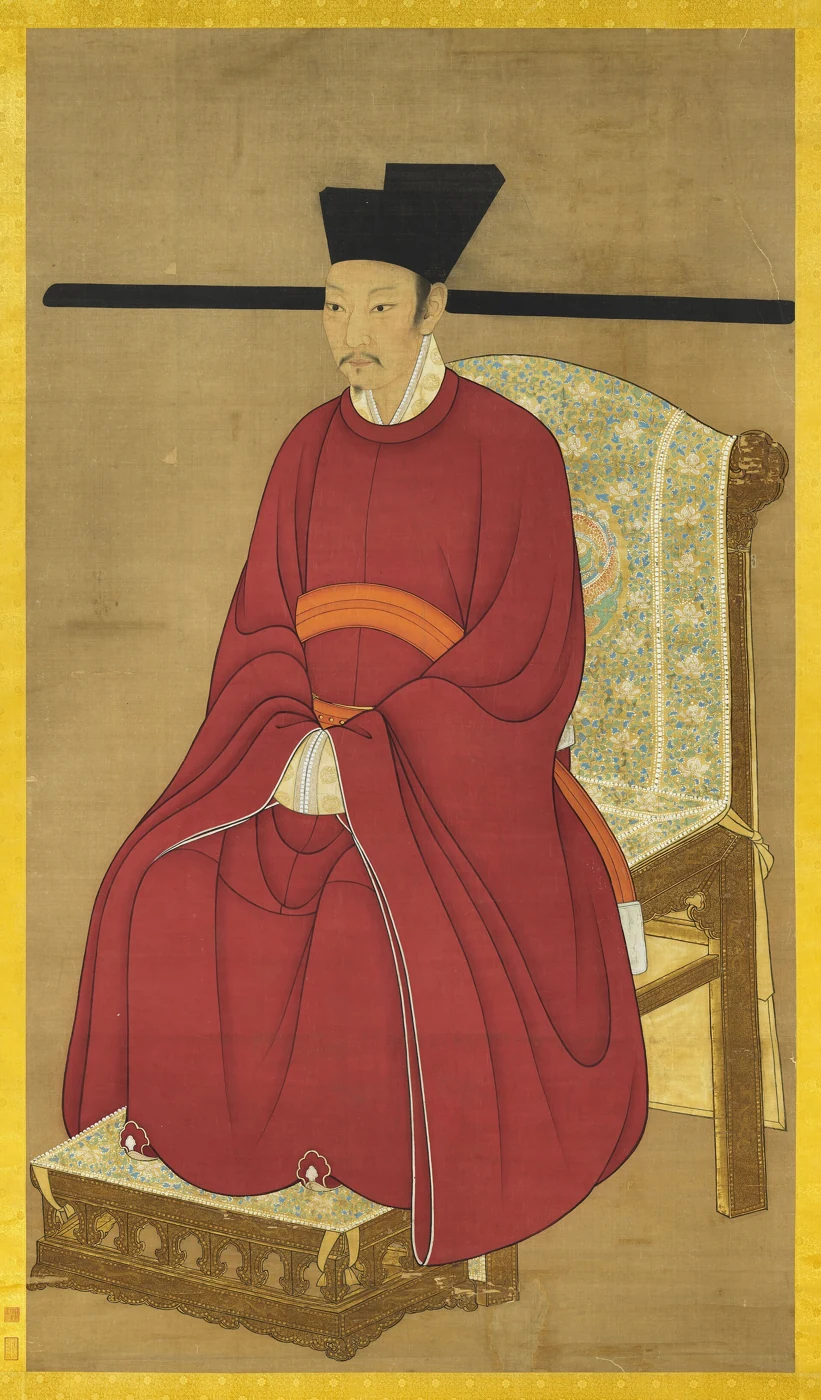
1100 CE–1161 CE
Emperor of the Northern Song
Zhao Huan
赵桓
Zhao Huan (May 23, 1100–1156), originally named Zhao Dan and later Zhao Xuan before adopting the name Zhao Huan, was the ninth emperor of the Song dynasty and the last emperor of the Northern Song, reigning from 1125 to 1127. He was the eldest son of Emperor Huizong of Song, Zhao Ji, and the elder half-brother of Emperor Gaozong of Song, Zhao Gou; his mother was Empress Xiangong, Lady Wang. In 1125, the seventh year of the…
1100 CE–1161 CENorthern Song
PROFILE
Zhao Huan (May 23, 1100–1156), originally named Zhao Dan and later Zhao Xuan before adopting the name Zhao Huan, was the ninth emperor of the Song dynasty and the last emperor of the Northern Song, reigning from 1125 to 1127. He was the eldest son of Emperor Huizong of Song, Zhao Ji, and the elder half-brother of Emperor Gaozong of Song, Zhao Gou; his mother was Empress Xiangong, Lady Wang. In 1125, the seventh year of the Xuanhe era, Jin forces advanced south and Emperor Huizong abdicated in favor of Zhao Huan. The following year Zhao Huan adopted the era name Jingkang. In 1127, the second year of Jingkang, Jin troops captured Kaifeng, and Zhao Huan was taken north together with Huizong and members of the imperial family, bringing the Northern Song to an end. In captivity, the Jin successively granted him the titles Marquis of Chonghun and Duke of Tianshui, and he spent many years confined at places including Wuguocheng. He died in 1156, the first year of the Zhenglong era of the Jin; accounts differ as to whether he was killed after falling from a horse or died of illness. News of his death reached the Southern Song in 1161, the thirty-first year of Shaoxing. Emperor Gaozong of Song, Zhao Gou, then conferred on him the posthumous title Emperor Gongwen Shunde Renxiao and the temple name Qinzong.
- Other name
- Emperor Qinzong of Song
- Period
- Northern Song
- Date of Birth
- May 23 1100
- Date of Death
- June 14 1156
- Dynasty/Polity
- Northern Song
- Identity
- Emperor of the Northern Song
- Ethnicity/People
- Not recorded in historical sources
- Native place
- Not recorded in historical sources
- Place of birth
- Kunning Hall
- Place of death
- Not recorded in historical sources
- Reign
- 1125–1127
- Predecessor
- Emperor Huizong of Song (Zhao Ji)
- Successor
- Emperor Gaozong of Song (Zhao Gou)
- Era name
- Jingkang
- Temple name
- Qinzong
- Posthumous name
- Emperor Gongwen Shunde Renxiao
- Highest office
- See Life and Major Activities
- Major achievements
- Last emperor of the Northern Song; captured and taken north with his father, Emperor Huizong, during the Jingkang Incident; the Northern Song fell during his reign
LIFE TIMELINE
Age three | Renamed Xuan in the second month and Huan in the eleventh month.
Age nine | Advanced to Prince of Ding.
Age twelve | Began studies at Zishan Hall, where court lecturers instructed him in the classics and histories.
Age sixteen | Appointed Crown Prince.
Age seventeen | Married Lady Zhu as Crown Princess.
Age twenty-six | Jin forces advanced south; Emperor Huizong abdicated and Zhao Huan succeeded to the throne, adopting the era name Jingkang the following year.
Age twenty-seven | During the first Jin siege of Kaifeng, appointed Li Gang to defend the capital, later dismissed him and sought peace; Jin forces advanced south again and breached Kaifeng's outer walls in the eleventh month.
Age twenty-eight | Went again to the Jin camp in the first month and was detained; reduced to commoner status in the second month as the Northern Song fell; in the fifth month Zhao Gou became emperor and honored him from afar as Emperor Yuansheng; in the seventh month he was taken north as a captive.
Age twenty-nine | Arrived at the Jin Upper Capital and was enfeoffed by Emperor Taizong of Jin as Marquis of Chonghun; later moved to Hanzhou.
Age thirty-one | Moved with Huizong to Wuguocheng under house arrest.
Age thirty-six | His father Huizong died at Wuguocheng.
Age forty-two | Emperor Xizong of Jin changed his title to Duke of Tianshui.
Age fifty-seven | Died; accounts differ between death in a staged polo/horse-riding incident and death from illness.
News of his death reached the Southern Song | News of his death reached the Southern Song; Emperor Gaozong held mourning rites and conferred the posthumous title Emperor Gongwen Shunde Renxiao and the temple name Qinzong.
BIOGRAPHY
Biography
Family background and early years
Zhao Huan was born on the thirteenth day of the fourth lunar month in 1100, the third year of Yuanfu, at Kunning Hall. He was the eldest son of Emperor Huizong of Song, Zhao Ji, and his mother was Empress Xiangong, Lady Wang. In the ninth month he was given the name Dan, appointed Acting Grand Commandant and Military Commissioner of Shannan East Circuit, and enfeoffed as Duke of Han. In the sixth month of 1101, the first year of Jianzhong Jingguo, he was promoted to Commander Unequalled in Honor and Military Commissioner of Xingde and advanced to Prince of Jingzhao. In the second month of 1102 he was renamed Xuan, and in the eleventh month renamed Huan. In the first month of 1108, the second year of Daguan, he became Minister of Works and Military Commissioner of Wuchang and was advanced to Prince of Ding.
In the third month of 1111, the first year of Zhenghe, Zhao Huan began his education at Zishan Hall, listening to court lecturers explain the classics and histories. In the first month of 1113, the third year of Zhenghe, after changes in the official system, he was appointed Junior Guardian. In the second month of the following year he underwent the capping ceremony at Wende Hall. In the second month of 1115 he was established as Crown Prince, with the investiture held at Daqing Hall. Huizong sat in the hall wearing the Tongtian crown and a dark-red gauze robe, while Zhao Huan wore the Youyou crown and the prescribed vermilion robe and received the patent while holding a jade tablet in the courtyard. In the sixth month of 1116 he married Lady Zhu, daughter of Zhu Bocai, as his consort.
Although Zhao Huan occupied the Eastern Palace as heir apparent, he did not participate in government. His position as Crown Prince was not entirely secure. Huizong's favored son Zhao Kai, Prince of Yun, was highly talented and for a time appeared capable of displacing him. Wang Fu and others are also said to have secretly plotted to support Zhao Kai, leaving Zhao Huan's succession position precarious. Zhao Huan preserved himself by maintaining a low profile and concealing his ambitions.
Taking the throne in crisis
In the tenth month of 1125, the seventh year of Xuanhe, the Jin launched a two-pronged southern invasion of the Song. Jin forces not only took the entire Yanshan Prefecture Circuit but also pressed toward Zhongshan Prefecture. On the twentieth day of the twelfth month, Huizong issued an edict appointing Crown Prince Zhao Huan as Governor of Kaifeng and gave him a square jade belt of a type reserved for the emperor, signaling an intended abdication. Li Gang, Vice Minister of the Court of Imperial Sacrifices, proposed to Academician-in-Attendance Wu Min that the throne be transferred to the Crown Prince. Wu Min then used a dream as an opportunity to urge Huizong to abdicate, laying out the dangers of delay.
On the twenty-third day of the twelfth month, Huizong summoned civil and military officials to Yuhua Pavilion and announced his abdication. At that moment he suddenly suffered a stroke and collapsed beside the imperial couch. After regaining consciousness, he wrote with his left hand: "Crown Prince Huan may immediately assume the imperial throne; I, as the Daoist sovereign, shall retire to Longde Palace." Zhao Huan was summoned by palace attendants to Xuanhe Hall. Seeing Huizong suddenly ill, he wept at the bedside and refused the command. Tong Guan and Li Bangyan placed the imperial robe over him, but Zhao Huan pulled away and refused to accept it. Huizong again wrote with his left hand, "If you do not accept, you are unfilial!" Zhao Huan replied, "If your subject accepts, then he is unfilial!" Palace attendants finally forced him toward Funing Hall for the accession. Zhao Huan struggled violently, fell to the floor, and lost consciousness. Even after reviving he continued to refuse, while Grand Councilor Bai Shizhong announced that the new sovereign had already ascended the throne before Zhao Huan had formally done so. Zhao Huan did not consent until that evening.
On the twenty-fourth day of the twelfth month, Zhao Huan formally received the officials in Chongzheng Hall and assumed the throne. A few days later he elevated the Daoist Emperor's title to "Supreme Emperor, Lord and Daoist Sovereign" and chose the era name Jingkang for the following year, drawing on the phrase "bringing peace to the four quarters and enduring well-being to the myriad people."
The Jingkang Incident
In the first month of 1126, the first year of Jingkang, Jin forces crossed the Yellow River and Kaifeng was placed under emergency defense. Senior officials urged Zhao Huan to flee toward Xiangyang. Li Gang requested an audience and threatened to die rather than allow the emperor to abandon the capital. Zhao Huan ultimately remained and appointed Li Gang as Defender of the Eastern Capital to organize Kaifeng's defense. Privately, however, Zhao Huan accepted Li Bangyan's proposal to send envoys to the Jin camp to negotiate territorial concessions and peace. Li Yue and others returned from the Jin camp with severe demands: five million taels of gold, fifty million taels of silver, ten thousand cattle and horses, one million bolts of silk, recognition of the Jin emperor as an elder paternal uncle, cession of the three prefectures of Taiyuan, Zhongshan, and Hejian, and the dispatch of a grand councilor and a prince to the Jin camp as hostages. Zhao Huan accepted all of these terms. Prince Kang, Zhao Gou, volunteered to serve as a hostage. After relief armies from various regions began arriving, the Jin withdrew in the second month, temporarily preserving the capital.
After the Jin army retreated north, Zhao Huan dismissed Li Gang. Under pressure from officials and public opinion he also executed or demoted Cai Jing, Tong Guan, and the other men known as the Six Traitors. In the eighth month of 1126, Emperor Taizong of Jin, Wanyan Sheng, launched another major invasion of the Song. Wanyan Zonghan's army captured Taiyuan and then joined forces with Wanyan Zongwang for the advance south. Zhao Huan trusted Grand Councilor He Li and Military Affairs Commissioner Sun Fu, who claimed that the adventurer Guo Jing could repel the enemy with divine troops. Guo Jing was promoted and the defenses of Kaifeng's outer city were removed. Guo Jing suffered a crushing defeat, allowing Jin troops to breach the outer city. On the twenty-fifth day of the intercalary eleventh month, Guo Jing opened Xuanhua Gate and led an attack outside the city; Song troops were struck from four sides and more than half were killed. After the outer city fell, Zhao Huan personally went with his ministers to the Jin camp to negotiate. He submitted a memorial of surrender accepting vassal status and was then allowed to return.
In the first month of 1127, the second year of Jingkang, Zhao Huan again went to the Jin camp to seek peace and was detained. The Jin continued demanding wealth from the Northern Song as the price for his release. Song general Fan Qiong and others handed over the Supreme Emperor, Crown Prince Zhao Chen, imperial consorts, princes, princesses, and other members of the imperial house to the Jin as payment, an episode known as the Jingkang Incident. On the sixth day of the second month, March 20, 1127, Emperor Taizong of Jin ordered Huizong and Qinzong deposed and reduced to commoner status, and their dragon robes were forcibly removed. Li Ruoshui, who accompanied them, clung to Zhao Huan and fiercely denounced the Jin as bandits; the Jin cut his throat and killed him. The Jin then installed Zhang Bangchang as emperor of the Great Chu. The Northern Song, which had lasted 168 years, came to an end.
Years in northern captivity
In the fifth month, Prince Kang Zhao Gou ascended the throne at Yingtian Prefecture and honored Zhao Huan from afar as Emperor Yuansheng. In the seventh month the two former emperors were taken north to Yanjing. On the twenty-first day of the eighth month in 1128, the sixth year of Tianhui, they reached Huining Prefecture, the Jin Upper Capital. On the twenty-fourth day they wore plain robes and knelt before the temple of Emperor Taizu of Jin, then paid court to Emperor Taizong of Jin, Wanyan Wuqimai, in Qianyuan Hall. The Jin emperor titled Huizong Duke of Hunde and Zhao Huan Marquis of Chonghun. In the tenth month the two were moved to Hanzhou, north of present-day Pianliancheng in Lishu County, Jilin. In the seventh month of 1130, the eighth year of Tianhui, they were moved again to Wuguocheng, north of present-day Yilan County in Heilongjiang, where they were kept under house arrest.
In the fourth month of 1135, the thirteenth year of Tianhui, Huizong died at Wuguocheng. In the second month of 1141, the first year of Huangtong, Emperor Xizong of Jin, while seeking a peace agreement with the Southern Song, posthumously changed Huizong's title to Prince of Tianshui and made Zhao Huan Duke of Tianshui.
In the third month of 1142, the twelfth year of Shaoxing, all procedures for the Treaty of Shaoxing between Song and Jin were completed. In the fourth month, Consort Wei, mother of Emperor Gaozong of Song, returned to the Song with Huizong's coffin. As she departed, Zhao Huan grasped the wheel of her carriage and begged her to tell Gaozong that, if he were allowed to return, he would never compete for power or seek the throne and would be satisfied merely to become master of the Taiyi Temple, that is, to live as a Daoist recluse. Emperor Gaozong had also proposed that Zhao Huan be allowed to return south, and the Jin had agreed, but changes in Jin politics prevented the plan from being carried out. In 1146, the sixteenth year of Shaoxing, He Zhu traveled to the Jin and requested the release of Zhao Huan and other members of the imperial clan, but the request was rejected.
Death
In the sixth month of the twenty-sixth year of Shaoxing in the Southern Song, corresponding to the first year of Zhenglong in the Jin, 1156, Zhao Huan died. Accounts of his death differ. Some say that he died of illness. The Unofficial History of the Xuanhe Era of the Great Song, however, claims that the Jin emperor Wanyan Liang arranged a polo match in which the fifty-six-year-old Zhao Huan and the eighty-one-year-old former Liao emperor Yelü Yanxi, Emperor Tianzuo of Liao, were deliberately killed. The work is a Yuan-period fictionalized narrative, and its account may not be reliable. News of Zhao Huan's death did not reach Lin'an until 1161, the thirty-first year of Shaoxing, when Emperor Gaozong held mourning rites. After Zhao Huan's death, Gaozong no longer faced this dynastic concern and transferred the throne to Emperor Xiaozong of Song the following year.
His Family, His Early Titles and His Elevation as Heir
Zhao Huan was the eldest son of Emperor Huizong of Song, his mother the empress Xiaogong, lady Wang, and he was born in the Kuning hall on the thirteenth day of the fourth month of the third year of Yuanfu, 1100. In the ninth month he was given the name Dan and made acting grand commandant and military commissioner of Shannan east, enfeoffed as duke of Hanguo; in the sixth month of the first year of Jianzhong Jingguo, 1101, he was advanced to open-office of the same three divisions and commissioner of Xingdejun and enfeoffed as commandery prince of Jingzhao; in the second month of the first year of Chongning, 1102, his name was changed to Xuan and in the eleventh month to Huan; in the first month of the second year of Daguan, 1108, he was advanced to minister of works and commissioner of Wuchangjun and enfeoffed as prince of Ding; in the third month of the first year of Zhenghe, 1111, he began his studies in the Hall of Goodness, hearing the expositors explain the classics and histories; in the first month of the third year of Zhenghe the official system being altered he was made junior guardian; and in the second month of the next year he was capped in the Wende hall. In the second month of the fifth year of Zhenghe, 1115, Zhao Huan was made heir apparent, the ceremony of investiture being held in the Daqing hall: Huizong wearing the cap of communication with heaven and the crimson gauze robe sat on the throne, while Zhao Huan in the cap of distant travel and the vermilion bright robe received the patent in the court holding the jade tablet, and the academician of the Hanlin led the hundred officials in congratulation and went to the eastern palace to offer their good wishes. In the sixth month of the sixth year of Zhenghe Zhao Huan married the lady Zhu, daughter of Zhu Bocai. Though he held the place of heir apparent he took no part in government, and his position was not entirely secure: the prince of Yun, whom Huizong favoured, was a man of outstanding talent and for a time seemed likely to supplant him, and Wang Fu and others secretly plotted to set up the prince of Yun, so that Zhao Huan's place as heir was once in jeopardy and he preserved it by keeping himself hidden and biding his time.
The Jin Invasion and His Forced Accession
In the tenth month of the seventh year of Xuanhe, 1125, the Jin sent their armies south against the Song in two columns. On the twentieth day of the twelfth month Huizong decreed that the heir apparent Zhao Huan be made guardian of Kaifeng and gave him the square jade belt worn only by emperors, already hinting at abdication; he had also spoken of it to the chief minister, but Bai Shizhong thought it unwise. The junior master of ceremonies advised handing the throne to the heir, and Wu Min, taking the occasion of a dream, urged Huizong to do so, saying that if the emperor would decide and settle the plan the central land would remain Chinese for several hundred years, and if not it would be lost to the barbarians for as long, the whole fortune of the central land resting on the emperor this day; and he recommended Li Gang. On the twenty-third day of the twelfth month Li Gang, with his memorial in his bosom, came to the outer treasury to await audience, but Huizong and the chief ministers deliberated the abdication until late afternoon, and Li Gang went away disappointed; and Wu Min, having reported his business that day, stood aside while the chief ministers reported, and after court Huizong kept Li Bangyan in talk, then presently summoned Wu Min alone and had Li Bangyan announce that Wu Min was made assistant of the chancery to assist the heir. That evening Huizong gathered the civil and military ministers in the Yuhua pavilion, and after the chief ministers had reported and stood aside he called Li Bangyan and Wu Min and said that the matter of abdication was settled and this was a good day for it; and while affairs were being reported Huizong said to Cai You that he was by nature firm but had not thought the petty barbarians would dare so much, and taking Cai You's hand he was suddenly struck by apoplexy and fell senseless below the imperial bed. The ministers hastily had the attendants carry him to the eastern chamber of the Xuanhe hall and pour in broth, and he revived and at once calling for paper and brush wrote with his left hand that he had lost half his body and how could he manage great affairs; and the ministers looked at one another and had nothing to say, and Huizong wrote again asking why they were all silent, and none about him dared answer, and he wrote himself that the heir apparent Huan might take the throne and that he himself as the sovereign of the Dao was retiring to the Longde palace, and had Wu Min draft the edict of abdication. The heir apparent was brought by a eunuch into the Xuanhe hall and, seeing Huizong suddenly ill, wept at his couch and would not accept. Tong Guan and Li Bangyan threw the imperial robe over him and he shrank from it and would not receive it; and Huizong writing with his left hand that to refuse would be unfilial, Zhao Huan answered that to accept would be unfilial. Huizong then brought the empress to persuade him, and she told him that the sovereign was old and that they two wished to entrust themselves to him, but he still declined. Huizong had the eunuchs carry him off and he would not go, and they bore him away by force while he struggled and fell to the ground senseless; and when he came to himself they carried him to the western corridor of the Funing hall where the ministers were waiting. There he still would not take the throne, but the civil and military officials were already assembled in waiting; and as it was late Bai Shizhong, without waiting, announced that the new sovereign had ascended, and all the officials asked to see him. Presently Liang Shicheng, coming from the inner palace, whispered to Bai Shizhong that the emperor had been carried to the Funing hall and was still unconscious and that when he woke he might refuse, asking how it was to be settled; and Li Bangyan, learning that Zhao Huan was on good terms with Geng Nanzhong, summoned him by decree. Geng Nanzhong by decree summoned the imperial physicians to treat the new sovereign, Wu Min by decree summoned the chief ministers to discuss affairs, and by decree dismissed the officials, since it was late and the sovereign would hold court another day; and when the officials had dispersed the chief ministers saw Huizong in the Xuanhe hall and Zhao Huan in the Funing hall, and then at last he consented to ascend. On the twenty-fourth day of the twelfth month he received the ministers in the Chongzheng hall, the chief minister and assistant of the chancery Bai Shizhong leading the civil and military officials in congratulation, and Huizong went out to live in the Longde palace. A few days later the new emperor gave the Daoist sovereign the honorific of the Daoist sovereign and supreme emperor and his empress that of supreme emperor's empress, and taking the words "pacifying the four quarters day by day and bringing lasting peace to the millions" changed the next year's era name to Jingkang.
The Disaster of Jingkang
After his accession Zhao Huan was irresolute, and listening later to the slander of wicked ministers he dismissed Li Gang and sought peace with the Jin, and the capital Kaifeng was put under martial law. The ministers advising him to go to the Jin, Li Gang asked to be received in audience and told him that the emperor had been given the altars of state and should not think of abandoning them, asking whether that were fitting; and Zhao Huan was silent. When some said the capital could not be held and they should take refuge, Li Gang answered that no city in the realm was so strong as the capital, and that with the ancestral temples, the altars, the hundred officials and the millions of people all there, how could they be abandoned; and that the plan for today was to order the troops and people and hold the capital until the armies of relief came. Asked who could command, Li Gang answered that Bai Shizhong and Li Bangyan, though not versed in war, were chief ministers whose duty it was to comfort the officers and men and resist the Jin, at which Bai Shizhong asked angrily whether Li Gang could not lead out troops himself, and Li Gang firmly said that if the emperor did not think him too weak to take charge he would repay him with his life; and so Zhao Huan appointed Li Gang to defend Dongjing against the Jin. Just then a eunuch came to hurry him, saying that the empress Zhu was ready to leave Kaifeng, and Zhao Huan changed colour and rose, saying that he could not stay and that his ministers must not keep him, for he would set out with the empress; and Li Gang, kneeling, wept and knocked his head on the ground to keep him by force of death, and Zhao Huan's mind was somewhat eased and he said that he accepted his plea to stay and that the whole conduct of training the troops and resisting the enemy was in his hands. That night the chief ministers Bai Shizhong and Li Bangyan came into the palace to urge him again to leave at once, and he resolved to go early next morning; and in the morning Li Gang coming to court found the guards ready for the march and the imperial carriage prepared and, knowing he had changed his mind again, asked the guards loudly whether they would stay and defend the altars of state or flee with the emperor, and they answered with one voice that their parents and wives were there and they would hold the capital to the death. Li Gang hurried in and told him that the guards' families were all here and they would die to hold the city, and that if he forced them to escort him away and they scattered back to the capital on the road, who would defend him; and that the Jin were near and, learning the carriage had not gone far, would pursue with fast horses beyond resistance; and Zhao Huan came to himself and ordered the empress recalled. To steady men's minds Li Gang at once proclaimed to soldiers and people that the emperor's mind was fixed on holding the city and that any man who spoke again of leaving the capital to unsettle men's hearts would be beheaded, and the six guards hearing that they were to stay shouted ten thousand years. The Jin then reached the Mutuo hill northwest of the capital, where horses were pastured, and twenty thousand army horses and much fodder fell into their hands; and Zhao Huan, alarmed, called his ministers to consider what to do, and Li Bangyan said that with few troops and generals in the capital and the relieving armies not yet come there was no way but to cede land and sue for peace, while Li Gang answered that the Jin were a lone army deep in hostile country with little grain and need not be so feared, that if they could not win a battle they could shut the gates and hold, and meanwhile hurry the relieving armies, when with attack from within and without the Jin could certainly be beaten, and that ceding land must not be done. In private, however, Zhao Huan accepted the advice and sent envoys to the Jin camp to negotiate the cession of land; and the envoys meeting the Jin envoy Wu Xiaomin on the road, the Song envoys brought him back to Kaifeng. Wu Xiaomin told Zhao Huan that the retired emperor having abdicated the past need not be reckoned, and asked that the two states renew their alliance, sending a prince and a chief minister to the Jin camp to sue for peace. Asked who should go, Li Gang asked to be sent, and Zhao Huan said that he bore the weight of the city's defence and the safety of the state was on him, so he could not go, and that Li Zhuo should go. When the envoys were chosen and the ministers had withdrawn, Li Gang alone stayed and asked why he was not sent, and Zhao Huan answered that his nature was too upright for negotiation; and Li Gang memorialised that the terms of peace must be apt, that Li Zhuo was weak and might ruin the state's business, that the enemy was insatiable and would demand harsh terms, and that if the court out of fear agreed to everything the Jin would despise them and the trouble afterwards would be endless; but Zhao Huan would not hear it. Li Zhuo, reaching the Jin camp, was too frightened to say anything, and brought back only the terms: five million ounces of gold, fifty million of silver, ten thousand head of cattle and horses, a million bolts of silk, the Jin emperor to be styled uncle, the three garrisons of Taiyuan, Zhongshan and Hejian to be ceded, a chief minister and a prince to be given as hostages, and the Jin army to be escorted across the Yellow river. Li Bangyan and the rest strongly urged acceptance, and the treasury being long empty, they ordered a general search of the capital for gold and silver, so that every household was disturbed and the whole city in confusion. Li Gang opposed the terms flatly, saying that the gold and silver demanded could not be met from all the wealth of the realm, much less a single capital; that the three garrisons were the state's bulwark and, ceded, how could the state stand; and that as to hostages a chief minister might go but a prince must not, and that an eloquent man should be sent to argue, for in a few days the relieving armies would come. Li Gang and Li Bangyan argued hotly again and again while Zhao Huan said nothing; and Li Gang offering to resign, Zhao Huan comforted him and told him to go out and direct the fighting while the matter was considered, but as soon as Li Gang had left he agreed to all the Jin terms. While Zhao Huan was wondering which prince to send as hostage, the ninth son of Huizong, the prince of Kang Zhao Gou, came to court and earnestly asked to be sent, saying that the enemy would surely demand a prince and that for the great business of the altars he could not decline; and Zhao Huan, pleased, sent him with a chief minister to the Jin camp. Li Zhuo told the prince of Kang that the Jin required the prince to escort them across the Yellow river before he could return, and the prince answered gravely that in the state's peril one should be ready to die for it. After he set out the relieving armies came one after another to more than two hundred thousand while the Jin had only some sixty thousand; and Li Gang and the rest commanding the Song troops fought the Jin with varying fortune, and the Jin, having got the three garrisons and much indemnity and seeing the relieving armies arriving, took the occasion of the second month to withdraw, and Dongjing was preserved. Afterwards Huizong came out of the city in haste to take refuge; and when the Jin had gone, Zhao Huan sent Li Gang to bring him back, and in the fourth month the retired emperor returned to the capital. But soon after the Jin withdrew north Zhao Huan dismissed Li Gang and, under pressure from within and without, put to death or degraded Cai Jing, Tong Guan and the rest.
The Jin Advance Again, the Fall of Kaifeng and His Captivity
The Jin having left the capital did not cease their war on the Song. In the eighth month of the first year of Jingkang, 1126, Emperor Taizong of Jin again sent a great army against the Song, with Wanyan Zongwang as vice-marshal of the right, advancing into the central plain in two columns east and west. The army under Wanyan Zonghan took Taiyuan; and Zonghan, hearing that Li Gang, whom he feared, had been dismissed, agreed with Zongwang to join forces and come south, taking in the tenth month, and soon after Zonghan's western army advanced again in strength as far as Kaifeng. Because of a verse about Yang Shi and Liu Wuji the court found among the guards a certain Guo Jing and gave him high military charge: Guo Jing claimed to be able to work the six-jia method and with 7,777 men to drive back the Jin and take their two commanders alive, and the court, believing it utterly, gave him office and let him raise troops, taking any man whose eight characters fitted the six-jia. The Jin closed about Kaifeng and in the eleventh month took the outer city, and Zhao Huan sent his younger brother the prince of Kang to the Jin commander. Early in the intercalary eleventh month the Jin began their assault in driving rain and snow, and to hearten the troops Zhao Huan put on armour and helmet and inspected the walls in person, gave the soldiers the food prepared for the emperor, and rode through rain and mud to the Xuanhua gate to encourage the army; but the day was lost and these measures availed little. With continuous rain and snow, bitter cold, poor rations and thin clothing so that the men could not grip their weapons, the Song army's spirit dissolved and more than half of the thirty thousand guards deserted, and Zhao Huan was helpless. On the twenty-second the Jin attacked the Tongjin and Xuanhua gates and the Song sallied without success; and on the twenty-fifth Guo Jing led out his troops, ordered all the defenders down from the wall, and opening the Xuanhua gate sallied forth, sitting on the gate tower with Zhang Shuye to watch; and the troops outside being taken on four sides by the Jin, most were killed and the rest fled back and shut the gate. Guo Jing told Zhang Shuye that he must go down himself to work his spells, but once down he fled south with the remnants. The Jin mounted the empty wall and could not be stopped, and though Zhang Shuye and the rest fought to the death the city fell that day. Having taken the outer city, the shrewd Zonghan and Zongwang did not press at once for the inner city but occupied the four walls, kept up feints and threats, and hypocritically proclaimed peace and withdrawal; and Zhao Huan believed it and at once sent the chief minister He Li to the Jin camp to sue for peace. The Jin told him that if the land were ceded peace could be made, but that the retired emperor must come in person to discuss it; and He Li, thinking he had done well, went back pleased to report, but the retired emperor had not the courage, and Zhao Huan could only weep bitterly and go in his place on the plea that the retired emperor was too shaken and chronically ill. At dawn on the thirtieth of the intercalary eleventh month the emperor went with many ministers to the Jin camp, which was precisely the trap the Jin had set: on his arrival the Jin commanders would not see him but sent to demand a letter of surrender, and he dared not refuse and had one written in haste; but the Jin were not satisfied and required it to be written in parallel prose, and the emperor, saying that matters had come to this and the rest need not be weighed, had the ministers revise it four times before the Jin were content. The substance of the letter was no more than submission to the Jin and a begging of forgiveness. After it was presented the Jin demanded that the retired emperor come, and the emperor begged hard until they no longer insisted; then the Jin set an incense table facing north in the fasting hall, had the Song sovereign and ministers bow northward in the manner of subjects, and read out the letter of surrender, the wind and snow driving while the emperor and his ministers wept in secret at the humiliation. When the ceremony was over the Jin, satisfied, let him return; and he, having tasted such shame and become in his helplessness a subject of the Jin, wept all the way, so that at the Nanxun gate, seeing the ministers and people come to meet him, he wailed aloud, and still weeping before the palace, so that within and without there was a sound of weeping like thunder. Hardly had he returned when the Jin demanded ten million ingots of gold, twenty million of silver and ten million bolts of silk, a demand beyond any reckoning; and in the beleaguered city all had been scraped together and it could not possibly be met, yet the emperor, terrified out of his wits by the Jin, yielded in humiliation and ordered a general seizure of gold and silver. The Jin demanded fifteen hundred young women, and he dared not delay, even giving his own consorts to make up the number, while many of the girls killed themselves rather than suffer shame. For the gold, silver and silk, finding the treasury insufficient, he ordered the nobles, rich houses and merchants to contribute to the army's support, which in truth was plunder, and those who resisted were put in the cangue, even the empress Zheng's family not escaping; and even so the amounts fell short, and the four ministers charged with the seizure were put to death by the Jin, while officials were flogged on every side and many of the common people driven to suicide. The Jin threatening to let their troops sack the city and demanding that the emperor come again to the camp, and others urging him to go, he dared not disobey and went again. On his arrival he was treated with utter contempt: Zongwang and Zonghan would not see him and lodged him in three small rooms in the western wing of the camp's fasting hall, furnished only with table and chairs and a bed and two felt mats, with Jin soldiers guarding closely outside and the door chained at dusk, so that the emperor and his ministers lost all freedom of movement. It being the depth of winter with unbroken rain and snow in the Kaifeng region, he bore hunger by day and piercing wind by night, turning and turning and unable to sleep. On the fifth day of the second month of the second year of Jingkang he had to force a smile and accept the Jin's invitation to watch a ball game, and afterwards begged the Jin commander to let him go and was rebuked fiercely, so that he dared not raise it again. The Jin, having detained him, declared that until the gold, silver and silk were complete he would not be released, and the Song court redoubled its seizure: the prefecture of Kaifeng sent officers straight into people's houses to search, as if hunting rebels, households being bound five together to watch one another with denunciation allowed, and even the poor of the Futián court were searched; and by late in the first month only a hundred and sixty thousand ounces of gold, two million of silver and a million bolts of cloth had been gathered, far short of what was demanded. After the emperor went to the Jin camp the snow and wind did not cease, and with plague spreading the dead of hunger and sickness were beyond counting; and the Jin, turning to other things in place of gold and silver, took the sacrificial vessels of heaven, the imperial carriages, the books and records and the great musical instruments, the physicians of every school, the musicians of the teaching workshop and every kind of craftsman, and carried off women madly, any of the least beauty being seized by the Kaifeng prefecture for the amusement of the Jin. On the sixth day of the second month of the second year of Jingkang Zhao Huan was reduced to commoner; and on the seventh the Jin forced Huizong and Qinzong to strip off their imperial robes, and one of them reviling the Jin as dogs without cease, the Jin in their rage cut his throat and his tongue and he was silent only in death. After the fall of the Northern Song the Jin enfeoffed the ever-appeasing Zhang Bangchang as ruler of a puppet state. On the first day of the fourth month, having plundered a great store of gold and silver, the Jin began to withdraw in two columns, one under Zongwang with Huizong and others going north, and one under Zonghan with Qinzong and a few officials who would not submit, going north by Zhengzhou; and with them went the ritual vessels of the court, antiques and works of art, books and records, palace women, eunuchs, actors and craftsmen, while the people driven off, men and women, were not fewer than a hundred thousand, and the accumulations of the Northern Song treasury were emptied. Zhao Huan, setting out, was forced to wear a felt hat and a robe of blue cloth and ride a black horse under Jin escort, weeping aloud to heaven from time to time and being checked for it; and at night the Jin "bound the emperor and the prince of Qi, the heir and the women of the household, limbs together" to prevent escape.
His Captivity in the North and His Death
The two emperors reaching Shangjing, the Jin made them wear mourning and bow at the sacrifice, in truth to humiliate the Song sovereign and ministers, and then forced father and son to the Qianyuan hall to see Emperor Taizong of Jin; and the lady Wei and more than three hundred below her being taken into the palace, Zhao Huan's empress Zhu, unable to bear the shame, drowned herself, while the men were enrolled in the army registers. Soon after, the Jin drove the two emperors to Wuguocheng, a bleak and remote frontier town, where they lived until their deaths. Huizong lived at Wuguocheng for three years and died there in the fifth year of Shaoxing of the Southern Song, 1135, his body being afterwards burnt by the Jin; and after his death Qinzong and the other captives were still imprisoned at Wuguocheng. In the second month of the eleventh year of Shaoxing, 1141, Emperor Xizong of Jin, to improve relations with the Southern Song, gave the dead Huizong the posthumous title of prince of Tianshui and the living Qinzong that of duke of Tianshui, and by the Comprehensive Compilation of the Three Reigns and the Northern Alliance, at the same time as the new title he was granted a fine dwelling at Shangjing, and afterwards Qinzong with his consorts and children were moved to the Jin capital. In the third month of the twelfth year of Shaoxing, 1142, relations being somewhat eased, the lady Wei with a dozen ox carts carrying the remains of Huizong, the empress Zheng and the empress Xing set out on the road back to the Southern Song; and as she left, Zhao Huan clung to the wheel of her cart and begged her to tell Emperor Gaozong that if he could return to the Southern Song, to be the master of a Taiyi temple would be enough for him. In the twenty-third year of Shaoxing, 1153, when the prince of Hailing of Jin moved the capital to Yanjing, it is very likely that Qinzong was moved there too: first to watch him the more closely, second to use him at any time to press the Southern Song, and third to carry out the plan offered at the death of the Jin founder, of setting Qinzong up to divide the Song realm in two; and some unofficial histories also give Yanjing as the place of his death. The date of Qinzong's death is not recorded in the official histories, but by the storytelling texts the cause was this: in 1156 the Jin sovereign held a polo match, at which the Jin ruler Wanyan Liang first had Yelü Yanxi shot to death, and Zhao Huan, seeing it, was so terrified that he fell from his horse and was afterwards killed by arrows, his body trodden by the horses. By the records, the news of Qinzong's death reached the Southern Song only in the fifth month of the thirty-first year of Shaoxing, 1161; and in the seventh month of that year Emperor Gaozong Zhao Gou gave him the posthumous name of the emperor of reverence, culture, compliance with virtue, benevolence and filial piety, with the temple name Qinzong.
Major Activities
Accession and early government
After taking the throne, Zhao Huan immediately demoted Cai Jing, Tong Guan, and the other Six Traitors, then gave Li Gang major responsibility for resisting the Jin. During the first Jin siege of Kaifeng in the first month of 1126, Zhao Huan initially intended to flee, but Li Gang threatened to die rather than allow him to abandon the capital. Zhao Huan ultimately appointed Li Gang to organize the capital's defense as Defender of the Eastern Capital. After regional relief armies arrived, the Jin withdrew in the second month and Kaifeng was preserved. Soon afterward, however, Zhao Huan dismissed Li Gang and resumed a policy of seeking peace.
The humiliation of Jingkang
Zhao Huan alternated between war and peace in dealing with the Jin. He also wrote a secret letter and gave it to the Jin envoy Xiao Zhonggong in an attempt to induce the former Liao general Yelü Yudu, who had defected to the Jin, to change sides, giving the Jin another pretext for military action. In the eighth month of 1126 the Jin again invaded south and breached Kaifeng's outer walls in the intercalary eleventh month. Zhao Huan trusted He Li and Sun Fu and relied on the adventurer Guo Jing, who claimed that "Six Jia divine troops" could repel the enemy. Guo Jing's crushing defeat accelerated the fall of the city. In the first month of 1127, Zhao Huan again went to the Jin camp seeking peace and was detained; in the second month he was reduced to commoner status and the Northern Song fell.
Captivity and removal to the north
Zhao Huan, Huizong, imperial consorts, the crown prince, princes, princesses, and other members of the imperial house were taken north by the Jin. They first reached Yanjing, then Huining Prefecture at the Jin Upper Capital, and were subsequently moved to Hanzhou and Wuguocheng. While in Jin territory, Zhao Huan was successively styled Marquis of Chonghun and Duke of Tianshui and remained under confinement for many years. When Consort Wei returned to the Song in 1142, the twelfth year of Shaoxing, Zhao Huan asked her to tell Gaozong that if he could return he would be content merely to become "master of the Taiyi Temple."
Relationship with Huizong
After Zhao Huan succeeded to the throne, he remained wary of the retired emperor Huizong. Following the Jin withdrawal, Zhao Huan outwardly welcomed the Supreme Emperor back to the capital, but soon removed Huizong's attendants and confined him at Longde Palace. It was said that when Huizong offered him wine on his birthday, Zhao Huan would not drink it, causing the retired emperor to return to the palace in tears. The relationship between father and son had become severely strained even amid the national crisis.
His Appointments as Sovereign
In the little more than a year of his reign Zhao Huan dismissed twenty-six chief ministers in rapid succession, among them the uninstructed civil officials who had the greatest influence on the crisis: some of their important measures for saving the state were not adopted, while some of their fatal policies were. Geng Nanzhong had been an official of the heir's establishment for fourteen years and, because of their special relation when the heir's position was in danger, was given office on the third day after Zhao Huan's accession, remaining deep in his confidence even after the flight and his brief escape from Kaifeng; and when in power his chief services were the exclusion of others and the advocacy of peace with the Jin and the wrecking of resistance, and these two faults, committed not in quiet times but in the hour of crisis, could not but do grave harm in the fall of the Northern Song — bold in private quarrels but timid in the public war, wholly without any way to govern or to save the state, yet with wit and cunning enough for mutual intrigue, Geng Nanzhong is a type of the officials of that time. Li Gang, then junior master of ceremonies, stood out and was raised far above his rank; a civil official who knew nothing of war, in the sudden emergency he organised the defence of Kaifeng quite effectively and beat off the enemy several times, winning high repute among the officers and people and at the same time the deep envy of his colleagues. Zhao Huan himself wavered between cowardice and the counsels of the brave: he gave Li Gang charge of the defences but not full powers, and instead of listening to his remonstrances devoted himself to humiliating peace.
The Relief of Taiyuan and the Dismissal of Li Gang
Early in the second month of the first year of Jingkang, Zhao Huan having approved a raid on the enemy camp, some ascribed it to Li Gang's counsel, though Li Gang in his memorial to the emperor said plainly that he had had no part in it, and in truth the raid had cost both sides about equally, the army losing only a hundred men while the relieving troops lost more than a thousand; but the chief minister Li Bangyan, who favoured peace and feared Li Gang's advocacy of war, exaggerated the matter with the other ministers and shifted the blame to Li Gang. Zhao Huan, panic-stricken, dismissed Li Gang and the old general Zhong Shidao, associate of the privy council, who commanded the relieving troops of Shaanxi; and thereupon the patriotic movement of Chen Dong and the kneeling submission of the people broke out in Kaifeng, and the gathering of tens of thousands of unorganised people showed that all minds were one and that there was no man to save the state but Li Gang. But Zhao Huan plainly looked on the patriotic movement as a danger and could not bear a challenge to his sovereignty: though forced to restore Li Gang, there could be no evidence that Li Gang had contrived the kneeling, and "from this the sovereign and his minister were estranged, suspecting him of coercing them with soldiers and people," and he "much resented him." Three thousand blank commissions being given to Li Gang, he "used only thirty-one"; and when he appointed two officers of small rank below the scale, Zhao Huan wrote in his own hand that it was the sovereign alone who confers blessings and majesty and that the presumption of ministers must not be allowed to grow. Zhao Huan had been forced into a treaty under the walls with the Jin commander of the eastern column, Wanyan Zongwang, and afterwards repented of it and, following Li Gang's advice, raised the siege of Taiyuan and refused to cede the land north of the three garrisons of Taiyuan, Zhongshan and Hejian. Having broken the treaty, the first necessity was to relieve Taiyuan, the capital of Hedong, then besieged. One great evil of the late Northern Song system of command in war was that, following tradition, military affairs were often in the hands of civil officials ignorant of war and of eunuchs. Li Gang had publicly rebuked Geng Nanzhong for estranging the emperor from his father, which added another breach between them; and when the first relief of Taiyuan failed, Geng Nanzhong took the chance to say that none but Li Gang could relieve it, and Zhao Huan at once appointed him to Hebei, while Chen Gongfu, Yu Yingqiu and others saw through the design and said that Li Gang "knows nothing of war and will be beaten if he leads troops," that he was "being entrapped by a great minister" and "should not be sent"; and Li Gang himself, knowing his own limits, bowed twice and declined with force, saying that he would only ruin the state's business and that death would not atone for it, but Zhao Huan, listening to slander, was angry with him. An associate of the privy council who thought as he did wrote the two characters of Duyou for him, recalling the Qin general who was ordered to die; and Li Gang was obliged to take up the post and go. The battle of Taiyuan was the decisive one for the fate of the Northern Song court: with Taiyuan lost the Jin western army could come south and join the eastern, while the main Song forces were worn out in two failed relief attempts, and the fall of Kaifeng was then certain. Li Gang had not spared himself in the relief, but under an already desperate situation and hampered by the court on every side he was impeached after the fall of Taiyuan and degraded and sent from the capital; and one writer observed that Geng Nanzhong "checked the army of Hedong from within and brought about its destruction in order to prove the sincerity of the peace." When Kaifeng was besieged again, Zhao Huan in the intercalary eleventh month of the first year of Jingkang summoned Li Gang by post to be in charge of Kaifeng, but it was too late.
Personal Relations
- Father: Emperor Huizong of Song, Zhao Ji.
- Mother: Empress Xiangong, Lady Wang.
- Younger half-brother: Emperor Gaozong of Song, Zhao Gou.
- Crown Princess / Empress: Lady Zhu.
- Sons: Zhao Chen, the Crown Prince; Zhao Xun, born in Jin territory.
- Daughters: First Princess and Second Princess, both born in Jin territory to Lady Di, a palace woman of the rank cairen.
- Geng Nanzhong: an official from Zhao Huan's years in the Eastern Palace who had a close relationship with him.
- Li Gang: advocated resistance to the Jin; Zhao Huan appointed and later dismissed him.
- Wu Min: urged Huizong to transfer the throne to Zhao Huan.
- Bai Shizhong: Grand Councilor who strongly urged Zhao Huan to flee.
- Li Bangyan: Grand Councilor and advocate of peace.
- He Li: Grand Councilor who mistakenly trusted Guo Jing's claimed divine troops.
- Sun Fu: Military Affairs Commissioner who recommended Guo Jing.
- Emperor Taizong of Jin, Wanyan Sheng: ordered Huizong and Qinzong deposed.
- Wanyan Zonghan: Left Deputy Marshal of the Jin army.
- Wanyan Zongwang: Right Deputy Marshal of the Jin army.
- Wanyan Liang: emperor of the Jin at the time of Zhao Huan's death.
Historical Assessment
Song / contemporary period
- Southern Song historian Li Tao, in the Long Draft of the Continuation of the Comprehensive Mirror in Aid of Governance, recorded the political affairs of Qinzong's reign and often criticized his decisions during the Jingkang Incident, regarding his vacillation between war and peace and his poor use of personnel as major causes of the dynasty's collapse.
- Southern Song scholar Zhu Xi, in the Classified Conversations of Master Zhu, discussed the Jingkang catastrophe and judged that Qinzong "was incapable of effective action," treating his weak and indecisive temperament as one of the direct causes of the Northern Song's fall.
- Zheng Sixiao, a Southern Song loyalist, expressed deep sympathy in Xinshi for Qinzong's removal to the north, saying that he "suffered calamity to an extreme degree," while also criticizing him as "submissive and weak, without understanding righteousness."
Song and Yuan periods
- The Yuan-compiled official History of Song, edited under Toghto and others, assessed him as follows: before taking the throne, he had shown no obvious moral failings; after accession he did not indulge in music or sensual pleasures, and in the opening government of Jingkang he punished Wang Fu, Zhu Mian, and others. Yet by then the disorder was already beyond remedy. Ruler and ministers failed to work together, devoted themselves anxiously to peace negotiations, and ultimately father and son were both swept into captivity and the state was ruined. The work concluded that he was submissive and weak and did not understand righteousness, that his reign was short but his suffering exceptionally deep, and that his fate was deeply lamentable.
- Hu Sansheng, a historian of the late Song and early Yuan who annotated the Comprehensive Mirror in Aid of Governance, repeatedly commented on Qinzong's government, arguing that "when one should decide but does not, one instead suffers from the resulting disorder" and that his hesitation at critical moments caused him to miss opportunities to resist the Jin.
- Yuan poet Hao Jing wrote on the Jingkang Incident with sympathy for Qinzong's captivity while also criticizing his failure to preserve the state.
Ming and Qing periods
- Ming thinker Li Zhi, in Cangshu, criticized Qinzong for being unable to defend even one city despite ruling such a vast realm, combining pity for his misfortune with anger at his failure to resist.
- Wang Fuzhi of the late Ming and early Qing offered a systematic judgment in Song Lun, arguing that the fall of the Northern Song had accumulated over a long period and that "the disorder was already formed" when Qinzong came to the throne, while maintaining that his weak temperament and peace policy accelerated the collapse. Wang especially criticized his dismissal of Li Gang, regarding it as the destruction of his own defensive wall.
- Qing historian Zhao Yi, in Notes on the Twenty-Two Histories, discussed the Jingkang Incident and argued that Qinzong did not understand military affairs yet readily appointed people to conduct them; his trust in Guo Jing and similar occult claims was one direct cause of the capital's fall.
Modern period
- Modern historian Chen Yinke, in discussions of the Northern Song collapse, described the Jingkang Incident as a profound trauma in Chinese history and treated Qinzong's personal character and policy errors as worthy of reflection.
- Modern historian Deng Guangming, in works including Wang Anshi, Political Reformer of the Northern Song, discussed the intense struggle between pro-war and pro-peace factions in Qinzong's reign and argued that the emperor's wavering between them ended in national and personal catastrophe.
- Modern scholar Zhang Bangwei, in the article "An Analysis of the Internal Conflict during the Jingkang Crisis," examined political conflict within Qinzong's court in detail and argued that tensions between Qinzong and Huizong and factional struggles among officials were important internal causes of the Jingkang Incident.
FIGURES ASSOCIATED WITH THIS DYNASTY
Bibliography
- History of Song, et al.
- Journal of Sichuan Normal University (Social Sciences Edition), Journal of Sichuan Normal University (Social Sciences Edition), 2001no. 3