Forest Birth
Born along the Ashi River as the fourth son of Helibo; displayed legendary physical courage and strength.
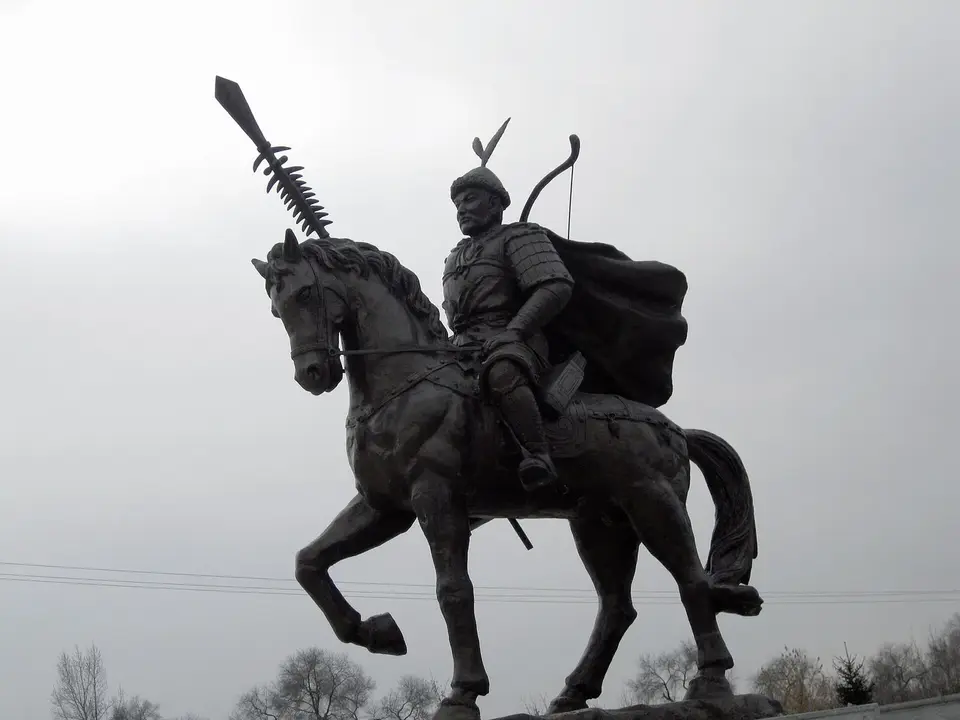
1075 CE–1135 CE
完颜晟
Wanyan Sheng (完颜晟, 1075–1135), Jurchen name Wanyan Wuqimai (完颜吴乞买), was a native of the Ashi River basin and the second emperor of the Jurchen Jin dynasty. The fourth son of Wanyan Helibo (Emperor Shizu) and younger brother of Wanyan Aguda (Emperor Taizu), Wanyan Sheng was renowned from his youth for his imposing physique, extraordinary physical strength capable of capturing bears barehanded, and astute strategic counsel. He…
Wanyan Sheng (完颜晟, 1075–1135), Jurchen name Wanyan Wuqimai (完颜吴乞买), was a native of the Ashi River basin and the second emperor of the Jurchen Jin dynasty. The fourth son of Wanyan Helibo (Emperor Shizu) and younger brother of Wanyan Aguda (Emperor Taizu), Wanyan Sheng was renowned from his youth for his imposing physique, extraordinary physical strength capable of capturing bears barehanded, and astute strategic counsel. He played an indispensable role alongside Aguda in initiating the anti-Liao rebellion, spearheading the critical victories at Chuhedian, Huanglongfu, and Hubudagang. Appointed as Anban Bojilie, the premier co-ruler and heir apparent, he managed domestic mobilization and civil governance during the early conquests. Following Aguda's death in 1123, he ascended the imperial throne under the era title Tianhui. His twelve-year reign transformed East Asian geopolitics: in 1225, his armies captured Emperor Tianzuo of Liao, obliterating the two-century-old Liao Empire; in 1227, his twin-pronged invasion captured the Northern Song capital of Kaifeng, taking Emperors Huizong and Qinzong captive in the Jingkang Incident and destroying the Northern Song dynasty. He established the puppet Qi regime under Liu Yu to govern the Central Plains, drove Song forces across the Huai River, and secured northern Shaanxi through the Battle of Fuping. Domestically, he instituted the Three Departments and Six Boards system, promulgated the Jurchen script, introduced civil service examinations, and practiced personal frugality, famously submitting to twenty strokes of imperial caning after borrowing palace funds for wine. In an act of supreme dynastic foresight, he bypassed his own sons to designate Aguda's grandson Wanyan Dan as imperial heir before passing away in 1135 at the age of sixty-one.
Born along the Ashi River as the fourth son of Helibo; displayed legendary physical courage and strength.
Aided his brother Aguda in launching the rebellion, leading the night crossing that routed Liao forces at Chuhedian.
Enfeoffed as Anban Bojilie upon the proclamation of the Jin dynasty, overseeing domestic governance and military logistics.
Succeeded to the throne following Aguda's demise, adopting the era title Tianhui.
Dispatched Wanyan Loushi to capture Emperor Tianzuo of Liao in Yingzhou, extinguishing the Liao Empire.
Sacked the Northern Song capital of Kaifeng, deporting Emperors Huizong and Qinzong to Manchuria and terminating the Northern Song.
Officially promulgated the Large Jurchen Script created by Wanyan Xiyin, inaugurating national literate culture.
Installed Liu Yu as puppet Emperor of Qi; decisively defeated forty thousand Song troops at the Battle of Fuping in Shaanxi.
Relinquished personal ambition to designate Aguda's eldest grandson Wanyan Dan as imperial heir apparent.
Passed away in the Mingde Palace at Huiningfu aged sixty-one; posthumously honored as Emperor Taizong.
Wanyan Sheng was born into the hereditary ruling house of the Wanyan clan in 1075. Raised in the dense taiga along the Ashi River basin under the harsh subarctic climate of eastern Manchuria, he grew into an imposing warrior possessing immense muscular power and an intimidating physical presence. In his youth, he accompanied his father and elder brothers on prolonged hunting expeditions across rugged mountains.
He became famous throughout the Jurchen tribes for his fearlessness in hand-to-hand combat with wild beasts, reportedly capturing charging black bears and ferocious tigers with his bare hands. Beyond personal martial bravery, he possessed acute political discernment, assisting his elder brothers Wanyan Wuyashu and Wanyan Aguda in arbitrating tribal disputes and earning deep respect among neighboring chieftains.
During this era, the Khitan Liao Empire subjected the Jurchen tribes to oppressive tributary extractions, demanding pearls, gold, and gyrfalcons while subjecting local families to extortion. Wanyan Sheng observed the deep humiliation endured by his people, resolving to overthrow Khitan dominance. As Aguda consolidated tribal authority, Wanyan Sheng served as his closest confidant, assessing Liao military weaknesses and organizing military supplies.
In 1113, during the historic First Fish Feast at Chunzhou, Emperor Tianzuo of Liao commanded Jurchen chieftains to perform celebratory dances. Aguda defiantly refused, while Wanyan Sheng stood watchfully behind him, his hand gripping his sabre. Their unified defiance marked the beginning of the open rupture between the Jurchen tribes and the Khitan court.
In September 1114, Aguda assembled twenty-five hundred Jurchen warriors at the Ashi River, launching the formal uprising against the Liao Empire. Wanyan Sheng served as vanguard commander, scaling the parapets to capture the frontier bastion of Ningjiangzhou. When a massive Liao relief army assembled at Chuhedian, Wanyan Sheng exploited a sudden freeze along the river, leading crack cavalry across the ice under cover of a blizzard to crush the enemy encampment.
The triumph at Chuhedian triggered widespread rebellions across northeastern Asia. In early 1115, Aguda proclaimed the founding of the Great Jin dynasty, appointing Wanyan Sheng as Anban Bojilie, the supreme minister and designated imperial successor. In the autumn of that year, Wanyan Sheng directed the coordinated siege of Huanglongfu, cutting off Liao supply routes and capturing the strategic fortress along with vast stores of weapons and treasure.
At the monumental Battle of Hubudagang, where Emperor Tianzuo mobilized seven hundred thousand Liao troops against twenty thousand Jurchen warriors, Wanyan Sheng fought at Aguda's side, piercing the Khitan center and precipitating the irreversible collapse of Liao military power.
Between 1116 and 1123, while Aguda conducted frontline campaigns across southern Manchuria and the Yan-Yun corridor, Wanyan Sheng remained at the capital of Huiningfu to direct homefront governance. He stabilized conquered territories, organized grain transports, and recruited Jurchen, Bohai, and Han administrators, ensuring steady logistical reinforcement for the advancing armies.
In late 1123, Aguda fell mortally ill on his return from Yanjing, designating Wanyan Sheng as his successor. Following Aguda's demise, Wanyan Sheng mounted the imperial throne on September 27, 1123, adopting the era title Tianhui. He confirmed veteran commanders Wanyan Zongwang, Wanyan Zonghan, and his brother Wanyan Gao in supreme administrative and military posts, securing dynastic continuity.
Adopting an innovative dual administration, he retained the traditional Bojilie tribal council and Meng'an Mouke hereditary military households in the northern heartland while establishing the Three Departments and Six Boards system across newly annexed Han Chinese territories, laying the foundation for an integrated bureaucratic empire.
Upon his accession, Emperor Taizong prioritized the total elimination of Emperor Tianzuo of Liao, who was attempting to rally remnants in the Yin Mountains. In late 1123, Taizong ordered Western Route Commander Wanyan Zonghan to execute a sweeping winter encirclement through the desert badlands.
In the spring of 1125, Jurchen general Wanyan Loushi intercepted Emperor Tianzuo's fleeing retinue near Yingzhou, capturing the Khitan monarch alive. The two-hundred-year-old Liao Empire was extinguished. Taizong held a solemn victory ceremony at the ancestral temple in Huiningfu, demoting the captured sovereign to Prince of Haibin while treating him with imperial clemency.
With Liao dismantled, Western Xia and steppe nomad confederations submitted to Jin suzerainty, expanding the empire's boundaries directly to the Great Wall.
When the Northern Song court engaged in duplicitous diplomacy by harboring Liao defectors, Emperor Taizong launched a full-scale southward invasion in October 1125. Eastern Route Commander Wanyan Zongwang broke through the Yellow River to threaten Kaifeng, prompting Emperor Huizong to abdicate in favor of Emperor Qinzong. Following an initial financial settlement, the Song court resumed covert anti-Jin operations.
Enraged by this defiance, Emperor Taizong mobilized over one hundred thousand elite cavalry in late 1126 for a final siege of Kaifeng. In January 1127, Jin assault units stormed the outer ramparts. Emperor Qinzong surrendered in person, and the Jin court officially deposed the Song sovereigns.
In May 1127, Jin forces evacuated Kaifeng, deporting Emperors Huizong and Qinzong, royal princesses, court officials, and thousands of skilled artisans to Manchuria in the historic Jingkang Incident. This catastrophe terminated the Northern Song dynasty, transferring immense cultural, technological, and material wealth to the northern Jin capital.
Recognizing that limited Jurchen manpower could not directly police the vast population south of the Yellow River, Emperor Taizong implemented an indirect governance strategy. In 1130, he invested former Song prefect Liu Yu as Emperor of Da Qi, assigning him administration over Henan, Shaanxi, and Shandong under strict Jin military supervision.
The puppet Qi regime served as an effective buffer and auxiliary combat force, levying heavy local taxes to fund Jin military expenditures and deploying Chinese conscript armies against the emerging Southern Song regime, conserving frontline Jurchen cavalry.
In 1130, seeking to bypass southern river defenses, Emperor Taizong opened a western theater in Shaanxi. He appointed Wanyan Zongfu as supreme commander, with Wanyan Loushi and Wanyan Zongbi as field generals, confronting a massive Southern Song coalition of four hundred thousand troops under Zhang Jun at Fuping.
Exploiting swampy terrain, Wanyan Loushi led three thousand ironclad cavalry across a concealed ford, striking the vulnerable flank of the Song army. The Song forces collapsed in panic, securing the rich agricultural basin of Shaanxi for the Jin dynasty and establishing a durable western frontier along the Qinling Mountains.
Subsequent attempts by Wanyan Zongbi to penetrate the Sichuan basin were checked by Song commanders Wu Jie and Wu Lin at the Battle of Heshangyuan and Xianren Pass, finalizing the continental boundary between the two empires along the Huai River and Dasan Pass.
Emperor Taizong accelerated the institutional transformation of the Jin state from a loose tribal confederation into a centralized bureaucratic empire. He formally established the Secretariat, Chancellery, and Department of State Affairs, utilizing experienced Han scholars such as Han Qixian to supervise civil governance, land registration, and taxation.
To foster indigenous cultural identity, he oversaw the completion and nationwide adoption of the Large Jurchen Script in 1128, followed by the development of the Small Jurchen Script. He established the Imperial Academy at Huiningfu, mandated the translation of Confucian classics into Jurchen, and instituted regular civil service examinations, providing thousands of educated scholars for imperial administration.
Emperor Taizong was renowned for his extraordinary personal austerity, continuing to dwell within the modest timber and mud palaces of Huiningfu and wearing mended robes. Early in his reign, he established a sacred oath with his generals that all imperial treasury assets were reserved strictly for military defense, disaster relief, and soldier pensions, forbidding personal royal expenditures.
When Taizong secretly took a modest sum of silver from the treasury to purchase wine, Left Chancellor Wanyan Zonghan discovered the shortfall during an audit. Demonstrating remarkable institutional discipline, Zonghan and the council impeached the sovereign before the assembled court.
Acknowledging his fault, Emperor Taizong descended from his throne, stripped off his imperial robes, and received twenty strokes of the cane upon the palace floor. Upon completion of the punishment, he resumed his seat without malice, serving wine to his ministers and commending their unbending devotion to the law, leaving an unparalleled exemplar of sovereign accountability.
In his final years, Emperor Taizong addressed the succession. While his eldest son, Wanyan Zongpan, commanded powerful military factions, Taizong respected the founding compact established with his brother Aguda. Supported by Wanyan Zonghan and Wanyan Zongbi, he designated Aguda's grandson Wanyan Dan (Emperor Xizong) as Anban Bojilie in 1132, averting civil war between the imperial branches.
Emperor Taizong passed away in the Mingde Palace at Huiningfu on February 9, 1135, at the age of sixty-one. He was interred in the Gongling Mausoleum and conferred the temple name Taizong. His brilliant conquests, profound institutional reforms, and selfless statesmanship elevated the Jin dynasty to supreme dominance over East Asia.
FIGURES ASSOCIATED WITH THIS DYNASTY