Born | Born in Huayin, Hongnong
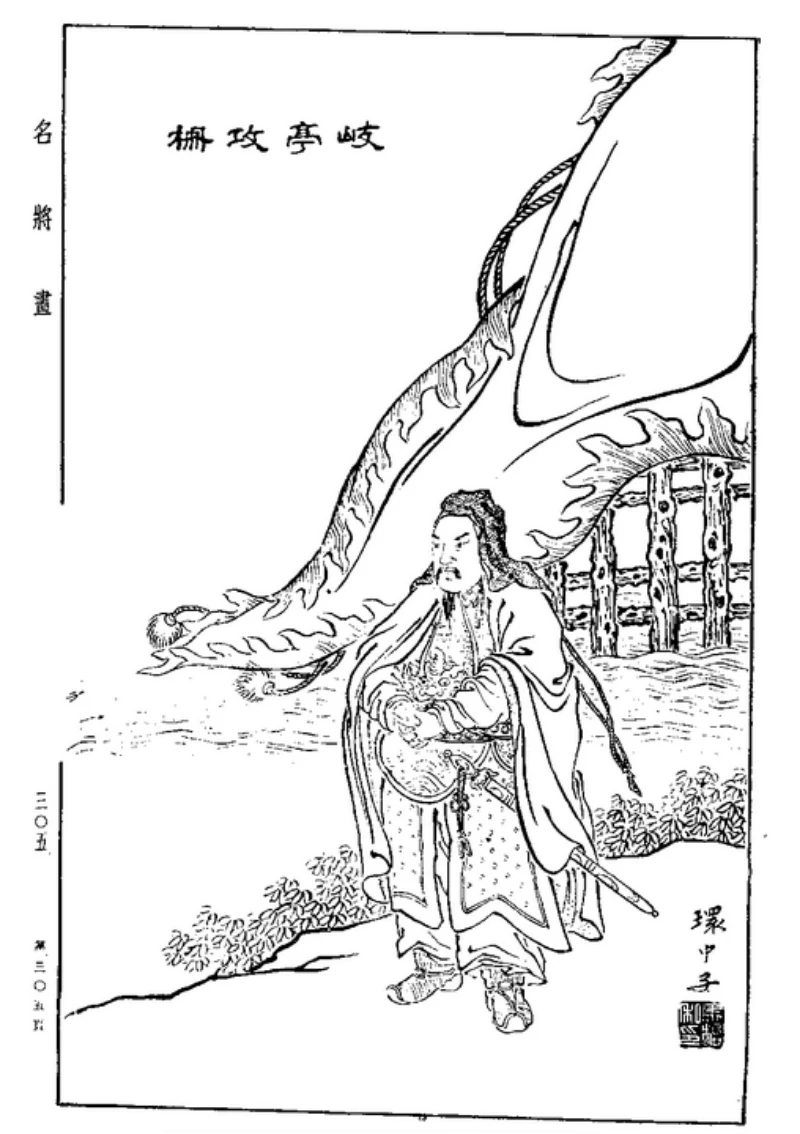
544 CE–606 CE
General
Yang Su
杨素
A leading general and statesman from the Kaihuang through Daye eras, Yang Su commanded forces in the conquest of Chen and the suppression of rebellions in Jiangnan and, under Emperor Yang of Sui, served as Prefect of the Masters of Writing and Duke of Chu.
544 CE–606 CESui Dynasty
PROFILE
A leading general and statesman from the Kaihuang through Daye eras, Yang Su commanded forces in the conquest of Chen and the suppression of rebellions in Jiangnan and, under Emperor Yang of Sui, served as Prefect of the Masters of Writing and Duke of Chu.
- Alternative Name
- Yang Chudao
- Courtesy Name
- Chudao
- Period
- Sui
- Date of Birth
- 544
- Date of Death
- August 31 606
- Dynasty/Regime
- Sui Dynasty
- Identity
- General
- Ethnicity
- Not recorded in historical sources
- Native Place
- Huayin County, Hongnong Commandery (present-day Huayin, Shaanxi)
- Place of Birth
- Not recorded in historical sources
- Major Achievements
- Leading general and statesman from the Kaihuang through Daye eras; commander in the conquest of Chen and suppression of rebellions in Jiangnan; served under Emperor Yang as Prefect of the Masters of Writing and Duke of Chu
LIFE TIMELINE
Age twenty-one | Recruited by Yuwen Hu as a recorder in the Central and External Office
Age twenty-eight | Submitted memorials seeking posthumous honors for his father Yang Fu; nearly executed by Yuwen Yong but later won his appreciation and was appointed General-in-Chief of Chariots and Cavalry and Official of the Three Excellencies
Age thirty-one | Followed Yuwen Xian in attacking Northern Qi; enfeoffed as Viscount of Qinghe County and appointed Minister of Works Administration
Age thirty-two | Followed Yuwen Xian in taking Jinzhou and fought hard at Jiqiyuan to protect Yuwen Xian's escape
Age thirty-three | After the fall of Northern Qi, received an additional superior command and was re-enfeoffed as Duke of Cheng'an County
Age thirty-four | Followed Wang Gui in heavily defeating the Chen general Wu Mingche at Lüliang and became chief administrator of Eastern Chuzhou
Age thirty-five | Followed Wei Xiaokuan in taking the Huainan region and captured Xuyi and Zhongli
Age thirty-six | Voluntarily aligned himself with Yang Jian, was appointed General-in-Chief, suppressed Yuwen Zhou, transferred to chief administrator of Xuzhou, advanced to Pillar of State, and was enfeoffed as Duke of Qinghe Commandery
Age thirty-seven | After the founding of the Sui Dynasty, advanced to Supreme Pillar of State and participated in revising the Sui Code
Age forty | Appointed Censor-in-chief; dismissed after being accused because of a quarrel with his wife Madam Zheng
Age forty-one | Posted as chief administrator of Xinzhou to prepare the upper Yangtze region for the conquest of Chen
Age forty-four | Participated in the conquest of Chen as a field marshal, led naval forces out of the Three Gorges, and repeatedly defeated Chen troops
Age forty-five | After the fall of Chen, returned to court, became Director of the Chancellery and later Director of the Secretariat, and was enfeoffed as Duke of Yue
Age forty-six | Led forces that suppressed rebellions by Jiangnan local elites
Age forty-eight | Promoted to Right Vice Director of the Department of State Affairs and shared direction of government with Gao Jiong
Age fifty-four | Campaigned against the Göktürks and won a major victory
Age fifty-eight | Again led forces that heavily defeated the Eastern Göktürks
Age sixty | Participated in Yang Guang's succession struggle and helped him take the throne; soon afterward suppressed the rebellion of Yang Liang, Prince of Han
Age sixty-one | Appointed Prefect of the Masters of Writing and, with Yuwen Kai and others, oversaw construction of the eastern capital at Luoyang
Age sixty-two | Advanced to Minister of Education and re-enfeoffed as Duke of Chu; died in August amid imperial suspicion
BIOGRAPHY
Biography
Family Background and Early Years
Yang Su claimed descent from the Yang clan of Hongnong, although modern scholarship has suggested that the genealogy may have been constructed. His grandfather Yang Xuan served under Northern Wei as General Who Supports the State and Grand Remonstrance Counselor. His father Yang Fu served under Northern Zhou as governor of Fenzhou and later, after defeat and capture in Northern Qi territory, died rather than abandon his principles. From youth Yang Su was bold and uninhibited and paid little attention to minor conventions. Most people did not understand him, but his senior kinsman Yang Kuan regarded him differently and often told his descendants that “Chudao [Yang Su's courtesy name] is no ordinary man; one day he will rise far above others, beyond anything you can match.” Yang later shared intellectual interests with Niu Hong of Anding and studied diligently, achieving ability in literature and calligraphy. The histories describe him as tireless in study, widely learned, skilled in composition and cursive and clerical scripts, interested in meteorological divination, handsome and bearded, and possessing the bearing of a heroic figure.
Career under Northern Zhou
In 565, the fifth year of the Baoding era, Yuwen Hu, then dominating the government, employed Yang as a recorder in the Central and External Office. Yang later moved to the Bureau of Rites and received the rank of grand commandant. In 572, the seventh year of the Tianhe era, Emperor Wu of Northern Zhou, Yuwen Yong, killed Yuwen Hu and assumed direct control of government. Because Yang Fu had died loyally after capture in Northern Qi but had received no posthumous honors, Yang Su memorialized the throne on his father's behalf. When Yuwen Yong ignored him, Yang repeatedly submitted memorials. The emperor became furious and ordered him executed. Yang shouted that if he served an unprincipled ruler, then death was only fitting. Impressed by his boldness, Yuwen Yong pardoned him, posthumously appointed Yang Fu General-in-Chief with the posthumous title Zhongzhuang, and appointed Yang Su General-in-Chief of Chariots and Cavalry and Official of the Three Excellencies. The emperor thereafter treated him with increasing favor. On one occasion Yuwen Yong ordered Yang to draft an edict; he completed it at once in ornate prose. The emperor told him that with hard work he need not worry about future wealth and honor. Yang replied that he only feared wealth and honor might force themselves upon him, since he had no intention of seeking them.
In 575, the fourth year of the Jiande era, Yuwen Yong campaigned against Northern Qi. Yang asked to lead his father's former troops in the vanguard, and the emperor agreed, giving him a bamboo whip. Serving as chief of staff in the field headquarters of Yuwen Xian, Prince of Qi, Yang fought Northern Qi forces at Heyin. For his merit he was enfeoffed as Viscount of Qinghe County and appointed Minister of Works Administration. The following year he followed Yuwen Xian in taking Jinzhou. When Yuwen Xian encamped at Jiqiyuan, the Northern Qi ruler Gao Wei led a large army against him. Yuwen Xian panicked and fled by night, while Northern Zhou forces were largely scattered under pursuit. Yang and more than ten fierce officers fought desperately and enabled Yuwen Xian to escape. Yang continued to distinguish himself in battle. After Northern Qi fell in 577, the sixth year of the Jiande era, Yang received an additional superior command and was re-enfeoffed as Duke of Cheng'an County with a fief of 1,500 households.
In 578, the seventh year of the Jiande era, the Chen general Wu Mingche invaded northward and besieged Pengcheng. Yang followed senior general Wang Gui to the relief and heavily defeated Chen forces, capturing Wu Mingche. Yang afterward became chief administrator of Eastern Chuzhou. In 579, the first year of the Daxiang era, he followed Supreme Pillar of State Wei Xiaokuan in taking Chen territory in Huainan and personally led troops that captured Xuyi and Zhongli.
Alignment with Yang Jian and the Founding of Sui
In 580, the second year of the Daxiang era, Emperor Xuan of Northern Zhou, Yuwen Yun, died and Left Grand Councilor Yang Jian took control of the government. Reading the political situation, Yang Su actively aligned himself with Yang Jian and cultivated a close relationship. Yang Jian valued him highly and appointed him governor of Bianzhou. While Yang was traveling to take up the post and reached Luoyang, Yuchi Jiong, chief administrator of Xiangzhou, rebelled against Yang Jian, and Yuwen Zhou, governor of Yingzhou, occupied Wulao in support. Yang Jian mobilized Guanzhong forces and made Wei Xiaokuan field marshal. Yang Su, Liang Shiyan, Yuan Xie, Yuwen Xin, Yuwen Shu, and others served as field generals against Yuchi Jiong. In the seventh month Yang was appointed General-in-Chief and led troops from Henei against Yuwen Zhou, killing him at Shiji in the eighth month. Yang was then transferred to chief administrator of Xuzhou, advanced to Pillar of State, and enfeoffed as Duke of Qinghe Commandery.
In the second month of 581, the first year of the Dading era, Yang Jian accepted the abdication and founded the Sui Dynasty. Yang Su was advanced to Supreme Pillar of State and, together with Gao Jiong, Zheng Yi, and others, revised the new law code with reference to the Northern Qi Code, producing the Sui Code.
Conquest of Chen and Suppression of Rebellions
In 584, the fourth year of the Kaihuang era, Yang was appointed Censor-in-chief. His wife Madam Zheng was fierce-tempered. During one quarrel Yang blurted out, “If I became Son of Heaven, you certainly could not become empress.” Madam Zheng reported the remark, and Yang was dismissed for the offense. He had, however, repeatedly proposed plans for conquering Chen, which accorded with Yang Jian's desire to unify the south. In 585, the fifth year of the Kaihuang era, he was posted as chief administrator of Xinzhou to develop the upper Yangtze in preparation for war against Chen. At Yong'an he had large and small warships built, including vessels called “Five-Fanged” and “Yellow Dragon,” strengthening Sui naval forces.
In the tenth month of 588, the eighth year of the Kaihuang era, Sui armies advanced against Chen in eight routes. Yang served as a field marshal and led the main naval force out of Badong Commandery downriver. At Liutoutan he used darkness for a coordinated land-and-water attack and heavily defeated the Chen general Qi Xin. He subsequently defeated Chen forces repeatedly in the Jingzhou and Yingzhou regions, supporting the lower-river Sui armies that captured Jiankang. After Chen fell in 589, the ninth year of the Kaihuang era, Yang returned to court, became Director of the Chancellery, later Director of the Secretariat, and was enfeoffed as Duke of Yue.
In 590, the tenth year of the Kaihuang era, Jiangnan local elites including Wang Wenjin, Gao Zhihui, Shen Xuankuai, Cai Daoren, Shen Xiaoche, and Wang Guoqing rebelled. Yang led an army to suppress them, dividing his forces into several columns and defeating the rebels one by one.
General and Statesman, and the Succession Struggle
In 592, the twelfth year of the Kaihuang era, Yang was promoted to Right Vice Director of the Department of State Affairs and shared direction of government with Gao Jiong. In 598, the eighteenth year of the Kaihuang era, and again in 602, the second year of the Renshou era, he campaigned against the Göktürks and won major victories that made his reputation formidable beyond the frontier.
During this period Yang cultivated ties with Yang Guang, Prince of Jin, and participated in the latter's secret plans to secure the succession. In 604, the fourth year of the Renshou era, Emperor Wen of Sui, Yang Jian, died and Yang Guang succeeded as Emperor Yang of Sui. Yang Su immediately took charge of suppressing the rebellion of Yang Liang, Prince of Han, thereby consolidating the new emperor's throne. In 605, the first year of the Daye era, Yang became Prefect of the Masters of Writing and, together with Yuwen Kai and others, was ordered to build the eastern capital of Luoyang. In 606, the second year of the Daye era, he was advanced to Minister of Education and re-enfeoffed as Duke of Chu.
Later Years and Death
Yang's enormous achievements aroused imperial suspicion. In August 606, the second year of the Daye era, he died of illness amid that climate of distrust. One account says that while Yang and the ill Crown Prince Yang Zhao attended a banquet together, Emperor Yang had intended to poison Yang Su, but the person serving the wine unknowingly gave the poisoned cup to Yang Zhao, who died three days later, while Yang Su was eventually poisoned as well. After Yang Su's death, his son Yang Xuangan rebelled against Sui in 613, the ninth year of the Daye era, but was defeated.
The Question of His Lineage and His Great-Uncle's Regard
Yang Su claimed descent from the Yang of Huayin, though by Guo Weitao's study of the construction of the ancestral lineages of the Yang Bo and Yang Jun families of the Northern Wei, this branch's genealogy contains elements put together by later hands and is not necessarily as the Sui History gives it. By that history his "grandfather Xuan was a general supporting the state and a counsellor under the Wei, and his father Fu was governor of Fenzhou under the Zhou and perished in Qi"; and he "was in youth careless and unrestrained, with great ambitions and no regard for trifles, so that most men did not know him, and only his great-uncle, the Wei president of the secretariat Yang Kuan, thought him very strange, saying to his sons and grandsons that 'Chudao will stand alone and beyond compare, a vessel out of the common; he is not one whom you can overtake'". With Niu Hong of Anding he "shared the same will and loved learning, studying with unwearied care and mastering many things; he was good at composition, skilled in cursive and clerical script, and gave some attention to divination; he had a fine beard and the look of a hero". His first office was as registrar to the Zhou prime minister Yuwen Hu, "afterwards transferred to the bureau of rites and made a grand commandant".
Pleading for His Father and His Northern Zhou Exploits
When Emperor Wu of Zhou took the government into his own hands, Yang Su, because his father had "kept his honour and perished in Qi without receiving the court's charge", "memorialised to have the matter righted"; the emperor refused, and "when he pressed it again and again the emperor was enraged and ordered his attendants to behead him", whereupon Yang Su cried aloud that "I serve an unrighteous Son of Heaven, and to die is my duty", and the emperor, "thinking his words heroic", posthumously made Yang Fu grand general with the posthumous name Zhongzhuang and "made Su a chariot and horse grand general and equal of the three ministers, and by degrees showed him favour". Ordered to draft an edict he "wrote it at once, both wording and sense admirable", and when the emperor praised him and said that "you should exert yourself; do not fear that you will not be rich and honoured", Yang Su answered at once that "I fear only that wealth and honour will press upon me; I have no mind to seek them". He then went on campaign after campaign: in the fourth year of Jiande, when Yuwen Yong attacked the Northern Qi, he "asked to lead his father's old troops as vanguard" and was given a bamboo whip, serving as secretary of the staff of the prince of Qi, Yuwen Xian, and fighting at Heyi, where for his merit he was made viscount of Qinghe and a grand officer of works; in the fifth year he followed Yuwen Xian in taking Jinzhou, and when Yuwen Xian lay at Jiqiyuan and the Qi emperor Gao Wei came with a great host, "Yuwen Xian fled by night in terror and was overtaken, and the Zhou army was mostly broken", but Yang Su "with a dozen brave officers fought hard", so that Yuwen Xian escaped; after the fall of Qi in the sixth year he was raised and made duke of Cheng'an with fifteen hundred households; in the seventh year he followed the grand general Wang Gui to the relief of Pengcheng, broke the Chen general Wu Mingche and took him, and was made governor of Dongchuzhou; and in the first year of Daxiang he followed the duke Wei Xiaokuan against the Huainan region of Chen and "took Xuyi and Zhongli with his own troops".
Joining Yang Jian and the Early Kaihuang Years
In the second year of Daxiang, when Emperor Xuan of Zhou died and the left chancellor Yang Jian seized power, Yang Su "judged the times and went over to Yang Jian of his own accord, binding himself to him deeply", and was made governor of Bianzhou. On the way, when the governor of Xiangzhou, Yuchi Jiong, rose in rebellion and the governor of Yingzhou, Yuwen Zhou, held Wulao in support, Yang Jian "called out the troops of the passes, with Wei Xiaokuan as commander-in-chief and Yang Su with Liang Shiyan, Yuan Xie, Yuwen Xin and Yuwen Shu as army commanders" against them; in the seventh month Yang Su was made grand general and led the troops of Henei against Yuwen Zhou, whom he killed at Shiji in the eighth month, being afterwards made governor of Xuzhou, raised to pillar of state and enfeoffed as duke of Qinghe. In the second month of the first year of Kaihuang, Yang Jian took the throne and founded Sui, and Yang Su was made a senior pillar of state and "with Gao Jiong and Zheng Yi revised the new code by reference to the Qi code". In the fourth year of Kaihuang he was made grand censor, and his wife the Lady Zheng being violent, in a quarrel he blurted out that "if I became Son of Heaven you would never be empress", and she informed against him, so that he was dismissed for his words; because he had several times offered plans for the conquest of Chen, suiting Yang Jian's wish to go south, in the fifth year he was sent out as governor of Xinzhou to control the upper Yangtze, and at Yong'an built the "five-tusk" and "yellow dragon" warships of various sizes to prepare for the conquest of Chen.
The Conquest of Chen: Wolf Tail Shoal, Qiting and Yanzhou
In the eighth year of Kaihuang the Sui emperor issued an edict enumerating the crimes of Chen Shubao, saying that "Chen Shubao holds a patch of land the size of a palm and gives free rein to his gullet... he beheads men who speak plainly and destroys guiltless houses", sending him "a sealed letter exposing twenty crimes, and scattering three hundred thousand copies of the edict abroad along the river". In the eighth month the Huainan branch secretariat was set up at Shouchun with the prince of Jin, Yang Guang, as its president; and in the tenth month "the prince of Jin Guang, the prince of Qin Jun and the duke of Qinghe Yang Su were made commanders-in-chief for the conquest of Chen", with eight columns setting out — Yang Guang from Liuhe, Yang Jun from Xiangyang, Yang Su from Xinzhou, Liu Ren'en from Jiangling, Wang Shiji from Qichun, Han Qinhu from Lujiang, He Ruobi from Wuzhou and Yan Rong from Donghai — in all "ninety commanders and five hundred and eighteen thousand men, all under the command of the prince of Jin", their banners and boats stretching several thousand li.
Yang Su led his fleet up the three gorges, and "reaching the Wolf Tail shoal", the Chen general Qi Xin "held it with more than a hundred green dragon boats and several thousand soldiers to block the army's road, the place being steep and the water swift, so that the officers were troubled". Yang Su said that "the great matter of victory or defeat lies in this one stroke; if we go down by day they will see us, and the shoal racing and the current beyond man's control, we lose our advantage", and so attacked by night, leading several thousand yellow dragon boats "muffled and silent", sending Wang Changxi with foot along the south bank against Qi Xin's detached stockade and Liu Ren'en with armoured horse to the north bank at Baisha "arriving at dawn and attacking", so that Qi Xin fled, and "all his men were taken, comforted and sent away, without the least offence, so that the men of Chen were greatly pleased".
In the ninth year of Kaihuang the Chen governor of Jingzhou, Chen Huiji, sent the inner secretary of Nankang, Lü Zhongsu, to hold Qiting and the Wu gorge, and he "cut the rock on the north bank and hung three iron chains across the upper stream to block the Sui boats", exhausting his private fortune on the army, so that the Chen troops were high in spirit and their defense strong. Yang Su and Liu Ren'en attacked furiously, "more than forty battles, and Zhongsu held the passes and fought hard, the Sui dead exceeding five thousand", the men of Chen cutting off the noses of the dead to claim reward, which enraged the Sui troops so that they fought desperately and won repeatedly, and "the Chen soldiers taken were released three times"; afterwards Zhongsu abandoned his stockade and fled, and "Su slowly removed the chains". Zhongsu then held Yanzhou by the Jingmen, and Yang Su "sent a thousand Ba boatmen in four five-tusk ships and smashed more than ten of his vessels with boarding poles, breaking him utterly and taking more than two thousand armoured men, Zhongsu escaping with his life alone". The Chen governor of Xinzhou, Gu Jue, abandoned Anshu city and fled, and Chen Huiji at Gong'an "burned all his stores and led his troops east, so that east of Baling there were no cities left held".
The Defense of Xiangzhou and the Pacification of Jiangnan
After Yang Su came down through Jingmen he "sent the detached general Pang Hui to reduce the country, reaching south to Xiangzhou, where the officers and men of the city had no firm purpose". Chen Shushen, the prince of Yueyang and governor of Xiangzhou, eighteen years old, "set out wine and gathered the civil and military officials", and when the wine was warm sighed that "the duty of ruler and subject ends here", at which the secretary Xie Ji bowed and wept, and the defender of Xiangzhou, the marquis of Suixing, Chen Zhengli, rose and said that "when the lord is shamed the subject dies; are you not all subjects of the state of Chen? The world is in peril, and this is the season for giving one's life; though it should fail, our honour as subjects will be seen", and all agreed, "sacrificing to seal the oath", and "sent men with a false letter of surrender to Pang Hui", who believed it and entered the city at the appointed time with several hundred men at the gate and a few dozen about him in the hall, whereupon the ambush rose, bound Pang Hui and paraded him, and all his party were taken and beheaded; Shushen "sat in the archery hall and gathered officers and men, and within days had five thousand", while the governor of Hengyang, Fan Tong, and the governor of Wuzhou, Wu Juye, both asked to join. Afterwards the Sui made Xue Zhou governor of Xiangzhou and Liu Ren'en army commander, and against Chen Zhengli and Fan Tong "a great battle was fought from dawn to the sun's decline", in which Zhengli, having too few men, was beaten; Xue Zhou entered the city and took Shushen alive, and Wu Juye was beaten at Heng bridge, the two with a dozen of the party being sent to the prince of Qin Jun and "beheaded at Hankou".
After the conquest of Chen, "since the Eastern Jin the law of Jiangnan had been lax and the great families rode over the poor", and the Sui "altogether changed the way of governing", while Su Wei composed the Five Teachings and "made the people, old and young alike, recite them, so that the gentry and people grumbled", and a rumour spread that "the Sui wished to move them into the passes, so that far and near were alarmed", whereupon Wang Wenjin of Wuzhou, Gao Zhihui of Yuezhou and Shen Xuanhui of Suzhou all rose, calling themselves Sons of Heaven and appointing officials, and Cai Daoren of Le'an, Li Nuo of Jiangshan, Wu Shihua of Raozhou, Shen Xiaoche of Wenzhou, Wang Guoqing of Quanzhou, Yang Baoying of Hangzhou and Li Chun of Jiaozhou all styled themselves grand commanders and took the prefectures, "and the whole former territory of Chen rose, the greater rebels with tens of thousands and the lesser with thousands", seizing the magistrates and "drawing out their intestines or cutting their flesh to eat", saying "can you still make us recite the Five Teachings?", whereupon Yang Su was made army commander to put them down. He attacked in turn: Zhu Mowen, calling himself governor of Nanzhou, held Jingkou, and Yang Su "led his fleet in by the Yangzi ford and broke him"; Gu Shixing of Jinling and his commander Bao Qian came out to fight, and Yang Su "met and broke them, took Bao Qian and captured more than three thousand"; advancing against the rebel chief Ye Lue of Wuxi he settled it; Shen Xuanhui and Shen Jie of Wujun besieged Suzhou and its governor Huangfu Ji fought without success, so Yang Su came to his aid, and Shen Xuanhui, hard pressed, fled to Lu Mengsun, the rebel chief of Nansha, whom Yang Su "attacked at Songjiang and broke utterly, taking Mengsun and Xuanhui alive"; Shen Xue and Shen Neng of Yi and She held stockades and were stormed; Gao Zhihui of Zhejiang, styling himself governor of Eastern Yangzhou, had "a thousand ships, held the key points and was very strong", and Yang Su attacked him "from dawn to the hour of Shen, breaking him after hard fighting", so that Zhihui fled to the sea and Yang Su "pursued him by sea from Yuyao to Yongjia", beating him off again and taking several thousand; Wang Wenjin, styling himself Son of Heaven, held Dongyang with Cai Daoren as his minister of works at Le'an, and Yang Su attacked and settled them all, and broke Shen Xiaoche at Yongjia, "then going by the hill road towards Tiantai and Linhai to hunt down the fugitives, in more than a hundred battles in all", until Gao Zhihui fled to Min and Yue. The emperor, thinking Yang Su long wearied abroad, summoned him to court and made his son Yang Xuangan a senior commandant, giving three thousand lengths of silk; but Yang Su, holding that "the remaining rebels are not yet destroyed and may be a trouble hereafter", asked to go again, whereupon an edict said that "the duke of Yue, Yang Su, understands ancient and modern and plans far ahead... he should be given a great army and made commander-in-chief to proclaim the court's way, display our might, seize the traitors and comfort the people; all military and civil matters are entrusted to him", and he returned to Kuaiji by post.
Of the fighting there are other matters to record: Lai Hu'er, with a sub-command, followed Yang Su against Gao Zhihui, whose men held the bank of the Zhejiang "in a camp more than a hundred li around, ships covering the river", and Lai Hu'er told Yang Su that "the men of Wu are keen and profit by their boats; with rebels who will die rather than yield it is hard to contend directly. Let the duke hold his ranks and wait, refusing battle, and let me have several thousand picked men to cross the river secretly and break their ramparts, so that they can neither retreat nor advance — this is Han Xin's plan against Zhao", which Yang Su thought right, and Lai Hu'er "with several hundred light boats went straight to the bank, stormed the camp and set fire to it, the smoke and flame reaching the sky", so that the rebels, seeing the fire, were afraid and Yang Su "moved upon it and broke them with one drum". Shi Wansui, for his part, "with two thousand men went by a side road from Dongyang, crossing mountains and seas and taking countless mountain lairs, in more than seven hundred battles over a thousand li, with no news of him for a hundred days", and since no messenger could pass he "put a letter in a bamboo tube and floated it down the water", and a drawer of water found it and told Yang Su, who was greatly pleased and reported it. As to Wang Guoqing of Quanzhou, "a powerful clansman of Nan'an, who killed the governor Liu Hong and held the prefecture in rebellion, all the fugitive rebels joining him", he thought that "the sea road is hard and northerners unused to it", and took no precautions, whereupon Yang Su "came upon him by sea" and Wang Guoqing fled in panic, his followers scattering to the islands or holding the mountain lairs; Yang Su sent his generals by water and land to hunt them, and "secretly had men tell Guoqing" that "your crimes are beyond the reach of pardon; only by beheading and sending in Zhihui can you answer for them", and Wang Guoqing "thereupon took Zhihui and sent him in, and he was beheaded at Quanzhou, and all the rest of the party came and submitted, and Jiangnan was greatly settled". The emperor sent the general Dugu Tuo to Xunyi to welcome him, and "inquirers came daily" when he reached the capital, and he made Yang Su's son Yang Xuanjiang an equal of the three ministers, giving forty catties of gold, a silver bottle filled with gold coin, three thousand lengths of fine silk, two hundred horses, two thousand sheep, a hundred qing of public land and a house, and made him president of the right of the secretariat in place of Su Wei, "to share the government with Gao Jiong".
The Renshou Palace, the Deposing of the Heir and the Death of Shi Wansui
Yang Su was once ordered to supervise the building of the Renshou palace, and "levelled hills and filled valleys, driving the workmen hard, so that many died, and the sound of weeping was heard about the palace". When it was finished the emperor had Gao Jiong look at it, and Gao Jiong reported that "it is much too fine, and the loss of men was great", at which the emperor was displeased; Yang Su "was much afraid and knew not what to do", and so at the north gate told the empress dowager Dugu that "an emperor may lawfully have detached palaces; the world being at peace, what loss is there in building this one?", and the empress reasoned with the emperor, whose mind was eased, and he gave a million cash and three thousand lengths of brocade. By the Comprehensive Mirror, "the weather was hot and the dead workmen lay one after another along the road, and Yang Su burned them all", which the emperor heard with displeasure, and when he arrived and saw "the splendour of the scale" he was angry and said that "Yang Su exhausts the people's strength for a detached palace and makes me hated by the world"; Yang Su, in terror, told Feng Deyi, who said that "have no fear; when the empress comes there will be a gracious edict", and the next day the emperor indeed called him in and the empress dowager Dugu comforted him, saying that "the duke knows that we are old and have nothing to amuse us, and adorns this palace — is it not loyalty and filial piety?", giving a million cash and three thousand lengths of brocade; and Yang Su, "relying on his rank and talent, insulted many, but valued Deyi alone", discussing the duties of a chancellor with him all day without weariness and stroking his couch and saying that "Lord Feng will surely occupy this seat of mine", recommending him again and again until he was made an inner secretary.
The plot for the succession turned on Yang Su and his brother Yang Yue. The prince of Jin, Yang Guang, being on good terms with the governor of Anzhou, Yuwen Shu, the latter advised him that "the only man who can move the emperor's mind is Yang Su, and the only man Yang Su takes counsel with is his brother Yue", whereupon Yang Guang "gave much gold and treasure to send Shu into the passes"; Yuwen Shu "set out vessels and curios" and drank and gambled with Yang Yue, "losing on purpose each time, so that all the gold and treasure he had brought went to Yue", and then conveyed Yang Guang's wish, saying that "if you will now ask that the prince of Jin be made heir, it lies in your elder brother's mouth alone... and so the peril of a stacked egg becomes the safety of Mount Tai", and Yang Yue agreed and told Yang Su, who was delighted and clapped his hands, saying that "my own wits came nowhere near this; it was you who opened my eyes", and Yang Yue added that "the empress's words are never refused by the emperor, so seize the occasion and bind yourself to her early", to which Yang Su agreed. A few days later Yang Su, waiting at a banquet, "hinted that the prince of Jin was filial, fraternal and frugal, like the emperor himself", to sound the empress, who wept and said that "the duke is right", and Yang Su, knowing her mind, "spoke at length of the heir's want of ability", and the empress sent him gold "to encourage the deposing". Afterwards the emperor "had Yang Su observe what Yong did", and Yang Su "went to the eastern palace and rested without entering"; the heir "girt himself and waited, and Su purposely stayed long without entering to enrage him", and the heir's resentment showed in his face; Yang Su reported that "Yong is resentful and I fear some change; let Your Majesty guard and watch him closely", and the emperor, "hearing Su's slander, was much suspicious", afterwards sending men to spy on the eastern palace, "and every trifle was reported and embellished into a crime". As to the death of Shi Wansui, Yang Su "begrudged his merit" and first told the emperor that "the Turks had already submitted and came not as raiders but to pasture on the frontier", so that his merit went unrewarded; and when the heir was deposed and the emperor was seeking out his party, he asked where Shi Wansui was, and Yang Su, though he was in the hall, answered that "Wansui has gone to visit the eastern palace" to enrage the emperor, so that Shi Wansui, coming in and saying that "the officers have merit and are suppressed by the court" in fierce terms, was beaten to death by the emperor's attendants, "and though they sought to stay it afterwards it was too late", and the world pitied him.
The Northern Campaigns against the Turks and the Building of the Mausoleum
In the eighteenth year of Kaihuang, when the Turkic Tardu qaghan raided the frontier, Yang Su was made commander for the Lingzhou road and went out beyond the passes against him. Formerly "the generals, fearing the rush of the barbarian horse, joined chariots, foot and horse, forming a square with antler barricades and the horse within", and Yang Su said that "this is the way of self-defense, not of victory", and so "abolished all the old methods and made the armies form as cavalry"; Tardu, hearing of it, was greatly pleased and said that "this is a gift from Heaven", dismounting and bowing to heaven, and came with more than a hundred thousand picked horse, but Yang Su attacked and broke him utterly, "Tardu fleeing with heavy wounds, the killed and wounded past counting, and the barbarians wailing as they went"; he was praised in an edict and given twenty thousand lengths of silk and a belt of ten thousand studs, and his son Yang Xuangan was made a grand general. In the third month of the second year of Renshou, "the Turkic Sili Qijin crossed the river south, carrying off six thousand men and women of Qimin and more than two hundred thousand head of livestock", and Yang Su pursued with the armies, "fighting over sixty li and breaking them utterly"; the Turks fled north and he pursued again, "coming up with them by night, and fearing they would escape, made his horse fall back a little while he himself with two riders and two surrendered Turks rode along with the enemy, who did not perceive it", and "when their camp was not yet settled, urged the horse behind to fall upon them", taking all the people and cattle to restore to Qimin, "and from that time the Turks fled far and south of the desert there were no more raids". When the empress died, the plan of the mausoleum was chiefly Yang Su's, and the emperor praised him in an edict, saying that "the lord is the head and the minister the limbs... broad in purpose, far-seeing in judgement, with the strategy to assist the age and the talent to govern the state", recounting his "going over rivers and plains, choosing the site himself, and if anything was in the least inauspicious seeking again", and so "granted another son the dukedom of Yikang with ten thousand households, to descend for ever", with thirty qing of land, ten thousand lengths of silk, ten thousand piculs of rice, a gold bowl filled with gold, a silver bowl filled with pearls and five hundred lengths of figured silk. Yang Su's honour and favour then grew daily: his brother Yang Yue, his elder kinsman Yang Wensi, his brother Yang Wenji and the clan elder Yang Yi were "all presidents and ministers", and his sons "without a hair of horse's sweat to their name" rose to pillars of state and governors; he had thousands of servants, and "in his inner quarters the singing women and concubines in silk were numbered by the thousand"; his mansion was splendid "in the manner of the palace"; Bao Heng was good at composition and Yin Zhou at cursive and clerical script, both men of Jiangnan, "made slaves for the affair of Gao Zhihui"; and his kin and old officers filled the offices of honour, "a height of honour unseen in recent antiquity". Of those who opposed him, "though loyal and devoted to the state, such as He Ruobi, Shi Wansui, Li Gang and Liu Yu, Su secretly struck at them all", while "any who agreed with him or were his kin, though without ability, he raised", so that the court bent before him and all feared him, and only Liu Shu, Liu Yu, Liang Pi and Li Gang dared stand against him. The chief of judicial review Liang Pi memorialised in a sealed paper that "I have heard that for a subject to play the tyrant is ruinous to his house and disastrous to his state... those who oppose him meet frost in summer and those who flatter him sweet rain in winter; glory and decay hang on his lips and promotion on his pointing finger", citing the examples of "Wang Mang who built his power through years and Huan Xuan who founded his on a change of reign", and adding that "if Your Majesty takes Su for an Yi Yin, I fear his heart is not Yi Yin's"; the emperor was enraged, had Liang Pi imprisoned and questioned him in person, and Liang Pi said to his face that "Su monopolises favour and plays with power, and where he commands he kills without reason; and on the day the heir and the prince of Shu were condemned every officer trembled, while Su alone raised his eyebrows and his elbows and showed joy in his face, taking profit in the troubles of the state", to which the emperor "had no answer and released him". Afterwards the emperor too grew wary of him and issued an edict that "the president is the state's chief minister and should not attend to small matters in person, but come to the secretariat once in three or five days to discuss the great affairs", "outwardly honouring him but in truth taking away his power", so that "to the end of Renshou he no longer handled the business of the secretariat", and Yang Yue was sent out as governor of Yizhou.
The Pacification of the Prince of Han, Yang Liang
In the fourth year of Renshou the prince of Han, Yang Liang, rose in rebellion, "sending Ruru Tianbao to hold Puzhou and burn the river bridge, and Wang Danzi with tens of thousands to hold it with him". Yang Su "attacked with five thousand light horse, crossing secretly by night at the mouth of the Wei, and fell upon them at dawn", so that Tianbao fled and Wang Danzi "sued for terms in fear and surrendered the city". The histories say that before he set out he "reckoned the days in which he would break the rebels, and it was as he had measured". The emperor then made Yang Su commander for the Bingzhou road and commissioner for the pacification of Hebei, with several tens of thousands against Yang Liang; and since "the three prefectures of Jin, Jiang and Lü all held for Liang", Yang Su "tied each down with two thousand men and went on". Yang Liang sent Zhao Zikai with "more than a hundred thousand, blocking the paths and holding Gaobi in a line fifty li long", and Yang Su "had his generals face them with the army while he himself led a picked force secretly into the Huo mountains, coming up by cliffs and gorges straight to their camp, breaking them in one battle with tens of thousands killed and wounded"; and the governor of Jiezhou under Yang Liang, Liang Xiuluo, at Jiexiu, "hearing Su was coming, fled in fear, abandoning his city". Advancing to Qingyuan, thirty li from Bingzhou, Yang Su met Yang Liang with Wang Shizong, Zhao Zikai, Xiao Mohe and "near a hundred thousand" and broke them again, taking Xiao Mohe; Yang Liang fell back on Bingzhou and Yang Su besieged him, "and Liang, at his wits' end, surrendered, and the rest of the party was settled". After the affair the emperor sent Yang Su's brother Yang Yue with an autograph edict to comfort him, and Yang Su presented a memorial of thanks, saying of himself that "I am shallow and of no far ambition; for the offices of prefecture or commandery I would not shrink from toil, but the honour of chancellor or minister I never presumed to hope for", and of the merit of the pacification that "the Red Heart of the prince of Xiao made all men ready to die and the great generosity of the Han emperor brought the world to him; that the evil rebels were swept away — how was it my strength?" — a memorial at once modest and proud. In that month he returned to the capital, went with the emperor to Luoyang, and "was given charge as grand supervisor of the building of the eastern capital"; and for the merit against Yang Liang his sons Yang Wanshi and Yang Renxing and his nephew Yang Xuanting were made equals of the three ministers, with fifty thousand lengths of silk and a thousand of figured silk, and twenty of Yang Liang's concubines given him.
Honour in the Daye Years and the Honours After His Death
In the first year of Daye Yang Su was made president of the secretariat, given a first-class house at the eastern capital and two thousand lengths of silk, and soon made grand tutor to the heir with his other offices unchanged, "his rewards past all counting"; in the second year of Daye he was made minister of education and enfeoffed as duke of Chu, "with two thousand five hundred households in actual revenue", dying in office that year with the posthumous name Jingwu and the posthumous grants of grand master of light, grand commandant and the governorship of ten commanderies, "with a hearse, forty swordsmen, drums and pipes before and behind, five thousand piculs of grain and five thousand lengths of cloth", and the chief of foreign affairs supervising the mourning. The emperor further decreed that "to inscribe merit on the vessels of sacrifice and record virtue on a stone is how name and fame are handed down imperishably and example set for after ages", praising Yang Su as one whose "great achievements and first-rate merit, labouring for the royal house and exhausting his loyal fidelity, assisted my own person, so that in his way he surpassed the three heroes and in his deeds ranked with the ten restorers", and permitting that "a stele be set up over his tomb to show forth his splendour". His son Yang Xuangan succeeded to the dukedom and in the ninth year of Daye rose in rebellion against Sui and was defeated, and all his sons were executed for Yang Xuangan's crime. The Sui History says of his last years that "though Su had the merit of setting up the succession and of pacifying Yang Liang, he was especially suspected by the emperor, who showed him unusual honour outwardly but was very cold within". Of the affairs of Jiaozhou, when the Li chieftain Li Fozi rebelled and held the old city of the king of Yue, with his brother's son Li Daquan at Longbian and his commander Li Puding at Wuyan, Yang Su "recommended Liu Fang of Guazhou as one who had the strategy of a commander", and Liu Fang was made commander of the Jiaozhou road with "twenty-seven camps advancing"; his "military orders were strict and any breach was punished with death, yet he loved his soldiers and tended with his own hands those who fell ill, so that they were devoted to him"; reaching the Dulong ridge he beat the rebels, and advancing to Li Fozi's camp "set before them the consequences of fortune and misfortune", so that Fozi, in fear, asked to surrender and was sent to Chang'an.
Major Activities
Military Contributions
Yang Su was one of the Sui Dynasty's most outstanding commanders. His principal military achievements included following Wei Xiaokuan in taking Huainan, helping suppress Yuchi Jiong's Rebellion, participating in the conquest of Chen, suppressing the Jiangnan rebellions, campaigning twice against the Göktürks, and suppressing the rebellion of Yang Liang, Prince of Han. He was adept at naval warfare: for the conquest of Chen he built large “Five-Fanged” warships and introduced striking-beam devices. He was skilled at night attacks, using darkness to strike Chen forces at Langweitan, and at mountain warfare, where he divided his forces into multiple columns to suppress the Jiangnan rebellions. The histories describe him as highly resourceful in warfare and strict and orderly in commanding troops. His military ability contributed greatly to Sui unification and frontier consolidation.
Political Activity
Politically, Yang was a central minister under both Yang Jian and Yang Guang. After the Sui Dynasty was established, he participated in revising the Sui Code and successively served as Censor-in-chief, chief administrator of Xinzhou, Director of the Chancellery, Director of the Secretariat, Right Vice Director of the Department of State Affairs, Prefect of the Masters of Writing, and Minister of Education. He was highly adept at judging political circumstances: he backed Yang Jian during the usurpation of Northern Zhou and later secretly assisted Yang Guang's succession struggle, and both political choices proved successful. For this very reason, later evaluations also burdened him with a reputation for treachery.
Literary Achievements
Yang was “skilled in composition and accomplished in cursive and clerical scripts” and was an important literary figure of the Sui. Few of his poems survive, but the source describes their style as vigorous and forceful. His poem “On Going Beyond the Pass” evokes frontier campaigning in expansive martial imagery. He was also skilled in cursive and clerical calligraphy and held a place in Sui calligraphic culture.
Anecdotes
Numerous anecdotes were attached to Yang's life. As a young man he reportedly said that he only feared wealth and honor would force themselves upon him because he did not seek them, and later indeed became extraordinarily powerful and wealthy. During the wars, Princess Lechang of Chen and her husband Xu Deyan were separated, each keeping half of a bronze mirror as a token. Princess Lechang eventually became a concubine in Yang's household and secretly sent someone to sell her half of the mirror in search of her husband. When Yang learned what had happened, he allowed her to return to Xu Deyan and gave the couple money, giving rise to the expression “a broken mirror made whole again.” According to Sui-Tang Jiahua, Li Baiyao once mistakenly entered Yang's residence and had an affair with a favored concubine; seeing that the young man was handsome and talented in poetry and prose, Yang pardoned him and even gave him a woman and money. The “golden-flecked rice” that Yang favored has also been described as an early ancestor of egg fried rice.
His Way of Command and the Effect of His Stratagems
The Sui History says that Yang Su "had many stratagems, seizing the moment to meet the enemy and changing his method with circumstance, yet in the main he controlled his troops severely, and whoever broke the military law was beheaded at once without pardon". His method before battle was ruthless: "whenever he was about to face the enemy he would seek out a man's fault and behead him, sometimes more than a hundred and never fewer than ten; blood covered the ground before him and he talked and laughed as ever. And when drawn up against the enemy he would first send one or two hundred men against them, and if they broke the ranks well and good, but if they could not break them and came back, however many they were they were all beheaded; then he would send another two or three hundred, as before." His officers therefore "trembled, having the will to die, and so were never beaten and he was called a famous general". Yet he never omitted the smallest merit: "those who campaigned with Su had the least merit recorded, while in other generals' armies, however great the merit, it was usually dismissed by the civil officials", so that the histories say that "though Su was severe and cruel, his officers were willing to follow him on that account". His stratagems in the field — the night attack at Wolf Tail shoal, the turning of defeat to victory at Qiting, the riding abreast of the enemy against Sili Qijin, the adopting of Lai Hu'er's "Han Xin against Zhao" plan to burn out Gao Zhihui, and the sea-borne surprise against Wang Guoqing — are all instances of "seizing the moment to meet the enemy and changing his method with circumstance". In the northern campaigns his abolition of the square formation in favour of cavalry shows too that he "well understood the speed and mobility of horse, striking while the Turkic ranks were not yet steady".
His Literary Work and What Followed His Death
Yang Su "was good at composition, skilled in cursive and clerical script", and a leading figure in Sui letters. His two poems On the Frontier, written from what he saw and felt in the field, have lines such as "the champion at the Han sea, Changping with the great wind at his wing; clouds across the tiger-fall array, spirit embracing the rainbow of Dragon City; sweeping ten thousand li abroad, the barbarian fate a hundred years run out", with a rugged and grand air, plain and true, deep and vigorous, matching his career of campaigning. In the series Sent to Xue Bozhou, which "passes from the disorder of the world to the unification of the four seas, and from the search for talent, the establishing of the root and the going out to govern to the leisure of retirement", written in several pieces at a single breath and full of the deep friendship with Xue Daoheng, lines such as "the pine waits for your heart, your bamboo keeps my arrow" and "looking back to the white clouds, at dusk the autumn wind rises; if you wander on Mount Xian, tears fall without end" show both solid depth and bleak grief; and in his old age, when he had been estranged and suspected, poems such as the two Written Alone in the Mountain Studio, Sent to Xue the Inner Secretary, express his desolation, unease and longing for his old friend. He often used the device of linked repetition, as in "the mountain is hidden, what does it desire" and "what it desires is a single branch", or "the trees fall, I grieve at the year's end, the year's end moves the parting heart", "I stay the cup and wait for you, wait for you till the spring grass fades", "day after day only falling flowers, night after night the empty bright moon", and his use of plain description, in which a few strokes of scene make a mood, "came of his absorbing the artistic experience of the southern poets while giving outward form to the inward spirit". In form, the fourteen sections of Sent to Xue Bozhou, each of ten lines and each complete in itself, with the six middle lines of each section in neat parallelism and harmonious rhyme, "helped to fix the form of the five-character regulated verse".
Several Anecdotes and the Fall of His House
Yang Su's anecdotes are mostly of a literary kind. The tale of the broken mirror comes from his house: by the Tang collection of anecdotes, Xu Deyan, secretary to the Chen heir, had as wife the sister of the last Chen emperor, Princess Lechang, "supreme in beauty and talent"; in the disorder of the times they "broke a mirror and each kept half", agreeing that "one day we shall sell it on the market on the fifteenth of the first month"; Chen fell and the wife "entered the house of the duke of Yue, Yang Su, and was favoured beyond measure", while Xu Deyan, after much wandering, reached the capital and on the fifteenth sought her in the market, where "an old servant was selling half a mirror at a great price and all laughed at him"; Xu took him home, "brought out his own half and joined them", and wrote on the mirror that "the mirror and the man went away together; the mirror returns but the man does not; no more the shadow of Chang'e, only the brightness of the moon", at which the princess "wept and would not eat", and Yang Su, hearing of it, "was moved and changed countenance, called Xu Deyan, gave him back his wife and sent them away with rich gifts", drinking with them and making the princess compose a poem with the lines "what shifts are these today — a new husband facing the old", and the two went home to Jiangnan and lived out their years. And by the Records of Sui and Tang, Li Baiyao, "gallant in youth", entered Yang Su's house by night to meet his favourite concubine and was caught; Yang Su in anger would have put him to death, but seeing that Li Baiyao was "not yet twenty, of elegant person and handsome features", "his love of talent rose in him" and he said that "I hear you excel in letters; compose a poem of your own account, and if it pleases me you shall live", unbinding him and giving him paper and brush, so that Li Baiyao "wrote it at one stretch", and Yang Su, pleased, "gave him the concubine then and there for a wife" with "several hundred thousand" in dowry. The Comprehensive Mirror further records that the maid Xu Ani of the governor Dugu Tuo "served the cat-spirit and could make it kill men", and that when the empress dowager and Yang Su's wife both fell ill and the physicians called it "the cat-spirit disease", the emperor, Dugu Tuo being the empress's half-brother, sentenced them to death, until the empress "fasted for three days" to plead for them, and the sentence was reduced to degradation. As to his end, Yang Su, "though he had the merit of setting up the succession and of pacifying Yang Liang, was especially suspected by the emperor, who showed him unusual honour outwardly but was very cold within": when the astrologers said that "there would be a great mourning in the Sui's division", he was enfeoffed as duke of Chu, "Chu being in the same division as Sui, to avert it thereby"; and in his illness the emperor "sent famous physicians to examine him daily and gave him the best medicines, but secretly asked the physicians whether he would not die", while Yang Su, "knowing that his rank and fame were at their height, would not take medicine nor be careful of himself", saying to his brother Yang Yue that "why should I live longer?" His greed for wealth was despised by his contemporaries: his houses in the two capitals were extravagant, "torn down in the morning and rebuilt at night, the building never ceasing", and in every great city "inns, water-mills and profitable lands were numbered by the thousand".
Personal Relations
- Grandfather: Yang Xuan (Northern Wei General Who Supports the State and Grand Remonstrance Counselor)
- Father: Yang Fu (Northern Zhou governor of Fenzhou, died after capture by Northern Qi)
- Brothers: Yang Yue (Sui Grand Master for Splendid Happiness with Golden Seal and Purple Ribbon), Yang Cao, Yang Li, Yang Shen (Marquis of Yi'an), Yang Yue (Duke of Cangshan County)
- Wife: Zheng Qiye (granddaughter of Zheng Daoying, Director of the Court of the Imperial Granaries under Northern Wei)
- Sons: Yang Xuangan (eldest son, later rebelled against Sui), Yang Xuanzong, Yang Xuanting, Yang Xuanjiang, Yang Wanshi, Yang Renxing, Yang Jishan
- Yuwen Hu: Powerful Northern Zhou minister and Yang's early patron
- Yuwen Yong: Emperor Wu of Northern Zhou, who first nearly executed Yang and later rewarded him
- Yang Jian: Emperor Wen of Sui and Yang's principal ruler
- Yang Guang: Emperor Yang of Sui, whose succession Yang helped secure and whose suspicion he faced late in life
- Gao Jiong: Left Vice Director of the Department of State Affairs under Sui; shared direction of government with Yang Su
- Niu Hong: Senior Sui official and Yang's early friend in study
- Wei Xiaokuan: Northern Zhou general under whom Yang served in campaigns
- Heruo Bi: Sui general who competed with Yang in proposing plans for the conquest of Chen
- Yuwen Kai: Sui architect who worked with Yang in building Luoyang
- Madam Zheng: Yang's wife; her report of a remark by Yang led to his dismissal
- Yuchi Jiong: Former Northern Zhou official who rebelled against Yang Jian and was suppressed in a campaign in which Yang Su served
- Yang Liang: Prince of Han; rebelled after Yang Guang's accession and was defeated by Yang Su
Historical Assessment
Sui and Tang Periods
- Emperor Wen of Sui, Yang Jian: “Yang Su's talent and strategy are rarely seen in the world.” (Book of Sui, “Biography of Yang Su”)
- Emperor Yang of Sui, Yang Guang: “Yang Su's meritorious service truly made him a principal supporter of the dynasty.” (Book of Sui, “Biography of Yang Su”)
- Tang historian Wei Zheng, in the Book of Sui, wrote that Yang was free and eloquent by nature, judged others according to his own standards, respected Gao Jiong among senior court figures but treated many court officials contemptuously, and was especially friendly only with Niu Hong, Xue Daoheng, and a few others.
Song and Yuan Periods
- Northern Song historian Sima Guang, in the Comprehensive Mirror in Aid of Governance, recorded Yang's activities and took a critical view of his role in helping Yang Guang secure the succession.
- Southern Song scholar Hong Mai, in Spontaneous Essays of the Studio of Forbearance, described Yang as possessing both intelligence and courage but having an improper moral character, assisting tyranny, and ultimately failing to escape a suspicious death.
Ming and Qing Periods
- Ming thinker Li Zhi, in Essential Evaluations of the Historical Outline, wrote that Yang Su “used troops as if divinely,” but condemned his assistance to Emperor Yang in the succession struggle.
- Qing historian Wang Fuzhi, in Du Tongjian Lun, wrote that Yang's ability was “ten times that of Gao Jiong,” but that the dangerousness of his intentions was likewise “ten times that of Gao Jiong.”
Modern and Contemporary
- Modern historian Cen Zhongmian, in History of the Sui and Tang, described Yang as the foremost general of the Sui, whose military ability was not inferior to Han Qinhu or Heruo Bi, while noting that his role in the succession conspiracy drew later criticism.
- Modern scholar Huang Yongnian, in Collected Essays on Sui-Tang History, described Yang as the Sui's most outstanding commander, with great achievements in conquering Chen, suppressing rebellions, and fighting the Göktürks, while also treating his suspicious death after becoming too powerful as a tragedy common to meritorious ministers.
FIGURES ASSOCIATED WITH THIS DYNASTY
Bibliography
- Book of Sui, (et al.)
- History of the Northern Dynasties, ()
- Cen Zhongmian, History of the Sui and Tang Dynasties
- Huang Yongnian, Collected Essays on Sui-Tang History