Age one | Born at Xiangyang
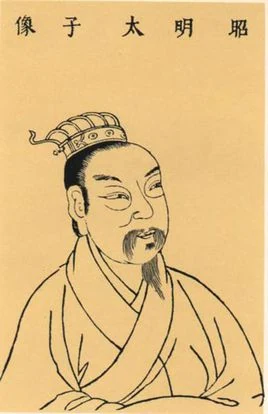
501 CE–531 CE
Crown princeliterary figure
Xiao Tong
萧统
Xiao Tong (501–May 7, 531), courtesy name Deshi and childhood name Weimo, was a native of Lanling County in South Lanling Commandery, present-day Danyang, Jiangsu. He was a member of the Southern Liang imperial house and a literary figure, the eldest son of Emperor Wu of Liang, Xiao Yan, and Noble Consort Ding Lingguang. In 502, the first year of the Tianjian era, he was established as crown prince. He was known for dignified…
501 CE–531 CELiang dynasty
PROFILE
Xiao Tong (501–May 7, 531), courtesy name Deshi and childhood name Weimo, was a native of Lanling County in South Lanling Commandery, present-day Danyang, Jiangsu. He was a member of the Southern Liang imperial house and a literary figure, the eldest son of Emperor Wu of Liang, Xiao Yan, and Noble Consort Ding Lingguang. In 502, the first year of the Tianjian era, he was established as crown prince. He was known for dignified conduct and benevolence in the Eastern Palace and was admired by officials and commoners. Later the “wax-goose curse” affair created tension between him and his father. In 531, the third year of Zhongdatong, Xiao Tong died young from illness at the age of thirty-one. He received the posthumous name Zhaoming and was buried at Anning Mausoleum, becoming known as Crown Prince Zhaoming. An avid reader devoted to metaphysical learning, he gathered scholars around the Eastern Palace and wrote extensively. He presided over compilation of Wen Xuan, traditionally called the Zhaoming Wen Xuan, which selected more than seven hundred poems, prose pieces, and rhapsodies from the pre-Qin period through Liang. The source describes it as the earliest surviving large-scale anthology of Chinese literary writing and notes that later scholarship devoted specifically to the work became known as “Wen Xuan studies.”
- Other name
- Crown Prince Zhaoming
- Courtesy name
- Deshi
- Period
- Southern Liang
- Date of Birth
- 501
- Date of Death
- May 7 531
- Dynasty/Regime
- Southern Liang
- Identity
- Crown prince, literary figure
- Ethnicity
- Not recorded in historical sources
- Native place
- Lanling County, South Lanling Commandery (present-day Danyang, Jiangsu)
- Place of birth
- Xiangyang
- Place of death
- Not recorded in historical sources
- Highest office
- See Biography and Major Deeds
- Main significance
- Eldest son of Emperor Wu of Liang; presided over compilation of the literary anthology Wen Xuan; later traditions of “Wen Xuan studies” developed around the work.
LIFE TIMELINE
Age two | Established as crown prince in the eleventh lunar month
Age nine | Lectured on the Classic of Filial Piety at Shou'an Hall and was said to grasp its central principles fully
Age fifteen | Performed the capping ceremony at Taiji Hall in the first lunar month; known for graceful bearing and for reading several lines at once
Age twenty | Sweet dew was reported at Huiyi Hall in the fourth lunar month and contemporaries attributed the omen to Xiao Tong's virtue
Age twenty-six | His mother Noble Consort Ding died in the eleventh lunar month; his intense mourning caused severe weight loss
Age thirty | Submitted a memorial opposing a canal project intended to drain floodwaters, citing the burden on the population
Age thirty-one | Fell into water while boating in the rear garden in the third lunar month and injured his thigh; died of illness on the yisi day of the fourth lunar month, May 7, and received the posthumous name Zhaoming
Posthumous | His grandson Xiao Dong became emperor and posthumously honored him as Emperor Zhaoming
Posthumous | His third son Xiao Cha established Western Liang and added the temple name Gaozong
BIOGRAPHY
Biography
Family Background and Early Life
Xiao Tong was born in the ninth lunar month of 501, the first year of Southern Qi's Zhongxing era. At the time his father Xiao Yan, then governor of Yongzhou, had raised an army from Xiangyang against Xiao Baojuan, Marquis of Donghun. By the end of the year Xiao Yan captured the Qi capital Jiankang and took control of the government. On April 30, 502, Xiao Yan accepted the “abdication” of Emperor He of Qi, became emperor, and founded Liang. In the eleventh lunar month that year, Xiao Tong was established as crown prince.
Xiao Tong was intelligent and studious from childhood. He was said to read several lines at once and remember what he had seen. In the ninth lunar month of 509, at only nine years of age, he lectured on the Classic of Filial Piety at Shou'an Hall and was said to understand its central meaning fully; afterward he personally attended a sacrificial ceremony at the Imperial Academy. He was also described as highly compassionate. At twelve he once observed a criminal trial in an inner office. After carefully studying the case papers, he concluded that the accused had mitigating circumstances and asked for a lighter sentence. The judicial official agreed, and Xiao imposed the lesser punishment. When the matter was reported to Xiao Yan, the emperor praised him and thereafter often allowed him to decide cases.
Life as Crown Prince
On New Year's Day of the first lunar month in 515, Emperor Wu presided from the audience hall while the fifteen-year-old Xiao Tong underwent his capping ceremony at Taiji Hall. Under earlier rules the crown prince wore a distant-travel crown with a golden cicada and jade-green tassels; Xiao Yan specially ordered the addition of a golden boshan ornament. Xiao Tong was praised for elegant appearance and proper conduct. At farewell banquets and ceremonial gatherings he could compose poems of more than ten rhymes, sometimes on difficult rhyme schemes, producing them after only brief thought without later correction.
Xiao Yan strongly promoted Buddhism and personally lectured on doctrine. Xiao Tong also had long-standing faith in the Three Jewels and read widely in Buddhist scriptures. Within the palace he established Huiyi Hall as a place specifically for Dharma assemblies, invited eminent monks, and composed his own Meaning of the Three Truths. In the fourth lunar month of 520, sweet dew was reported at Huiyi Hall and contemporaries attributed the auspicious phenomenon to Xiao Tong's virtue.
Xiao Tong became famous for benevolence. During the Putong era, 520–527, Southern Liang launched northern campaigns and the price of rice rose in Jiankang. Xiao Tong ordered reductions in his own food and clothing. Whenever it rained or snowed, he sent trusted men into the streets to identify poor households and homeless people and quietly distributed rice, ten shi per person. He also used palace cloth to have three thousand jackets and three thousand pairs of trousers made each year for distribution to people without winter clothing. He took care to conceal his identity in these acts. If a deceased person lacked a coffin, he donated one. He was repeatedly troubled by discrepancies between household-registration figures and actual population and by what he regarded as excessive burdens on commoners.
Mourning and the Wax-Goose Affair
In the eleventh lunar month of 526 Noble Consort Ding became gravely ill. Xiao Tong returned to Yongfu Palace and attended his mother from morning to night, even sleeping without removing his clothes. After her death he followed the funeral procession back to the palace on foot and consumed no food or drink before the encoffining. He frequently wept until he fainted. Xiao Yan sent Secretariat Drafter Gu Xie to urge him to eat, and Xiao Tong reluctantly took a few mouthfuls. Until the burial he consumed only one sheng of wheat porridge each day. He had originally been heavily built, with a waist said to exceed ten spans, but during mourning he lost more than half his former size. When he appeared at court, officials and commoners who saw his emaciation reportedly wept.
When arranging his mother's burial, Xiao Tong had earlier sent people to search for an auspicious gravesite. One landowner bribed the eunuch Yu Sanfu to help sell his land to the crown prince and promised him one million cash after the transaction. Yu secretly told Xiao Yan that another site was more auspicious for the emperor than the land selected by the crown prince. In old age Xiao Yan had become highly attentive to omens, so he ordered the alternate site purchased. After Noble Consort Ding was buried, a Daoist priest claimed that the site was unfavorable to the eldest son and that the danger might be countered through ritual suppression. Xiao Tong therefore had wax geese and other objects made and buried beside his mother's grave in the position associated with the eldest son.
Palace supervisors Bao Miaozhi and Wei Ya had both once been favored by Xiao Tong. After Bao gradually lost favor, he secretly reported to Xiao Yan that Wei Ya was conducting harmful magical rites on behalf of the crown prince. Xiao Yan had the grave excavated and wax geese were indeed found. He was shocked and wished to conduct a full investigation. Chancellor Xu Mian strongly remonstrated, persuading the emperor to stop after executing only the Daoist priest. Xiao Tong was nevertheless left ashamed and resentful for the rest of his life, unable to clear himself fully, and his relationship with his father gradually became more distant.
Final Years and Death
In the spring of 530, Wuxing Commandery repeatedly suffered crop failures from flooding. Some officials proposed digging channels to drain water into the Jiangsu-Zhejiang region. Xiao Yan ordered former Jiaozhou governor Wang Yi to conscript laborers from Wu, Wuxing, and Xinyi commanderies. Xiao Tong learned of the plan and memorialized against it, describing high grain prices in the east, frequent banditry, a shortage of able-bodied labor, and the likelihood that the work could not be completed. Xiao Yan issued a favorable response and accepted his recommendation to postpone the project.
In the third lunar month of 531, while touring the rear garden, Xiao Tong went boating to pick lotus flowers. A woman of his household rocked the boat and he accidentally fell into the water, injuring his thigh when rescued. He never recovered fully. Afraid that his father would worry, he prevented his staff from reporting the seriousness of his illness until shortly before death. On the yisi day of the fourth lunar month, May 7, his condition worsened and attendants rushed to notify Xiao Yan. By the time the emperor received the news, Xiao Tong had died at thirty-one.
Xiao Yan wept bitterly and ordered that his body be dressed in imperial robes and crown for burial. He granted the posthumous name Zhaoming, hence the name Crown Prince Zhaoming. On the gengyin day of the fifth lunar month Xiao Tong was buried at Anning Mausoleum near Jiankang. Wang Yun, Left Chief Clerk to the Minister over the Masses, was ordered to compose the funerary investiture text. Court and public were shocked and saddened. In Jiankang, men and women reportedly ran between the palace gates and “the roads were filled with wailing.” People in distant regions and frontier areas also mourned when they learned of his death.
Posthumous Developments
By succession custom Xiao Tong's eldest son Xiao Huan should have become crown prince. Xiao Yan, however, remained troubled by the wax-goose affair and also believed that a newly stabilized realm should not be entrusted to a young ruler. On May 21, 531, he instead made Xiao Huan Prince of Yuzhang and ordered him back to his post. On May 27 he formally established Xiao Tong's full brother Xiao Gang, Prince of Jin'an, as crown prince. To compensate Xiao Tong's branch, Xiao Yan exceptionally gave all of Xiao Tong's sons large commandery fiefs, treated his daughter as a full-ranking princess, and left Crown Princess Cai's treatment unchanged, merely moving her to Jinhua Palace.
In 551 Hou Jing installed Xiao Tong's grandson Xiao Dong, Prince of Yuzhang, as emperor. Xiao Dong posthumously honored Xiao Tong as Emperor Zhaoming. In 555 Xiao Tong's third son Xiao Cha founded Western Liang and added the temple name Gaozong.
Through his more than twenty years in the Eastern Palace Xiao Tong gathered about him a circle of literary men — Liu Xiaochuo, Wang Yun, Yin Yun, Dao Qia and Lu Chui among them — and a library of nearly thirty thousand scrolls, making the palace a leading center of letters and learning in the later Southern Dynasties. The Selections of Refined Literature in thirty chapters, which he directed, gathers more than seven hundred pieces of poetry and prose from the pre-Qin to the Liang arranged in over thirty categories such as rhapsody, poem, elegy, edict, memorial, letter and preface, its standard favoring matter that springs from deep thought and language that returns to elegant expression, a criterion of lasting influence on later literary ideas. In the Tang the anthology became a standard reader for the examinations and for literary study, giving rise to the saying that with the Selections well thumbed half the examinations were passed, and from the Song on there was even a "study of the Selections." He also compiled the Flower of Letters and other works, edited and prefaced the collected poems of Tao Yuanming, and his own writings were gathered as the collected works of the Heir Apparent Zhaoming. His eldest son Xiao Huan was made Prince of Yuzhang, and his third son Xiao Cha later founded the Western Liang under Western Wei patronage, honoring Xiao Tong posthumously as Emperor Zhaoming.
Besides the Selections he compiled the Flower of Letters and other books, and edited and prefaced the collected works of Tao Yuanming, that preface being an early and systematic appraisal of the poet; his own poems and prose survive in the collected works of the Heir Apparent Zhaoming. His palace literary circle and the making of the Selections have been seen as the practice of his criterion that writing spring from deep thought and return to elegant expression; in the Tang Li Shan and the five commentators each annotated the anthology, and from the Song it gave its name to a recognized field of study, its influence reaching into modern times.
Major Activities
Literary Contribution
Xiao Tong presided over compilation of Wen Xuan, traditionally known as the Zhaoming Wen Xuan. It selected more than seven hundred poems, prose works, and rhapsodies from the pre-Qin period through Liang and is described in the source as the earliest surviving large-scale anthology of Chinese literary writing. The anthology used the principle that “events should arise from deep reflection and meaning should return to literary elegance,” distinguishing belles-lettres from the Classics, histories, and philosophical writings. It had a major influence on later concepts of literature and preserved many works from before Liang. A specialized tradition of scholarship known as “Wen Xuan studies” later developed, and the saying “master the Wen Xuan and you are halfway to being a successful scholar” reflected the anthology's later prestige.
Buddhist Contribution
Xiao Tong was devoted to the Three Jewels and read broadly in Buddhist scriptures. He established Huiyi Hall in the palace as a venue for Dharma assemblies, invited eminent monks, and wrote Meaning of the Three Truths. The source also attributes to Xiao Tong the division of the Diamond Sutra into thirty-two sections, reorganizing a long continuous scripture into units easier to recite and understand and adding concise sectional headings. Because of the contributions of Crown Prince Zhaoming and his father to the circulation of Buddhist doctrine, some Chan temples later worshiped Emperor Wu and Crown Prince Zhaoming together as protective deities.
Benevolent Government and Concern for the People
Xiao Tong was famous in the Eastern Palace for benevolence. When northern campaigns during the Putong era caused rice prices to rise, he reduced his own consumption, sent trusted men to provide secret relief to the poor, had three thousand sets of clothing made each year for those without winter garments, and donated coffins to families unable to bury their dead. He was troubled by excessive taxation and labor service and by inaccurate household registers. In 530 he memorialized against the proposed flood-drainage canal, arguing in detail that the population lacked labor capacity, banditry was common, and the project could create even greater harm. Xiao Yan accepted his recommendation.
Places and Travel
Xiao Tong was born at Xiangyang and later followed his father to Jiankang. Most of his life was spent in the palace at Jiankang. In 509 he lectured on the Classic of Filial Piety at Shou'an Hall, and in 515 underwent his capping ceremony at Taiji Hall. He established Huiyi Hall as a site for Buddhist assemblies. In the third lunar month of 531, while boating in the rear garden to pick lotus flowers, he fell into the water and injured his thigh, an accident followed by the illness that led to his death.
Relations with Contemporaries
As crown prince, Xiao Tong gathered many talented men and wrote diligently. The Eastern Palace was said to possess nearly thirty thousand volumes, and “famous talents gathered together; the flourishing of literature had not been seen since the Jin and Song.” Numerous scholars and writers worked around him and participated in compilation of Wen Xuan. He had dealings with Chancellor Xu Mian, who strongly remonstrated with Xiao Yan during the wax-goose affair and prevented a deeper investigation. Palace supervisors Bao Miaozhi and Wei Ya served him; Bao's resentment after losing favor led to the accusation of harmful magic that became a lifelong source of humiliation for Xiao Tong.
Xiao Tong was the eldest son of Xiao Yan, Emperor Wu of Liang, born at Xiangyang in the ninth month of 501 while his father was raising troops against the Marquis of Donghun. Xiao Yan took the throne in the fourth month of 502, and on the jiazi day of the eleventh month made Xiao Tong heir apparent. In the ninth month of 509 the prince lectured on the Classic of Filial Piety at the Shou'an Hall, mastering its meaning, and afterward presided in person at the sacrifice at the imperial academy. At twelve, seeing the prison officers at work in the inner secretariat, he asked for the files and said, "These are all pitiable; may I judge them?" The officials, thinking him a child, said yes, and he sentenced every capital case to fifty strokes of the cane; the officers, not knowing what to do, reported it, and the emperor laughingly let it stand, thereafter often having him hear cases.
For more than twenty years in the Eastern Palace he was known for kindness, frugality and letters. On the first day of the first month of 515 the emperor presided at his capping in the Taiji Hall; where custom gave the heir a distant-journey cap with gold cicada and kingfisher tassels, an edict now added a gold mountain ornament. Handsome and well mannered, he could read several lines at once and remember all he saw, and at farewell banquets would compose poems to a dozen rhymes, even on set rhymes, without revision. Devout in the three jewels and widely read in the sutras, he set up the Huiyi Hall in the palace for dharma assemblies, invited famous monks and wrote his own Meaning of the Three Truths; in 520 sweet dew fell on the hall and men took it as a sign of his virtue. He gathered literary men and compiled the Selections of Refined Literature in thirty chapters, the earliest surviving anthology of poetry and prose, of great influence on later letters.
When his mother Lady Ding fell ill in 526 he returned to the Yongfu Palace and nursed her day and night without undressing; after her death he walked with the funeral procession and would take no food or water, weeping until he fainted. The emperor urged him to eat, and he took only a pint of wheat gruel a day until the burial, eating less than a handful in mourning, so that his waist, ten spans around, shrank by more than half, and the people wept to see him so wasted at court. With fashions turning to luxury he set an example of plain dress, wearing washed robes and never two meats at a meal. When the northern campaign raised grain prices in the capital he cut his clothes and food and, on long spells of rain and snow, sent trusted men through the lanes to give the poor and the homeless ten measures of rice each in secret; he had three thousand pairs of trousers made each year from palace silk for the cold, without letting it be known, and provided coffins for the unburied. In the spring of 530, when the three commanderies of Wu, Wuxing and Xinyi were conscripted to dig a canal, he memorialized on the poor harvests, high grain prices, men still on campaign and the harm to silkworm and farm work, asking that the work be postponed, and the emperor answered with a gracious edict.
In the third month of 531, boating on the rear pond to pick lotuses, Xiao Tong fell in when the boat rocked, injuring his thigh, and never recovered; he died on the yisi day of the fourth month at only thirty-one. Because of the affair of the wax goose buried beside his mother's tomb, exposed by a eunuch's report — the emperor had the site dug, found the object, and at the chancellor Xu Mian's urging killed only the Daoist priest — he remained shamed and unable to clear himself to the end. His eldest son Xiao Huan was therefore not made heir, and the emperor raised Xiao Gang, Prince of Jin'an, later Emperor Jianwen, in his place.
Personal Relations
- Father: Xiao Yan, Emperor Wu of Liang
- Mother: Ding Lingguang, Noble Consort Ding, posthumously Empress Dowager Mu
- Brothers: Xiao Zong, Prince of Yuzhang; Xiao Gang, Emperor Jianwen of Liang; Xiao Ji, Prince Jian of Nankang; Xiao Xu, Prince Wei of Luling; Xiao Lun, Prince of Shaoling; Xiao Yi, Emperor Yuan of Liang; Xiao Ji, Prince of Wuling
- Wives and consorts: Crown Princess Cai; Baolin Gong
- Children: Xiao Huan, Prince of Yuzhang; Xiao Yu, Prince of Hedong; Xiao Cha, Emperor Xuan of Western Liang; Xiao Jian, Prince of Wuchang; Xiao Jian, Prince of Yiyang; Princess Luling, married Wang Xuan
- Xu Mian: chancellor who remonstrated with Xiao Yan on his behalf during the wax-goose affair
- Wang Yun: Left Chief Clerk to the Minister over the Masses, ordered to compose his funerary investiture text
- Gu Xie: Secretariat Drafter sent by Xiao Yan to urge Xiao Tong to eat during mourning
- Xiao Yan: father and sovereign; their relationship became strained after the wax-goose affair
- Xiao Gang: full younger brother who succeeded him as crown prince
- Bao Miaozhi: palace supervisor who, after losing favor, accused him of using harmful magical rites
- Yu Sanfu: eunuch whose secret report to Xiao Yan helped trigger the burial-site controversy
Historical Assessment
Southern Dynasties / Contemporary Views
- The Book of Liang, vol. 8, “Biography of Crown Prince Zhaoming,” says that “the crown prince was intelligent and perceptive from birth; at three he received the Classic of Filial Piety and Analects, at five he had read all Five Classics and could recite them.” It also describes him as filial and humane, handsome in appearance and graceful in conduct, able to read several lines at once and remember whatever he had seen.
- The History of the Southern Dynasties, vol. 53, records that at banquets and farewell ceremonies he could compose poems of more than ten rhymes, even on difficult rhyme schemes, “forming them as soon as he thought, with nothing needing correction.” It also records that after his death “court and public were shocked and grieved; men and women in the capital ran to the palace gates, and the roads were filled with wailing. Commoners of the four quarters and people at the frontier who heard the news mourned deeply.”
- Wang Yun's funerary text praised his character and literary ability and included the line “the sound of your virtue has not yet grown distant, yet the road to the springs is already eternal,” expressing grief at his early death.
Sui and Tang Periods
- Tang scholar Li Shan wrote a commentary on Wen Xuan, helping establish “Wen Xuan studies” as a specialized field. His commentary remains one of the major sources for studying the anthology.
- Du Fu admonished his son in the poem “On Zongwu's Birthday” to “master thoroughly the principles of the Wen Xuan,” showing the anthology's canonical status among Tang literati.
- Lü Yanzuo and other Tang scholars produced the Five Ministers' Commentary on Wen Xuan, further expanding the anthology's circulation and influence.
Song and Yuan Periods
- Su Shi is associated with the saying “master the Wen Xuan and you are halfway to being a successful scholar,” reflecting the anthology's prestige in the examination age.
- Wang Yinglin repeatedly cited Wen Xuan in Notes on Learning Through Adversity and used it as a source for scholarly textual investigation.
- Yuan scholar Fang Hui, in Critical Comments on the Yan, Bao, and Xie Poems in Wen Xuan, discussed the anthology's standards and argued that its principle of deep reflection and literary elegance was pioneering in later literary criticism.
Ming and Qing Periods
- Hu Yinglin called the Zhaoming Wen Xuan “a great repository of literature and a precious vessel in the forest of letters” in Shisou, giving it very high literary-historical status.
- Zhang Xuecheng, in General Meaning of Literature and History, discussed Xiao Tong's selection principles and argued that the idea of taking literary writing itself as the foundation contributed to later consciousness of literature as an independent field.
- Ruan Yuan sponsored publication of the Wenxuanlou Collectanea, strongly encouraging “Wen Xuan studies” and contributing to its flourishing in the Qing.
Modern Period
- Fan Wenlan's Concise General History of China describes the anthology compiled under Xiao Tong as the first great anthology in Chinese literary history and as irreplaceable for preserving writings from the pre-Qin period through Liang.
- Luo Hongkai's Wen Xuan Studies systematically surveyed the history and achievements of scholarship on the anthology and called Xiao Tong the “founder of Wen Xuan studies.”
- Cao Daoheng, in works including “Crown Prince Zhaoming and the Wen Xuan,” examined Xiao Tong's life, thought, and the circumstances of the anthology's compilation and argued that his literary ideas reflected the maturation of literary self-consciousness in the Qi-Liang period.
FIGURES ASSOCIATED WITH THIS DYNASTY
Bibliography
- Yao Silian, Book of Liang, vol. 8, “Biography of Crown Prince Zhaoming”
- Li Yanshou, History of the Southern Dynasties, vol. 53, “Biography of Crown Prince Zhaoming”
- Luo Hongkai, Wen Xuan Studies, Zhonghua Book Company