Birth | Born in Shangyuan County, Yingtian Prefecture.
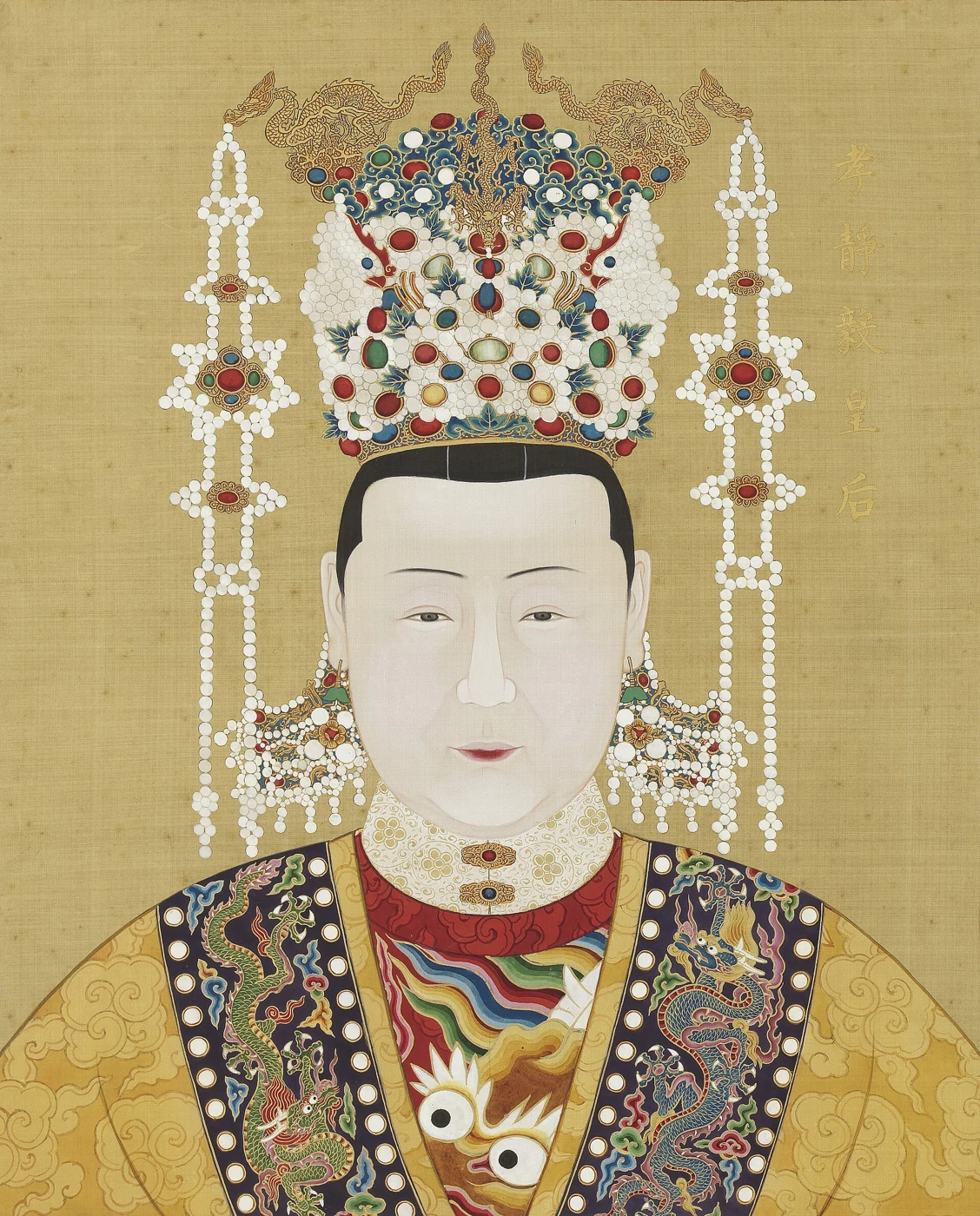
?–1535 CE
Empress
Empress Xia (Ming dynasty)
夏氏(明武宗皇后)
Empress Xia (1493–February 26, 1535), personal name unknown, was a native of Shangyuan County in Yingtian Prefecture (present-day Nanjing, Jiangsu); her family later moved north to Daxing County in Shuntian Prefecture (present-day Beijing). She was the empress of Zhu Houzhao, Emperor Wuzong of Ming. She was installed as empress in 1506, the first year of the Zhengde era. Wuzong died without a son. After Emperor Shizong…
?–1535 CEMing Dynasty
PROFILE
Empress Xia (1493–February 26, 1535), personal name unknown, was a native of Shangyuan County in Yingtian Prefecture (present-day Nanjing, Jiangsu); her family later moved north to Daxing County in Shuntian Prefecture (present-day Beijing). She was the empress of Zhu Houzhao, Emperor Wuzong of Ming. She was installed as empress in 1506, the first year of the Zhengde era. Wuzong died without a son. After Emperor Shizong succeeded to the throne, Empress Xia, as his imperial sister-in-law, occupied the senior position in the inner court and received the honorific title Empress Zhuangsu. She died in 1535, the fourteenth year of the Jiajing era, and was buried with Emperor Wuzong in Kangling Mausoleum.
- Other Names
- Empress Xia of Emperor Wuzong; Empress Xiaojingyi; Wuzong; Empress Zhuangsu
- Period
- Ming
- Date of Birth
- 1492 CE(5th year of the Hongzhi era, Ming)
- Date of Death
- February 26 1535
- Dynasty/State
- Ming
- Identity
- Empress
- Ethnicity
- Not reliably confirmed in the available sources
- Native Place
- Shangyuan County, Yingtian Prefecture (present-day Nanjing, Jiangsu)
- Birthplace
- Unknown
- Tenure as Empress
- 1506–1521
- Posthumous Title
- Empress Xiaojing Zhuanghui Ansu Wencheng Shuntian Xieshengyi
- Principal Significance
- Empress of Emperor Wuzong of Ming; after Wuzong died without a son and Emperor Shizong succeeded, she occupied the senior palace position as the emperor's sister-in-law.
- Courtesy / Art Name
- Empress Xia of Emperor Wuzong, Empress Xiaojing Yi of the Xia family, Emperor Wuzong, Empress Xiaojing Yi, Empress Zhuangsu
- Era
- Ming
- Dynasty
- Ming
- Ancestral Home
- Shangyuan county of Yingtian prefecture (present-day Nanjing, Jiangsu)
- Place of Birth
- Unknown
- Place of Death
- Unknown
- Lifespan
- 43 (source recorded)
- Highest Office
- See the Biography section
- Major Offices
- See the Biography section
- Peerage
- Her father Xia Ru was Count of Qingyang
- Posthumous Name
- The Empress Xiaojing Zhuanghui Ansu Wencheng Shuntian Xiesheng Yi
- Major Achievements
- Empress of Emperor Wuzong; he died without sons and on the accession of Emperor Shizong she held the place of empress dowager
LIFE TIMELINE
Age fourteen (source recorded) | Installed as empress.
Repeatedly remonstrated with Emperor Wuzong and urged him to restrain his conduct | Repeatedly remonstrated with Emperor Wuzong and urged him to restrain his conduct, without success.
As Imperial Sister-in-Law In 1521 | ### As Imperial Sister-in-Law In 1521, the sixteenth year of the Zhengde era, Emperor Wuzong died without an heir.
Imperial succession | Emperor Wuzong died without a son. Zhu Houcong succeeded as emperor. Empress Xia, as the new emperor's sister-in-law, occupied a senior palace position and received the honorific title Empress Zhuangsu.
Age forty-three | Died, was buried with Emperor Wuzong at Kangling Mausoleum, and her spirit tablet was enshrined in the Imperial Ancestral Temple.
Posthumous | Emperor Shizong revised her posthumous title to Empress Xiaojing Zhuanghui Ansu Wencheng Shuntian Xieshengyi.
In 1536 | In 1536, the fifteenth year of the Jiajing era, Shizong reconsidered Zhang Fujing's earlier argument and declared that Empress Xiaojing's title was incomplete and insufficient for her to share Wuzong's ancestral honors.
BIOGRAPHY
Biography
Family Background and Early Years Empress Xia was born in 1493 into a family of hereditary military merit. Her great-great-grandfather was Xia Yanguang, her great-grandfather Xia Qizong, and her grandfather Xia Xuan. Her father, Xia Ru, held the honorific ranks of Meritorious Martial Official for Promoting Sincerity and Declaring Strength, Grand Master for Glorious Happiness, and Pillar of State, and was enfeoffed as Count of Qingyang. The Xia family was originally registered in Shangyuan County, Yingtian Prefecture, and moved north to Daxing County, Shuntian Prefecture, during the Yongle era. Empress Xia had three brothers—Xia Zhu, Xia Chen, and Xia Xun—and three sisters. One sister married Xu Pengju, Duke of Wei, and another married Zhang Zongshuo, son of Zhang Heling, Marquis of Shouning, who served as a commander in the Embroidered Uniform Guard. In 1506, the first year of the Zhengde era, Lady Xia was installed as empress at the age of fourteen, as recorded by the source. ### Life as Empress During Empress Xia's tenure, Emperor Wuzong spent long periods outside the main palace at the Leopard Quarter and indulged in entertainment and sensual pleasures. Empress Xia repeatedly urged him to restrain his conduct but was unable to change his behavior. The Ming bibliophile Yang Yi recorded in Mingliang Ji that, after Wuzong had long avoided the inner palace, he suddenly returned following a trip from Datong. Empress Xia wept when she saw him. Wuzong asked why she had become so thin and ordered the Court of Imperial Entertainments to provide a meal including a pair of fat geese. The episode suggests that the two retained some personal affection, although Wuzong's prolonged residence outside the palace left Empress Xia without children. ### As Imperial Sister-in-Law In 1521, the sixteenth year of the Zhengde era, Emperor Wuzong died without an heir. Empress Dowager Zhang summoned Grand Secretary Yang Tinghe to discuss the succession. Although the Prince of Yi, a younger son of Emperor Xianzong, already had grandsons, Empress Dowager Zhang supported Zhu Houcong, son of the Prince of Xing and a cousin of Wuzong. Zhu Houcong ascended the throne that year as Emperor Shizong of Ming. As Shizong's imperial sister-in-law, Empress Xia could not formally be called empress dowager under the traditional rule that the title belonged to the emperor's mother. Shizong therefore followed the precedent of Empress Xiaozhang of Song and bestowed an honorific title upon her, calling her Empress Zhuangsu. ### Later Years and Posthumous Honors On February 26, 1535, the bingxu day of the first lunar month in the fourteenth year of the Jiajing era, Empress Zhuangsu Xia died. She was buried with Emperor Wuzong at Kangling Mausoleum, and her spirit tablet was enshrined in the Imperial Ancestral Temple. After her death, court officials submitted proposals for the mourning rites. Emperor Shizong stated that an emperor did not observe mourning for a sister-in-law and that both empress dowagers were still alive; he therefore intended to wear blue clothing during the mourning period, while subjects would observe the mourning appropriate to an empress. Xia Yan, Minister of the Ministry of Rites, argued that ministers could not appear before the emperor in mourning garments and requested a temporary suspension of court audiences. Shizong approved the request. A further dispute concerned the length of Empress Xia's posthumous title. Grand Secretary Zhang Fujing argued that because the deceased empress was the emperor's sister-in-law rather than his own principal consort, a title of two or four characters was appropriate. Li Shi proposed eight characters, while Chief Censor Wang Tingxiang and Vice Minister of Personnel Huo Tao argued that all empresses should be treated alike. Xia Yan gathered the officials' views and memorialized that contemporary rules should be followed for a contemporary empress and that the number of characters should not be decided by unsupported distinctions. Shizong rejected this position and ordered further discussion. When the officials asked him to accept Zhang Fujing's approach, Shizong decided upon six characters as an even, yin number. Lady Xia was therefore initially given the posthumous title Empress Xiaojing Zhuanghui Ansuyi. In 1536, the fifteenth year of the Jiajing era, Shizong reconsidered Zhang Fujing's earlier argument and declared that Empress Xiaojing's title was incomplete and insufficient for her to share Wuzong's ancestral honors. He therefore revised it to Empress Xiaojing Zhuanghui Ansu Wencheng Shuntian Xieshengyi.
Major Activities
Status as Empress In 1506, Lady Xia was installed as Emperor Wuzong's principal wife. As empress she attempted to persuade Wuzong to abandon excessive indulgence and restrain his conduct, but without success. Yang Yi's Mingliang Ji preserves an episode between the couple that suggests a degree of personal affection. ### Wuzong's Childlessness and the Succession Emperor Wuzong spent many years outside the main palace, and Empress Xia had no children. After Wuzong died childless in 1521, Empress Dowager Zhang and Grand Secretary Yang Tinghe arranged for Zhu Houcong, son of the Prince of Xing, to succeed as Emperor Shizong. Empress Xia, as the new emperor's sister-in-law, did not become an empress dowager; instead, she held the honorific title Empress Zhuangsu while occupying a senior position in the inner court. ### Debate over Posthumous Honors After Empress Xia died in 1535, court officials debated both her mourning rites and the length of her posthumous title. Shizong simplified his own mourning obligations because of their relationship as brother-in-law and sister-in-law. Zhang Fujing advocated a two- or four-character title, Li Shi argued for eight characters, and Shizong ultimately chose six. The following year, the title was expanded again, reflecting the complex ritual implications of Empress Xia's position as the reigning emperor's sister-in-law.
Personal Relations
- Xia Qizong: Great-grandfather.
- Xia Xuan: Grandfather.
- Xia Ru: Father; Count of Qingyang.
- Xia Zhu, Xia Chen, Xia Xun: Brothers.
- Sisters: Two are specifically identified in the source, one married to Xu Pengju, Duke of Wei, and one to Zhang Zongshuo. ### Court Relationships - Zhu Houzhao (Emperor Wuzong of Ming): Husband.
- Zhu Houcong (Emperor Shizong of Ming): Imperial brother-in-law.
- Empress Dowager Zhang: Mother of Wuzong.
- Yang Tinghe: Grand Secretary.
- Xia Yan: Minister of the Ministry of Rites.
- Zhang Fujing: Grand Secretary.
- Li Shi: Official.
- Wang Tingxiang: Chief Censor.
- Huo Tao: Vice Minister of Personnel.
Historical Assessment
Ming and Contemporary Views - The Ming bibliophile Yang Yi recorded the meeting between Wuzong and Empress Xia in Mingliang Ji, suggesting that the couple retained some affection; Empress Xia reportedly wept because Wuzong had long stayed away from the inner palace.
- Emperor Shizong stated during her funeral arrangements that an emperor did not need to observe mourning for a sister-in-law and simplified his own mourning obligations, reflecting a degree of ritual distance from his imperial sister-in-law.
- Xia Yan and other officials argued during the posthumous-title debate that a deceased empress of their own age should be treated under contemporary precedent like other principal empresses. ### Early and Middle Qing - The Qing-compiled History of Ming placed Empress Xia in the biographies of empresses and consorts and neutrally recorded her installation in the first year of Zhengde, Wuzong's death without an heir, and the honorific title Empress Zhuangsu bestowed after Shizong's accession.
- Qing historians often treated Wuzong's lack of an heir as an important factor in the transition of the throne to a collateral branch, making Empress Xia's childlessness part of the background to the political change. ### Late Qing and Republican Period - Meng Sen's History of the Ming Dynasty mentioned Empress Xia's childlessness and the succession issue in its discussion of Wuzong's reign, treating them as part of the background to a major political transition in the mid-Ming.
- Modern-era historians have also analyzed Shizong's repeated changes to Empress Xia's posthumous title from the perspective of ritual institutions, sometimes connecting the issue to the aftereffects of the Great Rites Controversy. ### Modern Period - Modern studies of Ming palace institutions often cite Empress Xia when discussing the ritual status of an emperor's sister-in-law. Shizong's use of a Song precedent to confer an honorific title on her represents an unusual case in Ming ritual history.
- Some scholars have noted that Empress Xia's unsuccessful remonstrations with Wuzong show the limited ability of later Ming empresses to restrain an emperor's personal conduct compared with influential early Ming empresses such as Empress Ma and Empress Xu.
FIGURES ASSOCIATED WITH THIS DYNASTY
Bibliography
- History of Ming*, “Biographies of Empresses and Consorts”
- Meng Sen, History of the Ming Dynasty