Age one | Xiao Daocheng was born
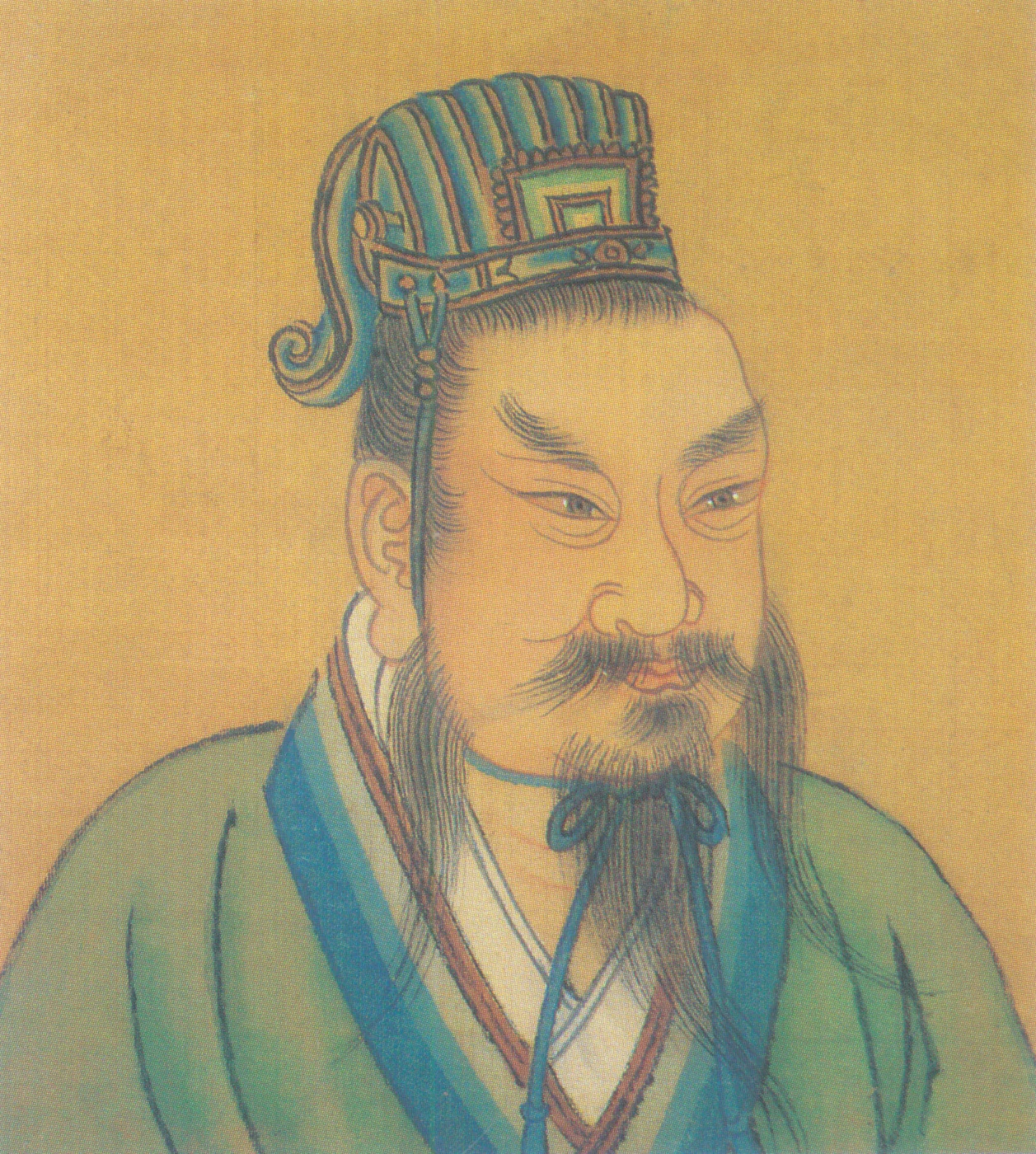
427 CE–482 CE
Emperor
Xiao Daocheng
萧道成
Xiao Daocheng (427–April 11, 482), courtesy name Shaobo and childhood name Doujiang, was a native of South Lanling Commandery, in present-day Danyang, Jiangsu. He was the founding emperor of Southern Qi during the Southern and Northern Dynasties and is commonly known as Emperor Gao of Southern Qi. Born into the Lanling Xiao clan, he studied the Confucian classics in his youth before entering military service. He distinguished…
427 CE–482 CESouthern Qi
PROFILE
Xiao Daocheng (427–April 11, 482), courtesy name Shaobo and childhood name Doujiang, was a native of South Lanling Commandery, in present-day Danyang, Jiangsu. He was the founding emperor of Southern Qi during the Southern and Northern Dynasties and is commonly known as Emperor Gao of Southern Qi. Born into the Lanling Xiao clan, he studied the Confucian classics in his youth before entering military service. He distinguished himself repeatedly in the suppression of rebellions and in wars against Northern Wei under Liu Song, gradually entering the center of political power. After Emperor Ming of Liu Song died, Xiao Daocheng became one of the senior regents and, together with Yuan Can, Chu Yuan, and Liu Bing, was counted among the “Four Eminent Men.” In 477, the fifth year of Yuanhui, he arranged the killing of the violent Deposed Emperor Liu Yu and installed Emperor Shun of Liu Song, Liu Zhun. He then defeated the opposition of Shen Youzhi, Yuan Can, and others and advanced to the rank of Prince of Qi. In 479, the third year of Shengming, Xiao Daocheng accepted Emperor Shun's abdication, established Southern Qi, and became emperor. He died after a reign of four years, receiving the posthumous name Emperor Gao and temple name Taizu. His era name was Jianyuan, and he was buried at Tai'an Mausoleum.
- Other name
- Emperor Gao of Southern Qi
- Courtesy name
- Shaobo
- Period
- Southern Qi
- Dynasty/Regime
- Southern Qi
- Identity
- Emperor
- Ethnicity
- Han Chinese
- Native place
- South Lanling Commandery (present-day Danyang, Jiangsu)
- Date of birth
- 427
- Place of birth
- Not recorded in historical sources
- Date of death
- April 11, 482
- Reign
- May 29, 479–April 11, 482
- Predecessor
- Emperor Shun of Liu Song (Liu Zhun)
- Successor
- Emperor Wu of Southern Qi (Xiao Ze)
- Era name
- Not recorded in historical sources
- Temple name
- Taizu
- Posthumous name
- Emperor Gao
- Main significance
- Rose from the office of General of the Central Guards under Liu Song, suppressed internal rebellions, replaced Liu Song with Southern Qi, and became the founding emperor of Southern Qi.
LIFE TIMELINE
Age thirteen | Entered Jilong Mountain in Jiankang and studied the Book of Rites, Zuo Tradition, and other Confucian classics under the scholar Lei Cizong
Age fourteen | Abandoned his studies and went south with the army because his father Xiao Chengzhi was commanding troops stationed at Yuzhang
Age sixteen | By order of Emperor Wen of Liu Song, led a detachment against tribal groups north of the Mian River
Age eighteen | Fought Northern Wei, advanced to Qiukan Mountain, and heavily defeated Wei forces
Age twenty | Followed Yongzhou governor Xiao Sihua to defend Xiangyang and campaigned against mountain tribes around Fan and Deng, defeating them
Age twenty-four | While Northern Wei besieged Runan, was commissioned to proclaim imperial orders and coordinate the armies; fought Emperor Taiwu of Northern Wei, Tuoba Tao, at Guanshan, suffered defeat, held his ground, and eventually returned safely to the capital
Age twenty-six | Led a detachment against the state of Chouchi, captured Langao and Wuxing garrisons, then withdrew to Nanzheng after Emperor Wen's death and inherited the fifth-rank barony of Jinxing County
Age twenty-eight | Appointed staff officer in the Grand Marshal's office of the Prince of Jiangxia; later followed the office when it was reorganized under the Grand Steward, and successively became Gentleman Outside the Regular Establishment, Drafter of the Secretariat in Direct Attendance, staff officer to the Prince of Xiyang's General Who Pacifies the Army, and magistrate of Jiankang
Age thirty-five | Served as military staff officer to the Northern Central General; resigned to mourn his mother and later resumed office as magistrate of Jiankang
Age thirty-nine | Served as General of the Rear Army; when Liu Yu became Emperor Ming of Liu Song, promoted to General of the Right Army
Age forty | Granted the title General Who Assists the State and sent east to suppress the rebellion of Liu Zifang, governor of Kuaiji, and others, breaking twelve enemy fortifications in one day; later defeated Xue Suo'er in the north, was made Marquis of Xiyang with six hundred households, defeated the attack of Zhang Yan, a commander under Liu Zixun, Prince of Jin'an, and was promoted to military staff officer of the Northern Expedition under the Prince of Guiyang, governor of South Dongguan, and acting administrator of Southern Xuzhou
Age forty | Advised Emperor Ming against Zhang Yong and Shen Youzhi's attempt to compel Xue Andu to surrender; after Xue Andu defected to Northern Wei and Zhang Yong's army suffered a major defeat at Pengcheng, Xiao Daocheng was appointed acting Champion General, Bearer of Credentials, commander of the northern expeditionary vanguard, and stationed at Huaiyin
Age forty-one | After Shen Youzhi and Wu Xi suffered a major defeat at Suikou, sent Gao Daoqing with crossbow ships to relieve the siege of Jiaocheng; promoted to commander of military affairs in Southern Yanzhou and Xuzhou and governor of Southern Yanzhou
Age forty-three | Advanced to commander of Yanzhou, Qingzhou, and Jizhou
Age forty-four | Appointed Gentleman of the Yellow Gate and concurrently Commandant of the Yue Cavalry but did not accept; reappointed Champion General and retained in his existing command
Age forty-five | Recalled to the capital by Emperor Ming and appointed Regular Mounted Attendant and Left Guard Commander of the Crown Prince
Age forty-six | After Emperor Ming died, appointed by testament as General of the Right Guard and concurrently Commandant of the Guards, with five hundred guards; together with Yuan Can, Chu Yuan, and Liu Mian, controlled major state affairs and was counted among the “Four Eminent Men”
Age forty-eight | Suppressed the rebellion of Liu Xiufan, Prince of Guiyang; advanced in noble rank and became General of the Central Guards, controlling the imperial guards and supervising military affairs in five provinces
Age fifty | Promoted to Left Vice Director of the Department of State Affairs
Age fifty-one | Because Deposed Emperor Liu Yu was violent, conspired with Chu Yuan and others, ordered Wang Jingze to kill Liu Yu, and installed Liu Zhun as Emperor Shun; became Supervisor of the Affairs of the Secretariat and Duke of Jingling Commandery
Age fifty-one | Shen Youzhi, governor of Jingzhou, rebelled; Yuan Can and Liu Bing planned to support him but were exposed and killed; Xiao Daocheng successively suppressed the opposition
Age fifty-two | Advanced to Grand Tutor and received ceremonial privileges including the yellow battle-axe and sword-bearers, entry to the palace without hastening, and exemption from being called by name during formal audience
Age fifty-three | Enfeoffed as Prince of Qi; in the fourth lunar month accepted Emperor Shun's abdication, proclaimed himself emperor, established the state of Qi, and adopted the era name Jianyuan
Age fifty-six | Became seriously ill in the third lunar month and gave final instructions; died at Linguang Hall on the eighth day of the fourth lunar month, April 11, receiving the posthumous name Emperor Gao and temple name Taizu and being buried at Tai'an Mausoleum
BIOGRAPHY
Biography
Family Background and Early Life
Xiao Daocheng claimed descent in the twenty-fourth generation from Xiao He, Chancellor of State of the Western Han. Xiao He's grandson Xiao Biao later settled at Zhongdu Village in Zhongdu Township, Lanling County, Donghai Commandery, in present-day Lanling County, Linyi, Shandong. In 291, the first year of Yuankang under Western Jin, Lanling Commandery was separated from Donghai Commandery. During the upheavals at the end of Western Jin, Xiao Daocheng's great-great-grandfather Xiao Zheng crossed south in the early Eastern Jin and settled at Dongchengli in Wujin County, Jinling Commandery, in present-day Danyang, Jiangsu. Eastern Jin established an expatriate Lanling Commandery within Wujin. Because expatriate northern commanderies in the south were commonly distinguished by adding “South” to their northern place names, the area became known as South Lanling, and the Xiao clan there was regarded as the Lanling branch of South Lanling. Xiao Zheng had two sons, Xiao Jun and Xiao Xia. Xiao Jun was Xiao Daocheng's great-grandfather, while Xiao Xia was the great-great-grandfather of Xiao Yan, Emperor Wu of Liang. The Lanling Xiao clan therefore supplied imperial houses to both Southern Qi and Southern Liang and was later described as the Qi-Liang branch.
Xiao Daocheng's father, Xiao Chengzhi, was a distant relative by marriage of the Liu Song imperial house through Xiao Wenshou, stepmother of Liu Yu, and rose through military service to become governor of South Taishan Commandery and General of the Right Army. Xiao Daocheng was Xiao Chengzhi's third son and was born in 427, the fourth year of Emperor Wen's Yuanjia era. He was said to have an exceptional appearance and bearing. At thirteen he entered Jilong Mountain in Jiankang to study the Book of Rites, Zuo Tradition, and other Confucian classics under Lei Cizong. In 440, the seventeenth year of Yuanjia, Liu Yikang, Prince of Pengcheng, was deposed and sent to Yuzhang. Xiao Chengzhi led troops there, and Xiao Daocheng abandoned his studies to accompany the army south, beginning his military career.
Early Military Achievements
In 442, the nineteenth year of Yuanjia, tribal groups in Jingling were suspected of plotting rebellion, and Emperor Wen sent Xiao Daocheng with a detachment against groups north of the Mian River. In 444, the twenty-first year of Yuanjia, Xiao Daocheng campaigned against Northern Wei, advanced to Qiukan Mountain, and heavily defeated Wei forces. In 446, the twenty-third year of Yuanjia, he followed Yongzhou governor Xiao Sihua to defend Xiangyang, guarded the region north of the Mian, and campaigned against mountain peoples around Fan and Deng, defeating them.
In 450, the twenty-seventh year of Yuanjia, Northern Wei besieged the Liu Song commander Chen Xian at Runan. The court sent General Who Pacifies the North Zang Zhi and Liu Kangzu, military administrator for pacifying the tribal peoples, to relieve the city. Emperor Wen ordered Xiao Daocheng to transmit imperial commands and gave him authority to coordinate the armies. Emperor Taiwu of Northern Wei, Tuoba Tao, led a great army against Pengcheng, causing Zang Zhi and others to turn back. When the army reached Xuyi, Xiao Daocheng and Zang Zhi separately directed Hu Zongzhi and five other units, several thousand infantry and cavalry serving as the vanguard. Tuoba Tao secretly crossed the Huai River and encountered the Song army below Guanshan. Xiao Daocheng's force was badly defeated; he withdrew along the Huai, while Hu Zongzhi's and other units were destroyed. Xiao Daocheng fell back to Zang Zhi's position and held out under attack by Tuoba Tao. The situation became critical, but he eventually returned safely to the capital.
In 452, the twenty-ninth year of Yuanjia, Xiao Daocheng led a detachment against the state of Chouchi and captured Langao and Wuxing garrisons, the latter in present-day Lueyang, Shaanxi. When he was about eighty li from Chang'an, Liu Xiuzhi, governor of Liangzhou, sent the military officer Ma Zhu to assist him, and together they captured Tandi. After enemy reinforcements arrived, Xiao Daocheng judged that his troops were few and exhausted. He then learned of Emperor Wen's death, burned the captured position, withdrew to Nanzheng, present-day Hanzhong, Shaanxi, and inherited the fifth-rank barony of Jinxing County.
Rapid Advancement
Early in the Xiaojian era under Emperor Xiaowu of Liu Song, in 454, Xiao Daocheng was appointed staff officer in the Grand Marshal's office of the Prince of Jiangxia. He followed the princely establishment when it was reorganized under the Grand Steward and successively became Gentleman Outside the Regular Establishment, Drafter of the Secretariat in Direct Attendance, staff officer to the Prince of Xiyang's General Who Pacifies the Army, and magistrate of Jiankang. In 461, the fifth year of Daming, the Prince of Xin'an Liu Ziluan selected officials for his staff and appointed Xiao Daocheng a military staff officer to the Northern Central General. When Xiao Daocheng's mother died he resigned to observe mourning; after the mourning period he returned to office as magistrate of Jiankang.
In 465, the first year of Jinghe, Xiao Daocheng became General of the Rear Army. Later that year Liu Yu succeeded as Emperor Ming of Liu Song, and Xiao Daocheng was promoted to General of the Right Army. In 466, the second year of Taishi, the Liu Song realm was shaken by the “Yijia Disturbance”: Liu Zixun, Prince of Jin'an, proclaimed himself emperor at Xunyang, while Liu Zifang, governor of Kuaiji, and the eastern commanderies rose in support. Xiao Daocheng received the title General Who Assists the State and was sent east. At Jinling he fought the rebel vanguard under Cheng Han, Sun Tanbo, and others, breaking twelve fortified positions in a single day. He divided his forces to suppress the counties; Jinling governor Yuan Biao abandoned the city, and the eastern rebel strongholds collapsed in succession.
Xue Andu, governor of Xuzhou, then defected to the northern regime and sent his nephew Xue Suo'er against Huaiyin. Xiao Daocheng was ordered north, defeated Xue Suo'er at Huaiyin, pursued him to Zhongli near Xuzhou, and returned victorious. The court appointed Xiao Daocheng General of Agile Cavalry and Marquis of Xiyang with six hundred households. Liu Zixun, Prince of Jin'an and governor of Jiangzhou, again sent his commander Zhang Yan from Poyang through mountain routes directly toward the Three Wu region. Xiao Daocheng intercepted him with three thousand men. Lacking equipment, his soldiers braided palm fiber into horse gear and cut bamboo for arrows. They advanced by night carrying torches; seeing an apparently endless line of fire, the enemy fled without fighting. Xiao Daocheng was promoted to military staff officer for the Northern Expedition under the Prince of Guiyang, governor of South Dongguan, and acting administrator of Southern Xuzhou.
Defense of Huaiyin
Earlier, Emperor Ming had sent Zhang Yong and Shen Youzhi with a large army to compel Xue Andu to submit. Xiao Daocheng remonstrated that Andu lacked judgment but was extremely crafty; if the court wished to control and employ him, his son should first be summoned to court as a hostage. Threatening him with an army, Xiao argued, would only make him resist and would bring no benefit to the state. Emperor Ming rejected the advice. When the Song army arrived, Xue Andu indeed requested troops from Northern Wei, and Zhang Yong and the others suffered a major defeat at Pengcheng. With the Huainan region exposed, the court appointed Xiao Daocheng acting Champion General, Bearer of Credentials, and commander of the northern expeditionary vanguard and stationed him at Huaiyin.
In 467, the third year of Taishi, the forces of Shen Youzhi and Wu Xi were heavily defeated at Suikou in fighting with Northern Wei. Wei troops advanced into the region north of the Huai and besieged Jiaocheng. Xiao Daocheng's commanders urged him to cross the river and relieve the city, but he refused. Instead, he sent Gao Daoqing to float vessels mounting several hundred crossbows in the Huai and fire from a distance at the Wei army outside the walls. Each coordinated discharge loosed hundreds of bolts, and the Wei troops broke. Xiao Daocheng then ordered a general attack and relieved the siege. For this service he was appointed commander of military affairs in Southern Yanzhou and Xuzhou and governor of Southern Yanzhou, retaining credentials and his acting rank as Champion General while continuing to direct operations against Northern Wei. In 469, the fifth year of Taishi, he advanced to supervise Yanzhou, Qingzhou, and Jizhou.
Emperor Ming's Suspicion
Because Xiao Daocheng had remained in military command for many years, rumors circulated that “Xiao Daocheng will become Son of Heaven,” and Emperor Ming became suspicious of him. In 470, the sixth year of Taishi, Emperor Ming appointed Xiao Daocheng Gentleman of the Yellow Gate and concurrently Commandant of the Yue Cavalry, intending to recall him to the center and remove his military power. Xiao Daocheng was afraid and did not accept. His subordinate Xun Boyu, a staff officer under the Champion General, advised him to send several dozen cavalry into Northern Wei territory and post proclamations calling on Wei subjects to rebel. When the Wei court heard of this, it dispatched several hundred mounted patrols along the frontier. Xiao Daocheng reported the new military activity to the Liu Song court, and Emperor Ming was compelled to restore his title of Champion General and leave him in place.
In 471, the seventh year of Taishi, Emperor Ming sent Champion General Wu Xi north with three thousand troops to Huaiyin. Wu Xi was instructed to leave his army behind and personally carry a sealed silver flask of wine from the emperor to Xiao Daocheng. Xiao Daocheng went out in military dress to receive him and immediately drank the imperial wine. When Wu Xi returned to court, Emperor Ming was pleased. Soon afterward, however, the emperor feared Wu Xi might threaten the crown prince and had him killed. He then summoned Xiao Daocheng back to Jiankang. Xiao's subordinates urged him not to return, but he replied that they did not understand affairs at court. The emperor, he said, had killed his own brothers because the crown prince was young and he was planning for the succession, not because of others. Xiao Daocheng argued that he must depart quickly because hesitation would itself arouse suspicion. He added that slaughter within the imperial family was naturally no fortunate thing and that, when disaster was about to break out, he should exert himself together with his men. On returning to court, Xiao Daocheng became Regular Mounted Attendant and Left Guard Commander of the Crown Prince.
Regency at Court
In 472, the first year of Taiyu, Emperor Ming died. His testament appointed Xiao Daocheng General of the Right Guard and concurrently Commandant of the Guards, with five hundred guards assigned to him. Together with Prefect of the Masters of Writing Yuan Can, General Who Guards the Army Chu Yuan, and General of the Guards Liu Mian, he shared control of important government affairs; the four were known as the “Four Eminent Men.” Xiao Daocheng soon relinquished the post of Commandant of the Guards, received the additional title Palace Attendant, and took charge of military affairs at the Stone Fortress.
In the fifth lunar month of 474, the second year of Yuanhui, Liu Xiufan, Prince of Guiyang, rebelled at Xunyang. Within days he gathered more than twenty thousand men and moved rapidly down the Yangzi toward Jiankang. The court was thrown into panic. Xiao Daocheng, Chu Yuan, Zhang Yong, Liu Mian, and other senior officials gathered in the Secretariat to discuss a response, but no one initially spoke. Xiao Daocheng argued that earlier uprisings from the upper Yangzi had failed because they moved too slowly; Liu Xiufan would surely learn from those examples and rush downstream with light forces, so the court should hold key positions such as Xinting and Baixia and wait for his weaknesses to appear. Xiao volunteered for the task and led troops to defend Xinting. When Liu Xiufan's army arrived, Xiao Daocheng sent Huang Hui and Zhang Jinger to feign surrender and kill Liu Xiufan in front of the lines. Liu's commanders Ding Wenhao, Du Heiluo, and others, unaware that their leader was dead, continued the attack and at one point reached Zhuque Bridge. Xiao Daocheng turned back and suppressed them. For this victory he advanced in noble rank, became General of the Central Guards, took control of the imperial guard, and supervised military affairs in five provinces, placing military power largely in his own hands.
Killing the Ruler and Installing a New Emperor
After Liu Yu, the Later Deposed Emperor, came to the throne, his cruelty and unpredictable violence left the officials in constant fear. Xiao Daocheng, Chu Yuan, Yuan Can, and others plotted a change of ruler. In the seventh lunar month of 477, the fifth year of Yuanhui, Liu Yu planned to kill Xiao Daocheng. Xiao Daocheng therefore ordered Wang Jingze, Yang Yufu, and others to assassinate the emperor by night and installed Liu Zhun as Emperor Shun of Liu Song. Xiao Daocheng became Supervisor of the Affairs of the Secretariat and was made Duke of Jingling Commandery.
Shen Youzhi, governor of Jingzhou, had long been at odds with Xiao Daocheng. In the twelfth lunar month of 477, the first year of Shengming, Shen rebelled against him. Minister over the Masses Yuan Can and Prefect of the Masters of Writing Liu Bing also planned to respond, but their scheme was exposed and they were killed. Xiao Daocheng sent forces against Shen Youzhi, who was defeated and hanged himself. Xiao then successively eliminated the remaining opposition, advanced to Grand Tutor, received the yellow battle-axe and ceremonial sword-bearers, and was permitted to enter court without hastening and to be addressed without his personal name in formal audience. In 479, the third year of Shengming, he was enfeoffed as Prince of Qi. In the fourth lunar month he accepted Emperor Shun's abdication, proclaimed himself emperor, established the state of Qi, and adopted the era name Jianyuan.
Founding Southern Qi
After ascending the throne, Xiao Daocheng abolished a number of abuses associated with the late Liu Song. Politically, he reorganized household registers, dismissed private armed retainers, forbade members of the imperial clan from monopolizing mountains and waterways, reduced taxes and corvée obligations, and tried to resettle displaced people. Economically, he emphasized frugality, replacing gold and bronze utensils in the palace with iron ones and prohibiting the private use of gold and silver decoration on various objects. Conscious of the causes of Liu Song's fall, he often told those around him: “If I govern the realm for ten years, I will make gold worth no more than earth.”
In the third lunar month of 482, the fourth year of Jianyuan, Xiao Daocheng became seriously ill and issued final instructions. On the eighth day of the fourth lunar month, April 11, he died at Linguang Hall. He received the posthumous name Emperor Gao and temple name Taizu and was buried at Tai'an Mausoleum. Crown Prince Xiao Ze succeeded as Emperor Wu of Southern Qi.
Xiao Daocheng was a descendant in the twenty-fourth generation of Xiao He, chancellor of the Han, and bore the childhood name Doujiang. Xiao He's family had lived at Pei, and his descendant Xiao Biao, leaving office, settled in Zhongdu village of Lanling county in Donghai; in 291 the commandery of Lanling was separated from Donghai. In the disorders of the age the prefect of Huaiyin, Xiao Zheng, crossed the river and lived at Dongcheng village in Wujin county of Jinling commandery; since places of residence in Jiangnan were given the names of the northern homelands with the word South prefixed, the district came to be called South Lanling, and the family became Lanling men of South Lanling. His father Xiao Chengzhi, styled Sibo, had great ambitions and uncommon strength, served first as a counsellor of the Jianwei staff and in the Yixi years was made general of martial display and governor of Angu and Wenshan, where he was skilful at conciliating the people, rising by military merit to governor of Nantaishan and general of the right army.
Xiao Daocheng was born in 427. The Qi History says he was of a striking and uncommon appearance, with a dragon brow, a bell-like voice and scale patterns on his body. When the scholar Lei Cizong opened a school at Jilongshan, Xiao Daocheng, at thirteen, went to study the rites and the Zuo commentary, and received a fairly systematic Confucian education. In 440, when the great general Liu Yikang, prince of Pengcheng, was degraded and sent to Yuzhang, Xiao Chengzhi led troops to guard him and Xiao Daocheng abandoned his studies to go south with the army. In 442 the barbarians of Jingling became restless and Emperor Wen sent him with a detached force against those north of the Mian; in 444 he took part in the fighting against the Northern Wei, advancing to Qiujian mountain and beating them off. In 446 the governor of Yongzhou, Xiao Sihua, held Xiangyang and asked for him to come, so that he guarded the north of the Mian and campaigned against the hill peoples of Fan and Deng, breaking their settlements; and in 450, when the Northern Wei invaded, he took part in the defence. Such early service built his reputation in the Song armies.
Through the following decades Xiao Daocheng served under Emperors Wen, Xiaowu, the deposed emperor, Ming and the last deposed emperor. Under Ming he helped put down the rising of Liu Zixun, rose to high command by his merit and was posted out to Nanyan and elsewhere. In the reign of the last deposed emperor he was one of the regents with Yuan Can and Chu Yuan under the testamentary charge; in 474, when the prince of Guiyang, Liu Xiufan, brought his army down the river, Xiao Daocheng broke it by a feigned surrender and turned the crisis at Jiankang in a single battle. He afterward did away with the emperor Liu Yu, set up Emperor Shun, Liu Zhun, and in 478 put down the rising of Shen Youzhi, governor of Jingzhou, holding the government and army of the Song in his hands.
In 479 Xiao Daocheng took the throne by abdication, founded the state of Qi and changed the era to Jianyuan, becoming Emperor Gao of the Southern Qi. In his reign he prized frugality and opposed extravagance, telling his ministers that if he could govern the realm for ten years he would bring the price of gold down to that of earth; he attended to the registers and the taxes to lighten the people's burden, and discussed calligraphy with Wang Sengqian and others. He died in 482 at fifty-six with the posthumous name Emperor Gao. His life ran from a soldier's service under the Liu Song through faction and mutiny to the founding of the Southern Qi, the type of the provincial commander who took the throne in the changes of regime of the Southern Dynasties.
His reign was short and his measures were chiefly aimed at the abuses of the last years of the Liu Song. He remitted part of the harsh levies, lightened corvée and attended to the administration; he lived frugally himself, keeping the vessels and clothing of the palace plain, and warned his ministers by the example of the extravagance that had ruined the Song so quickly. His last decree asked that his funeral be simple and should not trouble the people, a thing uncommon among the emperors of the Southern Dynasties. In the Jianyuan years he also took up the confusion of land and households left by the late Song, decreeing a search for concealed households, limiting the land held by the powerful and forbidding officials to add levies at will, to restore the finances and steady the countryside; the time was too short for most of it to be carried through. On the frontier he kept the standoff with the Northern Wei, and when the Wei invaded in 480 the Qi troops held them, the two sides facing each other along the Huai.
His rise was bound up with the quarrels of the Liu Song house in its last years. After Emperor Ming the disorders at court never ceased, and the last deposed emperor Liu Yu was violent and killed ministers at will; in such a situation Xiao Daocheng took a steady course, did away with that emperor and put down the risings of Liu Xiufan and Shen Youzhi, winning the confidence of court and country. When he took the throne by abdication the princes of the Song had mostly been killed and the court had no force to match his, which made the change of dynasty comparatively easy.
Xiao Daocheng was also a lover of calligraphy; the histories say he wrote well and discussed the art with Wang Sengqian, and a story survives of sovereign and minister matching their hands. His collecting and judging of painting and calligraphy show how the aristocratic culture of the Southern Dynasties reached the throne. He died in 482 and his son Xiao Ze succeeded as Emperor Wu; the Southern Qi he founded lasted only some twenty years, and under his son, in the Yongming years, society and culture flourished considerably. The histories praise his frugality and his care for the people's affairs and note that his change of dynasty was not without killing; he reigned but four years, and the fruit of his measures appears mostly in his son's time.
In the Jianyuan years he also took care to employ men of lesser families, widening the social base of his regime.
In his reign he also decreed a lightening of punishments and care in judging cases.
He also decreed relief for the families of soldiers killed in battle.
Major Activities
Political Activity
Amid the political disorder of late Liu Song, Xiao Daocheng gradually accumulated supreme power through military strength and political maneuvering. He had the violent Later Deposed Emperor Liu Yu killed, installed Emperor Shun of Liu Song, defeated Shen Youzhi, Yuan Can, and other opponents, and ultimately replaced Liu Song with Southern Qi. After becoming emperor he reorganized household registers, reduced private armed forces, prohibited imperial relatives from monopolizing mountains and waterways, reduced taxes and labor obligations, resettled displaced people, and removed a number of abuses of the late Liu Song government.
Military Achievements
Xiao Daocheng rose through the army and repeatedly took part in suppressing rebellions and fighting Northern Wei. In 444 he campaigned against Northern Wei and heavily defeated it at Qiukan Mountain. In 450 he fought the army of Emperor Taiwu, Tuoba Tao, at Guanshan; although defeated, he held out successfully. In 452 he campaigned against Chouchi and captured Langao and Wuxing garrisons. In 466 he suppressed the eastern uprising during the Yijia Disturbance and broke twelve fortified positions in a single day. In 467 he relieved the siege of Jiaocheng. In 474 he defeated the rebellion of Liu Xiufan, Prince of Guiyang, a decisive step in his acquisition of control over the central government.
Economic Measures
Xiao Daocheng promoted frugality, replacing palace utensils of gold and bronze with iron and prohibiting private decoration of objects with gold and silver. Mindful of Liu Song's fall, he said that if he governed for ten years, he would make gold as cheap as earth. He reduced taxes and labor obligations and resettled displaced people in an effort to restore an economy damaged by prolonged warfare.
Relations with Contemporaries
Xiao Daocheng maintained a close relationship with Chu Yuan, who recommended him for central regency service when Emperor Ming of Liu Song was gravely ill and became an important political ally. Yuan Can and Liu Bing were killed after opposing Xiao Daocheng's concentration of power. Xiao Daocheng and Shen Youzhi had once both served as Liu Song generals but later became enemies in the struggle for power. His relations with the Liu Song imperial house were complex: he arranged the killing of the Later Deposed Emperor Liu Yu, installed Emperor Shun Liu Zhun, and ultimately accepted Liu Zhun's abdication.
Personal Relations
- Xiao He: distant ancestor, Chancellor of State of the Western Han
- Xiao Zheng: great-great-grandfather, crossed south in the early Eastern Jin and settled in South Lanling
- Xiao Jun: great-grandfather
- Xiao Chengzhi: father, General of the Right Army under Liu Song
- Xiao Daosheng: brother, enfeoffed as Prince of Shi'an
- Xiao Ze: eldest son, later Emperor Wu of Southern Qi
- Xiao Yi: second son, Prince of Yuzhang
- Xiao Ying: third son, Prince of Linchuan
- Xiao Huang: fourth son, Prince of Changsha
- Xiao Ye: fifth son, Prince of Wuling
- Xiao Gao: sixth son, Prince of Ancheng
- Xiao Qiang: seventh son, Prince of Poyang
- Xiao Shuo: eighth son, Prince of Guiyang
- Xiao Jian: ninth son, Prince of Shixing
- Xiao Jun: tenth son, Prince of Hengyang
- Xiao Yan: clansman of a younger generation, Emperor Wu of Liang
- Lei Cizong: Confucian scholar under whom Xiao Daocheng studied the classics at age thirteen
- Chu Yuan: political ally and testamentary minister of Emperor Ming of Liu Song who supported Xiao Daocheng
- Wang Jingze: subordinate commander who participated in the killing of the Later Deposed Emperor Liu Yu
- Zhang Jinger: subordinate commander who feigned surrender and killed Liu Xiufan during the suppression of his rebellion
- Xun Boyu: staff officer under the Champion General who advised Xiao Daocheng on how to respond to Emperor Ming's suspicion
- Emperor Wen of Liu Song, Liu Yilong: Liu Song emperor whom Xiao Daocheng served early in his career
- Emperor Xiaowu of Liu Song, Liu Jun: Liu Song emperor under whom Xiao Daocheng held office
- Emperor Ming of Liu Song, Liu Yu: Liu Song emperor who both employed and distrusted Xiao Daocheng
- Later Deposed Emperor Liu Yu: Liu Song emperor killed on Xiao Daocheng's orders
- Emperor Shun of Liu Song, Liu Zhun: last Liu Song emperor, who abdicated in Xiao Daocheng's favor
- Yuan Can: senior Liu Song official who opposed Xiao Daocheng's concentration of power and was killed after his plot was exposed
- Liu Bing: Prefect of the Masters of Writing under Liu Song who opposed Xiao Daocheng and was killed after the plot was exposed
- Shen Youzhi: governor of Jingzhou who rebelled against Xiao Daocheng and hanged himself after defeat
- Liu Xiufan: Prince of Guiyang who rebelled and was defeated by Xiao Daocheng
Historical Assessment
Southern Dynasties and Contemporary Assessments
- Chu Yuan praised Xiao Daocheng as a man of exceptional talent and grand strategy, beyond the ordinary, in the Book of Southern Qi: Biography of Chu Yuan.
- Wang Kun, a former Liu Song official, said at the time of Xiao Daocheng's accession that when a sage receives the Mandate, auspicious signs must appear, as recorded in the History of the Southern Dynasties: Biography of Wang Kun.
- Xiao Ze, Emperor Wu of Southern Qi, praised his father as possessing a divinely martial bearing, receiving the Mandate at the appointed time, and restoring the realm, in the Book of Southern Qi: Basic Annals of Emperor Wu.
Tang Period
- Historian Li Yanshou wrote in the History of the Southern Dynasties that Emperor Gao of Qi possessed a martial and forceful character, rose amid a difficult age, took advantage of the times, and came to possess the Jiangdong region.
- Emperor Taizong of Tang, Li Shimin, commented on the rulers of the Southern Dynasties that Xiao Daocheng rose from common status, took action, and obtained Jiangnan, making him a powerful figure of his time, as recorded in the Essentials of Government in the Zhenguan Reign.
Song and Yuan Periods
- Sima Guang wrote in the Comprehensive Mirror in Aid of Governance that Xiao Daocheng, as General of the Central Guards entrusted with regency, killed his ruler and seized the state, a grave crime; yet after taking the throne he personally practiced frugality and worked diligently at government, showing some of the qualities of a ruler.
- Hu Sansheng, in his commentary on the Comprehensive Mirror in Aid of Governance, wrote that Xiao Daocheng rose from the military ranks and settled the succession within the palace; although he usurped the throne, he removed the violent abuses of late Liu Song and was therefore not without merit.
Ming and Qing Periods
- Wang Fuzhi wrote in Discussions on Reading the Comprehensive Mirror that Xiao Daocheng's seizure of Liu Song did not rest on deep benevolence or popular attachment but on taking advantage of disorder in the Liu house and entering with arms; nevertheless, his frugality and concern for the people were worthy of recognition.
- Zhao Yi wrote in Notes on the Twenty-Two Histories that Emperor Gao of Qi rose from ordinary status through military merit to the highest civil and military offices and then transferred the Liu Song throne to himself; his employment of officials and administration had notable strengths, though suspicion and severity were also part of his character.
Modern Period
- Lü Simian wrote in History of the Jin and the Southern and Northern Dynasties that Xiao Daocheng became regent as General of the Central Guards, killed his ruler, and seized the state, but after accession promoted frugality, reduced taxation, and reorganized household registration, creating a relatively clear administrative atmosphere; his short reign prevented him from completing these policies.
- Historian Tian Yuqing, in Aristocratic Politics of the Eastern Jin, described Xiao Daocheng as a military figure of comparatively humble political background who used military merit and political maneuvering to reach the throne, breaking the long dominance of aristocratic great clans over imperial power and marking an important turning point in Southern Dynasties politics.
FIGURES ASSOCIATED WITH THIS DYNASTY
Bibliography
- Book of Southern Qi: Basic Annals of Emperor Gao
- History of the Southern Dynasties: Basic Annals of Qi
- Comprehensive Mirror in Aid of Governance: Qi Annals
- Lü Simian, History of the Jin and the Southern and Northern Dynasties