Birth | Born into the Jingzhao Wei clan of Duling
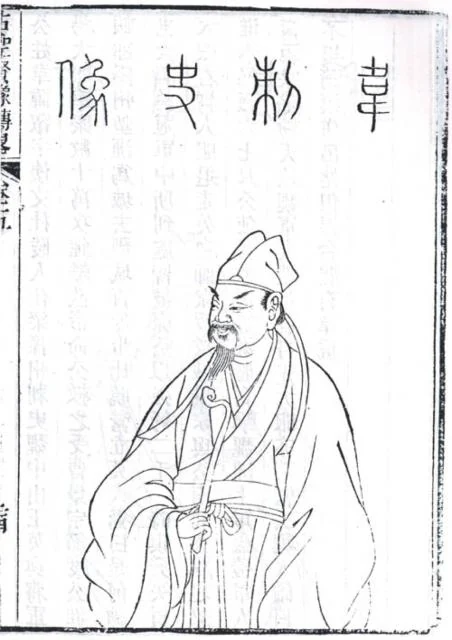
442 CE–520 CE
Senior ministergeneral
Wei Rui
韦睿
Wei Rui (442–September 20, 520), courtesy name Huaiwen, was from Duling in Jingzhao (present-day Xi'an, Shaanxi) and later lived in Xiangyang. A celebrated general of Southern Liang during the Northern and Southern Dynasties, he came from the prominent Jingzhao Wei clan and was described as a descendant of the Western Han chancellor Wei Xian. Wei served under Liu Song, Southern Qi, and Southern Liang. Known for the…
442 CE–520 CELiang dynasty
PROFILE
Wei Rui (442–September 20, 520), courtesy name Huaiwen, was from Duling in Jingzhao (present-day Xi'an, Shaanxi) and later lived in Xiangyang. A celebrated general of Southern Liang during the Northern and Southern Dynasties, he came from the prominent Jingzhao Wei clan and was described as a descendant of the Western Han chancellor Wei Xian. Wei served under Liu Song, Southern Qi, and Southern Liang. Known for the intelligence and restraint of a scholar-general, he achieved his greatest victory at Zhongli, where he destroyed a Northern Wei force said to number more than two hundred thousand. Contemporaries called him “Wei the Tiger.” Emperor Wu of Liang, Xiao Yan, relied on him heavily. Wei ultimately held the offices of Attendant-in-Ordinary and General of Chariots and Cavalry, was created Marquis of Yongchang, and received the posthumous name Yan.
- Alternative name
- Wei Huaiwen
- Courtesy name
- Huaiwen
- Period
- Southern Liang
- Dynasty/Polity
- Southern Liang
- Identity
- Senior minister, general
- Ethnicity / ethnic affiliation
- Not reliably confirmed in surviving sources
- Native place
- Duling, Jingzhao (present-day Xi'an, Shaanxi)
- Date of birth
- 442
- Place of birth
- Unknown
- Date of death
- September 20, 520
- Place of death
- Unknown
- Highest office
- See Biography and Major Activities
- Major achievements
- Leading general of early Liang; crushed a Northern Wei army of more than two hundred thousand at the Battle of Zhongli; celebrated as the scholarly commander “Wei the Tiger”
LIFE TIMELINE
Age 23 | Served as secretary to Yuan Bian, Inspector of Yongzhou; later went out to Yicheng Commandery and thereby escaped Yuan Bian's downfall
Age 24 | Yuan Bian rebelled against Emperor Ming of Song; Wei Rui avoided involvement because he was serving outside the provincial headquarters
Age 31 | Became Left Regular Attendant to the Prince of Jinping, later joining the staff of the Prince of Guiyang, Minister of Works
Age 36 | Helped Liu Shilong defend Yingcheng against Shen Youzhi and was promoted to a central military staff post in the Forward Army
Age 38 | After the founding of Southern Qi, served as magistrate of Guangde and successively as Administrator of Qixing, Biejia of Yongzhou, Commandant of Changshui, and General of the Right Army
Age 58 | Became Administrator of Shangyong and General Who Establishes Might
Age 59 | Sent two sons to establish ties with Xiao Yan, then led followers to join Xiao Yan's uprising; became Champion General and Administrator of Jiangxia
Age 61 | Summoned as head of judicial administration when the Liang court was established; after Emperor Wu took the throne, became Chief Justice and was created Viscount of Duliang
Age 62 | Redesignated Viscount of Yongchang, became Commander of the Crown Prince's Right Guard, and was sent out as General Who Assists the State, Inspector of Yuzhou, and concurrent Administrator of Liyang
Age 63 | Repelled Northern Wei troops attacking Yuzhou
Age 64 | Directed forces in the northern expedition, captured Xiaoxian, advanced on Hefei, diverted the Fei River to flood the city, and defeated Wei forces, killing or capturing more than ten thousand
Age 65 | Completed the capture of Hefei and moved the Yuzhou provincial seat there; after defeat at Luokou, was ordered to withdraw and returned with his force intact
Age 66 | Joined Cao Jingzong in relieving Zhongli and routed Northern Wei at Shaoyang Isle; advanced to Marquis of Yongchang
Age 67 | Became General of the Right Guard and then Inspector of Southern Xuzhou
Age 68 | Ordered to guard Anlu and forced the Northern Wei commander Yuan Ying to withdraw
Age 69 | Became Intendant of Danyang
Age 70 | Became Inspector of Yongzhou
Age 72 | Recalled as General of the Guards
Age 74 | Appointed General Who Pacifies the North, Commandant for Pacifying the Man, and Inspector of Yongzhou
Age 79 | Promoted to Attendant-in-Ordinary and General of Chariots and Cavalry but died before assuming office, on the jiazi day of the eighth lunar month (September 20); posthumous name Yan
BIOGRAPHY
Biography
Family Background and Early Years
Wei Rui came from the Jingzhao Wei clan and was said to descend from the Western Han chancellor Wei Xian. His family was one of the prominent lineages of the Sanfu region. His grandfather Wei Xuan, also recorded as Wei Zusi, reportedly withdrew to the Zhongnan Mountains to avoid office and declined appointment when Liu Yu entered the passes. His uncle Wei Zuzheng later served as Minister of Splendid Happiness under Liu Song, while his father Wei Zugui rose to chief secretary under a General Who Pacifies Afar.
Wei Rui was known from youth for filial devotion to his stepmother. His uncle Wei Zuzheng often took him along while serving as a commandery administrator and treated him like a son. Wei Rui's wife's elder brother Wang Cheng and his maternal cousin Du Yun were both locally renowned. When Wei Zuzheng once asked Wei Rui how he compared with them, Wei modestly declined to answer. Wei Zuzheng said that Wei's literary talent might be slightly inferior, but his learning was greater and, when it came to serving the state and accomplishing great affairs, neither man could equal him. His cousin Du Youwen, Inspector of Liangzhou, invited him to accompany him to office. Liangzhou was wealthy and many predecessors had been ruined by corruption, but the young Wei Rui became known for integrity.
Liu Song Period
In 465, Yuan Bian, Inspector of Yongzhou, regarded Wei Rui as unusual and appointed him secretary. When Yuan later joined Deng Wan in rebellion against Emperor Ming of Song, Wei Rui had already requested an outside appointment in Yicheng Commandery and thereby escaped the disaster. He subsequently served as Left Regular Attendant to the Prince of Jinping and as a staff officer under the Prince of Guiyang, who held the office of Minister of Works.
Wei later joined Liu Shilong in defending Yingcheng against Shen Youzhi, Inspector of Jingzhou. After Shen's defeat, Wei became a central military staff officer in the Forward Army. He later served as magistrate of Guangde and successively as Administrator of Qixing, Biejia of Yongzhou, Commandant of Changshui, and General of the Right Army.
Southern Qi Period
During the disorder at the end of Southern Qi, Wei Rui preferred not to serve far from his home region and requested appointment as Administrator of Shangyong, with the additional title General Who Establishes Might. Between 499 and 500, Chen Xianda and Cui Huijing successively rebelled against Xiao Baojuan and repeatedly threatened Jiankang with large armies. When men in Yongzhou discussed the political future with him, Wei judged Chen an old soldier but not an extraordinary leader and Cui experienced but timid. He said that the man capable of accomplishing a great enterprise might well come from their own province.
Wei therefore sent two sons to make contact with Xiao Yan, then Inspector of Yongzhou. After Xiao raised troops, Wei cut bamboo into rafts, hurried to join him, and brought about two thousand men and two hundred horses. Xiao Yan was delighted and declared that after previously seeing only Wei's face, he now saw his heart and knew his undertaking would succeed. Wei thereafter contributed plans during the seizure of Ying and Lu and the pacification of Jiahu, and his advice was repeatedly adopted.
When Xiao Yan prepared to take his main force east from Yingzhou, he struggled to choose a commander to remain behind. He ultimately selected Wei Rui, comparing the choice to refusing to leave a fine steed unused. Wei was appointed Champion General and Administrator of Jiangxia with acting authority over the Yingzhou administration. Yingcheng had endured a year of siege, and disease had killed seven or eight people out of ten; corpses were piled beneath beds while survivors slept above them. Wei cleared the bodies, comforted the people, and restored order.
Founding of Liang and Northern Campaigns
In February 502, Xiao Yan was made chancellor and Duke of Liang and established his governing headquarters. Wei Rui was summoned to serve in judicial administration. In April Xiao took the throne and founded Southern Liang. Wei became Chief Justice and was created Viscount of Duliang with three hundred households. In 503 he was redesignated Viscount of Yongchang, appointed Commander of the Crown Prince's Right Guard, then sent out as General Who Assists the State and Inspector of Yuzhou while concurrently serving as Administrator of Liyang. In 504 he repelled a Northern Wei attack on Yuzhou.
In 505 Emperor Wu placed Prince Linchuan Xiao Hong in nominal command of a northern expedition while Wei Rui directed the armies. Wei sent Wang Chaozong and Feng Daogen to attack Xiaoxian. After an initial setback, Wei inspected the defenses himself. Seeing several hundred Wei troops arrayed outside the gate, he judged them elite soldiers and decided to strike. His officers asked to return to camp for armor, but Wei raised his staff of authority and declared that it had not been given as decoration and that his orders could not be violated. He attacked, routed the defenders, and captured Xiaoxian that night before advancing on Hefei.
Hu Jinglüe had already besieged Hefei without success. Wei surveyed the terrain, diverted the Fei River, and built a dam to flood the city. Once the water rose, Liang warships could approach. Northern Wei had built two smaller forts east and west of Hefei, and Wei attacked them first. When the Northern Wei relief commander Yang Lingyin approached with fifty thousand troops, Wei rejected calls for further reinforcement. He argued that once an enemy was at the walls it was too late to begin forging weapons, and that if Liang sought more troops the enemy could do the same; what mattered was unity rather than mere numbers. He then moved against Yang and defeated him.
When one of the Liang positions near the dam was lost and the situation became dangerous, military supervisor Pan Lingyou advised retreat toward Chaohu and other officers proposed withdrawing to Sancha. Wei angrily rejected retreat, invoking the principle that a general should die holding the line. He ordered his parasols, fans, banners, and command emblems planted beside the dam to show that he would not move. Physically weak and unable to ride a horse, he normally directed battle from a board litter. When Northern Wei troops cut the dam, Wei personally supervised the fighting, repelled them, and strengthened the defenses. He also constructed tower ships as high as the Hefei walls and attacked from all sides. The defender Du Yuanlun was struck and killed by a crossbow bolt, and the city fell. More than ten thousand were said to have been captured or killed, and large numbers of cattle, horses, and bolts of silk were taken. Wei distributed the booty to the army and kept none for himself.
Battle of Zhongli and Later Years
In the tenth lunar month of 506, Northern Wei commanders Yuan Ying, Xiao Baoyin, Yang Dayan, and others led several hundred thousand troops to besiege Zhongli. The city lay behind the Huai River. Wei forces built bridges and palisades over Shaoyang Isle to connect both banks. The Liang defender Chang Yizhi held the city with only three thousand troops and repeatedly repelled assaults. In the eleventh lunar month Emperor Wu sent Cao Jingzong with a large relief army, but Cao halted at Daoren Isle and launched an unauthorized attack; a storm drowned many of his men.
In the first lunar month of 507, Emperor Wu ordered Wei Rui to reinforce Zhongli. Wei moved by a direct route from Hefei, marching rapidly while establishing orderly fortified camps along the way. People called him “Wei the Tiger.” After joining Cao Jingzong, he camped on Shaoyang Isle. About twenty li in front of Cao's camp, Wei dug a long trench by night, planted chevaux-de-frise, and turned part of the island into a fortified position only about one hundred paces from the Northern Wei army, alarming Yuan Ying.
When the Huai River rose sharply, Wei led the river force against the floating bridges. Small boats were loaded with dry grass and soaked with oil, then set ablaze. With the wind strengthening the flames, the bridges burned while Liang troops attacked. The Northern Wei army collapsed; Yuan Ying and Yang Dayan fled on horseback. Accounts state that more than one hundred thousand drowned and more than one hundred thousand were beheaded, even claiming that the Huai River was blocked by the dead. The victory at Zhongli was described as an unprecedented triumph for the southern regimes in their wars with the north. Wei was advanced to Marquis of Yongchang and appointed General of the Right Guard.
In 508 Wei was ordered to guard Anlu. Yuan Ying came to attack, but Wei held firmly without offering battle; seeing no opportunity, Yuan withdrew. Wei later served as Intendant of Danyang, Inspector of Yongzhou, and General of the Guards. In 515 he again became Inspector of Yongzhou. In 520 he was promoted to Attendant-in-Ordinary and General of Chariots and Cavalry but, because of illness, never assumed the posts. He died at home on September 20, aged seventy-nine. Emperor Wu came personally to mourn him and granted money, cloth, ceremonial burial goods, court dress, and clothing. Wei was posthumously confirmed as Attendant-in-Ordinary, General of Chariots and Cavalry, and Grand General Who Opens the Office, and received the posthumous name Yan.
Major Activities
Military Achievements
Wei Rui was known throughout his military career for strategic intelligence. His major achievements included:
- Battle of Xiaoxian: In 505, during the northern expedition, Wei recognized that the Northern Wei formation outside the gate consisted of elite troops, attacked decisively, and captured the city during the night.
- Battle of Hefei: In 505, Wei diverted the Fei River to flood the city, employed high tower ships for assaults from several directions, defeated the relief army, and captured Hefei with more than ten thousand enemy personnel killed or taken.
- Battle of Zhongli: In 507, Wei and Cao Jingzong relieved Zhongli and crushed a very large Northern Wei army at Shaoyang Isle, producing what was regarded as the greatest southern victory over the north to that date.
- Defense of Anlu: In 508, Wei held Anlu and compelled Yuan Ying to withdraw without finding an opening.
Political Activity
Wei Rui served under Liu Song, Southern Qi, and Southern Liang. At the end of Southern Qi he recognized Xiao Yan's political prospects and joined his uprising. After Liang was founded, he held posts including Chief Justice, Inspector of Yuzhou, Intendant of Danyang, Inspector of Yongzhou, and General of the Guards, before promotion late in life to Attendant-in-Ordinary and General of Chariots and Cavalry. While administering Yingzhou he cleared the accumulated dead left by siege and disease, assisted surviving residents, and restored local order.
Travels and Service Locations
Wei Rui traveled widely during his career. In youth he accompanied relatives to official postings and later went to Liangzhou at the invitation of his cousin Du Youwen. His service then took him through Yongzhou, Yingzhou, Yuzhou, Hefei, Zhongli, Anlu, and other locations, and he spent much of his later life in Yongzhou.
Contemporary Associations
Wei Rui maintained a close relationship with Emperor Wu of Liang, Xiao Yan, having joined his uprising at a critical moment. He cooperated with Cao Jingzong at Zhongli despite Cao's competitive temperament and preference for personal credit. Wei also worked with Hu Jinglüe, Zhao Zuyue, and other commanders and at one point personally mediated a dispute between Hu and Zhao.
Personal Relations
Family
- Grandfather: Wei Xuan / Wei Zusi, recluse in the Zhongnan Mountains who declined Liu Yu's summons
- Uncle: Wei Zuzheng, Minister of Splendid Happiness under Liu Song
- Father: Wei Zugui, chief secretary under a General Who Pacifies Afar
- Brothers: Wei Zuan, Wei Chan
- Sons: Wei Fang, Wei Zheng, Wei Leng, Wei An
Mentors and Associates
- Yuan Bian: Inspector of Yongzhou who recognized Wei Rui and appointed him secretary
- Du Youwen: maternal cousin, Inspector of Liangzhou, who invited Wei Rui to the province
Ruler
- Xiao Yan / Emperor Wu of Liang: founding emperor of Southern Liang and Wei Rui's ruler, who relied on him heavily
Colleagues
- Cao Jingzong: Southern Liang general and Wei Rui's partner in the Battle of Zhongli
- Chang Yizhi: defender of Zhongli who coordinated with the relief armies
- Hu Jinglüe and Zhao Zuyue: Liang officers associated with the Hefei campaign; Wei mediated between them
Opponents
- Yuan Ying: Prince of Zhongshan of Northern Wei and major opponent at Zhongli
- Yang Lingyin: Northern Wei relief commander in the Hefei campaign
Historical Assessment
Southern Dynasties / Contemporary
Emperor Wu of Liang praised Wei's loyalty at the time of the uprising, saying that he had previously seen Wei's face but now saw his heart and knew the enterprise would succeed.
A Northern Wei rhyme said, in effect, that people did not fear certain other Liang commanders but feared “Wei the Tiger” at Hefei.
Cao Jingzong reportedly admitted that he could not equal Wei Rui's ability.
Tang Period
Yao Silian wrote that Wei Rui combined the bearing of a scholar with the strategy of a warrior and enjoyed a successful career from beginning to end.
Li Yanshou wrote that Wei rose from scholarly beginnings to become a famous general and compared him favorably with celebrated commanders of antiquity.
Ming and Qing Periods
Wang Fuzhi argued that Wei Rui possessed the ability to serve as a great general and that Emperor Wu of Liang did not make full enough use of him.
Hu Sanxing praised his command as possessing the strategic qualities associated with Sun Wu and Wu Qi.
Seong Hae-eung, writing in Korea, ranked Wei among the finest commanders of the Song, Qi, and Liang periods and compared his discipline to Zhuge Liang's methods of command.
Modern Period
Mao Zedong made repeated annotations to the biography of Wei Rui in the History of the Southern Dynasties, praising his presence at the front, emphasis on unity among commanders, modesty, and courage, and using him as an example of leadership style.
Lü Simian described Wei Rui as the foremost southern general of the period, emphasizing both his battlefield skill and scholarly bearing.
FIGURES ASSOCIATED WITH THIS DYNASTY
Bibliography
- Yao Silian, Book of Liang, juan 12, “Biography of Wei Rui”
- Li Yanshou, History of the Southern Dynasties, juan 58, “Biography of Wei Rui”
- Lü Simian, History of the Jin and Northern and Southern Dynasties