Birth | Birth; the place is not recorded; chancellor
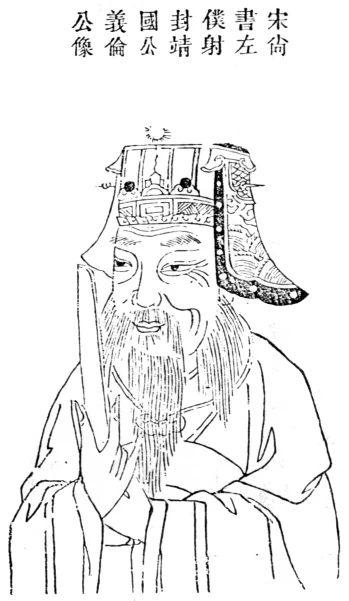
909 CE–987 CE
Grand Councilor
Shen Lun
沈伦
Shen Lun (909–987), originally named Shen Yilun, courtesy name Shunyi, was a native of Taikang County, Kaifeng Prefecture (present-day Taikang County, Henan). He was a founding statesman of the Northern Song and rose to the office of Grand Councilor. In his youth he studied the “Three Rites” and supported himself by teaching. He entered official service during the Qianyou era of the Later Han and, early in the Xiande era of…
909 CE–987 CENorthern Song
PROFILE
Shen Lun (909–987), originally named Shen Yilun, courtesy name Shunyi, was a native of Taikang County, Kaifeng Prefecture (present-day Taikang County, Henan). He was a founding statesman of the Northern Song and rose to the office of Grand Councilor. In his youth he studied the “Three Rites” and supported himself by teaching. He entered official service during the Qianyou era of the Later Han and, early in the Xiande era of the Later Zhou, entered Zhao Kuangyin's staff through the recommendation of Palace Commissioner Zan Jurun. After Emperor Taizu of Song ascended the throne, Shen advanced through a series of offices and eventually became Grand Councilor. Known for integrity and restraint, he remained personally incorrupt during the Song conquest of Later Shu and refused bribes. He was also remembered for a reputation for yielding office to the worthy. During the reign of Emperor Taizong of Song, he changed his name from Shen Yilun to Shen Lun to avoid the emperor's personal-name taboo. He was later removed from the chancellorship after being implicated by the crimes of his colleague Lu Duoxun and retired while holding the title Left Vice Director of the Department of State Affairs. He died in 987, the fourth year of the Yongxi era, at the age of seventy-nine. He was posthumously appointed Palace Attendant, enfeoffed as Duke of Lu, and granted the posthumous name Gonghui.
- Alternative name
- Shen Yilun
- Courtesy name
- Shunyi
- Period
- Northern Song
- Date of Birth
- 909
- Date of Death
- November 16 987
- Dynasty / polity
- Northern Song
- Identity
- Grand Councilor
- Ethnicity / ethnic affiliation
- Not recorded in historical sources
- Native place
- Taikang County, Kaifeng Prefecture (present-day Taikang County, Henan)
- Place of birth
- Not recorded in historical sources
- Place of death
- Not recorded in historical sources
- Highest office
- See Biography and Major Deeds
- Major achievements
- Founding statesman; known for personal integrity and austerity; rose to Grand Councilor; remembered for a reputation for yielding office to the worthy
LIFE TIMELINE
Age 39 | Entered Bai Wenke's staff, beginning his career as a military-governor's staff officer.
Age 47 | Recommended by Zan Jurun to join Zhao Kuangyin's staff, serving as a staff officer.
Age 51 | After Zhao Kuangyin was acclaimed emperor, Shen Yilun was summoned back and appointed Director in the Ministry of Revenue.
Age 52 | Sent on a diplomatic mission to Wuyue.
Age 53 | Submitted a memorial proposing the use of military grain to relieve famine victims in Huainan; promoted to Supervising Secretary.
Age 54 | Appointed Fiscal Commissioner of the Shaanxi Circuit.
Age 55 | During the Song attack on Later Shu, appointed army Fiscal Commissioner for land and water transport.
Age 56 | After the Song conquest of Later Shu, lived alone in a Buddhist monastery, ate vegetarian food, and refused bribes.
Age 58 | Promoted to Vice Minister of Revenue and Deputy Commissioner of the Bureau of Military Affairs.
Age 60 | During Emperor Taizu's personal campaign against Northern Han, assisted Zhao Guangyi, who remained behind in the Eastern Capital.
Age 64 | Appointed Vice Director of the Secretariat and Participant in Determining Government Matters, becoming a Grand Councilor.
Age 67 | Changed his name to Shen Lun to avoid Emperor Taizong's personal-name taboo; additionally appointed Right Vice Director and Vice Director of the Chancellery, and placed in charge of compiling the dynastic history.
Age 70 | During Emperor Taizong's personal campaign against Northern Han, served as Regent of the Eastern Capital and acting head of Kaifeng Prefecture.
Age 72 | Became senior Grand Councilor.
Age 73 | Implicated by Lu Duoxun's crimes, demoted to Minister of Works, and retired as Left Vice Director of the Department of State Affairs.
Age 79 | Died; posthumously appointed Palace Attendant, enfeoffed as Duke of Lu, and granted the posthumous name Gonghui.
BIOGRAPHY
Biography
Family Background and Early Life
Shen Lun, originally named Shen Yilun and courtesy name Shunyi, was a native of Taikang County, Kaifeng Prefecture (present-day Taikang County, Henan). He was born in 909, the third year of Kaiping under the Later Liang. As a youth he studied the “Three Rites”—the Rites of Zhou, Book of Etiquette and Ceremonial, and Book of Rites—and became especially proficient in the Dai tradition of the Book of Rites. Because his family was not prominent, he did not initially pursue office through the imperial examination system. Instead, he earned his living teaching in the Mount Song and Luoyang areas. These years fostered a character of frugality, self-restraint, and indifference to wealth and rank, traits for which he later became known in official life.
Career on Military-Governor Staffs
In 948, the first year of Qianyou under the Later Han, Bai Wenke became Military Commissioner of Shanzhou and also held the title Participant in Determining Government Matters. Shen Lun entered his staff and began his career in a military governor's secretariat. In 956, the third year of Xiande under the Later Zhou, Zhao Kuangyin was appointed Military Commissioner of the Kuangguo Army at Tongzhou. On the recommendation of Northern Palace Commissioner Zan Jurun, Shen Lun entered Zhao's staff at almost the same time as Zhao Pu and served as a staff officer in charge of financial affairs. When Zhao Kuangyin was later transferred among Hua, Xu, and Song prefectures, Shen continued to serve under him and won his deep trust. Within Zhao's Hegemonic Headquarters, Shen became known for caution, sincerity, and skill in financial management and emerged as one of Zhao's core staff members.
Founding Statesman
In 960, the first year of Jianlong, Zhao Kuangyin was acclaimed emperor at Chenqiao Station and founded the Song dynasty. Shen Lun was then still at Songzhou, also known as the Guide Army. After hearing the news, he was immediately recalled to the capital and granted robes of the fifth rank. The next day he was appointed Director in the Ministry of Revenue. Among Zhao Kuangyin's former staff officers promoted for their role in founding the dynasty, Shen ranked fourth, reflecting his standing in Zhao's pre-imperial headquarters.
In 961, the second year of Jianlong, Shen was sent as an envoy to Wuyue. Passing through Huainan, he witnessed severe famine around Yangzhou and Sizhou, with many people dying of hunger. On returning to court, he memorialized Emperor Taizu and proposed lending famine victims one million shi of military grain stored in the prefectures, to be repaid with the new harvest in autumn. Opponents warned that further flood or drought might make repayment impossible and leave officials responsible. Shen argued that if the state opened its granaries to save the people, harmonious conditions would bring a good harvest and there was no need to fear flood or drought. Emperor Taizu accepted the proposal and ordered Huainan Circuit officials to open the granaries for relief. In the eleventh month of 962, Shen was promoted to Supervising Secretary. In the spring of 963, he became Fiscal Commissioner of the Shaanxi Circuit.
The Shu Campaign and Appointment as Grand Councilor
In 964, the second year of Qiande, the Song launched a large-scale attack on Later Shu. Shen Lun became army Fiscal Commissioner for land and water transport and was responsible for military logistics. In the first month of 965, the Song conquered Later Shu. Generals Wang Quanbin, Cui Yanjin, and others relied on their military success to plunder Chengdu, provoking widespread resentment. By contrast, Army Inspector Cao Bin and Fiscal Commissioner Shen Lun maintained strict personal integrity. Shen lived alone in a Buddhist monastery in Chengdu, ate only vegetables, and returned to court with nothing in his baggage except a few volumes of books. After returning, Cao Bin strongly recommended Shen for higher responsibility. Once Emperor Taizu learned the circumstances, he punished Wang Quanbin and others and promoted Shen to Vice Minister of Revenue and Deputy Commissioner of the Bureau of Military Affairs.
In the second month of 969, the second year of Kaibao, Emperor Taizu personally campaigned against Northern Han. His younger brother Zhao Guangyi remained behind as regent in the Eastern Capital, while Shen was appointed General Commissioner of the Inner Palace and placed in charge of the State Finance Commission's affairs that remained in the capital, making him responsible for palace security and routine court finances. In the eighth month of 973, Zhao Pu, who had served as Grand Councilor for ten years, was dismissed for overbearing conduct and abuse of power. The following month, Deputy Commissioner Shen Lun and Assistant Grand Councilor Xue Juzheng were promoted to the chancellorship on the same day. Shen was appointed Vice Director of the Secretariat, Participant in Determining Government Matters, and Grand Academician of the Jixian Hall, while also supervising land and water transport affairs for Jingnan and Jiannan. Among Zhao Kuangyin's former staff, he was the second after Zhao Pu to become Grand Councilor.
Later Years and Retirement
In the tenth month of 976, the ninth year of Kaibao, Prince of Jin Zhao Guangyi ascended the throne as Emperor Taizong of Song. Shen Yilun changed his name to Shen Lun to avoid the emperor's personal-name taboo and was additionally appointed Right Vice Director and Vice Director of the Chancellery, with responsibility for supervising compilation of the dynastic history. In the second month of 979, the fourth year of Taiping Xingguo, Emperor Taizong personally campaigned against Northern Han and then the Liao. While many officials accompanied the expedition, Shen, then the second-ranking Grand Councilor, remained as Regent of the Eastern Capital and acting head of Kaifeng Prefecture, with full responsibility for affairs in the capital.
In 980, the fifth year of Taiping Xingguo, historians Li Fang and Hu Meng completed fifty juan of the Veritable Records of Emperor Taizu, with Shen serving as supervising compiler, and the work was presented to the throne. In the sixth month of 981, after senior Grand Councilor Xue Juzheng died, Shen rose to the senior chancellorship. In the ninth month of the same year, Zhao Pu was appointed senior Grand Councilor after presenting the story of the “Golden Coffer Covenant,” and Shen again became the second-ranking Grand Councilor. At this time Zhao Pu was directing an increasingly intense political campaign against the emperor's younger brother, Prince of Qin Zhao Tingmei.
Early in 982, the seventh year of Taiping Xingguo, Shen fell ill. Sensing that a political storm was approaching, he took sick leave and watched developments. Unable to stop the campaign, unwilling to take part in the persecution of Zhao Tingmei and the second-ranking Grand Councilor Lu Duoxun, and unwilling to be implicated himself, Shen submitted a request to retire before the charge that Zhao Tingmei had conspired with Lu Duoxun was finalized. In the fourth month, however, Shen was still held responsible for failing to detect Lu's crimes. He was demoted to Minister of Works and removed from government decision-making. That autumn he again pleaded illness and requested retirement, and in the seventh month he retired with the title Left Vice Director of the Department of State Affairs. Shen died in the tenth month of 987, the fourth year of Yongxi, at the age of seventy-nine. Emperor Taizong suspended court for two days, posthumously appointed him Palace Attendant, enfeoffed him as Duke of Lu, and granted the posthumous name Gonghui.
Major Activities
Political Activities
Shen Lun's political career spanned the Later Han, Later Zhou, and Northern Song, with his most important contributions concentrated in the early Northern Song. During the Huainan famine of 962, he overcame objections and proposed using military grain to relieve the population, helping people in Yangzhou, Sizhou, and surrounding areas survive. The episode illustrated his concern for popular hardship. During the Song conquest of Later Shu, he served as an army fiscal commissioner, ensuring front-line supply while maintaining personal integrity amid widespread plundering by other generals. His conduct helped provide Emperor Taizu with grounds for disciplining the offending commanders. While serving as Grand Councilor, Shen repeatedly remained in the Eastern Capital during imperial campaigns, responsible for the security of the capital and the routine operation of the court, contributing to political stability in the early Song.
Personal Integrity and Austerity
Shen was renowned for incorruptibility in early Song politics. After the conquest of Later Shu in 965, generals such as Wang Quanbin and Cui Yanjin seized valuables and women from the people of Chengdu. Shen alone lived in a Buddhist monastery, ate vegetables, and returned to court carrying only a few books. On the basis of the contrasting conduct of Shen and Cao Bin, Emperor Taizu resolved to punish Wang Quanbin and the other offenders. Even after becoming Grand Councilor, Shen continued to live frugally, and his residence remained plain and cramped. In 973, when Emperor Taizu sent officials to supervise construction of a new house for him according to a prepared plan, Shen asked that the rooms be built small. Such austerity was unusual among officials of the early Song.
Reputation for Yielding Office
While in high office, Shen achieved no major institutional accomplishments but was known for caution and sincerity. In 982, when Emperor Taizong and Zhao Pu were planning the persecution of Prince of Qin Zhao Tingmei, Shen did not wish to participate in the political struggle. He took sick leave and requested retirement. Although he was eventually dismissed from the chancellorship for “failing to perceive Lu Duoxun's crimes,” his choice kept him from direct involvement in the persecution and preserved his later reputation. Later historians often viewed this refusal to curry favor and his instinct for self-preservation positively.
Devotion to Buddhism
Shen was deeply devoted to Buddhism and believed strongly in karmic cause and effect. According to the Veritable Records of Emperor Taizong of Song, during the height of summer he sometimes sat bare-skinned indoors, allowing mosquitoes and gnats to bite him through the night without sleeping, treating this as a religious practice for accumulating merit; contemporaries laughed at him for it. During famine years, villagers borrowed grain from him, sometimes as much as a thousand hu. More than a year later, he burned all the loan documents and did not demand repayment. Such behavior reflected the strong influence of Buddhist ideas of compassion on him.
Family Life
When Shen was still of humble status, he married Lady Yan, who in old age was described as unattractive. He later took Lady Tian as a concubine and greatly favored her. After becoming prominent, Shen built a residence at Taikang for his first wife, Lady Yan, while treating Lady Tian as Lady of the State of Lu. Scholar-officials criticized this arrangement. Lady Tian bore his son Shen Jizong, who later rose to Secretary of the Imperial Library. After Shen Lun's death, Shen Jizong petitioned to have his father's posthumous name changed to “Wen.” Shen Lun's grandsons Shen Weiwen and Shen Weiqing also served as Secretaries of the Imperial Library. Shen Weiqing married the daughter of Zhao Yuanwo, Prince of Mi, the Lady of Yidu County, and became a Palace Commandant. A granddaughter of Shen Lun later became an imperial consort of Emperor Zhenzong of Song.
Personal Relations
- Wife: Lady Yan (first wife); Lady Tian (concubine, later Lady of the State of Lu)
- Son: Shen Jizong
- Grandsons: Shen Weiwen, Shen Weiqing, Shen Weigong
- Granddaughter: Consort Shen, consort of Emperor Zhenzong of Song
- Zan Jurun: Palace Commissioner and friend of Shen Lun; recommended him to Zhao Kuangyin's staff.
- Cao Bin: early Song general; shared Shen's reputation for integrity during the conquest of Shu and later recommended him for higher office.
- Bai Wenke: Later Han Military Commissioner of Shanzhou and Shen's first staff patron.
- Zhao Kuangyin (Emperor Taizu of Song): Shen's former patron and sovereign, who placed great trust in him.
- Zhao Guangyi (Emperor Taizong of Song): Shen's sovereign; Shen changed his name to avoid the emperor's personal-name taboo and was later implicated and dismissed late in life.
- Zhao Pu: joined Zhao Kuangyin's staff at roughly the same time; later served as Grand Councilor, followed by Shen.
- Xue Juzheng: appointed Grand Councilor on the same day as Shen and later became senior Grand Councilor.
- Lu Duoxun: second-ranking Grand Councilor; demoted for treason, with Shen implicated and dismissed as a result.
Historical Assessment
Northern Song / Contemporary
- The Veritable Records of Emperor Taizong of Song stated that Shen was “simple, sincere, cautious, and generous,” which was why he was often left in charge of the capital when the emperor traveled, but added that during ten years as Grand Councilor he mainly clung cautiously to favor and “was unable to establish anything of consequence.”
- After returning to court, Cao Bin “recommended only Shen Yilun as fit for appointment,” strongly affirming Shen's integrity.
- After hearing one of Shen's responses, Yang Huizhi clapped his hands and exclaimed, “I did not expect the Secretariat to produce another Shen and Song,” a remark that carried a degree of mockery regarding his literary learning.
- In petitioning for a revised posthumous name for his father, Shen Jizong wrote that his late father had devoted himself to Confucian learning from youth and, fortunate to live in an enlightened age, had risen to the chancellorship, affirming Shen's scholarly background and official achievements.
Song and Yuan Periods
- The History of Song, compiled under Tuo Tuo, included a biography of Shen and recorded his life in detail, recognizing both his role as a founding statesman and his character as an incorrupt Grand Councilor.
- The Continuation of the Comprehensive Mirror in Aid of Governance recorded his relief of famine victims in Huainan and treated his concern for popular suffering positively.
- Historians of the Song and Yuan generally held that although Shen achieved no major political innovations, his integrity, self-restraint, and refusal to seek factional advantage contributed to stability in early Song politics.
Ming and Qing Periods
- Ming historians often focused on Shen's position during the Zhao Tingmei affair, arguing that he preserved his reputation by withdrawing from political persecution.
- Qing scholar Wang Mingsheng, in Critical Discussions of the Seventeen Histories, described Shen as a type of official who possessed “more than enough caution and sincerity, but insufficient talent and strategy.”
- Ming and Qing scholar-officials often criticized Shen for leaving his first wife in his native place while elevating a concubine to the status of lady, regarding the arrangement as contrary to ritual norms.
Modern and Contemporary Assessments
- Modern scholars have regarded Shen as one representative of the early Song orientation toward civil governance and have seen his personal incorruptibility as a positive influence on official culture.
- Some scholars have noted that although Shen “established nothing of consequence” as Grand Councilor, his cautious and steady style had particular value during the consolidation of the early Song regime.
- Contemporary assessments commonly praise his famine relief and personal integrity and regard him as one of the more upright prominent officials of the early Song.
FIGURES ASSOCIATED WITH THIS DYNASTY
Bibliography
- , relevant Southern Han accounts;, History of Song, et al.
- Veritable Records of Emperor Taizong of Song, juan