Born | into a merchant family in Luoyang
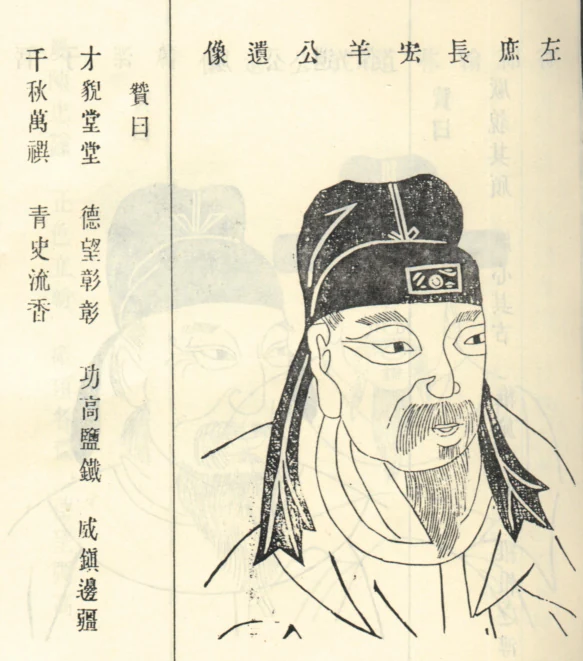
152 BCE–80 BCE
Senior official
Sang Hongyang
桑弘羊
Sang Hongyang (c. 152–80 BCE), a native of Luoyang, was an important fiscal official during the reign of Emperor Wu of the Western Han. Born into a merchant family, he entered the palace at age thirteen as a Palace Attendant because of his skill in mental arithmetic. He later helped direct major economic policies, including the state monopoly on salt and iron, the equal-supply and price-stabilization systems, and the…
152 BCE–80 BCEWestern Han
PROFILE
Sang Hongyang (c. 152–80 BCE), a native of Luoyang, was an important fiscal official during the reign of Emperor Wu of the Western Han. Born into a merchant family, he entered the palace at age thirteen as a Palace Attendant because of his skill in mental arithmetic. He later helped direct major economic policies, including the state monopoly on salt and iron, the equal-supply and price-stabilization systems, and the property-tax and reporting measures known as suanmin and gaomin. These policies provided the fiscal resources used by Emperor Wu in repeated campaigns against the Xiongnu and in territorial expansion. Before Emperor Wu's death, Sang was named one of the regents and became Censor-in-chief. In 81 BCE, the sixth year of the Shiyuan era of Emperor Zhao, he debated economic policy with the Worthy and Literary scholars at the Salt and Iron Debate. The discussions were later edited by Huan Kuan as Discourses on Salt and Iron. The following year Sang was executed for high treason after becoming involved in the coup conspiracy of Prince Liu Dan of Yan and Shangguan Jie.
- Other name
- Hongyang
- Period
- Western Han
- Date of Birth
- 152 BCE
- Date of Death
- 80 BCE
- Dynasty / regime
- Western Han
- Identity
- Senior official
- Ethnicity / ethnic affiliation
- Not reliably confirmed in the historical sources
- Native place
- Luoyang
- Place of birth
- Luoyang
- Place of death
- Place of death not known
- Highest office
- See Biography and Major Activities
- Major achievements
- Fiscal official under Emperor Wu; promoted the state monopoly on salt and iron and the equal-supply and price-stabilization policies to strengthen state finances and support external warfare
- Age at Death
- Unconfirmed; not explicitly stated in the
LIFE TIMELINE
Event | Implicated in the rebellion conspiracy of Prince Liu Dan of Yan and Shangguan Jie and executed
In 120 BCE | In 120 BCE, the third year of Yuanshou, severe flooding in Shandong displaced large numbers of people, who relied on local governments for relief even though local treasuries had been exhausted.
Event | At age thirteen, summoned to the palace for his exceptional mental arithmetic and appointed Palace Attendant
Event | Recommended by Zheng Dangshi and worked with Kong Jin in directing fiscal reforms
Event | Promoted the state monopoly on salt and iron and implemented the suanmin property tax
Event | Promoted to Deputy of the Grand Minister of Agriculture and implemented the equal-supply system
Event | Implemented the gaomin reporting system
Event | Became Colonel for Grain and acting Grand Minister of Agriculture, fully implemented the price-stabilization system, and received the rank Zuo Shuzhang
Event | Named Censor-in-chief and one of the regents entrusted with the young heir by the dying Emperor Wu
BIOGRAPHY
Biography
Family Background and Early Years Sang Hongyang was born in Luoyang. Situated near the center of the realm, Luoyang had been a major commercial center since the Warring States period and attracted wealthy merchants from many regions. Sang's father was a prosperous local merchant. Growing up in this environment, Sang developed an unusually strong sensitivity to commercial operations, changes in prices, and the movement of goods. He was also said to possess exceptional powers of mental arithmetic and could reportedly perform complex calculations without counting rods. This ability transformed his prospects. After Emperor Wu came to the throne, the emperor actively sought capable people without limiting recruitment to established family backgrounds. During the Jianyuan era, approximately 140–135 BCE, Sang, only thirteen years old, was summoned to the palace and appointed Palace Attendant. A Palace Attendant held an additional court appointment that permitted access to the inner palace and close proximity to the emperor. The Chinese source emphasizes the rarity of a thirteen-year-old entering the imperial entourage solely on the strength of calculation skills. Sang thereby entered the outer edge of the Han political center and began a political career lasting more than sixty years. ### Directing Fiscal Reform After Emperor Wu's accession, the government moved away from the relatively restrained policies associated with the reigns of Emperors Wen and Jing. Continuous campaigns against the Xiongnu, major construction works, imperial tours and sacrifices, and recurring natural disasters rapidly depleted the treasury. In 120 BCE, the third year of Yuanshou, severe flooding in Shandong displaced large numbers of people, who relied on local governments for relief even though local treasuries had been exhausted. At this point Zheng Dangshi, Grand Minister of Agriculture, recommended Sang Hongyang and the merchant-born Kong Jin to Emperor Wu to help devise solutions to the fiscal crisis. After assuming his fiscal responsibilities, Sang first worked on monetary reform. In 119 BCE he proposed changing the currency system, eliminating older half-liang coins and issuing five-zhu coins while centralizing minting authority. The measure attacked private coinage by commanderies, kingdoms, wealthy merchants, and local strongmen and provided a more stable source of state revenue. Sang then vigorously promoted the state monopoly on salt and iron. He proposed establishing salt and iron offices in producing areas throughout the empire. The government recruited people to boil salt and smelt iron, while the state purchased and distributed the products and prohibited private trade. By bringing highly profitable salt and iron industries under state control, the policy reduced the ability of major merchants to accumulate wealth and challenge the government. In 119 BCE Sang and Zhang Tang also devised the suanmin order, which imposed a high property tax on merchants and moneylenders and required them to declare assets. Concealment or false declarations, once discovered, were punished by a year of frontier service and confiscation of all property. In 115 BCE Sang was promoted to Deputy of the Grand Minister of Agriculture and began implementing the equal-supply system. Under this arrangement, officials in different regions converted tribute owed to the central government into locally produced goods at local market values. Equal-supply officials then transported those goods to places where prices were higher and sold them, remitting the proceeds to the treasury. The system both reduced the burden of long-distance tribute transport on the population and enabled the state to profit from regional commodity circulation. In 114 BCE Sang implemented the gaomin order, encouraging people to report merchants who concealed assets or evaded suanmin taxation. Informers could receive half of the confiscated property. Reports multiplied across the empire. The source states that the court confiscated property valued in the hundreds of millions, tens of thousands of enslaved persons, and an incalculable quantity of land, and that most merchants of middle or greater wealth were ruined as a result. ### Full Control of the Agricultural-Fiscal Administration In 110 BCE, the first year of Yuanfeng, Kong Jin was dismissed for opposing a tax on boats and vehicles. Sang succeeded him as Colonel for Grain and acting Grand Minister of Agriculture and took broad control of state finance. At the center he established price-stabilization officials who bought goods when prices were low and sold when prices were high, with the goal of moderating prices and balancing supply and demand. At the local level he expanded salt, iron, and equal-supply offices, extending the monopoly and equal-supply system throughout the empire. The Chinese source describes the results as substantial. The “Treatise on Equalization” in Records of the Grand Historian states that after Sang's policies were fully implemented, “without increasing the people's taxes, the resources of the empire became abundant.” Government treasuries were filled, grain overflowed the Taicang and Ganquan granaries, and five million bolts of silk were obtained through equal-supply operations. The source links these resources to Emperor Wu's ability to continue warfare against the Xiongnu, extend power into the Western Regions, pacify Nanyue, and conduct other large military operations. For his service Sang received the rank Zuo Shuzhang, the tenth rank in the twenty-rank system associated with Shang Yang's Reforms. Sang also strongly supported military-agricultural colonies. He proposed establishing colonies around Luntai, in present-day Xinjiang, to strengthen frontier defense in the Western Regions. The proposal was not adopted because Emperor Wu issued the Luntai Edict late in his reign, expressing regret over earlier policies. ### Regency and the Salt and Iron Debate In February 87 BCE, the second year of Houyuan, Emperor Wu became seriously ill. On the twelfth day of the second month he designated the eight-year-old Liu Fuling as crown prince. The following day he entrusted the child to senior officials: Huo Guang as Grand Marshal and General-in-Chief, Jin Midi as General of Chariots and Cavalry, Shangguan Jie as General of the Left, and Sang Hongyang as Censor-in-chief. Sang thereby became one of four regents. After Emperor Wu died and Emperor Zhao took the throne, several of Sang's policies—especially suanmin, gaomin, and the state monopoly on salt and iron—continued to provide large revenues but also imposed heavy burdens on merchants and commoners, provoking criticism. In 81 BCE, under Huo Guang's direction, the court summoned more than sixty Worthy and Literary scholars recommended by commanderies and kingdoms to the capital and questioned them about popular hardship. Most were Confucian scholars and attacked Sang's economic policies as “competing with the people for profit” and contrary to the principles of the ancient kings. Sang responded point by point. The two sides debated the salt and iron monopoly, equal-supply and price-stabilization policies, currency reform, and whether to fight or pursue peace with the Xiongnu. Huan Kuan, who had served as an assistant to the governor of Lujiang, recorded and edited the discussions, later expanding them into the ten-juan, sixty-chapter work Discourses on Salt and Iron. It became an important source for the political, economic, and intellectual history of the mid-Western Han. The immediate result of the meeting was abolition of the state liquor monopoly, while the core salt and iron monopoly and equal-supply and price-stabilization policies were retained. ### Execution and Destruction of His Family The year after the Salt and Iron Debate, in 80 BCE, the first year of Yuanfeng under Emperor Zhao, a severe political struggle erupted at court. Prince Liu Dan of Yan, Emperor Wu's eldest son, resented having been passed over for the throne. Shangguan Jie and his family were in a power struggle with Huo Guang and allied themselves with Liu Dan. Sang, whose relationship with Huo Guang had deteriorated after the Salt and Iron Debate and whose relatives had been investigated by Huo for legal violations, joined Shangguan Jie and others in a conspiracy to eliminate Huo Guang, depose Emperor Zhao, and install the Prince of Yan. After the conspiracy was exposed, Shangguan Jie and the others were arrested and destroyed. Sang Hongyang was executed for high treason. His son Sang Qian fled and sought refuge with Sang's former subordinate Houshi Wu, but was later captured and executed. Houshi Wu was cut in two for harboring a fugitive. Sang's family declined thereafter.
His Family of Luoyang Merchants, His Service at Thirteen, and the Disputes over His Birth Year and Way of Entry
Sang Hongyang was born into a rich merchant family of Luoyang. Luoyang was one of the great commercial cities of the Western Han, and its long commercial tradition had a great effect on the customs of the place; it was also a gathering place of men of letters, where tales such as that of Su Qin bearing the seals of the six states were current. Such a setting worked imperceptibly on Sang Hongyang's mind: on the one hand he could as a boy help his family with some of its financial business, and on the other the ambition of a career in office, of becoming a general or chancellor and receiving fief and rank, took firm hold of him. At thirteen he was known throughout Luoyang for his mastery of mental arithmetic, and by an imperial edict he was specially taken into the palace — one account says he was made a gentleman by purchase — and so entered on his official career; and his long attendance on the emperor as a reading companion gave him a close relation with Emperor Wu and made him gradually one of his most useful assistants. As to his birth year, two explicit records survive: that "Hongyang, son of a Luoyang merchant, by mental calculation became an attendant at thirteen," and his own statement that he had held office, received salary and been granted gifts for more than sixty years. From different readings of the age as reckoned by the lunar year or by full years, and of the "sixty" as exactly sixty or as more than sixty, scholars have placed his birth between the second and fifth years of Emperor Jing, and no agreement has been reached. As to how he entered office, scholarly opinion also divides between his having become a gentleman by purchase and his having been summoned to be an attendant because of his mental arithmetic: the latter view holds that a boy of thirteen could not really hold office and that his duty was chiefly to attend the emperor, which is precisely the original sense of the office of attendant, and that Emperor Wu, though heir apparent, was himself still a youth who must receive basic instruction, especially in arithmetic and mathematics, so that Sang Hongyang is supposed to have been brought into the palace for his mental arithmetic and made attendant to serve him.
The Background of Financial Crisis, the State Monopoly of Salt and Iron, and His Financial Offices
On Emperor Wu's accession the state's finances, resting on the accumulations of more than seventy years of the early Han, were very rich; but through his "doing something," and above all through the immensely costly foreign wars, together with great public works and relief, and the extravagance of court and officials alike, within a mere twenty years the finances began to show deficits again and again. Faced with hardship the emperor took emergency measures, such as creating the "military merit rank" worth more than three hundred thousand, and setting up a conspicuous example of a man who contributed his wealth, calling on the people to give money to the state; these measures had some effect but on the whole were a cup of water on a cartload of burning wood, and they brought with them such evils as the corruption of official discipline. In 120, to meet the deficit caused by the foreign wars, the emperor adopted the proposal of Kong Jin and Dongguo Xianyang and ordered the state monopoly of salt and iron, transferring salt and iron from the privy treasury to the chamberlain for agriculture, with the state monopolizing their production, and appointing a great salt merchant as assistant chamberlain for agriculture to take charge of it; and Sang Hongyang, being skilled at calculating economic questions, took part as an attendant in planning the monopoly, being in charge of calculation and of "speaking of profit." In 115 the emperor promoted Sang Hongyang to be assistant chamberlain for agriculture in charge of accounts; in 110 he made him commandant of the harvested grain with charge of agriculture; and thereafter he carried out the state monopoly of salt and iron and the system of equal supply, created the system of equitable standard, and put into practice the granting of ranks and offices and the remission of penalties for the delivery of grain. In 104 the chamberlain for agriculture was renamed the minister of agriculture and his subordinate offices were reorganized and enlarged; in 100 Sang Hongyang was formally appointed minister of agriculture and in that office introduced the monopoly of wine; and in 97, implicated by the lawbreaking of a younger kinsman, he lost office, though it is thought he continued to act for the minister of agriculture.
The Confiscation of Hidden Wealth, the Lending of Public Land, the Farms of Six Hundred Thousand, and the Coinage Reform
The property tax on merchants was a tax levied by the state on their wealth, and the informing on hidden wealth was a penalty for concealing assets and evading tax, serving both to secure the property tax and to strip the merchants; the measure was first proposed by Zhang Tang, and a law for it was promulgated in 119, but as the then chamberlain for agriculture, Yan Yi, disapproved, it was not earnestly carried out, whereas the informing conducted under Sang Hongyang was carried out with vigour, and by 111, when it was stopped, in the space of only three years it had produced great results: the government gained property reckoned in hundreds of millions and thousands of slaves; the confiscated fields ran to several thousand qing in a large county and a hundred or more in a small one, with many houses besides; merchants above the middle rank were ruined one after another, and the treasury was filled. The lending of public land meant lending public fields to peasants who had lost their land and then collecting produce from them, a measure to settle displaced people within the empire; and under Sang Hongyang's direction the amount of public land lent to the people was greatly enlarged, adding to the public fields in the charge of the chamberlain for agriculture, the old waste land and the irrigated land created by waterworks, the estates confiscated in the informing on hidden wealth from nobles, officials guilty of crimes and merchants, and opening some parks and enclosed lands to lease to the poor. This lending restored to a considerable number of dispossessed peasants the land on which they lived, so that great numbers of displaced people could support themselves, easing the conflict sharpened by the concentration of land; it also brought much waste land within the empire under cultivation, enlarging the cultivated area of the realm, and it removed many displaced people from the roll of those relieved by the state, saving expenditure and restoring and increasing the state's taxable base. On the frontier the Han followed the early practice of garrison farms and continued on a great scale the policy of Emperor Wen; and to secure the military strongholds within the empire Emperor Wu opened new farm areas, sending in 111 fifty or sixty thousand officers and men to farm and garrison the region of modern Yongdeng in Gansu, and going on to extend it to the four commanderies of the west, the number rising to six hundred thousand. Under Sang Hongyang's planning and organization this great military farming was completely successful: six hundred thousand farming soldiers, cultivating the land and guarding the frontier at once, contributed greatly to the victory of the war, and served to settle displaced people, open the northwestern frontier, reduce military expenditure and secure the border. As to coinage, the Han followed Qin in taking gold and copper cash as legal money, the cash of early Han still being called the "half tael"; and as the economy was ruined the state left minting to anyone, which helped the recovery of the economy but led to coins of differing weight and a confused currency, until in 175 the government even abolished the ban on private minting, so that illicit coining flourished and local separatist forces used it to build up their economic strength. To set the finances in order Emperor Wu had struck three kinds of coin in 119, but with poor results, and the situation came near to complete loss of control; and in 113, to reform the currency thoroughly, he adopted the advice of Sang Hongyang and others, forbade the commanderies, principalities and private persons to coin, appointed the three offices of Shanglin to be responsible for casting, for the dies and for the material, abolished all former coin and made the newly cast five-zhu coin the only currency of the realm. This reform solved in the main the problem of private coining and a confused currency, increased the state's revenue and steadied the market and circulation; it was also the first time in Chinese history that the right of coinage was wholly taken into the hands of the central government, and it settled the coinage of the Han, making the five-zhu coin a coin of stable quality that circulated for more than seven hundred years down to the Sui.
Equal Supply, the Equitable Standard, the Sale of Ranks, and the Wine Monopoly
The system of equal supply was created by Sang Hongyang in 115 and tried in some commanderies for five years: the goods which the commanderies and principalities owed the court as tribute were converted at local market prices into local products and handed to the officers of equal supply, who carried them to other regions and sold them dear. This avoided the middlemen's cut and greatly lowered the cost of purchase, saved the commanderies the labour and expense of transporting tribute, kept goods in circulation and allowed the state's needs to be met at any time, while the court, without spending a copper, obtained the local products of every region and made great profits by carrying and selling them. In 110, because the government offices traded against one another and prices moved, Sang Hongyang extended equal supply throughout the realm to steady them: several dozen assistants of the chamberlain for agriculture were appointed to take charge of the agriculture and state industry and commerce of the commanderies, and at the county level officers of equal supply under them handled the transport and sale of goods, so as to unify the management of transport and trade throughout the realm; and after 104 the officers of equal supply everywhere came under the director of equal supply of the minister of agriculture. In the single year after equal supply was extended in 110 the results were stirring: grain was moved to the regions that needed it while the officers of the chamberlain for agriculture sent grain to the capital, so that the transport of grain from Shandong rose from several hundred thousand shi in early Han to six million; the great state granaries of Taicang and Ganquan were filled, the frontier granaries had surpluses, and the profit directly gained through equal supply came to five million bolts of silk. The system had its abuses in practice, chiefly two: some officers of equal supply collected as tribute not the local products of the region but goods the region did not produce; and in checking the goods handed in some deliberately made difficulties for the people, while in buying and selling they used fraudulent means, buying cheap and selling dear, laying a heavier burden and suffering on the farmers. In 110, to accompany the monopoly and equal supply, Sang Hongyang created a new financial measure, the equitable standard, by which the state controlled goods and trade throughout the realm to steady prices, and set up in Chang'an an office of equitable standard under the chamberlain for agriculture; and with the goods of equal supply from every region and the carts, boats and implements made by the government workshops behind it, when some commodity in the capital rose too high in price the office sold at a fair price to bring it down, and when some commodity was too cheap it bought largely to bring the price up. The equitable standard and equal supply complemented each other, being two sides of the policy of controlling the market and steadying prices, the standard depending on equal supply for its goods and the goods collected or bought by the officers of equal supply being sold through it after reaching the capital. The equitable standard plainly served to steady prices and to check speculators who manipulated the market, but it too had abuses: on the one hand the government offices issued orders at random and forced purchases of goods, raising prices and so giving the merchants their chance of profit; and on the other, officials trading directly inevitably practised favouritism and fraud, colluded with merchants and even hoarded goods to corner the market. In 110, after becoming commandant of the harvested grain with charge of agriculture, Sang Hongyang memorialized and obtained the emperor's approval for vigorously carrying out the sale of ranks and offices and the remission of penalties for grain. In Qin and Han the sale of ranks for grain began with Chao Cuo, permitting the remission of penalties in return for grain and silk, and after the founding of Western Han the practice continued, while in the early years of Emperor Wu such measures as "buying exemption from service" and "becoming a gentleman by giving sheep" were used to meet the financial crisis; and after Sang Hongyang became assistant chamberlain for agriculture he widened the range of the sale of offices beyond officials, so that common people too might buy office. These measures increased revenue and above all the stores in the state granaries, so that in 110 alone they were filled; but they had grave consequences: on the one hand the sale of ranks exempted many landlords and rich peasants from labour service, so that rich and poor bore different burdens and the state's sources of conscription were reduced, the corvee finally falling on the farmers; and on the other they damaged the judicial and the recruiting systems, so that rich and poor met different punishments, judicial injustice grew, and administrative capacity declined with official discipline. In 100 Sang Hongyang was formally made minister of agriculture, and besides continuing the monopoly, equal supply and the equitable standard, the most influential of his financial measures was the monopoly of wine. Distilling had been well developed as early as the Shang, and in the Western Han, with the recovery of agriculture and the accumulation of grain, it developed further and drinking became part of daily life; and in 98, to increase revenue further, to suppress peasant risings and to monopolize the market more fully, Sang Hongyang memorialized and had the monopoly of wine put into effect, the government taking the distilling and the sale exclusively to itself. The measure played an important part in increasing revenue: from the sale alone the state gained twenty per cent, and with the high profit of distilling — at least two hundred and fifty-two thousand cash on every thousand produced — the income was very great indeed, and could truly "support the frontier and supply the soldiers."
The Reorganization of the Offices, the Scale of the Monopoly, and Its Abuses
While concurrently chamberlain for agriculture, Sang Hongyang memorialized for the appointment of "several dozen assistants of the chamberlain, each in charge of part of the commanderies and principalities," to supervise and guide the financial business of each, ending the old many-headed management and building a financial administration running from the centre to the localities; and after the chamberlain for agriculture became minister of agriculture in 104, the system was further enlarged, adding to the assistant minister the five directors of the great granary, of equal supply, of the equitable standard, of the capital store and of the sacred field, and the two long assistants of the salt office and the iron market, each with clear duties. He also reorganized the local financial officers, bringing the sixty-five long assistants of the granaries, the agricultural supervisors and the water officers, formerly under the commanderies, directly under the minister of agriculture, which further unified the financial administration of the realm. As to the scale of the monopoly, Kong Jin and Dongguo Xianyang had already in 117 proposed a plan for it: salt was to be made by hired boilers and sold by the government, while iron was to be wholly monopolized by the state. In the first years the monopoly, and especially iron casting, had clear results, but because they appointed many merchants as salt and iron officers the work was imperfectly done and official discipline badly disturbed; and after Sang Hongyang took charge of the finances he added several dozen assistants to set the salt and iron offices of the commanderies in order and to increase their number. It is reckoned that through his efforts thirty-five salt offices (one account says thirty-six) were set up in twenty-seven commanderies, and at least forty-eight iron offices in forty commanderies and principalities, all under the long assistants of the iron market of the minister of agriculture, completing the system and network of the monopoly. With ample funds and labour the scale of production grew rapidly once the monopoly was in force; and large-scale state production was incomparably superior to the generally small private salt and iron works in capital, equipment and men, in lowering costs, in standardizing and in improving technique. In the salt and iron debate more than twenty years later Sang Hongyang, defending the monopoly, held that large-scale state production was superior to small private operation. But through the inevitable defects of a bureaucratic system the monopoly had serious problems: to meet the fixed quotas the state iron works looked only to quantity and turned out mostly large implements of little use, quite unsuited to the farmers; there were besides high cost and poor quality, no choice for the buyer, inconvenience of purchase, forced sales and forced labour; and above all the state salt and iron were expensive, so that many of the poor could not afford them at all.
The Regency, the Salt and Iron Debate, and His Death
On the twelfth day of the second month of 87 Emperor Wu, gravely ill, entrusted the eight-year-old Liu Fuling to his close ministers; on the thirteenth he issued the testamentary charge, making the chief of the imperial carriages Huo Guang grand marshal and general-in-chief to conduct the government, and promoting Sang Hongyang to censor-in-chief; on the fourteenth the emperor died, and on the fifteenth Liu Fuling came to the throne as Emperor Zhao. By the testament the general-in-chief Huo Guang conducted the government, with the general of chariots and cavalry Jin Midi and the general of the left Shangguan Jie as his deputies. Of the regents Jin Midi soon died and the chancellor Tian Qianqiu took no part in business, so that power lay chiefly with Huo, Sang and Shangguan. Sang Hongyang was Huo Guang's superior in seniority and in service, and there was a contest for power between them, with differences of policy besides: Sang Hongyang's financial measures were not abolished at Emperor Wu's death but continued, and he therefore often boasted of his services and used them as capital for seeking office for his sons and younger brothers, which Huo Guang repeatedly refused, so that their quarrel sharpened. Shangguan Jie was allied to Huo Guang by marriage, his son Shangguan An having married Huo Guang's eldest daughter and had by her a daughter, lady Shangguan; but perhaps in view of Sang Hongyang's deep roots at court Shangguan Jie came to lean towards joining him against Huo Guang. In 83, when Emperor Zhao was twelve and a wife was being chosen for him, Shangguan An meant to put his daughter, then only six, in the palace, which Huo Guang opposed; and Shangguan An, being on good terms with Ding Wairen, the lover of the princess of Eyi, had her made empress through the princess's good offices. To repay the princess the Shangguan family wished to make Ding Wairen a marquis, which the Han law forbade unless he were a marquis already, and Huo Guang refused on the ground that no one might be made a marquis without merit, so that the two sides became enemies. Shangguan Jie and the rest therefore joined with Sang Hongyang against Huo Guang's monopoly of power. In the second month of 81 the court summoned to the capital the "worthies and literati," men chosen by the commanderies and principalities, to deliberate on abolishing the state monopolies of salt, iron and wine; and the conference ended in the seventh month of that year. Through it Huo Guang succeeded in using the worthies and literati to attack his political rivals and won fairly wide support in opinion, while economically the state policy was somewhat contracted, the wine monopoly in the commanderies and the iron offices within the passes being abolished; yet the profit-making measures of the salt and iron monopoly and equal supply and the equitable standard continued after the conference. In the same year Shangguan Jie and the rest conspired with Liu Dan, king of Yan, the king to memorialize Emperor Zhao accusing Huo Guang of treason, with Sang Hongyang to organize the ministers in impeaching him; but Emperor Zhao saw through it and drew closer to Huo Guang and away from the Shangguan party. In the ninth month of 80 Shangguan Jie and the others planned a coup, the princess of Eyi to invite Huo Guang to a feast and hidden soldiers to kill him, to depose Emperor Zhao and set up the king of Yan; but the superintendent of rice fields under the princess discovered the plot, and so Emperor Zhao and Huo Guang struck first before the coup could begin, arresting all the chief conspirators, and Sang Hongyang was implicated and his whole clan wiped out. From his entry into the palace at thirteen to his death in the Yan affair Sang Hongyang took part in government for more than sixty years, of which more than fifty were under Emperor Wu; and his thought is preserved in the Discourses on Salt and Iron compiled by Huan Kuan.
Major Activities
Fiscal Reform Sang Hongyang was one of the most representative fiscal administrators in Western Han and, in the framing of the Chinese source, in Chinese history more broadly. His major economic policies under Emperor Wu included: - State monopoly on salt and iron: salt and iron offices were established in producing regions, the government controlled production and distribution, and private sale was prohibited, bringing major profits under state control.
- Equal-supply system: tribute goods were converted into local products and transported by state officials to markets where prices were higher, reducing long-distance transport burdens while producing revenue for the court.
- Price-stabilization system: officials in the capital purchased when prices were low and sold when prices were high, attempting to stabilize prices and prevent wealthy merchants from hoarding and manipulating markets.
- **Suanmin and gaomin:** high property taxes were imposed on merchants, while reporting of concealed assets was encouraged, striking heavily at wealthy commercial households and generating substantial revenue.
- Centralization of coinage: older coinage was replaced by five-zhu coins and minting authority was centralized, restricting private minting.
- Liquor monopoly: the state operated a monopoly on alcoholic beverages; it was abolished after the Salt and Iron Debate. Together these policies formed a coordinated fiscal system. Their central logic was to use state power to intervene in commercial circulation and redirect to the state profits that would otherwise accrue to merchant groups, thereby strengthening the treasury without directly increasing agricultural taxes. ### Political Activities Sang's political career spanned the reigns of Emperor Wu and Emperor Zhao. Under Emperor Wu he held long-term responsibility for state finance, rising from Deputy of the Grand Minister of Agriculture to Colonel for Grain and acting Grand Minister of Agriculture and receiving the rank Zuo Shuzhang. Under Emperor Zhao he became Censor-in-chief and one of four regents, one of the highest officials at court. He participated in Emperor Wu's arrangements for the succession and played an important role in the early government of the young Emperor Zhao. At the Salt and Iron Debate, Sang defended existing state policy against the Worthy and Literary scholars. He argued that measures such as the salt and iron monopoly formed “the basis for securing the frontier and ensuring adequate resources” and emphasized the necessity of state intervention in the economy and strong public finances. The source describes his arguments as sharp and logically structured. ### Military Views Although Sang was not a military commander, he held clear views on frontier defense. He supported Emperor Wu's continued campaigns against the Xiongnu, believing that active defense and offensive operations were necessary for border security. He advocated agricultural colonies in the northwestern frontier commanderies to solve military supply problems and strengthen defenses. He opposed proposals from the Worthy and Literary scholars for heqin marriage alliances and a suspension of warfare, arguing that the Xiongnu were unreliable and that marriage alliances alone could not secure peace. ### Intellectual Contribution Sang's thought is chiefly known through the arguments recorded in Discourses on Salt and Iron. The Chinese source summarizes several positions: - Valuing commerce without rejecting agriculture: agriculture was fundamental, but commercial circulation was also indispensable, and the state should use commercial mechanisms to increase revenue.
- State intervention in the economy: the state should intervene through salt and iron monopolies, equal-supply, and price-stabilization policies rather than leave all operations to private actors.
- Pragmatic emphasis on results: Sang prioritized practical effectiveness and the strengthening of the state and military and opposed what he regarded as empty moral discussion by Confucians. The source contrasts these positions with conventional Confucian emphasis on righteousness over profit and regards them as important in the history of Chinese economic thought.
His Doctrine That a State May Be Enriched by More Than One Road, His Views on Foreign Trade, the Later Judgements, and the Doubts in His Case
Sang Hongyang had some attainment in the Confucian learning and also ranged widely over other schools, taking over and continuing Guan Zhong's positions against appeasement by marriage, on the importance of stores, and against free coining, that is, for a unified currency. He was the first thinker in Chinese history to hold that a state could be enriched without relying on agriculture, saying plainly at the salt and iron debate that "there is more than one road to enrich a state," that "why must a state be enriched by the root occupation," and that "without the secondary occupations, whence would come the root occupation itself." In his view agriculture was not the only source of wealth, and industry and above all commerce were equally sources of wealth; indeed he held that the development of industry and commerce conditioned that of agriculture, saying that "if the craftsmen do not come forth, the farmers' implements will be wanting; if the merchants do not come forth, goods and treasure will be cut off." Precisely because he stressed enrichment through industry and commerce he urged, from the standpoint of the state, an active fiscal policy and the state's active entry into industry and commerce to increase its revenue; and he explained the function of the circulation of goods by the territorial division of natural resources, holding that circulation could "equalize what is scarce and abundant and put all things in communication" and remedy the surplus and shortage of the several regions. On foreign trade his doctrine that "the root is weighty and money is empty" was far in advance of the Western fifteenth-century notion that money is the root: though the amount of money might stand for wealth, he did not make the acquisition of money the aim of foreign trade but took money as the "secondary" and "empty" and the goods needed for men's material life as the "root" and "solid." He held that foreign trade had two chief ends: first, by exporting surplus goods as far as possible to bring foreign countries to depend on one's own produce, and so into political passivity; and second, to bring about that "foreign goods flow in while profit does not flow out," weakening the enemy state and enriching the supply of goods at home — and he held that a strict control of exports together with large exports of the gold and silk in which the realm was rich could purchase from an enemy in need of them the goods wanted at home, while a ban on the trade in iron weapons would leave the armies of the Western Regions unable to match the Han. Later judgements have differed widely: Bu Shi said that the government should live on rents and taxes and that Sang Hongyang, making officials sit in the markets and shops to traffic for profit, should be boiled, whereupon it would rain; the Discourses on Salt and Iron record that he "took his stand on the present age, fitted himself to the changes of the times, promoted the arts of government, esteemed power and profit, and in his small disputations, though not the correct law, left the great scholars and veterans of learning ashamed and unable to answer him, so that he may be called a man of wide learning and universal understanding"; Ban Gu listed "Sang Hongyang for the planning of strategy" among the talents of Emperor Wu's reign beside Sima Qian and Sima Xiangru; others have called him a "minister of profit," as Sima Guang, who said that this was Sang Hongyang's deceitful word to Emperor Wu which Sima Qian recorded to mock the emperor's want of understanding, since the goods and wealth produced by heaven and earth were a fixed quantity, either among the people or in the state, and if Sang Hongyang could make the state's funds abundant without taking from the people, whence did he take it; while others praise his measures, saying that his system of equal supply enriched the state and benefited the people and was an immortal device. As to the charge of treason, the records of his "participation" are extremely brief and general, and on the actual facts the charge cannot be established: he took part in the plot and the moves to have Huo Guang removed, but that does not prove he took part in treason; and even if the treason of Shangguan father and son was a fact, that does not mean Sang Hongyang must have shared in it. In Huo Guang's accusation, from Shangguan Jie and his son down to the general-in-chief's own secretary, all were expressly mentioned as having plotted deposition and setting up, and only Sang Hongyang, the censor-in-chief, was not mentioned. That from the events of the ninth month to the publication of the charges in the tenth Huo Guang had evidently prepared carefully, and yet never alleged that Sang Hongyang took direct part in the plot, cannot be set down to oversight but rather to the absence of reliable evidence. Some scholars therefore hold that the accurate description of the case is that "there were grounds for suspicion but no verified proof," and that his death was in essence a political persecution in which Huo Guang used the chance of destroying the Shangguan group to pin on him the name of treason. His burial place is unknown, though a tomb has been handed down as his; the Song gazetteer's note that it "may be a commemorative tomb" means the occupant may not have been Sang Hongyang, and some scholars hold it improbable that a man of Luoyang who was executed for treason should have been buried so far away at Xunxian. Unlike other figures of consequence in the Han, neither the Records of the Historian nor the History of the Han gives Sang Hongyang a biography, his deeds being scattered through the several tables and lives, of which the Discourses on Salt and Iron records his economic thought most closely — though even that must be used with care.
Personal Relations
- Son: Sang Qian, executed after the Yuanfeng political conspiracy ### Patrons and Colleagues - Zheng Dangshi: Grand Minister of Agriculture who recommended Sang for fiscal work
- Kong Jin: jointly directed the salt and iron monopoly with Sang and was later dismissed after policy disagreements
- Zhang Tang: harsh-law official who worked with Sang in formulating the suanmin order ### Rulers - Emperor Wu of Han, Liu Che: Sang's ruler, who trusted him and named him among the regents before death
- Emperor Zhao of Han, Liu Fuling: Emperor Wu's young son, whom Sang helped govern as regent ### Political Alliances and Conflicts - Huo Guang: fellow regent who later became Sang's political rival and ultimately defeated and purged him
- Shangguan Jie: fellow regent who conspired with Sang against Huo Guang and was killed after the plot failed
- Prince Liu Dan of Yan: Emperor Wu's eldest son and one of the principal conspirators, allied with Sang
- Worthy and Literary scholars: group of Confucian scholars who debated Sang at the Salt and Iron Debate
Historical Assessment
Han / Contemporary Assessments - At the Salt and Iron Debate, the Worthy and Literary scholars criticized Sang's policies as “competing with the people for profit” and as dispersing simple and honest customs while creating greed and baseness. Their position is recorded in Discourses on Salt and Iron.
- Sima Qian recorded Sang's policies in the “Treatise on Equalization” of Records of the Grand Historian. The Chinese source notes that while he did not directly pronounce judgment, his account of the social consequences conveyed criticism.
- Huan Kuan primarily recorded the debate in Discourses on Salt and Iron, but the source observes that his presentation tends to favor the Worthy and Literary side and frequently places Sang's arguments in a negative light. ### Wei-Jin through Sui-Tang - Fu Xuan of the Western Jin criticized Sang for “not understanding the larger principles,” arguing that although his policies could enrich the treasury temporarily, they were not suitable as a long-term way of government.
- Tang historian Du You recorded Sang's fiscal policies in the Tongdian, describing his financial methods comparatively objectively while also noting the severity and urgency of the policies. ### Song, Yuan, Ming, and Qing - During Wang Anshi's New Policies in the Northern Song, reformers cited Sang's equal-supply and price-stabilization methods as precedents, and Sang came to be regarded by reform-minded officials as an earlier model.
- Ye Shi of the Southern Song argued that Sang's financial policies were too harsh: they enriched the state but did not constitute benevolent government.
- Ming thinker Li Zhi wrote a biography of Sang in Cangshu and called him a “founder of fiscal administration through the ages,” highly praising his abilities.
- Qing thinker Wang Fuzhi criticized Sang as a “minister of extraction” and regarded his policies as harmful to the people. ### Modern Assessments - Qian Mu, in Outline of National History, regarded Sang as a rare fiscal expert in Chinese history. He acknowledged problems in the policies but argued that they had a degree of rationality under contemporary conditions.
- Lü Simian, in History of the Qin and Han, argued that Sang's fiscal reforms were essential to Emperor Wu's ability to sustain external warfare and that their historical role should not be erased.
- The Chinese source states that many contemporary scholars reassess Sang from the perspective of economic history, regarding him as one of the earliest systematic fiscal reformers in Chinese history and his economic thought as unusually forward-looking for its time.
FIGURES ASSOCIATED WITH THIS DYNASTY
Bibliography
- Sima Qian, Records of the Grand Historian, “Treatise on Equalization” and “Biographies of Harsh Officials”
- Ban Gu, Book of Han, “Treatise on Food and Money” and the relevant collective biography
- Qian Mu, Outline of National History
- Lü Simian, History of the Qin and Han