September 29, 929 CE(twenty-fourth day of the eighth month, fourth year of the Baozheng era) | Birth |
929 CE–988 CE
Ruler
Qian Chu
钱俶
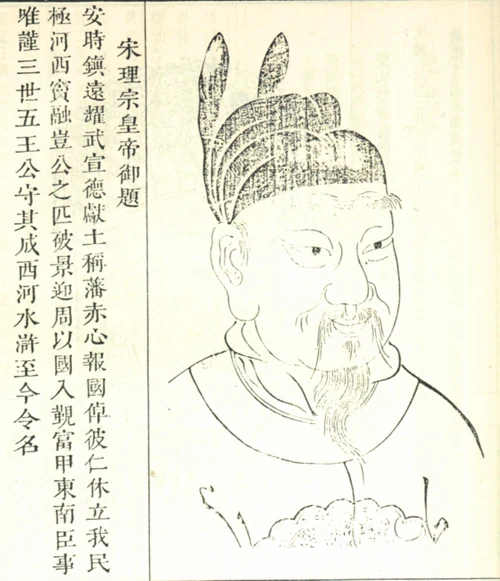
Qian Chu (September 29, 929–October 7, 988), courtesy name Wende, was originally named Qian Hongchu. After entering Song service, he dropped the character Hong to avoid the taboo on the name of Emperor Taizu of Song's father, Zhao Hongyin. His childhood name was Huzi. A native of Lin'an in Hangzhou, he was a grandson of Qian Liu, King Wusu of Wuyue, and the ninth son of Qian Yuanguan, King Wenmu. He was the last ruler of…
929 CE–988 CEWuyue
PROFILE
Qian Chu (September 29, 929–October 7, 988), courtesy name Wende, was originally named Qian Hongchu. After entering Song service, he dropped the character Hong to avoid the taboo on the name of Emperor Taizu of Song's father, Zhao Hongyin. His childhood name was Huzi. A native of Lin'an in Hangzhou, he was a grandson of Qian Liu, King Wusu of Wuyue, and the ninth son of Qian Yuanguan, King Wenmu. He was the last ruler of Wuyue during the Five Dynasties and Ten Kingdoms period, reigning from 948 to 978.
- Other Names
- Qian Hongchu; King Zhongyi of Wuyue
- Courtesy Name
- Wende
- Period
- Ten Kingdoms · Wuyue
- Dynasty/Polity
- Ten Kingdoms · Wuyue
- Identity
- Ruler
- Ethnicity/People
- Not recorded in historical sources
- Native Place
- Lin'an, Hangzhou (present-day Hangzhou, Zhejiang)
- Date of Birth
- September 29, 929
- Place of Birth
- Not recorded in historical sources
- Date of Death
- October 7, 988
- Reign
- 948–978
- Predecessor
- Qian Hongzong, Prince Zhongxun of Wuyue
- Successor
- Not applicable (Wuyue submitted to Song)
- Era Name
- Not recorded in historical sources
- Temple Name
- Not recorded in historical sources
- Posthumous Name
- Zhongyi
- Principal Achievement
- Last ruler of Wuyue; judged the political situation and submitted his entire realm to Song, sparing the people of the Two Zhe regions from warfare.
LIFE TIMELINE
Age 10 |
Age 17 |
Age 18 |
Age 18 |
Age 19 |
Age 19 |
Age 21 |
Age 27 |
Age 31 |
Age 45 |
Age 47 |
Age 49 |
Age 50 |
Age 55 |
Age 58 |
Age 59 |
BIOGRAPHY
Biography
Family Background and Early Life
Qian Chu was born on September 29, 929, in Gongchen Hall of the Wuyue royal palace in Hangzhou. His father Qian Yuanguan had no biological sons in his early years and did not have his first natural son, Qian Hongzun, until nearly forty. Qian Chu was Qian Yuanguan's ninth son and fifth biological son. His mother was Lady Wu, a consort of Qian Yuanguan later honored as Grand Lady Gongyi.
When Qian Chu was young, his half-brother Qian Hongzun was named heir but died in 940 at age sixteen. In 939 Qian Chu, like his brothers, was appointed commander of the Inner-Fang armies and Acting Minister over the Masses. He later rose through several honorary ranks, including Specially Advanced and Acting Grand Commandant.
In March 946 he was appointed Prefect of Taizhou, centered in present-day Jiaojiang, Zhejiang. The monk Deshao warned him that Taizhou was not the place where his future lay and advised him to return quickly or risk misfortune. Qian Chu followed the advice and requested permission to return to Hangzhou.
Accession through a Coup
In June 947, Qian Hongzuo died. Because his son was still young, his seventh younger brother Qian Hongzong succeeded him. Qian Hongzong was stern and disliked military officers who abused their power. His attempt to recover royal authority quickly brought him into conflict with Hu Jinsi, commander of the palace forces.
On the thirtieth day of the twelfth month, during a night banquet at the palace, Hu Jinsi feared that Qian Hongzong planned to kill him. Together with commanders Diao Tao, Zhu Wen, and several hundred palace troops, he launched a coup, confined Qian Hongzong in Yihe Courtyard, and falsely announced that the ruler had suffered a stroke. The following day Hu Jinsi and the commanders went to Qian Chu's private residence in the southern suburbs and asked him to take the throne. Qian Chu repeatedly declined and accepted only after receiving a promise that his brother's life would be spared. That day he began conducting affairs at the marshal's headquarters as Military Commissioner of Zhenhai and Zhendong, Acting Grand Commandant, and Attendant.
In the first month of 948, Qian Chu formally took the title King of Wuyue and appointed his younger brother Qian Hongyi chancellor. He sent Xue Wen, an officer of the personal guard, to escort the deposed Qian Hongzong to Yijin Army; in the early Later Zhou period Qian Hongzong was moved to the eastern residence in Yuezhou and continued to receive generous provisions. In February Qian Chu executed He Chengxun for his wavering conduct during Hu Jinsi's coup. Hu Jinsi died in March from fear and anxiety. The following year, Qian Chu demoted Diao Tao and Zhu Wen, both participants in the coup, and removed Qian Hongyi from the chancellorship. By this point the transfer of power had largely been completed.
Service to Later Han and Later Zhou
In August 948, the Later Han court appointed Qian Chu Grand Marshal of the Armies of the Southeast, Grand Opening Officer with the Three Excellencies, Acting Grand Preceptor and Secretariat Director, and Pillar of State. In October of the next year, Later Han formally invested him as King of Wuyue, granting a jade tablet and gold seal and honoring his mother as Grand Lady Shunde. In 950 Wu Cheng captured the Southern Tang general Zha Wenhui in Fuzhou and presented him at Kaifeng; Qian Chu was rewarded with the additional title Secretariat Director.
After Guo Wei founded Later Zhou in 951, the Zhou court successively gave Qian Chu the titles Grand Marshal of the Various Circuits and Grand Marshal of All Armies Under Heaven, with additional revenue assignments. When Chai Rong became Emperor Shizong in 954, he again confirmed Qian Chu as Grand Marshal of All Armies Under Heaven and granted a gold seal for the King of Wuyue.
Late in 955, Emperor Shizong prepared to campaign against Southern Tang and ordered Qian Chu to assist. In January 956 Qian Chu attacked Changzhou and Xuanzhou as a diversion. Wuyue Chancellor Wu Cheng rushed troops against Changzhou but was defeated by the Southern Tang general Chai Kehong and barely escaped. After the Zhou army crossed the Huai River, Qian Chu mobilized additional men throughout Wuyue and sent Shao Keqian and others with 400 warships and 17,000 naval troops to rendezvous at Tongzhou.
In 958 Later Zhou captured Shouzhou and Southern Tang sued for peace, ceding fourteen prefectures north of the Yangtze. Thereafter Wuyue's land route to the Central Plains remained open, and its tribute to Later Zhou increased sharply; in that year alone Wuyue sent tribute six times and treated envoys from the Central Plains with extraordinary deference.
Serving Song and Surrendering Wuyue
In January 960, Zhao Kuangyin seized the throne in the Chenqiao Mutiny, founded Song, and sent an envoy to notify Wuyue. In March Qian Hongchu changed his name to Qian Chu because of the naming taboo on Zhao Hongyin, the father of Emperor Taizu. In April Taizu made him Grand Marshal of All Armies Under Heaven. Thereafter Qian Chu carefully observed the duties of a subordinate state. His heir Qian Weijun traveled to Song four times, and Wuyue continuously sent tribute including rhinoceros horn, ivory, aromatics, pearls, and tortoiseshell.
In July 974, Emperor Taizu ordered Qian Chu to help attack Southern Tang. Li Yu, ruler of Southern Tang, wrote asking Qian Chu to join him against Song, warning that if Jiangnan fell today, Wuyue would fall tomorrow. Qian Chu refused, forwarded the letter to Song, personally led an army that captured Changzhou, and sent Shen Chengli and others to join Song forces in taking Runzhou and advancing on Jinling. In January 976 Qian Chu, his consort Lady Sun, and his heir Qian Weijun entered the Song court. Taizu had a residence built for him at Lixian House, granted him privileges including carrying a sword and wearing shoes in the palace and being omitted by personal name in edicts, and assured him of protection. When Qian Chu departed, Taizu handed him a yellow-wrapped bundle and told him to open it on the road; it contained memorials from Song officials urging the emperor to detain him.
In February 978, Qian Chu again went to the Song court. On the first day of the fifth month, Wuyue Chancellor Cui Renji, who had accompanied him, urged him to submit the territory immediately or face imminent disaster. Qian Chu therefore memorialized the throne and surrendered thirteen prefectures, one military command, eighty-six counties, 550,680 households, and 115,036 soldiers. Emperor Taizong elevated Yangzhou as the nominal Huaihai kingdom and enfeoffed Qian Chu as King of Huaihai, while retaining his title Grand Marshal of All Armies Under Heaven and his court privileges. More than 2,500 members of the Wuyue bureaucracy, from chancellors downward, received Song appointments.
Life under Song
After surrendering his territory, Qian Chu lived at Lixian House in the eastern capital. Emperor Taizong repeatedly summoned him for banquets and ball games and gave him gold and silver vessels, crystal, agate, and other gifts. In 979 he accompanied Taizong in the Northern Han campaign. In 984 he was retitled King of Hannan. In 987 he became Military Commissioner of Wusheng Army and King of Nanyang and moved to Nanyang; he was soon made Prince of Xu. In 988 he was retitled Prince of Deng.
On October 7, 988, the twenty-fourth day of the eighth month and Qian Chu's sixtieth birthday, Emperor Taizong sent Li Hui, a palace commissioner, and Wang Ji'en, Military Commissioner of Hezhou, to Nanyang with birthday gifts. Qian Chu drank merrily with the envoys. That evening he ordered attendants in the western pavilion of his residence to read the Book of Tang and had his descendants recite poetry. He suddenly suffered what the source calls fengxuan, interpreted there as a stroke, and died during the fourth night watch. Some contemporaries suspected poisoning. Taizong suspended court for seven days, posthumously made him King of Qin, gave him the posthumous name Zhongyi, and buried him at Taogong Plain in Xianxiang Ward, Luoyang. Under Emperor Zhenzong, he was posthumously granted the exceptional title Shangfu.
His Birth, His Early Offices, and the Change of Succession
Qian Chu, whose courtesy name was Wende and whose original name was Hongchu, changed to Chu after entering Song territory to avoid a naming taboo; his childhood name was Huzi and he was a man of Lin'an in Hangzhou, grandson of Qian Liu, prince Wusu of Wu-Yue, and ninth son of Qian Yuanguan, prince Wenmu. By the Wu-Yue Bei Shi he was born in the Merits hall on the twenty-fifth day of the eighth month of the fourth year of Tiancheng, his mother being the grand lady Gongyi of Wu-Yue, lady Wu. In the twelfth month of the fourth year of Tianfu of the Later Jin he was given by imperial authority the posts of commander of the several armies of the inner guard and assistant of the ministry of works. His brother Qian Hongzuo came to the throne at thirteen and the generals slighted him, and though he bore with them at first, when they grew unlawful he dismissed his chief generals Zhang De'an to Mingzhou and Li Wenqing to Muzhou and killed the inner supervisor Du Zhaoda and the army commander Kan Fan, "so that all in the state were in fear." In the sixth month of the twelfth year of Tianfu of the Later Han, 947, Qian Hongzuo died; his son being still young, his seventh brother Qian Hongzong was ordered to succeed. Qian Hongzong being by temper severe and hasty, he killed three law-breaking officers of Hangzhou and Yuezhou; and the army commander Hu Jinsi, relying on his merit in helping him to the throne, meddled in the government, which the prince hated, reproving him openly for every presumption, so that Hu Jinsi grew anxious and uneasy. The inner guard commander He Chengxun, seeking his master's will, asked leave to kill him, and consulted the army supervisor Shuiqiu Zhao-quan, who held that Hu Jinsi's faction was too strong to control and asked that he be borne with for the time, and the prince hesitated. He Chengxun in fear told Hu Jinsi of the plan, and Hu Jinsi rose in rebellion, entering in arms with his household troops; and the prince, cursing him to no effect, fled in confusion into the Yihe court, of which Hu Jinsi locked the door and, forging the prince's order, proclaimed within and without that the prince had suddenly been seized with a fit of the wind and had handed on the throne, and so led the generals to welcome the grand marshal at his own house. When the chancellor Yuan Dezhao came and stood below the screen without bowing, saying that he would wait to see the new sovereign, Hu Jinsi hurried out and lifted the screen, and Yuan Dezhao then bowed. The marshal said that if his brother were spared he would dare to accept the charge, and otherwise he would make way for a worthy; and Hu Jinsi agreeing, the marshal began to conduct the government. By the New History of the Five Dynasties, when Qian Hongzong reviewed his troops at the Bibo pavilion and was giving out rewards, Hu Jinsi came forward to object that the rewards were too generous, and the prince in anger threw his brush into the water, saying that in giving things to soldiers he was not making them his private property and asked why he should be blamed for it, at which Hu Jinsi was greatly afraid; and on new year's eve a painter presented a picture of Zhong Kui striking demons and the prince wrote a poem on it, which Hu Jinsi seeing understood at once that the prince meant to kill him, and that night he brought out the guards, deposed him and shut him in the Yihe court, welcomed Qian Chu and set him up, and moved Qian Hongzong to the eastern prefecture.
His Accession and His Handling of the Faction of Hu Jinsi
Having imprisoned Qian Hongzong, Hu Jinsi forged the prince's order saying that he was paralysed, and gathered the generals to go at once to the southern suburb where Qian Chu lived to welcome him as prince; and at dawn the next day Qian Chu, having obtained the promise that his brother's life would be spared, declined again and again before consenting to the generals' request, whereupon the generals knelt outside the marshal's office, saying that the grand commandant had long been of might and virtue, and congratulated him on his accession. By the Old History of the Five Dynasties, "Hongzong having been imprisoned by his officers and Chu being then governor of Wenzhou, the host, having no commander, welcomed and set him up, on the fifteenth day of the first month of the first year of Qianyou of the Han." In the matter of Hu Jinsi he was uncertain — He Chengxun having first asked leave of Qian Hongzong to kill Hu Jinsi and then, while he hesitated, told Hu Jinsi of it and so brought on the coup, and having after Hu Jinsi set Qian Chu up urged Qian Chu to destroy Hu Jinsi's party — and Qian Chu, fearing he would bring trouble on himself, had him put to death; and in the third month Hu Jinsi died of illness. In 949, because Dou Tao and Zhu Wen had joined in Hu Jinsi's plot and the coup, Qian Chu banished the former inner guard commander Dou Tao to Chuzhou and the former inner guard commander Zhu Wen to Wenzhou, and removed Qian Hongyi from the chancellorship to be governor of Mingzhou. By the Comprehensive Mirror, the inner guard commander Dou Tao being of Hu Jinsi's party and someone accusing him of treason with the chancellor Hongyi implicated, the prince of Wu-Yue, Hongchu, not wishing to probe to the bottom, banished Dou Tao to Chuzhou and made the chancellor Hongyi governor of Mingzhou. In the eighth month of the first year of Qianyou he was given the posts of marshal of the southeastern armies, military commissioner of Zhenhai and Zhendong and joint manager of state affairs, prince of Wu-Yue. In the same year, in the affair of Fuzhou, someone from Fuzhou went to Jianzhou to tell the Southern Tang's acting commander at Yongan, Zha Wenhui, that the Wu-Yue troops had abandoned the city and to ask him to take command; and Zha Wenhui, believing him, sent the governor of Jianzhou, Chen Hui, down the Min river with the fleet while he followed with horse and foot. Rain falling heavily and the water rising, Chen Hui made seven hundred li in one night, reached the wall, beat the Fuzhou troops and took their general Ma Xianjin and others; and when Zha Wenhui reached Fuzhou the Wu-Yue commander of the awe-inspiring army, Wu Cheng, sent several hundred men out in pretended welcome. Chen Hui said that the men of Min were full of guile and not to be trusted, and that they should camp and take their time, but Zha Wenhui said that doubt bred change and it were better to seize the city on the moment, and led his troops straight on; and Chen Hui drew up his men and halted with drums at the river's edge while Zha Wenhui took no precautions, so that Wu Cheng led out his troops and attacked, the Tang army being heavily beaten, Zha Wenhui falling from his horse and being taken by the men of Fuzhou with ten thousand of his soldiers dead, while Chen Hui brought his force back whole to Jianzhou; and Wu Cheng sent Zha Wenhui to Qiantang, where the prince of Wu-Yue, Hongchu, offered him in the five temples and then released him.
His Tribute to the Successive Central Courts and the Change in His Relation of Vassalage
In his reign the Han court gave him a fief of twelve thousand households with fifteen hundred in real fief, and Wu-Yue sent one tribute mission, of thirty-four thousand catties of tea with spices and weapons; and at this stage Wu-Yue was militarily and politically very independent, even addressing the envoys of the central court with "words and ceremonies somewhat peremptory," while the Han court took a policy of accommodation and lavish conciliation towards it. After the Later Zhou was founded, in Guo Wei's reign the Zhou court made Qian Chu commander of the armies of the several circuits, then commander-in-chief of the armies of the realm, then restored him as general of the eastern garrison, adding three thousand households to his fief with eight hundred in real fief, and granting him the honorific of the loyal, trustworthy, state-securing and order-bringing minister. When Shizong of Zhou campaigned in Huainan he ordered Qian Chu to attack Chang and Xuan to pin down Li Jing, and Qian Chu put his state's troops in readiness; but the Suzhou post officer Chen Man, not knowing of the Southern Tang's embassy, thought the court had taken the several prefectures and was sending an envoy to reassure them, and told Qian Chu urgently, asking that troops be raised to support it; and the chancellor Wu Cheng at once moved troops out, while the chancellor Yuan Dezhao, holding that the royal army could not yet have crossed the Huai, contended with him before Qian Chu and could not be moved. Wu Cheng's attack on Changzhou was indeed beaten by Li Jing's general Chai Kehong, and Wu Cheng's subordinate Shao Keqian fought hard, his son dying before his horse while he fought on regardless, and Wu Cheng and the rest barely escaped with their lives. When the Zhou army crossed the Huai, Qian Chu called out all the able-bodied men of the state to strengthen his army and sent Shao Keqian and others with four hundred warships and seventeen thousand sailors to Tongzhou to keep the tryst. In the fourth year of Xiande Shizong of Zhou sent the left remonstrating grand master Yin Rijiu and the secretary of the board of civil office Cui Song as envoys to Qian Chu, telling them that in this campaign he would certainly pacify the north of the river and that they would come back by land; and in the fifth year, the royal army campaigning in the Huai and taking the Jinghai army in the first month, Yin Rijiu and the rest did indeed return by land, and Shizong, having pacified Huainan, sent envoys to give Qian Chu armour, banners, camels, sheep and horses. In the third month of the fifth year of Xiande, 958, the Later Zhou army took Shouzhou and forced the Southern Tang to sue for peace and cede the fourteen prefectures north of the river; and from that time the land route by which Wu-Yue sent tribute to the central court was clear, and the amount of its tribute changed abruptly in that year — whereas before it had sent tribute once in several years, or once or twice a year, in that year it sent six missions. In the earlier part of the Later Zhou, Wu-Yue's relations with the central court remained much as before, but after the victory of the Zhou campaign in Huainan it began to serve the central court with humble words and rich gifts, sending tribute more frequently and treating its envoys with the utmost deference, so that its formerly loose relation of vassalage quietly changed. After the Song, when Taizu took the throne and changed the dynastic name to Song, he sent envoys to proclaim it to Wu-Yue; in the third month Qian Hongchu changed his name to Qian Chu to avoid the taboo on the personal name of Taizu's father Zhao Hongyin; in the fourth month Qian Chu was made commander-in-chief of the armies of the realm with an added fief; and in the first year of Kaibao, 968, the Song court again invested Qian Chu as prince of Wu-Yue. At the beginning of Northern Song, being busied with the destruction of Jingnan, the Later Shu, the Southern Han, the Northern Han and the Southern Tang, the neighbouring separatist powers, the court treated the comparatively submissive and distant Wu-Yue with the greatest conciliation; and though Wu-Yue kept administrative power within its territory, Qian Chu in receiving the envoys of the Song court no longer sat facing south as a sovereign but met them as host and guest facing east and west, so that the relation of vassalage had changed in kind; and militarily he no longer acted alone but co-operated with Song campaigns and even took Song orders. After Song destroyed the Southern Tang in 975 Wu-Yue lost its last screen, its tribute missions grew more frequent and richer and its envoys of higher rank, Qian Chu sending his heir to Bianliang several times and going himself; and by the accession of Emperor Taizong of Song Wu-Yue's independent political position was in effect lost and it had become a dependency of the central court.
His Help in the Pacification of Jiangnan and His Surrender of the Territory
In 975 the Song court raised troops to pacify Jiangnan and made Qian Chu commissioner for the pacification and settlement of the east of Shengzhou. Li Yu, sovereign of the Southern Tang, wrote to Qian Chu seeking a joint resistance to Song, saying that if he were destroyed that day, the next day would there be a sovereign for Qian Chu, and that once the Son of Heaven of the day rewarded merit with a change of place, Qian Chu too would be a commoner of Daliang — that is, with the Southern Tang destroyed Wu-Yue would lose its lips with its teeth, and Qian Chu too would be a sovereign of a fallen state; and Qian Chu, having read the letter, threw it on the ground and said that to lure men so was to invite destruction, and then sent Li Yu's secret appeal to Bianjing to prove his loyalty, at which Song Taizu commended him. Qian Chu accordingly led the vanguard to take Changzhou and was given the post of acting grand preceptor, and sent Shen Chengli and others with troops to help the Song army pacify Runzhou, cutting the last line between Jinling and Wu-Yue; and when Jinling fell in the eleventh month of 975 and the Southern Tang was destroyed, Qian Chu at once withdrew his troops to Qiantang and handed over all the prefectures of Run and Chang he had occupied to the Song army. In the spring of the ninth year of Kaibao, 976, after the Southern Tang campaign, Qian Chu was summoned to court with the princess lady Sun and the heir Qian Weijun and rich gifts, and was received and favoured by Song Taizu, the court building him a mansion in Bianliang; and during his stay he enjoyed the highest honours of a subject, not only being allowed to come to court with his sword and shoes and not to be named in edicts, but his wife lady Sun being exceptionally enfeoffed as princess of Wu-Yue, and Taizu feasting him many times and even having him treat with his brother Zhao Tingmei as brothers. At his departure Taizu gave him rich gifts besides and handed him the memorials of the courtiers urging that he be detained and forced to surrender his land, telling him to read them secretly on the road, to show the court's sincerity; and thereafter he again and again added to his fief. As to the advice of his chancellors, by the Sushui Jiwen the chancellor of Wu-Yue, Shen Huzi, was a stiff-backed minister of the Qian house, and when Qian Chu took Changzhou for the court, Huzi remonstrated that Jiangnan was the state's screen and that if the prince withdrew his own screen how should he guard the altars; and Qian Chu sent him out as a prefect and made Cui Renji chancellor in his place, Cui Renji telling Qian Chu that the sovereign was martial and unmatched and that the situation of the realm was now plain, so that to preserve the clan and the people was the best policy, with which Qian Chu wholly agreed. In 978 Cui Renji again went to court with Qian Chu, and Lu Duoxun advised Emperor Taizong to keep Qian Chu and not send him back, so that after the ceremony of audience he was not permitted to return; and Qian Chu, seeing that all the southern states had been pacified, was much disquieted and memorialized to surrender all his officers and men and weapons, asking to be relieved of the title of prince of Wu-Yue and of commander-in-chief of the armies of the realm and the honours attached, and only to return to his own province, which Emperor Taizong still would not allow. While the prince and his ministers were at a loss, Cui Renji said that the court's mind could now be known and that if the prince did not quickly surrender his land disaster would come; and when the other ministers all held it impossible, Cui Renji said aloud that they were now in another's grasp and a thousand li from their own country, and that only with wings could they fly away. Qian Chu took his advice and on the first day of the fifth month memorialized of his own accord, surrendering the thirteen prefectures of the two Zhe circuits, the one army of Yijin, eighty-six counties, five hundred and fifty thousand six hundred and eighty households and a hundred and fifteen thousand and sixteen soldiers, known to history as "Wu-Yue's surrender of its land." More than a thousand of the officers and retainers who had come to court with him learned only after the memorial that the state was gone, and all wailed that their prince would not return. Emperor Taizong gave Qian Chu the highest honour, changing his fief to that of prince of Huaihai — though the edict spoke of enfeoffing him as prince of Huaihai within the Huainan command, there was no actual fief, and he remained in the capital to attend court, the Qian clan afterwards moving to Bianliang. By his own memorial Qian Chu set out that from his forebears he had led righteous troops in person, honoured the central capital, held the fields of the two Zhe and put down the usurpers of the four quarters, and that the family succession had lasted a hundred years; and Emperor Taizong's edict answered that he had been loyal and true through generations, followed the statutes in his aims, inherited a hundred years of building and held a thousand li of hills and rivers, and that his weapons and towers had all been given up to the responsible offices and his hills, rivers, fields and lands all presented to the treasury, a whole clan coming over in obedience such as former ages had not seen, to be written in the records and to display his loyalty forever. And he said to his face that Qian Chu's preservation of one quarter and his coming over to him without bloodshed were deeply to be commended.
His Successive Titles under Song, His Death, and His Epitaph
In the summer of the fifth year of Taiping Xingguo, 980, Qian Chu, being ill of the foot, was given leave and the emperor came in person to comfort him; in the eighth year he memorialized three times asking to be relieved of the princely title of Huaihai and of the offices of commander-in-chief of the armies of the realm, president of the secretariat and grand preceptor, and Taizong relieved him only of the command-in-chief and refused the rest; in the first year of Yongxi his fief was changed to that of prince of Hannan, and in the spring of the fourth year the emperor, since Qian Chu was ill, allowed him to rest and made him military commissioner of Wusheng with the fief of prince of Nanyang, which Qian Chu firmly declined, so that it was changed to prince of Xu, and in the spring of the first year of Duangong to prince of Deng. It happened that the emperor sent an envoy to give him birthday gifts, and Qian Chu, the feasting with the envoy just ended, had reached evening when a great meteor fell before his principal chamber, lighting the whole courtyard, and that night he died suddenly at sixty. As to his epitaph, in 1895 the epigrapher Wang Liu first recorded its text in his work, and afterwards Luo Zhenyu included a rubbing of it; but because the title of the stone was long and the text nowhere contained so plain a mark of identity as "Qian Chu," this precious epitaph survived under the name of "Deng Chu," and so escaped by accident the destruction of modern wars and disorders; and only in 1981, when it was transferred and examined by experts, was the stone long mistaken for the epitaph of Deng Chu recognized as that of the last sovereign of Wu-Yue. The stone is ninety-two centimetres high and ninety-three broad, with fifty-three lines of fifty-two characters, some two thousand seven hundred characters in all, and a very long title. The text says of him that he was endowed with a frame of marvellous spareness and a nature of tranquil joy, of grave bearing and serene spirit, keeping the way in speech and silence and seeking benevolence in movement and rest, caring nothing for pleasure excursions and much given to frugality; and it says that as king Wu-su was careful in the beginning, as king Wenmu harmonious in the middle, and as king he completed the end, the three sovereigns of one mind being the model of the four quarters, so that of loyal ministers and filial sons the hundred generations may know.
His Character, Anecdotes, and His Government
By the supplement to the Wu-Yue Bei Shi, Qian Chu "held the offices of grand preceptor, president of the secretariat and joint manager of state affairs and prince for forty years and was marshal thirty-five years, reaching the utmost of wealth and honour, such a fullness of fortune as modern times have not equalled"; and yet he "was frugal by nature and extremely sparing in his own wants, commonly wearing a robe of coarse silk, his curtains, mattresses and cushions all of plain silk and purple gauze, eating no second dish, gentle by nature and never crossing anyone"; and in his province "whenever an envoy of the court came he received and served him with care, and the tribute he sent was of exquisite workmanship, and before sending an envoy he would set it all out in the courtyard and, facing north, burn incense and bow twice before sending him." By the Veritable Records of Emperor Taizong of Song, when at the beginning of the dynasty he was made commander-in-chief of the armies of the realm, his uncle by marriage, the military commissioner of Xuanguo, Wu Yanfu, had designs of his own, and when those about him urged that he be put to death Qian Chu said that for the sake of the common breath of his late wife's kin he could not bear to bring him to the law, and having said it wept aloud and in the end preserved the whole Wu family. In Taizu's time Qian Chu came to court and was sent home with rich gifts, and being pleased he offered more vessels, robes and rare curiosities than could be counted, at which Taizu said that these were things already in his own treasury and what use was there in offering them. In the Taiping Xingguo years, when Zhao Pu again became chancellor and Lu Duoxun was removed to be minister of war, Zhao Pu summoned the heir Qian Weijun and told him that the court knew Lu Duoxun had taken very much of the marshal's property, and that the reason no prosecution had been made was fear of implicating the marshal, and asked that he list all that had been sent; and Qian Weijun told his father, who said that the sovereign was clear-sighted and that when a great minister erred he dealt with it himself and there was no need of a written list. Zhao Pu and his officers pressing again and again, Qian Chu took all the registers of the time and had them burned, and calling Qian Weijun and the rest told them that at the beginning of his coming to court he had received extraordinary favour, so that the ministers about the throne had all had gifts, and not Lu Duoxun alone, and asked whether a man should add stone to one already drowning, and told the young men not to involve themselves in such fortunes and misfortunes, since he would bear it himself; and Zhao Pu, hearing of it, was filled with admiration and called him magnanimous and large-minded, and the matter dropped. After the fifth year of Taiping Xingguo, when Qian Chu was ill at home, a eunuch named Zhao Hai, drunk, came at midnight to his mansion and took out a pill, saying that the medicine was given by the emperor and that he begged the prince to take it at once for him; and Qian Chu's household, thinking Emperor Taizong meant to put him to death, all wept, but Qian Chu said that the sovereign treated him well and that medicine sent by an envoy must be good medicine and why should he doubt it, and chewed and swallowed it with a cup of wine; and Zhao Hai reporting it, the emperor was furious, had him imprisoned, beaten with rods and banished to an island, and those who understood commended Qian Chu's loyalty. By the Wudaishi Bu there is also the affair of the monk Shao: Shao was versed in the arts of divination and lived in the two Zhe, greatly honoured by Qian Liu, who called him national preceptor; and one day when he visited Qian Liu a palace child playing beside them dropped several dozen coins, and Qian Liu told him to pick them up quickly lest someone tread on his coins, at which the monk laughed and said that to tread on these coins would need an ox; and Qian Liu was pleased, taking it for a sign that the altars were firm, but afterwards it came to his grandson Qian Chu, who came over to court with all his clan and so the state ended, "and as Qian Chu's year was in the ox sign, it may be said that an ox trod the coins and broke them." In government, Qian Chu took care in his reign to lighten taxes: by the policy of remitting arrears he remitted accumulated taxes and opened the granaries in drought to relieve the people, so that the drain of farming people was checked and the peasants could work in peace; he promoted the rule that those who brought waste land under cultivation should not be taxed, to encourage the opening of waste; he kept up the special water office established by earlier Qian princes and formed the "silt-scouring army" to manage water and land and maintain the works of the Taihu basin, which both enlarged the fields and improved irrigation, greatly raising the grain yield and giving Wu-Yue a stable economic base; and he attended to the spread of cash crops, developing tea and mulberry and promoting textiles, tea-making, smelting and porcelain. The growth of farming and handicrafts laid the base for commerce, and his open policy furthered the diversification of the economy: Hangzhou, the Wu-Yue capital, saw "merchants gathered and ships crowding," presenting the prosperity described as "Qiantang rich and populous, the first in the southeast"; and taking advantage of its position by the sea Wu-Yue developed overseas trade, archaeological finds showing that Wu-Yue porcelain went as far as Southeast Asia, while the expansion of that trading network provided experience for the Song institution of the maritime customs. On the other hand he also continued the heavy taxes, "fowls, fish, eggs and vegetables being all taken, and for the arrears of a pint or a peck the punishment reaching the whipping of the back," the number of strokes depending on the amount owed, so that the least were whipped several dozen times and the most five hundred; and after his surrender these exactions were abolished by the new Song officials — by the Mengxi Bitan, the land tax of the two Zhe had been three pecks to the mu, and when the Qian state was abolished the court sent Wang Fangzhi to equalize the miscellaneous taxes, and he made it one peck to the mu, and on his return being reproached for reducing the rate at his own discretion, he answered that one peck to the mu was the common law of the realm and that the two Zhe, being now subjects of the throne, should not follow the law of a usurping state, and the emperor allowed it, "so that to this day the tax of one peck to the mu begins with Fangzhi." In Buddhism the Qian house had believed from Qian Liu's time and Qian Chu promoted it greatly, giving much support to the preaching and practice of the monks, and sending envoys to Korea and Japan to seek the treatises and commentaries of the Tiantai school, whose return gave a great impulse to the revival of Tiantai in Wu-Yue; and with the family's support the Pure Land, Tiantai, Vinaya and Chan schools all developed and exchanged with one another, so that Wu-Yue showed the flourishing of a "Buddhist land of the southeast." The prosperity of Buddhism drew monks from every quarter, whose coming brought a diversity of Buddhist thought and culture and promoted exchange within Buddhism, so that Wu-Yue by this advantage became a key centre for the spread of Chinese Buddhism outward, its Buddhist culture reaching Korea, Japan and India. With the Qian house's hereditary faith and Qian Chu's promotion, Wu-Yue became an important base for the revival of Buddhism, helping to shift the centre of Chinese Buddhism from north to south and changing the pattern of its development.
Major Activities
Surrendering the Territory to Song
On the first day of the fifth month of 978, following Cui Renji's advice, Qian Chu surrendered all of Wuyue to Song: thirteen prefectures, one military command, eighty-six counties, 550,680 households, and 115,036 soldiers. The submission spared the Two Zhe region from war and preserved much of Jiangnan's economic and cultural development. More than 2,500 Wuyue officials and members of the ruling circle received Song offices, and the Qian clan retained its position under Song.
Helping Song Conquer Southern Tang
In 974, Emperor Taizu ordered Wuyue to join the campaign against Southern Tang. Li Yu wrote to Qian Chu arguing that the two states shared the same fate. Qian Chu rejected the proposal, sent the letter to Song, personally led 50,000 troops, captured Changzhou, and sent Shen Chengli and others to support Song forces at Runzhou and Jinling.
Governance of Wuyue
During his thirty-one-year reign, Qian Chu served Later Han, Later Zhou, and Northern Song and continued Wuyue's policy of protecting the territory and pacifying the people. Externally he maintained a subordinate relationship with stronger dynasties and sent frequent tribute; internally the source credits his government with lightening corvée and taxation and encouraging agriculture and sericulture, allowing the Two Zhe region to remain relatively stable and prosperous during the Five Dynasties turmoil. He also sponsored Buddhist temples and pagodas in Hangzhou; the source names Leifeng Pagoda among his projects and notes Wuyue's reputation as a "Buddhist kingdom of the southeast."
Literary Work
Qian Chu enjoyed poetry and compiled his own poems as the ten-juan Zhengben Ji, with a preface by Tao Gu. Only one poem, "Written in the Palace," is said here to survive. The source describes his poetry as elegant and clear.
The Meaning of His Surrender of the Territory, the Judgements of Later Ages, and the Sites Connected with Him
In pacifying the separatist regimes of the south the Northern Song met resistance of varying degrees everywhere, a process that consumed great financial, material and human resources and did severe damage to the natural environment, social order and productive system of the regions unified; but Qian Chu's surrender of his territory of his own accord set the precedent of the peaceful transfer of a local regime to the central government, in sharp contrast with the passive submission of the Southern Tang, Jingnan and the rest, and it saved the Song court millions of strings in military expenditure and hastened the unification. Su Shi, in his stele for the Hall of Loyalty, judged Wu-Yue and Qian Chu thus: that three generations and five princes lasted with the Five Dynasties; that with the realm in disorder and heroes swarming, and while those who usurped titles with a few prefectures were beyond counting and had their clans destroyed with the innocent people besides, Wu-Yue held a thousand li with a hundred thousand troops and the wealth of mountains mined and seas boiled, of ivory, rhinoceros horn, pearls and jade the first in the realm, and yet never lost the duty of a subject, its tribute heard of along the roads, so that its people to old age and death knew nothing of arms and the sound of music and drums went on from season to season to this day, by which its virtue to the people was very great; and that whereas Shu and Jiangnan, trusting in their distance and their defiles, came to terms only when the troops were at their walls and their strength and position exhausted, and the Liu of Hedong fought to the death for a hundred battles against the royal army so that bones were piled into walls and blood made a pool and the whole strength of the realm was needed to overcome them, Wu-Yue alone did not wait for orders but sealed its treasuries, registered its commanderies and counties and asked the court for officials, regarding the loss of its state as the leaving of an inn, by which its service to the court was very great. Later ages have also debated his accession, saying that the brother taking the place of the brother, though a temporary expedient, did not depart from right, and yet none has heard of a younger brother taking the place while the elder lived, let alone when the plot came of a wicked minister's coup; and that Qian Chu, having made the covenant with Hu Jinsi before taking the government, was still not unable to decide for himself, and yet when He Chengxun asked leave to remove the chief criminal he had him executed as a turncoat, while Hu Jinsi, holding the former sovereign by force, was borne with and the law let lie. Several sites are also connected with him: the Leifeng pagoda is said to have been built by him to celebrate the birth of a son to his favourite consort lady Huang, though this is doubted, since the Southern Song Lin'an gazetteer, recording his colophon to the Avatamsaka Sutra, changed "the pagoda was therefore called the imperial consort's" to "the pagoda was called lady Huang's" for a taboo, so that the name of the Huangfei pagoda spread by error; the Jingci temple was built by Qian Chu in 954 to welcome the Chan master Cihua Dinghui below HuiRi peak on Nanping mountain, originally called the HuiRi Yongming hall; and the Baochu pagoda was first built in the Five Dynasties period, the present one being an octagonal seven-storey brick tower imitating a wooden pavilion, forty-five point three metres high, whose name has been connected with Qian Chu in popular tradition since the Ming, though scholars mostly hold that its original official name was the Baoshu pagoda and that the form "Baochu" appears only in the Ming. Such sites and legends stand together, and their precise attribution requires separate examination.
Personal Relations
- Grandfather: Qian Liu, King Wusu of Wuyue.
- Father: Qian Yuanguan, King Wenmu of Wuyue.
- Mother: Wu Hanyue, Grand Lady Shunde of Wuyue.
- Brothers: Qian Hongzun, who died young; Qian Hongzuo, sixth son and ruler; Qian Hongzong, seventh son and deposed ruler; Qian Hongyi, who served as chancellor.
- Consort: Lady Sun; another consort, Lady Yu.
- Sons: Qian Weijun, Qian Weizhi, Qian Weixuan, Qian Weihao, Qian Weijin, Qian Weicui, Qian Weiyan, and Qian Weiji. Qian Weizhi adopted a son of Qian Hongzong as his own.
- Daughters: seven, married into the Pei, Yuan, Shen, and Sun families, including Pei Zuo, Yuan Xiangzong, Shen Congji, Sun Pu, and Sun You.
- Monk Deshao: advised Qian Chu to leave Taizhou and return to Hangzhou, influencing an important early political choice.
- Liu Chengyou, Emperor Yin of Later Han: formally invested Qian Chu as King of Wuyue.
- Guo Wei, Emperor Taizu of Later Zhou: granted him the title Grand Marshal of the Various Circuits.
- Chai Rong, Emperor Shizong of Later Zhou: ordered him to attack Southern Tang.
- Zhao Kuangyin, Emperor Taizu of Song: treated Qian Chu generously and assured him that he would not kill the king of Wuyue.
- Zhao Guangyi, Emperor Taizong of Song: accepted Wuyue's submission and granted Qian Chu titles including King of Huaihai and Prince of Deng.
- Hu Jinsi: Wuyue power-holder who deposed Qian Hongzong and installed Qian Chu, then died in fear.
- He Chengxun: vacillated during Hu Jinsi's coup and was executed by Qian Chu.
- Diao Tao and Zhu Wen: participated in the coup and were later demoted.
Historical Assessment
Five Dynasties and Early Song
- Emperor Taizong of Song treated Qian Chu with exceptional honor after the submission, suspended court for seven days after his death, made him King of Qin, and granted the posthumous name Zhongyi.
- Emperor Zhenzong later posthumously granted Qian Chu the title Shangfu and refused to convert Lixian House into the Astronomical Bureau, preserving it as a sign of respect.
- Chancellor Cui Renji's warning that disaster would come immediately if Wuyue did not submit reflects the political judgment of Wuyue officials at the time.
Song and Yuan Periods
- Ouyang Xiu's New History of the Five Dynasties included Qian Chu in the "Hereditary House of Wuyue" and recorded his insistence on preserving Qian Hongzong's life before accepting the throne, treating the act favorably.
- Sima Guang's Comprehensive Mirror in Aid of Governance gives detailed accounts of his accession and surrender to Song and records the political calculation behind them.
- Song historians generally regarded his submission as having spared the people of the Two Zhe region from a larger war.
Ming and Qing Periods
- Zhu Guozhen's Fanghong Xiaopin records Qian Chu's life and praises his protection of his elder brother and his surrender to Song.
- Wu Renchen's Spring and Autumn Annals of the Ten Kingdoms gave him a biography and credited him with governing out of concern for the people.
- Ming and Qing historians often interpreted his surrender as a prudent accommodation to the broader trend toward reunification.
Modern Period
- Fan Wenlan's General History of China regarded the submission of Wuyue as an important step in ending the political fragmentation of the Five Dynasties and Ten Kingdoms.
- Zhuge Ji and Yin Yuzhen's Chronological Record of Wuyue Historical Affairs systematically reconstructs Qian Chu's political, military, and diplomatic activities and gives a favorable view of his policy of protecting the territory and pacifying the people.
- Contemporary scholarship generally holds that the peaceful submission preserved the Two Zhe region from warfare and contributed to the continuation of Jiangnan's economic and cultural development.
FIGURES ASSOCIATED WITH THIS DYNASTY
Bibliography
- New History of the Five Dynasties, juan 67, "Hereditary House of Wuyue 7"
- Old History of the Five Dynasties, juan 133, "Hereditary Biographies 2"
- Veritable Records of Emperor Taizong of Song, juan 45
- Chen Shangjun, comp., New Collated and Annotated Edition of the Old History of the Five Dynasties, vol. 11, Fudan University Press, 2005