Born in Fenyi, Jiangxi
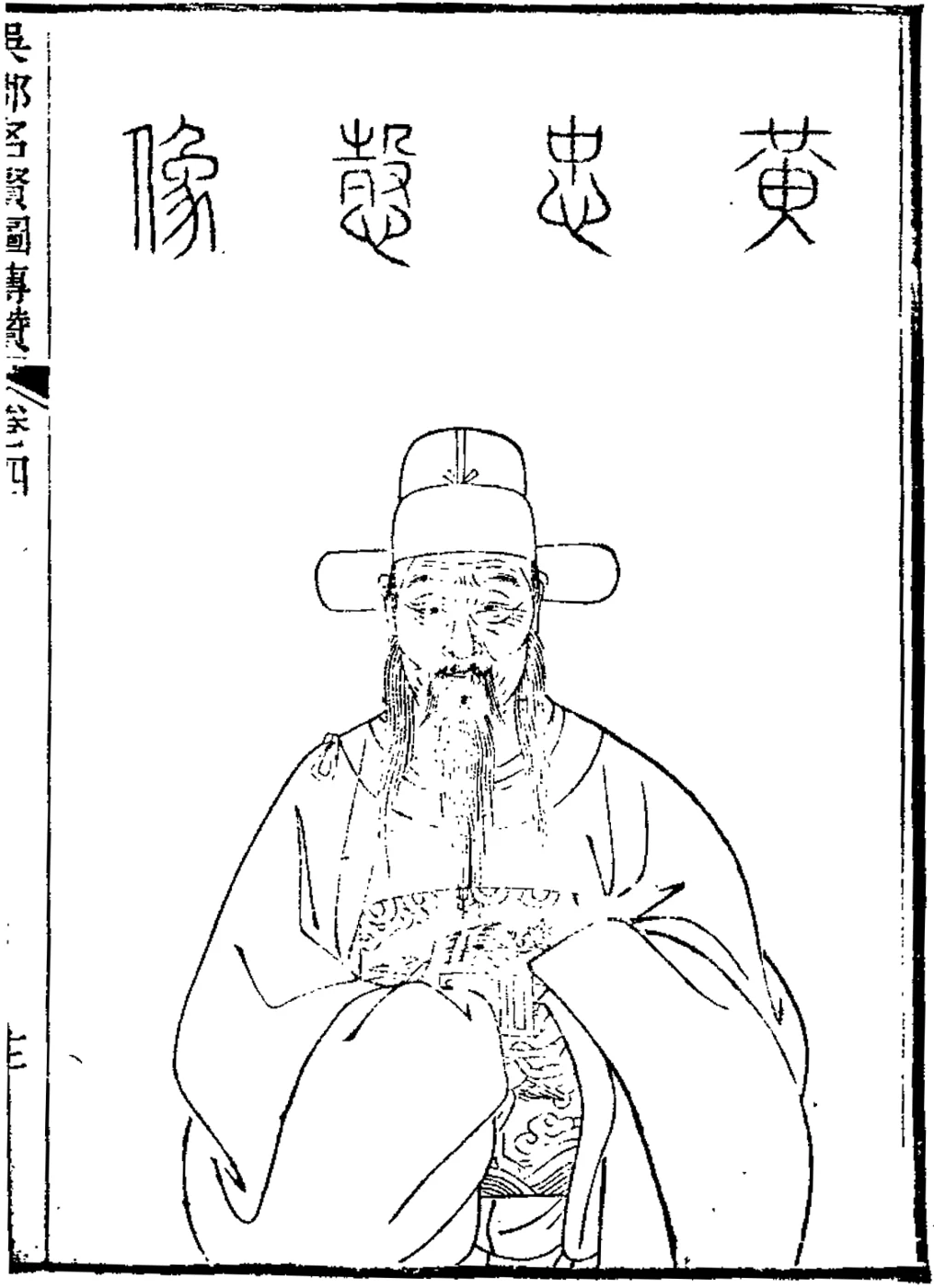
1350 CE–1402 CE
Official and adviser
Huang Zicheng
黄子澄
Huang Zicheng (1350–1402), personal name Shi and courtesy name Zicheng, by which he was commonly known, was a native of Fenyi County, Yuanzhou Prefecture, Jiangxi, now part of Xinyu. An early Ming official, he placed third in the palace examination in 1385 (Hongwu 18) and rose to become minister of the Court of Imperial Sacrifices and a Hanlin academician. A trusted adviser to Zhu Yunwen, the Jianwen Emperor, Huang…
1350 CE–1402 CEMing Dynasty
PROFILE
Huang Zicheng (1350–1402), personal name Shi and courtesy name Zicheng, by which he was commonly known, was a native of Fenyi County, Yuanzhou Prefecture, Jiangxi, now part of Xinyu. An early Ming official, he placed third in the palace examination in 1385 (Hongwu 18) and rose to become minister of the Court of Imperial Sacrifices and a Hanlin academician. A trusted adviser to Zhu Yunwen, the Jianwen Emperor, Huang participated in government with Qi Tai and strongly advocated reducing the power of the imperial princes. His poor choice of commanders contributed to repeated defeats of the court army during the Jingnan Campaign. After Zhu Di, the Prince of Yan, entered Nanjing, Huang was arrested. He argued defiantly and was executed by dismemberment; members of his clan, young and old, were all beheaded. He was posthumously named Jiemin early in the Hongguang reign and Zhongque by the Qianlong Emperor of Qing.
- Other Name
- Minister of the Court of Imperial Sacrifices
- Courtesy Name
- Zicheng
- Era
- Ming
- Dynasty/Regime
- Ming
- Identity
- Official and adviser
- Ethnicity/Group
- Not reliably established in historical sources
- Ancestral Home
- Fenyi County, Yuanzhou Prefecture, Jiangxi (now part of Xinyu, Jiangxi)
- Date of Birth
- 1350
- Place of Birth
- Fenyi, Jiangxi
- Date of Death
- 1402
- Place of Death
- Unknown
- Highest Office
- See Biography and Major Activities
- Major Achievements
- Close adviser to the Jianwen Emperor; strongly advocated reducing the power of the princes and recommended commanders for the campaign against Yan; killed after the Jingnan Campaign
LIFE TIMELINE
At age thirty-four, entered the Imperial University as a tribute student
At age thirty-five, placed first in the metropolitan examination and third in the palace examination; appointed an editor and compiler in the Hanlin Academy
Served as a reader-companion in the Eastern Palace and rose to minister of the Court of Imperial Sacrifices
At age forty-eight, after the Jianwen Emperor’s accession, concurrently became a Hanlin academician; participated in government with Qi Tai and began planning the reduction of princely power
At age forty-nine, first moved against the Prince of Zhou; Zhu Di, Prince of Yan, launched the Jingnan Campaign, and Geng Bingwen’s initial court expedition was defeated
Recommended Li Jinglong to replace Geng Bingwen; Li suffered successive defeats at Zhengcunba, Baigou River, and Jinan
At age fifty, dismissed because of Li Jinglong’s defeats, then soon restored
At age fifty-one, restored after Sheng Yong’s victory at Dongchang, then dismissed again after the defeat at Jiahe
At age fifty-two, as the Yan army approached Nanjing, Huang and Qi Tai were demoted and sent from the capital; in disguise, Huang went to Suzhou to recruit loyalist troops, hid in the home of Yang Ren in Jiaxing, and was denounced and arrested
Taken to the capital and interrogated personally by the Yongle Emperor; remained defiant, was executed by dismemberment, and his clan was exterminated
BIOGRAPHY
Biography
Family Background and Early Life
Huang Zicheng was born in 1350, the tenth year of the Zhizheng era near the end of the Yuan dynasty, in Fenyi County, Yuanzhou Prefecture, Jiangxi. Intelligent and studious from childhood, he studied the Book of Changes under Ouyang Zhen, the Book of Documents under Zhou Yuxue, and the Spring and Autumn Annals under Liang Yin. He became renowned for both his writing and his moral conduct.
Entry into Office through the Examinations
In 1384 (Hongwu 17), Huang entered the Imperial University as a tribute student. The following year he placed first in the metropolitan examination. In the palace examination, the responsible officials initially ranked Hua Lun first, Lian Zining second, and Huang next. Zhu Yuanzhang, however, believed that Ding Xian’s name accorded with a dream and elevated him to first place. Huang was relegated to the third class, became a Hanlin bachelor awaiting appointment, and was later appointed a compiler. He successively served as editor and compiler in the Hanlin Academy, accompanied the heir’s studies in the Eastern Palace, and rose to minister of the Court of Imperial Sacrifices.
Adviser to the Jianwen Emperor
When Zhu Yunwen was imperial grandson-heir, he once sat at the Eastern Corner Gate and asked Huang: “The princes are senior members of the imperial house and command large forces. Many act unlawfully. What is to be done?” Huang replied: “The princes’ guard troops are barely sufficient for their own defense. If disorder arose and the imperial armies descended upon them, who could resist? The Seven Kingdoms of Han were not weak, yet all were ultimately destroyed. The relative strength of great and small differs, as do the principles of legitimacy and rebellion.” Zhu Yunwen approved his advice and respectfully called him “Master Huang.”
After the Jianwen Emperor took the throne, he appointed Huang concurrently as a Hanlin academician and had him participate in government with Qi Tai. The emperor asked, “Do you remember what you once said at the Eastern Corner Gate?” Huang bowed his head and replied, “I dare not forget.” After leaving court, he and Qi Tai discussed how to reduce the power of the princes.
Strategy to Reduce Princely Power
Qi Tai wanted first to remove Zhu Di, Prince of Yan. Huang objected: “The princes of Zhou, Qi, Xiang, Dai, and Min committed many unlawful acts even under the late emperor, so there are grounds to remove them. If we are to punish one now, we should begin with Zhou. The Prince of Zhou is the Prince of Yan’s full younger brother; removing Zhou would cut off Yan’s hands and feet.” They agreed and reported their plan to the Jianwen Emperor the following day.
When someone accused Zhu Su, Prince of Zhou, of wrongdoing, the emperor ordered Li Jinglong to make a surprise attack and arrest him. His confession implicated the princes of Xiang and Dai. Zhu Su and Zhu Pian, Prince of Min, were reduced to commoner status; Zhu Gui, Prince of Dai, was confined in Datong; and Zhu Fu, Prince of Qi, was imprisoned in the capital. Zhu Bo, Prince of Xiang, burned himself to death.
The court ordered the Prince of Yan to deliberate on the Prince of Zhou’s guilt, but Yan submitted a memorial pleading Zhou’s innocence. Deeply saddened after reading it, the Jianwen Emperor thought the measures should stop. Huang and Qi Tai argued otherwise, but the emperor remained undecided. The next day they again advised him: “Only the Prince of Yan now remains a concern. We should take advantage of his reported illness and attack him.” The emperor hesitated: “I have only recently taken the throne and have already deposed several princes. If I now remove Yan as well, how can I explain myself to the realm?” Huang answered, “He who acts first controls others; do not let others control you.” The emperor said, “The Prince of Yan is intelligent, brave, and skilled in warfare. Even if ill, he may be difficult to seize suddenly.” The plan was abandoned.
On Huang and Qi’s advice, the emperor ordered Commander-in-Chief Song Zhong to transfer frontier troops to Kaiping and place the strongest men of the Yan princely guard under his command. He summoned Guan Tong and other commanders of the guard’s mounted troops to the capital to weaken Yan. Troops of the Left and Right Yongqing Guards at Beiping were redeployed to Zhangde and Shunde; Xu Kai trained forces at Linqing, and Geng Xuan did the same at Shanhai Pass, thereby seeking to contain Beiping.
The Prince of Yan was anxious and afraid because all three of his sons were in the capital. Feigning severe illness, he requested their return to Beiping. Qi Tai wanted to detain them, but Huang said: “It would be better to send them back and show him that we have no suspicions. We can then attack and seize him.” The three were therefore released. Soon afterward the Prince of Yan rose in arms, tearfully telling his officers: “The persecution of the princes was not the emperor’s will. It was the work of the treacherous ministers Qi Tai and Huang Zicheng.”
Jingnan Campaign
The Jianwen Emperor trusted Huang and Qi and proceeded with the reduction of princely power. Both, however, were scholars without military expertise. When the veteran general Geng Bingwen’s first expedition against Yan suffered a major defeat, the emperor summoned Huang for advice. Huang replied: “Victory and defeat are common in war. The realm is now rich and prosperous, with strong armies and ample provisions. How can one small corner oppose the whole empire? Assemble five hundred thousand troops and advance from every direction; he will soon be captured.” Huang recommended Li Jinglong, Duke of Cao, for the supreme command. The emperor replaced Geng Bingwen with Li despite Qi Tai’s vehement objection.
Li proved even less capable. He suffered successive defeats at Zhengcunba and the Baigou River and lost military supplies numbering in the hundreds of thousands. The Prince of Yan then defeated him below Jinan. The emperor urgently recalled Li to the capital but pardoned him. Huang wept bitterly: “Jinglong hesitated on campaign and harbored divided loyalties. Unless he is executed at once, how can we answer to the ancestors and inspire the soldiers?” He requested Li’s execution, but the emperor refused.
As commanders in the Jiang-Huai region lost battle after battle, Huang beat his breast and cried: “The great cause is lost! By recommending Jinglong I ruined the state; ten thousand deaths could not redeem my guilt!”
Taking advantage of Li’s defeat, Zhu Di submitted a memorial fiercely attacking Huang and Qi. To appease the Yan army, the emperor dismissed both men, although he continued consulting them secretly on major affairs. In the twelfth month of 1400, Sheng Yong decisively defeated the Yan army at Dongchang. In the first month of 1401, the Jianwen Emperor personally announced the victory at the imperial ancestral temple and restored Huang and Qi to office. After Sheng Yong was defeated at Jiahe in the third month, however, the two were dismissed again in another attempt to appease Yan. Zhu Di said, “This is merely a delaying tactic against me,” and pressed his advance more urgently.
Defeat and Martyrdom
In 1402, the Yan army attacked the Huai region and approached the capital. Huang and Qi were both demoted and sent out of the capital under secret orders to recruit troops. The Jianwen Emperor sent an envoy to tell the Prince of Yan that they had been expelled. Yan replied: “This is meant to delay me. Recall all the armies of Wu Jie, Ping An, and Sheng Yong, and only then will it end.” The emperor next sent Xue Yan, vice minister of the Court of Judicial Review, to request a ceasefire. Yan refused and reached the Yangtze.
Disguised, Huang traveled by way of Lake Tai to Suzhou, where he joined Yao Shan, prefect of Suzhou, in raising loyalist forces. Yao memorialized: “Zicheng has sufficient ability to resist this crisis. He should not be cast aside in a distant idle post merely to gratify the enemy.” The Jianwen Emperor again recalled Huang. Before he reached the capital, however, the Jinchuan Gate had fallen and Nanjing was lost.
Huang wished to go with Yao Shan to recruit troops along the coast, but Yao opposed the plan. Huang hid in the Jiaxing home of Yang Ren and secretly plotted an uprising. They were denounced and arrested together.
After Huang was taken to the capital, Zhu Di, now the Yongle Emperor, personally interrogated him. Huang argued defiantly and was executed by dismemberment. Every member of his clan, young and old, was beheaded, while relatives by marriage were sentenced to frontier garrison service.
Posthumous Honors and Descendants
Early in the Hongguang reign, Huang was posthumously named Jiemin. The Qianlong Emperor later gave him the posthumous name Zhongque.
One of Huang’s sons concealed his identity and changed his name to Tian Jing. After receiving an amnesty, he settled in Xianning, Huguang, now in Hubei. Huang Biao, who passed the metropolitan examination in 1521 (Zhengde 16), was Huang Zicheng’s descendant.
Major Activities
Strategy to Reduce the Princes
Huang was a principal architect of the Jianwen Emperor’s policy to reduce princely power. He proposed first removing the Prince of Zhou to “cut off the hands and feet of Yan” and guided the deposition or imprisonment of the princes of Zhou, Qi, Xiang, Dai, and Min. He urged the court to “act first and control others rather than be controlled” and advocated attacking the Prince of Yan while the latter claimed illness. When Yan requested the return of his three sons, Huang supported releasing them to allay suspicion and facilitate a later surprise attack. Although these strategies followed an internal logic, they were overly theoretical and failed to contain Yan effectively.
Mistaken Recommendation of a Commander
After Geng Bingwen’s defeat, Huang strongly recommended Li Jinglong, Duke of Cao, as commander. Li “hesitated on campaign and harbored divided loyalties,” suffered successive defeats at Zhengcunba and the Baigou River, lost military supplies numbering in the hundreds of thousands, and was defeated again below Jinan, severely weakening the court army. Huang later regretted the decision bitterly, beating his breast and lamenting: “The great cause is lost! By recommending Jinglong I ruined the state; ten thousand deaths could not redeem my guilt!” It was the greatest mistake of his life.
Loyalist Resistance during the Jingnan Campaign
Shortly before Nanjing fell, Huang traveled in disguise from Lake Tai to Suzhou and joined Prefect Yao Shan in raising loyalist forces. After the city fell, he hid in Yang Ren’s house in Jiaxing and plotted further action, but was denounced and arrested. Before the Yongle Emperor, he remained defiant and died for his cause.
Literary Work
Because the Yongle Emperor executed Huang, nearly all his manuscripts were dispersed or destroyed. Historical gazetteers preserve only seventeen poems and prose works, including “On Li Jinglong’s Defeat,” “Returning to Dongting,” “In Reply to Elder Yao the Sixth,” “Song for Sending Off Physician Liu,” and “Record of Guangqing Monastery on Dagang Mountain.” “On Li Jinglong’s Defeat” expresses his grief and self-reproach over the defeat:
“Bearing the command axe, you once mounted the general’s altar; / a sable coat was bestowed for the cold northern frontier. / An undisciplined campaign was truly child’s play; / betraying the state, you alone returned safely. / Whenever commanders are discussed, I grieve at Zhao Kuo; / when shall we see a Duke Huan of Qi repel the enemy? / From whom may the imperial sword be borrowed? / Crying to blue heaven, how often my cap has fallen.”
Personal Relations
Family
- Huang Zicheng: Personal name Shi, courtesy name Zicheng; commonly known by his courtesy name.
- Son: Changed his name to Tian Jing; after an amnesty, settled in Xianning, Huguang.
- Descendant: Huang Biao, who passed the metropolitan examination in 1521 (Zhengde 16).
Teachers and Associates
- Ouyang Zhen: Huang’s teacher of the Book of Changes.
- Zhou Yuxue: Huang’s teacher of the Book of Documents.
- Liang Yin: Huang’s teacher of the Spring and Autumn Annals.
- Yao Shan: Prefect of Suzhou and Huang’s partner in recruiting loyalist troops.
- Yang Ren: A Jiaxing resident who sheltered Huang and was arrested with him.
Rulers and Officials
- Zhu Yunwen, the Jianwen Emperor: Huang’s sovereign, who respectfully called him “Master Huang.”
- Zhu Di, the Yongle Emperor: Huang’s hostile ruler, who executed him after the Jingnan Campaign.
- Qi Tai: Participated in government with Huang and was likewise a trusted adviser of the Jianwen Emperor.
Conflicts
- Li Jinglong: The commander recommended by Huang; after Li’s defeats damaged the state, Huang requested his execution.
- Zhu Di: Principal target of the policy to reduce princely power and initiator of the Jingnan Campaign.
Historical Assessment
Ming Period and Contemporary Views
- The Yongle Emperor called Qi Tai and Huang Zicheng “treacherous ministers” and used them as a justification for taking up arms.
- Yao Shan believed that “Zicheng has sufficient ability to resist this crisis. He should not be cast aside in a distant idle post merely to gratify the enemy.”
- The Jianwen Emperor respectfully addressed Huang as “Master Huang” and followed his advice.
Early and High Qing
- Zhang Tingyu’s History of Ming states: “Qi, Huang, Fang, Lian, and their fellows possessed loyal plans for the state but lacked strategies for victory. Yet their loyal indignation blazed forth; they regarded knives, saws, cauldrons, and boiling pots as sweet. Even after a hundred generations, their awe-inspiring vitality still lives. How could they be spoken of in the same breath as those who neglect affairs of state and excuse themselves merely by dying?”
- The Qianlong Emperor Hongli stated: “At that time Yongle was originally a vassal prince, yet he defied legitimacy, raised troops, and secretly plotted to seize the state. These men naturally regarded him as an irreconcilable enemy. Although Qi Tai and Huang Zicheng were rash and poor in strategy, and Fang Xiaoru’s views were pedantic and narrow, so that none was sufficient to assist a young ruler, their intention to honor their sovereign and eliminate a powerful threat truly deserves understanding. Even when the situation was lost, they still recruited troops to preserve the cause and denounced him defiantly. Though their bodies were destroyed and their clans exterminated, they never yielded after a hundred reverses and were truly without shame before the moral teaching.”
- Zhao Xunyan wrote in “Passing the Shrine of the Minister of the Court of Imperial Sacrifices”: “Your integrity stirred the autumn of righteousness, / worthy of the highest rank won in the examinations. / Chao Cuo’s plan brought deeper anxious care; / Jinglong’s mistaken recommendation left regret beyond recovery. / In one morning cauldrons consumed the bond of ruler and minister; / later sacrifices shamed the treacherous. / Most heartbreaking was the place of collective punishment, / where ten clans repeatedly meet the eye.”
Late Qing and Republican Period
- Republican-era scholars often judged Huang in terms of loyalty and righteousness, holding that although his strategy was deficient, his devotion to the Jianwen Emperor and moral integrity were admirable.
- Other scholars criticized him as a scholar who ruined the state. Meng Sen’s Lectures on Ming History argues that Qi Tai, Huang Zicheng, and the others “were all scholars ignorant of military affairs,” leading to the failure of the reduction policy.
Modern Period
- Modern historians generally regard Huang as a representative architect of the Jianwen Emperor’s policy against the princes. Its failure reflected the political and military weakness of the Jianwen court.
- Some scholars note that Huang’s strategy was not itself wholly unreasonable, but execution was poor and personnel choices were mistaken. His recommendation of Li Jinglong in particular was a key factor in the failure of the Jingnan Campaign.
- Huang’s loyalty and integrity remain praised, and he is regarded as an archetypal “loyal minister.”
FIGURES ASSOCIATED WITH THIS DYNASTY
Bibliography
- Zhang Tingyu et al., History of Ming, vol. 141
- Meng Sen, Lectures on Ming History
- Veritable Records of the Ming Dynasty