Birth | Hai Rui (January 22 or 23, 1514-November 13, 1587), courtesy name Ruxian, also courtesy name Guokai, art name Gangfeng, was a native of Qiongshan County, Qiongzhou Prefecture, Guangdong, now part of Haikou, Hainan.
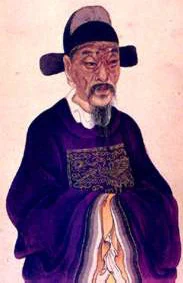
1514 CE–1587 CE
Ming official
Hai Rui
海瑞
Hai Rui (January 22 or 23, 1514-November 13, 1587), courtesy name Ruxian, also courtesy name Guokai, art name Gangfeng, was a native of Qiongshan County, Qiongzhou Prefecture, Guangdong, now part of Haikou, Hainan. He was a prominent official of the Ming Dynasty. Hai Rui became renowned for his integrity and forthrightness. Near the end of the Jiajing reign, he prepared a coffin for himself and submitted the *Memorial on…
1514 CE–1587 CEMing Dynasty
PROFILE
Hai Rui (January 22 or 23, 1514-November 13, 1587), courtesy name Ruxian, also courtesy name Guokai, art name Gangfeng, was a native of Qiongshan County, Qiongzhou Prefecture, Guangdong, now part of Haikou, Hainan. He was a prominent official of the Ming Dynasty. Hai Rui became renowned for his integrity and forthrightness. Near the end of the Jiajing reign, he prepared a coffin for himself and submitted the Memorial on Public Security, directly criticizing the emperor; he was imprisoned and sentenced to death, but was released after the Longqing Emperor ascended the throne. He later served as Governor of Yingtian and Right Censor-in-Chief of the Nanjing Censorate. Throughout his career he promoted land surveys, a more equitable distribution of taxes and corvée, and restrictions on powerful local interests. Common people praised him as "Hai Qingtian."
- Other names
- Ruxian; Gangfeng
- Courtesy name
- Ruxian
- Art name
- Gangfeng
- Period
- Ming
- Date of Birth
- January 22, 1514 CE(27th day of the 12th month, 8th year of Zhengde;one account gives the 23rd day)
- Dynasty/Regime
- Ming Dynasty
- Identity
- Ming official
- Ethnicity
- Not reliably established in historical sources
- Native place
- Qiongshan County, Qiongzhou Prefecture, Guangdong (now part of Haikou, Hainan)
- Place of birth
- Qiongshan County, Qiongzhou Prefecture, Guangdong (present-day Haikou)
- Place of death
- Place of death unknown
- Highest office
- See Biography and Major Deeds
- Major achievements
- Celebrated for incorruptibility and uncompromising integrity; bought a coffin before submitting a direct memorial criticizing the Jiajing Emperor; popularly known as “Hai Qingtian”; promoted land surveys and measures to relieve the people
- Principal achievements
- Known for integrity and uncompromising conduct; submitted the Memorial on Public Security after preparing a coffin and directly criticized the Jiajing Emperor; known as "Hai Qingtian"; carried out land surveys and relief measures for the people
- Date of Death
- November 13, 1587 CE(14th day of the 10th month, 15th year of Wanli)
LIFE TIMELINE
Age four | His father Hai Han died, and he was raised by his mother Lady Xie.
Age thirty-six | Passed the provincial examination and wrote the Proposal for Governing the Li.
Age thirty-seven | Traveled to the capital for the metropolitan examination, failed, and submitted the Proposal for Pacifying the Li.
Age forty | Failed the metropolitan examination again and was appointed Instructor of Nanping County, Fujian.
Age forty-five | Promoted to Magistrate of Chun'an County, Zhejiang.
Age forty-nine | Transferred to serve as Magistrate of Xingguo County, Jiangxi.
Age fifty-one | Promoted to Director in the Yunnan Bureau of the Ministry of Revenue and took up office in Beijing.
Age fifty-three | Submitted the Memorial on Public Security directly criticizing the Jiajing Emperor; imprisoned in the imperial prison and sentenced to death.
Age fifty-four | The Jiajing Emperor died; Hai Rui was released and restored to office.
Age fifty-six | Promoted to Right Assistant Censor-in-Chief and appointed Governor of the ten prefectures of Yingtian.
Age fifty-seven | Impeached and dismissed after compelling Xu Jie's family to return land; lived in retirement.
Age seventy-two | Recalled as Right Assistant Censor-in-Chief of the Nanjing Censorate.
Death | Died in office at Nanjing; posthumous title Zhongjie.
BIOGRAPHY
Biography
Family Background and Early Years According to the Hai Clan Genealogy compiled by Hai Rui's elder paternal cousin Hai Hu, during the Southern Song period a man named Hai Qiu migrated from Fujian to Guangzhou. Hai Qiu's great-grandson Hai Xunzi served as a commander in the Guangzhou Guard in the early Ming. Hai Xunzi's son Hai Da'er came to Hainan Island with the army in 1383, the sixteenth year of the Hongwu era, registered his household in Qiongshan County, and became Hai Rui's great-great-grandfather. Thereafter the Hai family shifted from military to civil pursuits and became a prominent local lineage. Hai Rui's grandfather Hai Kuan passed the provincial examination and later served as Magistrate of Songxi County in Fujian. His elder paternal uncle Hai Cheng rose to Investigating Censor of the Sichuan Circuit. Several members of the family passed the provincial examination, while Hai Rui's father Hai Han never achieved an official career and remained only a government-supported student. His father Hai Han died when Hai Rui was four, leaving mother and son dependent on one another and on several dozen mu of inherited farmland for a modest livelihood. His mother Lady Xie was strong-willed and imposed strict discipline, not allowing him to play freely like other children. Hai Rui studied the Classics from an early age and resolved that if he entered official life he would not seek private gain or flatter the powerful. He therefore adopted the art name Gangfeng, expressing his ideal of being firm, upright, and unafraid of wrongdoing. At thirteen, Hai Rui entered a private school in Haikou town, Qiongshan County. At twenty-seven, while studying at the Qiongshan prefectural school, he often discussed learning and history with like-minded companions and wrote works including Admonitions of a Strict Teacher, Farewell to Guests, and Instructions to My Sons, expressing his ambitions. In these writings he repeatedly warned himself not to waste his life, arguing that a person should seek what is genuine, emulate the sages, avoid becoming a complacent conformist, refrain from pursuing wealth and rank, and not present himself as a pillar of the age, and remain modest and willing to correct faults; otherwise, he wrote, one might as well "die quickly." His fellow townsman and disciple Liang Yunlong later wrote that Hai Rui's conduct in private and in public office matched the principles stated in his Admonitions of a Strict Teacher without the slightest discrepancy, and described him, with references to Confucius and Mencius, as a truly resolute and upright man. ### Imperial Examinations and Early Office Hai Rui was not successful in examinations and did not pass the provincial examination until 1549, the twenty-eighth year of the Jiajing era, when he was thirty-six. That year, considering Qiongzhou's large Li population and strategic coastal position, he submitted the Proposal for Governing the Li, arguing that the best policy for governing Qiongzhou was to open roads and establish counties in order to stabilize the region. In 1550, the twenty-ninth year of the Jiajing era, Hai Rui traveled to the capital for the metropolitan examination. While there he submitted the Proposal for Pacifying the Li and Illustrated Memorial to the Ministry of War, again presenting proposals for the administration of Qiongzhou. The court did not adopt them, and he failed the examination. In 1553, the thirty-second year of the Jiajing era, after failing the metropolitan examination twice, Hai Rui decided to abandon further examination attempts. In an intercalary third month that year, the Guangdong Provincial Administration Commission assigned him to serve as Instructor of Nanping County, Yanping Prefecture, Fujian. Hai Rui taught students that morality and literary learning should not be separated and argued that scholars should respect their own status rather than kneel casually before superior officials. During his tenure, a censor visited the county school. The other teachers knelt to announce their names, but Hai Rui alone greeted him with a long bow, stating that subordinate ritual should be observed at the censor's yamen, whereas a school was a place where teachers instructed students and should not require such submission. Zhu Heng, Vice Education Commissioner of Fujian, consequently respected Hai Rui and later seconded him to Zhengxue Academy to assist with editorial work. ### Career as a Local Official In 1558, the thirty-seventh year of the Jiajing era, Hai Rui was promoted to Magistrate of Chun'an County, Zhejiang. He observed that wealthy households held three or four hundred mu of land while paying little or no tax, whereas poor households without meaningful landholdings were still assigned heavy tax and corvée burdens. He therefore ordered a new land survey and reassessed tax liabilities. The burden on Chun'an peasants was reduced, and a number of households that had fled returned home. In addition to surveying land and equalizing taxes and corvée, Hai Rui implemented the Mutual Security (baojia) Policy, adjudicated difficult cases, and established community schools. He lived frugally, wearing plain cloth robes and eating coarse grain, and had an old servant grow vegetables for household use. A story that he bought only two jin of meat for his mother's birthday became widely repeated. In 1560, the thirty-ninth year of the Jiajing era, Yan Song's associate Yan Maoqing, a Censor-in-Chief, toured the salt administration of Zhejiang and the Huai regions while engaging in corruption and exactions. Hai Rui resisted him, providing only simple food and publicly declaring that the county offices were too small to accommodate a large procession of carts and horses. Yan Maoqing was angered but, already familiar with Hai Rui's reputation, restrained himself and left. Afterwards he instructed the salt censor Yuan Chun to bring charges against Hai Rui. No substantive fault could be established, but Hai consequently lost an opportunity for promotion to Controller-General of Jiaxing. In December 1562, the forty-first year of the Jiajing era, with Zhu Heng's assistance, Hai Rui was transferred to serve as Magistrate of Xingguo County, Jiangxi. There he again focused on land surveys and wrote the Eight Proposals for Xingguo, centered on removing longstanding abuses and stabilizing the livelihood of the people. ### Preparing a Coffin, Submitting a Memorial, and Imprisonment In 1564, the forty-third year of the Jiajing era, Hai Rui was selected as Director in the Yunnan Bureau of the Ministry of Revenue and took up office in Beijing. By this time, the Jiajing Emperor Zhu Houcong rarely attended to government in open court, remained deep within the the Xiyuan precinct, and devoted himself to altar rituals and the pursuit of blessings. Governors-general, governors, and other frontier officials competed to present objects interpreted as auspicious signs, while officials of the Ministry of Rites routinely submitted congratulatory memorials. After the punishment of Yang Zui and Yang Jue, few court officials dared to criticize current policy. On February 1, 1566, the forty-fifth year of the Jiajing era, Hai Rui purchased a coffin, entrusted his family to a friend, and submitted the Memorial on Public Security, criticizing the emperor's devotion to occult practices, extravagant lifestyle, and neglect of government. The Jiajing Emperor became furious, threw the memorial to the floor, and ordered that Hai Rui be arrested before he could flee. The eunuch Huang Jin replied that Hai was already known for his uncompromising foolishness, had bought a coffin before submitting the memorial, taken leave of his wife, and seen his servants scatter, so he was unlikely to flee. The emperor fell silent, then repeatedly reread Hai Rui's memorial during the day and kept it in the palace for several months. He is recorded as saying that Hai Rui could be compared with Bi Gan, although he himself was not King Zhou of Shang. In the autumn of 1566, the Jiajing Emperor fell ill and, in a depressed state, discussed with Senior Grand Secretary Xu Jie the possibility of yielding the throne to the Crown Prince. He said that Hai Rui's criticisms were all correct and that his long illness prevented him from attending court, adding that had he been able to conduct government in a side hall he would not have suffered Hai Rui's rebukes. Hai Rui was nevertheless arrested and placed in the imperial prison while the court investigated whether anyone had directed him. He Yishang, an administrative secretary in the Ministry of Revenue, inferred that the emperor did not truly intend to kill Hai Rui and submitted a memorial requesting his release. The emperor became enraged, ordered the Embroidered Uniform Guard to flog He Yishang one hundred strokes, and imprisoned and interrogated him day and night. Xu Jie worked to save Hai Rui. Some court officials proposed execution by strangulation, but Xu Jie and Minister of the Ministry of Justice Huang Guangsheng blocked the sentence. On January 23, 1567, the fourteenth day of the twelfth month of the forty-fifth year of the Jiajing era, the Jiajing Emperor died. The prison official responsible for Hai Rui heard the news and, believing Hai would not only be released but also restored to office, prepared food and wine for him. Hai Rui assumed instead that he was about to be taken to the western market for execution and ate and drank without restraint. The official quietly told him that the emperor had died and that he would soon leave prison and be entrusted with important office. Hai Rui asked whether this was true, then burst into grief, vomited what he had just eaten, fainted, and wept throughout the night. ### Governor of Yingtian and Later Years In 1567, the first year of the Longqing era, Zhu Zaihou, formerly Prince of Yu, ascended the throne as the Longqing Emperor. Acting under the late emperor's succession edict, he pardoned remonstrating officials including Hai Rui. Hai was released, restored to his original office, soon transferred to the Ministry of War, later moved to the Court of Judicial Review, promoted to Assistant Director of the Imperial Seal Office, and then transferred to the Office of Transmission, where he successively served as Left and Right Transmission Commissioner. In the summer of 1569, the third year of the Longqing era, Hai Rui was promoted to Right Assistant Censor-in-Chief and made governor of the ten prefectures of Yingtian. He implemented the Single whip law. A major Yangtze flood struck Jiangnan at the same time. The Ming court had repeatedly dredged the Wusong River over several decades without resolving the problem. After conducting an inspection, Hai Rui concluded that the Huangpu River had already begun to capture the Wusong channel. He therefore decided to make the Wusong River a tributary of the Huangpu. After several months of work, a longstanding flood problem was reduced. He also limited rent and debt exactions, promoted more equal land and tax arrangements, and restrained land concentration. When he compelled the family of former Senior Grand Secretary Xu Jie to return occupied land, he was impeached and dismissed, and then lived in retirement for more than ten years. In 1585, the thirteenth year of the Wanli era, Hai Rui was recalled as Right Assistant Censor-in-Chief of the Nanjing Censorate and soon transferred to Right Vice Minister of Personnel in Nanjing. He died in office on the thirteenth day of the tenth month of the fifteenth year of the Wanli era, November 13, 1587. A few days before his death, he returned six qian of silver sent by the Ministry of War. Wang Yongji, an Assistant Censor-in-Chief of the Nanjing Censorate, went to Hai Rui's residence to inventory his belongings and found only an old hemp bed curtain and worn clothing, insufficient even for burial preparations, and was moved to tears. Colleagues donated money for the funeral. Hai Rui was posthumously granted the office of Junior Guardian of the Crown Prince and the posthumous title Zhongjie. On the day of the funeral, the sources state that townspeople lined the riverbanks and that people poured libations and wept along a route extending for a hundred li.
His Family, His Orphaned Poverty, and His Assumption of the Name "Gangfeng"
Among Hai Rui's kinsmen of the previous generation there were five sons and nephews — Hai Cheng, Hai Lan, Hai Han, Hai Peng and Hai Mai — of whom Hai Cheng rose to be investigating censor of the Sichuan circuit and three others passed the provincial examination; only Hai Rui's father Hai Han achieved nothing, being merely a stipendiary student of the state academy. His mother was lady Xie. Four years after Hai Rui's birth Hai Han died, and from that time the widow and orphan depended on one another, keeping body and soul together on the few score mu of land their forebears had left. Lady Xie was by temper firm and strict with Hai Rui, not letting him play as other children did. From childhood he read the poems, documents, classics and commentaries, resolving that if he ever became an official he would be one who sought no private gain and flattered no powerful man; and he therefore took the style "Gangfeng," meaning that a man should be firm and upright and fear no evil. In his youth he often studied and discoursed on past and present with two or three like-minded men, writing such pieces as the Admonition of a Severe Teacher, the Farewell at the Guest's Seat and the Instructions to My Sons to express his ambition; and in these he warned himself again and again that, being born between heaven and earth, he must not pass the years in vain but must accomplish something, saying that a man in the world should "only seek the true," should not pursue wealth and rank nor let palaces and concubines move his heart, should not envy the world of goods but be a pillar in midstream, and should be modest and prudent and not shrink from hearing of his own faults — otherwise "better to die quickly." These words show that the noble virtue of opposing extravagance and upholding frugality, and the character that set its mind on serving the people and stood firm against wrong, had taken shape in him already in youth.
His Provincial Degree, the Plan for the Li, and the Naping School Mastership
In 1549 Hai Rui passed the provincial examination. Qiongzhou being a district of Li tribesmen, situated on the maritime frontier and of importance, yet badly governed, he submitted his Plan for Governing the Li, holding that the best policy was to open roads and establish counties "to pacify the countryside"; and afterwards he submitted to the central court his Plan for Pacifying the Li and a memorandum with maps to the board of war, setting out once more his principles and concrete measures for Qiongzhou, but the proposal drew no attention from the court. He failed in that metropolitan examination, and his chronological biography records that "having again gone up to the spring examination without success he resolved firmly with himself that a gentleman may advance by the examinations and accomplish his will, and asked why it must be the regular examination," and in the intercalary third month was selected and made instructor of the Naping county school in Fujian. As instructor he held that morals and letters in a pupil could not be separated, and that scholars should respect their own standing and not kneel indiscriminately before their superiors.
Magistrate of Chun'an: Land, Taxes, His Own Frugality, and His Refusal to Spare Hu Zongxian's Son
By his own account in his memorial asking leave to support his mother, he passed the provincial examination in 1549, was made instructor of the Naping county school in the intercalary third month of 1553, was promoted magistrate of Chun'an in the fifth month of 1558, and was transferred as magistrate of Xingguo in the twelfth month of 1562. At Chun'an he measured the land afresh and equalized the taxes and labour service, carried out the baojia system and decided difficult cases, "resolving anew to measure the land and fix the tax burden," so that the peasants' load was lightened and many fugitive households returned. His conduct record says that on first entering the district he "saw suffering in ten thousand forms" and sighed that "the world's business is all ruined by scholar-officials": the incompetent plunder the people to fill their own purses, and even the worthy, torn between the "goody-goody" course and the right one, exhaust the fat and marrow of the people to buy praise, and then lay it all to the court's heavy taxes. He therefore issued his instructions and first made his meaning clear — that a magistrate's business is to know one county's affairs, and that "above, the court are my parents; in the middle, the grand coordinators, the provincial judges, the commissioners and their officers, the guests and the local gentry are my elder brothers; below, the clerks, the village headmen and the common people are my children," each to be met in the proper way; and that if a man thinks he need only keep himself clean and not others, since to cleanse others breeds slander, and that nothing he does is to be taken seriously, since seriousness breeds resentment and ruin, and disregards whether the court is for or against and treats himself, his children and his elder brothers in the "goody-goody" way, floating with the stream to win a name and steal office, then "he is no magistrate." In his own person he took not a hair beyond his salary; even his household servants were made to gather firewood, his courtyard was quiet, and the clerks with nothing to do were allowed to go back to farming or trade; where the village levies had once come to four or five taels a head he collected only a little over two mace, and all his expenditure came out of that. When the grand coordinators offered by custom money to his clerks, saying that without it trouble would come, he said alone that he would rather suffer the penalty of transportation for a capital crime than stoop to such a burglar's trick. Of gifts to men in key posts and of the courtesies expected of an official going to the capital he said alone that a man might decline to bribe any superior in the realm and still not fail to be promoted, and might bribe every superior in the realm and still not fail to be dismissed, and asked whether he should give himself over to the ditch. Chun'an had many licentious shrines and lacked community schools, and he destroyed the shrines to make schools, encouraging scholars by right and duty and not by fashion. As magistrate he wore cloth and ate unhusked rice, having an old servant grow vegetables for his food; and the governor-general Hu Zongxian once told men that he had heard that magistrate Hai, for his mother's birthday, had bought two catties of meat. Once Hu Zongxian's son, passing through Chun'an, fell into a rage at the post-station clerk and had him hung up; and Hai Rui said that formerly the governor-general, on his inspections, had ordered that the places he passed should make no lavish provision, and that this man with his rich baggage could certainly not be Hu's son — whereupon he confiscated the money he carried, put it into the treasury, and sent a rider to report the matter to Hu Zongxian, who found no way to blame him.
The Passage of Yan Maoqing, His Transfer to Xingguo, and the Eight Points for Xingguo
When the grand censor Yan Maoqing passed through on his tour, Hai Rui not only provided very plain food and drink but declared aloud that the county seat was too small to hold his numerous carriages and horses; and Yan Maoqing, though furious, had long heard of Hai Rui's name and could only restrain his rage and go. His conduct record says that where Yan Maoqing's tour went the proclamation claimed frugality while the reality was otherwise, and the officials he passed spent a thousand and a hundred thousand to entertain him; and Hai Rui alone sent up a memorandum saying that the rumour of his coming and the proclamation differed, that to follow the proclamation would be to court blame and to follow rumour to break the law, and that a poor district did not know which course to take. Yan Maoqing could only endorse it "according to the proclamation," but went round another way and no longer passed through Yanzhou; and the governor of Yanzhou, hearing that he was coming and then that he had stopped, was puzzled, and learning the reason feared trouble, receiving Hai Rui in a fury and railing at him; but Hai Rui only composed his face, knelt long and said not a word, so that Yan Maoqing's temper cooled, and he rose, bowed and withdrew without further words. Yan Maoqing afterwards set his creature, the salt inspector Yuan Chun, on Hai Rui; and Hai Rui, though nothing could be laid to his charge, thereby lost his promotion to assistant of Jiaxing and had to go to the board of civil office to await assignment, being transferred in his former rank to the magistracy of Xingguo (the Ming History's "assistant of Xingguozhou" is an error). On taking office there he applied himself to measuring the land and wrote his Eight Points for Xingguo, whose centre was the removal of accumulated abuses and the settling of the people's livelihood; and his conduct record says that on arriving he found the land poor and the people destitute, the annual collection not one tenth of what it should be, the harm lying in the floating grain, and that he submitted eight matters to the grand coordinator of Nangan, Wu Yaoshan, to be carried out in order, and pressing above all for the new measurement; and that the measurement being barely finished he was reported for promotion to secretary of the Yunnan bureau of the board of revenue.
The Memorial on Government and His Commitment to the Imperial Prison
In 1564 Hai Rui was transferred to be a secretary of the board of revenue. Shizong in his last years held no court, dwelt deep in the western park and gave himself to building altars and seeking blessing, while the governors and grand coordinators vied in presenting auspicious objects and the ritual officers were always memorializing their congratulations. Seeing the corruption of the government, the growth of taxes and labour service, the people's bitter complaints, and the emperor's devotion to fasts and sacrifices in hope of immortality, Hai Rui risked death to present his Memorial on Government, denouncing the emperor's way as not the way of a ruler and his superstition as monstrous, so that officials were greedy and generals weak and the people could not live. On its presentation he was thrown into prison and sentenced to death. It is recorded that Shizong at first reading was furious and threw it on the floor, telling those about him to seize the man quickly before he escaped; and that the eunuch Huang Jin said beside him that the man had long had a name for folly, that before memorializing he had known he would offend and die, had bought a coffin, taken leave of his wife and had his servants scatter, and would not run away; at which Shizong said nothing, and after a while read the memorial again, reading it many times in one day, and sighed, and could only keep the Memorial on Government in the palace for several months, saying once that the man could be compared to Bi Gan, though he himself was no King Zhou of Shang. Afterwards, on the question of abdicating in favour of the heir, Shizong said that all Hai Rui said was right, that he had long been ill and could not hold court, and that he had indeed not been careful of himself and so had fallen into many illnesses, and that had he been able to conduct business in a side hall he would not have suffered this man's reproaches; and he had Hai Rui arrested and put in the imperial prison and had the instigator investigated, the record of the case being sent up but still kept in the palace unpublished. A certain secretary of the board of revenue, hearing of it, concluded that Hai Rui would not only be released but employed, and brought wine and food to entertain him; and Hai Rui, supposing he was being taken to the western market for execution, ate and drank his fill and thought of nothing else, until the secretary whispered in his ear that the emperor was dead and he was about to leave prison and be employed; and Hai Rui asked whether it was true, and then wept bitterly, vomited up all he had eaten and fainted away, weeping all night.
His Restoration under Longqing, the Governorship of Yingtian, and the Waterworks of Jiangnan
After Shizong's death Muzong came to the throne with the era name Longqing and, by Shizong's testament, pardoned all the remonstrating ministers, of whom Hai Rui was the chief; and he was released, restored to office, and soon transferred to the board of war. In 1567, when Xu Jie was impeached by the censor Qi Kang, Hai Rui memorialized that Xu Jie in serving the late emperor had failed to save him from the errors of the immortality cult and the building works, and had kept his place in fear of the imperial anger, but that since taking charge of the government he had laboured over the state's business and had a generous mind able to bear with men, and had much to his credit, whereas Qi Kang was so willing to serve as a falcon and hound to seize and devour good men that his crime exceeded the other's. In 1569 he was promoted right assistant censor-in-chief and governor of the ten prefectures of Yingtian. The Jiangnan region, though the richest in the realm, suffered frequent floods: at the time of his arrival it was drowned in flood, great areas of field were submerged, grain prices rose and the people were driven from their homes with the starving lying everywhere. By going over the ground himself and reading the water-control records of successive governors he found the cause: besides the long rainy season and heavy rainfall, the greater factor was the decay of the waterworks; and he memorialized at once that the water officers neglected their duty and the grand coordinators gave it no thought, so that silt gathered in the channels and the lake water could not drain, and that dredging the Wusong river and controlling the floods of Jiangnan admitted of no delay. Having obtained the court's approval he began at once. Judging that with limited funds the opening of a new channel was too great a work, and that the tendency of the Huangpu to take over the Wusong could no longer be reversed, he held the discharge of the lake waters by the Huangpu to be a good plan after all, and decided to remake the Huangpu: he had a dam and sluice built on the neighbouring ancient Dongjiang so that most of the upper waters flowing through it turned northward into the Huangpu, making that river fuller, and narrowed and deepened the channel to increase the force of the current so that the silt at the mouth of the Wusong was scoured away. By this remaking the Wusong became a tributary of the Huangpu and the silting of its lower channel was thoroughly cured. During the works he raised money and grain himself, and besides calling on the gentry to contribute he memorialized asking that the grain of the three prefectures of Suzhou, Songjiang and Changzhou be kept in place, lest in a great disaster a man should have money and find no grain to buy; and the money and grain still falling short he used the method of "works in place of relief," calling the victims into the works and paying them their wages in grain and money, so that relief was given and the works completed at once, "relieving the hunger of the moment and establishing the profit of a hundred years." Under his direction eighty li of channel were dredged within two months and a hundred and thirty thousand famine victims tided over the famine, the works costing ten per cent less than the estimate; and for several years afterwards, though great floods came again and again, the people suffered no disaster.
His Dismissal, His Years in Retirement, and His Restoration under Wanli
While Hai Rui governed Yingtian the subordinate officers feared his severity and many corrupt officials resigned of themselves; a great family that had painted its gate red, hearing that Hai Rui was coming, painted it black; and the eunuchs supervising the silk manufactories in Jiangnan reduced their carriages and attendants when he came near. He compelled the former grand secretary Xu Jie's household to give back the land it had seized, and after Xu Jie's dismissal he showed his family no favour; his administration being fierce, the officers under him carried out his orders in fear and the powerful even fled elsewhere, while some wicked men took the chance to lay information, so that great houses were sometimes falsely accused; and he cut the redundant expenses of the post stations, so that officials passing through his jurisdiction were ill provided for, and complaints grew. He governed Wu for only half a year, and when the people heard that he was dismissed they wailed and wept in the streets and every household painted his likeness and sacrificed to it. In retirement he was not cast down but still concerned for the state, and in his ten and more years in the fields he put the conduct of officials first, constantly pointing out to the prefectural and county officers where their government succeeded or failed and denouncing corrupt officials, always "speaking out plainly without the least reserve"; he set out principles and methods for measuring the land afresh and equalizing taxes and labour service, drafting the rules himself and drawing the plans, and when a clerk out of admiration left one mu eight fen of Hai Rui's own land unmeasured he corrected it at once. On the tenth day of the first month of 1585 Shenzong formally restored the seventy-two-year-old Hai Rui as right assistant censor-in-chief of the Nanjing censorate; and driven by the thought that a subject may not fail to repay extraordinary knowledge with extraordinary service, he "gladly left home" on the twenty-eighth day of the second month and crossed the sea northward, ending sixteen years of retirement; and on the twelfth day of the fifth month he reached his post as right vice minister of the Nanjing board of civil office. To equalize labour service and ease the people he drew up his Register of Corvee, which "examined the statutes above and weighed human feeling below," providing expressly for what should be kept and what abolished, and ordaining severe punishment for any who took "a single thing or a single man" beyond the register. In the same year he presented his memorial on the essentials of government for a single day, holding that "corruption and villainy must not be indulged in the least," and that if the people were to be made happy not only must the local officials be carefully chosen but the remedy must be traced to its source, from the localities to the court and to the emperor's own example; and he cited the statute of the thirtieth year of Hongwu ordaining strangling for the taking of eighty strings, hoping by heavy penalties to save the times (not, as some sources say, proposing the revival of flaying). His views were attacked by the censor Fang Huan and others, who used the tactics of "attacking in order to defend" and "striking first," charging that Hai Rui "had no good record in office" and "wickedly cited the punishment of flaying and stuffing with grass to stir the emperor's love of killing"; and Gu Yuncheng, a presented scholar of the board of civil office, with others memorialized jointly in his defence, calling him a "great man of the present dynasty" and Fang Huan a hypocrite who "does not know the meaning of the two words shame and honour," and exposing six crimes of deceiving the sovereign. Shenzong's edict reproved Fang Huan's argument as improper, but severely rebuked the three presented scholars for speaking out of turn before receiving office and being "frivolous in the extreme," and had them removed. In his last years, seeing the wicked and greedy indulged and unpunished and the hope of restoring discipline gone, Hai Rui memorialized again and again asking to retire, saying that at seventy-four he was in no season for office and that since the world's business was no more than this, what should he stay for; and by the ninth month of 1587 he had memorialized seven times without the emperor's consent. In the autumn his illness grew worse and he would take no medicine, and on the fourteenth day of the tenth month of that year he died. The assistant censor-in-chief Wang Yongji went to direct the funeral and, seeing that the curtains in his dwelling were of kudzu cloth and the bamboo vessels broken, some of them such as even a poor scholar would not use, could not keep from weeping, and collected money to bury him; and when news of his death went out the people of Nanjing closed their markets, and when his coffin was carried home by boat the banks were lined with men in white clothes and white caps, and those who sacrificed and wailed along the way were unbroken for a hundred li. Shenzong issued an edict granting sacrifice and burial, gave him the posthumous rank of junior guardian of the heir and the posthumous name Zhongjie.
Major Activities
Land Surveys and Local Administrative Reform As Magistrate of Chun'an County, Hai Rui responded to a situation in which powerful families occupied land while poorer households bore disproportionate tax and corvée burdens. He ordered a new land survey and reassessment, after which displaced households gradually returned. He also implemented the Mutual Security (baojia) Policy, established community schools, adjudicated difficult cases, and required clerks and local elites to observe their proper responsibilities. He refused to secure promotion by giving extra gifts or providing lavish receptions for superiors and their entourages. When Yan Maoqing passed through while supervising the salt administration, Hai Rui followed the official regulations for simple provisions and rejected additional demands by Yan's attendants. After transferring to Xingguo County, Hai Rui drafted the Eight Proposals for Xingguo in response to poor soils, impoverished people, and excessive assessed grain taxes, proposing land surveys and the removal of longstanding abuses. He was transferred before all of the measures could be implemented. ### Flood Control and Relief In 1569, while serving as Governor of Yingtian, Hai Rui encountered severe flooding in Jiangnan. After surveying the Wusong River system, he concluded that, with limited funds and the Huangpu increasingly capturing the Wusong channel, opening another large new river was impractical. He therefore worked with the existing flow: a dam and sluice were constructed at the old Dongjiang channel to direct more upstream water into the Huangpu, while the channel was narrowed and deepened to increase current velocity and scour silt from the mouth of the Wusong River. The full states that about eighty li of channel were cleared within two months and that spending remained below the budget. Hai Rui also requested that grain from Suzhou, Songjiang, and Changzhou prefectures be retained locally for relief, and organized disaster victims to participate in public works in exchange for wages, helping 130,000 people through the famine. These details are presented as stated in the sources and are not used to attribute Shanghai's later urban development to a single flood-control project. ### Equalizing Land, Restricting Concentration, and Reducing Official Exactions During his governorship of Yingtian, Hai Rui promoted more equal land and tax arrangements and the Single whip law, restricted rent and debt exploitation, restrained land concentration, and curtailed the customary reception banquets, gifts, and provisions associated with a governor's travel. He required officials to act according to regulations and reduced postal-service and other extraordinary expenses to limit the transfer of government costs onto the population. In litigation concerning the Xu family estates, Hai Rui ordered the return of part of the land, and Xu Jie's younger brother Xu Zhi was also punished for alleged misconduct. These actions alienated powerful Jiangnan families and some officials, after which Hai Rui was impeached and removed from the governorship. ### Hearing Cases According to Law Hai Rui advocated "understanding the people's grievances and restraining the powerful." He emphasized hearing direct petitions, inspecting sites, verifying evidence, and considering human circumstances. While in Chun'an he accepted reports from common people about local conditions, but also punished false accusations and attempts to profit from litigation. Cases difficult for neighboring counties to resolve were sometimes transferred to Chun'an for adjudication. His administration emphasized the application of established law and the protection of weaker people, but source assessments also note that his rigid enforcement and policy implementation could provoke resistance among subordinate officials, local elites, and groups affected by his measures. His land surveys and anti-concentration policies therefore should not be described as universally uncontested benevolent government.
His Legal Thought, His Practice in Hearing Cases, and His "Regulations for Governors"
In legal thought Hai Rui insisted on the strict execution and observance of the law, holding that "the established law has long been ruined," and that to remedy the slackness of discipline there was no way but to "restore the established law of the ancestors," since "only so can the people's distress be eased, and apart from this there is nothing to be said of government." In hearing cases he held to "penetrating the people's hidden grievances and holding down the violent," and held that whether severe penalties were admissible must be judged by whether they were properly applied. Wherever he went he broke the old rules, posted notices and accepted oral complaints, allowing the village elders to "point out the ills of their own village and the affairs of the prefecture and county," while on the other hand he struck hard at false accusation and forbade those who stirred up litigation for profit. He also set store by going over the ground and examining the scene, by gathering evidence and by weighing human circumstance and reason, insisting that in every case the truth must be thoroughly established and that the whole process be conducted with the utmost caution. In his governorship of Yingtian he at once issued his Regulations for Governors, providing that when the governor toured the prefectures the officers of the prefecture, sub-prefecture and county were in no case to come out of the city to meet him nor to lay banquets for him; and considering that high officers of the court might still need some small dignity, he allowed the working meal to include one dish each of chicken, fish and pork, but forbade goose and yellow wine and forbade exceeding the standard of expense — the standard being three mace of silver where prices were high and two where they were low, with candles and firewood included in that sum. By the custom of the time, when an official came to his post or an old friend was promoted, men would send gifts and money in congratulation, which if not large were thought no more than human; but Hai Rui posted a notice saying that "having now become an official of the court, I am no longer as a private man at home," and returned every gift one by one, not excepting those sent from far off by old friends. Of the public purse he took not a fraction: when the board of war, in sending his firewood money at the end of his life, overcounted by seven mace of silver, he had it reckoned and returned. The histories sum up his governorship as "forbidding all gifts and cutting down extravagance," so that "discipline was revived and men looked to him from afar as though a tiger or leopard were in the hills," which had its good effect on the official temper of a time when bribery was open. As to the manner of his conduct, later critics both described him as one who "in his study of life took firmness as the master, and therefore called himself Gangfeng, and was known to the realm as Master Gangfeng," and pointed out that he "was too rigid to bear with others" and that some thought him "impractical"; and the fact that under him "wicked men took the chance to inform and great houses were sometimes falsely accused" went together with the fierceness of his administration, and the two sides are to be seen together in judging the effect of his rule. Of his household his conduct record says that his wife lady Wang was enfeoffed as a lady of the sixth rank and then of the fifth, that he had first married lady Xu and had two daughters by her before putting her away, that he then married lady Pan whom he also put away within the month, and that he had two secondary wives, lady Qiu and lady Han; and that those who found fault with him said he was too particular in this matter, marrying six or seven times, whereas in fact, the record says, he married only three times and chose carefully, taking secondary wives when he changed, and that his putting away and their deaths were rather misfortunes than his fault.
Personal Relations
- Father: Hai Han, a government-supported student who did not obtain office.
- Mother: Lady Xie, strong-willed and strict with Hai Rui.
- First wife: Lady Xu, mother of two daughters; later divorced after conflict with Lady Xie.
- Second wife: Lady Pan, divorced less than a month after marriage.
- Later wife: Lady Wang, who got along with Lady Xie; mother of the eldest son Hai Zhongdi, second son Hai Zhongliang, both of whom died young, and one daughter.
- Concubine: Lady Qiu, who died by suicide.
- Concubine: Lady Han, mother of a son, Hai Zhongqi, who also died young. - Zhu Heng, Vice Education Commissioner of Fujian: respected Hai Rui and later helped advance him to a post in the Ministry of Revenue.
- Liang Yunlong: Hai Rui's fellow townsman and disciple; wrote an account of his conduct.
- He Yishang: administrative secretary in the Ministry of Revenue; flogged and imprisoned after requesting Hai Rui's release. - Jiajing Emperor Zhu Houcong: directly criticized in Hai Rui's Memorial on Public Security; had Hai imprisoned and sentenced to death.
- Longqing Emperor Zhu Zaihou: followed the succession edict and pardoned Hai Rui, allowing his release.
- Wanli Emperor Zhu Yijun: recalled Hai Rui to office during the Wanli era. - Yan Maoqing: Censor-in-Chief who came into conflict with Hai Rui while supervising the salt administration.
- Yuan Chun: salt censor who, at Yan Maoqing's direction, impeached Hai Rui.
- Xu Jie: former Senior Grand Secretary whose family Hai Rui compelled to return occupied land.
- Fang Huan: censor and contemporary of Hai Rui who attacked him.
Anecdotes
Meat for His Mother and the Confiscated Money The History of Ming, “Biography of Hai Rui,” says that Hu Zongxian once told others he had heard that Hai Rui bought only two jin of meat for his mother’s birthday. The same biography recounts that Hu’s son passed through Chun’an and angered a post-station clerk. Hai Rui judged that the man’s lavish baggage did not match Hu’s usual instructions for modest provision, confiscated the money he carried, and sent a report to Hu. The history uses these episodes to illustrate Hai Rui’s thrift and refusal to make exceptions for the powerful. They are presented as accounts in the official history, without adding dialogue or folk embellishment absent from the source.
Historical Assessment
Ming and Contemporary Assessments - Liang Yunlong, Hai Rui's disciple, wrote: "From the time he was obscure and lived privately at home to the time he was eminent in office at court, if his conduct is tested against what he wrote in Admonitions of a Strict Teacher, every point matches like a contract, without the slightest discrepancy. He was what Confucius called truly strong and what Mencius called a great man—a genuine man for all ages."
- Jiajing Emperor Zhu Houcong said that Hai Rui could be compared with Bi Gan, although he himself was not King Zhou of Shang.
- Wang Yongji, Assistant Censor-in-Chief of the Nanjing Censorate, was moved to tears when he found that Hai Rui left only old household cloth and clothing and lacked sufficient burial goods. ### Early to Mid-Qing - The History of Ming states that Hai Rui was naturally firm and uncompromising and compares him to Ji An of the Han and Bao Zheng of the Song, praising the severe self-discipline of his moral conduct.
- Qing scholar Qian Daxin noted that Hai Rui permitted widows to remarry and prohibited the drowning of infant girls. ### Late Qing and Republican Period - Bai Shouyi, a Hui historian, argued that Hai Rui may have been Hui and included him in the Biographical Dictionary of Hui Figures that he edited. ### Modern Assessments - Ray Huang, a Chinese American historian, described Hai Rui in 1587, A Year of No Significance as an "eccentric model official" and as an educated, honest, and upright official, while also emphasizing his lack of flexibility.
- Scholar Li Hongran, in an article in the Journal of Hainan University on the Memorial on Public Security, praised Hai Rui's willingness to remonstrate frankly.
FIGURES ASSOCIATED WITH THIS DYNASTY
Bibliography
- History of Ming: Biography of Hai Rui*