Birth | Born in Jingkou to a poor family
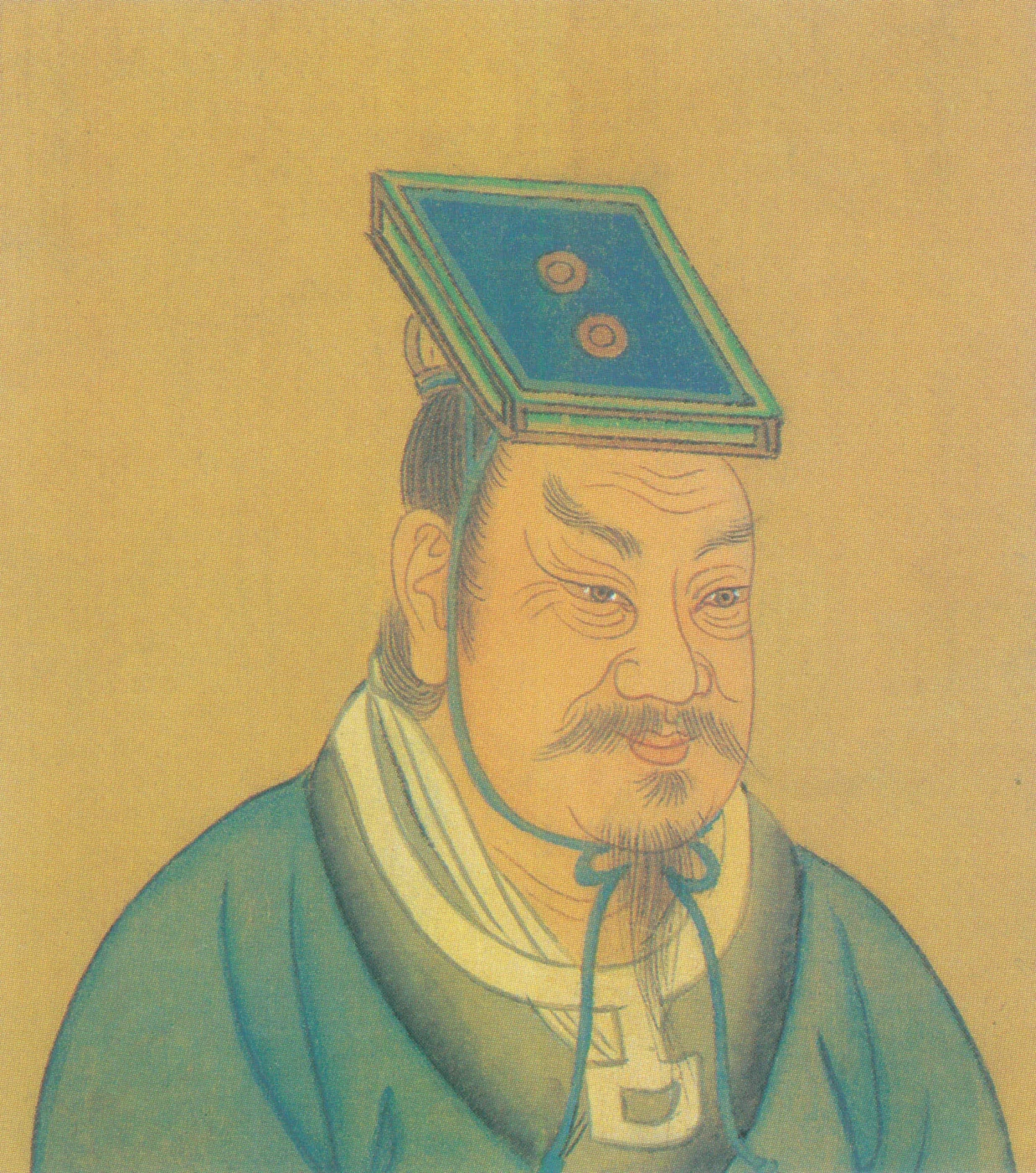
Historical figure
Liu Yu
刘裕
Liu Yu (363–422), courtesy name Deyu and childhood name Jinu, came from a Pengcheng family and was born in Jingkou. He became a general in the late Eastern Jin and founded the Liu Song dynasty. After gaining prominence in the conflict with Sun En, he raised troops against Huan Xuan and restored the Jin emperor. He then defeated several southern rivals and conquered Southern Yan and Later Qin, entering Luoyang and Chang'an. In…
Liu Song
PROFILE
Liu Yu (363–422), courtesy name Deyu and childhood name Jinu, came from a Pengcheng family and was born in Jingkou. He became a general in the late Eastern Jin and founded the Liu Song dynasty. After gaining prominence in the conflict with Sun En, he raised troops against Huan Xuan and restored the Jin emperor. He then defeated several southern rivals and conquered Southern Yan and Later Qin, entering Luoyang and Chang'an. In 420 (Yongchu 1 of Liu Song) he accepted the abdication of Emperor Gong of Jin and founded Liu Song. His military achievements and his consolidation of power before replacing Jin both shaped his historical position.
- Other names
- Emperor Wu of Song; Jinu; Liu Xiapi
- Courtesy name
- Deyu
- Period
- Liu Song
- Polities
- Eastern Jin; Liu Song
- Roles
- General, statesman, founding emperor of Liu Song
- People
- Han Chinese
- Ancestral home
- Suiyu hamlet, Pengcheng County, Pengcheng Commandery (around present-day Xuzhou, Jiangsu; another identification places it in Xiao County, Anhui)
- Birth
- April 16, 363 (renyin day of the third month, Xingning 1 of Eastern Jin)
- Birthplace
- Jingkou hamlet, Dantu County, Jinling Commandery (present-day Zhenjiang, Jiangsu)
- Death
- June 26, 422 (fifth month, Yongchu 3 of Liu Song)
- Place of death
- Western Hall of the palace at Jiankang
- Reign
- July 10, 420 (sixth month, Yongchu 1 of Liu Song) – June 26, 422
- Era name
- Yongchu
- Temple name
- Gaozu
- Posthumous name
- Emperor Wu
- Tomb
- Chuning Mausoleum
- Predecessor
- Sima Dewen as Eastern Jin emperor; no predecessor as Liu Song emperor
- Successor
- Liu Yifu
- Principal achievements
- Overthrew Huan Xuan; defeated Lu Xun and other rivals; conquered Southern Yan and Later Qin; founded Liu Song in place of Eastern Jin
LIFE TIMELINE
Military service | Joined operations against Sun En and gradually gained a military reputation
Rising at Jingkou | Rebelled against the usurper Huan Xuan and marched on Jiankang
Restoration of Jin | Huan's forces withdrew from Jiangling and Emperor An returned to Jiankang
Campaigns north and south | After conquering Southern Yan, returned to confront Lu Xun and Xu Daofu
Sichuan campaign | An army sent under Zhu Lingshi conquered Qiao Shu
Campaign against Later Qin | Jin forces entered Chang'an and Later Qin fell
Foundation of Liu Song | Accepted Sima Dewen's abdication and became emperor at Jiankang
Death | Died in the palace's Western Hall and was succeeded by Liu Yifu
BIOGRAPHY
Biography
Family Background and Early Years
Liu Yu was born at night on the seventeenth day of the third month of the first year of Xingning under Emperor Ai of the Eastern Jin, that is 16 April 363, and died on 26 June 422. His courtesy name was Deyu and his childhood name Jinu; his ancestral home was Pengcheng, and he was a descendant in the twenty-second generation of Liu Jiao, prince of Chu and younger brother of the Han founder Liu Bang. The family had moved south with the Jin court and lived for generations about Jingkou, now Zhenjiang in Jiangsu, and later scholarship generally classes Liu Yu's household among the lower gentry or the commoner families of the second rank. He was born into poverty and his mother fell ill and died after his birth; the family could not afford a wet nurse and at one point meant to abandon him, and he survived only because the mother of a kinsman, Liu Huaijing, took him and nursed him herself. Growing up he was, as the record says, a man of heroic spirit and large measure, seven feet six inches tall, of striking frame and careless of small formalities, and known for his filial care of his stepmother.
In his early years his poverty was such that he lived by cutting firewood, farming, fishing and selling straw sandals; he knew only a few characters, and having gambled away his property he was despised by his neighbors. The notable Wang Mi, however, thought highly of him and told him that he was destined to become a hero of his age. He once owed Diao Kui thirty thousand cash from a mutual fund and failed to repay it on time, whereupon Diao Kui seized and imprisoned him, and Wang Mi secretly paid the debt with his own money so that Liu Yu was released. This background — a poor family, a mother lost at birth, firewood and sandals, gambling and debt, and recognition by a man of note — is the ground of the second half of his life and of his later campaigns to discipline the army, curb the great families and re-register the households, and it is why the annals of the Song record it at the outset.
Service at Jingkou and revolt against Huan Xuan
Liu Yu was born at Jingkou to Liu Qiao and grew up in poverty before serving in the Northern Garrison Army. When Sun En rebelled in 399 (Long'an 3 of Eastern Jin), Liu Yu fought under Liu Laozhi in the southeast and advanced through repeated campaigns. After Huan Xuan took control of the court and usurped the throne, Liu Yu joined He Wuji, Liu Yi, and others in a revolt at Jingkou. Their forces entered Jiankang and Huan fled. By 405 (Yixi 1 of Eastern Jin), Emperor An had returned to Jiankang, giving Liu Yu a basis for directing court affairs.
Sun En's rebellion had drained the Jin armies and left the capital region empty, which gave his opportunity to Huan Xuan, who held the great military town on the upper Yangzi. In 402 Sima Yuanxian marched west against Huan Xuan, who moved south against him with the armies of Jing and Chu; Sima Yuanxian sent Liu Laozhi to hold him, and Liu Yu went with the army. Reaching the Li district, they met Huan Xuan's forces, and Liu Yu asked to attack but was refused; Liu Laozhi proposed sending Liu Jingxuan to Huan Xuan's camp to negotiate, which Liu Yu and Liu Laozhi's nephew He Wuji jointly and firmly opposed, but Liu Laozhi would not listen. Huan Xuan entered Jiankang and killed Sima Yuanxian, and Liu Laozhi afterwards hanged himself. Liu Yu, judging the situation, gave himself over to Huan Xuan for the time being and kept his counsel; and because he had repeatedly won merit and had a name among the veterans of the Northern Garrison, Huan Xuan did not dare slight him and gave him office.
Sun En was by then dead and his followers had taken his sister's husband Lu Xun as their leader. Lu Xun led the remnant south and took Yongjia and Jin'an, and Huan Xuan, to pacify the region, made him governor of Yongjia, which Lu Xun accepted in appearance while continuing to raid the coastal commanderies. In the fifth month of 402 Huan Xuan sent Liu Yu east against Lu Xun; in the first month of 403 Liu Yu beat him at Dongyang, and Lu Xun fled to Yongjia, was beaten again by Liu Yu, and lost his officer Zhang Shidao. Liu Yu pursued him to Jin'an and Lu Xun crossed the sea southward. In the sixth month Liu Yu was made interior secretary of Pengcheng for his merit. Huan Xuan, now in control of the government and enfeoffed as prince of Chu, meant to usurp the throne; when his cousin Huan Qian privately asked Liu Yu's view of such a transfer, Liu Yu pretended to praise Huan Xuan's services and said that for him to take the throne in the course of events was entirely proper, at which Huan Qian said in delight that if Liu Yu thought so it must indeed be possible. In the twelfth month of 403 Huan Xuan usurped the throne, and Liu Yu went to court with the governor of Xu and Yan, Huan Xiu. Huan Xuan, seeing Liu Yu, told Wang Mi that he had the air of no ordinary man and was a hero of the age, and treated him with ever greater favor. Huan Xuan's wife, the lady Liu, was a good judge of men and repeatedly urged him to remove Liu Yu, but Huan Xuan refused on the ground that he needed him to pacify the central plains. At the same time, to remove future dangers, Huan Xuan set about breaking up the Northern Garrison and had its veteran officers killed wholesale, so that it was almost destroyed; and while Huan Xuan was making his plans Liu Yu was secretly in touch with the surviving officers of the Northern Garrison, waiting his chance.
Huan Xuan was dead, but his party survived, and another year and more was needed to settle matters. Through the negligence of the pursuing armies Huan Xuan's nephew Huan Zhen escaped to the Yong district of Huarong, gathered several thousand followers again and seized Jiangling, so that Emperor An was once more in Huan hands, and Huan sympathizers hiding in Juchuan rose in support. He Wuji and others attacked Jiangling, fought Huan Zhen at Lingxi, fell into an ambush at Yanglin, were routed and fell back to Xunyang. At the same time the governor of Yanzhou, Xin Yu, and the governor of Beiqingzhou, Liu Gai, rebelled and were quickly put down. In the tenth month of 404 Liu Yu took the governorship of Qingzhou as well; at the end of the year Liu Yi and others came again before Xiakou and took Lucheng and Yanyuelei in succession, and in the twelfth month the government forces recovered Baling. In the first month of 405 Liu Yi recovered Jiangling, drove out the Huan family and brought Emperor An back, and the Huan troubles were at an end.
In the third month of 405 Emperor An issued an edict praising Liu Yu's services and promoting him, his credentials as commissioner and his governorship of Xu and Qing continuing as before; but Liu Yu several times firmly declined the offices granted him and returned to hold Dantu. The emperor, having no alternative, could only add to him the military command of the seven prefectures of Jing, Si, Liang, Yi, Ning, Yong and Liang, which with the nine he already commanded made sixteen in all, at the same time relieving him of Qingzhou and adding Yanzhou, his other posts continuing. He further demanded that the Later Qin return the districts of Nanxiang, Shunyang, Xinye and Wuyin which it had occupied; the Later Qin, perhaps pressed in the west and unwilling to make an enemy of him in the east, agreed to return the whole of the twelve commanderies north of the Huai. In the third month of 406 Liu Yu was given the military command of Jiao and Guang as well; in the tenth month he memorialized for rewards to the officers who had campaigned west against the Huan family, and on the memorials of the court he was enfeoffed, as the chief mover of the loyal rising and the author of the restoration, as duke of Yuzhang commandery with ten thousand households and thirty thousand bolts of silk, the establishment of his staff being but one grade below that of a grand tutor; in the eleventh month the emperor repeated the edict making him attendant at court and chariot general, and only after repeated refusals did he let the matter rest. In the intercalary second month of 407 he executed the officer Luo Bing for plotting rebellion and with him the governor of Yongjia, Luo Qiu, Luo Bing's father, Huan Yin, a nephew of Huan Xuan whom Luo Bing meant to make his leader, and the governor of Dongyang, Yin Zhongwen, with his two brothers, so that the remnants of Huan Xuan's party were cut off root and branch. In the first month of 408, Wang Mi, who had been close to him, having died in the twelfth month of the previous year and no one being left at court, Liu Yu took the advice of his staff and went to court to accept the charge of assisting the government, receiving in the end the offices of attendant at court, chariot general, opening office as the emperor's equal in the three departments, governor of Yangzhou and supervisor of the secretariat, together with the governorship of Xu and Yan, and so took the government into his hands; he resigned the governorship of Yanzhou. In the ninth month, when Liu Jingxuan campaigned against separatist forces, the emperor refused his request and merely reduced his military title. From a former Northern Garrison officer who had raised troops at Jingkou he had become the effective ruler of the Eastern Jin.
Southern consolidation and two northern campaigns
Liu Yu campaigned against Southern Yan, destroying it in 410 (Yixi 6 of Eastern Jin). Lu Xun and Xu Daofu threatened Jiankang while he was in the north, forcing him to return, organize its defence, and pursue them. He later defeated Liu Yi and Sima Xiuzhi, and sent Zhu Lingshi into Sichuan, where Qiao Shu fell in 413 (Yixi 9 of Eastern Jin). During disorder in Later Qin he launched another northern expedition; Jin troops entered Chang'an in 417 (Yixi 13 of Eastern Jin). After his adviser Liu Muzhi died, Liu Yu returned south, and Jin forces could not hold Guanzhong for long.
After Liu Yi's fall Zhuge Changmin, who held Jiankang as the supervisor of the grand protector's household and had governed lawlessly, was uneasy and feared to follow Liu Yi, and so inclined to rebel. In the third month of 413 Liu Yu returned to Jiankang, lured Zhuge Changmin to the eastern residence, and amid laughter and talk had the strong man Ding Wu strike him dead from behind with a staff, afterwards destroying the Zhuge clan. In Shu, as early as 407 Liu Yu had sent the general of the champion Liu Jingxuan with five thousand men against the Qiao Shu regime that held Sichuan; Liu Jingxuan entered the Three Gorges the next year, sending Wen Zuo by the outer river and leading the main force by the inner river from Dianjiang against Chengdu, but at Huhu, five hundred li from Chengdu, he was blocked by Qiao Shu officers and, with sickness in the army and his grain gone, was forced to withdraw. Having destroyed Liu Yi, Liu Yu turned again to Shu: in the twelfth month of 412, esteeming Zhu Lingshi's military ability and experience, he overrode all objections and promoted him out of course to be governor of Yizhou and sent him west.
In strategy Liu Yu reasoned that the Qiao Shu, knowing the previous campaign had come by the inner river, would expect a surprise attempt by the same route and mass their strength there; he therefore decided that the main Jin force should advance on Chengdu by the outer river and a decoy force by the inner. To prevent any leak he gave Zhu Lingshi a sealed letter to be opened only at Baidi, so that the army did not know its route after leaving Jiangling and the Qiao Shu could not discover his design. At Baidi Zhu Lingshi opened the letter and announced that the whole army would go by the outer river to Chengdu, that Zang Xi and Zhu Lin would take Guanghan by the middle river, and that weak troops in a dozen tall ships would move up the inner river toward Huhu. The army then marched faster, and the Qiao Shu, exactly as Liu Yu had foreseen, massed against the inner river, posting Qiao Daofu with heavy forces at Fu city and sending Hou Hui and Qiao Shen with more than ten thousand to camp at Pengmo, building walled posts on both banks. In 413 the Jin destroyed Qiao Shu and Sichuan returned to the southern realm, Liu Yu receiving the feather banner, drums and a guard of twenty swordsmen; he then ordered the corvee reduced in every district so that the people might rest. In Hanzhong, the Di chief of Chouchi had taken advantage of Qiao Zong's revolt to seize the unowned territory and later, attacked by the Later Qin, had submitted to it with the land; in the fourth month of 407 Chouchi retook Hanzhong while the Later Qin was pressed in the west; and in 413 Liu Yu appointed Suo Miao governor of Liangzhou, whereupon Fu Xuan, the acting governor appointed by Yang Sheng, withdrew to Chouchi and handed over Hanzhong, so that the Eastern Jin regained control of it.
Sima Xiuzhi formed the last link of the southern separatists. When Liu Yu campaigned against Liu Yi in 412, Sima Xiuzhi, a prince of the Jin house, held Jingzhou, keeping troops of his own and, having governed there before, enjoying the people's attachment; and since Jing and Yang were wide and strong and the gates of the capital, a threat to the center, Liu Yu had reason to want them. In 414 Sima Xiuzhi's son Sima Wensi gathered young bravos in Jiankang, which disgusted Liu Yu; when Sima Wensi plotted to murder him and was discovered, Liu Yu sent the man to his father to deal with, in substance requiring his death, but Sima Xiuzhi did not kill him, merely memorializing to strip him of the princely title and writing Liu Yu an apology, which much displeased him, and he at once ordered the governor of Jiangzhou to act. In 415 Liu Yu arrested and killed Sima Xiuzhi's second son Sima Wenbao and his nephew Sima Wenzu in Jiankang, and marched against Sima Xiuzhi, taking the golden axe himself and the governorship of Jingzhou. Sima Xiuzhi memorialized his crimes and resisted; the governor of Yongzhou, Lu Zongzhi, feeling himself unsafe, joined him with his troops. Liu Yu commanded in person, entered Jiangling, and though his vanguard was killed to a man outside the walls, he crossed the river in anger; Lu Gui and Sima Wensi drew up on cliffs and crags so that he could not land, and Liu Yu with his officer Hu Fan climbed at the risk of their lives, and Sima Wensi's men could not hold them, so that Liu Yu, taking advantage of their withdrawal, landed and broke them. In the fourth month he defeated forty thousand of their troops, took Jiangling, and advanced on Xiangyang, so that Jing and Yang were wholly absorbed and Sima Xiuzhi and Lu Zongzhi fled north to the Later Qin. Their fall marked the end of every great separatist force in the south since Huan Xuan's rebellion, and the south was one; within the Eastern Jin all was under Liu Yu's rule. He afterwards declined the posts of grand tutor and governor of Yangzhou, accepting only the grand protectorate, and in the first month of 416 added the titles of general of the north, governor of Yanzhou and commander of the several armies with the right to open an office, so that he now commanded twenty-two prefectures in all.
Since its retreat to the south the Eastern Jin had always faced threats from the north, and earlier men such as Zu Ti and Huan Wen had campaigned north without success; to strengthen himself Liu Yu resolved to march north. In 409, when Murong Chao of the Southern Yan let his troops ravage the region north of the Huai, Liu Yu, to strike at the Southern Yan and to spread his renown abroad, led his fleet from Jiankang up the Huai into the Si in the fourth month; at Xiapi he left his ships and baggage and went by land to Langya, building walled posts and leaving garrisons at every place he passed, lest the Southern Yan cut his line of retreat with a flying column. Murong Chao, trusting to his own courage, thought the Jin army's entry into his territory no cause for concern. In the sixth month Liu Yu passed Ju county and crossed Mount Daxian without meeting resistance; Murong Chao had first sent his general of the left guard, Gongsun Wulou, with cavalry ahead to hold the Jumie river south of Linqu, where he met the Jin vanguard, was beaten and fell back; learning that the Jin had already crossed Mount Daxian, Murong Chao followed with forty thousand horse and foot. The Yan army reached Linqu, and Liu Yu advanced with four thousand war chariots on the left and right wings, troops and chariots alternating and cavalry behind, and fought the picked Yan cavalry to a standstill; in the midst of the fighting he adopted his adviser's plan, sent troops around to the Yan rear, took Linqu by surprise, and then let his men pursue Murong Chao, who escaped alone, breaking the Yan army and killing Duan Hui and more than ten other officers. Murong Chao fled back to Guanggu, and Liu Yu, following up, took the outer city, so that Murong Chao withdrew into the inner one; Liu Yu invested it, accepted surrenders, sought the people's loyalty and fed his army from the country.
Besieged in the inner city of Guanggu, Murong Chao sent envoys in succession to the Later Qin for help. In the seventh month the Later Qin emperor Yao Xing sent a general of the guard with ten thousand horse and foot to join the commander at Luoyang and relieve the Southern Yan, and sent an envoy to tell Liu Yu that the Later Qin had a hundred thousand troops at Luoyang and that if the Jin did not withdraw they would advance at once; Liu Yu saw through the bluff and was unmoved, and in the event the Later Qin, pressed in the west, never sent the relief. Murong Chao, long besieged and with no help in sight, offered to cede territory and become a vassal of the Eastern Jin, which Liu Yu refused, and the Southern Yan's ministers came over one after another. In the ninth month Liu Yu intercepted the Southern Yan director of the secretariat, Han Fan, who was going to the Later Qin for troops, and paraded him around the walls of Guanggu, spreading the word that no Later Qin relief would come, at which the defenders were dismayed; in the tenth month the Jin obtained siege engines from former Yan officers who had surrendered, improving their means of attack. In the second month of 410 Helai Lu and Gongsun Wulou led troops out through a tunnel against the Jin and were beaten back into the inner city; Liu Yu then attacked on all sides, a Southern Yan minister opened a gate to surrender, and the Jin entered the inner city. Murong Chao broke out with several dozen riders, was taken, and the Southern Yan came to an end. On the ground that Guanggu had long held out, Liu Yu put to death three thousand men of the Yan royal house and above, and Murong Chao was sent back with the army and beheaded in the streets of Jiankang. The campaign was one of the rare complete successes of Eastern Jin arms in the north: a fleet up the Huai and a march by land with walled posts behind, four thousand chariots in line against cavalry and a turning movement to take the city, and finally a long siege that cut off the enemy's relief.
In the first month of 416 the Later Qin emperor Yao Xing died; his son succeeded amid repeated internal revolts and an unstable regime, and Liu Yu judged it the moment to destroy the Later Qin. In the eighth month he made Liu Muzhi supervisor of the left of the secretariat, to direct the government within and supply the army's grain without, and led the main force north in four columns, reaching Pengcheng in the ninth month, where he accepted in turn the governorships of Si, Yong and Xu. The army pressed from the Huai and Fei toward Xu and Luo, the Later Qin garrisons surrendering at the news, and its progress was rapid; in the tenth month Wang Zhen'e's force took Luoyang, sent the Later Qin commander in chains to Jiankang, and repaired the tombs of the five emperors of the Western Jin, setting guards over them. In the first month of 417 Liu Yu left his son to hold Pengcheng and led the main army north. The Northern Wei then stationed a hundred thousand troops in Hebei and harassed the Jin with flying cavalry; Liu Yu beat them repeatedly with unusual formations and with heavy crossbows and strong spears, but his advance was slow. When Wang Zhen'e reached Tong pass from Luoyang he was blocked by the Later Qin main force holding the defiles, and Tan Daoji's supply route was cut by a Qin officer, so that the Jin were for a time in danger and were saved only by the help of the local people; the two asked Liu Yu for aid, and he was pinned down by the Wei and could not spare it.
To break the Wei harassment Liu Yu on the eighth day of the third month posted a general of the left at the important crossing of Qiao'ao and led the main army into the Yellow river; the Wei followed along the north bank with several thousand cavalry to prevent the Jin from landing and attacking into Wei, killing any Jin men who drifted to the north bank. Liu Yu several times landed troops, and the Wei withdrew from the bank each time; he therefore sent several thousand brave men with a hundred war chariots, under Ding Wu and a general of the awe-inspiring standard, carrying strong bows and sharp arrows, to land on the north bank and advance in formation. The Wei at once attacked, and their commander with thirty thousand cavalry surrounded the Jin on all sides and was beaten off. In mid-fourth month Liu Yu reached Luoyang and, to guard against Wei attack, halted there two months to arrange his rear; in the seventh month he drove the Wei back completely and the whole of Henan was recovered. He proposed moving the capital to Luoyang, and his adviser Wang Zhongde observed that extraordinary undertakings were not for ordinary men to conceive and would shake the empire, that the army had been long in the field and the soldiers longed for home, and that the plan could not be discussed now; and Liu Yu dropped it.
He then advanced to Shancheng, his vanguard entered the Wu pass and camped at Qingni. In the eighth month he reached Tong pass and joined his several commands, and on Wang Zhen'e's proposal sent him with a fleet from the Yellow river into the Wei toward Chang'an. As the Qin general Yao Nan was withdrawing west from Xiangcheng, Wang Zhen'e followed him; Yao Hong came from Bashang to Shiqiao, and Yao Jiang and Yao Nan joined forces to hold Jingshang against Wang Zhen'e, who sent a general to beat them, Yao Jiang dying in the fight and Yao Nan fleeing to Chang'an; the duke of Dongping, Yao Zan, learning that the Jin were closing on Chang'an, fell back from Dingcheng to Zhengcheng as Liu Yu's main army drew near. To escape being attacked from two sides Yao Hong planned to destroy Shen Tianzi's force first and then face Liu Yu, and hurried to Qingni with several tens of thousands of horse and foot; Shen Tianzi's command was no more than a thousand men meant only as a decoy, but fighting each on his own they were so fierce that several attacks drove Yao Hong back to Chang'an. Wang Zhen'e meanwhile broke through the Tong pass line and advanced directly, taking Chang'an at a blow, and Yao Hong surrendered with his ministers. In the winter of 417 Liu Yu reached Chang'an and meant to rest there and administer the passes, when word came that Liu Muzhi had died of illness. He gathered his civil and military officers at Chang'an to discuss it, and most were against further northern campaigning, so he left his twelve-year-old son with Shen Tianzi and others to hold Chang'an and led the army south himself.
Not long after his departure Helian Bobo sent troops to cut Qingni in the south and hold Tong pass in the east and marched on Chang'an in force. The Jin officers left there fell out among themselves: Shen Tianzi killed Wang Zhen'e, Wang Xiu killed Shen Tianzi, and Liu Yizhen killed Wang Xiu. Liu Yu, appalled at the news, ordered Zhu Lingshi to hold Chang'an and Liu Yizhen to return at once; Liu Yizhen and his officers plundered treasures and women and came south with them in carts, were overtaken by the Xia army, and Zhu Lingshi was killed while Liu Yizhen escaped alone on horseback. Chang'an was thus won and lost again and many good officers and troops were lost, but the part of the passes east of Tong pass that had been recovered and the whole of Henan remained held by Liu Yu's main forces. After the two northern campaigns the lands south of the Yellow river, north of the Huai and the upper Han were in his hands — which is better described not as the recovery of the north but as pushing the line of defense to the Yellow river: Luoyang and Chang'an came briefly into Jin hands, the loss of the passes shows the result was not stable, and the lasting control of Henan changed the geography of the north-south standoff thereafter.
Dynastic transition and death
Military success and court appointments brought Liu Yu the positions of chancellor and Prince of Song. In 420 (Yongchu 1 of Liu Song), Emperor Gong of Jin, Sima Dewen, abdicated to him. Liu Yu took the throne at Jiankang, establishing Song, known as Liu Song. His reign lasted only two years. He continued to address administration, taxation, and household registration, and before his death appointed Xu Xianzhi, Fu Liang, and others to support Crown Prince Liu Yifu. He died in 422 (Yongchu 3 of Liu Song) and was buried at Chuning Mausoleum.
His immense military merit gave Liu Yu a position at court beyond compare. In 416 he agreed to accept the offices of chancellor, director of all government business and governor of Yangzhou, and to found the duchy of Song with ten commanderies, being enfeoffed as duke of Song and granted the nine bestowals. The transfer of the throne then proceeded by degrees: in the first month of 419 he directed a vice minister of the secretariat to draft the text urging him to take the throne; in the tenth month he was advanced to prince of Song with ten more commanderies, making twenty in all; at the end of the year he received the twelve tassels and other insignia of imperial rank. On the dingmao day of the sixth month of 420, that is 10 July, Liu Yu took the throne from the Jin, demoting Sima Dewen to prince of Lingling, and the Eastern Jin came to an end; he changed the name of the state to Song and the era to Yongchu, and the regime he founded is known as Liu Song. From his assumption of the government in 405 to his accession in 420 was sixteen years: for the first fourteen he ruled the Eastern Jin in fact as an outsider, and only in the last two did he take the name as well — a sequence of substance before title like that of Wang Mang and Cao Pi, but more circumspect in its pace.
Once on the throne he took the Sima house as a warning and weakened the great commands to concentrate power at the center. Since Jingzhou had repeatedly been the source of trouble he reduced its jurisdiction and limited the number of its officers and clerks. To prevent great ministers from abusing military power he decreed that any minister sent out on campaign should be given government troops, to be returned to the government when the campaign was over. He ordered the household registers rectified and the re-registration strictly carried out, forbidding the great families to hide their dependents; ruled that goods the government needed should not be requisitioned as of old but bought with money by the proper officials; and lowered the peasants' taxes and abolished harsh and vexatious ordinances, so that the people might rest and production grow. Since the Wei and Jin the court and the offices had prized luxury, and Liu Yu, of poor origin and knowing the hardship of the fields, was by habit frugal and of few desires, disliking extravagance. These measures continued the re-registration, the curbing of the great families and the discipline of officials of his years in power, carried out more thoroughly now that he was emperor.
Though a soldier by trade who knew few characters, Liu Yu attached great importance to education. In the first month of 422 he issued an edict saying that with the royal plan now extending far and the Chinese realm cleared, men who looked to his wind daily hoped for it, and that therefore the sons of the great should be widely invited, the young instructed and encouraged, Confucian officers selected and the state academy revived, the officers concerned to examine the old statutes and carry it out in season. The edict at once strengthened Liu Song's rule and produced a general attention to schooling and an improvement in public manners. As to books, since the disorders of Yongjia many Chinese texts and records had been scattered and lost: before his northern campaign against the Later Qin the Eastern Jin's collection, including what the treasury held, amounted to only four thousand scrolls; in the course of the campaign he gathered all the books scattered through the central plains and had them brought back to Jiankang, ordering that even the old red-axis and blue-paper copies in archaic script be included. That a soldier of poor family should have preserved and assembled the texts of the central plains, making Jiankang the literary center of the south for decades to come, was a service not inferior to his military achievements.
Liu Song's foreign relations and territory in its first years are another side of his historical position. In the seventh month of 420 he conferred titles on neighboring chiefs, and in the fourth month of 422 he enfeoffed Yang Sheng, duke of Chouchi, as prince of Wudu commandery. Juqu Mengxun, who held Liangzhou and styled himself prince of Hexi, sent tribute in 421 and in the tenth month of that year was made general of the army of the center, opening office as the emperor's equal in the three departments, and governor of Liangzhou. In the south the kingdom of Linyi, which in the last years of the Jin had repeatedly raided Jiaozhou, was defeated after his accession by the governor of Jiaozhou and sued for peace with Song, sending elephants, gold, silver and cloth as gifts; in the eighth month of 420 the king of Linyi sent envoys with tribute. By the early years of Liu Song the lands east of Tong pass and south of the Yellow river as far as Qingzhou were within the southern domain, making the regime of that period the largest of the Eastern Jin and Southern Dynasties: the passes were lost again, but Henan, Shandong and the lands north of the Huai were incorporated in the south, giving it a northern frontier to hold. This was the direct result of the two northern campaigns, and the expression of his principle of taking land by war and founding a state upon land.
Major Activities
Military campaigns and transfer of power
Liu Yu's campaigns ended Huan Xuan's control over Jin, defeated several southern rivals, and briefly secured Luoyang and Chang'an in the north. The later loss of Guanzhong means the advance of 417 cannot be described as a lasting reconquest of all northern China. His control of military and political resources also made the Jin–Song transfer possible.
The rebellion of Sun En was Liu Yu's true beginning. In the eleventh month of 399 Sun En, a Daoist of the Five Pecks of Rice sect, rose against the Jin, eight commanderies of the southeast answered him, and the court was shaken and sent troops to suppress him. Liu Yu, on the recommendation of Sun Wuzhong or otherwise, passed into the service of Liu Laozhi as a military adviser. In the twelfth month Liu Laozhi reached the Wu region and sent Liu Yu with several dozen men to scout the rebels' movements; meeting several thousand of them by chance, Liu Yu fought with his long sword without pause though more than half his followers were killed, until Liu Laozhi's son Liu Jingxuan came up with the cavalry and the rebels broke, whereupon Liu Yu recovered Shanyin, now Shaoxing in Zhejiang, and Sun En fled to the sea. In the fifth month of 400 Sun En took Kuaiji commandery and killed Xie Yan; in the eleventh month Liu Laozhi marched east again and Sun En fell back. Liu Laozhi camped at Shangyu and posted Liu Yu to hold Gouzhang, now Ningbo. The town was small and his soldiers fewer than several hundred, and Liu Yu, wearing armor and bearing arms himself, was always first in the fight, so that the rebels withdrew to Jiekou.
In the spring of 401 Sun En attacked Gouzhang repeatedly and was beaten off each time. In the third month he moved north against Haiyan, and Liu Yu, following, built a fortified camp on the site of the old county town; the rebels attacked daily while the defenders were few, so Liu Yu picked several hundred men as a forlorn hope, stripped them of armor and armed them with short weapons, and had them charge out of the gate with drums and shouts, at which the rebels were so shaken that their morale collapsed, they threw away their arms and fled, and their leader Yao Sheng was killed. Though victorious again and again, Liu Yu judged the disparity of numbers too great, pretended to abandon the town, let the rebels pour in, and then attacked them while they were off guard, routing them. In the sixth month Sun En crossed the sea intending to surprise Dantu, now Zhenjiang, with more than a hundred thousand followers; Liu Laozhi was still at Shanyin and the capital was alarmed. Liu Yu marched day and night and reached Dantu at the same time as the rebels — the rebels were far more numerous but exhausted by the forced march and the Dantu garrison had no stomach for a fight; when Sun En led several tens of thousands against Suanshan he was heavily beaten by Liu Yu's troops, many of the rebels leaping from the cliffs or drowning. In the eighth month the court added to Liu Yu the governorship of Xiapi; he pursued Sun En by water to the Yuzhou area and beat him again, forcing him south, and in the eleventh month defeated him once more at Haiyan. He had now won three victories in three battles and taken tens of thousands of prisoners, while the rebels, visited by famine and pestilence, lost more than half their number and withdrew from Jiekou to Linhai, where Sun En, fearing capture, drowned himself and his followers took his sister's husband Lu Xun as their leader. In these years of fighting through the three Wu districts Liu Yu served repeatedly as the vanguard and broke the enemy in every engagement, and his grasp of war began to show: he was not only fierce in battle, wearing armor and leading the charge, but skilled in command and full of stratagem, able to beat many with few; and whereas the other generals let their troops plunder and oppress the people, Liu Yu alone kept his army in order and his discipline strict.
In the second month of 404 Liu Yu, under pretense of hunting, gathered more than seventeen hundred surviving officers and men of the Northern Garrison and rose at Jingkou, destroying the forces of Huan Chu there and killing Huan Xiu. He was then made leader of the alliance and sent proclamations in all directions, and every region rose in answer. Huan Xuan, on learning of the rising, was anxious day and night and could think of no counter; when someone said that Liu Yu and his men were weak and could hardly amount to anything, Huan Xuan answered that Liu Yu was a hero of the age, that He Wuji, being Liu Laozhi's nephew, was very like his uncle, and that with men of that stamp joined in a great enterprise one could not say they would fail.
Huan Xuan first sent his fierce generals Wu Fuzhi and Huangfu Fu with picked troops against Liu Yu. Liu Yu killed Wu Fuzhi at Jiangcheng, fought hard at the Luoluo bridge south of it and killed Huangfu Fu, and pressed on; he had weak troops climb the hills carrying banners and moving by separate roads to create the appearance of soldiers on every side, and since Huan Xuan's garrison was largely of Northern Garrison origin and had no stomach for fighting Liu Yu, he attacked with his whole force and broke them by fire, so that Huan Xuan abandoned the city and fled west. In the third month of 404 Liu Yu entered Shitou city and sent troops after Huan Xuan; Wang Mi and others proposed him for the governorship of Yangzhou, which he firmly declined, so that Wang Mi held it while Liu Yu was made commissioner with credentials and commander of the eight prefectures of Yang, Xu, Yan, Yu, Qing, Ji, You and Bing. From the rising to his entry into Jiankang was no more than a month, and it rested on seventeen hundred veterans of the Northern Garrison, on his reading of the enemy's temper — largely Northern Garrison men with no will to fight — and on the pretense of numbers created by weak troops on the hills with banners on separate roads: the same three means by which he afterwards beat superior forces again and again.
After the rising at Jingkou Liu Yu passed from rebel leader to ruler of the government within a few months, the pivot of it being the rebuilding of political order. In the third month of 404 he entered Shitou city and sent troops after Huan Xuan; Wang Mi and others proposed him for the governorship of Yangzhou, which he firmly declined, so that Wang Mi held it while he was made commissioner with credentials and commander of the eight prefectures of Yang, Xu, Yan, Yu, Qing, Ji, You and Bing. The politics of the late Eastern Jin were disordered, officials self-indulgent and every enterprise neglected, and Liu Yu led by example, first restraining the palace and court with severity, so that the officials applied themselves to their duties and, as the record says, within two or three days the temper of the court was changed. Once in power he executed opponents among the great families of the lower Yangzi and the kinsmen and partisans of the Huan family; and when the chief of the imperial table Ding Chengzhi, the general of the left guard Chu Can and a general of the mobile guard, exposed by the censorial official Wang Zhenzhi in a certain affair, complained bitterly in their letters of thanks to the court, Liu Yu memorialized that they had raised grievances against the responsible officials and had them all dismissed. In the fourth month he supported the prince of Wuling, Sima Zun, as general-in-chief and proclaimed a general amnesty, sparing all but the Huan clan itself. Meanwhile Huan Xuan's son Huan Shao attacked Liyang and Liu Yu sent a general of the state to drive him back, while He Wuji and Liu Daogui heavily defeated the Huan commander Guo Qian and occupied Xunyang, whereupon Sima Zun added to Liu Yu the military command of Jiangzhou.
Huan Xuan, back in his base in Jingzhou, recruited troops again, built tower ships and equipment and moved east down the river with Emperor An in his hands; Liu Yi and others met him near Sangluozhou and in a great battle routed him, so that he abandoned his army and fled back to Jiangling with the emperor, and afterwards, trying to escape west into Shu, was killed by the protector of Yizhou and his head sent to the capital, the governor of Nan commandery, Wang Tengzhi, bringing Emperor An into Jiangling. Liu Yu's handling had a character of its own: while he disciplined the government with severity he left room for those who had been forced to comply — those he killed were the Huan partisans and officials who nursed grievances, those he pardoned were all outside the Huan clan; and in military matters he distinguished primary from secondary, entrusting the pursuit of the Huan remnant to veterans of the Northern Garrison like Liu Yi and He Wuji while he himself held the capital and managed its center. In the following years he repeatedly declined the offices granted him while his real power grew: in 405 declining and returning to Dantu, in 406 declining the posts of attendant and chariot general, in 408 resigning the governorship of Yanzhou — each refusal converting the court's grant into political capital. To decline without accepting, and to accept only in substance, is a key to understanding the transfer of power at the end of the Eastern Jin.
The rebellion of Lu Xun was the gravest test of Liu Yu's early rule, and its danger lay in this: he had just returned from destroying the Southern Yan when the enemy appeared before Jiankang. In the ninth month of 404 Lu Xun had taken Panyu and Shixing from the sea and captured the governor of Guangzhou; Liu Yu, then consolidating his power, tacitly accepted Lu Xun's hold on Lingnan and made him governor of Guangzhou. When Liu Yu went north against the Southern Yan, Lu Xun and Xu Daofu rose in his absence in the second month of 410, taking Nankang, Luling and Yuzhang in succession; the court summoned Liu Yu in haste, and he, though he had just destroyed the Southern Yan and cherished the aim of clearing the Yellow river and the Luo and restoring the central plains, was forced to withdraw to Jiankang. In the third month the governor of Jiangzhou, He Wuji, fought Xu Daofu at Yuzhang, was defeated and killed; when the news reached Jiankang the whole court was shaken and the ministers at one point thought of taking Emperor An north to join Liu Yu, and were reassured only when they learned that Lu Xun was not advancing on the capital. Liu Yu, reaching Huai'an and hearing of He Wuji's death, feared for Jiankang, shipped his baggage by boat and hurried back with picked troops himself, arriving in the fourth month and lifting the emergency measures.
Liu Yi, general of the champion, asked to march south against Lu Xun; Liu Yu wrote dissuading him and asked him to wait until he came with his own troops, sending Liu Yi's cousin Liu Fan to remonstrate with him in person in Yuzhou, but Liu Yi would not listen and set out with twenty thousand men — at which moment Xu Daofu, having just beaten the governor of Jingzhou, Liu Daogui, at Changsha, joined Lu Xun on hearing of Liu Yi's approach. In the fifth month Liu Yi was crushingly defeated at Sangluozhou with his whole army lost, and Lu Xun pressed east down the river. The court and the country were in uproar at the news; Liu Yu's own men were sick and wounded from the forced march south, and Jiankang's garrison was no more than a few thousand against more than a hundred thousand of Lu Xun's, yet Liu Yu absolutely refused the proposal that Emperor An be taken north to Guangling to avoid the enemy, resolved to defend the altars of the state to the death in fulfilment of his pledge to give himself for the state, and argued to Meng Chang that with men's minds in terror and no will to hold, a single rash move would bring the Jin down from within and lose the north of the river as well. He then raised troops widely, repaired Shitou city and concentrated his forces there; and to the proposal that troops be divided to hold the several vital points he answered that with the enemy many and his own few, dividing would expose his weakness, and that the loss of one point would shake the spirit of the whole army, whereas concentrating in one place would let him defend with all his strength and keep the enemy from learning his numbers.
He camped in person at Shitou city and blocked the river with a wooden palisade. When Lu Xun's army came near Jiankang, Liu Yu judged that if Lu Xun attacked the vital points south of the city, Xinting and Baishi, the outcome would be uncertain, but that if he fell back to the west bank at Caizhou, victory would be his for the taking. Lu Xun, unwilling to risk a direct attack on Xinting and Baishi, did fall back to Caizhou; Liu Yu seized the chance to repair Yuecheng and to build the three forts of Chapu, Yaoyuan and Tingwei, garrisoning them with picked officers, and had a general of the north with more than a thousand armored cavalry come from north of the Huai to Xinting, at which Lu Xun's men were much afraid. Lu Xun still waited for risings in Jiankang and the three Wu districts and sent more than ten ships against the Shitou palisade, which Liu Yu had driven off with heavy crossbows; having failed at the palisade, Lu Xun laid an ambush south of the Qinhuai river and sent the old and weak in boats toward Baishi in a feint; Liu Yu, fearing a landing at Baishi, led troops north to block it while ordering the adjutant Xu Chite to hold the south bank, and Lu Xun, once Liu Yu had gone, burned Chapu, drove straight at the south bank and beat the disobedient Xu Chite, until Jin officers came to the rescue and forced him back. Lu Xun then brought several tens of thousands to Danyang commandery, and Liu Yu, putting Xu Chite to death for disobeying orders and fleeing, sent the adjutants Zhuge Shudu and Zhu Lingshi across the Huai with more than a thousand picked men, who beat back several thousand of Lu Xun's.
When Liu Yi had been defeated, the registrar of Yuzhou, Yuan Xingguo, had rebelled and held Liyang in support of Lu Xun; the interior secretary of Langya, Wei Shunzhi, sent his officer Xie Bao to take and kill Yuan Xingguo, but when Yuan Xingguo's men attacked Xie Bao he failed to rescue him and fell back instead. Liu Yu, hearing of it, was furious and had Wei Shunzhi put to death, and when it was seen that even the brother of a friend of his cloth-jacket days was dealt with according to the law, no one dared disobey. In the seventh month Lu Xun, his attacks having failed repeatedly and no plunder to be had in the counties, fell back to Xunyang in Jiangzhou; Liu Yu at once sent a general after him, returned to the eastern residence to build a fleet, all great ships with tiered towers, the tallest more than ten zhang, and, foreseeing that Lu Xun's retreat must be aimed at Jiangling, sent Suo Miao with troops to help Jingzhou and a general of the awe-inspiring standard with three thousand men by sea against Panyu, Lu Xun's base. Lu Xun's officers Xun Lin and Huan Qian, the latter having submitted to Western Shu, attacked Jiangling separately and were both killed by Liu Daogui; and the vanguard of the governor of Jiangzhou, Yu Yue, broke Lu Xun's detached force and cut off his supplies.
His army in order, Liu Yu left Liu Yi to hold the rear and in the tenth month led the governor of Yanzhou, Liu Fan, and a general of the awe-inspiring standard by water against Lu Xun; that month Xu Daofu attacked Jiangling again, was routed by Liu Daogui and fell back to Penkou; Wang Zhongde and others, hearing that Liu Yu's main force was moving south, attacked Lu Xun's officer Fan Chongmin at Nanling in the eleventh month with complete success; and Sun Chu, taking advantage of laxness in Panyu's defenses, burned its fleet and took the city the same day — when Liu Yu first sent Sun Chu out, all objected, and only his insistence brought about the success. Lu Xun was then preparing for battle, and Liu Yu, taking the long view, was in no hurry to attack but camped at Leichi; Lu Xun proclaimed that he would not attack it but would go down the river, and Liu Yu, seeing through him and fearing he might escape to sea if beaten, sent Wang Zhongde beforehand with two hundred ships to cut the passage below Jiyang. In the twelfth month Lu Xun and Xu Daofu came by water with several tens of thousands, and Liu Yu sent out all his fast boats with drums, ordering the armies to meet them together, and landed horse and foot on the west bank; the adjutant of the right army, Yu Lesheng, failed to advance his ship and was beheaded as an example, whereupon all pressed forward eagerly, and with the many heavy crossbows with which the Jin were equipped, nothing withstood them. The wind that day forced Lu Xun's fleet to moor on the west bank, where the ships were all burned by the troops Liu Yu had placed in advance; the fire spread, Lu Xun and Xu Daofu were utterly beaten, and the Jin pursued until night before returning, Lu Xun fleeing back to Xunyang. When the infantry had first been posted on the west bank the officers did not understand it, and only when they saw Lu Xun's defeat by fire were they satisfied.
After Leichi, Liu Yu recalled Wang Zhongde as his vanguard. Lu Xun tried to withdraw to Yuzhang and made a palisade at Zuoli in a posture of counterattack; as Liu Yu's army reached Zuoli, before the fighting the standard on its pole broke and the banner sank in the water, and the officers, taking it for an evil omen, were afraid. Liu Yu laughed and said that in a former year the pole had broken too, and that this recurrence meant the rebels would surely be beaten; he ordered the palisade attacked at once and broke the enemy in a hard fight, Lu Xun escaping by boat with more than ten thousand of his men killed or drowned. Liu Yu conciliated those who surrendered and pardoned those forced to follow Lu Xun, sending Liu Fan and Meng Huaiyu with light troops in pursuit. In the first month of 411 he returned to Jiankang with the army and, though granted new offices and a guard of twenty swordsmen, firmly declined them; he then submitted the names of the officers and men killed in his campaigns, asking the court to bury them, and where the bodies had not been brought home to send commanders to gather them and return them to their native places. With the rebellion largely put down he again declined the post of general-in-chief, and Emperor An made him grand protector and supervisor of the secretariat. In the second month Lu Xun tried to take Panyu, was beaten by Sun Chu and fled further south; in the same month Liu Fan and Meng Huaiyu killed Xu Daofu at Shixing; and afterwards Lu Xun was defeated at Longbian by the governor of Jiaozhou, and the rebellion that had shaken the age was over.
The military worth of the two northern campaigns is best seen within the century of north-south confrontation. Since the disorders of Yongjia the northern regimes had long held the central plains, and every earlier Eastern Jin expedition had stopped at the Huai and the Si or been ruined by internal strife, none ever taking Luoyang and Chang'an together; Liu Yu's campaign took Luoyang in four months and entered Chang'an within half a year, achieved by bringing a fleet into the Yellow river, opposing chariots to cavalry and advancing in separate columns — the same manner as his early victories against odds in the three Wu, resting on the use of ground, the reading of the enemy's mind and the coordination of the arms. Its outcome, however, exposed a structural weakness: with one man commanding in the field and no one fit to hold the center, the death of Liu Muzhi forced him south to secure his position, and the passes were lost to quarrels among his own officers and the mutual killing of his meritorious generals. To write this campaign up as the successful recovery of the central plains does not accord with the record; the accurate summary is that he briefly pushed the Jin armies to both banks of the Yellow river and into the passes, then abandoned the passes for reasons of the court and of personnel, keeping only Henan and the north of the Huai. This is what the annals of the Song and later historical discussion both show: the military achievement is written large, while the winning and losing of the passes is explained as something that could not last.
Liu Yu's following is as closely bound up with his success as with his failures, and its structure has three layers. The first was the veterans of the Northern Garrison: He Wuji, Liu Yi, Zhuge Changmin, Meng Chang and Tan Pingzhi, who rose with him at Jingkou and were the main force against Huan Xuan and Lu Xun. Such men regarded themselves as companions in a common rising rather than as subordinates, and their relation with him was one of alliance, not obedience; hence Liu Yi held Jing and Jiang in defiance and Zhuge Changmin held Jiankang in conspiracy, and both were removed by his stratagems. To pass from the leader of a loyalist rising to the ruler of a state he had first to turn his equals into subjects, and this was the most taxing business of his early years in power. The second layer was the newcomers of poor or lower-gentry origin: Liu Muzhi, made supervisor of the left of the secretariat to direct the government within and supply the army without, was the only man to whom he could entrust the center while campaigning in the north; and Tan Daoji, Wang Zhen'e, Zhu Lingshi, Dao Yanzhi, Sun Chu and Suo Miao were the commanders he raised — Zhu Lingshi promoted out of course against all objections and destroying Qiao Shu, Sun Chu sent out in despite of everyone and burning the fleet at Panyu, showing that he chose men for ability and not for rank or name. The third layer was the personal attendants and sworn bravos about him, such as Ding Wu, who killed Zhuge Changmin, and Hu Fan, who climbed the cliffs to break the enemy line. The third was the most reliable in loyalty, the second the most capable, and the first the one that most needed clearing up.
The inner tension of this structure appeared most clearly in the passes. In 417, after entering Chang'an, Liu Yu meant to administer the region, but the news of Liu Muzhi's death left no one fit to hold the center, so that he could only leave his twelve-year-old son with Shen Tianzi, Wang Zhen'e and others to hold Chang'an and lead the army south. The officers left behind distrusted one another, and there followed the chain of killings — Shen Tianzi killing Wang Zhen'e, Wang Xiu killing Shen Tianzi, Liu Yizhen killing Wang Xiu — of which Helian Bobo took advantage, so that the passes were lost and Zhu Lingshi killed. He could, that is, by his single prestige swallow one southern separatist after another, yet could not, once he had gone, keep his own officers at peace with one another: precisely the problem inherent in the southern pattern of men of humble birth holding the key posts, a pattern he himself founded. Later judgment of his achievement and failure fastens on this: he found the men but could not keep them in concord, and took the ground but could not hold it long.
In the direction of operations Liu Yu was an innovator in tactics, able both to use his own advantages and to dispose his formations so that those advantages covered his weaknesses. He held that a commander should grasp the whole situation, judge the enemy to win, use surprise and deceit, and avoid the strong while striking the weak; that before battle he should know the enemy's condition thoroughly and weigh the deployment of forces and the timing of the attack with care and deliberation; that he should choose the main line of attack and avoid being taken front and rear; and that he should attack from several directions and never advance as a single isolated column. He was skilled not only in strategy and the command of a campaign but in tactical innovation, and not only with infantry and fleet but with the coordinated use of all arms: his defeat of the Northern Wei's armored cavalry with the crescent formation is the classic instance. Taking account of the defects of earlier formations, he drew up his troops in an arc to strengthen their power of resistance and joined crossbow and spear so as to increase their killing power; in disposing his forces he combined several arms to fight together, with the fleet in support behind and war chariots in line to meet the enemy, infantry to kill, and cavalry to pursue. In commanding troops he insisted on both kindness and severity, keeping strict discipline while showing consideration for his men: when the Later Qin was destroyed he gave all the captured gold, jade and treasures to the officers of the northern expedition, and hearing that amber healed wounds he had the amber pillow sent from Ningzhou pounded to pieces and distributed among the troops. He held that men should be chosen for ability and not for rank or name, and that a man fit for great use should be given great charge though his rank were low and his fame slight; and that faults should not be demanded of men in full, but their weaknesses avoided and their strengths used. His practice and writing enriched the treasury of Chinese military thought, and he is said to have written a volume of essential principles of war, now lost.
Administration
While directing the Eastern Jin government and in the early Liu Song period, Liu Yu applied tuduan registration measures, reorganized household rolls, sought to limit land concentration by powerful families, and attempted to reduce burdens on the population. These actions crossed the boundary between his years as a Jin minister and his short imperial reign; they did not all begin after he became emperor.
Beyond war, Liu Yu's reform of the interior was no less vigorous, its core being the re-registration of households, the curbing of the great families and the discipline of the officials. Since the founding of the Eastern Jin the bonds of government had slackened, the great houses had swallowed one another's land and the people had been driven from their homes; once in power Liu Yu publicized the regulations, carried out the re-registration and forbade the engrossing of land. The Yu Liang family of Yuyao defied the law and hid more than a thousand fugitives in resistance to the reform, and Liu Yu destroyed Yu Liang with an iron hand, dismissed the interior secretary of Kuaiji who had shielded him, and brought to justice a great number of gentry and officials involved, so that for a time the great families were overawed, careful of the rules, and near and far kept the law. He also forbade the families to appropriate mountains, lakes and rivers and stripped the gentry and the imperial house of private holdings to relieve the people: the Diao clan, long wealthy and with many slaves and clients, was destroyed and its property distributed for men to take according to their strength, relieving those then suffering famine and war; and in 413 he gave to the poor the fields at Linyi and Hushu that had belonged to the Jin empress and had funded her cosmetics. In 414 he memorialized to lighten the corvee and let the people rest; since the hills and waters had all been seized by the great families so that the poor were taxed for gathering firewood, picking, fishing or angling, he ordered such exactions abolished and the hills and lands returned to the people; and since settlement was irregular he laid down regulations by which the land was divided for the purpose of re-registration, only those of Xu, Yan and Qing living in Jinling being outside the division, while the many commanderies and counties of refugees were consolidated.
The re-registration of the Yixi years was Liu Yu's most influential policy: it struck at the power of the great families, eased class tension, lightened the people's burden, improved the political condition of society and rebuilt the authority of the central government. With it went the reform of officialdom: he dismissed or put to death many officials of gentry or princely origin, and punished or even executed those among his own favorites and meritorious officers who were arrogant, greedy and heedless of government. Whereas the graduates and filial and incorrupt candidates sent up by the commanderies had mostly been worthless, he memorialized in 412 for the old rules and for examination to sift them, testing those recommended and investigating any misrepresentation, so that appointment should be fair and merit alone respected. In the Eastern Jin the power of the court and of the commanderies had lain with the Wang, Xie, Yu and Huan families and office had gone by family rank, producing many incompetents; Liu Yu, of commoner origin and risen by military merit, founded the southern pattern in which men of humble birth held the key offices, and it was consistent with this that he employed men of low birth. He also reformed harsh law, repeatedly lightened taxes and service, and released slaves conscripted for the war, sending commissioners through the country to commend the good, honour the worthy and inquire into the people's hardships. The carrying out of these measures spans the years before and after his accession and cannot be assigned to the brief period of his reign alone.
The political design of the early Liu Song was aimed at nearly every abuse of the Eastern Jin. First, the weakening of the great commands: taking the Sima house as a warning, he stripped the powerful commands of real authority, above all at Jingzhou, which because it had repeatedly been the source of trouble he reduced in jurisdiction and limited in the number of officers and clerks; and he decreed that ministers sent out on campaign should be given government troops to be returned afterwards, so as to prevent long tenure of armed power in the provinces. Second, the reduction of superfluous office: in the last years of the Eastern Jin offices had multiplied to the people's cost, and after his accession he limited Jingzhou to two thousand officers and ten thousand clerks and other prefectures to five hundred and five thousand respectively. Third, precautions against overmighty ministers and consort kin: he decreed that no separate military establishment might be created and that a chancellor holding Yangzhou might keep a thousand soldiers; and in his last testament he provided that when a young sovereign came to the throne the government should be entrusted to the chancellor and not to a dowager empress — a measure aimed precisely at the Eastern Jin practice of empresses regent and consort kin in power. Fourth, relief and law: he repeatedly lightened taxes and service, remitted certain exactions altogether, released slaves conscripted for the war, and in the first month of 422 decreed that punishments of whatever weight should all be reduced. Fifth, the reform of levies and requisitions: local officials were strictly forbidden to exact taxes and labor arbitrarily, taxes and service were to be based on the existing registers, and all land held by officials of the prefectures, commanderies and counties in the name of the government was to be given up; goods the government needed were to be bought at fair price from the people, not requisitioned. Sixth, the inspection of officials and relief of the people: after his accession he sent commissioners through the country to commend the good, honor the worthy and inquire into hardship. These measures were institutional in character, recovering power from the great families and the provincial commands and returning it to the court, and they prepared the southern pattern in which men of humble birth held the key posts.
Later historians describe Liu Yu's personal manner with unusual consistency. Since the Wei and Jin the court and the offices had prized luxury, and he, of poor origin and knowing the hardship of the fields, was frugal and of few desires, disliking extravagance: the record says that he was clear and plain in his desires and strict and orderly in his rules, that in dress and dwelling he was more sparing than a commoner, that banquets and excursions were very rare and his consorts few, that his money and silk were kept in the outer treasury and he had no private store, and that inside and out men kept his prohibitions and none dared be extravagant. In 422 he planned a campaign against the Northern Wei but was taken ill from the third month and gave it up; briefly better that month, he grew worse in the fifth, and left in his testament the charge of the young heir Liu Yifu to four regents, Xu Xianzhi, Fu Liang, Xie Hui and Tan Daoji. On the twenty-first day of the fifth month of that year, that is 26 June, Liu Yu died in the western hall at the age of sixty, and was buried in the seventh month at Chuning, on Mount Jiang in Jiankang county of Danyang. In a reign of only two years the arrangements he left — weakening the great commands, limiting the officers and clerks of the prefectural governments, forbidding separate military establishments, requiring government troops lent for campaigns to be returned, and providing that a young sovereign should entrust the government to his chancellor rather than to a dowager empress — were aimed at the structural abuses of a century of Eastern Jin rule, and this is why later ages, comparing him with Cao Cao and Sima Yi, judge him the greater.
Personal Relations
- Liu Qiao: father.
- He Wuji: ally in the Jingkou revolt; later died fighting Lu Xun.
- Liu Yi: ally against Huan Xuan who later broke with Liu Yu.
- Liu Muzhi: close adviser who helped manage court affairs.
- Sima Dewen: last Eastern Jin emperor, who abdicated to Liu Yu.
- Liu Yifu: son and successor as emperor.
- Zhu Lingshi: commander sent by Liu Yu into Sichuan, where he conquered Qiao Shu.
Historical Assessment
The Book of Song, in its annals of Emperor Wu, emphasizes Liu Yu's campaigns and role as founder. Both accounts recount his suppression of internal challengers and northern expeditions. “Unification of the south” refers to the political scope of his own time; his northern occupation of Guanzhong did not endure. The Jin–Song transition also ended Eastern Jin imperial rule, so his whole career cannot be described simply as support for the Jin dynasty.
FIGURES ASSOCIATED WITH THIS DYNASTY
Bibliography
- Shen Yue, Book of Song, juan 1-3, "Annals of Emperor Wu."
- Li Yanshou, History of the Southern Dynasties, juan 1.