Birth | Liu Jun, third son of Emperor Wen of Liu Song, was born.
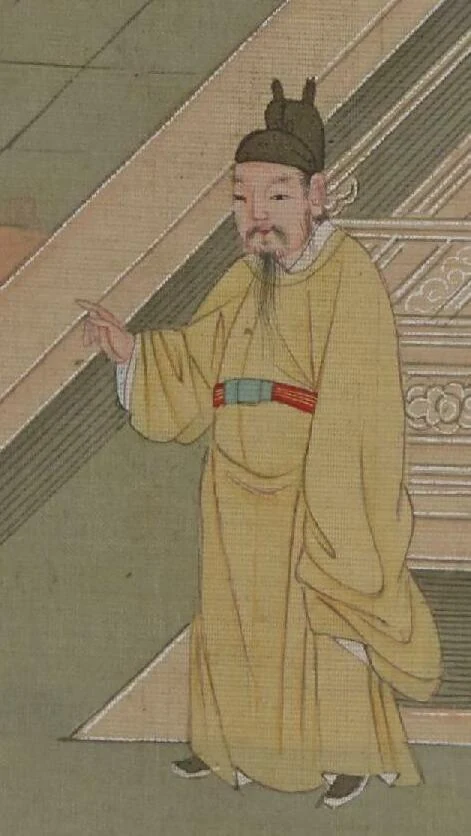
430 CE–464 CE
Emperor
Liu Jun
刘骏
Liu Jun (September 19, 430–July 12, 464), courtesy name Xiulong and childhood name Daomin, was from Pengcheng County in Pengcheng Commandery, Xuzhou, present-day Tongshan District of Xuzhou, Jiangsu. A politician of the Northern and Southern Dynasties period, he was the fifth emperor of Liu Song and reigned from May 20, 453 to July 12, 464. He was the third son of Emperor Wen Liu Yilong; his mother was Lu Huinan. Intelligent…
430 CE–464 CELiu Song
PROFILE
Liu Jun (September 19, 430–July 12, 464), courtesy name Xiulong and childhood name Daomin, was from Pengcheng County in Pengcheng Commandery, Xuzhou, present-day Tongshan District of Xuzhou, Jiangsu. A politician of the Northern and Southern Dynasties period, he was the fifth emperor of Liu Song and reigned from May 20, 453 to July 12, 464. He was the third son of Emperor Wen Liu Yilong; his mother was Lu Huinan. Intelligent and quick-witted from youth and skilled in both civil and military pursuits, Liu Jun was first enfeoffed as Prince of Wuling. He was not especially favored by his father and spent long periods governing outside the capital. He successively commanded campaigns against tribal uprisings in Yongzhou, participated in the Yuanjia northern campaigns, and fought communities along the Yangtze. In 453, Crown Prince Liu Shao killed Emperor Wen. Liu Jun raised troops, defeated and killed Liu Shao, and seized the throne. During his reign he implemented measures to strengthen central power, weakened aristocratic families, promoted men of low social origin, revised penal administration, reorganized provinces and garrisons, and expanded the use of dianqian supervisory officials. He died in 464, the eighth year of the Daming era, at age thirty-five after eleven years on the throne and was buried at Jingning Mausoleum.
- Alternative name
- Emperor Xiaowu of Liu Song
- Courtesy name
- Xiulong
- Period
- Liu Song
- Date of Birth
- September 19 430
- Date of Death
- July 12 464
- Dynasty/Regime
- Liu Song
- Identity
- Emperor
- Ethnicity
- Not recorded in historical sources
- Ancestral origin
- Pengcheng County, Pengcheng Commandery, Xuzhou (present-day Tongshan District, Xuzhou, Jiangsu)
- Place of birth
- Not recorded in historical sources
- Reign
- May 20, 453–July 12, 464
- Predecessor
- Liu Shao, the "Chief Culprit" of Liu Song
- Successor
- Emperor Qianfei of Liu Song (Liu Ziye)
- Era name
- Not recorded in historical sources
- Temple name
- Not recorded in historical sources
- Posthumous title
- Emperor Xiaowu of Liu Song
- Main achievements
- Defeated Liu Shao after the latter's patricide and took the throne; strengthened imperial centralization, while later sources also record harsh and oppressive policies.
LIFE TIMELINE
Age 6 | Made Prince of Wuling with a fief of two thousand households.
Age 10 | Appointed General Who Conquers the Caitiffs, commander of military affairs in Xiangzhou, and Inspector of Xiangzhou, while also overseeing the Shitou garrison.
Age 11 | Promoted with imperial tally and command over military affairs in five provinces and appointed Inspector of Southern Yuzhou, with responsibility for defending Shitou Fortress.
Age 15 | Added responsibility for Qinzhou and advanced to General Who Pacifies the Army.
Age 16 | Appointed Inspector of Yongzhou and Colonel Who Pacifies the Man; stationed at Xiangyang and became the first imperial prince since the Eastern Jin period to be posted there.
Age 19 | Appointed General Who Pacifies the North and Inspector of Xuzhou; stationed at Pengcheng.
Age 21 | Participated in the Yuanjia northern campaign; achieved an initial victory in a raid on Ruyang but was later defeated and reduced in title to General Who Guards the Army.
Age 22 | Reduced to General of the Northern Household after failing to stop Northern Wei; later appointed General of the Southern Household and Inspector of Jiangzhou.
Age 23 | Given overall command of armies campaigning against tribal groups along the Yangtze.
Age 24 | Crown Prince Liu Shao killed Emperor Wen in the second month; Liu Jun proclaimed himself emperor at Xinting in the fourth month; in the fifth month he captured Jiankang and executed Liu Shao and Liu Jun, Prince of Shixing.
Age 25 | Changed the era name to Xiaojian; suppressed the rebellion of Liu Yixuan and Zang Zhi; divided provinces and commanderies to weaken regional military bases.
Age 29 | Executed Wang Sengda, sent Yan Jun away from court, and increasingly entrusted confidential affairs to favored men of humble origin, producing a political pattern in which such men controlled key channels of power.
Age 30 | Suppressed the rebellion of Liu Dan, Prince of Jingling, and killed three thousand adult males in Guangling.
Age 35 | Died of illness in Yuzhu Hall of the Jiankang palace in the seventh month and was buried at Jingning Mausoleum in the eighth month.
BIOGRAPHY
Biography
Family Background and Early Years
Liu Jun was born on September 19, 430, the sixteenth day of the eighth month of Yuanjia 7. He was the third son of Emperor Wen Liu Yilong. His mother, Lu Huinan, came from a modest background and had originally been a palace consort; after giving birth to Liu Jun she received the rank Shuyuan. The History of the Southern Dynasties describes Liu Jun as exceptionally quick and alert in youth, able to read several lines at once, gifted in literary composition, decisive and fond of martial pursuits, and skilled in riding and archery.
In 435, at age six, Liu Jun was made Prince of Wuling with a fief of two thousand households. Despite his youth, he was repeatedly assigned important regional commands. In 439 he became General Who Conquers the Caitiffs, commander of military affairs in Xiangzhou, and Inspector of Xiangzhou, while overseeing the Shitou garrison. The following year he was promoted to command military affairs across several provinces and became Inspector of Southern Yuzhou with responsibility for Shitou Fortress. In 444 he was given additional responsibility for Qinzhou and advanced to General Who Pacifies the Army.
Although an imperial son, Liu Jun was not especially favored by Emperor Wen, who preferred Crown Prince Liu Shao and his second son Liu Jun, Prince of Shixing. Liu Jun was treated more like an ordinary regional prince. This lack of favor, however, kept him in the provinces for long periods and gave him military and administrative experience and local networks that later became important when he fought for the throne.
Governing Yongzhou and Campaigns Against Tribal Groups
After Inspector Liu Daochan of Yongzhou died in 442, uprisings spread among local tribal communities. In 445 Emperor Wen transferred Liu Jun to Yongzhou as inspector and Colonel Who Pacifies the Man and gave him overall command of operations in Yongzhou, Liangzhou, Northern and Southern Qinzhou, and several commanderies of Jingzhou. He thereby became the first imperial prince in roughly a century, since the Eastern Jin had established itself in the south, to be stationed at Xiangyang.
With the assistance of commanders including Shen Qingzhi, Zhu Xiuzhi, Liu Yuanjing, and Zong Que, Liu Jun recruited northern refugees to form campaigning forces and later accepted Xue Andu, who brought northern volunteers south. These units became a strong Jing–Yong military force. During more than three years in Yongzhou, Liu Jun directed campaigns against multiple tribal groups and captured nearly one hundred thousand people, who were registered into Liu Song households according to the source.
He also undertook water-control projects. He employed Liu Xiuzhi to restore the Liumen Weir, which had long been damaged and had harmed both public and private agriculture. The repair contributed to repeated harvests in Yongzhou. Liu Jun's years there therefore built both a political reputation and a loyal military following, which later formed an important part of his forces in the struggle for the throne.
Defending Pengcheng and the Yuanjia Northern Campaigns
In 448 Liu Jun was transferred to Pengcheng as General Who Pacifies the North, Inspector of Xuzhou, and commander over military affairs in several northern provinces. He soon also held authority over Yanzhou.
In the second month of 450, Emperor Taiwu of Northern Wei, Tuoba Tao, invaded south, captured Ruyang, and threatened Xuancheng. Emperor Wen ordered Liu Jun to strike north at Ruyang. Liu Jun led fifteen hundred cavalry in a surprise attack. The Wei forces, unprepared, broke; the Song troops killed more than three thousand enemies, burned supplies, and rescued many captured Song civilians. A few days later Wei learned that Liu Jun had no reinforcements and counterattacked from Hulao. Outnumbered, the Song force was defeated and only nine hundred men survived. Liu Jun was reduced in title to General Who Guards the Army.
In the seventh month of the same year Emperor Wen launched another major northern campaign with three armies. Northern Wei soon counterattacked and advanced to the northern bank of the Yangtze. Song positions collapsed in many places, but Liu Jun decided to hold Pengcheng. Liu Yigong, Prince of Jiangxia and senior commander at Pengcheng, wanted to flee south. Liu Jun and his aide Zhang Chang urged him to remain. Liu Jun stated that because Liu Yigong held overall command he would not presume to decide for him, but as the lord responsible for the city Liu Jun would be ashamed to abandon it and intended to live or die with Pengcheng. Liu Yigong then agreed to stay.
Tuoba Tao failed to take Pengcheng and moved around the city toward the Yangtze, later returning north after reaching the river. When the Wei army passed near Anwang Lake, Liu Jun and other commanders urged Liu Yigong to attack the exhausted enemy, but Liu Yigong was too fearful to act. Emperor Wen, angered by the failure of the forces north of the Yangtze, also blamed Liu Jun for not intercepting the Wei withdrawal and reduced him to General of the Northern Household.
Jiangzhou Campaigns and the Struggle for the Throne
In 451 Liu Jun became General of the Southern Household and Inspector of Jiangzhou, with command over Jiangzhou and parts of Jingzhou and Yuzhou. Following the failed northern campaign and exhaustion of the treasury, tribal uprisings spread along the Huai, Ru, Yangtze, and Mian river regions. In 452 Emperor Wen dispatched Shen Qingzhi and others to suppress them and placed Liu Jun in overall command. From Jiangzhou, Liu Jun organized a coalition of troops from Jiang, Yu, Jing, and Yong provinces.
In the first month of 453 Liu Jun moved from Xunyang to Wuzhou to campaign against the Wushui groups of Xiyang. On the twenty-first day of the second month, Crown Prince Liu Shao killed Emperor Wen and proclaimed himself emperor. Seeking to secure Liu Jun's loyalty, Liu Shao promoted him to General Who Conquers the South and added the title Cavalier Attendant-in-Ordinary, while secretly ordering Shen Qingzhi to kill him. When Shen asked to see Liu Jun, Liu Jun claimed illness and hesitated to receive him. Shen entered the tent, showed Liu Shao's written order, and declared that he had received great favor from the late emperor and would act with all his strength. Liu Jun wept, asked to bid farewell to his mother, then rose and bowed to Shen, saying the safety of house and state depended on him.
On the eleventh day of the fourth month, Liu Jun declared martial law in Jiangzhou and raised troops against Liu Shao. Liu Yixuan, Prince of Nanqiao and Inspector of Jingzhou, and Zang Zhi, Inspector of Yongzhou, responded. On the first day of the fifth month Liu Jun issued a proclamation toward Jiankang. On the fourteenth Liu Yuanjing fought Liu Shao at Xinting and defeated him. On the twentieth Liu Jun proclaimed himself emperor at Xinting at age twenty-four. On the twenty-seventh he captured Jiankang and executed Liu Shao and Liu Jun, Prince of Shixing.
Government and Centralizing Reforms
After taking the throne, Liu Jun adopted a series of measures to strengthen central authority. He removed the title Director of the Imperial Secretariat and divided large provinces and commanderies to weaken regional military bases. In 454, because Yangzhou and Jingzhou were exceptionally large and militarily powerful, he separated five eastern commanderies of Yangzhou to create Eastern Yangzhou and detached eight commanderies from Jingzhou, Xiangzhou, Jiangzhou, and Yuzhou to establish Yingzhou, reducing the strength of both Jingzhou and Yangzhou. Following Liu Yixuan's rebellion that year, he accepted Liu Yigong's proposal to reduce the ceremonial privileges, carriages, clothing, vessels, music, and dance permitted to princes and nobles, eventually expanding the restrictions to twenty-four articles.
Liu Jun simultaneously promoted men of low social origin. Shen Qingzhi, from a Jiangdong commoner background, and Liu Yuanjing, a northerner from outside the southern aristocratic elite, both rose to the Three Excellencies on the strength of military achievement, creating a precedent in the Southern Dynasties. After 458, Liu Jun increasingly refused to delegate power to imperial brothers or high aristocratic families and instead used favored men of humble origin as his eyes and ears. Dai Faxing, Chao Shangzhi, Dai Mingbao, and Xu Yuan were among the most trusted and capable, creating a political pattern often described as “men of low origin controlling confidential affairs.”
In economic administration, Liu Jun continued household-registration reforms, pardoned or released some slaves and military households, sought to restrain land annexation, limited aristocratic monopolization of mountains and waters, conducted registry inspections, appointed court commissioners, reformed taxation, and altered coinage. Militarily, he employed Yan Shibo and other commanders against Northern Wei and won the first battle of Qingzhou, recovering territory north of the Ji River.
Final Years and Death
In his later years Liu Jun became increasingly extravagant, fond of alcohol and wealth. Dissatisfied with the palace, he ordered construction of Yuzhu Hall and destroyed a small chamber once used by his grandfather Liu Yu, Emperor Wu of Song, to provide a foundation. When he saw the simple earthen partitions, woven lamp, and hemp fly-whisk associated with Emperor Wu's earlier life, Palace Attendant Yuan Yi praised the founder's frugality. Liu Jun contemptuously replied that such things were already more than sufficient for a rustic old man.
Liu Jun also enjoyed gambling and used it as a means of extracting wealth. Provincial inspectors and officials of two-thousand-bushel rank were ordered to present valuables when leaving office and returning to the capital. They were later summoned into the palace to gamble, and the emperor was said to take their accumulated wealth before allowing them to leave. The source notes that later emperors of Song and Qi continued and expanded similar practices.
In 463 and 464, corresponding to the seventh and eighth years of the Daming era, severe drought struck Zhejiang and other areas, causing major famine. The source states that six or seven tenths of registered households died or fled. On July 12, 464, the gengshen day of the intercalary fifth month of Daming 8, Liu Jun died in Yuzhu Hall of the Jiankang palace at age thirty-five after eleven years on the throne. He was buried at Jingning Mausoleum on the twenty-seventh day of the eighth month.
His Command in Yongzhou and the Pacification of the Man Peoples
The command at Yongzhou was the root of Liu Jun's military and political career. In the nineteenth year of Yuanjia the governor of Yongzhou, Liu Daochang, died and "the Man peoples rose in great numbers", while the general Zhu Xiuzhi, sent against them, was defeated; Shen Qingzhi was made general of the establishing-might and sent with troops to help Zhu Xiuzhi, who was then imprisoned for his failure, whereupon Shen Qingzhi "took sole command, advanced, broke the Man about the Mian river, taking seven thousand prisoners, and advancing on Huyang took more than ten thousand". He became Liu Jun's assistant of the central army. When Liu Jun, holding his own title, went west with the staff to Yongzhou, "the Man raiders being very numerous and the roads by water and land blocked, the emperor halted at the great dike and could not advance", and so detached Shen Qingzhi, who "broke them utterly, and twenty thousand surrendered"; and when Liu Jun reached his post and "the Man of the post road rebelled and killed Shen Shi", he sent Shen Qingzhi against them again with Wang Xuanmo of Jingzhou and Wang Fanghui of the palace army, "pacifying the hills and taking more than seventy thousand"; and the Man of Yun hill being strongest and Lu Zongzhi's many campaigns having failed, Shen Qingzhi "cut them down and took more than thirty thousand". Liu Yuanjing too was then made awing-general and governor of Sui commandery on Yigong's recommendation, and when "the Man cut the post road and meant to attack the commandery", its stores being short and its weapons few, he "devised plans and got six or seven hundred men, posting five hundred on the post road"; when it was objected that "the Man will press the city and the force should not be divided", he answered that "the Man have heard that the commandery sent a strong garrison, and will never guess that the city holds few; and to strike from within and without together is the better plan", and so had the post road prepared while he slipped out behind them, "enjoining that when the fire was raised they should gallop in"; and falling on them front and rear, "the Man were thrown into confusion, more than a thousand drowning in the Yun river and several hundred being killed or taken, and the commandery was stilled and there were no more raids"; afterwards he campaigned with Zhu Xiuzhi and served under Shen Qingzhi against Yun hill, "taking Taiyang".
The Affair at Ruyang and the Defense of Pengcheng
In the twenty-seventh year of Yuanjia, when the Wei invaded and took Ruyang and pressed on to Xuanhu, the emperor sent a secret envoy bidding Liu Jun "send out horse with three days' rations to strike them". By the Comprehensive Mirror, Liu Jun "raised fifteen hundred horses from within a hundred li, divided them into five columns" and sent the army secretary Liu Taizhi with Huan Qianzhi, Zang Zhaozhi, Yin Ding, Du Youwen and Cheng Tianzuo straight to Ruyang; and "the men of Wei, looking only for the relief troops from Shouyang, took no precautions at Pengcheng", so that Liu Taizhi and the rest advanced secretly and attacked, "killing more than three thousand, burning their baggage, so that the men of Wei scattered and all the prisoners escaped eastward". But the men of Wei, learning that Liu Taizhi had no support, turned and attacked again, and "Huan Qianzhi fell back first, the soldiers were thrown into confusion and cast away their arms and fled"; Liu Taizhi was killed by the men of Wei, Zang Zhaozhi drowned, Cheng Tianzuo was taken, and "of Huan Qianzhi, Yin Ding and Du Youwen and the soldiers nine hundred or more escaped, and four hundred horses returned". The full account is in the Song History's life of the Suo captives: the emperor sent the company commander Wu Xianglu by post to bid Liu Jun send a thousand horse, and when the officers proposed the assistant of the administration Liu Yansun as commander he declined and put forward the army secretary Liu Taizhi, whom Liu Jun consulted the army adviser Wang Xuanmo and the chief secretary Zhang Chang about, "and they all approved"; the five columns reached Qiaocheng, where "the men and horses were again reviewed and a thousand one hundred picked horse obtained", and went straight for Ruyang, where the barbarian camp lay three li north of the city, "and the men of Wei knew nothing of it, so that Liu Taizhi and the rest galloped in and attacked, killing more than three thousand and burning their baggage", the felt tents within holding fine weapons and vessels of gold and silver, "and all the great commanders in the tents were killed"; the prisoners all escaped eastward, shouting that "the government troops have given them a good beating"; but afterwards the barbarians scattered, and as the pursuit went on for a day and the horses and men were weary, they turned back to Runan, where a body of Wei horse and foot some five hundred within the city "mounted the wall and saw that Liu Taizhi had no support", and with the arrival of another commander, the duke of Julu, Yu Song, from Hulao, came out and attacked: "Liu Taizhi's men had not eaten, and having fought since dawn were weary, and their ranks were not yet formed" when Huan Qianzhi fell back first and the army broke, casting away arms and running, "losing the road and making for the Yin river, where the water was deep and the banks high, so that men and horses threw themselves in to cross"; and Liu Taizhi alone did not go, saying that "with a defeat like this, with what face could I return?", and dismounting and sitting down was killed by the barbarians. Liu Jun was therefore reduced from the title of general of the north to general of the garrison.
In the seventh month of the same year the emperor launched the northern expedition and the Wei counter-attacked, "the generals falling back" and "not one city in a hundred holding", and Liu Jun alone resolved to hold Pengcheng. The commander of the Song army at Pengcheng, the prince of Jiangxia Liu Yigong, was preparing to flee south, and Liu Jun with the chief secretary Zhang Chang remonstrated, saying that "my father being commander-in-chief, I dare not interfere with his going or staying; but I, Daomin, am shamefully the lord of this city, and to abandon my post and flee would leave me no face ever to serve the court again; I will live or die with this city", at which Liu Yigong resolved to hold it. When Tuoba Tao besieged Pengcheng without success and went round it southward to water his horses in the Yangtze and return north, Liu Jun had sent the general Ji Xuanjing ahead to Liucheng to watch the Wei movements, and the Wei, attacking Liucheng later, were defeated there with the help of the local people and went round it southward again; and at Anwangpo the officers asked Liu Yigong to strike while the Wei were weary, but he dared not, and the emperor, hearing of it, was greatly angered and reproached the armies of the six commanderies north of the river, Liu Jun too being reduced to general of the northern centre for failing to intercept the Wei. One matter at Pengcheng remains: when Zhang Chang met Li Xiaobo before the ranks, "Liu Jun put on the dress of a common soldier and watched Li Xiaobo from the side", and Li Xiaobo, whose eyes kept going to the man beside Zhang Chang, said as he left the camp that the man beside Zhang Chang, of such high and marvellous bearing, was "truly no common officer".
The Pacification of the Man at Jiangzhou and the Rising There
In the twenty-eighth year of Yuanjia Liu Jun was made general of the southern centre and governor of Jiangzhou, in command of Jiangzhou and parts of Jing and Yu; Jing, Yu and Yong were likewise ordered "each to send troops", and the emperor "sent the guardsman of the heir's foot, Shen Qingzhi, and others against the rebels, making the emperor-in-waiting commander of all the armies". Liu Jun's command then extended to Xiyang commandery, and Liu Yuanjing "was ordered to lead his men to Xiyang to join the campaign against the Man of the Five Waters", the lives of Xue Andu, Zong Yue and Zong Que showing that officers of the Yongzhou system campaigned with him against the Xiyang Man, so that the troops engaged came from four provinces, Jiang, Yu, Jing and Yong. In the first month of the thirtieth year Liu Jun led his army from Xunyang to Wuzhou against the Xiyang Five Waters Man, and on the twenty-first of the second month the heir Liu Shao rose, murdered the emperor and proclaimed himself; he raised Liu Jun's title to general of the south and added the title of cavalier attendant, but secretly "sent a letter to Shen Qingzhi bidding him kill the emperor-in-waiting". By the Southern History, Shen Qingzhi sought audience and "the emperor-in-waiting, feigning illness, dared not see him", and Shen Qingzhi "pressed forward and handed him the criminal's own letter", and Liu Jun "wept and begged to go within to take leave of his mother", and Shen Qingzhi said that "I received the late emperor's great kindness and have always wished to repay it; in today's business nothing counts but strength — why does Your Highness doubt so deeply?", at which Liu Jun rose and bowed twice, saying that "the safety of house and state rests with the general", and Shen Qingzhi "at once set the whole household in order".
On the eleventh of the fourth month Liu Jun declared martial law in Jiangzhou and rose against the usurper, and the governor of Jingzhou, the prince of Nanqiao Liu Yixuan, and the governor of Yongzhou, Zang Zhi, responded; Liu Yixuan "hearing of it at once raised troops, gathered armed men and sent his proclamation near and far", and "when the emperor-in-waiting came against the usurper, Yixuan sent his army secretary Xu Yibao with three thousand men to help as vanguard". Liu Jun's proclamation to the capital recounted the crimes of Liu Shao, saying that "he stirred up disorder with witchcraft and at last committed murder, so that the imperial person suffered the pain of poison and the altars of state were in danger of falling; the four seas are broken in heart and gods and men weep blood; since men began, such a calamity has not been heard", and disposing his armies he said that "I now order the champion general and adviser Liu Yuanjing, the tranquil-north general Ma Wengong and others with thirty thousand picked troops to gallop straight to Shitou and divide toward Baixia; the general supporting the state Zong Que and others with twenty thousand armored men; and the general who smites the barbarians and the sima and interior secretary of Wuchang, Shen Qingzhi, and others with fifty thousand brave men, to follow on the road; detached columns shall either burn their boats and break their cauldrons and march on foot from Gushu, or sweep in their swift oars to Wuhu and occupy Yunyang". On the fourteenth of the fifth month Liu Yuanjing fought Liu Shao a great battle at Xinting and Liu Shao fled in defeat, and on the twentieth Liu Jun took the throne at Xinting at twenty-four; on the twenty-seventh he took Jiankang and beheaded Liu Shao and his second brother Liu Jun.
The Enfeoffments on Accession, Zang Zhi's Designs and the Rising of Xiaojian
After taking the throne Liu Jun made the prince of Jiangxia, Liu Yigong, grand commandant and recorder of the six departments and governor of Nanzhou; the prince of Nanqiao and governor of Jingzhou, Liu Yixuan, palace secretary, chancellor and recorder of the six departments and governor of Yangzhou; and the prince of Sui, Liu Dan, general of the guard with the honours of the three ministers and governor of Jingzhou; and he made the prince of Nanping, Liu Shuo, minister of works, the prince of Jianping, Liu Hong, president of the left of the secretariat and the prince of Donghai, Liu Yi, general of the army. He changed the fief of Liu Yixuan to the princedom of Nan and of Liu Dan to Jingling, with Liu Yixuan's second son Liu Kai as prince of Yiyang; and later changed the chancellor, the prince of Nan, to governor of Jing and Xiang and the swift cavalry general, the prince of Jingling, to governor of Yangzhou. Zang Zhi already had designs: his life says that he "thought his own talent enough to make him the hero of a generation, and hearing of the national calamity conceived a design, holding Liu Yixuan dull and easy to control, and wishing outwardly to raise him up to accomplish his own ends"; reaching Jiangling he bowed and called himself by name, and being a brother in arms of Liu Yixuan though nearly ten years older, Liu Yixuan asked in amazement why he bowed to a younger brother, and Zang Zhi answered that "in the business it should be so"; but Liu Yixuan had already given his support to Liu Jun, and so his plan came to nothing, and fearing discovery he bowed also to the prince of Jiangxia at Xinting, who asked him why in astonishment, and he answered that "the world is in peril and courtesy differs from ordinary days; I bowed to the minister of works in Jingzhou too".
In the second month of the first year of Xiaojian the governor of Yuzhou Lu Shuang, the cavalry general and governor of Jiangzhou Zang Zhi, the chancellor and governor of Jingzhou the prince of Nan Liu Yixuan, and the governor of Yanzhou Xu Yibao rose in rebellion. Liu Yuanjing, who had been given the title of general of the army and the staff when Lu Shuang rose in the first month, was afterwards made commander of the four provinces of Yong, Liang, Nan and Bei Qin and of Jingling and Sui in Jingzhou, general of the army and colonel of the tranquil Man, governor of Yongzhou; and when Zang Zhi and Liu Yixuan rose, Wang Xuanmo "held Liangshan in the south, walling along the river", Huan Huzhi and Xue Andu "crossed to hold Liyang", and Liu Yuanjing "went out and camped at Caishi". Zhu Xiuzhi "feigned agreement with them while sending envoys to declare his loyalty to the emperor", who rewarded him with the governorship of Jingzhou and a command; and Liu Yixuan, hearing that he would not join, "made Lu Xiu governor of Yongzhou and attacked Xiangyang", where Zhu Xiuzhi "had the road over Ma'an hill cut, so that Lu Xiu could not advance and retired"; and when Liu Yixuan was beaten at Liangshan and fled south alone, Zhu Xiuzhi "led his troops south and settled the remnant rebels". The annals give the dates: on Gengwu of the second month the four rose; on Jimao Liu Yuanjing was given the title of general of the army; on Renwu an amnesty for Yuzhou; on Xinmao Wang Xuanmo became governor of Yuzhou and on Guisi advanced to Liangshan; on Guihai of the third month martial law was declared within and without, and Xu Yibao, beaten by Xiahou Zuhuan, abandoned his troops and fled; on Bingxu of the fourth month Shen Qingzhi "broke Lu Shuang utterly at Xiaoxian in Liyang and beheaded him", and on Guisi was raised to general of the north; on Jiayin of the fifth month Liu Yixuan and the others attacked Liangshan and Wang Xuanmo broke them utterly, and on Jiwei martial law was lifted; and on Wuchen of the sixth month Zang Zhi fled to Wuchang and "was killed by men, his head sent to the capital".
The Victory at Qingkou and the Killing of His Kin
Yan Shibo's defense against the Northern Wei was the greatest feat of arms in the Xiaowu reign. His life records that when Tuoba Jun sent Shibin Chiwen against Qingkou, Yan Shibo sent his army secretary Gou Sida with Meng Qiu to join him, and at Shagou "the barbarian dukes Kuhuan and Wujun with tens of thousands of horse and foot met them in battle", where Meng Qiu "fought hard all day and cut down the duke of Wujun with his own hand, so that the barbarians broke and fled", and Yin Xiaozu cut down the duke of Kuhuan, "a thousand drowning"; when the barbarians sent the dukes of Henan, Heishui and Jizhou and the governor of Qingzhou, Zhang Huaizhi, to hold the Ji bank, Yan Shibo sent Jiang Fangxing with Fu Qian'ai, who broke them and "cut down the duke of Henan, Shulan"; when the barbarian commander Tamen sent more than ten thousand against the fortress at Qingkou, "Qian'ai and Fangxing went out and fought, killed Tamen at once and the rest fled"; and when the barbarian duke of Tianshui came again with twenty thousand, "Qian'ai and the others went out, broke them again and pursued them to the Red Dragon gate, killing very many". The emperor praised his merit in an edict that "the barbarians drive their dogs and sheep and would ravage the frontier... in one month four victories, the detached columns vying in courage and slaying famous princes one after another", ordering envoys to comfort the troops. Afterwards they pursued the barbarians to Duliang, where the army secretary Tong Taiyi and Gou Sida "charged out each with a single horse, and all before them fell", and Meng Qiu coming up the barbarians scattered, "many drowning in the river"; the emperor also sent the secretary of works Bu Tiansheng to help Yan Shibo, who broke Zhang Huaizhi at Migou city, Zhang "coming out to give battle" and being driven back into the city "barely escaping with his life", while the palace general Meng Jizu "fell in the ranks and was posthumously made a commandery governor"; when the barbarian prince of Longxi held Shencheng "with its back to the Ji and facing the river, strong on three sides", Bu Tiansheng attacked it, "Zhu Shiyi and the others put on armour and were first over the wall, and the rebels drowned in the river past counting, the city falling the same day"; when the duke of Tianshui attacked Le'an, the general Fen Wudu with Bu Tiansheng beat him off and pursued to Qingkou; and when the barbarians besieged Fu Qian'ai, he "answered them as each point required", until Yin Xiaozu arrived and "the barbarians raised the siege and fled". The Comprehensive Mirror gives much the same, adding that in the eleventh month "the Wei general of the west, Pi Baozi, with thirty thousand horse helped Feng Chiwen against Qingzhou, and Yan Shibo met him, the general supporting the state Jiao Du stabbing Pi Baozi from his horse and taking his armour, lance and caparison, and killing several dozen with his own hand".
Of the killing of his kin, the affairs of Liu Shuo, prince of Nanping, Liu Hun, prince of Wuchang, and Liu Dan, prince of Jingling, are the chief. Liu Shuo, having submitted late and having been on bad terms with Liu Jun when both were princes, "often mocked and insulted Liu Jun, who was then the least regarded by Emperor Wen"; after the murder he went over to Liu Shao and held troops against Liu Jun, submitting only after Liu Shao's fall, when he was made minister of works; and Liu Jun, his position once secure, had him "given poison to die" for his divided allegiance. Liu Hun's death shows the emperor's reproof: he sent the unattached cavalier attendant Dai Mingbao to reproach him, saying that "between you and me the bond is that of one blood and the duty that of ruler and subject; I gave you a post in the west to be a rock to me — how could you on a sudden wish to do me harm? The proclamation and the dispositions are plain, disloyal and unrighteous to this degree... take good care of yourself and preserve the long life of Song and Qiao", and forced him to kill himself, buried at Xiangyang at seventeen. The affair of the prince of Jingling was the fiercest: in the third year of Daming Liu Dan, knowing that Liu Jun feared him, made secret preparations, and on the pretext of a Wei invasion repaired the walls of Guangling and gathered grain and weapons to secure himself; someone accused him of plotting, and Liu Jun ordered his rank reduced, whereupon Liu Dan refused to obey, killed the governor of Yanzhou, Huan Lang, held Guangling in rebellion and invited the towns north of the Huai to join him; Liu Jun sent Shen Qingzhi, who broke Guangling and "beheaded Dan, putting all the males within the city to death and giving the women to the soldiers". After the affair there is also the frankness of Cai Xingzong: when the emperor's carriage came out of the Xuan yang gate and he "ordered the officials about him to shout ten thousand years", Cai Xingzong, then attending the carriage, was asked by the emperor whether he alone would not shout, and answered calmly and gravely that "Your Majesty today should rather weep as you carry out the executions; how can the army shout ten thousand years?", at which the emperor was displeased; and later, sent to comfort Guangling, where the assistant of the province Fan Xi, his friend, had been killed with the city, Cai Xingzong "collected and buried him with his own hands and sent the coffin home to the old graves in Yuzhang", and the emperor, hearing of it, asked how he dared thus offend the law, and Cai answered boldly that "Your Majesty killed the traitors yourself and I buried my friend myself; having broken the strict rule, I deserve the axe", at which the emperor "looked ashamed". The rising of Liu Xiumao, prince of Hailing, belongs to the same period: he "was hasty by nature and wished to have his own way", and the sima Yu Shenzhi and his commanders restrained him, so that he bore a grudge; his attendant Zhang Bochao, "whom he loved greatly and who had many faults", was often rebuked by the commanders and, fearing punishment, "killed the keeper of the seals Yang Qing in the city, went out to the Jincheng and killed the sima Yu Shenzhi and the keeper of the seals Dai Shuang", gathered troops, raised his standard and sent out a proclamation, having his officers give him the titles of swift cavalry general and the three ministers with the yellow axe, while the reader of the heir, Xun Xian, who remonstrated, was killed; when Liu Xiumao went out to inspect the camp, the army adviser Shen Changzhi and the others closed the gate against him, and he galloped back and could not enter, while the governor of Yicheng, Xue Jikao, fought hard to break the gate for him and killed Shen Changzhi and dozens of his confederates; "that day the army secretary Yin Xuanqing rose, attacked Liu Xiumao, took him alive and had him beheaded as he came out of the middle gate, at seventeen".
His Luxury in Old Age, His Drinking, and the Fate of His Sons
In his later years Liu Jun greatly enlarged the palace and gave himself to luxury. By the Comprehensive Mirror, "since the Jin crossed the river the palace had been rough, and the only halls for court banquets were the eastern and western", until a summer hall was built at the end of the reign of Emperor Xiaowu of Jin, and "the Song did nothing to enlarge or alter them" until Liu Jun "began greatly to build halls and chambers, so that the woodwork was covered with brocade and embroidery, and favourites and concubines received gifts until the treasury was emptied", and he "destroyed the dark chamber in which the founder had lived and raised the Yuzhu hall on its site"; and when he showed it to his ministers, "at the head of the bed was an earthen screen and on the wall a lantern of grass cloth and a fly-whisk of hemp", and the attendant Yuan Yi praised the founder's frugality, at which Liu Jun answered nothing but said that "a farmer fellow who had these has had more than enough". He also drank heavily, "drinking all day and seldom sober", often falling asleep over his desk, but when some urgent matter was presented he would "at once shake off his drowsiness and arrange his dress and countenance with no sign of wine and go on to correct the documents", so that "all within and without feared him"; and he was fond of gambling to gather wealth, ordering the governors and the two-thousand-picul officials on leaving office and returning to the capital to present him with goods, and afterwards "summoning them into the palace to gamble and winning all the money they had saved before letting them go" — a way of taxing that "was followed and developed by the later emperors of Song and Qi". In the seventh and eighth years of Daming Zhejiang and elsewhere suffered a severe drought, bringing a great famine in which "six or seven out of ten of the people starved or fled". On the day Gengshen of the intercalary fifth month of the eighth year of Daming Liu Jun died in the Yuzhu hall of the palace at Jiankang at thirty-five, having reigned eleven years, and was buried in the Jingning mausoleum in the eighth month.
His habit of mocking his ministers is recorded in the life of Wang Xuanmo: "the Xiaowu was free with his ministers, giving each a nickname from his appearance: the many-bearded he called sheep; Yan Shibo, who had lost a tooth, he called Broken Tooth; Liu Xiuzhi, being miserly, he called the Old Miser; the yellow gate attendant Zong Lingxiu, being fat and slow to rise and bow, was at every assembly given many gifts, the emperor wishing to see him stumble as he thanked him, for his amusement; and he had a wooden image carved of Lingxiu's father, the court official Shu Xian, and sent it to his house." And Liu Yuanjing and Huan Huzhi being northerners, Wang Xuanmo alone received the name of "Old Rustic". He once wrote a poem of the four seasons for Wang Xuanmo, that "mallows and sow-thistles for the spring meal, millet broth for the summer dinner; pickled melon to season the autumn greens, white wine to dissolve the winter cold", and "kept a K'un-lun slave boy named Zhu always about him, whom he made beat his ministers with a staff, so that all from Liu Yuanjing down tasted it". With Wang Xuanmo too there was a jest: when, as governor of Yongzhou, he memorialised that "the emigrant commanderies and counties have no territory and old and new are confused, so that the rents are irregular; let all be regularised by the land", and the emigrants, unwilling to be registered, "spread the rumour that Xuanmo meant to rebel", while the clan of Liu Yuanjing being strong and "many of its members governors in the Yongzhou region", they "took up the cry and wished to attack Xuanmo"; he "kept all within and without quiet to dispel men's doubts, and sent a messenger galloping to memorialise the truth", and Liu Jun, knowing the charge false, sent the secretary Wu Xi to comfort him, saying that "a man of seventy, what should he rebel for? Between ruler and subject there is enough to be sure of each other; let this be a jest to smooth your brow", for Wang Xuanmo was stern and "never laughed at random", so that men said his brow was never unbent, and the emperor jested with him on that account. Of his sons, the Song History records twenty-eight princes, among them the deposed emperor Liu Ziye and the prince of Yuzhang, Liu Zishang, born of the empress Wenmu, the rest of various consorts, and under Emperor Ming many of them were killed: the prince of Xin'an, Liu Ziluan, dying at ten, said to those about him that "I wish never to be born into a royal house again", and the princes of Songzi, Linhai, Shian, Shaoling and Huaiyang were also put to death in turn. Of the monks there is also a record: by Hui Jiao's lives of eminent monks, after taking the throne Liu Jun "sent envoys to invite" the monk Sengdao, who came at the summons and stayed at the Zhongxing temple in the capital, where "the imperial carriage halted and the emperor came out in person to welcome him"; and Sengdao, grieving at "the beginning of Xiaojian, when the three bonds were made new", wept so that he could not master himself, and the emperor "choked for a long while", and at once ordered the preaching of the Vimalakirti at the Waguan temple, "the emperor coming in person, so that all the ministers and nobles assembled"; while in the second year of Daming, when the monk Tanbiao and the Qiang Gao Ge plotted rebellion, Liu Jun decreed that "the Buddha's law is decayed and the monks are mixed; they do not uphold the great teaching but become a den of runaways... let them be examined where they are and purged with care, and whoever offends hereafter shall be punished severely", establishing rules by which "all but those of strict discipline were made to return to lay life".
Major Activities
Political Reforms
During his reign Liu Jun implemented measures aimed at strengthening centralized imperial authority. He abolished the title Director of the Imperial Secretariat, divided large provinces and commanderies to weaken regional military bases, reduced ceremonial privileges of princes and nobles, and promoted men outside the great aristocratic clans. Shen Qingzhi and Liu Yuanjing rose through military merit, while favored men of humble origin increasingly controlled confidential administration. Liu Jun also revised penal rules, reorganized provinces and garrisons, and expanded the dianqian system for supervising regional administrations.
Military Activities
Liu Jun was frequently involved in warfare. In Yongzhou he directed Shen Qingzhi, Liu Yuanjing, and other commanders against tribal uprisings and, according to the source, incorporated nearly one hundred thousand captives into registered households. In 450 he took part in the Yuanjia northern campaign, winning first at Ruyang before suffering defeat. In 452 he commanded forces against communities along the Yangtze. In 453 he raised troops against the patricide Liu Shao and seized the throne. During his reign, commanders such as Yan Shibo won the first Qingzhou battle and recovered territory north of the Ji River.
Travels and Regional Posts
From youth Liu Jun repeatedly served outside the capital, governing or commanding in Xiangzhou, Southern Yuzhou, Yongzhou, Xuzhou, Southern Yanzhou, and Jiangzhou. He was the first imperial prince since Eastern Jin times to be stationed at Xiangyang. During more than three years in Yongzhou he suppressed uprisings, repaired irrigation, recruited refugees, and established a strong local base.
Relations with Contemporaries
Liu Jun was especially close to Shen Qingzhi. After Liu Shao killed Emperor Wen, Shen refused the order to kill Liu Jun and instead supported his uprising; he later helped suppress the rebellions of Liu Yixuan and Liu Dan. Liu Jun also developed close military ties with Liu Yuanjing, Xue Andu, and Zong Que during his Yongzhou period. His relationship with Liu Yigong, Prince of Jiangxia, was more complex: Liu Yigong joined Liu Jun against Liu Shao and submitted a memorial urging him to take the throne, yet once emperor Liu Jun remained suspicious of imperial princes, forcing Liu Yigong to act with great caution despite his high rank.
His Institutional Reforms and the Effect of Centralisation
The guiding thread of Liu Jun's political reforms was the strengthening of central power. Towards the imperial kin and the provinces he "strengthened the supervision of the regional princes and greatly limited and weakened the power of the clan", as in the appointment of his old retainer Zhu Xiuzhi as governor of Jingzhou for nine years, "breaking the custom of the Liu Song since its founding of sending princes of the blood to hold Jingzhou, and the testament of Emperor Wu", and in appointing Tan Hezhi and Shen Qingzhi successively as governor of Nanyanzhou; and on the other hand he used the system of the clerical supervisor to "strengthen control over the princes posted out and the provinces", appointing men of humble but real ability as supervisors in the provinces and garrisons, "to transmit the business of the province to the central government for review, to supervise and convey the central orders and assist the governor in his business, and to report directly to the court at any time", so that "the possibility of a province rising against the court was greatly reduced", and "from then on it became the regular practice of Southern Dynasties politics that humble men managed the confidential business, soldiers held the military power and the clerical supervisors controlled the provinces". He also established a royal domain system, treating the royal domain as a region directly administered by a central agency and "higher in status than the provinces outside it"; one school holds that his simultaneous use of the royal domain and the partition of Jingzhou was an attempt to realise, in institution and in practice, a state form "with a central royal domain as the core controlling the four quarters", while another holds that his creation of the royal domain, like his ritual reforms in the Bright Hall and the sacrifices to mountains and rivers, aimed "to establish a view of the world centred on Jiankang". In the guards he "restored the office of commandant of the guards, which had not been set up since Wei and Jin, and restored also the five officials of the palace, the left and right palace officials, the general of military guards and the cavalry attendant", greatly strengthening the central guards, a practice continued by the Southern Dynasties; the treatise on officials records that "the commandant of the guards was not set up in Jiangzuo and was restored by the founder of the Song in the first year of Xiaojian", that "the left and right palace officials were abolished by Emperor Wu of Jin and set up again by the founder of the Song in the Daming period", and that "the general of military guards was not regularly set up under Jin and was restored by the Song founder in Daming to replace the palace generals", as was the cavalry attendant. He also "began to control the guards through the equipment bureau", so that from the Xiaojian years "the equipment bureau managed affairs and shared power with the guard commander, all clerks and above being able to present memorials, while the guard commander folded his hands"; and the term of commandery and county officials was cut from six years to three, "the Qi, Liang and Chen afterwards reducing it further". In finance he "set up the courier-depot offices with censors in charge to handle the local depots and storehouses", so that "when a governor wished to use the money and goods in the depot, he had to pass the examination of the courier-depot office", which also "supervised the local levies and the collection of rents and taxes", a system "constantly strengthened in the Southern Dynasties, until under Emperor Wu of Liang even the salaries and silk of the provinces were brought into the courier-depot system". Some of his creations, such as the practice of the censor-in-chief having the road to himself and the office of the direct gate general, "were absorbed and imitated by the Northern Dynasties", so that "some historians regard him as the true founder of the political pattern of the Southern Dynasties", holding that he realised "both the political condition of the sovereign's majesty exercised alone and a court in which all within and without submitted to his intelligence and none dared be slack".
Law, Land Registration, Mountain Enclosure and Economic Policy
In law Liu Jun "cared much for the interrogation of criminal cases and their reform, hearing cases himself many times and supervising the trial of cases in person, being one of the few emperors of the Northern and Southern Dynasties devoted to the reform of criminal law". He made two important rules for interrogation: first, in every capital case the commandery governor must take part in the interrogation in person, and "if the two-thousand-picul official cannot decide, let it go to the commandant of justice; outside the metropolitan region let it go to the inspector, and if the inspector doubts let it go to the court prison, so that the dead may not complain nor the living resent" — a proposal originating in Xie Zhuang's memorial of the first year of Daming, that "formerly, when the official had finished with the prisoner, the commandery sent an inspector to verify and then carried out the punishment; the inspector is a low clerk, no different from the official, with the name of verification but not the substance of inquiry", and so asking that "henceforth in grave cases, when the county has examined, the matter be reported to the commandery with the prisoner himself, and the governor be charged to examine and argue in person". Second, since under Wei and Jin the inspectors and governors all held military office and even county magistrates bore the title of general, so that "capital crimes were all decided by themselves" and the criminal law fell into disorder, Liu Jun decreed in the fourth month of the seventh year of Daming that "except in battle no man may put another to death at his own will; where the crime is heinous and death is due, the law of the state must be followed and the matter reported first, and the offices concerned must supervise strictly, and whoever offends again shall be punished as a murderer"; and in the third year of Daming he decreed that "the commandant of justice should decide doubtful cases near and far, but on meeting a difficult case often takes a very long time, so that the people suffer and the officials take the occasion for private ends", and ordered that "henceforth when the prisoner arrives and the documents are complete the matter shall be reported at once, and I shall examine it carefully, so that no case lies over; and where the documents are many and the evidence insufficient, the matter must be examined in person to get the truth". A decree on agriculture belongs to the first year of Xiaojian, saying that "to make food the first thing is to value farming, the root of governing the state; to present scholars and examine conduct is the way of a peaceful court... let all officials who govern the people set out the old rules again and exhaust the profits of the land, and those who farm diligently and store well shall have their names reported". In land registration, troubled that "the emigrants who did not register increased until robbers swarmed, while the southern natives who attached themselves to the great families also grew daily", he "withdrew and merged the emigrant provinces and commanderies, dismissed the emigrant households and joined the floating population to the land to unify the registers of emigrants and natives": in the first year of Daming he "completed the merging of three commanderies and sixteen counties of Yongzhou into one commandery", abolished thirteen other emigrant counties, and "for the other emigrant commanderies divided the real commanderies and counties to form the emigrant ones and had them registered, completing the registration of Yongzhou by the fifth year of Daming"; the treatise on provinces records that "in the Daming period the founder of the Song divided real commanderies and counties to form the territories of emigrant ones", and that in the first year of Daming the three emigrant commanderies of Beishangluo, Beijingzhao and Yiyang with their sixteen counties were abolished and the counties of Ye, Caiyang and others done away with, while in the Daming period the emigrant commanderies of Chiyang, Huaili and others were registered. He also "first levied rent on the emigrants of Nanxuzhou", bringing that province within the scope of land registration and household inspection, and in the same year began the policy of examining registers, so that "all the gentry of the commanderies whose marriages or offices were tainted were degraded to officers and clerks, and the people were alarmed and resentful and would not serve, fleeing into the hills and lakes to gather as robbers". On the enclosure of hills the record is of Yang Xi's five articles: where the old edict of the second year of Xiankang had made "the enclosure of hills and the damming of waters punishable as robbery, and any gains of a foot or more punishable with death in the market", Yang Xi, holding that "the rule of Renchen is too severe to be obeyed and must be relaxed with the times", had five articles made — that "all hills and marshes where bamboo, wood, fruit trees or fish weirs and fisheries have been cultivated and worked shall not be reclaimed; officials of the first and second rank may enclose three qing of hill, of the third and fourth two hundred and fifty mu, of the fifth and sixth two qing, of the seventh and eighth one hundred and fifty mu, and of the ninth rank and commoners one qing, all according to the register of property; those who have already enclosed may not enclose more, and if they have less they may make it up to the limit; what is not old property under the above articles shall not be forbidden; offenders shall be punished as robbers for a foot of soil or water or more, reckoning the gains, and the rule of Renchen of the second year of Xiankang is abolished" — and this was followed, so that "after private persons lawfully acquired the property of hills and forests, the opening of the hills became usual, and from then on state and private ownership existed side by side". In military matters he also "set aside all objections and, on Huan Huzhi's advice, moved the seat of Qingzhou from Dongyang forward to Licheng on the first line and joined it with Jizhou, forming pressure on the Northern Wei from both sides", Huan Huzhi holding that "north of Qingzhou are the rivers He and Ji with many marshes, not the direction from which the barbarians come; whenever they raid they must come by Licheng, and to have the two provinces garrisoned together is a far-seeing plan — and being near the river, those who would submit do so easily; to quiet the people's troubles near and display the royal majesty far is the best plan for the frontier". Of ritual and letters he did much: in the tenth month of the first year of Xiaojian he decreed that "Confucius, embodying the virtue sent down by Heaven, sustained Zhou and raised Han... let a temple be built and sacrifices offered to him with the rites of a prince, a dry and high place chosen and the sacrifices richly provided"; in music he "made a new system of temple music different from that of Han, Cao Wei and Western Jin, that is, one blending temple and suburban sacrifice", had the president of the left of the secretariat, Yin Dan, "make new hymns", and had the temple of the empress dowager Zhang "play only civil music as the scholars agreed", so that "through Liu Jun's management the music of the two suburban sacrifices was gradually completed"; and towards Buddhism, "at the beginning of his reign he established the office of monk officials, the monk superintendent of the capital Shi Faying being the first instance of a central monk official in the Southern Dynasties; through monk officials he managed the monks, realising the court's control over the Buddhists".
Personal Relations
- Father: Emperor Wen Liu Yilong of Liu Song
- Mother: Lu Huinan, later Empress Dowager Lu
- Full brother: Liu Shuo, fourth son of Emperor Wen
- Half-brothers: Liu Shao, crown prince, killed after Liu Jun's uprising; Liu Jun, Prince of Shixing, also killed; Liu Dan, Prince of Jingling, later suppressed; Liu Hong, Prince of Jianping; Liu Yi, Prince of Lujiang; Liu Hun, Prince of Wuchang, ordered to die; Liu Yu, later Emperor Ming of Song; Liu Xiuren and others
- Sisters: Liu Ying'e and others
- Empress: Wang Xianyuan
- Sons: Liu Ziye, later Former Deposed Emperor of Song; Liu Zishang; Liu Ziluan; Liu Zixun; Liu Zixu; Liu Zifang; Liu Zike; and others
- Daughters: Liu Chupei and others
- Shen Qingzhi: principal military supporter; assisted Liu Jun's accession and suppressed major rebellions
- Liu Yuanjing: commander from the Yongzhou period and later senior official
- Xue Andu: northern commander who submitted to Liu Song and repeatedly distinguished himself in war
- Zong Que: commander under Liu Jun in Yongzhou, later famous for the phrase about riding the long wind to break ten thousand li of waves
- Yan Jun: close associate later sent away and executed after a struggle over power
- Wang Sengda: member of a great aristocratic clan, executed by Liu Jun
- Dai Faxing: favored man of humble origin who handled confidential affairs
- Zhang Chang: senior aide at Pengcheng who urged Liu Yigong to defend the city
- Cai Xingzong: Minister of Personnel, whom Liu Jun feared
- Liu Shao: crown prince who killed their father and usurped the throne; defeated and killed by Liu Jun
- Liu Yixuan, Prince of Nanqiao: initially supported Liu Jun's accession, later rebelled and was defeated
- Zang Zhi: initially supported Liu Jun, later joined Liu Yixuan's rebellion and was executed
- Liu Dan, Prince of Jingling: became the object of Liu Jun's suspicion and was defeated after rebellion
- Tuoba Tao, Emperor Taiwu of Northern Wei: principal opponent during the Yuanjia northern campaigns
Historical Assessment
Southern Dynasties
- Shen Yue, author of the Book of Song, described Liu Jun as exceptionally quick and intelligent in youth but also recorded that in his later years he became especially greedy for wealth and preserved ambiguous reports concerning his relationship with Empress Dowager Lu.
- Cai Xingzong called Liu Jun a ruler who “kept to the Way from beginning to end.”
- Pei Ziye of the Liang dynasty summarized Liu Jun as possessing enough authority to order the law and enough intelligence to overcome treachery, arguing that he nearly possessed the full strategic qualities of a ruler, while lamenting that had he preserved the founder's frugality and Emperor Wen's leniency, even the celebrated rule of Han Emperors Wen and Jing would have had little to surpass him.
Tang and Song Periods
- Northern Song historian Sima Guang criticized Liu Jun's later alcoholism and extravagance in the Comprehensive Mirror in Aid of Governance, arguing that his conduct contributed to the mid-reign weakening of a previously strong Liu Song state.
- Sima Guang also recorded accusations of sexual misconduct without regard for kinship or status and judged Liu Jun's personal morality harshly.
Ming and Qing Periods
- Wang Fuzhi argued that although Liu Jun had a legitimate reputation as the ruler who punished a usurper, his suspicion of imperial relatives and reliance on favored men of humble origin intensified destructive conflicts within the Liu Song imperial clan.
- Zhao Yi, discussing the Southern Dynasties phenomenon of “men of low origin controlling confidential affairs” in Notes on the Twenty-Two Histories, treated Liu Jun's reign as a crucial turning point.
Modern Period
- Lü Simian judged that Liu Jun accomplished meaningful reforms and that his centralizing policies significantly affected the evolution of Southern Dynasties political institutions, while criticizing the extravagance, greed, and excessive extraction of his later years.
- Tian Yuqing, discussing relations between imperial power and the great clans in Aristocratic Politics of the Eastern Jin, treated Liu Jun as a representative monarch of stronger imperial authority and declining aristocratic influence.
- Modern scholarship generally regards his division of provinces, weakening of regional commands, and promotion of men outside the great clans as policies that deeply shaped later Southern Dynasties politics.
FIGURES ASSOCIATED WITH THIS DYNASTY
Bibliography
- Book of Song, vol. 6, “Annals of Emperor Xiaowu”; vol. 77, “Biography of Shen Qingzhi”; vol. 79, “Biography of Liu Yuanjing”; vol. 88, “Biography of Xue Andu”; vol. 94, “Biography of Dai Faxing”; and related biographies
- History of the Southern Dynasties, vol. 2, “Middle Annals of Song”
- Lü Simian, History of the Two Jin and the Northern and Southern Dynasties