Birth in Jingkou
Born into poverty in Dantu, Jinling; mother died in childbirth; raised by an adoptive aunt.
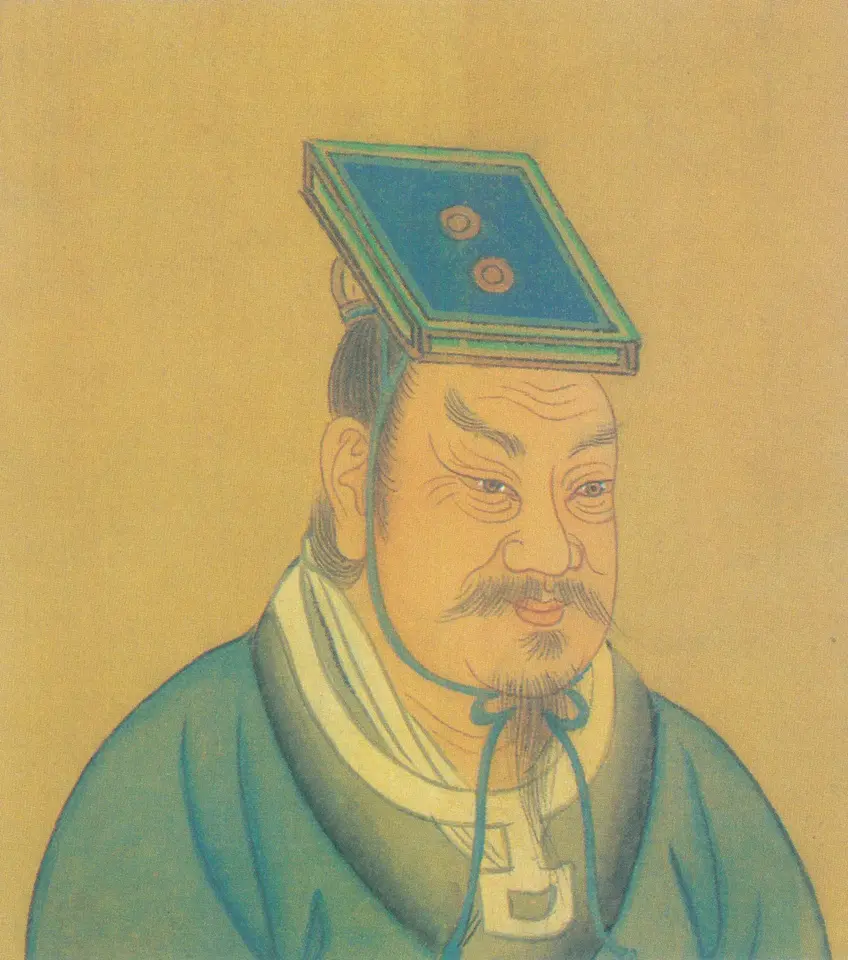
刘裕
Liu Yu (刘裕, April 16, 363 – June 26, 422), courtesy name Deyu and childhood sobriquet Jinu, was the founding monarch of the Liu Song dynasty, the paramount military strategist and field commander of early medieval China, and a twentieth-second-generation descendant of Western Han Prince Yuan of Chu, Liu Jiao. Born into impoverished commoner obscurity in Jingkou following the southern migration of his northern clan, Liu Yu…
Liu Yu (刘裕, April 16, 363 – June 26, 422), courtesy name Deyu and childhood sobriquet Jinu, was the founding monarch of the Liu Song dynasty, the paramount military strategist and field commander of early medieval China, and a twentieth-second-generation descendant of Western Han Prince Yuan of Chu, Liu Jiao. Born into impoverished commoner obscurity in Jingkou following the southern migration of his northern clan, Liu Yu spent his youth weaving straw sandals and laboring in rice paddies before enlisting in the veteran Beifu (Northern Headquarters) Army. Rising swiftly through peerless combat valor during the suppression of the Daoist Sun En uprising, Liu Yu launched a daring insurrection at Jingkou in 404, crushing the usurper Huan Xuan, restoring Emperor An of Jin, and assuming supreme military authority over the Eastern Jin state. Over the ensuing fifteen years, Liu Yu consolidated southern China by annihilating the entrenched warlords Lu Xun, Liu Yi, and Qiao Zong, bringing the Yangtze and Sichuan valleys under unified central control. He subsequently executed two legendary northern expeditions that reshaped Chinese geopolitics: destroying the Xianbei Southern Yan dynasty in 410 to liberate Shandong, and annihilating the Qiang Later Qin dynasty in 417 to recapture both imperial capitals of Luoyang and Chang'an. At the Yellow River, he pioneered the revolutionary Crescent Moon Array (Queyue Zhen), utilizing chariot barricades, heavy crossbows, and hammer-launched iron pikes to annihilate vastly superior Northern Wei cavalry formations. Celebrated by later generations as a martial titan who "swallowed ten thousand leagues like a tiger," Liu Yu expanded southern boundaries to their historical zenith along the Yellow River. In July 420, Liu Yu accepted the formal abdication of Emperor Gong of Jin, establishing the Great Song dynasty (known to history as Liu Song) and inaugurating the Southern Dynasties epoch. On the throne, he instituted transformative domestic reforms: promulgating the Yixi Land Regularization to strip aristocratic clans of tax-exempt status, curbing the two-century monopoly of aristocratic families like the Wang and Xie lineages, empowering commoner scholars (Hanren) in imperial secretariats, eliminating commercial monopolies on mountains and waterways, and drastically reducing peasant taxes. A paragon of imperial thrift, he preserved his tattered straw sandals and rusted farming tools in the palace to instruct his heirs against decadent indulgence. He passed away in 422 while preparing a third northern expedition against the Northern Wei at the age of sixty, leaving an administrative and economic legacy that directly enabled the celebrated thirty-year peace of the Yuanjia reign.
Born into poverty in Dantu, Jinling; mother died in childbirth; raised by an adoptive aunt.
Enlisted under Sun Wuzhong and Liu Laozhi following the outbreak of Sun En's uprising.
Single-handedly charged thousands of rebel soldiers, routing them across coastal marshes.
Defeated rebel fleets at Hanyan and Linhai; drove Sun En to suicide by drowning.
Swore an oath at Jingkou against the usurper Huan Xuan; liberated Jiankang and restored the Jin throne.
Pacified Jiangling; welcomed Emperor An back to the capital; appointed General of the Pacifying Army.
Captured Guanggu after an eight-month siege; executed Murong Chao and recovered Shandong.
Forced-marched back from Shandong to defend Jiankang; shattered Lu Xun's rebel navy at Zuoli.
Launched a lightning naval assault on Jiangling, eliminating warlord Liu Yi.
Dispatched Zhu Lingshi to conquer Qiao Zong's separatist regime in Sichuan; instituted the Yixi Land Reform.
Marched five armies northward, capturing Xuchang and liberating the ancient imperial capital of Luoyang.
Obliterated thirty thousand Northern Wei horsemen at the Yellow River; conquered Chang'an and destroyed Later Qin.
Rushed east following Liu Muzhi's demise; orchestrated the suffocation of Emperor An; enthroned Emperor Gong.
Granted the Nine Bestowals and appointed Chancellor of State, establishing the Song principality.
Accepted Jin abdication at the southern altar; proclaimed the founding of the Great Song dynasty.
Dispatched assassins to smother deposed monarch Sima Dewen (Prince of Lingling) to prevent restoration.
Fell critically ill during military reviews at Xiling; passed away at age sixty; interred at Chuningling.
Liu Yu was born in the fourth month of the first year of Xingning (363) during the reign of Emperor Ai of Eastern Jin, in Jingkou Lane, Dantu County, Jinling Commandery (modern Zhenjiang, Jiangsu). His ancestral genealogy traced back to the imperial Western Han royal clan, specifically as a twenty-second-generation descendant of Liu Jiao, Prince Yuan of Chu, who was a younger half-brother of Emperor Gaozu (Liu Bang). Following the cataclysmic collapse of Western Jin during the Yongjia disturbances, the Liu clan fled southward across the Yangtze along with hordes of northern refugees, settling permanently in the garrison outpost of Jingkou. However, in an aristocratic Eastern Jin society strictly partitioned by hereditary pedigree, the Liu family had long since tumbled into the disenfranchised ranks of commoners.
The family was plunged into desperate destitution at Liu Yu's birth. His biological mother, Lady Zhao Anzong, passed away from postpartum infections immediately after giving birth. Overwhelmed by poverty and lacking the means to hire a wet nurse, his father, Liu Qiao, initially prepared to abandon the newborn infant in the wilderness. Hearing of this, Liu Yu's maternal aunt (the mother of Liu Huaijing) rushed to the dwelling, took the child into her arms, and nourished him alongside her own son. Because he survived through adoptive nursing, he was affectionately given the childhood sobriquet "Jinu" (the Sent Child).
Growing up in bitter deprivation, Liu Yu received little formal schooling in classical canons, acquiring only functional literacy. To sustain himself, the young Liu Yu engaged in hard physical toil, fishing along marshes, chopping firewood, weaving straw sandals, and farming the earth. The aristocratic youths of southern emigre clans, devoted to abstruse Neo-Daoist pure conversation and aesthetic posturing, deeply disdained Liu Yu as a coarse, uncultivated peasant. Yet Liu Yu possessed extraordinary physical stature, standing over seven feet six inches tall, endowed with a formidable physique, imposing features, and an indomitable character dedicated to martial arts, swordsmanship, and archery. Wang Mi, an eminent statesman of the Langye Wang clan, recognized his hidden potential, famously declaring that Liu Yu was destined to become a military titan like Han Xin and Peng Yue.
In the late Taiyuan reign of Eastern Jin, northern China fractured anew while the southern court was consumed by factional strife. In 399, Sun En, a leader of the Five Pecks of Rice Daoist sect, ignited a colossal peasant rebellion in Kuaiji. The insurrection swept across eight commanderies of the Sanwu region, mobilizing hundreds of thousands of disaffected commoners and devastating the estates of aristocratic clans. The imperial court turned to the Beifu Army—the veteran garrison force founded by Xie Xuan before the Battle of Fei River—to rescue the imperiled dynasty.
At age thirty-six, Liu Yu cast aside his farming implements and enlisted as an Army Supervisor under Beifu general Sun Wuzhong. Recognizing his extraordinary tactical fortitude, Beifu supreme commander Liu Laozhi promoted him to military adjutant and dispatched him with a small forward scout detachment to penetrate behind rebel lines. In the winter of 399 near Gouzhang (modern Ningbo, Zhejiang), Liu Yu's detachment of several dozen soldiers was suddenly surrounded by thousands of Sun En's vanguard troops. As his men were cut down by archers, Liu Yu refused retreat. Gripping a heavy steel saber, he plunged into the rebel mass, cutting down dozens of enemy fighters. When relief cavalry under Liu Jingxuan arrived, they found thousands of rebel soldiers fleeing in panic, pursued across the marshes by a solitary, blood-soaked Liu Yu.
Over the ensuing three years, Sun En repeatedly regrouped to attack Haiyan, Linhai, and Jingkou. Operating with modest forces against immense hordes, Liu Yu mastered ambush tactics and nocturnal shock raids. At Haiyan, with fewer than a thousand defenders holding crumbled fortifications, he repeatedly broke through enemy lines, luring rebel formations into treacherous mudflats where his disciplined heavy infantry annihilated them. In 402, after suffering decisive defeats at Linhai, Sun En drowned himself in the sea. His brother-in-law Lu Xun inherited the remnants and retreated south to Guangzhou. Liu Yu's extraordinary combat exploits elevated him to legendary status within the Beifu Army.
With Sun En defeated, regional warlord Huan Xuan, Governor of Jingzhou, capitalized on court exhaustion to march his armies down the Yangtze, seizing Jiankang. In late 403, Huan Xuan deposed Emperor An of Jin and proclaimed himself emperor of the Great Chu dynasty. Paranoid regarding the battle-tested Beifu generals, Huan Xuan executed commander Liu Laozhi while attempting to pacify Liu Yu with ministerial commissions. Feigning political indifference and indulgence in wine to disarm the usurper's vigilance, Liu Yu secretly gathered trusted Beifu officers, including He Wuji, Liu Yi, and Zhuge Changmin, in Jingkou to organize a counter-coup.
On the morning of March 24, 404, Liu Yu launched his strike under the guise of an imperial hunt. Leading dozens of armed retainers into the administrative offices, he struck down Huan Xuan's regional governor, Huan Xiu, seizing control of the Jingkou citadel. He Wuji simultaneously captured Guangling. At Jingkou, Liu Yu erected an altar, donned heavy armor, and read an impassioned proclamation rallying the empire to overthrow the usurper. Over a thousand veteran Beifu warriors flocked to his banner within hours.
Liu Yu immediately drove his small army toward Jiankang. At Luoluo Bridge near Jurong, they encountered tens of thousands of elite Chu troops led by the formidable general Huangfu Fu. Outnumbered several times over, the insurgent ranks wavered under heavy cavalry charges. At this critical juncture, Liu Yu seized an imperial battle flag and a heavy lance, charging directly into the center of the enemy formation. Inspired by their commander's fearless advance, the Beifu veterans fought with desperate fury, slaying Huangfu Fu on the field. The Chu armies disintegrated, and Huan Xuan fled Jiankang in panic, abducting Emperor An to Jiangling. Entering the capital in triumph, Liu Yu restored order, sent generals to pursue the usurper, and had Huan Xuan intercepted and decapitated in Sichuan in May 404. Welcoming Emperor An back to the throne, Liu Yu was appointed General of the Pacifying Army and Commander-in-Chief of Sixteen Commanderies, securing supreme executive authority over the Eastern Jin state.
Although Huan Xuan was dead, Huan clan remnants lingered across the middle Yangtze, and rival military factions threatened southern stability. In 410, while Liu Yu was absent on his northern campaign against Southern Yan, Lu Xun and Xu Daofu mobilized over one hundred thousand seasoned insurgents from Lingnan, marching down the Yangtze to shatter the imperial armies of He Wuji and Liu Yi. With He Wuji slain and Liu Yi routed, Lu Xun's rebel navy anchored before Jiankang, filling the river with warships and plunging the capital into visceral terror.
Receiving emergency dispatches in Shandong, Liu Yu conducted an astonishing forced march, covering hundreds of leagues back to Jiankang in a matter of weeks. Refusing proposals to abandon the capital, Liu Yu fortified the Stone Castle overlooking the Yangtze, threw up wooden barricades along Cha Pu and Baishi, and repelled repeated rebel assaults. He then unleashed fireships and heavy crossbows upon Lu Xun's crowded fleet, turning the river into a roaring inferno. Chasing the broken rebels south to Leichi and Zuoli, Liu Yu destroyed their host, driving Lu Xun to commit suicide in Jiaozhou in 411 and permanently extinguishing the peasant uprisings that had tormented southern China for over a decade.
Simultaneously, Liu Yu moved decisively against internal rivals. In 412, when his erstwhile comrade Liu Yi grew arrogant and amassed private forces in Jiangling to challenge the court, Liu Yu launched a surprise naval expedition up the Yangtze, capturing Jiangling and driving Liu Yi to hang himself. In 413, he commissioned general Zhu Lingshi to execute an audacious two-pronged river campaign into Sichuan, annihilating Qiao Zong's Western Shu regime and restoring the upper Yangtze basin. In 415, he ousted Sima Xiuzhi from Jingzhou, bringing all southern provinces under unified, centralized administration.
With domestic tranquility established, Liu Yu dedicated his formidable military genius to the reconquest of northern China. In 409, when Murong Chao, the Xianbei emperor of Southern Yan, raided northern Huai to abduct thousands of southern subjects, Liu Yu saw an opportunity to liberate the ancestral heartlands. Marching his armies through the rugged Da Xian mountain passes, which the overconfident Murong Chao left undefended, Liu Yu routed the Xianbei cavalry at the Battle of Linqu through combined wagon defenses and flanking assaults. Following an eight-month siege, he captured the Southern Yan capital of Guanggu in early 410, executing Murong Chao and restoring Shandong to Chinese rule.
In 416, following the death of Yao Xing, ruler of the Qiang Later Qin dynasty, succession disputes erupted in Guanzhong. Seizing the moment, Liu Yu launched his celebrated Second Northern Expedition, deploying five coordinated armies by land and water. Vanguard commanders Wang Zhen'e and Tan Daoji advanced relentlessly, liberating Xuchang and taking possession of the ancient capital of Luoyang, where the Jin ancestral temples were restored after a century of barbarian occupation.
Advancing west along the Yellow River, Liu Yu's flotilla was shadowed by tens of thousands of Northern Wei cavalry operating along the northern bank. In March 417, Liu Yu deployed the famous Crescent Moon Array (Queyue Zhen), ferrying one hundred war chariots and two thousand elite crossbowmen onto the northern bank. Arranged in a semi-circle with both flanks anchored on the river, the defenders held fire until thirty thousand Wei cavalry charged within thirty paces. Unleashing torrential salvos from massive crossbows, followed by heavy iron lances launched with iron sledgehammers that impaled multiple horsemen at once, the small southern force routed the northern cavalry host, killing general A'baogan.
Clearing the Yellow River front, the southern armies breached Tongguan. General Wang Zhen'e sailed light warships up the Wei River directly to Chang'an, burned his boats to demonstrate unyielding resolve, and breached the city gates. Later Qin monarch Yao Hong surrendered in chains, bringing his dynasty to an end. After one hundred and one years of foreign rule, both ancient capitals of Luoyang and Chang'an were reclaimed, and Liu Yu's triumphant armies entered the Western Han metropolis in glorious victory.
The battlefield exploits of Liu Yu during the early campaigns against Sun En became foundational legends of his rise. At Gouzhang in 399, when separated from his command, he wielded a long saber with such terrifying ferocity that he halted the advance of several thousand armed rebels, personally slaying dozens of enemy fighters. This solitary stand demonstrated his extraordinary combat prowess and galvanized the morale of the entire Beifu corps.
At the defense of Haiyan in 400, facing a rebel siege army exceeding ten times his garrison, Liu Yu devised continuous nocturnal sortie tactics. Rather than waiting passively behind crumbling parapets, he repeatedly led small strike teams into the enemy encampments under cover of darkness, assassinating rebel commanders and creating widespread panic. His ability to turn terrain to his advantage—drawing heavy insurgent masses into coastal mudflats where their mobility was neutralized—demonstrated his tactical mastery of asymmetrical warfare.
The Jingkou insurrection of 404 was one of the most perilous military gambles in early medieval history. Operating with fewer than two thousand recruits against the tens of thousands of veteran soldiers garrisoning the capital under Huan Xuan, Liu Yu relied on sheer operational velocity and psychological shock. At Luoluo Bridge, when the imperial vanguard confronted the heavily armored cavalry of Huangfu Fu, the battle hung in the balance.
Recognizing that hesitation meant certain death, Liu Yu abandoned command post safety, personally seizing an imperial banner and charging into the melee. His conspicuous courage inspired his men to redouble their efforts, cutting down Huangfu Fu and causing the entire opposing wing to crumble. The victory at Luoluo Bridge broke the back of Huan Xuan's regime, precipitating the immediate liberation of Jiankang and demonstrating Liu Yu's unique capacity to alter the course of history through personal combat leadership.
The conquest of Southern Yan in 409–410 illustrated Liu Yu's strategic patience and logistical brilliance. Having defeated Murong Chao's cavalry in the open plains of Linqu, Liu Yu recognized that the massive fortress walls of Guanggu could not be breached by frontal storm without unacceptable casualties. He therefore executed a total investment strategy, digging concentric moats and constructing palisades around the city to cut off all food and water supplies.
Throughout the freezing winter of 409, while southern courtiers in Jiankang pleaded with him to abandon the distant northern expedition, Liu Yu maintained iron discipline around the siege perimeter. He directed engineering teams to construct siege towers and battering engines while conducting continuous psychological warfare that fractured the defender's resolve. When the walls were finally breached in February 410, Liu Yu systematically dismantled the fortifications, returned thousands of abducted citizens to their homes, and incorporated the strategic provinces of Shandong into the empire.
During the 416–417 campaign against Later Qin, the operations in the mountainous corridor between Luoyang, Shaan County, and Tongguan demonstrated Liu Yu's mastery of combined-arms strategy. While the main northern armies engaged the defenders in the river valleys, Liu Yu deployed general Shen Linzi to lead mountain detachments across the Qinling foothills, flanking northern fortifications and severing supply routes behind Tongguan.
The collapse of the Tongguan defenses, precipitated by the death of Later Qin commander Yao Shao, opened the western portal to the Guanzhong basin. Liu Yu's ability to coordinate simultaneous advances by land cavalry, riverine naval squadrons, and mountain infantry across five hundred leagues of rugged northern terrain established a high-water mark for southern military logistics and offensive planning.
The Crescent Moon Array deployed along the Yellow River in 417 remains one of the most celebrated tactical innovations in world military history. Confronting the tactical conundrum that infantry could not withstand the shock charge of massed heavy cavalry in open terrain, Liu Yu converted transport chariots into portable, interlocking fortifications and used the river to safeguard his rear and flanks.
The decisive tactical element was the weaponized use of iron lances. When normal arrows failed to halt the charge of barded Northern Wei cavalry, general Zhu Chaoshi ordered his men to hammer shortened tree-trunk-sized lances through heavy mechanical crossbows using sledgehammers. The kinetic force of these projectile lances penetrated both horse and rider, throwing the charging northern columns into violent disarray. The Crescent Moon Array demonstrated that disciplined, heavily armed infantry operating from prepared mobile fieldworks could decisively neutralize superior nomadic cavalry.
The tragic loss of Chang'an in 418 was a devastating strategic setback that shadowed Liu Yu's final years. Following the sudden death of his chief civilian minister, Liu Muzhi, in Jiankang, Liu Yu felt compelled to rush east to protect his political base, leaving his twelve-year-old son, Liu Yizhen, as titular commander in Guanzhong. This created a dangerous power vacuum among ambitious generals who possessed deep-seated personal animosities.
The friction between northern general Wang Zhen'e and southern veteran Shen Tianzi resulted in Wang's assassination, followed by Shen's execution and the murder of chief civilian counselor Wang Xiu. Exploiting this internal paralysis, Helian Bobo of the Xia state unleashed his desert cavalry upon the province. The retreating southern garrison was annihilated at Qingni, and Chang'an fell once again to northern rule. While Liu Yu wept over the catastrophe, his domestic political imperative to formalize the dynastic transition prevented him from mounting a third western expedition.
Upon returning to Jiankang, Liu Yu finalized arrangements to supplant the Eastern Jin dynasty. However, the presence of the mentally incapacitated Emperor An represented an ideological barrier to legitimate abdication rituals. Furthermore, popular prophetic verses circulating in the capital proclaimed that "after Changming there shall be two more emperors," indicating that another sovereign must reign before the Jin mandate expired.
In January 419, acting under Liu Yu's covert instructions, imperial secretary Wang Shaozhi entered the palace chambers and suffocated the helpless Emperor An with a quilted coverlet. Liu Yu then enthroned the late emperor's younger brother, Sima Dewen, as Emperor Gong. Sima Dewen reigned for eighteen months as a cooperative figurehead, fully cognizant of his role in managing the terminal phase of the Sima family's dynastic mandate.
In the summer of 420, with the court thoroughly prepared, Emperor Gong issued the formal decree of abdication, declaring that the mandate of heaven had visibly devolved upon the King of Song. On July 10, 420, Liu Yu ascended the imperial terrace at the southern altar in Jiankang, formally assuming the imperial dignity. He proclaimed the founding of the Great Song dynasty, altered the reign era to Yongchu, and granted an empire-wide amnesty.
Liu Yu's elevation marked the definitive end of the Eastern Jin and inaugurated the Southern Dynasties period. Unlike previous dynasty founders who arose from aristocratic lineages, Liu Yu was the first commoner to seize the supreme throne since Han Gaozu, fundamentally altering the sociopolitical landscape of medieval China.
In the spring of 422, despite failing health, the sixty-year-old emperor traveled to Xiling to conduct massive military reviews, secretly planning a third northern campaign against the Northern Wei and Xia states. However, the physical toll of decades on horseback brought on a severe illness that forced his return to the palace. Recognizing his impending demise and the reckless character of his seventeen-year-old heir, Liu Yifu, Liu Yu summoned his four most trusted counselors—Xu Xianzhi, Fu Liang, Xie Hui, and Tan Daoji—to his deathbed.
Entrusting the state to their collective guardianship, the emperor famously instructed them: "If the crown prince proves capable, support him faithfully; if he is unworthy, you may manage affairs as you see fit." He issued strict secret edicts balancing military command between Xie Hui in the capital and Tan Daoji on the frontier. On June 26, 422, Liu Yu passed away in the Western Hall at age sixty. He was interred at the Chuningling Mausoleum, leaving an indelible imprint upon Chinese history.
The most transformative socioeconomic policy enacted under Liu Yu was the Yixi Land Regularization (Yixi Tu Duan), initiated in 413. During the century following the Yongjia migration, northern emigres were granted exempt status recorded on "white registers" (Bai Ji), while indigenous southern populations were listed on "yellow registers" (Huang Ji) that bore the brunt of imperial taxes and corvee labor. Over decades, powerful aristocratic clans abused white registers to shelter hundreds of thousands of tenant farmers, creating massive fiscal losses for the imperial court while exacerbating social inequality.
Liu Yu abolished white registers across almost all southern commanderies, mandating that all residents—irrespective of ancestral origin—be registered under their actual physical place of residence on yellow registers. He dispatched imperial inspectors to conduct rigorous cadastral surveys, confiscating tens of thousands of hectares of illicitly enclosed lands from corrupt magnates like the Diao family and freeing hundreds of thousands of bonded laborers into independent, tax-paying households. This reform vastly expanded the empire's tax base and military manpower, generating the material resources necessary for his northern campaigns and the subsequent prosperity of the Liu Song state.
Liu Yu fundamentally altered the distribution of political power in southern China by breaking the aristocratic monopoly on governance. Emerging from humble origins, he deeply distrusted the decadent noble houses of Langye Wang and Chenjun Xie, who considered imperial offices their birthright. While granting noblemen high-ranking ceremonial titles to preserve social stability, Liu Yu systematically concentrated actual decision-making power in the hands of the Imperial Secretariat Drafters (Zhongshu Sheren), positions staffed entirely by talented commoner scholars (Hanren).
This administrative revolution established the historical pattern of "commoners wielding confidential authority" (Hanren Zhang Ji Yao), which persisted throughout the Southern Dynasties. Gifted commoners such as Liu Muzhi, Xu Xianzhi, and Fu Liang rose to supreme ministerial rank based on administrative merit rather than noble lineage, providing the state with a dynamic, highly competent bureaucratic core that supplanted the inert aristocracy.
To eliminate the chronic menace of regional warlords who had repeatedly toppled Eastern Jin administrations, Liu Yu restructured provincial administration. He fragmented the gargantuan command of Jingzhou—which controlled the entire middle Yangtze—into smaller, manageable administrative units, including Xiangzhou and Jiangzhou, while decreeing that imperial princes rather than autonomous warlords would hold critical regional commands.
Simultaneously, he instituted the "Dian Qian" system, assigning imperial secretarial monitors directly to provincial courts to oversee the actions of regional governors. These institutional safeguards curtailed the formation of private armies, dismantled regional military autonomy, and centralized tax collection and troop mobilization directly under the imperial throne in Jiankang.
Upon assuming the imperial throne, Liu Yu carried out comprehensive legal and fiscal reforms aimed at rehabilitating a war-weary populace. He promulgated empire-wide amnesties, expunging all accumulated debts, back taxes, and salt-monopoly arrears owed by commoners from the Eastern Jin era. He prohibited local officials from levying unauthorized taxes, tying the promotion of magistrates directly to population growth, land reclamation, and the welfare of the peasantry.
In jurisprudence, Liu Yu simplified the complex, punitive statutes inherited from the Jin, outlawing corporal mutilation and the collective punishment of distant relatives. He established strict appellate review requirements, decreeing that capital sentences throughout the provinces must be personally reviewed by the Department of State Affairs and confirmed by the emperor before execution. These policies fostered legal stability and permitted rapid economic recovery across the south.
Throughout the Eastern Jin dynasty, powerful aristocratic families had illegally seized control of mountains, forests, marshes, and coastal fisheries, enclosing natural resources with palisades and extorting heavy fees from impoverished peasants who gathered firewood or caught fish. This exploitation impoverished the common people and ignited widespread social unrest.
Liu Yu issued strict imperial decrees outlawing the private enclosure of mountains and marshes, declaring that all natural resources were public property to be shared freely by all subjects. Aristocratic enclosures were demolished, and magnates who attempted to impose illegal taxes upon peasants were prosecuted for robbery. This reform released essential survival resources to the lower classes, stimulating rural trade, fisheries, and crafts.
Liu Yu was renowned throughout Chinese history for his unyielding personal frugality. Having experienced the bitter realities of rural poverty, he maintained an ascetic lifestyle upon the throne, wearing unadorned hemp robes, consuming simple meals served in earthenware vessels, and refusing to renovate the deteriorated halls of the Jiankang palace. When a regional governor presented him with an exquisite ivory sleeping mat, Liu Yu publicly burned it in the courtyard, admonishing his ministers that such decadent luxuries wasted the labor of the people.
To prevent his children and grandchildren from succumbing to courtly decadence, he constructed a special hall behind the palace where he preserved the patched straw sandals he had worn as an impoverished youth and the rusted hoe he had used to plow fields. He required every imperial prince to visit the exhibit annually, reminding them that imperial power derived from the sweat of commoners and warning that moral decay would inevitably bring ruin to the dynasty.
Recognizing that stable governance required moral and intellectual foundations, Liu Yu revitalized classical Confucian education, which had languished during centuries of aristocratic warfare. In 420, he allocated state funds to rebuild the Imperial University (Guozixue) in Jiankang, appointing distinguished professors to teach the Five Classics.
He mandated that the sons of imperial princes, civil officials, and talented commoners enroll in the academy to study statecraft, ethics, and historiography, establishing academic proficiency as a formal criterion for bureaucratic advancement. He also gathered surviving classical manuscripts across the realm to rebuild the imperial archives, reversing the cultural decline of the late Eastern Jin.
The ultimate military instrument of Liu Yu's reign was the restructured Beifu Army. Originally formed as an emigre regional garrison in Jingkou, the force was transformed by Liu Yu into the permanent, elite Imperial Palace Guard (Zhongjun) stationed directly in Jiankang.
By professionalizing the force, introducing merit-based promotion based on verified battlefield decapitations, and enforcing iron discipline that prohibited looting of civilian populations, Liu Yu created the most lethal, highly disciplined military machine in sixth-century East Asia. This imperial army served as an unassailable bastion defending the throne against external barbarian invasions and internal insurrections.
Liu Yu's tactical repertoire fundamentally expanded early medieval military science. He synthesized infantry, naval, and chariot forces into a flexible, interdependent combat system capable of defeating nomadic cavalry in open plains. His utilization of riverine fleets as mobile logistic hubs enabled his armies to project overwhelming force hundreds of leagues into northern territory while maintaining secure supply lines.
His tactical masterpieces, including the wagon-fortification defense at Linqu and the Crescent Moon Array on the Yellow River, demonstrated that technology, discipline, and defensive field engineering could reliably neutralize the mobility of nomadic cavalry. His operational concepts influenced military treatises throughout the Tang and Song dynasties.
Liu Yu's systematic eradication of entrenched warlords achieved the total geopolitical reunification of southern China. By destroying Huan Xuan, eliminating the powerful warlord Liu Yi in Jiangling, conquering Qiao Zong's independent regime in Sichuan, and subduing Sima Xiuzhi, he resolved the Century-old administrative cleavage between the upper and lower Yangtze.
For the first time since the reign of Western Jin Emperor Wu, a single centralized authority exercised uncompromised command from the mountains of Sichuan to the shores of the East China Sea, providing the institutional cohesion necessary to defend southern civilization against northern nomadic incursions.
Liu Yu's founding of the Liu Song dynasty established the definitive institutional architecture for the entire Southern Dynasties period (Song, Qi, Liang, and Chen). By destroying the political supremacy of the hereditary aristocracy, establishing commoner bureaucratic primacy, and centralizing provincial military control, he created a resilient imperial autocratic state that endured for over a century and a half.
His territorial conquests expanded southern borders to the Yellow River, providing the southern dynasties with vital strategic depth. The stability, administrative efficiency, and fiscal reserves generated by his reforms directly facilitated the golden era of the Yuanjia reign under his son Emperor Wen, making Liu Yu one of the most consequential empire-builders in Chinese history.
The darkest aspect of Liu Yu's historical record was his ruthless physical elimination of the deposed Jin imperial clan. Breaking the civilized precedent established by Cao Pi and Sima Yan—who had granted deposed monarchs noble titles and protected their lineages—Liu Yu ordered the covert assassination of the abdicated Emperor Gong (Sima Dewen) and slaughtered dozens of Sima princes.
This brutal purge set a catastrophic precedent for subsequent dynastic transitions, inaugurating a bloody cycle wherein the founders of the Southern Qi, Liang, and Chen systematically liquidated their predecessor's royal house. Traditional Confucian historians severely censured Liu Yu for this breach of imperial virtue, viewing the bloody civil strife that later consumed the Liu Song royal family as cosmic retribution for his cruelty.
Through his conquests of Southern Yan and Later Qin, Liu Yu fundamentally altered the frontier of early medieval China. By establishing fortified garrisons across Shandong, Henan, and the Huai-Yellow river plains, he created a dual-river defensive system that contained Northern Wei expansionism for decades.
This geopolitical perimeter preserved southern Chinese culture, literature, and institutions during a critical century of northern nomadic assimilation, ensuring that Han administrative traditions survived intact to influence the ultimate reunification of China under the Sui dynasty.
The celebrated thirty-year peace known as the "Yuanjia Era" (424–453) under his son, Emperor Wen (Liu Yilong), was directly built upon the administrative, fiscal, and military foundations laid by Liu Yu. The elimination of corrupt magnate privileges, the regularization of land tenure under the Yixi reform, and the establishment of meritocratic administration provided the institutional framework that allowed commerce, agriculture, and culture to flourish across southern China.
Without Liu Yu's radical restructuring of the state apparatus during the Yongchu era, the sustained economic and cultural achievements of the early Southern Dynasties would have been historically impossible.
Liu Yu possessed a complex, formidable character defined by profound self-control, taciturn gravity, and unwavering resolution. In the midst of catastrophic battlefield crises, he remained completely composed, inspiring unwavering devotion among his officers and men. Despite wielding absolute autocratic power, he never developed the paranoia or grandiosity typical of military usurpers, maintaining his simple tastes and unadorned speech until his death.
To his old comrades from the Beifu ranks and the peasants of Jingkou, he displayed genuine warmth and loyalty, paying off their debts and treating them as lifelong equals. His combination of martial genius, administrative clarity, and personal modesty rendered him one of the most compelling figures of the medieval era.
In accordance with his lifelong dedication to simplicity, Liu Yu strictly forbade luxurious tomb construction. His imperial resting place, the Chuningling Mausoleum on Mount Huanghe, was excavated into the natural hillside without massive earthen mounds or elaborate stone statuary.
His funeral was marked by the absence of precious burial goods, with only his personal battle armor, a modest iron sword, and plain earthenware vessels interred within the subterranean vault. His insistence on unadorned burial provided an enduring model of imperial restraint.
Liu Yu's deathbed instructions to his sons reflected his deep anxieties regarding dynastic succession. Conscious that his children had grown up in royal luxury without experiencing the hardships that forged his own character, he warned them that imperial rule was a solemn public trust that could easily be forfeited through decadence.
Although his eldest son Liu Yifu proved incorrigible and was deposed, his third son, Liu Yilong, internalized his father's frugal precepts and governing philosophy, governing the realm with wisdom and securing the legacy of the Liu Song house.
Liu Yu's tactical innovations represented a conceptual revolution in medieval military doctrine. By combining mobile chariot fieldworks, heavy mechanical crossbows, and armor-piercing projectible lances, he systematically neutralized the speed and shock momentum of nomadic horse archers.
His operations demonstrated that well-trained, heavily armed infantry forces operating with integrated naval and transport support could successfully take the offensive against massed cavalry on open terrain, providing invaluable tactical models for later Chinese dynasties.
Historians across dynasties have celebrated Liu Yu's extraordinary achievements. Shen Yue, author of the Book of Song (Song Shu), praised his rise from commoner obscurity to supreme imperial power, comparing his military genius to Han Gaozu and Guangwu. The Ming-Qing philosopher Wang Fuzhi declared in his Readings of the Comprehensive Mirror that "in martial glory, Emperor Wu of Song reached the absolute pinnacle."
Centuries later, Southern Song poet Xin Qiji immortalized Liu Yu's northern campaigns in his immortal lyric Yongyu Le: Reminiscence at Beigu Pavilion in Jingkou:
"Amid the slant sunlight and grassy trees, in common alleys, they say Jinu once dwelt. Think of those years: with golden spears and armored horses, he swallowed ten thousand leagues like a tiger."
Despite stripping the aristocratic houses of political monopoly, Liu Yu skillfully avoided open class warfare by offering the elite clans a grand political compromise. He granted high-ranking prestige titles and lavish court pensions to figures like Wang Hong and Xie Hui, ensuring that the old nobility retained cultural and social preeminence while relinquishing military and administrative power.
This delicate balance ensured that the transition from Eastern Jin to Liu Song occurred with minimal domestic disruption, uniting both commoner military talent and aristocratic cultural prestige behind the new throne.
Liu Yu's administrative reforms dismantled the chaotic, overlapping network of emigre commanderies that had plagued southern administration for a century. By consolidating administrative boundaries, clarifying judicial jurisdictions, and upgrading Jingkou to the formal capital of Nan-Xuzhou, he eliminated redundant bureaucracies and lowered administrative costs across the southern realm.
This restructured territorial system streamlined taxation, improved census accuracy, and established the administrative blueprint for all subsequent southern regimes.
To support his military operations and enhance regional agriculture, Liu Yu carried out extensive hydraulic maintenance across the Huai and Yangtze river systems. He deepened the ancient Han Canal, constructed protective river dikes, and renovated urban irrigation systems around Jiankang, such as the Baishi Weir.
These water conservancy projects facilitated the transport of grain fleets between the fertile south and the northern frontiers, insulating the southern economy against seasonal droughts while securing the logistics of imperial expansion.
Throughout his reign, Liu Yu prosecuted an unremitting campaign against bureaucratic corruption. He deployed secret imperial inspectors across the provinces to uncover official embezzlement, decreeing capital punishment for magistrates who extorted commoners or embezzled public funds.
Under his strict supervision, judicial corruption was drastically reduced, and the administrative machinery operated with unprecedented integrity, providing ordinary citizens with reliable protection under imperial law.
Liu Yu proved completely fearless in prosecuting influential magnates who defied imperial authority. When members of the ultra-wealthy Diao family abused their privileges to harbor outlaws and seize peasant farmlands, Liu Yu ordered their execution and confiscated their ill-gotten estates, redistributing the land to landless farmers.
By demonstrating that even the most powerful noble houses were subject to imperial law, Liu Yu re-established the supremacy of state justice, dismantling the culture of aristocratic impunity that had paralyzed the Eastern Jin.
To reward the commanders who had supported his rise, Liu Yu instituted a comprehensive system of noble enfeoffments and honors. He elevated loyal companions such as Xu Xianzhi, Fu Liang, Xie Hui, and Tan Daoji to ducal and marquis ranks, granting them substantial landed estates and ministerial posts.
However, to prevent these new military nobles from forming autonomous regional power centers, he instituted strict rotation policies for provincial governors, ensuring that military authority remained permanently subordinate to the imperial court in Jiankang.
| Relationship Type | Name | Identity and Historical Intersections |
|---|---|---|
| Younger Half-Brother | Liu Daogui | Brilliant general and Governor of Jingzhou; crushed rebel armies under Huan Qian; passed away early. |
| Chief Strategist | Liu Muzhi | Vice Director of the Imperial Secretariat; Liu Yu's most trusted civilian counselor who governed Jiankang for over a decade. |
| Founding Regent | Xu Xianzhi | Director of the Imperial Secretariat; senior regent entrusted with Liu Yu's deathbed charge; later deposed Emperor Shao. |
| Literary Statesman | Fu Liang | Imperial Secretary; drafted the abdication edicts transitioning the Jin to Song; served as regent. |
| Aristocratic General | Xie Hui | Commander of the Palace Guards; elite Chenjun Xie nobleman who served as regent; later rebelled and was executed. |
| Renowned Commander | Tan Daoji | Brilliant general who captured Luoyang; famous for measuring sand to deceive enemies; served as regent. |
| Fierce Vanguard | Wang Zhen'e | Grandson of Wang Meng; sailed up the Wei River to capture Chang'an; murdered in camp by rival general Shen Tianzi. |
| Tactical Commander | Zhu Chaoshi | Commander of the Crescent Moon Array; annihilated Northern Wei cavalry; killed during the loss of Guanzhong. |
| Former Comrade / Rival | Liu Yi | Beifu commander who co-founded the 404 uprising; grew arrogant in Jingzhou and was crushed by Liu Yu. |
| Usurping Warlord | Huan Xuan | Usurper who established the Chu dynasty; overthrown and executed following Liu Yu's 404 Jingkou uprising. |
| Deposed Emperor | Sima Dewen | Emperor Gong of Jin; abdicated the throne to Liu Yu in 420; assassinated with a quilted coverlet in 421. |
Emperor Wu of Song, Liu Yu, stands as one of the most brilliant, formidable, and transformative military monarchs in the history of imperial China. Emerging from the depths of impoverished obscurity through personal bravery and strategic genius, he extinguished the destructive Sun En rebellion, shattered the usurping Huan Chu regime, and restored centralized authority across southern China. His magnificent northern campaigns—conquering Southern Yan, crushing Later Qin, liberating the ancient capitals of Luoyang and Chang'an, and obliterating Northern Wei cavalry hosts with his innovative Crescent Moon Array—represented the pinnacle of southern offensive arms against the northern nomadic empires, earning him the immortal literary praise of having "swallowed ten thousand leagues like a tiger."
On the imperial throne, Liu Yu demonstrated profound statecraft by dismantling the parasitic two-century monopoly of the hereditary aristocracy. Through the landmark Yixi Land Regularization, he stripped corrupt noble magnates of tax exemptions, redistributed enclosed lands to commoners, and instituted the revolutionary practice of appointing commoner scholars to confidential administrative posts. His unyielding personal frugality, merciful judicial reforms, and state-sponsored agricultural policies provided southern society with the institutional and economic foundations that directly flowered into the thirty-year golden age of the Yuanjia reign under his son Emperor Wen.
However, Liu Yu's legacy was permanently stained by his ruthless execution of the deposed Emperor Gong of Jin and the systematic liquidation of the Sima royal clan. By violating the traditional code of imperial chivalry that guaranteed the protection of abdicated dynasties, Liu Yu set a catastrophic precedent that haunted subsequent southern dynastic successions with recurring fratricidal bloodshed. Despite this severe moral failure, his immense military exploits, administrative brilliance, and enduring social reforms established him as the paramount architect of the Southern Dynasties.
In the Book of Song (Song Shu), historian Shen Yue delivered a glowing assessment of the founding monarch:
"Emperor Gaozu arose from humble obscurity, shaking the realm with martial brilliance. Endowed with natural military genius, he was invincible across a hundred battles, pacifying usurpers and recovering both imperial capitals. His majestic accomplishments matched those of Han Gaozu and Guangwu. Dressing in plain hemp, eating simple food, suppressing luxury, and instructing his heirs in thrift, he exhibited the highest virtues of imperial leadership."
In Readings of the Comprehensive Mirror (Du Tongjian Lun), the great philosopher Wang Fuzhi declared:
"In martial glory, Emperor Wu of Song reached the absolute pinnacle! Crushing Huan Xuan, destroying Lu Xun, pacifying Qiao Zong, capturing Yao Hong, executing Murong Chao, and defeating Northern Wei cavalry on the Yellow River with infantry forces—he was victorious in every engagement. Among all the monarchs of the Six Dynasties, none could equal his towering stature."
Southern Song patriot Xin Qiji immortalized Liu Yu's legendary spirit in his celebrated lyric poem Yongyu Le: Reminiscence at Beigu Pavilion in Jingkou:
"Amid the slant sunlight and grassy trees, in common alleys, they say Jinu once dwelt. Think of those years: with golden spears and armored horses, he swallowed ten thousand leagues like a tiger."
FIGURES ASSOCIATED WITH THIS DYNASTY