Birth | Born in Jingkou (present-day Zhenjiang, Jiangsu)
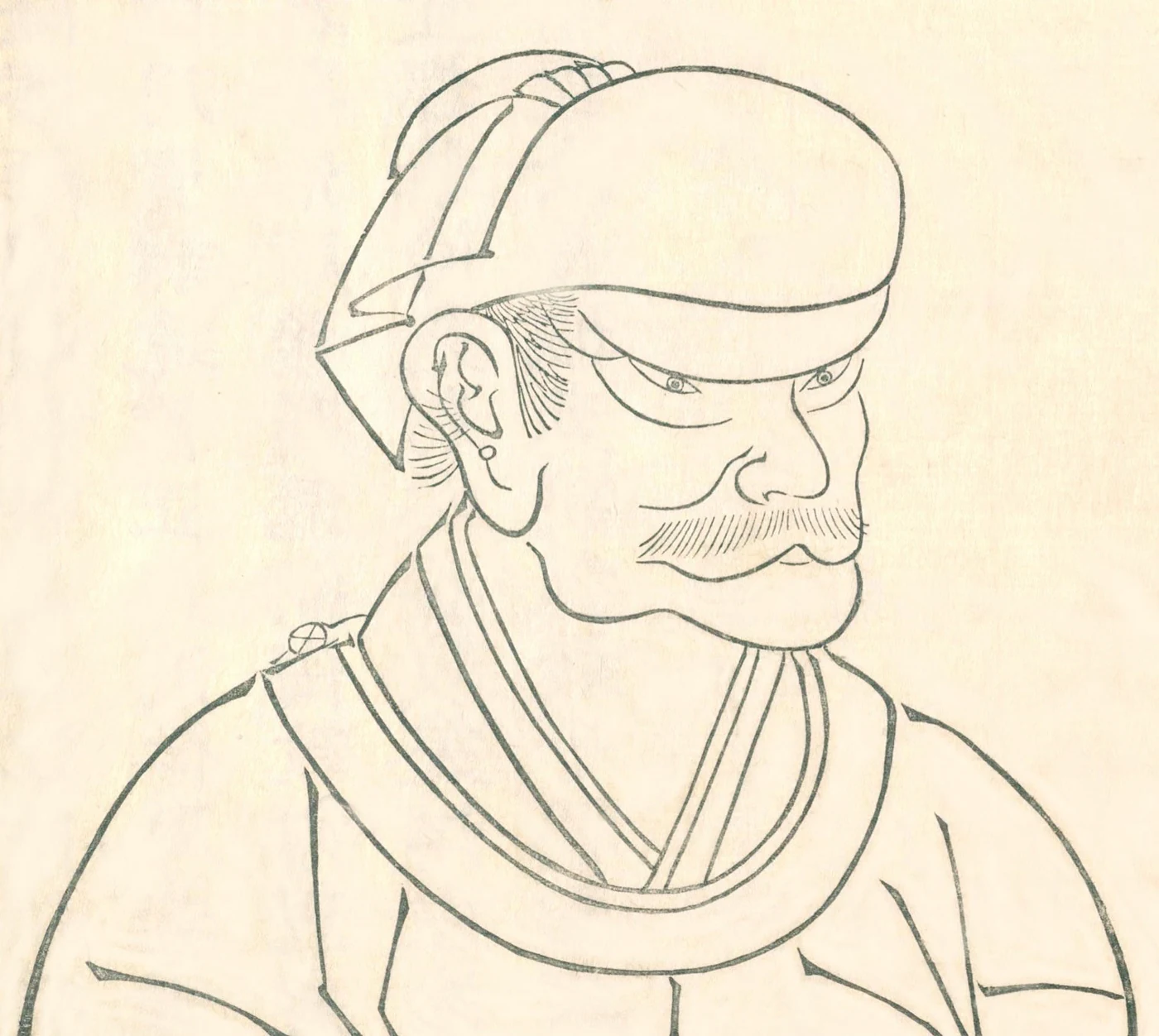
407 CE–453 CE
Emperor
Liu Yilong
刘义隆
Liu Yilong (407–March 16, 453), childhood name Che'er, had his ancestral origin in Pengcheng (present-day Xuzhou, Jiangsu) and was born in Jingkou (present-day Zhenjiang, Jiangsu). He was the third emperor of Liu Song in the Southern Dynasties, the third son of Liu Yu, Emperor Wu of Liu Song, and his mother was Empress Dowager Hu Dao'an. Liu Yilong was widely read in the classics and histories, skilled in clerical script, and…
407 CE–453 CELiu Song
PROFILE
Liu Yilong (407–March 16, 453), childhood name Che'er, had his ancestral origin in Pengcheng (present-day Xuzhou, Jiangsu) and was born in Jingkou (present-day Zhenjiang, Jiangsu). He was the third emperor of Liu Song in the Southern Dynasties, the third son of Liu Yu, Emperor Wu of Liu Song, and his mother was Empress Dowager Hu Dao'an. Liu Yilong was widely read in the classics and histories, skilled in clerical script, and described as deep and strategic. During his nearly thirty-year reign, he presided over the Reign of Yuanjia, during which Liu Song reached its height. However, all three of his northern expeditions failed. The disastrous expedition of 450, in particular, brought Northern Wei forces to Guabu on the northern bank of the Yangtze and severely weakened the state. In his final years, he became suspicious of Crown Prince Liu Shao and planned to replace him, only to be murdered by the crown prince. He died at the age of forty-seven.
- Alternate name
- Emperor Wen of Liu Song
- Period
- Liu Song
- Dynasty / regime
- Liu Song
- Identity
- Emperor
- Ethnicity / people
- Not recorded in historical sources
- Ancestral origin
- Not recorded in historical sources
- Date of birth
- 407
- Place of birth
- Jingkou
- Date of death
- March 16, 453
- Reign
- September 17, 424–March 16, 453
- Predecessor
- Emperor Shao of Liu Song (Liu Yifu)
- Successor
- Liu Shao, Crown Prince of Liu Song
- Era name
- Not recorded in historical sources
- Temple name
- Not recorded in historical sources
- Posthumous title
- Emperor Wen of Liu Song
- Principal achievements
- Third emperor of Liu Song; presided over the Reign of Yuanjia but suffered defeat in the Yuanjia Northern Expeditions and was ultimately murdered by the crown prince
LIFE TIMELINE
Age three | His birth mother Hu Dao'an was ordered to commit suicide
Age four | During Lu Xun's rebellion, Liu Yu ordered Liu Cui to assist in guarding Jingkou
Age six | His adoptive father Liu Daogui died; because “ritual permits no double succession,” he returned to his original family line
Age nine | Enfeoffed as Duke of Pengcheng County
Age eleven | Served as acting Champion General and remained to guard Pengcheng; additionally appointed Inspector of Xuzhou
Age twelve | Reassigned as Inspector of Jing Province and stationed at Jiangling
Age fourteen | Enfeoffed as Prince of Yidu; entered court for audience and won approval through his handling of prisoners' cases
Age eighteen | After Xu Xianzhi and others deposed and killed Emperor Shao of Liu Song, he was welcomed and enthroned; the era name was changed to Yuanjia
Age twenty | Xu Xianzhi, Fu Liang, and Xie Hui were killed; Liu Yilong took direct control of government
Age twenty-three | Became seriously ill and placed Prince Liu Yikang of Pengcheng in charge of government
Age twenty-four | First northern expedition; defeated
Age thirty | Approved the execution of Tan Daoji
Age thirty-four | Liu Zhan was executed and Liu Yikang was sent out of the capital
Age thirty-nine | Fan Ye's conspiracy was exposed; Liu Yikang was reduced to commoner status
Age forty-four | Second northern expedition ended in a major defeat; Northern Wei forces reached Guabu
Age forty-five | Ordered Liu Yikang to die
Age forty-six | Third northern expedition ended without success
Age forty-seven | Murdered by Crown Prince Liu Shao
BIOGRAPHY
Biography
Family Background and Early Years
Liu Yilong was born in Jingkou in 407 (the third year of the Eastern Jin Yixi era). His father Liu Yu was a powerful Eastern Jin statesman who later replaced Jin with Song and became Emperor Wu of Liu Song. Liu Yilong was Liu Yu's third son. His mother Hu Dao'an was found guilty and ordered to commit suicide in 409 (the fifth year of Yixi), at the age of forty-two. Liu Yilong lost his mother while still young and was raised by his third uncle Liu Daogui. Liu Daogui had no son and originally intended Liu Yilong to be his heir, but after Liu Daogui died, Fan Tai argued that “ritual permits no double succession.” Liu Yu accepted the argument and returned Liu Yilong to his original lineage, making Liu Daolian's second son Liu Yiqing the heir of Liu Daogui instead.
As an adult, Liu Yilong was seven chi and five cun tall (approximately 181.5 centimeters), widely read in the classics and histories, and skilled in clerical script. In 410 (the sixth year of Yixi), Lu Xun's rebellion broke out, and Liu Yu ordered the advisory officer Liu Cui to assist four-year-old Liu Yilong in guarding Jingkou. In 415 (the eleventh year of Yixi), Liu Yilong was enfeoffed as Duke of Pengcheng County. In 417 (the thirteenth year of Yixi), after Liu Yu launched a northern expedition against Later Qin, Liu Yilong remained in Pengcheng as acting Champion General. The Eastern Jin court additionally appointed him Bearer of Credentials, supervisor of military affairs in Xu, Yan, Qing, and Ji provinces, and Inspector of Xuzhou. In 418 (the fourteenth year of Yixi), after Liu Yu recovered Guanzhong and returned to Pengcheng, he initially intended to station his heir Liu Yifu in Jing Province, but abandoned the plan after remonstrance from Zhang Shao. Liu Yilong was instead appointed commander supervising military affairs in Jing, Yi, Ning, Yong, Liang, and Qin provinces, Western Central Corps General, and Inspector of Jing Province, with his headquarters at Jiangling.
In 420 (the first year of Yongchu), Liu Yu replaced Jin and proclaimed himself emperor. He enfeoffed Liu Yilong as Prince of Yidu with a fief of three thousand households and additionally appointed him General Who Pacifies the West. That same year, when Liu Yilong entered court for an audience, Liu Yu was hearing lawsuits and ordered him to question prisoners in the Jiankang jail. Liu Yilong analyzed and decided the cases appropriately, greatly pleasing Liu Yu. In 422 (the third year of Yongchu), Liu Yu died, and Crown Prince Liu Yifu succeeded him as Emperor Shao of Liu Song.
Accession to the Throne
Emperor Shao of Liu Song, Liu Yifu, was devoted to games and neglected government. In May 424 (the second year of Jingping), Xu Xianzhi, then Minister over the Masses, Secretariat Director Fu Liang, General of the Army of the Guards Xie Hui, and General of the Palace Guard Tan Daoji launched a coup, deposed Liu Yifu, and soon killed him. Because Liu Yifu had no son, his younger brother Liu Yizhen should have succeeded him, but Xu Xianzhi considered him unsuitable. Liu Yizhen was first reduced to commoner status and then also killed. Palace Attendant Cheng Daohui proposed enthroning Liu Yu's fifth son Liu Yigong, but Xu Xianzhi favored Liu Yilong, and the officials therefore submitted a memorial inviting Liu Yilong, then Inspector of Jing Province, to become emperor.
In July, Fu Liang led an official delegation to Jiangling to escort Liu Yilong to the capital. Jiangling had already heard of Emperor Shao's death, and Liu Yilong and some of his officials suspected the welcoming delegation and hesitated to travel east. Wang Hua, Wang Tanshou, Dao Yanzhi, and others strongly urged him to go, arguing that Xu Xianzhi and the other leading ministers were evenly matched and restrained one another and therefore would not dare harm him. Liu Yilong then decided to depart. During the eastward journey from Jiangling, he maintained a strong armed guard; the officials of the delegation were not allowed to approach him, and Zhu Rongzi, a Central Army staff officer, stood outside his vessel with a blade for several dozen days. On the bingshen day of the eighth month (September 16, 424), Liu Yilong reached Jiankang and was enthroned the following day, changing the era name to Yuanjia.
Elimination of Powerful Ministers
After his accession, Liu Yilong treated Xu Xianzhi, Fu Liang, and Xie Hui generously. Xu Xianzhi was promoted to Minister over the Masses, Fu Liang was additionally appointed Grand Master of Splendid Happiness of the Left and granted the privilege of Opening Office with the Same Ceremonial as the Three Excellencies, and Xie Hui was advanced to General of the Guards and permitted to take command in Jing Province. At the same time, Liu Yilong insisted on summoning Dao Yanzhi to the capital as General of the Central Army and entrusted him with military affairs, while appointing his confidants Wang Hua and Wang Tanshou as Palace Attendants, thereby securing control of the palace forces.
In 425 (the second year of Yuanjia), Xu Xianzhi and Fu Liang sensed danger and offered to return authority to the emperor, but after remonstrance from Cheng Daohui, Xu Peizhi, and others, they resumed their duties under imperial order. Wang Hua, Kong Ningzi, and others repeatedly spoke against Xu, Fu, and Xie before Liu Yilong, building political pressure. Liu Yilong himself intended to eliminate the powerful ministers but was concerned that Xie Hui controlled Jing Province. He therefore used preparations for a northern expedition and visits to imperial tombs as a pretext to build ships while drawing Tan Daoji to his side.
In 426 (the third year of Yuanjia), Liu Yilong publicly accused Xu Xianzhi, Fu Liang, and Xie Hui of unlawfully killing Emperor Shao and Liu Yizhen. Xu Xianzhi committed suicide after hearing the news, and Fu Liang was arrested and executed. Xie Hui rebelled in Jing Province, but when he learned that Tan Daoji was assisting the court expedition against him, he panicked and lost direction. His army eventually collapsed, and Xie Hui was captured and executed. Liu Yilong had thereby eliminated the three powerful ministerial factions and brought government genuinely under his own control.
Conflict Between Emperor and Chief Minister
After Liu Yilong eliminated Xu Xianzhi, the post of Inspector of Yang Province was given to Wang Hong, Minister over the Masses. To reduce the prominence of the Langya Wang clan at the highest levels of government, Wang Hong repeatedly asked that Prince Liu Yikang of Pengcheng be summoned to the capital to share responsibility for the government. In 429 (the sixth year of Yuanjia), Liu Yikang entered government as Minister over the Masses and Supervisor of the Affairs of the Masters of Writing, jointly assisting Wang Hong. Because Wang Hong was frequently ill, he often left affairs to Liu Yikang, who gradually monopolized political authority. After Wang Hong died in 432 (the ninth year of Yuanjia), Liu Yikang controlled government alone.
Liu Yilong was frequently ill, and Liu Yikang handled much of the government. Liu Yikang tended his elder brother without even removing his clothes and managed affairs both inside and outside the court. In 436 (the thirteenth year of Yuanjia), Liu Yilong fell gravely ill. Fearing that after the emperor's death no one would be able to control Tan Daoji, whose achievements and reputation had become immense, Liu Yikang fabricated an edict and, with Liu Yilong's approval, executed Tan Daoji, his family, and his close commanders.
However, Liu Yikang believed that the emperor was his closest kin and acted freely without avoiding suspicion, neglecting proper ruler–subject distinctions. His confidant Liu Zhan and others tried to place Liu Yikang on the throne. During Liu Yilong's illness they argued that an adult ruler should be established and even cited the Eastern Jin precedent of Emperor Kang succeeding his elder brother. When Liu Yilong recovered and learned of this, suspicion arose between the brothers. In 440 (the seventeenth year of Yuanjia), Liu Yilong executed Liu Zhan and his associates and sent Liu Yikang out as Inspector of Jiang Province, later reducing him to commoner status. The struggle ended with imperial authority restored to Liu Yilong.
Three Northern Expeditions
From the beginning of his reign, Liu Yilong aspired to recover the territories south of the Yellow River. In 430 (the seventh year of Yuanjia), he launched his first northern expedition under Dao Yanzhi. The Song army temporarily recovered the four strongholds of Qia'ao, Huatai, Hulao, and Luoyang. In October, however, Northern Wei forces counterattacked and the Song army suffered successive defeats. Huatai fell in February of the following year, bringing the expedition to failure.
In 450 (the twenty-seventh year of Yuanjia), a Northern Wei army of one hundred thousand invaded southward and besieged Xuangu (present-day Runan, Henan), whose defender Chen Xian held out successfully after hard fighting. Ignoring the objections of Shen Qingzhi, Crown Prince Liu Shao, and others, Liu Yilong insisted on another northern expedition. In July he issued the campaign order, appointing Xiao Bin commander and Wang Xuanmo vanguard commander. Wang Xuanmo assaulted Huatai for several months without taking it. In October, Northern Wei reinforcements, said to number one million, crossed the Yellow River. Wang Xuanmo suffered a crushing defeat during his retreat, losing more than ten thousand men. Northern Wei forces then drove south to Guabu (in present-day Liuhe District, Nanjing, Jiangsu), at one point threatening to cross the Yangtze and attack Jiankang. Liu Yilong had no choice but to negotiate and end the fighting. During their withdrawal, Northern Wei troops engaged in extensive burning, killing, and plunder. The Comprehensive Mirror in Aid of Governance records: “Able-bodied men were cut down at once; infants were impaled on spears and swung about for sport. The commanderies and counties through which they passed were left utterly bare.” The campaign severely damaged the domestic economy and population, and “the government of Yuanjia declined from this point.”
In 452 (the twenty-ninth year of Yuanjia), Liu Yilong took advantage of the death of Tuoba Tao, Emperor Taiwu of Northern Wei, and ordered Xiao Sihua to attack Qia'ao. After more than ten days without taking it, the force withdrew. The third northern expedition likewise ended without success.
Final Years and Assassination
In 445 (the twenty-second year of Yuanjia), General of the Left Guard Fan Ye, Gentleman Attendant Outside the Regular Establishment Kong Xixian, and others were exposed as plotting a rebellion to enthrone Liu Yikang. They were executed, and Liu Yikang was reduced to commoner status. In 451 (the twenty-eighth year of Yuanjia), fearing that others might use the deposed Liu Yikang as the focus of a revolt, Liu Yilong ordered him to die.
Crown Prince Liu Shao and Prince Liu Jun of Shixing trusted the sorceress Yan Daoyu. To prevent their misconduct from becoming known to Liu Yilong, they practiced sorcery and buried a jade figure representing Liu Yilong in front of Hanzhang Hall. The eunuch Qingguo reported the matter. Liu Yilong, shocked and saddened, ordered the arrest of their accomplice Wang Yingwu. Hundreds of sheets containing curses written by Liu Shao and Liu Jun were found in her residence. Liu Yilong intended to depose the crown prince but hesitated and continued discussing the matter late into the night with Xu Zhanzhi, Jiang Zhan, and others. On March 16, 453 (the thirtieth year of Yuanjia), Liu Shao learned of the plan, led troops from the Eastern Palace in a coup, and murdered Liu Yilong in front of Hanzhang Hall. Liu Yilong was forty-seven.
His Early Enfeoffments
Liu Yilong, Emperor Wen of Song, whose childhood name was Che'er, was the third son of Emperor Wu and was born at Jingkou in the third year of Yixi of Emperor An of Jin. In the troubles of Lu Xun, Liu Yilong being then four, the founder sent his adviser Liu Cui to support him in guarding the capital. In the eleventh year of Yixi he was enfeoffed as duke of Pengcheng county. When the founder went against the Qiang as far as Pengcheng and was about to advance, he had a board made for Liu Yilong as acting general of the champions to hold the place; and the Jin court added to him the tally, the supervision of the military affairs of Xu, Yan, Qing and Ji and the inspectorate of Xuzhou, with his generalship as before. When the passes were pacified and the founder returned to Pengcheng, he gave him the supervision of the military affairs of the Huai west of Sizhou and Yuzhou and of Chenliu of Yanzhou, with the title of general of the van and inspector of Sizhou, and his tally as before, to hold Luoyang; and before he could take up that post he was transferred to be commander of the military affairs of Jing, Yi, Ning, Yong, Liang and Qin and of the four commanderies of Henan and Guangping of Yuzhou and Yicheng and Songzi of Yangzhou, general of the western household and inspector of Jingzhou, with his tally as before. In the first year of Yongchu he was enfeoffed as prince of Yidu with three thousand households, given also the supervision of Beiqin, making seven provinces with the former, advanced to the title of general of the western garrison with a band of drummers and pipers, and given also the supervision of Xiangzhou; and in that year he came to court at fourteen. Liu Yilong was seven feet five inches tall, widely read in the histories and skilled in the clerkly script. At first the minister over the masses Liu Daogui had no son and brought up Liu Yilong as his heir; and when Liu Daogui died, Liu Yilong the founder's second cousin, the second son of his brother Liu Daolian, was made his heir; but the founder, because Liu Daogui had loved Liu Yilong, had him hold the weight, and Fan Tai argued that the rites allowed no double succession and that the naming should return to the proper line; and so it was done.
The Deposing of the Young Emperor and His Enthronement
In the middle of the seventh month of the second year of Jingping the young emperor Liu Yifu was deposed. Earlier, the young emperor having lost virtue, the minister of works Xu Xianzhi and others plotted to depose him; and the general of the north, the inspector of Nanyanzhou Tan Daoji, an old general of the former reign whose majesty overawed the palace and who had troops, was summoned to court and told the plot, and when it was about to be carried out Tan Daoji lodged in the headquarters of the guard, with the palace secretaries Xing Antai and Pan Sheng as their men within and the gates held that day; and Tan Daoji led troops in front with Xu Xianzhi and the rest behind, entering by the eastern side gate and the Cloud Dragon gate, the guards having first received their orders and none stirring. The soldiers went in and killed two men and wounded the emperor's finger, brought him out through the eastern pavilion, took back the seals, and the ministers bowed their farewells and escorted him with the guards to the one-time heir's palace and moved him to Wu commandery, whence envoys were sent to kill him at Wu county. The hundred officials prepared the imperial carriage to welcome Liu Yilong to the imperial succession; the travelling office came to Jiangling and presented the seals and cords, and the palace attendant Xiu and others memorialised asking him to take the throne. Liu Yilong answered that the imperial fortune had been hard and the times full of trouble, and that with his own want of virtue the great charge had been laid on him by mistake, and that he trembled to think how he could bear it. The officers of his office and province styled themselves his servants and asked that the boards of the gates be inscribed as in the palace, and Liu Yilong would not allow it. On the day jiaxu he set out from Jiangling; on the day bingshen of the eighth month the carriage reached the capital; on the day dingyou he sacrificed at the Chuning tomb, and returning to the central hall took the imperial throne. At first, because the young emperor had been killed, Liu Yilong doubted and dared not come down, and Wang Hua advised that Xu Xianzhi and the rest, having received a great charge, could not lightly have turned against their trust, but that, the deposed sovereign being alive, they feared harm from him in time to come and so brought about the killing; that the three being equal in strength none could yield to another, and that they merely meant to hold power and lean on a young sovereign; and that if he came now to the summons there was nothing to fear. Liu Yilong followed him. After taking the throne he made the acting general of the pacification of the army and inspector of Jingzhou, Xie Hui, general of the pacification of the army and inspector of Jingzhou, advanced the minister of works, president of the secretariat and inspector of Yangzhou, Xu Xianzhi, to be minister over the masses, and the general of the guards and inspector of Jiangzhou, Wang Hong, to be minister of works; the overseer of the secretariat and general of the guards, Fu Liang, was made grandee of brilliant emolument of the left with the honours of the three excellencies; and Xie Hui was given the title of general of the guards and Tan Daoji, general of the north and inspector of Nanyanzhou, that of general of the northern expedition. At first, when the young emperor was deposed, Xu Xianzhi, holding the decree, had made Xie Hui commander of the military affairs of Jing, Xiang, Yong, Yi, Ning and the southern and northern Qin and general of the pacification of the army, holding also the protectorship of the southern barbarians and the inspectorate of Jingzhou, meaning to have him outside as his support, and lest the emperor on coming should appoint another had hastily given him this; and all the best troops and old generals were assigned to him with abundant weapons and stores. Xie Hui, fearing he might not be allowed to go, was much troubled, and when he set out from Xinting and looked back at Shitou city he said with joy that now he had escaped.
The Killing of the Testamentary Ministers
Before the emperor's measures to strengthen his power and the pressure of opinion of the time, Xu and Fu felt themselves threatened and in the second year of Yuanjia offered of themselves to resign the government; but on the persuasion of Cheng Daohui, Xu Peizhi and Wang Shaozhi they took up office again by decree, and the two departments of the secretariat still lay under their control. And when Kong Ningzi slandered Xu Xianzhi, Fu Liang and Xie Hui to the emperor again and again and kept up a campaign of opinion against the three for the killing of the sovereign, the emperor too meant to kill the great ministers; and considering that Xie Hui then held the vital ground of Jingzhou as its inspector, he made the pretext of a northern campaign and of visiting the tombs to build ships, and at the same time succeeded in winning over Tan Daoji. Kong Ningzi and Wang Hua both wished for wealth and honour, and from the time Xu Xianzhi and the rest held power they worked on the emperor day and night; and Kong Ningzi, going east one day to the Jinchang pavilion, where his attendants wished to moor the boat, ordered them away, saying that this was the pavilion where the sovereign was slain and could not be moored at; and Wang Hua, in his leisure, would chant Wang Can's poem on ascending the tower about hoping for the Way to be made level and the high road open for the strong, and meeting Xu Xianzhi and the rest abroad would gnash his teeth and rail. When the emperor was about to kill Xu Xianzhi and the others he summoned Tan Daoji meaning to send him on the western expedition, and Wang Hua said he should not; and the emperor said that Tan Daoji was a follower of others and had not been the author of the plot, and that if he were soothed and used there would be nothing to fear. The day after Tan Daoji arrived the emperor killed Xu Xianzhi and Fu Liang. He issued a decree rehearsing that the three were men of mere occasion whose favour had come long since, raised from obscurity to the weightiest posts, and yet could not exhaust their strength or their hearts; that at the beginning of the removal of the sovereign they plotted poison, and before long openly wrought murder, holding the state's commission yet cutting it away as an enemy, and that within a month they had twice dealt in poison; that such a thing could not be borne, and that they should at once be put to death to answer to the living and the dead. He ordered the commander of the central army Dao Yanzhi to set out at once by day, the general of the northern expedition Tan Daoji to follow in relays, and the general who subdues the barbarians Liu Cui to cut off their retreat, punishing only the chief criminals and asking no other. When Tan Daoji arrived and joined Dao Yanzhi's army they towed their ships along the bank; and Xie Hui, seeing few ships at first, made light of them and did not come out at once, but towards evening, the wind rising, the sails came on one after another and the men of the west, divided and hindered, lost heart, and when the government fleet reached the tail of the Jizhi isle and crossed the river in line, Xie Hui's great army broke at once. Xie Hui fled by night, went to Baling and got a small boat back to Jiangling, where he made no disposition but only apologised to Zhou Chao; and Zhou Chao that night left the army and went alone in a boat to surrender to Dao Yanzhi, and the men dispersed, and Xie Hui fled north with his brother and his brother's son Shiji and seven riders, and at Yantou in Anlu was taken by the garrison commander Guang Shunzhi.
The Government of Yuanjia
Having destroyed the great ministers, the emperor sent envoys through the four quarters to report the merits and faults of the local officers and set the administration in order; he proclaimed that the aged, the widowed, orphans and those gravely ill and in want might seek help of the commandery and county, and opened the way of speech widely, welcoming useful counsels from the people; and he himself several times went to the Yanxian hall to hear lawsuits. In the seventeenth year of Yuanjia he ordered the opening of the hills and marshes whose use had been forbidden to commoners and forbade the conscription of the old and weak that harmed the government and the people, requiring the officers to act by the statutes; and in every calamity he gave relief or remitted the year's taxes. He encouraged farming and sericulture: in the eighth year of Yuanjia he decreed that the commanderies and counties should reward the farmers diligent in tillage and sericulture and teach right methods of farming, and report the best of them to the court; in the seventeenth year he remitted in part the arrears the peasants owed the government, and in the twenty-first remitted entirely those before the nineteenth year, lending seed and grain to those who wished to farm but lacked the means, and giving silk and cloth to officers and people who broke a thousand mu of ground; and in the summer of the twenty-first year, when continuous rain brought floods and harmed farming, besides ordering relief he had the officers in autumn strongly encourage the farmers to plant rice and wheat and break ground for the next year's crops.
The Case of the Prince of Pengcheng and the Death of Tan Daoji
In the sixth year of Yuanjia the prince of Pengcheng, Liu Yikang, was inspector of Jingzhou at Jiangling, and the magistrate of Pinglu, Cheng Can of Henan, wrote to Wang Hong warning him against fullness and setting out that the prince of Pengcheng should come in and take part in the government; and Wang Hong therefore earnestly begged for himself, was advanced to general of the guards with the honours of the three excellencies, and in the sixth year memorialised again that the prince of Pengcheng should come in to assist and asked to resign his province, whereby Liu Yikang took Wang Hong's place as minister over the masses and shared the revenue with him. In the same year Wang Hong memorialised that Liu Yikang should return to assist, and he was summoned as palace attendant, commander of the military affairs of Yang, Nanxu and Yan, minister over the masses and president of the secretariat, holding also the office of general of the north and inspector of Nanxuzhou; the two offices both kept officers and troops, and he assisted the government with Wang Hong. Wang Hong being often ill and on every matter yielding and modest, from then all business within and without was decided by Liu Yikang. The junior tutor of the heir apparent, Liu Zhan, had the talent to order the state; and Liu Yikang, when he was in Yuzhou, had had Liu Zhan as his chief secretary, and being long intimate with him now gave him his whole confidence, consulting him on men and manners and on every matter of conduct, so that in his several posts he had much good government and was praised near and far; and in the ninth year Wang Hong died, and Liu Yikang took also Yangzhou. But Liu Yikang and his party, Liu Zhan and the rest, strove to set Liu Yikang on the throne, and when the emperor lay gravely ill they said that a grown sovereign should succeed, going so far as to fetch from the department of rites the precedent of the brother succeeding brother in the Xiankang period of the Eastern Jin, and to slander the ministers loyal to the state who did not agree with Liu Zhan's party; and the emperor, recovering, learned of it, and from this came the breach between the brothers. The attendants Wang Lü, the master of records Liu Jingwen and the libationer Kong Yinxiu, having been brought in by crooked means, seeing the emperor gravely ill all said that a grown sovereign should be set up; and when the emperor was once in danger he had Liu Yikang draw up the testament, and Liu Yikang, returning to the secretariat, told Liu Zhan and Yin Jingren with tears, and Liu Zhan said that the realm was in difficulty and no young sovereign could govern it; and Liu Yikang and Yin Jingren gave no answer, while Kong Yinxiu and the rest went of themselves to the deliberation office of the secretariat to seek the precedent of setting up Emperor Kang in the late Xiankang period, which Liu Yikang did not know; and when the emperor recovered he heard something of it. And Liu Bin and the others, being favoured by Liu Yikang and all power being in the chancellor, constantly wished to overturn the court and give the sacred vessel a master, and so banded into a faction, spying within the palace, and if any were wholly loyal to the state and not of their mind they framed charges and dismissed them, and they would gather up Yin Jingren's faults or invent differences to tell Liu Zhan, so that from then the sovereign and the chancellor were divided and the troubles within and without were knit. When Liu Yikang wished to make Liu Bin governor of Danyang and said he was poor, the emperor perceived it and said he should be made governor of Wu; and afterwards when the governor of Kuaiji, Yang Xuanbao, asked to return, Liu Yikang wished again to put Liu Bin in his place, and the emperor, having nothing then in mind, said hastily that he had already used Wang Hong. The emperor, seeing the breach complete and great disaster coming, in the seventeenth year arrested Liu Zhan and put to death Liu Bin with the army's recorder Liu Jingwen and the bandit office Kong Shaoxiu, the household commander Xing Huaiming, the master of records Kong Yinxiu and others, banishing He Mozi and the brothers of Liu Zhan and Liu Bin to Guangzhou and reducing Wang Lü to private life; and the inspector of Qingzhou, Du Ji, drew up his troops within the palace against mischance. Liu Yikang, being then in attendance and lodged in the secretariat, was told by an envoy of the guilt of Liu Zhan and the rest, and memorialised to yield his place; he was given instead the inspectorate of Jiangzhou and sent out to hold Yuzhang, which in truth was to imprison him. Taking leave in the secretariat he went down to the islet, and the emperor only wept at him and sent the monk Huilin to see him; and Liu Yikang asked whether a disciple might ever return, and Huilin said he grieved that the duke had not read several hundred volumes of books. Tan Daoji had won merit in the former reign and his majesty was very great, his intimates and confidants had all been through a hundred battles and his sons were men of talent, so that the court feared and dreaded him; and the emperor having lain ill for years and been many times in danger, the prince of Pengcheng, Liu Yikang, feared that when the imperial carriage passed away Tan Daoji could not be controlled. In the twelfth year, when the emperor was gravely ill and the Rouran were on the frontier, Tan Daoji was summoned to court, and when he arrived the emperor was better; and in the spring of the thirteenth year he was to be sent back to his post and had already gone aboard when the emperor's illness recurred, and he was summoned to the farewell feast, arrested and given to the commandant of justice.
The Northern Campaigns and the Wei Invasion
In the third month of the seventh year of Yuanjia the emperor decreed that Henan, through the troubles of China, had been long lost and its remnant people were in misery, which he ever pitied; that now the people were at peace and the year abundant and the frontiers quiet, and they should take the time to set things in order and strengthen the borders; that fifty thousand armoured men should be chosen and given to the general of the right, Dao Yanzhi, commanding the general of secure north Wang Zhongde and the inspector of Yanzhou Zhu Lingxiu with the fleet into the river; that the general of the galloping cavalry Duan Hong with eight thousand picked horse should go straight to Hulao; that the inspector of Yuzhou Liu Dewu with ten thousand bold men should form the other jaw; and that the general of the rear, the prince of Changsha, Liu Yixin, might hold the tally for the time and lead thirty thousand of the present force as commander of the military affairs of the expedition, all to be made ready and set out within the month. Dao Yanzhi advanced and the enemy drew back all the garrisons of Henan to the north of the river, and the emperor made Yin Chong commander of the military affairs of the three provinces of Si, Yong and Bing and of the two commanderies of Yingchuan of Yuzhou and Chenliu of Yanzhou, general of roused majesty and inspector of Sizhou, to hold Hulao. In the eleventh month the enemy in great numbers crossed the river southward and Dao Yanzhi fell back, and Luoyang, Huatai and Hulao were all lost to the enemy, who drove back the Song general who came to their relief. In the twenty-seventh year of Yuanjia Tuoba Tao, leading a hundred thousand foot and horse, raided Runan, plundering the six commanderies west of the Huai and killing many, and invested the city of Xuanhu, in which were fewer than a thousand fighting men. The grand administrator of Runan and Xincai, Xu Zunzhi, having left the commandery, the prince of Nanping, Liu Shuo, then holding Shouyang, sent his left army's military adviser Chen Xian to administer the commandery; and Chen Xian held the city, and Tuoba Tao attacked it with all his strength while Chen Xian climbed the outer wall to direct the fighting. The enemy raised towers against the wall so that arrows fell like rain, and their ram broke the southern city, and Chen Xian built a defence wall within and set up stockades to repair it, and the enemy attacked hand to hand, many dying, and Chen Xian's officers and men were more than half killed or wounded. Tuoba Tao sent his cousin, the prince of Yongchang, Kurenzhen, with more than ten thousand foot and horse, to lead the people taken in the six commanderies north to camp at Ruyang; and the Shizu then holding Pengcheng, the emperor sent the troop commander Wu Xianglu by post to order him to send a thousand horse with three days' rations to attack them. Shizu raised the horses within a hundred li and got fifteen hundred, and the council wished to make the assistant of the commandery, Liu Yansun, commander, but he declined and named instead the military adviser Liu Taizhi, and Shizu asking the master of horse Wang Xuanmo and the chief secretary Zhang Chang, they approved him; and they divided into five armies with Liu Taizhi as commander, and coming to Qiao city they picked their men again and got eleven hundred picked horse, going straight for Ruyang; and the enemy, not expecting a surprise force from the north, were unaware when Liu Taizhi arrived, who charged in and killed more than three thousand and burnt their baggage. Tuoba Tao, hearing first of the defeat at Ruyang and then that Pengcheng had troops in the field, was much afraid and told his men that they had heard only of troops sent from Huainan and now there was this surprise force too, and that this year they would fall into another's plan; and he burnt his siege engines meaning to go, but when news of Liu Taizhi's death followed he stayed at Shouyang and sent Liu Kangzu to relieve Xuanhu, against whom Tuoba Tao sent the duke of Rencheng and was beaten, with the duke killed; and Tuoba Tao besieged the city forty-two days without taking it, losing many men, and the duke of Rencheng being dead and Liu Kangzu's relief drawing near, he laid the blame on his great generals, killing many, and marched away by double stages. Afterwards the Wei cavalry came south and the Song defence in Henan soon broke; Tuoba Tao led several hundred thousand foot and horse south, trampling the six provinces, and every city, however held, fled in terror; Tuoba Tao reached Guabu, Tuoba Ren reached Jiangxi and Tuoba Na reached Guangling, and these Wei expeditionary armies came to the river the same day and cut timber, threatening at one time to cross the Yangtze. But afterwards Tuoba Tao learned that the Song garrison of Pengcheng behind him meant to cut his retreat and that the Song was sending a fleet from the sea into the Huai to attack him, while his own troops, unused to the climate, fell ill in great numbers and many died of plague, and so he withdrew. Both northern campaigns ended in failure, chiefly because Liu Yilong's direction of the war was wrong. Besides this, in the twenty-third year of Yuanjia the Song army went south against Lin yi, and Zong Que and others took Qusu and entered Xiangpu; and the king of Lin yi, Fan Yangmai, came out with all his force, putting armour on his elephants, rank upon rank without end, so that the soldiers could not withstand them; and Zong Que, saying that he had heard the lion awed all beasts, made a lion's shape and set it against the elephants, at which the elephants in terror broke away and the enemy scattered, and Lin yi was taken.
The Rebellion of the Heir Liu Shao and His Murder
There was a witch, Yan Daoyu, a woman of Wuxing, who said she had commerce with spirits and could command ghosts and things; her husband being a robber, she was enslaved in the palace office. The slave girl Wang Yingwu of the princess of Dongyang told her mistress that Yan Daoyu had power with spirits and strange arts, and the princess told the emperor, making the pretext that she was good at silkworms and asking leave to bring her in, which was granted. Yan Daoyu, once within, spoke of her fasting and diet, and the princess and Liu Shao both believed and were deluded by her; and the prince of Shixing, Liu Jun, having always flattered Liu Shao and being with him guilty of many faults, feared the emperor might learn of them and had Yan Daoyu pray that their faults might not be known, and she always said that she would lay the matter before Heaven and that it would certainly not be divulged; and Liu Shao and the rest honoured her, calling her the heavenly teacher. Afterwards they made sorcery, burying jade images made in the emperor's likeness before the Hanzhang hall. The princess of Dongyang had a slave, Chen Tianxing, whom Wang Yingwu brought up as a son and with whom she had commerce, and Wang Yingwu, Chen Tianxing and Qingguo, the yellow-gate sent as tribute by Ningzhou, were all privy to the sorcery, and Liu Shao made Chen Tianxing a troop commander. When the princess of Dongyang died Wang Yingwu was to be married out, and Liu Shao, fearing the secret would not be kept, took counsel with Liu Jun and married Wang Yingwu to Shen Huaiyuan as a concubine. Wang Yingwu, being married to Shen Huaiyuan, feared the discovery of her commerce with Chen Tianxing and asked Liu Shao to kill him, and Liu Shao secretly had him killed; and Qingguo, thinking that of the two who carried messages only Chen Tianxing was left and that he himself would be the next, told the whole matter to the emperor. The emperor, in horror, at once had Wang Yingwu seized and her house searched, and found several hundred sheets in the hands of Liu Shao and Liu Jun, all words of cursing and sorcery, and found the buried images of the emperor within the palace; and Yan Daoyu fled and could not be caught. The emperor in great anger searched the matter to the bottom, sending eunuchs into the eastern commanderies to hunt her, and she was not found; and he reproached Liu Shao and Liu Jun, who in terror had nothing to say but to apologise. Yan Daoyu changed her dress and became a nun and hid in the eastern palace, and Liu Jun going to Jingkou took her with him, and afterwards, coming from Jingkou to court to hold Jiangling, carried her back to the eastern palace meaning to take her west. Someone told the emperor that in the house of Zhang Wu, a commoner of Jingkou, there was a nun who fasted and went in and out of the household of the general of the northern expedition and was like Yan Daoyu; and the emperor at first did not believe it, but sent to seize her and took two of her maids, who said that Yan Daoyu had come back to the capital with the general of the northern expedition. The emperor, holding that Liu Shao and Liu Jun should long since have driven her away and yet had dealings with her, was grieved and shocked, and had two of her maids sent by boat from Jingkou, meaning, when they arrived and the matter was examined, to depose Liu Shao and give Liu Jun death. At that time Xu Zhanzhi wished to set up the prince of Sui, Liu Dan, and Jiang Zhan wished to set up the prince of Nanping, Liu Shuo, while the emperor wished to set up the prince of Jianping, Liu Hong, and for long they could not decide; and the emperor told Wang Sengchuo that each was planning for himself and none shared the state's grief, and Wang Sengchuo said that the matter of establishing should rest with the imperial mind, and that it could only be cut short at once and not delayed, for to fail to decide when decision was needed was to suffer disorder, and that he should cut off affection for the sake of righteousness and not spare a small compassion. On the night of the twenty-first day of that month, when Yan Daoyu's maids were about to arrive, Liu Shao forged an imperial decree saying that Lu Xiu was rebelling and that they should keep the palace at daybreak and lead troops in; and he had Zhang Chaozhi and others gather the two thousand odd soldiers he had long kept and arm them all, and called in the commanders and deputies of the standards within and without and disposed them beforehand, saying there was something to be punished; and he summoned the former junior tutor of the household and chief secretary of the right army, Xiao Bin, and by night called Xiao Bin and the guard commander of the left, Yuan Shu, the household secretary Yin Zhongsu and the general of the left crossbow Wang Zhengjian into the palace and told them the great matter, rising himself to bow to Xiao Bin and the rest and weeping, at which all were astounded. At dawn, before the drums, Liu Shao put his red court dress over his armour and, riding in a painted-wheel carriage with Xiao Bin, entered by the Wanchun gate with an escort as on a usual progress to court; and the rule being that the eastern palace troops might not enter the city, Liu Shao told the gate guard that he had a decree and something to arrest, and bade the rear troops come quickly; and Zhang Chaozhi and several dozen others galloped in by the Yunlong and eastern Zhonghua gates and the fasting pavilion, and drawing their knives went straight up to the He hall. The emperor that night had been speaking with the vice-president of the secretariat Xu Zhanzhi behind closed doors, and at dawn the candles were still burning and the guards were yet asleep; and Zhang Chaozhi with his own hand did the murder, killing Xu Zhanzhi also. Liu Yilong was murdered at forty-seven.
Major Activities
Reign of Yuanjia
During Liu Yilong's reign, institutions were established, rewards and punishments were clearly administered, agriculture and sericulture were encouraged, and taxes and labor services were reduced. He was diligent in government and attentive to popular conditions, repeatedly ordering tax relief and assistance for disaster victims. Under his rule, Liu Song reached the height of its power, and the period was described as one in which “the interior was orderly and the exterior peaceful; all within the seas was tranquil,” known as the Reign of Yuanjia.
Three Northern Expeditions
Liu Yilong vigorously pursued northern expeditions in an effort to recover lands in Henan occupied by Northern Wei. He launched three major campaigns in 430 (the seventh year of Yuanjia), 450 (the twenty-seventh year), and 452 (the twenty-ninth year), all of which failed. The second expedition was the most disastrous: Northern Wei forces advanced to Guabu on the northern bank of the Yangtze and inflicted severe damage on the domestic economy and population.
Elimination of Powerful Ministers and Dynastic Conflict
After becoming emperor, Liu Yilong gradually eliminated the powerful ministers Xu Xianzhi, Fu Liang, and Xie Hui, who had enthroned him, and consolidated supreme authority. He later entered a struggle for power with his younger brother Prince Liu Yikang of Pengcheng, who had controlled the government. Liu Zhan was executed, Liu Yikang was deposed, and in 451 (the twenty-eighth year of Yuanjia) Liu Yikang was ordered to die.
Literary Attainments
Liu Yilong was widely read in the classics and histories and skilled in clerical script. He was regarded as one of the more culturally accomplished emperors of Liu Song, and his literary abilities were recognized by later generations.
The Government of Yuanjia and the Flowering of Letters
Pei Ziye, in his general survey of the Song, describing his government, says that the emperor was deep and decided within, would not have the government come from a Ning house, destroyed the pressure of the powerful so that no thorn was in his own side, himself attended to the court's business, honoured virtue, weighed the statutes of the former kings and made plain what was fitting for the time, kept officers long in their posts, brought up sons and grandsons, so that the people rejoiced in their living and few fell into punishment, and the transforming power of his benevolence and generosity, once diffused, made the whole land glad with none unsubmissive; and of his letters he says that the emperor, versed in letters and thought, sought to enlarge the hall of the scholars, that schools were built in the capital and the four studies were heard of in the lanes, the Son of Heaven halting his carriage and descending from it to attend them and offering silk and discourse to encourage them, so that the scholars all delighted in the Odes and Documents, bathed in the rites and righteousness, and observed the rules with care; and that those who cultivated their conduct and spoke of the Way were then raised to court and office. The Song History, describing the wealth of the time, says that the state of Jiangnan was prosperous, and that although it held Xiangpu in the south and Mount Qiong in the west, its tribute and its stores came only from Jing and Yang; that since Han the households had dwindled and the land of Jing and Chu, a cockpit of four quarters, was wasted with scarce one in ten thousand left; but that from the eleventh year of Yuanxi, when Sima Xiuzhi fled, to the end of Yuanjia, thirty-nine years, no chariots of war were used, the people were not put to labour abroad, the corvée was light and the business simple, so that the common folk multiplied and grain lay in the fields and no doors were barred at night, which was the greatest prosperity of the east and west; and that the land of Kuaiji, by the sea and beside the lake, had fine fields of several hundred thousand qing, fat soil worth a catty of gold a mu, with which the lands between Hu and Du could not compare, while Jing city straddled the wealth of southern Chu and the Yang province had the richness of all Wu, with fish, salt, timber and lacquer filling the eight quarters and silk, floss, cloth and silk enough to clothe the world. In the thirteenth year of Yuanjia, when the eastern lands were flooded and the people's lives were at stake, the emperor reduced his expenses and opened the granaries to relieve them, so that they were afflicted but not destroyed, and this was the reason.
His Calligraphy and His Poems
Liu Yilong was skilled in the clerkly script and next in the running and cursive, taking the great magistrate as his model and claiming not to fall below his teacher; and the judgement of the time held his natural gifts above Yang Xin's, though his pains were fewer, and that his clerkly script entered the marvellous and his running and cursive the able. He also left poems, as in the piece written in the seventh year of Yuanjia when Huatai after long fighting fell, with the lines about the rebel host troubling the frontier and the border general enduring the foe, and about grasping the sword with swelling feeling and a spirit floating like clouds, longing to mount the whirlwind and sweep the banners over the central plains; and in the poem on the northern campaign, with the lines about his uncle who saw the calamity first and the man of Xin who knew the moment of the beginning, and about spreading the great net and joining the whole realm in one track, asking whether the hour would come again, since the river's clearing was hard to await.
His Empresses and Sons
Emperor Wen had nineteen sons: the empress Yuan bore Liu Shao; the honoured consort Pan bore Liu Jun; the honoured lady Lu bore the Xiaowu emperor; the honoured lady Wu bore the prince of Nanping, Liu Shuo; the honoured lady Gao bore the prince Zhao of Luling, Liu Shao; the honoured lady Yin bore the prince of Jingling, Liu Dan; the honoured lady Cao bore the prince Xuanjian of Jianping, Liu Hong; the honoured lady Chen bore the prince of Donghai, Liu Yi; the honoured lady Xie bore the prince of Jinxi, Liu Chang; the honoured lady Jiang bore the prince of Wuchang, Liu Hun; the honoured lady Shen bore the Ming emperor; the honoured lady Yang bore the prince of Jian'an, Liu Xiuren; the honoured lady Xing bore the prince of Jinping, Liu Xiuyou; the honoured lady Cai bore the prince of Hailing, Liu Xiumao; the honoured lady Dong bore the prince Ai of Poyang, Liu Xiuye; the honoured lady Yan bore the prince Chong of Linqing, Liu Xiuqian; the honoured lady Chen bore the prince Huai of Xinye, Liu Yifu; the honoured lady Xun bore the prince of Guiyang, Liu Xiufan; and the honoured lady Luo bore the prince Ai of Baling, Liu Xiuruo. The empress Wen Yuan, whose name was Qi Gui, was a woman of Yangxia in Chen commandery and the daughter by a concubine of the grandee of brilliant emolument Yuan Zhanzhi; her mother was of low birth and she was not brought forward until she was six. She married Emperor Wen, was first made princess of Yidu, and bore Liu Shao and the princess Xian of Dongyang, Ying'e. The emperor treated her with deep kindness and ceremony; and the Yuan house being poor, she often asked the emperor for money and silk to support them, but the emperor was by nature frugal, and what she got was no more than thirty or fifty thousand cash or thirty or fifty bolts. When the honoured consort Pan came into favour and her love filled the palace, all said that nothing she asked was refused; and the empress, hearing it and not knowing whether to believe, asked through Pan for three hundred thousand cash for her family to see the emperor's mind, and got it within a night and a day, and for this she conceived a grudge, pleaded illness and would not see the emperor again, and her bitterness brought on sickness; and in the seventeenth year of Yuanjia, gravely ill, the emperor held her hand and wept and asked what she wished to say, and she looked at him a long while and then drew the coverlet over her face and died in the Xianyang hall, at which the emperor grieved much and had the former grand administrator of Yongjia, Yan Yanzhi, write an elegy of great beauty. The empress dowager Ming Xuan, whose name was Rongji, was a lady of beauty to Emperor Wen, bore the Ming emperor and was made a concubine of the second rank; she died in the thirtieth year of Yuanjia.
Personal Relations
- Father: Liu Yu (Emperor Wu of Liu Song)
- Mother: Hu Dao'an (Empress Dowager Wenzhang)
- Brothers: Liu Yifu (Emperor Shao of Liu Song), Liu Yizhen, Liu Yikang (Prince of Pengcheng), Liu Yigong (Prince of Jiangxia), Liu Yiji (Prince Wen of Hengyang)
- Sons: Liu Shao (crown prince), Liu Jun (Prince of Shixing), Liu Jun (Emperor Xiaowu of Liu Song), and others
- Wang Hua, Wang Tanshou, Dao Yanzhi: supporters of his accession and trusted associates
- Zhu Rongzi: Central Army staff officer who distinguished himself in guarding Liu Yilong
- Xu Xianzhi, Fu Liang, Xie Hui: enthroned Liu Yilong and were later killed
- Tan Daoji: renowned commander executed in 436 (the thirteenth year of Yuanjia)
- Liu Yikang: younger brother who governed and was later deposed and killed
- Wang Xuanmo: commander in the northern expeditions
- Shen Qingzhi: opponent of the northern expedition policy
- Liu Shao (crown prince): murdered his father and usurped the throne
- Tuoba Tao (Emperor Taiwu of Northern Wei): opponent in the northern wars
Historical Assessment
Southern Dynasties / Contemporary
- The Book of Song described Liu Yilong as “widely read in the classics and histories, skilled in clerical script, deep and strategic,” praising his learning and judgment
- Shen Qingzhi remonstrated against a northern expedition, arguing that “infantry has always been at a disadvantage when facing cavalry,” implicitly criticizing Liu Yilong's campaign decision
- Crown Prince Liu Shao's patricide reflected the severe deterioration of Liu Yilong's relations with his son in his final years
Tang and Song Periods
- The Comprehensive Mirror in Aid of Governance states, “the government of Yuanjia declined from this point,” emphasizing the severe depletion caused by the Yuanjia Northern Expeditions
- Tang historians generally praised the Reign of Yuanjia while criticizing the three northern expeditions
Ming and Qing Periods
- Wang Fuzhi wrote in Du Tongjian Lun that Liu Yilong “had the ambition to govern but lacked the talent to govern,” regarding his ambitions as greater than his capacities
- Ming and Qing historians often argued that the reputation of the Reign of Yuanjia exceeded its reality and that the failed northern expeditions exposed weaknesses in Liu Yilong's military and political judgment
Modern Period
- Lü Simian argued in History of the Jin and the Northern and Southern Dynasties that Liu Yilong's government was relatively clear and orderly in the early part of his reign but declined later because of the northern expeditions and growing suspicion
- Modern scholars generally regard the Reign of Yuanjia as one of the few prosperous periods of the Southern Dynasties, while viewing the failed northern expeditions and late internal turmoil as major failures of the reign
FIGURES ASSOCIATED WITH THIS DYNASTY
Bibliography
- Book of Song, “Basic Annals of Emperor Wen”
- History of the Southern Dynasties, “Basic Annals of Song”
- Lü Simian, History of the Jin and the Northern and Southern Dynasties