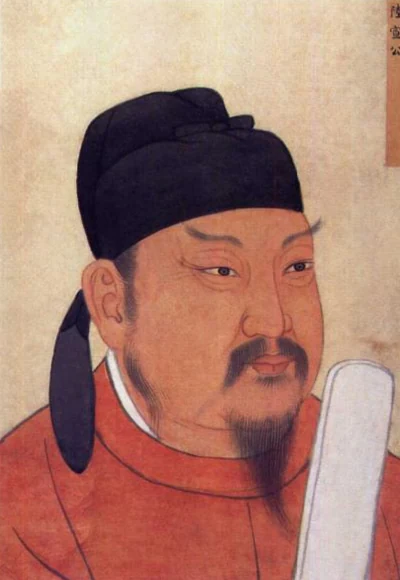
Biography
Aristocratic Lineage and Youthful Austerity Lu Zhi was born in 754 during the twilight of the High Tang in Jiaxing County, Suzhou. He belonged to the illustrious Wujun Lu lineage, an aristocratic family that had supplied eminent scholars and high officials to Chinese imperial dynasties since the Han and Three Kingdoms eras. His father, Lu Kan, served as Magistrate of Liyang but passed away while Lu Zhi was still in infancy. Bereft of paternal patronage, Lu Zhi was raised in modest poverty by his mother, Lady Wei. Lady Wei was an extraordinary matriarch steeped in Confucian ethics and historical chronicles. Despite their straitened economic circumstances, she subjected the young Lu Zhi to an austere moral regime, commanding him to study classical texts day and night. Lu Zhi responded with astonishing cognitive capacity. He synthesized complex canonical arguments and mastered poetic composition with fluent grace. In 771, at the exceptionally youthful age of eighteen, Lu Zhi traveled to Chang'an and passed the imperial Jinshi examination. Soon after, he triumphed in the rigorous Boxue Hongci examination, earning an appointment as Police Magistrate of Huayin (*Huayin Wei*). In Huayin, regional superior officials indulged in rampant corruption and financial extortion. Lu Zhi stood alone in his unyielding probity, refusing to compromise administrative justice or flatter his superiors. Consequently marginalized by his colleagues, he resigned his post to return home to care for his aging mother. Passing through Shouzhou on foot, the local prefect, Zhang Yi, who had long admired Lu Zhi's reputation, came out to the outskirts to receive him with great ceremony. Astonished by Lu Zhi's encyclopedic intellect and moral nobility, Zhang Yi observed the young scholar's threadbare attire and offered him a farewell gift of one million copper coins to sustain his family. Lu Zhi politely yet firmly declined the fortune. When Zhang Yi repeatedly pressed him to accept, Lu Zhi, unwilling to wound the prefect's sincere affection, reached into the luggage, selected a single small packet of fresh tea valued at a few dozen cash, and smiled: "The friendship of gentlemen is as pure as water. This packet of tea is more than enough to convey your generous esteem; more I dare not take." His spotless virtue became the talk of the literati across the south. ### The Hanlin Inner Cabinet and Imperial Favor In May 779, Emperor Daizong died and his son Emperor Dezong mounted the throne. In the early months of his reign, Dezong was determined to restore administrative efficiency and patronize Confucian virtue. Senior chancellor Cui Youfu strongly urged the throne to recruit Lu Zhi, declaring that the young scholar possessed "talents worthy of defending the realm and learning encompassing the cosmos." Emperor Dezong summoned Lu Zhi to the palace, tested him in person on grand policy, and was so impressed that he appointed him Literature Instructor to Prince Ding, rapidly transferring him into the imperial palace as a Hanlin Academician. Within the Hanlin Academy, Lu Zhi was tasked with drafting the Emperor's most confidential decrees (*Chitou*). Emperor Dezong treated Lu Zhi with unprecedented intimacy, summoning him day and night to the private quarters to deliberate military campaigns, ministerial appointments, and disaster relief. Lu Zhi performed his duties with scrupulous dedication. Unlike fawning courtiers, he never flattered the young Emperor, offering fearless counsel whenever imperial policies strayed from Confucian benevolence. Ministers and generals encountering insurmountable policy dilemmas frequently consulted Lu Zhi to ascertain the Emperor's true disposition, leading the court to revere Lu Zhi as the "Inner Chancellor." ### The Cataclysm of Fengtian and the Pen that Saved an Empire In the winter of 783, Emperor Dezong's aggressive efforts to centralize tax authority provoked widespread armed mutiny among regional military governors (*Jiedushi*). Armies dispatched from Jingyuan to march against rebels in the north reached Chang'an, where soldiers mutinied over meager rations and cold food. The mutineers stormed the imperial palace, proclaimed the deposed general Zhu Ci as Emperor of Great Qin, and hunted down imperial officials. Emperor Dezong fled in panic through the palace back gates, escaping along muddy mountain roads toward the mountain fortress of Fengtian (modern Qian County, Shaanxi). Amidst the screaming confusion of the night retreat, with rebel cavalry hunting the royal party through driving wind and rain, Lu Zhi became separated from the imperial vanguard. At daybreak, when Emperor Dezong reached the walls of Fengtian and assembled his bedraggled entourage, he discovered that Lu Zhi was missing. The Emperor broke down in tears on the city wall, crying in despair: "If Lu Zhi has perished, of what value is my own survival?!" Dezong immediately dispatched couriers across the war zone and proclaimed a desperate decree: "Whoever finds Academician Lu Zhi and brings him safely to our camp shall receive one thousand ounces of pure gold and hereditary official rank!" Shortly afterward, Lu Zhi appeared at the city gates, his clothes torn and covered in mud, having slipped through rebel patrols at the risk of his life. Seeing him, Emperor Dezong wept with relief, rushed down the gate stairs, embraced Lu Zhi, and wept aloud before his imperial guards. Dezong immediately appointed him Vice Director in the Ministry of Rites while retaining his Hanlin responsibilities. Within days, Zhu Ci led over one hundred thousand rebel troops to encircle Fengtian, constructing siege towers, sapping the earthworks, and cutting off food supplies. Trapped inside the tiny mountain fortress with wounded soldiers and dwindling arrows, the Tang dynasty stood on the edge of extinction. In this moment of supreme crisis, Emperor Dezong turned to Lu Zhi in tears, asking how the dynasty could be preserved. Lu Zhi replied with resolute moral clarity: "Your Majesty suffers this calamity because past decrees broke faith with the people, levied excessive taxes, and trusted slanderers, alienating the hearts of the realm. If Your Majesty wishes to turn Heaven's heart and rally mankind, you must issue a profound Edict of Self-Reproach (*Zuiji Zhao*), publicly confessing your own moral failures and abolishing oppressive exactions to summon the loyalty of the empire!" Emperor Dezong wept and agreed. Working through the night by candlelight under the sound of bombardment, Lu Zhi composed the legendary *Imperial Edict of Universal Pardon and Self-Reproach at Fengtian* (*Fengtian Gaiyuan Dashe Zhi*): > "We, endowed with meager virtue, succeeded to the imperial throne, yet We have failed to illuminate benevolent governance to comfort the common people. Instead, calamity has mounted year after year, and military exactions have known no respite. What crime have the myriad commoners committed to suffer such misery?! It is entirely due to Our own blindness, defying the will of Heaven above and offending the hearts of mankind below... We bitterly reproach Our own conduct and assume full responsibility for this ruin! All uncollected debts and back taxes throughout the empire are hereby remitted; as for the brave officers and soldiers on campaign who have suffered the blades of war, Our heart bleeds for them!" The decree was dispatched on fast horses across the battlefields of northern China. Its prose was so searing, sincere, and emotionally raw that when it was read aloud in the camps of Fengtian, Liangzhou, and the Yellow River basin, "the officers and soldiers of the three armies wept aloud, throwing themselves upon the earth in grief." Hardened military governors in Hebei—such as Li Huaiguang, Tian Yue, and Wang Wujun—who had rebelled against the court were stunned into repentance. Weeping as they read the imperial confession, they proclaimed their renewed fealty, ceased hostilities, and rushed their armies west to liberate the Emperor. Through the sheer moral force of this single decree drafted by Lu Zhi, the rebellion disintegrated, prompting later historians to marvel: "Dezong lost the empire through folly, but Lu Zhi reclaimed it with his brush; a single edict moved the armies to tears and preserved the realm!" ### Chancellorship and the Rejection of Imperial Compromise In 784, Tang loyalist armies recaptured Chang'an, and Emperor Dezong returned to his capital. In April 792, Dezong officially appointed Lu Zhi as Chancellor (*Tong Zhongshu Menxia Pingzhangshi*), advancing him to Founding Baron of Jiaxing. As Chancellor, Lu Zhi dedicated himself to institutional purification. He reformed the Two-Tax System, abolished arbitrary provincial levies, eliminated redundant bureaucrats, and promoted incorruptible scholars. In his personal conduct, Lu Zhi erected an absolute barrier against corruption. He posted strict notices at his residence, barring all regional governors and court officials from presenting private gifts, returning every box of silk, silver, and regional delicacies. In an age dominated by regional warlords who routinely bribed chancellors to secure court influence, Lu Zhi's uncompromising purity unnerved the aristocracy. Aware that Lu Zhi's family lived in genuine poverty and that his gate remained empty of visitors, Emperor Dezong took a bizarre step. Instead of praising his minister's virtue, the Emperor considered Lu Zhi rigid and unsociable, sending him a confidential private message that read: > "You are scrupulous and pure to an excess. In refusing all gifts from regional commanders, you risk offending worldly custom and causing dangerous estrangement. The regional military governors command mighty armies; if you reject everything, governance cannot function smoothly. Henceforth, if people present small, customary tokens—such as riding whips or leather boots—accepting them causes no harm to public morals; why torment yourself so stubbornly?" Faced with an imperial command urging him to accept polite bribes, an opportunistic minister would have happily complied. Lu Zhi was deeply alarmed, immediately submitting his celebrated *Memorial on Declining Gifts and Bribes* (*Lun Shou Kuiyi Shu*): > "Your servant believes that once the path of bribery is unlocked, insatiable greed will flood the realm! That which begins under the pretext of 'polite custom' inevitably degenerates into rapacious extortion; that which starts with minor trifles ultimately culminates in the plunder of the state! Those who accept riding whips and leather boots today—how can anyone guarantee they will not accept gold, jade, and brocade tomorrow? When low desires are gradually indulged and small breaches are opened in the dike, how can the torrent be restrained?! Your servant has received the boundless grace of Your Majesty and swore an oath to preserve spotless purity to rectify the court. How dare I exploit the hollow excuse of 'human custom' to ruin my own integrity and destroy the state!" Emperor Dezong read the memorial in awe. Confronted by this magnificent manifestation of ministerial dignity, the Emperor was left speechless with admiration. ### The Duel with Pei Yanling and Political Persecution However, Emperor Dezong grew increasingly paranoid, suspicious, and obsessed with hoarding private wealth in his later years. Vice Minister of Revenue Pei Yanling was a cunning, sycophantic opportunist who recognized the Emperor's avarice. By extorting local treasuries, appropriating peasant grains, and falsifying government registers, Pei Yanling amassed mountains of silver in Dezong's private palace vaults (*Neiku*), boastfully claiming that he had discovered tens of millions of strings in "surplus revenue" beyond ordinary taxes. Dezong was delighted by the influx of gold, showering Pei Yanling with honors and intending to appoint him Chief Chancellor. Lu Zhi recognized that Pei Yanling was a parasitic monster devouring the fiscal marrow of the state. Between 793 and 794, Lu Zhi risked his life, submitting several ten-thousand-word memorials, including the famous *Memorial Denouncing Pei Yanling's Treasonous Parasitism*, ruthlessly exposing Pei's falsified accounts and criminal extortion. During full imperial audiences in the Zichen Hall, Lu Zhi confronted Pei Yanling face to face, shouting before the throne: "If Your Majesty trusts this predatory sycophant, how can the innocent commoners survive?! The altars of soil and grain are in mortal peril!" Yet Emperor Dezong, blinded by Pei's flattering tongue, concluded that Lu Zhi was motivated by petty professional jealousy. In December 794, Dezong dismissed Lu Zhi from the chancellorship, demoting him to titular Minister of War. In 795, emboldened by Lu Zhi's removal, Pei Yanling conspired with palace eunuchs to fabricate treasonous allegations against him, accusing Lu Zhi of "forming cliques to defame the throne and plotting sedition." Emperor Dezong flew into a fury, secretly resolving to arrest and execute Lu Zhi in the palace. The news shocked the capital. Remonstrance Official Yang Cheng and Imperial Doctor Quan Deyu led dozens of righteous ministers to prostrate themselves before the palace gates, weeping bitterly in protest. Yang Cheng shouted at the throne: "Lu Zhi is a founding pillar of our dynasty, pure and loyal without equal! When the empire was on the verge of ruin, Lu Zhi saved it! If Your Majesty murders Lu Zhi today, we shall die upon these steps rather than obey such a decree!" Faced with the collective defiance of the court, Dezong relented, commuting the death penalty but banishing Lu Zhi to the distant mountain wilderness of Zhongzhou as Vice Prefect. ### Decade of Medical Benevolence in Zhongzhou In the autumn of 795, the forty-two-year-old Lu Zhi departed Chang'an in disgrace, traveling into the remote mountain defiles of Zhongzhou along the Yangtze gorges. Zhongzhou was a rugged, malaria-ridden frontier where another great chancellor, Liu Yan, had been murdered two decades earlier. Arriving at this tragic sanctuary, Lu Zhi demonstrated sublime spiritual resilience. He ate simple food, wore coarse hemp, and completely withdrew from public life. To deny Pei Yanling's agents any pretext for further persecution, Lu Zhi closed his courtyard gates for ten full years, "never uttering a single word concerning contemporary court politics or personalities." Observing that the local mountain tribes suffered grievously from pestilential fevers and lacked access to trained physicians, relying on superstitious shamans, Lu Zhi dedicated his extraordinary intellect to medical philanthropy. He climbed the cliffs of the Yangtze gorges to collect and taste wild herbs, studied ancient medical canons, and assembled effective folk remedies from travelers and peasants. Over years of clinical experimentation, Lu Zhi completed his monumental fifty-volume medical compendium, *Collection of Tested Prescriptions of Master Lu* (*Lu Shi Jiyan Fang*). The treatise contained thousands of effective prescriptions utilizing inexpensive, readily available herbs, specifically tailored to poor rural families who could not afford exotic minerals. Lu Zhi had these prescriptions transcribed and posted across the villages of Zhongzhou, treating and saving tens of thousands of dying peasants. The local people venerated him as a living deity, painting portraits of "Governor Lu" to worship in their homes. ### Posthumous Vindication and Eternal Glory In January 805, Emperor Dezong passed away, and Crown Prince Li Song ascended the throne as Emperor Shunzong. Having long revered Lu Zhi's towering virtues and wept over his unjust exile, Shunzong's first act upon taking power was to issue an imperial amnesty clearing Lu Zhi of all past slanders, issuing a special decree summoning him back to the capital to serve once more as premier chancellor. Tragically, worn out by a decade of damp mountain confinement and relentless intellectual labor, Lu Zhi's health had completely collapsed. In May 805, while the imperial envoy was still traversing the mountain roads of Sichuan bearing the summons of restoration, Lu Zhi passed away peacefully in his simple quarters in Zhongzhou at the age of fifty-two. Emperor Shunzong wept bitterly upon receiving the death report, suspending court audiences for three days. He posthumously elevated Lu Zhi to Minister of War, conferred the prestigious posthumous name "Xuan" (signifying wisdom and wide renown), and commanded that his official memorials be distributed to imperial academies. Centuries later, Northern Song literary titan Su Shi, living in exile on Hainan Island, kept only a single set of political writings in his traveling satchel: the *Memorials of Duke Xuan of Lu*. In his famous *Postscript to the Memorials of Duke Xuan of Lu*, Su Shi inscribed an immortal eulogy: > "A towering sage of the empire, a supreme master of classical prose, possessing the talents of a king-maker and the learning of an imperial preceptor. Since the Han and Wei dynasties, in the piercing brilliance of strategic counsel and the sublime majesty of literary models, he stands alone as the supreme exemplar of Chinese history!"
Lu Zhi, courtesy name Jingyu, was a native of Jiaxing in Suzhou, born in 754. His family had been a great one in Jiangnan since the early Tang, though it had declined before his birth. His father Lu Kan, a magistrate of Liyang, died early, and Lu Zhi was raised and taught by his mother, née Wei, and known in his day as Lu the Ninth. A man of independent judgment and principle, he studied the Confucian writings with great diligence. Zhang Yi, a man of high repute, talked with him for three days, judged him a rare talent and asked to be his friend despite the difference in years; when Lu Zhi took his leave Zhang Yi offered him a million cash, saying that it might serve for a day's meals for his mother, and Lu Zhi would not take it, accepting only a string of tea and saying that he dared not accept so rich a gift.
At eighteen he passed the metropolitan examination and was made magistrate's assistant of Zheng county, then secretary of Weinan, and then an investigating censor. When Emperor Dezong came to the throne he called Lu Zhi to be a Hanlin academician. Dezong had heard of his name while still heir apparent, made him a Hanlin academician and transferred him to the board of rites. Lu Zhi gave himself wholly to loyal service, and once in attendance on the throne, mindful of the emperor's regard and wishing to repay it by achievement, he pointed out every fault in government, great or small; and the emperor treated him with ever greater favour.
In 783 the Jingyuan troops mutinied, took Chang'an and set up the former grand commandant Zhu Ci, and Lu Zhi fled with the emperor to Fengtian, in charge of drafting the edicts, on which the emperor leaned heavily. The business of government was endless and a great mass of edicts came from Lu Zhi's hand, written at speed yet never failing to set out the matter fully and to reason. Though there were chancellors for the great affairs of state, in everything great and small the emperor would consult Lu Zhi, and men called him the inner chancellor. Wherever the emperor went he must have Lu Zhi with him; on the hard roads about Liangzhou the emperor once lost him, and when after a night he had not come, the emperor in his alarm and grief wept and offered a thousand pieces of gold to whoever should find him; when at last he came, the emperor was overjoyed. Yet Lu Zhi remonstrated again and again and sometimes crossed the emperor's will. At Fengtian the edicts he drafted took as their theme the sovereign's own fault and compassion for the people, speaking so earnestly that those who heard them were moved; he advised again and again on military spending, taxes and appointments, urging the remission of harsh levies and the settling of refugees to gather men's hearts again. These documents were later taken as models of Tang parallel prose and are important material for the politics of Dezong's reign.
He afterward left office on his mother's death, and when his mourning ended returned as acting vice-president of the board of war and still a Hanlin academician. In 791 he was removed from the Hanlin and forthwith given the substantive post of vice-president of the board of war and charge of the examinations. In 792, when Dou Shen was condemned and degraded, Lu Zhi became vice-president of the chancellery and joint manager of state affairs. In 794, for memorializing against the treachery of the emperor's favourite Pei Yanling, he angered Dezong, was removed from the chancellorship and reduced to companion of the heir apparent; in 795 Pei Yanling accused him of stirring up the army, and he was banished as assistant of Zhongzhou. In 805 Emperor Shunzong came to the throne and decreed his recall, but the decree arrived after his death. He was given posthumously the presidency of the board of war and the name Xuan, and is known as Duke Lu Xuan.
Lu Zhi held that the root of order and disorder lies in men's hearts and that the urgent business of the day was to understand the feelings of the people, and he argued that order and disorder come from men and not from Heaven's decree, that the power of a state lies in holding the weight and controlling the light, and that talent should be sought widely and tested carefully. Early in life he urged the commissioners who toured the realm to use five methods for observing customs, eight tests for judging officials, three categories for choosing talent, four levies for managing finance, six virtues for settling the distressed and five essentials for reducing offices. He also submitted the Six Articles on Equalizing Taxes and Relieving the People, directed at the abuses that appeared after the two-tax system, urging lighter burdens and a reform of collection, an important document in Tang fiscal thought. Upright in office, taking nothing beyond his salary, learned and severe with himself, bold in remonstrance, he was a pillar of a time of grave danger; in later judgments of Tang chancellors he is set beside the great ministers of earlier reigns, the men of Song especially valuing his memorials, which were collected as the Collected Works of Duke Lu Xuan and whose political ideas had wide influence afterward.
Lu Zhi's memorials were famed in his own day for their bluntness, arguing from the classics while keeping close to the business in hand, and directed chiefly at the questions of taxes, military spending and appointments. In his exile at Zhongzhou he went on arranging his writings and wrote a preface for a collection of local medical prescriptions, some pieces in his collected works belonging to that time. The Hanlin academicians were in origin attendants who drafted edicts, and Lu Zhi's place under Dezong much raised the weight of the office, so that the title of inner chancellor has become a stock example in later discussions of the central government of the middle and late Tang. His political views came to be more valued after his death, and from the Song onward he has often been taken as a model of frank remonstrance and of the management of finances in government.