Return to the five Xiongnu divisions |
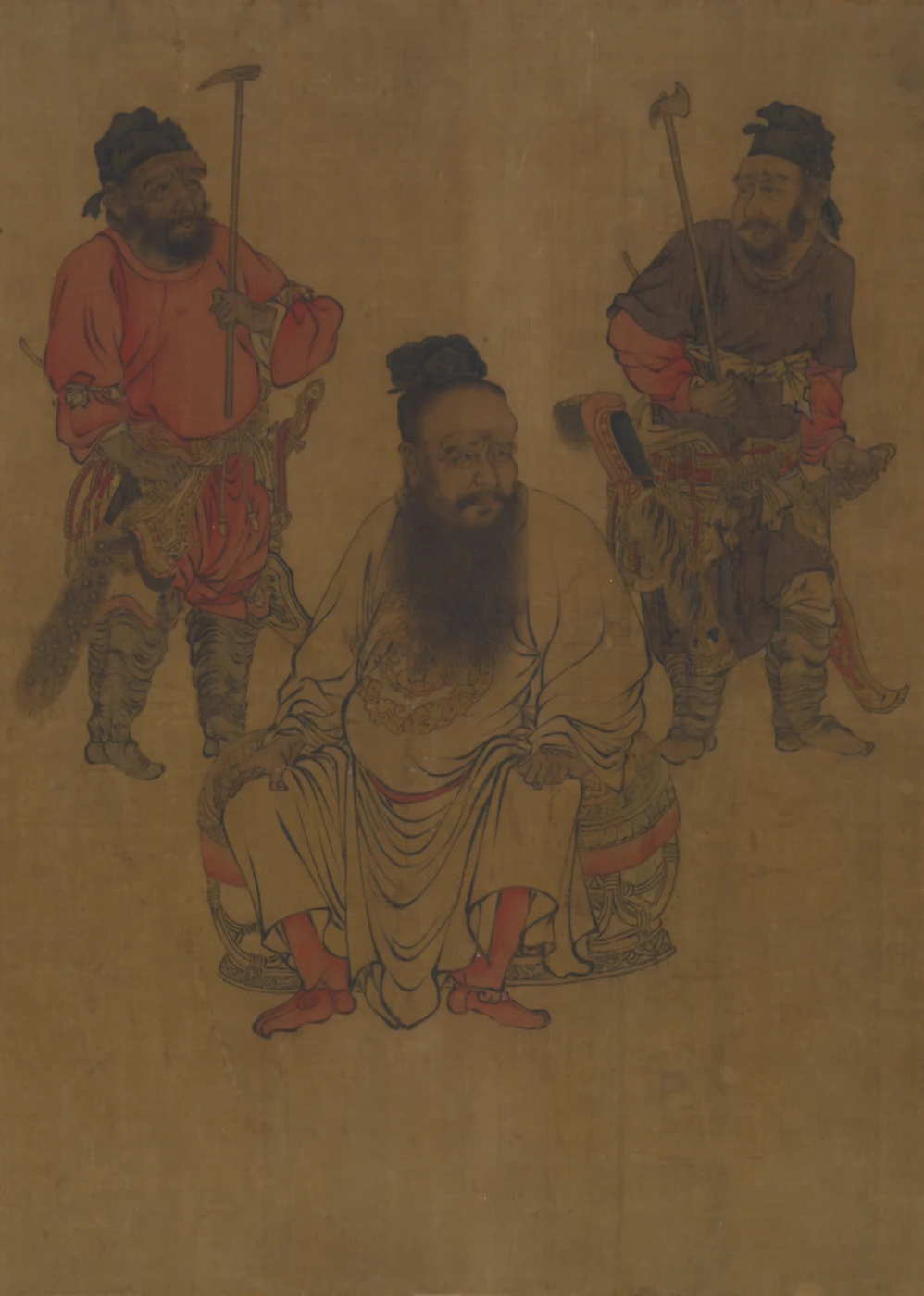
unknown–318 CE
Third ruler of Former Zhao
Liu Cong
刘聪
Liu Cong was the fourth son of Liu Yuan, the founder of Former Zhao; his mother was Lady Zhang. He studied the Chinese classics and military writings and held offices among the Xiongnu Five Divisions and in the service of a Western Jin prince. In 304 (first year of the Western Jin Yong'an era), he joined his father's uprising. After Liu Yuan's death in 310 (second year of the Former Zhao Herui era), the new ruler Liu He tried…
unknown–318 CEFormer Zhao
PROFILE
Liu Cong was the fourth son of Liu Yuan, the founder of Former Zhao; his mother was Lady Zhang. He studied the Chinese classics and military writings and held offices among the Xiongnu Five Divisions and in the service of a Western Jin prince. In 304 (first year of the Western Jin Yong'an era), he joined his father's uprising. After Liu Yuan's death in 310 (second year of the Former Zhao Herui era), the new ruler Liu He tried to reduce the power of the princes. Liu Cong killed Liu He and took the throne. From his capital at Pingyang, he sent Liu Yao, Wang Mi, Huyan Yan, and others against Western Jin. They captured Luoyang and Emperor Huai in 311 (first year of the Former Zhao Jiaping era), then Chang'an and Emperor Min in 316 (second year of the Former Zhao Jianyuan era). The Western Jin state ended. Liu Cong directed these campaigns as ruler; he did not personally lead the two successful sieges.
- Other name and courtesy name
- Liu Zai; courtesy name Xuanming
- Period
- Former Zhao
- State
- Former Zhao, called Han during his reign
- Role
- Third ruler of Former Zhao
- Ancestry
- Xiongnu
- Ancestral home
- Xinxing Commandery
- Born
- Not recorded in historical sources
- Died
- August 31, 318 (guihai day of the seventh lunar month, third year of the Former Zhao Linjia era)
- Reign
- 310–318
- Predecessor
- Liu He
- Successor
- Liu Can
- Era names
- Guangxing, Jiaping, Jianyuan, Linjia
- Temple and posthumous names
- Liezong; Emperor Zhaowu
- Tomb
- Xuanguang Mausoleum
- Predecessor and successor
- Liu He; Liu Can
- Principal activities
- Ordered campaigns that took Luoyang and Chang'an and captured the Western Jin emperors Huai and Min; established offices for the separate administration of Han households and other groups
LIFE TIMELINE
Liu Yuan's proclamation as emperor |
Failed attacks on Luoyang |
Liu Yuan's death |
Capture of Luoyang |
Occupation of Jinyang |
Emperor Huai of Jin's death at Pingyang |
Liu Can put in charge of state affairs |
Capture of Chang'an |
Emperor Min of Jin's death |
August 31, 318 CE(guihai day of the seventh lunar month, third year of the Former Zhao Linjia era) | Death |
BIOGRAPHY
Biography
Early career and his father's state
Historical accounts describe Liu Cong as a student of the classics, strategy, and archery. As an adult he visited Luoyang, served as secretary to Guo Yi, administrator of Xinxing, and later held a command among the Xiongnu divisions. He also entered the service of the Jin prince Sima Ying. When Liu Yuan was raised to leadership among the Xiongnu Five Divisions in 304 (first year of the Western Jin Yong'an era), Liu Cong returned with him and took part in establishing the Han state. He received titles and commands under his father. After Liu Yuan proclaimed himself emperor, Liu Cong fought in the regions of Bingzhou, Hedong, and Luoyang. Attacks on Luoyang in 309 (first year of the Former Zhao Herui era) ended in withdrawal following Jin raids and shortages. His early campaigns were therefore not an uninterrupted series of victories.
Killing Liu He and taking the throne
Liu Yuan died in 310 (second year of the Former Zhao Herui era), and his crown prince Liu He succeeded him. Following the advice of close officials, Liu He moved against princes who commanded troops. Liu Cong attacked the palace, killed Liu He and his supporters, and accepted the throne after officials urged him to do so. He made his younger brother Liu Yi the designated successor and said he would yield the throne when Liu Yi grew older. He also killed his elder brother Liu Gong because he feared objections to the order of succession. The violence around Liu Cong's accession matters to the later succession crisis; a bare statement that the officials selected him would omit it.
The fall of Western Jin
Liu Cong continued the war against Jin. In 311 (first year of the Former Zhao Jiaping era), Huyan Yan, Liu Yao, Wang Mi, and other commanders entered Luoyang. Emperor Huai, court members, and officials were captured, while the city suffered plunder and large-scale killing. The episode became known as the Disaster of Yongjia. Emperor Huai was taken to Pingyang and killed in 313 (third year of Jiaping). Fighting for Guanzhong continued. Liu Yao occupied Chang'an for a time but had to withdraw before Jin counterattacks in 312 (second year of Jiaping); Jinyang likewise changed hands. In 316 (second year of the Former Zhao Jianyuan era), Liu Yao besieged Chang'an again. Starvation forced Emperor Min to surrender, ending Western Jin. Liu Cong later made the captive ruler perform servile tasks at hunts and banquets and eventually had him killed. The state's reach expanded, but regional commanders and armed groups did not all submit to effective control from Pingyang.
Delegation and death
Liu Can received senior offices in 314 (fourth year of the Former Zhao Jiaping era), and Liu Cong increasingly left government to him. He appointed multiple empresses and favored Wang Shen, Xuan Huai, Yu Rong, and other close attendants. Chen Yuanda, Liu Yi (Liu Yi), Liu Fu, and others criticized this influence and the demands placed on the treasury, but faced exclusion or death. Liu Cong accepted accusations by Liu Can, Jin Zhun, and their allies that Liu Yi had plotted rebellion. Liu Yi was deposed and killed, and Liu Can was made crown prince. Liu Cong became ill in 318 (third year of the Former Zhao Linjia era), arranged a group of regents, and died that year. Jin Zhun's later coup followed Liu Cong's death, but it was connected to the structure of power and succession he had left behind.
A Youth Accomplished in Letters and Arms, and His Entry into the Five Divisions
Liu Cong was clever and studious as a child, astonishing the court scholars. He not only mastered the classics, the histories and the hundred schools but read deeply in the books of war, wrote well, practised calligraphy in both cursive and clerical hands, and trained in arms, being so skilled with the bow that he could draw one of three hundred catties, fierce and swift beyond all his contemporaries — accomplished, that is, in both letters and arms. After his twentieth year he travelled to Luoyang, where he made many friends among famous men, and was afterwards secretary to the governor of Xinxing, Guo Yi, and then commandant of the right division, where by his well-judged conciliation he won the allegiance of the great clans of the five Xiongnu divisions. The prince of Hejian, Sima Yong, once memorialized to make him a general of the red sands; but his father Liu Yuan being then in office at Ye, and he fearing that the prince of Chengdu, Sima Ying, who held Ye, would harm him, he went over to Sima Ying as general of the right crossbow and took part in the vanguard fighting. Sima Ying made Liu Yuan a northern chanyu and Liu Cong prince of the right worthies, and the two went back to the five divisions as commanded, bringing Sima Ying Xiongnu reinforcements; but having returned, Liu Yuan took the title of great chanyu and Liu Cong was made prince of Luli. Liu Yuan gathered his people, took the title king of Han the same year and founded Han-Zhao, afterwards making Liu Cong general of the pacifying army; and at the end of that year, when Liu Yuan took the imperial title, Liu Cong was raised to general of the chariots and cavalry and soon enfeoffed prince of Chu.
The Two Setbacks in His Early Attacks on Luoyang
About 309 Liu Cong took Tunliu and Changzi, so that the governor of Shangdang, Pang Chun, surrendered Huguan; and some months later he led troops against Luoyang, beating the general of the pacified north, Cao Wu, and driving as far as Yiyang, but, made careless by repeated victories, he was surprised at night by a false surrender from the governor of Hongnong, Yuan Yan, and was heavily defeated and withdrew. Two months afterwards he attacked Luoyang again with Wang Mi and Liu Yao: the Jin court, thinking that Han-Zhao could not invade south again so soon after its defeat, had neglected its defences, and was much frightened to learn that Liu Cong was coming, so that he advanced as far as the neighbourhood of Luoyang and camped at the Ximing and Xuanyang gates. The Jin general Beigong Chun then raided the Han-Zhao ramparts by night and killed his officer Huyan Hao; and afterwards Huyan Yi was killed by his own men, whose force broke up for want of a commander, so that Liu Yuan ordered a withdrawal. Liu Cong memorialized instead that the Jin armies were few and weak and that they should not abandon the attack because of the deaths of Huyan Yi and the others, and insisted on staying, which Liu Yuan allowed; and against the Han-Zhao army the defending Sima Yue could only shut himself in the city. But Sima Yue, taking the occasion of Liu Cong's going to Mount Song to sacrifice, sent troops against the Han-Zhao force left in camp and killed Huyan Lang, whereupon the officer Liu Li, fearing Liu Cong's anger, threw himself into the Luo river and drowned. Wang Mi now urged withdrawal on the ground that Luoyang's defences were still strong and the food would not last, but Liu Cong, having himself asked to stay, did not dare withdraw of his own accord; and when Liu Yuan, on Xianyu Xiuzhi's advice, ordered him to withdraw, he did so. These campaigns show that the early attacks on Jin were not a series of victories but were governed by night raids, supply and his father's orders. In the second year of Hongrui (310) Liu Yuan fell ill and made Liu Cong grand marshal and great chanyu, sharing the direction of the Secretariat with the grand steward Liu Huanle and the grand tutor Liu Yang, and setting up a chanyu terrace west of the capital Pingyang.
The Killing of Liu He, His Cession to Liu Yi, and His Suspicion of Seniority
After Liu Yuan's death the heir apparent Liu He came to the throne, and he with the commandant of the guards Liu Rui and the attendant Liu Cheng, who had always disliked Liu Cong, urged the removal of the princes, above all Liu Cong, who then commanded a hundred thousand troops. Liu He acted presently, but Liu Cong was prepared, and in the end he entered the palace by the Ximing gate, killed Liu He in the western chamber, and seized Huyan You and the others who had fled to the southern palace and had them beheaded and shown. The ministers then asked Liu Cong to take the throne, and he offered it to the prince of Beihai, Liu Yi, as the son of the empress dowager Shan; but Liu Yi insisted that Liu Cong should rule, and Liu Cong consented, saying that he would yield the throne to Liu Yi when he grew up. He then made Liu Yi heir apparent's uncle, changed the era to Guangxing, honoured Liu Yuan's wife Lady Shan as empress dowager and his own mother Lady Zhang as imperial empress dowager, made his wife Lady Huyan empress and his son Liu Can general of the pacifying army and commander of military affairs at home and abroad; and because he had come to the throne out of order he feared his elder brother Liu Gong and had him murdered by breaking through the wall while he slept. The killing at his accession was thus bound up with the later disputes over the succession, and it is not enough to say that he was raised by the ministers.
The Yongjia Catastrophe, the Two Captive Emperors, and the Tossings of Guanzhong and Jinyang
After his accession Liu Cong continued the war against Jin. In 311 Huyan Yan led twenty-seven thousand men against Luoyang, defeating the defending Jin armies twelve times on the march into Henan and killing more than thirty thousand; and Liu Yao, Wang Mi and Shi Le were then ordered to join him. Huyan Yan attacked the city before the others arrived and took the Pingchang gate, burning the Dongyang and Xuanyang gates and the government offices; but with his supports not yet come he withdrew by the eastern gate and burned on the Luo river the boats the Jin emperor Huai had meant for flight. When Liu Yao and Wang Mi arrived they entered the city again, took the Xuanyang gate, and Wang Mi with Liu Yao broke into the Taiji hall of the southern palace, plundering at large, seizing all the palace women and treasures, while Liu Yao killed more than thirty thousand officials and imperial kinsmen; and they took Emperor Huai and the empress Yang prisoner and sent them with the six imperial seals to Pingyang. Liu Cong proclaimed an amnesty, changed the era to Jiaping and made Emperor Huai commissioner with special rank, grand master of light of the left and duke of Ping'a. He once recalled with Huai their former acquaintance and was so pleased that he gave him the young lady Liu; but in the first month of 313, at a banquet with his ministers, he had Huai pour the wine in a blue robe, and the former Jin ministers, unable to bear their grief, wailed aloud, which disgusted him, and Huai was afterwards killed. In Guanzhong, when news of Huai's death reached Chang'an in the fourth month of that year the heir apparent there took the throne; and Liu Cong sent Zhao Ran with Liu Yao, the colonel of the capital Qiao Zhiming and the general Li Jingnian against Chang'an, defeating the Jin forces resisting at Huangbai city many times, and Zhao Ran by night entered the outer city of Chang'an, burning and plundering until dawn, only to find his commander Zhao Ran careless and himself surprised, so that Qiao Zhiming was killed and Liu Yao withdrew to Pingyang. At Jinyang, a man who had fled to Han-Zhao after being killed by Liu Kun's order betrayed the state of the city, and Liu Cong, greatly pleased, sent Liu Can and Liu Yao against it with him as guide; and Liu Kun, hearing of it, raised troops in Zhongshan and Changshan and asked help of Tuoba Yilu, but his generals were killed and he abandoned Jinyang and fled, so that Liu Yao and Liu Can took it — until Tuoba Yilu came in person with a great army and Liu Kun counter-attacked, when Liu Yao and Liu Can were beaten, had to abandon the city, and in the withdrawal Liu Can was heavily defeated, so that Jinyang was lost as soon as won. Liu Yao afterwards with Zhao Ran and the general Yin Kai attacked Chang'an again and beat the Jin at Fengyi, but the Jin sent the army adviser Zhang Zhao with five hundred Xianbei cavalry to relieve Chang'an, and passing the Han-Zhao camp he persuaded the Xianbei riders to attack Liu Yao; the Han-Zhao troops fled without fighting at the sight of Xianbei cavalry, and Liu Cong, seeing that the attack could not succeed, meant first to destroy Liu Kun and so ordered Liu Yao to withdraw. In 315 Liu Yao beat Liu Kun at Xiangyuan, but Liu Cong, judging that Chang'an must be taken first, again recalled him to Puban. Some months later he sent Liu Yao against Beidi: Liu Yao broke Fengyi and took Beidi, and pressed on towards Chang'an; and though several relief columns came, they dared not advance for fear of the Han-Zhao army, and the Jin side, though it once beat Liu Yao, withdrew its troops rather than see a rival power grow through his defeat, so that Liu Yao took the outer city of Chang'an and besieged the small city where Emperor Min was. After two months of famine and holding out, Emperor Min surrendered and was sent to Pingyang, and the Western Jin formally ended. Liu Cong made him grand master of light and marquis of Huai'an, had Liu Can announce it in the ancestral temple, proclaimed an amnesty and changed the era to Linjia; and the next year, on going out to hunt, he had Emperor Min lead the way in military dress with a halberd, at which the old men of Jin wept. Liu Can urged him to kill Emperor Min but he wished to wait; and afterwards he had him pour wine, wash the cups and hold the canopy, so that the former Jin ministers wept and Xin Bin embraced him and cried aloud, until Liu Cong at last had him killed.
His Institutions and the Disorder after He Delegated the Government
In institutions Liu Cong first created the chancellorship of state, ranking above the dukes and conferred only on the death of men of extraordinary merit; and he then established the full court, with grand tutor and chancellor, the seven dukes from grand marshal upward all of the highest rank with green silk ribbons and the distant-journey cap; offices of supporting Han, protector-general, the central, upper and supporting armies, the garrison and capital guards, the front, rear, left, right, upper and lower armies, and generals of the state's support, champion, soaring dragon and martial fang, each command with two thousand men and all held by his sons; the colonels of the left and right of the capital, each with more than two hundred thousand households, one intendant for every ten thousand, forty-three intendants in all; the assistants of the chanyu of left and right, each over a hundred thousand households of the six barbarians with one commandant per ten thousand; the abolition of the board of personnel in favour of presidents of the left and right selections; and the grand censor and the provincial governors ranking below the dukes; his son Liu Can being made chancellor, general-in-chief and director of the Secretariat, advanced to prince of Jin with five capitals for his revenue. This division of offices, intendants and commandants answers to the practical need of governing many peoples and should not be read through modern categories of nationality. In the eleventh month of 314, having made Liu Can chancellor of state, great chanyu and general manager of affairs, Liu Cong delegated the government to him and began to seek his pleasures, and the next year created an upper, a left and a right empress for his consorts, so that "three empresses stood at once," and later a central empress besides. While delegating business to Liu Can he favoured the eunuchs Wang Shen, Xuan Huai and Yu Rong, and because he took his pleasure in the inner palace he long ceased to hold court, so that ministers reported to Wang Shen and the others instead of memorializing Liu Cong; and Wang Shen for the most part did not report to him but decided matters by his own likes and dislikes, depressing the worthy at court and appointing flatterers. In the second month of 316 Liu Cong, on the slander of Wang Shen and the others, killed the commissioner with special rank Qi Wuda, the grand master of the palace and the president Wang Yan and four other officials whom the eunuchs disliked; the attendant Bu Gan remonstrated in tears and was reduced to a commoner. Liu Yi, the grand master of light Liu Yan and Liu Cong's son the general Liu Fu all memorialized against his trusting the eunuchs, but he believed Wang Shen and the others entirely and would not listen; and Liu Can, in league with Wang Shen, praised them to Liu Cong, who thereupon made them marquises. Liu Yi memorialized again and so enraged Liu Cong, who with his own hands tore up the memorial, and Liu Yi died of resentment; and Chen Yuanda, seeing Liu Yi's death, lost hope in Liu Cong and killed himself in anger. Under the control of Wang Shen and Liu Can the framework of government was wholly lost and corruption rife, ministers doing nothing but flatter their superiors; the gifts to the palace women were lavish while the armies in the field went short, and when Liu Fu remonstrated repeatedly Liu Cong scolded him for always weeping before him, so that Liu Fu fell ill of grief and died soon after. Because of Liu Cong's complete trust, Wang Shen and Liu Can with Jin Zhun falsely accused Liu Yi of treason, not only deposing and killing him but seizing the occasion to remove officials they disliked and burying alive more than fifteen thousand soldiers of Pingyang; and Liu Can was made heir apparent after Liu Yi's death. There were also many killings at his own hand: the commissioner of the left waterworks was killed because fish and crabs were short, and the master builder Jin Ling because the Wenming and Huiguang halls were not finished on time; and when Wang Zhang remonstrated against his excessive hunting and urged him to remember the hardships of Liu Yuan's founding and attend to government, Liu Cong was so angry that he would have killed him too, and only the empress dowager Zhang's refusal of food and the desperate remonstrances of Liu Yi and Liu Can obtained his pardon; and Wang Jian with the president of the Secretariat Cui Yizhi, remonstrating against his indiscriminate creation of empresses, were killed as well. In 318 Liu Cong fell ill and made the grand steward Liu Jing and the grand marshal Liu Yao acting presidents of the Secretariat with equal ceremonial to the three excellencies and Jin Zhun minister of works, the two to decide the memorials of the Secretariat, as guardians; and on the gui-hai day of the seventh month (31 August) he died, with the posthumous name emperor Zhaowu and the temple name Liezong.
Major Activities
Campaigns and their limits
Under Liu Cong, Former Zhao captured two Western Jin emperors and ended the Western Jin central government in the north. Its armies also looted and killed on a large scale; the campaigns cannot be described only as a peaceful unification. Wang Mi, Liu Yao, and Shi Le led their own forces, and the degree of control after conquest varied. Historical accounts of Jinyang and Chang'an being taken and retaken show that expansion did not automatically bring stable rule to every contested area.
Offices and court government
Liu Cong created the Left and Right Directors of Retainers to oversee Han households and Left and Right Assistants to the Chanyu to administer other groups. The Book of Jin also records further local offices under them. The arrangement reflected the challenges of governing a diverse population and should not be mapped mechanically onto modern ethnic categories. In Liu Cong's later years, the transmission of petitions passed increasingly through favored attendants. The growth of offices thus coincided with loss of oversight and the killing of officials who remonstrated.
The System of Separate Rule over Chinese and Barbarian, the Limits of His Military Merit, and His Late Arrangements of Power
The most structural part of Liu Cong's legacy was the system of separate rule. He governed the Chinese households through colonels of the left and right of the capital, each over more than two hundred thousand households with one intendant per ten thousand and forty-three intendants in all, and governed the Xiongnu and other peoples through the assistants of the chanyu of left and right, each over a hundred thousand households of the six barbarians with one commandant per ten thousand, setting up a chanyu terrace west of the capital Pingyang; this arrangement of separate offices each over its own people was the practical means by which Han-Zhao held power among many peoples, recorded in the Jin History, and it should not be read through later categories of nationality. With it went the establishment of the full court: grand tutor and chancellor with the seven dukes from grand marshal upward of the highest rank; the offices of supporting Han, protector-general and the several armies, each with two thousand men under his sons; the abolition of the board of personnel in favour of presidents of the left and right selections; and the grand censor and the governors ranking below the dukes. This expansion of offices took place at the same time as the disorder of the court: after the delegation to Liu Can, favourites passed on or held back memorials, upright ministers were killed for remonstrance, the framework of government was lost and gifts were lavish while the armies went short.
In military terms, his reign took the two Western Jin emperors captive and ended the Jin central power in the north, which is a confirmable result; but his armies plundered and killed on a great scale in taking cities — at the fall of Luoyang more than thirty thousand officials and imperial kinsmen were killed and Emperor Huai and the empress Yang were taken with the six seals — so that it cannot be summed up as the unification of the central plain. Further, Wang Mi, Liu Yao and Shi Le each led their own troops and their hold on the regions after the fighting differed; and the histories record the loss and recovery of Jinyang and the repeated contests over Chang'an, which shows that Han-Zhao's expansion did not amount to stable government of every theatre: Jinyang was lost as soon as won, Chang'an changed hands again and again, relief columns dared not advance for fear, and the Jin side itself withdrew rather than let a rival grow by his defeat. His arrangements for the succession in his last years were especially consequential: he made Liu Can chancellor of state and great chanyu with the government in his hands, and on the false accusation of his favourites, Liu Can and Jin Zhun, he deposed and killed Liu Yi, the heir apparent's uncle to whom he had once promised the throne, buried alive more than fifteen thousand soldiers of Pingyang, and then made Liu Can heir apparent; and among the guardians he appointed at his death was Jin Zhun, whose coup, though it came after Liu Cong's death, was directly connected with his late distribution of power and his arrangements for the succession. On the whole Liu Cong was famous in the first half of his reign for talent in letters and arms and for military and political expansion, and in the second half brought disorder to his court by delegating the government to favourites and by rejecting remonstrance and killing at will — his gains and losses together forming the hinge on which Han-Zhao turned from strength to decline.
Personal Relations
- Liu Yuan and Lady Zhang: His parents. Liu Cong continued the war against Jin begun under Liu Yuan.
- Liu He, Liu Gong, and Liu Yi: His brothers. Liu Cong killed Liu He and Liu Gong; Liu Yi was his designated successor before being deposed and killed.
- Liu Can: His son, who held extensive power in Liu Cong's final years and succeeded him before being killed by Jin Zhun.
- Liu Yao: A kinsman and commander, not Liu Cong's son. He led the attacks on Luoyang and Chang'an and later ruled Former Zhao.
- Wang Mi, Shi Le, and Huyan Yan: Commanders or allies in campaigns against Jin; their actions were not all personal expeditions by Liu Cong.
- Chen Yuanda, Liu Yi, and Wang Shen: The first two remonstrated with the ruler; Wang Shen was a favored court attendant.
Historical Assessment
The Liu Cong biography in the Book of Jin records the growth of his military power while criticizing his treatment of outspoken officials, close attendants, and the succession. Lu Sidao called the appointment of multiple empresses disorderly; Fang Xuanling and other later historians placed his conquests beside the violence of his rule. These are judgments by historians writing after the events. The verifiable record combines the fall of Western Jin with executions and a weakening court. Neither “heroic founder” nor “decadent ruler” alone can replace the particulars. Stories about supernatural signs at his birth are anecdotes, not evidence of ability or legitimacy.
FIGURES ASSOCIATED WITH THIS DYNASTY
Bibliography
Bibliographic information is not yet available for this entry.