Born | Born in Anyang, Xiangzhou, the second daughter of Military Commissioner Li Dao; legend says a black phoenix circled nearby at her birth.
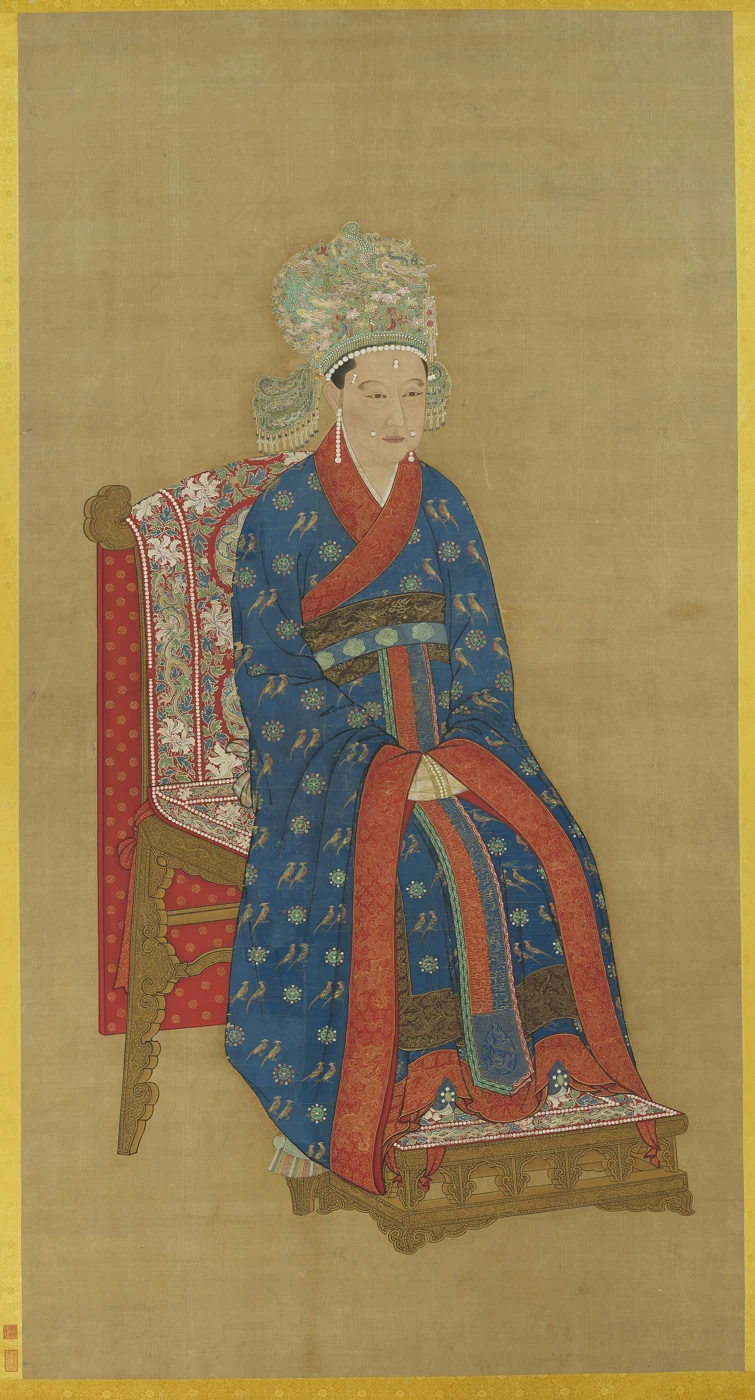
?–1200 CE
Empress
Li Fengniang
李凤娘
Li Fengniang (1145–1200), a native of Anyang in Xiangzhou (present-day Anyang, Henan), was the empress of Zhao Dun, Emperor Guangzong of the Southern Song, and the mother of Zhao Kuo, later Emperor Ningzong. She was the second daughter of Li Dao, Military Commissioner of Qingyuan. She was born in 1145, the fifteenth year of the Shaoxing era. According to legend, when she was born a black phoenix circled above a stone in front…
?–1200 CESouthern Song
PROFILE
Li Fengniang (1145–1200), a native of Anyang in Xiangzhou (present-day Anyang, Henan), was the empress of Zhao Dun, Emperor Guangzong of the Southern Song, and the mother of Zhao Kuo, later Emperor Ningzong. She was the second daughter of Li Dao, Military Commissioner of Qingyuan. She was born in 1145, the fifteenth year of the Shaoxing era. According to legend, when she was born a black phoenix circled above a stone in front of the military encampment; her father regarded this as an omen and named her “Fengniang.” The Daoist Huangfu Tan read her physiognomy and declared that “this girl will one day be mother to all under Heaven.” Emperor Gaozong of Song then arranged her marriage to his imperial grandson Zhao Dun. In 1171, the seventh year of the Qiandao era, she became crown princess. After Guangzong ascended the throne in 1190, the first year of Shaoxi, she was installed as empress.
- Other names
- Empress Ciyi; Ciyi Empress Li Fengniang
- Courtesy name
- Fengniang
- Period
- Song · Southern Song
- Date of Birth
- 1145
- Date of Death
- 1200
- Dynasty / polity
- Song · Southern Song
- Identity
- Empress
- Ethnicity / group
- Not recorded in historical sources
- Native place
- Anyang, Xiangzhou (present-day Anyang, Henan)
- Place of birth
- Not recorded in historical sources
- Tenure as empress
- Not recorded in historical sources
- Posthumous name
- Ciyi
- Main achievements
- Empress of Emperor Guangzong of Song, remembered for jealousy and political domination; her actions directly contributed to Guangzong's mental and political breakdown and the Forced Abdication of Emperor Guangzong of Song.
LIFE TIMELINE
Youth | The Daoist Huangfu Tan read her physiognomy and said, “this girl will one day be mother to all under Heaven”; Emperor Gaozong then arranged her marriage to Prince Gong, Zhao Dun.
Age twenty-three | Gave birth to Prince Jia, Zhao Kuo, later Emperor Ningzong of Song.
Age twenty-six | Installed as crown princess.
Age forty-five | Guangzong ascended the throne and she was installed as empress.
Age forty-six | Consort Huang was killed; Guangzong became ill from shock and many affairs of government came to be decided by the empress.
Age forty-eight | At the Chongming Festival, officials urged Guangzong to visit Chonghua Palace. Li Fengniang kept him back, and Chen Fuliang was rebuked after grasping the emperor's robe to remonstrate.
Age forty-nine | Xiaozong died and Guangzong could not personally conduct the mourning rites. Zhao Ruyu and others arranged an abdication; Guangzong yielded the throne to Ningzong, while Li Fengniang became Retired Empress and received the title Shouren.
Age fifty-six | Died of illness; received the posthumous name Ciyi and was buried at Yongchong Mausoleum.
BIOGRAPHY
Biography
Family Background and Early Life
Li Fengniang was born in 1145, the fifteenth year of Emperor Gaozong's Shaoxing era. Her father, Li Dao, was Military Commissioner of Qingyuan, and she was his second daughter. The “Biographies of Empresses and Consorts” in the History of Song records that at her birth a black phoenix alighted on a stone before Li Dao's army camp. Li Dao regarded this as extraordinary and named his daughter Fengniang. While Li Dao was stationed in Hubei, he heard that the Daoist Huangfu Tan was skilled in physiognomy and had his daughters come out to pay respects to him. On seeing Li Fengniang, Huangfu Tan was so startled that he refused to accept her obeisance, saying: “This girl will one day be mother to all under Heaven.” Huangfu later told Emperor Gaozong, who arranged Li Fengniang's marriage to Prince Gong, Zhao Dun.
After marrying into the princely household, Li Fengniang was first created Lady of Rongguo and later Lady of Dingguo. In 1168, the fourth year of Qiandao, she gave birth to Prince Jia Zhao Kuo, later Emperor Ningzong. In 1171, the seventh year of Qiandao, Zhao Dun was made crown prince, and Li Fengniang accordingly became crown princess.
Period as Crown Princess
Li Fengniang was already described as fiercely jealous while crown princess. She complained to the courts of Gaozong and Xiaozong about people around the crown prince. Gaozong was displeased and told Empress Wu: “She is the daughter of a military family; Huangfu Tan misled me.” Xiaozong repeatedly admonished Li Fengniang: “You should take the empress dowager as your model; otherwise I shall have you deposed.” Li suspected that these rebukes originated with the empress dowager and resented her.
Period as Empress
In 1190, the first year of Shaoxi, Guangzong ascended the throne and Li Fengniang was installed as empress. Guangzong was described as weak in temperament and inattentive to government, and Li gradually came to dominate the inner palace and even political affairs. Guangzong once wished to execute certain eunuchs. His close attendants, fearing for themselves, plotted to estrange the three imperial courts of Gaozong, Xiaozong, and Guangzong. Around the same time Guangzong developed a heart ailment. Xiaozong acquired a medicine and intended to give it to him when he visited Chonghua Palace. The eunuchs told Li Fengniang that the retired emperor had compounded a large pill to be administered when the imperial carriage arrived and insinuated that the dynasty might be endangered. Li secretly investigated, found that there was indeed medicine, and harbored resentment.
At a palace banquet soon afterward, Li asked that Prince Jia Zhao Kuo be made crown prince. Xiaozong refused. Li replied, “I was married according to the full six rites; Prince Jia is my own son. Why should it not be possible?” Xiaozong became furious. After withdrawing, Li took Prince Jia to Guangzong and wept, telling him that the Retired Emperor Xiaozong intended to change the succession. Guangzong was persuaded and thereafter stopped visiting his father.
Li Fengniang's jealous behavior was said to become increasingly extreme. When Guangzong once noticed the fair hands of a palace woman while washing his own hands and expressed admiration, Li later sent him a food box. When opened, it contained the woman's severed hands. Consort Huang was another favorite of Guangzong. While the emperor was staying in a fasting palace during a suburban sacrifice, Li had Consort Huang killed and reported that she had died suddenly. That night a storm extinguished the candles at the altar and the ritual could not be completed. Guangzong was so frightened that his illness worsened. He ceased holding regular audiences, and many political decisions came to be made by Li Fengniang.
Li also had Consort Zhang and Lady Fu arrested, shackled, and sent back to their natal families. She used her authority to lavish honors on her relatives, ennobling three generations of her family as princes. The family temple exceeded prescribed standards and had more guards than the imperial ancestral temple. During a visit to her ancestral shrine, favors were extended to twenty-six relatives and 172 retainers or officials, and even clients of the Li household were recommended for office. The scale of this patronage was described as unprecedented since the Southern Song restoration.
Estrangement of the Three Courts and the Failure to Visit Chonghua Palace
Li Fengniang continually worsened relations between Guangzong and the retired emperor Xiaozong. In the ninth month of 1193, the fourth year of Shaoxi, during the Chongming Festival, chief ministers, attendants, censors, and remonstrance officials jointly petitioned Guangzong to visit his father at Chonghua Palace. Xie Shenfu told him that the bond between father and son was fundamental and that Xiaozong loved the emperor just as the emperor loved Prince Jia; given Xiaozong's advanced age, he asked how Guangzong could face the realm after his father's death. Guangzong was moved and ordered his carriage prepared for Chonghua Palace.
Officials assembled to await his departure. When Guangzong reached the imperial screen, Li Fengniang drew him back inside and said, “It is cold; Your Majesty should have some wine first.” The officials and guards looked at one another but dared not speak. Secretariat Drafter Chen Fuliang seized Guangzong's robe and begged him not to go back inside, following him even behind the screen. Li rebuked Chen, demanding to know what place he thought this was and whether a mere scholar wished to lose his head. Chen descended from the hall and wept bitterly. Li sent someone to ask why he behaved in this manner. Chen answered: “If a son remonstrates with his father and the father will not listen, the son cries aloud and follows him.” Li grew still more angry and had an order issued returning the imperial carriage to the palace. After Xiaozong later died, Guangzong was unable to personally conduct the mourning rites.
Abdication and Later Years
In 1194, the fifth year of Shaoxi, Xiaozong died and Guangzong's inability to personally observe the mourning rites shocked the court and the wider realm. Chief Minister Zhao Ruyu and others planned to enthrone Prince Jia Zhao Kuo, and an abdication was carried out. Guangzong yielded the throne to Ningzong. Li Fengniang was honored as Retired Empress and received the honorific Shouren. She and Guangzong moved to Tai'an Palace, lost political power, and were kept under close watch by the scholar-official establishment. Her attitude toward Guangzong also became more conciliatory. In her later years, after a physiognomist predicted calamity, Li put on Daoist robes, lived in seclusion, and devoted herself to Buddhist practice. She died in the sixth month of 1200, the sixth year of Qingyuan, aged fifty-six. She was given the posthumous name Ciyi and buried at Yongchong Mausoleum.
Major Activities
Political Domination of the Inner Palace and Jealous Conduct
Li Fengniang became historically notorious for jealousy and political domination. The “Biographies of Empresses and Consorts” in the History of Song records several representative episodes. First, after Guangzong admired the fair hands of a palace woman, Li had both hands cut off and sent to the emperor in a food box. Second, while Guangzong was staying in a fasting palace for the suburban sacrifice, Li had the favored Consort Huang killed and reported a sudden death. A storm that night extinguished the altar candles and the rite could not be completed; Guangzong was shocked, his illness worsened, he stopped holding court, and many affairs were decided by the empress. Third, Li had Consort Zhang and Lady Fu arrested, shackled, and returned to their families. Fourth, she once confronted Empress Dowager Xie and emphasized her own status as the emperor's formally wedded wife.
Estrangement of Father and Son
Using claims passed on by eunuchs, Li came to suspect that Xiaozong intended to alter the succession. She repeated this to Guangzong and helped convince him to stop visiting his father. At the Chongming Festival in the fourth year of Shaoxi, officials urged Guangzong to visit Chonghua Palace, but Li kept him behind the imperial screen. Chen Fuliang grasped the emperor's robe to remonstrate and was rebuked, and the visit did not occur. After Xiaozong's death, Guangzong likewise failed to personally conduct the mourning rites, producing a serious political crisis.
Patronage of Her Natal Clan
Li used her position as empress to grant extensive honors to her natal family. Three generations were created princes; the family ancestral temple exceeded prescribed standards and had more guards than the imperial ancestral temple. On one visit she extended favors to twenty-six relatives and 172 retainers or officials and recommended even clients of the Li family for appointments. Contemporary accounts described the scale of hereditary patronage as unmatched since the Southern Song restoration.
Contribution to the Forced Abdication of Emperor Guangzong of Song
Li repeatedly obstructed Guangzong's visits to Xiaozong, and after Xiaozong's death Guangzong failed to perform the mourning rites, alarming both court and country. Chief Minister Zhao Ruyu and others then arranged the abdication and enthroned Prince Jia Zhao Kuo. Li did not herself initiate the abdication, but her conduct directly contributed to the political crisis that produced it. Guangzong was ultimately compelled to yield the throne, while Li became Retired Empress and lost her former power.
Personal Relations
- Father: Li Dao, Military Commissioner of Qingyuan, posthumously honored as Defender-in-chief
- Husband: Zhao Dun, Emperor Guangzong of Song
- Son: Zhao Kuo, Emperor Ningzong of Song
- Younger brothers: Li Xiaochun and Li Xiaoyou, both ennobled as princes through Li Fengniang's influence
- Zhao Gou, Emperor Gaozong of Song: arranged her marriage and later said that Huangfu Tan had misled him
- Zhao Shen, Emperor Xiaozong of Song: her father-in-law, repeatedly admonished her; their relationship deteriorated
- Zhao Dun, Emperor Guangzong of Song: husband, strongly influenced by her
- Zhao Kuo, Emperor Ningzong of Song: son
- Zhao Ruyu: chief minister and leading figure in arranging the abdication
- Chen Fuliang: Secretariat Drafter who directly confronted Li during the Chongming Festival incident
- Consort Huang: killed by Li Fengniang according to the historical account
- Consort Zhang and Lady Fu: arrested, shackled, and sent back to their families
- Empress Dowager Xie: confronted by Li Fengniang
Historical Assessment
Song / Contemporary Period
- The History of Song, “Biographies of Empresses and Consorts,” describes Li as “jealous and fierce” and records Gaozong's remark that Huangfu Tan had misled him, showing the strongly negative court view of her.
- Xiaozong repeatedly admonished her to take the empress dowager as her model and warned that otherwise she could be deposed, illustrating the depth of his dissatisfaction.
- Chen Fuliang's direct confrontation with Li at the Chongming Festival and his weeping after leaving the hall reflected strong scholar-official opposition to her political interference.
Song–Yuan Period
- The History of Song, compiled in the Yuan period, gives a detailed and highly negative account of Li Fengniang and largely established the later historical image of her as jealous and politically domineering.
- Yuan historians repeated the characterization “jealous and fierce” and recorded the severed-hands episode, the killing of a consort, and the expulsion of palace women, showing a consistently critical stance.
Ming and Qing Periods
- A Ming-period cautionary story or formulation portraying “Li Fengniang's cruel jealousy bringing heavenly punishment” shows that her reputation for jealousy had become deeply rooted in later memory.
- Ming and Qing historians largely followed the History of Song, treating her as a negative example of an empress interfering in government and disordering politics through jealousy.
Modern Period
- Modern scholars often analyze Li Fengniang from the perspective of political history, interpreting her conduct partly through the rivalry between imperial in-laws and the scholar-official establishment.
- Some scholars argue that although Li was jealous and politically domineering, Guangzong's weakness and Xiaozong's pressure on him in his later years were also important causes of the Shaoxi political crisis, so responsibility should not be attributed solely to Li.
- Li Fengniang's story has repeatedly been adapted for screen productions; in the 2023 television drama Song Ci Shaohua Lu, she was portrayed by Tao Yujia.
FIGURES ASSOCIATED WITH THIS DYNASTY
Bibliography
- History of Song, juan 243, Biography 2, “Biographies of Empresses and Consorts”
- Tuo Tuo et al., History of Song, Zhonghua Book Company punctuated edition