Born | Born at Danyang in Runzhou; orphaned young, adopted by the Zhai family, and temporarily used the surname Zhai
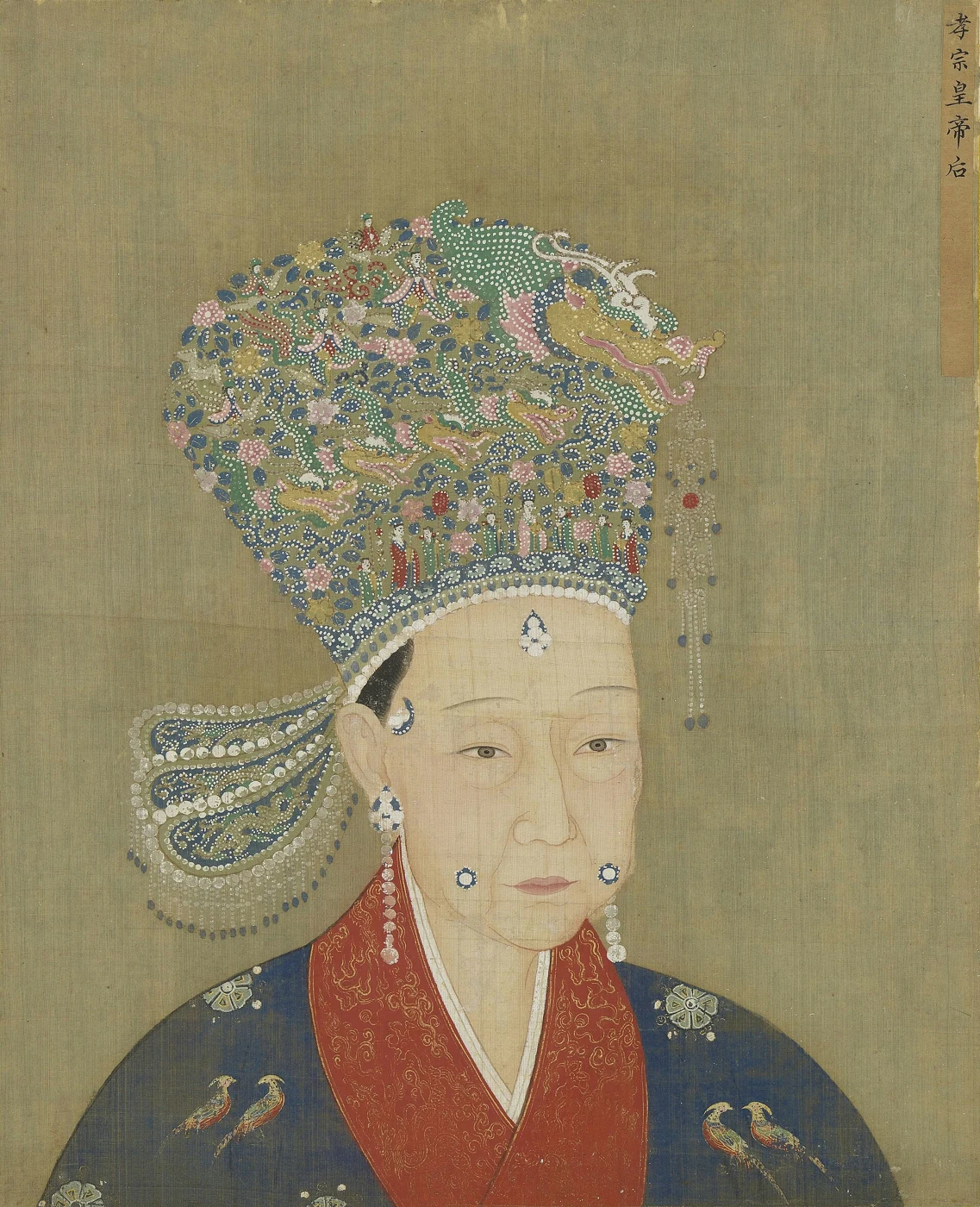
?–1203 CE
Empress
Empress Xie
谢氏(宋孝宗皇后)
Empress Xie, posthumously Empress Chengsu (birth year unknown–1207), personal name Xie Sufang, was a native of Danyang in Runzhou, present-day Danyang in Jiangsu, and the third empress, appointed later in the reign, of Emperor Xiaozong of Song, Zhao Shen. Orphaned in childhood, she was adopted by a family surnamed Zhai and later entered the palace as a maid to Empress Xiansheng Cilie, Lady Wu. In 1161 she was given to Zhao…
?–1203 CESouthern Song
PROFILE
Empress Xie, posthumously Empress Chengsu (birth year unknown–1207), personal name Xie Sufang, was a native of Danyang in Runzhou, present-day Danyang in Jiangsu, and the third empress, appointed later in the reign, of Emperor Xiaozong of Song, Zhao Shen. Orphaned in childhood, she was adopted by a family surnamed Zhai and later entered the palace as a maid to Empress Xiansheng Cilie, Lady Wu. In 1161 she was given to Zhao Shen, then Prince of Pu'an, and was titled Lady of Xian'an Commandery. After Xiaozong's accession she was successively promoted to Wanyong and Noble Consort. In 1176 she was established as empress. During the Guangzong reign she was honored as Empress Shoucheng, and during the Ningzong reign she became empress dowager and then grand empress dowager. In 1207, the third year of the Kaixi era, she died at Shouci Hall on the sixteenth day of the fifth lunar month. She received the posthumous title Chengsu and was buried with Emperor Xiaozong at Yongfu Mausoleum. She was known for frugality and benevolence and is presented as an important figure in palace affairs under Xiaozong and in the politics of the Guangzong and Ningzong reigns.
- Courtesy / Art Name
- Empress Chengsu, Empress Xie, empress of Emperor Xiaozong, Empress Chengsu Xie
- Era
- Southern Song
- Dynasty
- Song dynasty (Southern Song)
- Identity
- Empress
- Date of Birth
- Not recorded in historical sources
- Date of Death
- 1207 CE(3rd year of the Kaixi era, 5th month, 16th day)
- Ethnicity
- Not reliably established in the available sources
- Ancestral Home
- Danyang, Runzhou (present-day Danyang, Jiangsu)
- Place of Birth
- Place of birth unknown
- Place of Death
- Place of death unknown
- Lifespan
- Unknown
- Highest Office
- See Biography below
- Major Offices
- See Biography below
- Peerage
- Duke of He
- Posthumous Name
- Chengsi
- Major Achievements
- The last empress of Emperor Xiaozong of Song, honoured as empress dowager in the reign of Guangzong and living into the reign of Ningzong
LIFE TIMELINE
About twenty-nine | Given to Zhao Shen, Prince of Pu'an, and titled Lady of Xian'an Commandery; the History of Song records only the year, not the month or day
About thirty | On August 28, after Xiaozong's accession, promoted to Wanyong
About thirty-two | On February 11 promoted to Noble Consort
About thirty-five | After the death of Empress Chenggong, Lady Xia, Noble Consort Xie took charge of the inner palace
About forty-four | Established as empress on August 14; investiture ceremony held on the fifth day of the tenth lunar month, and her surname was restored to Xie
About fifty-seven | In the second lunar month Xiaozong abdicated to Guangzong; she was honored as Empress Shoucheng, empress of the retired emperor
About sixty-two | Xiaozong died; she was honored as empress dowager and took part in supporting Zhao Kuo's accession as Emperor Ningzong
About sixty-four | On the third day of the tenth lunar month received the honorific “Empress Dowager Shoucheng Huici”
About sixty-eight | On August 16 honored as grand empress dowager with the title “Grand Empress Dowager Shoucheng Huici”
About seventy | On the fourth day of the twelfth lunar month received the additional honorific “Grand Empress Dowager Shousheng Ciyou”
Age unconfirmed | On the sixteenth day of the fifth lunar month died at Shouci Hall; on the second day of the eighth lunar month received the posthumous name Chengsu and was buried with Xiaozong at Yongfu Mausoleum
BIOGRAPHY
Biography
Family Background and Early Life Lady Xie was from Danyang in Runzhou and, has an unconfirmed birth year. Her personal name was Sufang. Her father Xie Ning was later posthumously granted the titles Grand Preceptor and Prince Zhong. She lost both parents when young and was adopted by a local Zhai family, whose surname she temporarily used. Historical records provide little detail on her early life. When older, she was selected for palace service as a woman of respectable family and became a maid in the household of Empress Xiansheng Cilie, Lady Wu, empress of Emperor Gaozong. Lady Xie served Empress Wu for many years and gained trust through respectful and diligent conduct. In 1161 Gaozong and Empress Wu gave her as a concubine to Zhao Shen, Prince of Pu'an, the future Emperor Xiaozong, and she was titled Lady of Xian'an Commandery. The History of Song gives only the year and no exact month or day. Zhao Shen was not Gaozong's biological son but a seventh-generation descendant of Emperor Taizu Zhao Kuangyin who had been adopted into the palace because Gaozong lacked an heir. ### From Wanyong to Noble Consort In the sixth lunar month of 1162, Emperor Gaozong abdicated and transferred the throne to Zhao Shen, who became Emperor Xiaozong. On August 28 Lady Xie was promoted to Wanyong. On February 11, 1164, the second year of Longxing, she was promoted again to Noble Consort, ranking immediately below the empress. In 1167, after the death of Empress Chenggong, Lady Xia, the central palace position was vacant. As Noble Consort, Xie took charge of palace affairs. The source describes her administration as orderly and her character as frugal and benevolent. She washed her own clothing, reduced mutton in the palace meals, and always sent food first to the emperor before eating herself. She also strictly restrained her relatives. When her younger brother Xie Yuan received the military rank Wuyilang because of her status, she admonished him: “The sovereign transforms the realm through reverence and frugality; I myself wear clothing washed of sweat. You should value humility and restraint and keep far from arrogance and extravagance.” ### Established as Empress In 1176, the third year of Chunxi, Noble Consort Xie accompanied Xiaozong on a visit to Deshou Palace, the residence of the retired Emperor Gaozong. Gaozong indicated that she should be made empress and immediately sent the eunuch Zhang Quwei to convey the order. Noble Consort Xie was therefore established as empress and her original surname Xie restored. She was formally designated on August 14, and the investiture ceremony was held on the fifth day of the tenth lunar month. The investiture text was composed by Vice Grand Councilor Gong Maoliang, and ten relatives received official appointments through imperial favor. The source situates her elevation during the period known as the “Qiandao–Chunxi governance” under Xiaozong. It notes that after accession Xiaozong restored Yue Fei's reputation and offices, punished the family of the deceased Qin Hui, removed Qin Hui's associates, and employed advocates of war such as Zhang Jun and Yu Yunwen in efforts to strengthen the military and recover the north. Empress Xie is presented as supporting Xiaozong quietly within the palace, not directly intervening in government but maintaining an orderly inner court through her personal conduct. ### Reigns of Guangzong and Ningzong In the second lunar month of 1189, Xiaozong abdicated in favor of Crown Prince Zhao Dun, Emperor Guangzong. Empress Xie was honored as Empress Shoucheng, the empress of the retired emperor. Guangzong's empress, Li Fengniang, is described in the source as domineering, jealous, and interventionist in government, and as disrespectful to both the retired emperor and retired empress. Lady Xie once gently admonished Li Fengniang to observe the dignity and propriety appropriate to an empress. Li refused and retorted: “The emperor and I are husband and wife from the beginning, and the Prince of Jia is my own son. Our status is proper and legitimate; why should he not be made crown prince?” The remark implicitly mocked both Xiaozong's adoption by Gaozong and Xie's status as a later empress rather than Xiaozong's original wife. Xie was angered and reported the matter to Xiaozong. Xiaozong decided to depose Li and summoned ministers to discuss the issue, but Shi Hao argued that Guangzong had only recently become emperor and that immediately deposing his empress would generate damaging criticism. Because Xiaozong had already retired and could not gain sufficient ministerial support, the plan was abandoned. In 1194 Xiaozong died. Because Guangzong was estranged from his father, he claimed illness and did not personally perform the mourning rites, causing widespread controversy. Ministers Zhao Ruyu and Han Tuozhou, with support from Grand Empress Dowager Wu—Gaozong's empress—and Lady Xie, forced Guangzong to abdicate and enthroned his son Zhao Kuo, Prince of Jia, as Emperor Ningzong. Guangzong became retired emperor and Li Fengniang retired empress; Ningzong honored Lady Xie as empress dowager. On the third day of the tenth lunar month of 1196, Ningzong granted her the honorific “Empress Dowager Shoucheng Huici.” On August 16, 1200, she was elevated to grand empress dowager and received the title “Grand Empress Dowager Shoucheng Huici.” On the fourth day of the twelfth lunar month of 1202, she received the additional title “Grand Empress Dowager Shousheng Ciyou.” On the sixteenth day of the fifth lunar month of 1207, the third year of Kaixi, she died at Shouci Hall at Age unconfirmed. On the second day of the eighth lunar month Ningzong granted her the posthumous title Chengsu, and she was buried with Xiaozong at Yongfu Mausoleum.
Major Activities
Palace Administration and Frugality Lady Xie was known for frugality. The History of Song states that she was “frugal and benevolent by nature, reduced the serving of mutton, and before every meal first sent food to the imperial table. She wore clothing washed of sweat and sometimes did not replace it for several years.” She personally washed clothing and avoided luxury, setting an example inside the palace. She also strictly restrained her natal family. Although her younger brother Xie Yuan obtained office because of her rise, she repeatedly warned him to remain modest and avoid extravagance. Xie Yuan later became military governor of Baoxin Army, Grand Commandant, and Equal in Honor to the Three Excellencies, and was enfeoffed as Duke of He; the source says he continued to follow her admonitions. ### Conflict with Li Fengniang The conflict between Lady Xie and Empress Li Fengniang of Guangzong was an important episode in mid-Southern Song palace politics. Li was jealous and domineering, intervened in affairs of state, and behaved disrespectfully toward retired Emperor Xiaozong and Empress Xie. Xie's attempt to admonish her instead drew a taunt. Xiaozong considered deposing Li, but Shi Hao's opposition and Xiaozong's reduced authority after abdication prevented it. The dispute worsened the estrangement between Xiaozong and Guangzong and indirectly affected the political crisis of the Shaoxi era. ### Support for Ningzong's Accession After Xiaozong's death in 1194, Guangzong claimed illness and failed to perform the funeral rites, producing political disorder. Zhao Ruyu, Han Tuozhou, and other ministers planned to enthrone Zhao Kuo, Prince of Jia. After obtaining the support of Grand Empress Dowager Wu, Lady Xie also joined the forces supporting the succession. Ningzong's accession stabilized the immediate situation, and Xie was honored as empress dowager, becoming one of the most senior women in the Southern Song court. ### Indirect Support for Xiaozong's Government Although Lady Xie did not directly participate in government, the source presents her orderly conduct as empress as providing a stable palace environment for Xiaozong's “Qiandao–Chunxi governance.” It connects this period with Xiaozong's rehabilitation of Yue Fei, punishment of Qin Hui's family, removal of Qin's supporters, and employment of war advocates. A poem preserved in the Guangxu-era Danyang County Gazetteer praises her: “Could the emperor and empress of the restoration have been ordinary? Dragon and phoenix shone together. The women who walked beside her did not know her true identity; even now the water by the bridge remains fragrant.”
Personal Relations
- Younger brother: Xie Yuan, appointed because of his sister's status; eventually military governor of Baoxin Army, Grand Commandant, Equal in Honor to the Three Excellencies, and Duke of He ### Rulers and Court Relations - Emperor Gaozong of Song, Zhao Gou: Lady Xie originally served Gaozong's empress Lady Wu; Gaozong and Empress Wu later gave her to Zhao Shen
- Emperor Xiaozong of Song, Zhao Shen: husband; Lady Xie was his third empress, appointed after his accession
- Empress Xiansheng Cilie, Lady Wu: the empress whom Xie initially served in the palace and who helped advance her position
- Emperor Guangzong of Song, Zhao Dun: son of Xiaozong; during his reign Xie was empress of the retired emperor
- Emperor Ningzong of Song, Zhao Kuo: son of Guangzong; Xie became his empress dowager and grand empress dowager ### Conflict - Li Fengniang, empress of Guangzong: clashed with Xie; Xie admonished her on ritual and conduct, was mocked in return, and Xiaozong unsuccessfully considered deposing Li ### Contemporaries - Shi Hao: minister under Xiaozong who opposed deposing Li Fengniang
- Zhao Ruyu and Han Tuozhou: leading supporters of Ningzong's accession and part of the same political coalition as Lady Xie in 1194
Historical Assessment
Song / Contemporary Assessments - The History of Song, vol. 243, “Biographies 2,” calls her “frugal and benevolent by nature” and records her warning to her younger brother, praising her restraint and compassion.
- The Song Huiyao Jigao, “Empresses and Consorts 1,” records in detail the changes in her titles, honorifics, and investiture dates and presents her as a normally ordered model of an imperial consort. ### Song and Yuan Periods - When Toqto'a and other Yuan compilers produced the History of Song, they included Xie in the “Biographies of Empresses and Consorts” and treated her mainly positively without direct condemnation.
- Historians discussing Xiaozong's “Qiandao–Chunxi governance” frequently regarded palace stability as one of its supporting conditions, and Xie's virtue was praised by contemporaries. ### Ming and Qing Periods - The Guangxu-era Danyang County Gazetteer praised her highly and preserved the poem: “Could the emperor and empress of the restoration have been ordinary? Dragon and phoenix shone together. The women who walked beside her did not know her true identity; even now the water by the bridge remains fragrant.” It treated her as a source of local pride for Danyang.
- Ming and Qing historians largely followed the History of Song, regarding her as a model virtuous empress and praising both her control of imperial relatives and her personal frugality. ### Modern Period - Modern historians of the Song frequently focus on her role in the Guangzong-era dispute over Empress Li and in Ningzong's accession. They generally regard her as not directly governing but as taking positions at critical moments that materially affected mid-Southern Song politics.
- Scholarship on her conflict with Li Fengniang often treats it as a reflection of tensions within Southern Song palace power structures. Li's attack on Xie's status as a later-appointed empress illustrates the complexity of relationships within the imperial house.
FIGURES ASSOCIATED WITH THIS DYNASTY
Bibliography
- History of Song*, vol. 243, “Biographies 2” (compiled by Toqto'a and others)