Birth | Born at Xianzhou in Henan; a poet
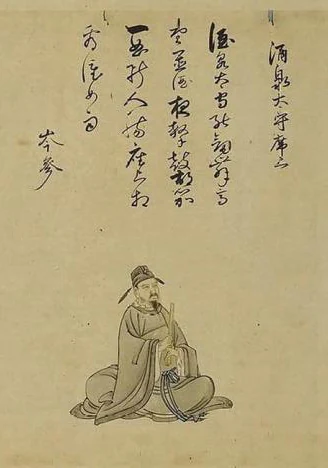
715 CE–770 CE
Poet
Cen Shen
岑参
Cen Shen was a leading frontier poet of the High Tang, the author of Song of the White Snow: Saying Farewell to Supervisor Wu Returning to the Capital, and a member of Feng Changqing's staff.
715 CE–770 CETang Dynasty
PROFILE
Cen Shen was a leading frontier poet of the High Tang, the author of Song of the White Snow: Saying Farewell to Supervisor Wu Returning to the Capital, and a member of Feng Changqing's staff.
- Other names
- Cen Jiazhou
- Period
- Tang
- Date of Birth
- 715
- Date of Death
- 770
- Dynasty / polity
- Tang
- Identity
- Poet
- Ethnicity / group
- Not recorded in historical sources
- Native place
- Jiangling, Jingzhou
- Place of birth
- Xianzhou, Henan
- Place of death
- Not recorded in historical sources
- Highest office
- See Biography and Major Deeds
- Major achievements
- Leading frontier poet of the High Tang; author of Song of the White Snow: Saying Farewell to Supervisor Wu Returning to the Capital; member of Feng Changqing's staff
LIFE TIMELINE
about age ten | Began formal study and read widely in the classics and histories.
about age fourteen | Began composing prose.
about age twenty | Moved to Songyang, present-day Dengfeng in Henan, and lived in retirement.
about age twenty-five | Traveled west to Chang'an and submitted writings at court but was not promoted; for roughly the next decade he moved repeatedly between Chang'an and Luoyang.
about age twenty-eight | When Wang Changling became county lieutenant of Jiangning, Cen Shen wrote Seeing Wang Changling Off to Jiangning for his departure.
about age thirty-two | Ranked second in the metropolitan examination and entered a three-year waiting period before appointment.
about age thirty-three | Traveled east through the Hebei region in spring and visited his third paternal uncle Cen Pei; returned south in late autumn and spent the year-end at Yingyang.
about age thirty-four | Returned west to Chang'an; traveled east again to Yingyang to obtain examination documents for the winter selection, then returned to Chang'an in autumn.
about age thirty-five | After completing the waiting period, appointed military adjutant of the Right Inner Guard of the Heir Apparent and wrote On First Receiving Office, Inscribed at Gaoguan Thatched Cottage.
about age thirty-six | When Yan Zhenqing served on a military assignment in Hexi and Longyou, Cen Shen wrote Song of the Hu Jia, Seeing Yan Zhenqing Off on His Mission to Hexi and Longyou.
about age thirty-seven | Gao Xianzhi returned to court and recommended Cen Shen for appointment as recorder in the Right Guard; Cen Shen traveled beyond the frontier to Anxi and entered Gao's staff as a secretary, beginning his first frontier posting.
about age thirty-nine | After Gao Xianzhi's defeat and return to court, Cen Shen returned east and reached Chang'an around early autumn.
about age forty | In autumn climbed the Ci'en Temple pagoda with Du Fu, Gao Shi, Chu Guangxi, and Xue Ju and composed Climbing the Pagoda of Ci'en Temple with Gao Shi and Xue Ju.
about age forty-one | In spring, after Yan Zhenqing was appointed Administrator of Pingyuan Commandery, Cen Shen composed Seeing Yan of Pingyuan Off.
about age forty-two | Accepted Feng Changqing's invitation to join his staff and went to Beiting as judge of the Anxi-Beiting military command, beginning his second frontier posting; that winter, after Feng defeated Boxian, Cen Shen wrote six victory songs in his honor.
about age forty-five | In spring traveled from Beiting to Emperor Suzong's temporary court at Fengxiang; on the twelfth day of the sixth month, after recommendations from Pei Jian, Du Fu, and others, appointed Right Remonstrator; in the tenth month escorted the emperor back to Chang'an.
about age forty-six | Exchanged poems with colleagues in the Left and Right Offices, including Du Fu, Wang Wei, and Jia Zhi.
about age forty-seven | Transferred to Diarist in the third month; demoted to Chief Secretary of Guozhou in the fourth month and took up the post in the fifth.
about age fifty | In spring appointed Assistant to the Heir Apparent and concurrently Palace Censor; served as judge of the Guanxi military command; in the tenth month became secretary to Li Shi, Prince of Yong and Supreme Commander of the empire's armies.
about age fifty-one | Appointed Vice Director in the Bureau of Evaluation.
about age fifty-two | Transferred to Director in the Bureau of Forestry and Crafts.
about age fifty-three | Transferred to Director in the Bureau of Storehouses; in the eleventh month demoted to prefect of Jiazhou and departed Chang'an for Chengdu with Cheng Ben, but was delayed in Liangzhou by political disorder in Chengdu.
about age fifty-four | In the second month Du Hongjian became military governor of Jiannan Xichuan and recommended Cen Shen as Director in the Bureau of Operations and concurrently Palace Censor; Cen Shen met Du at Yichang in Lizhou in the fourth month and reached Chengdu in the seventh.
about age fifty-five | In the sixth month took up office as prefect of Jiazhou and wrote Summoning the Shu Guests to Return.
about age fifty-six | Dismissed in the seventh month; while traveling east from Jiazhou he was blocked at Rongzhou and remained at Hukou before returning overland north to Chengdu.
about age fifty-seven | Died in a lodging house in Chengdu in autumn or winter.
Death | Death; aged fifty-five by Chinese reckoning
BIOGRAPHY
Biography
Family Background and Early Life
Cen Shen was born into an official family and was a great-grandson of Cen Wenben, a grand councilor under Emperor Taizong of Tang. His father Cen Zhi rose to prefect of Xianzhou. Around 712, the first year of Xiantian, Cen Shen was born in Xianzhou, Henan. He lost his father while still young and the family's circumstances declined, but he studied diligently and read widely in the classics and histories. He began formal study around 722 and started composing prose around 726, showing literary promise at an early age. Around 732 he moved to Songyang, present-day Dengfeng in Henan, where he spent a period in secluded study. His landscape poetry from this period was clear and elegant, somewhat reminiscent of Xie Tiao and He Xun, yet already marked by unusual diction, a vigorous style, and novel imagery. Yin Fan's Heyue Yingling Ji, for example, praised lines such as "The mountain wind blows through the empty forest; rustling, as though someone were there," from Autumn Evening Mountain Journey.
Between the Two Capitals and Success in the Examinations
Around 737, in the twenty-fifth year of Kaiyuan, Cen Shen traveled west to Chang'an in search of office and presented writings at court, but he received no appointment. For roughly the next ten years he moved repeatedly between Chang'an and Luoyang and developed a wide circle of literary acquaintances, including Wang Changling. In 740, when Wang Changling was appointed county lieutenant of Jiangning, Cen Shen wrote a farewell poem for him.
In 744 Cen Shen ranked second in the metropolitan examination and then entered the customary three-year waiting period for official selection. In the spring of 745 he traveled east through the Hebei region, visiting Xinxiang, Ye, Handan, Jizhou, Yingzhou, Anxi, and other places, and called on his third paternal uncle Cen Pei. He returned south in late summer or early autumn and spent the year-end at Yingyang. In 746 he went west again to Chang'an, revisiting Wangwu Mountain, Jinzhou, Jiangzhou, and other places on the way; to participate in the winter selection he traveled east once more to Yingyang to obtain the necessary documents, and returned to Chang'an in autumn. In the spring of 747, after the waiting period ended, he was appointed military adjutant of the Right Inner Guard of the Heir Apparent. He commemorated the appointment in On First Receiving Office, Inscribed at Gaoguan Thatched Cottage, lamenting that he had only received his first appointment around the age of thirty but could not disdain even a minor post.
Two Frontier Postings
In 749 Gao Xianzhi returned to court and recommended Cen Shen for appointment as a recorder in the Right Guard. Cen Shen then traveled beyond the frontier to Anxi and joined Gao's staff as a secretary, his first frontier assignment. In the third month of 751 Gao Xianzhi was appointed Administrator of Wuwei and military governor of Hexi, and members of his staff, including Cen Shen, went to Wuwei. Cen Shen wrote several poems there. After Gao was defeated and returned to court, Cen Shen also went east, reaching Chang'an around early autumn.
Around 754 Cen Shen accepted an invitation from Feng Changqing and joined his staff, going again beyond the frontier to Beiting as judge of the Anxi-Beiting military command. This was his second frontier posting. In the fifth month Feng Changqing led a western expedition while Cen Shen remained in the rear. That winter Feng defeated Boxian, and Cen Shen composed six victory songs for his triumphant return. Cen Shen called Feng a "national worthy" and in poems praised the terror inspired by his army and declared that Feng's achievements surpassed those of famous men recorded in earlier histories. During some six years spent in Anxi and Beiting, Cen Shen composed a large body of frontier poetry. Many of his best-known works, including Song of the White Snow: Saying Farewell to Supervisor Wu Returning to the Capital and Song of Running-Horse River, Seeing the Army Off on a Western Expedition, date from these years.
Return to Court and Demotion to Guozhou
In the spring of 757 Cen Shen traveled from Beiting to Fengxiang, where Emperor Suzong had established his temporary court, and composed poems there. On the twelfth day of the sixth month, Pei Jian, Meng Changhao, Wei Qidan, Du Fu, and Wei Shaoyou jointly recommended him for a remonstrance post, and Emperor Suzong appointed him Right Remonstrator. In the tenth month Cen Shen accompanied the emperor back to Chang'an. During 758 he often exchanged poems with colleagues in the Left Office, the Menxia Sheng, and the Right Office, the Zhongshu Sheng, including Du Fu, Wang Wei, and Jia Zhi. In the third month of 759 he was transferred from Right Remonstrator to Diarist, perhaps because he had criticized powerful favorites. In the fourth month he was demoted to Chief Secretary of Guozhou and left to take up the post in the fifth. While in Guozhou, his mood was often despondent, but his landscape poetry remained fresh and finely observed and increasingly expressed a desire for retreat among mountains and forests.
Later Years in Sichuan and Death in Chengdu
In the spring of 762 Cen Shen was appointed Assistant to the Heir Apparent and soon concurrently became Palace Censor and judge of the Guanxi military command. In the tenth month, when Li Shi, Prince of Yong and Supreme Commander of the empire's armies, assembled forces at Shanzhou to attack Shi Chaoyi, Cen Shen served as his secretary. In 763 Cen Shen became Vice Director in the Bureau of Evaluation; the following year he moved to Director in the Bureau of Forestry and Crafts. In 765 he became Director in the Bureau of Storehouses. In the eleventh month he was demoted to prefect of Jiazhou and set out from Chang'an for Chengdu with Deputy Mayor Cheng Ben. They reached Liangzhou, present-day Hanzhong in Shaanxi, in the twelfth month but remained there because of political disorder in Chengdu.
In the second month of 766 Du Hongjian became military governor of Jiannan Xichuan and recommended Cen Shen as Director in the Bureau of Operations and concurrently Palace Censor, bringing him into his staff. In early summer Cen Shen traveled from Liangzhou to Yichang in Lizhou to meet Du and arrived in Chengdu in the seventh month. In the sixth month of 767 he went to Jiazhou to take up the prefecture and wrote Summoning the Shu Guests to Return, also known as Summoning the Northern Guests. In the seventh month of 768, after being dismissed, he left Jiazhou for the east. At Rongzhou, present-day Yibin, he was prevented by fugitives from continuing downstream and remained at Hukou before returning north overland to Chengdu. Around the autumn or winter of 769 he died in a lodging house in Chengdu, at about fifty-seven years of age.
Cen Shen was born about 718. His ancestral home was Jiangling in Jingzhou, though some accounts give Jiyang in Nanyang. Du Que's preface to his collection and other sources give Nanyang, while the Fayuan zhulin and the general gazetteers give Jiangling; Wen Yiduo held that he was of Jiangling, his forebears having moved there from Nanyang in the time of his sixth-generation ancestor Cen Shanfang, and that the Nanyang attribution rested on the clan's ancient home, while Liao Li of the Henan Academy of Social Sciences argued from the household registration system that the Nanyang attribution was better founded, though the Jiangling view has been the more common. He came of a family of officials, lost his father young and studied hard, beginning to write about 726. About 732 he moved to Songyang in Henan and lived retired for a time. About 737 he went west to present writings at the palace without obtaining promotion, and thereafter spent some ten years between Changan and Luoyang. In 740, when Wang Changling became assistant of Jiangning, he wrote a poem for him. In 744 he passed the presented scholar examination in second place, followed by three years of waiting for appointment. During that waiting he travelled, chiefly between 744 and his first appointment in 747. In the spring of 745 he set out from Changan by the capital road, crossed the Yellow River at Mengjin and went into the north, seeking a recluse named Tao; he then went north-east to Xinxiang to visit the magistrate Wang Fu, by Xiangzhou to Yecheng and Handan, through Qinghe to Jizhou, north to Yingzhou and north-west to Anxi county to visit his uncle Cen Bei. In late summer he turned south, visiting the Daoist Li at Jingxing, reaching Liyang on the Yellow River, crossing to Baima ferry and going south-east to Yingyang for the winter. In 746 he went west from Yingyang to Changan, crossing the Yellow River north to his old home on Mount Wangwu, north to Jinzhou to revisit old ground, to Jiangzhou to see the tomb of Li Ji, east across the river to lodge at the Pu pass, and so to his villa at Duling. To sit the winter selection he went east again to Yingyang to report his waiting and take his certificate; while waiting he visited Kuangcheng and was entertained by the magistrate Zhou, lodged at Daliang by night, and visited the monk Hui of the Jingyun temple east of Yanshi with his friend Han Zun. In the autumn he returned west to Changan for the winter selection. In the spring of 747, his waiting ended, he was appointed a military officer of the right inner guard. In 748, when Yan Zhenqing was made commissioner for the Hexi and Longyou armies, Cen Shen wrote the song of the nomad reed-pipe to send him to the He-Long region. The next year Gao Xianzhi, coming to court, memorialised for his appointment as recorder of the right awe-inspiring guard, and he went beyond the frontier to Anxi as secretary of the headquarters, his first expedition. In the third month of 751, when Gao Xianzhi was made governor of Wuwei and commissioner of Hexi, Cen Shen and his colleagues went to Wuwei, where he wrote several poems; after Gao Xianzhi's defeat and return he came east, reaching Lintao in the sixth month and Changan in early autumn. In the autumn of 752 he climbed the pagoda of the Ci'en temple with Gao Shi, Xue Ju and others. About 754 he accepted the summons of Feng Changqing and went beyond the frontier a second time as administrative officer of the Anxi and Beiting commands. In the fifth month Feng Changqing marched west and Cen Shen remained in the rear; in winter, when Feng returned in triumph from breaking Boxian, Cen Shen wrote the six songs of triumph. In the spring of 757, while at Beiting, and with the emperor at Fengxiang, he went from Beiting to the imperial quarters; on the twelfth day of the sixth month Pei Jian, Meng Changhao, Wei Qidan, Du Fu and Wei Shaoyou recommended him for a remonstrating office, and the emperor made him right reminder. In their joint memorial they said that his understanding was clear and far, his discussions proper, and his good name early established, so that his contemporaries looked up to him, and that with the road of remonstrance now open and the offices of censure unfilled, a man of his talents was needed. In the tenth month he accompanied the emperor back to Changan. In 758 he often exchanged verses with Du Fu, Wang Wei, Jia Zhi and other colleagues of the two secretariats; in the third month of 759, probably for having named the powerful and flattering, he was transferred from right reminder to attendant of the imperial diary, and in the fourth month was made acting chief secretary of Guozhou, leaving the pass for his post in the fifth month. In the spring of 762 he was made an attendant of the heir apparent and soon concurrent palace censor and administrative officer of the Guanxi command; in the tenth month, when the prince of Yong led the armies, Cen Shen was made his secretary, and about winter he entered Changan. In 763 he was made a bureau director of the Ministry of Personnel, in 764 of the Ministry of Works and in 765 of the Ministry of War. In the eleventh month of 765 he was degraded to be prefect of Jiazhou and went with the assistant prefect Cheng Ben from Changan to Chengdu; in the twelfth month they reached Liangzhou and were detained there by the disorders at Chengdu. The next year, when Du Hongjian became commissioner of Jiannan West, he made Cen Shen a bureau director of the Ministry of War and concurrent palace censor, and Cen Shen entered his headquarters; in early summer he went from Liangzhou to meet him at Lizhou, arriving in the fourth month, crossing the Jiange pass in the sixth month and reaching Chengdu in the seventh. In the sixth month of 767 he took up the prefecture of Jiazhou, writing his address to the northern guest, and in the seventh month of 768, being dismissed, he went east from Jiazhou; at Rongzhou he was prevented by bandits from continuing by water, was detained at Hukou and returned overland to Chengdu. About the autumn and winter of 769 he died in a lodging at Chengdu, about fifty-two years old. On the year of his birth scholars have advanced six theories - 714, 715, 716, 717, 718 and 719 - the first four of which have been shown to conflict with the ages he gives in his own poems or with the Tang rules of appointment; the sixth, resting on the reckoning that after passing the examination in 744 and waiting three years he went to the winter selection in 747 and was appointed in the spring of 748, suits the ages stated in his poems. On his death five views have been held, from 769 to the first month of 770 at Chengdu; and a careful examination of his poems written at Chengdu in the autumn of 769, and of Du Que's statement that he never returned to his native place after entering Shu, points to the autumn or winter of 769 at Chengdu. Thirty years after his death his son Cen Zuogong collected his writings and had Du Que compile them into eight fascicles, the beginning of his collected works; in the Song there were editions in eight, seven and ten fascicles, and there are modern collated editions. According to Chen Tiemin and Hou Zhongyi there survive four hundred and three poems, with one rhapsody, one address and two epitaphs. From tomb 506 at the Astana-Karakhoja graveyard east of Turpan came a coffin pasted with waste paper, being the fodder accounts of the post stations of Xi and Ting prefectures for 753 to 755, in which occur accounts of Commissioner Feng and his kin, and one entry recording that Judge Cen's seven horses ate so much green wheat and beans, paid to the soldier Chen Jin; the only Cen who was a judge in Feng Changqing's headquarters in those years was Cen Shen, so that the entry refers to him. A story is told of his time in the western regions: returning from duty through the Chiting post, he was asked by the frontier soldiers to write a poem on the wall, and when a child's voice read it back he found a shepherd boy who could speak Chinese, and who had once saved thirteen soldiers lost in a snowstorm. Asked who taught him, the boy said his father, and drew from his breast a book which he said was the Analects written by his grandfather, who had told him that it held many truths. Cen Shen, pleased, wrote on it that the Analects was broad and the Uighur's ambition far. The boy's father, of a family that had long studied on the northern grasslands and fled south in civil strife, asked Cen Shen to take him as a pupil; and Cen Shen, thinking how much the frontier needed interpreters, agreed to take him away as his adopted son and renamed him Cen Hu, under whose careful teaching he mastered both languages, wrote good verse, and afterwards served as an interpreter in the intercourse of the Chinese and the frontier peoples. He is commemorated in later ages: at the Qiushou farm in Cenhe town of Shashi district in Jingzhou, Hubei, there is a Cen Shen memorial hall with an account of his life and family and paintings and calligraphy by famous hands related to his poems, together with a Cen Shen academy, a shrine to his forebears, three of whom were chancellors, and a Cen Shen cultural square; the town has a painting academy, a poetry society and an art troupe named for him, and has held cultural and sports festivals since 2010, a national Cen Shen poetry competition in 2016 which drew more than three thousand poems from twelve hundred and thirty-one people, and a conference on Cen Shen and Cenhe in 2017. On the twenty-sixth day of the third month of 2026 the government of Xinjiang published the establishment, with the approval of the Central Committee and the State Council, of Cenling county, administered by Kashgar prefecture from Xinhua town, governing the southern part of the former Yecheng county including the Kudi and Mazar passes of the Xinjiang-Tibet highway; the name, meaning high and steep ranges, fits the country and also honours the frontier poet Cen Shen of the Tang.
Cen Shen came of a family long in office. Among his forebears Cen Jingqian held the offices of junior supervisor of the Lin tai and prefect of Weizhou under Empress Wu; his father Cen Zhi, styled Demao, passed the examination in the classics and ended his career as prefect of Xianzhou and Jinzhou; and another kinsman, Cen Xi, was chancellor under Emperors Zhongzong and Ruizong, whence the family was said to have produced three chancellors. Of Cen Zhi's sons, Cen Wei rose to be assistant of Chengcheng, Cen Kuang was magistrate of Danfu and assistant of Huzhou, Cen Bing became a senior adviser to the heir apparent and Cen Ya assistant of Changge. Du Que's preface relates that Cen Shen, orphaned young and poor, spurred himself on, read all the histories and was especially skilled in composition, his diction seeking clarity and his meaning precision, so that whatever he achieved came often to excellence, and that no sooner was a piece finished than it was copied by all, so that the learned and the common, the Chinese and the barbarian, all chanted and studied it.
Major Activities
Literary Achievement
Cen Shen excelled in poetry, especially seven-syllable song-form verse. His work is marked by unusual imagery, a vigorous and often rugged style, grand momentum, rich imagination, ornate diction, passionate energy, and a strong romantic quality. His subjects include personal aspiration, exchanges with friends, landscape, and travel, but his frontier poems are especially celebrated. Among High Tang poets he wrote an unusually large number of frontier poems and achieved particularly high distinction in that field. Some 403 poems survive, more than seventy of them on frontier subjects, together with two prose rhapsodies or essays and two tomb inscriptions.
Cen Shen was among the earliest poets to depict the scenery of the Western Regions on a broad scale. He brought frontier landscapes into the established tradition of descriptive poetry and introduced new visual and experiential material. His western landscape poems also injected a heroic quality into conventional landscape writing and challenged the inward-looking tendency often associated with traditional Chinese landscape culture. Xu Yi of the Song dynasty wrote in Yanzhou Shihua that Cen Shen had formed a poetic style of his own because of his service with Feng Changqing and his many records of unusual western places not found in earlier narratives. About thirty years after Cen Shen's death, his son Cen Zuogong collected his surviving writings and asked Du Que to arrange them into the eight-juan Poetry Collection of Cen Jiazhou. Du Que's preface states that whenever Cen Shen completed a piece, people copied it immediately and that commoners and peoples of the frontier alike recited his poems.
Frontier Poetry
The landscape poems Cen Shen wrote during his two frontier postings had important innovative significance for Chinese descriptive poetry. In subject matter, he was one of the earliest poets to portray western frontier scenery extensively and to make it a central object of poetic observation. In style, he infused landscape poetry with a heroic spirit and thereby challenged the inward orientation of much traditional landscape writing. Song of the White Snow: Saying Farewell to Supervisor Wu Returning to the Capital contains the celebrated comparison of sudden snow to pear blossoms bursting across thousands of trees after a night of spring wind, an image admired for its imaginative brilliance.
Two tendencies often identified in Cen Shen's landscape poetry are a preference for clarity and a delight in the strange. The first appears in scenes of quiet clarity, cold clarity, and detached elegance; the second in his attraction to unusual scenery, unexpected ideas, and extraordinary emotional effects. During his frontier years, heroic patriotism is repeatedly projected onto the dramatic mountains, rivers, winds, and snows of the Western Regions. His astonished gaze at frontier scenery is not merely aesthetic but is presented in the source text as joining love of landscape with a broader emotional attachment to the realm.
Political Career
Cen Shen's official career rose and fell repeatedly. He received his first appointment in 747 as military adjutant of the Right Inner Guard of the Heir Apparent. In 749 he joined Gao Xianzhi's staff as a secretary, and around 754 he entered Feng Changqing's staff as judge of the Anxi-Beiting military command. In 757 he became Right Remonstrator through the recommendations of Du Fu and others, but in 759 was demoted to Chief Secretary of Guozhou. In 762 he became Assistant to the Heir Apparent and Palace Censor and served as judge of the Guanxi command; later that year he became secretary to Li Shi, Prince of Yong. He was appointed Vice Director in the Bureau of Evaluation in 763, Director in the Bureau of Forestry and Crafts in 764, and Director in the Bureau of Storehouses in 765, before being demoted to prefect of Jiazhou. In 766 he entered Du Hongjian's staff and in 767 took up the Jiazhou prefecture, from which he was dismissed the following year.
Relations with Contemporaries
Cen Shen maintained a wide literary network. In the autumn of 752 he climbed the Ci'en Temple pagoda in Chang'an together with Du Fu, Gao Shi, Chu Guangxi, and Xue Ju and composed a poem on the occasion. In 758 he often exchanged poems with Du Fu, Wang Wei, Jia Zhi, and others. Du Fu and several colleagues had earlier recommended him for appointment as Right Remonstrator in 757. Cen Shen also maintained poetic exchanges with Wang Changling and Yan Zhenqing.
Cen Shen, a master of verse and especially of the seven-character song, was named with Gao Shi as "Gao and Cen," and was often called Cen of Jiazhou from his prefecture; he was a leading figure of the frontier poetry of the high Tang. Four hundred and three of his poems survive with four pieces of prose. His verse is novel in conception, rugged in style, sweeping in force, rich in imagination and colour and ardent in feeling, and though its subjects include ambition, farewells, landscape and travel, it is his frontier poetry that is the finest: in the high Tang none wrote more or better of the frontier. He was among the first to describe the scenery of the western regions at large, bringing it into the scope of landscape poetry and giving that poetry new material, and his western poems also brought to it a note of heroism, breaking through the introversion of the traditional landscape tradition, so that later western landscape poetry was deeply influenced in both respects. He widened the subjects and range of frontier poetry beyond the old themes of cold and hardship, and in art his frontier verse is marked by grand images and vast, strange scenes, by the fusion of feeling and scene, and by fresh and graceful language and varied and inventive rhyme, using rhyme as the shape of the matter required, with one rhyme to each level, so that the rhythm and music are strengthened while changing rhymes express complex feeling.
His landscape poetry is chiefly marked by clarity and by curiosity. Clarity appears in three modes: the secluded, in which in his early years he chose warm and delicate images to build the beauty of the hills and to deepen their stillness, in a language plain and natural, returning to it for a time as chief secretary of Guozhou; the cold and clear, when in his years between the capitals he used cold tones to match the loneliness of seeking office; and the untrammelled, a clear and soaring realm born of fine scenery and an open heart, which the freedom of his two frontier years and the splendour of the west enabled him to reach. His curiosity shows in strange scenes, strange fancies, strange feelings and strange words: he loved to take novel things into his verse, so that his landscape poetry, and above all his western poetry, bore the mark of strangeness from the first; he had strange fancies, writing the wind in the empty woods and the waterfall falling in mid-air with a wonder beyond the common, as in the lines on the wind in the woods that rustles as if someone were there, and on the waterfall at the cliff mouth hanging white in mid-air; and he loved strange feeling and strange words, joining two scenes by an ingenious verb so that the lines gained clarity and novel interest. In subject he was among the first to bring the scenery of the western regions into landscape poetry, and in manner he gave it a note of heroism; and because Gao Shi, Cen Shen and their fellows wrote much of the frontier, later ages spoke of a school of frontier poetry of the high Tang, comprising Gao Shi and Cen Shen with Wang Changling, Wang Zhihuan and Li Qi, though some scholars hold the notion of a "school" to be unsound and to obscure both their other verse and the frontier poetry of others. It is recorded that the name first appeared in Hu Yunyi's War Literature of the Tang, and that its meaning narrowed from the whole Tang to the high Tang and then to Gao and Cen.
Personal Relations
- Great-grandfather: Cen Wenben, a grand councilor under Emperor Taizong of Tang
- Father: Cen Zhi, prefect of Xianzhou
- Third paternal uncle: Cen Pei, resident of Anxi County
- Son: Cen Zuogong, who collected Cen Shen's surviving works after his death and asked Du Que to compile the Poetry Collection of Cen Jiazhou
- Fourth-generation descendant: Cen Zhuo'er
- Du Fu: recommended Cen Shen for appointment as Right Remonstrator and frequently exchanged poems with him
- Gao Shi: paired with Cen Shen in the expression "Gao and Cen"
- Wang Changling: recipient of Cen Shen's farewell poem when leaving for Jiangning
- Chu Guangxi and Xue Ju: companions in the ascent of the Ci'en Temple pagoda
- Wang Wei and Jia Zhi: colleagues who exchanged poems with Cen Shen at court
- Yan Zhenqing: recipient of several farewell poems by Cen Shen
- Emperor Suzong of Tang: appointed Cen Shen Right Remonstrator
- Li Shi, Prince of Yong: employed Cen Shen as secretary
- Du Hongjian: recommended Cen Shen as Director in the Bureau of Operations and concurrently Palace Censor
- Gao Xianzhi: recommended Cen Shen for appointment in 749 and employed him as secretary
- Feng Changqing: invited Cen Shen into his staff around 754 and employed him as judge of the Anxi-Beiting military command
Historical Assessment
Tang and Contemporary Assessments
- Yin Fan's Heyue Yingling Ji praised Cen Shen's poetry for unusual language, vigorous form, and inventive conception.
- Du Que's preface to the Poetry Collection of Cen Jiazhou states that Cen Shen's poems were quickly copied and widely recited among both commoners and frontier peoples.
- Du Fu mentioned Gao Shi and Cen Shen together and compared their literary company to that of Shen Yue and Bao Zhao.
Song and Yuan Periods
- Xu Yi's Yanzhou Shihua said that Cen Shen's poetic conception formed a school of its own and that his experience in Feng Changqing's army enabled him to record unusual western matters absent from earlier accounts.
- Lu You praised Cen Shen's poetic power as approaching that of Li Bai and Du Fu and called him the outstanding poet after those two masters.
- Yan Yu's Canglang Shihua described the poetry of Gao Shi and Cen Shen as tragic and heroic, emphasizing the vigorous grandeur of their frontier writing.
Ming and Qing Periods
- Hu Yinglin wrote that Gao Shi and Cen Shen both excelled in old-style seven-syllable verse, Gao being more harmonious in tone and Cen more unusual in diction.
- Weng Fanggang argued that Cen Jiazhou's rugged originality helped open the way for the later poetic line of Han Yu and Meng Jiao.
- Shen Deqian selected many of Cen Shen's poems in Tangshi Biecai Ji and praised their magnificent form and clear, elevated intent.
Modern Assessments
- Wen Yiduo's chronological study of Cen Jiazhou systematically investigated Cen Shen's life and became a foundation for modern scholarship.
- Lai Yihui's chronological biography examined Cen Shen's life year by year and remains an important reference.
- Modern scholarship generally regards Cen Shen as a representative frontier poet of the High Tang and emphasizes the lasting importance of his western landscape poetry in broadening the traditional repertoire of Chinese descriptive verse.
FIGURES ASSOCIATED WITH THIS DYNASTY
Bibliography
- Liao Li, Annotated Poems of Cen Jiazhou, Zhonghua Book Company, 2004.