Yelü Abaoji became Khitan Khagan; the Liao polity is treated here as beginning at this point.
907 CE–1125 CE
Liao dynasty
Unified dynasty辽
The Liao dynasty (the Khitan state) was a northern polity in Chinese history established by the Khitans. It is also known as Great Khitan and Great Liao. Its history is commonly traced from Yelü Abaoji's proclamation as emperor in 916 to its destruction by the Jin dynasty in 1125, a span of about 210 years and nine emperors. The Khitans are described here as descendants of the Donghu and a branch of the Xianbei, sharing origins with the Yuwen group and the Kumo Xi. In the late Tang period, Yelü…
907 CE–1125 CECapital · See entry
ERA OVERVIEW
The Liao dynasty (the Khitan state) was a northern polity in Chinese history established by the Khitans. It is also known as Great Khitan and Great Liao. Its history is commonly traced from Yelü Abaoji's proclamation as emperor in 916 to its destruction by the Jin dynasty in 1125, a span of about 210 years and nine emperors. The Khitans are described here as descendants of the Donghu and a branch of the Xianbei, sharing origins with the Yuwen group and the Kumo Xi. In the late Tang period, Yelü Abaoji, leader of the Diela tribe, unified the Khitan tribes. The Liao took the Sixteen Prefectures of Yan and Yun and the northern steppe as its core and maintained long relations of war, diplomacy, and exchange with the Five Dynasties states, Northern Song, Western Xia, and Goryeo. It developed a dual system in which Khitan and Han institutions operated in parallel. Even today, forms of the name "Khitan" remain words for China in some Eastern European and Central Asian languages, illustrating the breadth of its historical influence.
Time span907 CE–1125 CE
CapitalSee entry
ERA TIMELINE
The Khitan state was established and Abaoji proclaimed himself emperor.
Balhae was destroyed and Liao influence expanded across the northeast.
Yelü Deguang entered Kaifeng and changed the state name to Liao.
Emperor Muzong of Liao took the throne and internal contradictions deepened.
Emperor Jingzong of Liao took the throne and adjusted relations with Song.
Emperor Shengzong of Liao took the throne, with Empress Dowager Xiao acting as regent.
The Liao and Northern Song concluded the Chanyuan Treaty.
Emperor Xingzong of Liao took the throne, and the state's fortunes began to turn from strength toward decline.
The Jurchens rose against the Liao.
Emperor Tianzuo was captured and the Liao dynasty ended.
FULL ENTRY
Overview
The Liao dynasty (the Khitan state) was a northern polity in Chinese history established by the Khitans. It is also known as Great Khitan and Great Liao. Its history is commonly traced from Yelü Abaoji's proclamation as emperor in 916 to its destruction by the Jin dynasty in 1125, a span of about 210 years and nine emperors. The Khitans are described here as descendants of the Donghu and a branch of the Xianbei, sharing origins with the Yuwen group and the Kumo Xi. In the late Tang period, Yelü Abaoji, leader of the Diela tribe, unified the Khitan tribes. The Liao took the Sixteen Prefectures of Yan and Yun and the northern steppe as its core and maintained long relations of war, diplomacy, and exchange with the Five Dynasties states, Northern Song, Western Xia, and Goryeo. It developed a dual system in which Khitan and Han institutions operated in parallel. Even today, forms of the name "Khitan" remain words for China in some Eastern European and Central Asian languages, illustrating the breadth of its historical influence.
Historical Development
Establishment: The Khitans lived in the upper Liao River region. In 648 (the twenty-second year of the Tang Zhenguan era), the Tang established the Songmo Protectorate to exercise loose rule over them, although they never became fully subordinate and rebelled repeatedly under Emperors Gaozong and Xuanzong. After the An Lushan Rebellion, they gradually returned to an independent tribal confederation. In the late Tang, Yelü Abaoji absorbed rival tribes, became Khagan in 907, suppressed aristocratic rebellions, conquered the Xi and Shiwei groups, and controlled salt lakes on the Mongolian steppe. In 916 (the first year of the Khitan Shence era), Abaoji proclaimed himself emperor and established a state called "Khitan." The History of Liao connects his imperial accession to 907 and records that ministers presented him with an honorific title but does not record a state-name proclamation or era change, so many scholars take 916 as the year of formal state foundation. In 918 Abaoji established the imperial capital at Linhuang Prefecture (in present-day Bairin Left Banner, Chifeng, Inner Mongolia), later Shangjing. He employed Han Chinese such as Han Yanhui, Han Zhigu, and Kang Moji, built walled settlements for displaced people, and in 925 campaigned eastward to destroy Balhae, creating the Dongdan state there and appointing Crown Prince Yelü Bei as King of Dongdan. After Abaoji's death, Shulü Ping acted as regent and supported the accession of her second son Yelü Deguang, Emperor Taizong of Liao, after which the Khitan state began to move south into the Central Plains.
Height of power: The Liao reached its greatest strength under Emperor Shengzong. Emperor Taizong Yelü Deguang destroyed Later Jin in 946 and occupied Bianjing (present-day Kaifeng, Henan). In 947 (the first year of the Datong era), he proclaimed himself emperor in Bianjing, changed the state name to Great Liao, and adopted the Datong era name; sources differ on the exact year of the name change, as discussed below. He soon withdrew north in the face of resistance in the Central Plains. Emperor Shengzong Yelü Longxu came to the throne as a child. Empress Dowager Chengtian, Xiao Chuo, and the prominent minister Han Derang assisted in government, reducing punishments, promoting the imperial examination system, and issuing laws while advancing both Khitan and Han administration. Liao government reached its height. In the ninth intercalary month of the twenty-second year of Tonghe (1004, first year of the Song Jingde era), Liao forces invaded southward and Emperor Zhenzong of Song personally went to the front. The armies confronted one another at Chanzhou (present-day Puyang, Henan). In January 1005 they concluded the Chanyuan Treaty, under which Song and Liao recognized a fraternal relationship and exchanged annual payments, after which more than a century of relative peace and border-market trade followed.
Turning point: From the later reign of Emperor Xingzong, structural weaknesses became more visible: powerful aristocratic families accumulated land, administrative discipline weakened, and under Emperor Daozong and Emperor Tianzuo the Jurchens rose in the northeast while internal factional conflict intensified.
Decline: During the Tianqing era, Wanyan Aguda rose in revolt and established the Jin dynasty. Liao armies were repeatedly defeated, and Zhongjing, Xijing, and the prefectures of the Yan-Yun region fell one after another. In 1122 (the second year of Baoda), Emperor Tianzuo fled north to Jiashan, while Yelü Chun proclaimed himself emperor at the Liao Southern Capital, creating the polity known as Northern Liao, which soon collapsed.
Fall: In the second month of the fifth year of Baoda (1125, seventh year of the Song Xuanhe era), Emperor Tianzuo was captured by Jin forces in Yingzhou and the Liao dynasty ended. After the fall, the imperial clansman Yelü Dashi led remaining followers westward into Central Asia and reestablished a polity in 1132, known as Western Liao. It survived until 1218, when it was destroyed by the Mongols, bringing this continuation of the Liao line to an end.
Politics and Institutions
The Liao used a dual system of Northern and Southern Administrations, summarized by the principle "govern the Khitans by the national system and treat the Han Chinese by the Han system," an approach often described as rule according to custom. The Northern Administration handled military and political affairs of the Khitan core and was staffed mainly by Khitan nobles, while the Southern Administration governed Han Chinese prefectures and counties using institutions modeled on the Tang and Five Dynasties. The emperor followed the four-season nabo practice of moving between seasonal camps, preserving nomadic traditions. The Liao maintained Five Capitals: Shangjing Linhuang Prefecture was the formal capital, while Zhongjing Dading Prefecture, Dongjing Liaoyang Prefecture, Nanjing Xijin Prefecture, and Xijing Datong Prefecture served as regional administrative centers rather than coequal national capitals. The dynasty created the Khitan large script and small script, drawing partly on Chinese writing while developing distinct characters for official documents alongside written Chinese. It also maintained the ordo palace-guard system to support imperial authority.
The state name changed more than once. Abaoji established the state name "Khitan" in 916 (some accounts hold that Great Liao may already have been used alongside it). Sources disagree over the year in which the name became "Great Liao": the New History of the Five Dynasties, Dongdu Shilüe, and other Central Plains sources place the change in 938 (third year of Later Jin Tianfu), while the History of Liao and many scholars, including Chen Yuan, Cai Meibiao, Jian Bozan, and Bai Shouyi, connect it to 947 (first year of Datong), when Emperor Taizong destroyed Later Jin and proclaimed in Bianjing that the former Jin state was now Great Liao. Other scholarship proposes 937. In 983 (first year of Shengzong's Tonghe era) the state name returned to "Great Khitan," and in 1066 (second year of Daozong's Xianyong era) it again became "Great Liao," which remained in use until the dynasty's fall.
Military and Foreign Relations
The Liao was renowned for cavalry. Its military system combined tribal forces and Han armies, imperial campaigning, and levies from constituent groups. In its early period the Khitans fought repeatedly with Later Liang, Later Tang, and other Five Dynasties states. In 936, at Shi Jingtang's request, the Liao helped defeat Later Tang and received the Sixteen Prefectures of Yan and Yun, depriving the Central Plains dynasties of a major section of the Great Wall defensive line. In 947 (first year of Datong), Emperor Taizong destroyed Later Jin and proclaimed himself emperor in Bianjing before withdrawing north. The Liao later fought Later Han and Later Zhou, and Emperor Shizong of Later Zhou recovered Ying and Mo prefectures. Liao forces also fought Goryeo several times in the Liaodong and coastal regions. Relations with Northern Song shifted from war to peace, with the Chanyuan Treaty followed by sustained peaceful trade. Relations with Western Xia alternated between marriage alliances and warfare. Liao military reputation extended toward the Western Regions; in parts of Central Asia, West Asia, and Eastern Europe, forms of "Khitan" (Cathay) became names for China.
Economy and Commerce
The Khitans began with a pastoral economy, but the Liao combined pastoralism and agriculture. Steppe communities relied on livestock raising, fishing, and hunting, while the Han Chinese areas of the Yan-Yun region practiced settled agriculture. The government promoted farming and sericulture and settled displaced people on cultivated land. Border markets supported trade with Northern Song in horses, salt, tea, coin, and silk; trade also connected the Liao with Goryeo, Japan, and states of the Western Regions. Shangjing Linhuang Prefecture and Nanjing Xijin Prefecture became important commercial cities. Horses, precious goods, and gyrfalcons were major exports. The Liao minted relatively little coin and used large amounts of Song copper cash, reflecting close economic ties with the Central Plains.
Culture and Society
Liao culture was highly composite. It retained Khitan pastoral traditions, shamanic beliefs, and the ancestral legend of the "blue ox and white horse," while also promoting Confucian learning, establishing schools and a National University, and using the imperial examination system in Han Chinese areas. The Khitan large and small scripts were created and Chinese works were translated. Buddhism was especially influential among the elite, and temples existed throughout the Five Capitals; sites such as the Fangshan Stone Sutras are associated with this religious culture. Khitan nobles and prominent Han Chinese families coexisted within a stratified, multiethnic society that developed its own distinctive order.
Rulers and Governing Core
Yelü Abaoji, Yelü Deguang, Yelü Ruan, Yelü Jing, Yelü Xian, Yelü Longxu, Yelü Zongzhen, Yelü Hongji, Yelü Yanxi.
> This section describes the position of rulers in the development of the polity; complete biographies are carried by the corresponding person entities.
Historical Assessment and Legacy
Contemporary assessments: Central Plains observers regarded the Khitans as a formidable enemy, and Song accounts often described the danger of Khitan incursions. After the Chanyuan Treaty, however, some also praised the Liao for observing agreements and diplomatic protocol. Within Khitan and northern political traditions, the unification and state-building achievements of rulers such as Emperor Taizu were viewed as major accomplishments.
Later historiographical assessments: Later historians often treat the Liao as a representative case of the integration and continuation of a northern pastoral polity, emphasizing rule according to custom and the parallel operation of Khitan and Han institutions. It is often seen as a precursor to later northern dual administrative systems under the Jin and other dynasties. Later accounts also identify corruption and excessive pressure on subordinate groups in the final period as important causes of the dynasty's rapid collapse. The Liao's legacy included continued development of the Yan-Yun region during the Five Dynasties era and increased north–south commerce. Archaeological and architectural remains such as Shangjing Linhuang Prefecture, Fengguo Temple, and the Fangshan Stone Sutras testify to northern civilization under the Liao. The name "Khitan" also spread widely across Eurasia and became a term for China in several languages.
Rulers
Yelü Abaoji, Yelü Deguang, Yelü Ruan, Yelü Jing, Yelü Xian, Yelü Longxu, Yelü Zongzhen, Yelü Hongji, Yelü Yanxi.
Liao dynasty
Liao emperor
Yelü Deguang
Yelü Deguang (902–947), courtesy name Dejin and Khitan name Yaogu, was the second son of Emperor Taizu of Liao, Yelü Abaoji, and Empress Chunqin Shulü Ping. He was the second emperor of the Liao (Khitan) state and a major military commander. In his youth he served as Grand Marshal of All the Armies and campaigned with his father. After Emperor Taizu died in 926, Deguang succeeded to the throne with the support of Emp
Liao dynasty
Emperor
Yelü Jing
Yelü Jing (September 19, 931–March 12, 969), whose Khitan name and childhood name were both recorded as Yelü Shulü/Shulü, was a Khitan and the fourth emperor of the Liao. He was the eldest son of Emperor Taizong Yelü Deguang and Empress Jing'an Xiao. He was enfeoffed as Prince of Shou'an in 939. In the ninth lunar month of 951, Yelü Chage launched the Huoshendian coup and killed Emperor Shizong Yelü Ruan. Yelü Jing j
Liao dynasty
Emperor
Yelü Xian
Yelü Xian (September 1, 948–October 13, 982), courtesy name Xianning and childhood name Mingyi, was a Khitan and the fifth emperor of the Liao. He was the second son of Emperor Shizong Yelü Ruan and Empress Huaijie Xiao Sagezhi. He reigned from 969 to 982, held the honorific Tianzan Emperor, used the era names Baoning and Qianheng, received the temple name Jingzong and the posthumous name Emperor Xiaocheng Kangjing,
Liao dynasty
Emperor
Yelü Longxu
Yelü Longxu (January 16, 972–June 25, 1031), whose Khitan name was Wenshunu, was the sixth emperor of the Liao and reigned for forty-nine years, longer than any other Liao ruler. He was the eldest son of Emperor Jingzong, Yelü Xian, and Empress Dowager Chengtian, Xiao Chuo. He ascended the throne at the age of twelve, with Xiao Chuo acting as regent, and governed jointly with her during the early part of his reign. I
Liao dynasty
Emperor
Yelü Zongzhen
Yelü Zongzhen (1016–1055), courtesy name Yibujin and Khitan name Zhigu, was the seventh emperor of the Liao. He received the temple name Xingzong and the posthumous name Emperor Shensheng Xiaozhang. He was the eldest son of Emperor Shengzong Yelü Longxu and Yuanfei Xiao Noujin. Born in 1016, he was raised by Empress Qitian Xiao Pusage. He succeeded Shengzong in 1031 and reigned for twenty-four years. Early in the rei
Liao dynasty
Emperor
Yelü Hongji
Yelü Hongji (September 14, 1032–February 12, 1101), courtesy name Nielin and childhood name Chala, was a Khitan and the eldest son of Emperor Xingzong of Liao, Yelü Zongzhen, and Empress Renyi Xiao Tali. He was the eighth emperor of the Liao, reigning from 1055, the twenty-fourth year of the Chongxi era, until 1101, the seventh year of the Shouchang era, for a total of forty-six years. His temple name was Daozong and
Liao dynasty
Emperor
Yelü Yanxi
Yelü Yanxi (June 5, 1075–1128, with another account giving 1156), courtesy name Yanning and childhood name Aguo, was a Khitan and the last emperor of the Liao, with the honorific Tianzuo Emperor. He was a grandson of Emperor Daozong Yelü Hongji and the son of the posthumously honored Emperor Shunzong Yelü Jun and Empress Zhenshun Xiao Guyu. He reigned from 1101 to 1125 and successively used the era names Qiantong, Ti
KEY PEOPLE
 Liao dynasty
Emperor
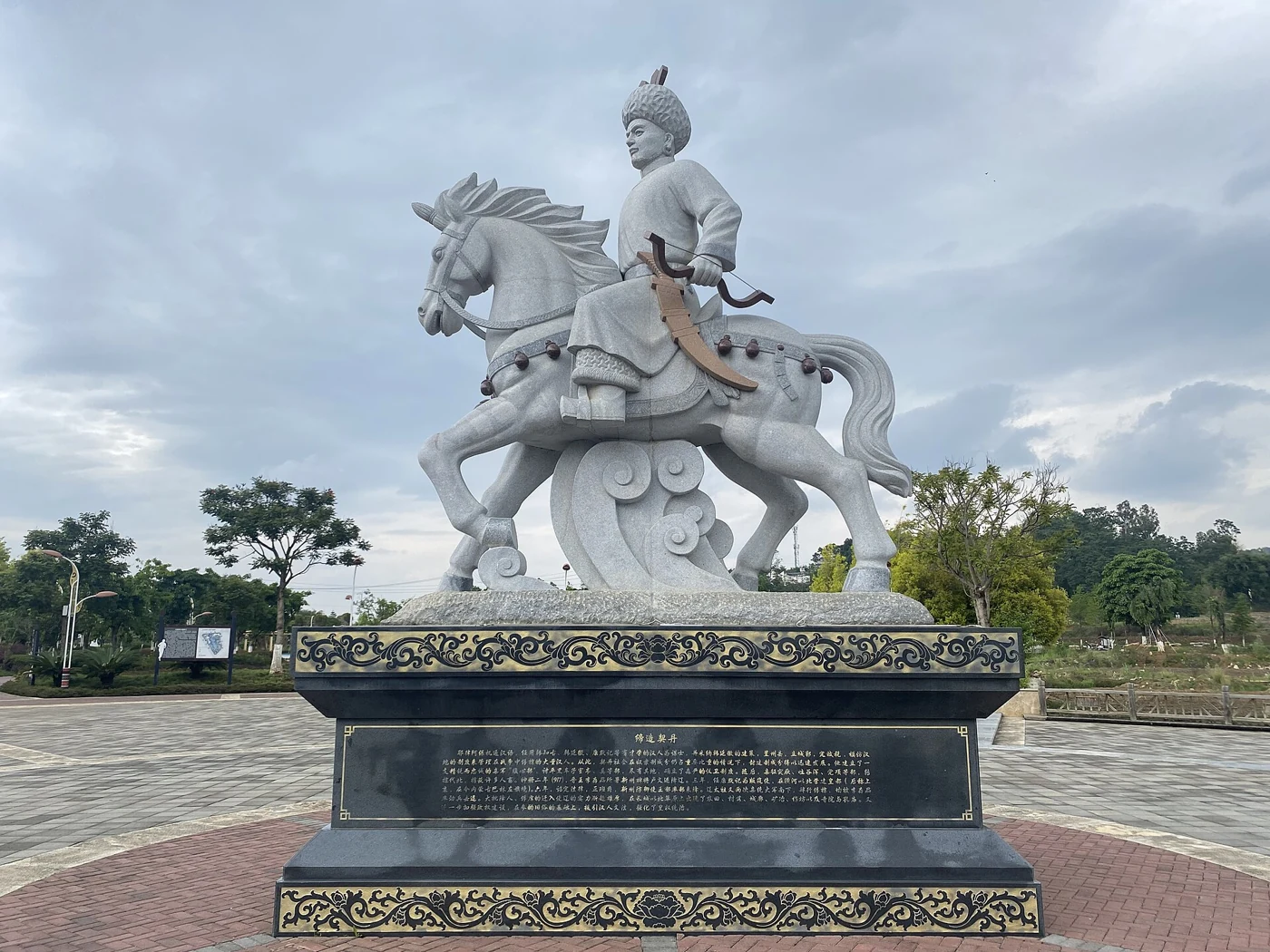
Emperor Taizu of Liao
Yelü Abaoji (872–September 6, 926), of the Yelü clan, had the sinicized name Yi, the name Abaoji, and the childhood name Chulizhi. He came from Yelü Mili in the Xialaiyi shilie locality of the Khitan Diela tribe, in the area of present-day Chifeng, Inner Mongolia. He was the founder of the Liao dynasty, initially the Khitan state, and reigned from March 17, 916 to September 6, 926. He was the son of Yelü Saladi, late
Western Liao
Emperor
Yelü Dashi
Yelü Dashi (1087–1143), courtesy name Zhongde, was a Khitan, an eighth-generation descendant of Yelü Abaoji, and the founding emperor of Western Liao, with the temple name Dezong. Literate in both Khitan and Chinese and skilled in riding and archery, he is the only Khitan jinshi explicitly recorded in the History of Liao. During the collapse of the Liao he led followers west and founded Western Liao in Central Asia
 Liao dynasty
Empress dowager
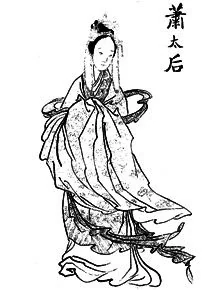
Xiao Chuo
Xiao Chuo (June 18, 953–December 29, 1009), childhood name Yanyan, was a Khitan politician, military leader, and reformer of the Liao dynasty. She was the empress of Emperor Jingzong of Liao, Yelü Xian, and the mother of Emperor Shengzong of Liao, Yelü Longxu, and became the effective ruler of the Liao state. In 969, the first year of the Baoning era, she was made empress and already participated in decisions on mili
Liao dynasty
Minister
Yelü Helü
Yelü Helü (872–918), courtesy name Kongwen and also known by the courtesy name Hongyin, was a Khitan of the Diela tribe. He was the eldest son of Yelü Ousi, the yilijin of the Diela tribe, and a kinsman and imperial-clan minister of Yelü Abaoji, later Emperor Taizu of Liao. He knew Abaoji from childhood. As adults the two exchanged fur garments and horses to seal a bond of friendship, and Helü thereafter followed A
Liao dynasty
Empress
Yelü Jun
Yelü Jun (1058–1077), whose Khitan name was Yelüwo, was the eldest son of Emperor Daozong of Liao, Yelü Hongji, and Empress Xuanyi Xiao Guanyin. A member of the Liao imperial clan, he was enfeoffed as Prince of Liang and made crown prince at the age of eight. Intelligent, studious, articulate, and well read, he was deeply favored by Emperor Daozong. He was nevertheless framed by the powerful minister Yelü Yixin, redu
Liao dynasty
General
Yelü Xiuge
Yelü Xiuge (died December 22, 998), courtesy name Xunning, was a member of the Liao imperial clan and one of its leading generals. He was a grandson of Yelü Shilu, Prince of Sui, and the son of Yelü Wansi, a Southern Administration tribal commander. During the Liao-Song wars he won major victories at the Gaoliang River, Waqiao Pass, Qigou Pass, and Junziguan. He rose to the rank of Yuyue and was enfeoffed as Prince o
Liao dynasty
Powerful Liao minister
Yelü Yixin
Yelü Yixin (died 1083), courtesy name Hudugun and Han Chinese name Yingbi, came from the Khitan Five Courts tribe. A powerful minister under Emperor Daozong, he rose to Northern Administration Privy Commissioner and acting Grand Preceptor and was enfeoffed as Prince of Wei. He became notorious for political manipulation, luxury, and the framing of Empress Yide Xiao Guanyin and Crown Prince Yelü Jun, including the “Te
Liao dynasty
of the Liao imperial clan
Yelü Wuzhi
Yelü Wuzhi (915–973 AD), courtesy name Dilie, was an eminent imperial clansman, statesman, and military strategist of the Khitan Liao Dynasty, and a nephew of Emperor Taizu (Abaoji). Composed, erudite, and farsighted, he was revered for his integrity and strategic wisdom. In 947 AD, after Emperor Taizong's death, Empress Dowager Shulü Ping and her favorite son Lihu mobilized against Emperor Shizong (Yelü Ruan) across
Liao dynasty
Liao Royal Statesman
Yelu Lubugu
Yelu Lubugu(?–952 CE), courtesy name Tuyan, was a nephew of Emperor Taizu of Liao(Yelu Abaoji)and a premier statesman, linguistic innovator, and military commander of the early Khitan Liao dynasty. In 920 CE, acting upon the imperial command of Emperor Taizu, he collaborated with Yelu Tulübu to invent the Khitan Large Script, establishing an indigenous written orthography for the Khitan nation and compiling the earli
Related entries
Bibliography
- 《辽史》
- 《宋史》
- 《金史》
- 《资治通鉴》
- 《契丹国志》
- 《新五代史》
- 《东都事略》
- 《廿二史朔闰表》
- 《中国通史》
- 《中国通史纲要》
- 《"辽"国号新解》
- 《吉林大学社会科学学报》