Birth | Born
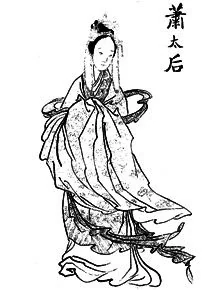
953 CE–1009 CE
Empress dowagerregent exercising imperial authority
Xiao Chuo
萧绰
Xiao Chuo (June 18, 953–December 29, 1009), childhood name Yanyan, was a Khitan politician, military leader, and reformer of the Liao dynasty. She was the empress of Emperor Jingzong of Liao, Yelü Xian, and the mother of Emperor Shengzong of Liao, Yelü Longxu, and became the effective ruler of the Liao state. In 969, the first year of the Baoning era, she was made empress and already participated in decisions on military and…
953 CE–1009 CELiao dynasty
PROFILE
Xiao Chuo (June 18, 953–December 29, 1009), childhood name Yanyan, was a Khitan politician, military leader, and reformer of the Liao dynasty. She was the empress of Emperor Jingzong of Liao, Yelü Xian, and the mother of Emperor Shengzong of Liao, Yelü Longxu, and became the effective ruler of the Liao state. In 969, the first year of the Baoning era, she was made empress and already participated in decisions on military and state affairs during Emperor Jingzong's reign. After Jingzong died in 982, the fourth year of Qianheng, Emperor Shengzong succeeded to the throne, and Xiao Chuo governed as empress dowager and regent for twenty-seven years. In 986, the fourth year of Tonghe, she repelled the Northern Song's Yongxi Northern Expedition. In 1004, the twenty-second year of Tonghe, she personally campaigned against Northern Song and concluded the Chanyuan Treaty. In 1009, the twenty-seventh year of Tonghe, she returned government authority to Emperor Shengzong and died later that year. Her posthumous title was Empress Shengshen Xuanxian.
- Other names
- Xiao Yanyan; Empress Dowager Chengtian
- Courtesy/childhood name
- Yanyan
- Period
- Liao dynasty
- Date of Birth
- June 18 953
- Date of Death
- December 29 1009
- Dynasty/Regime
- Liao dynasty
- Identity
- Empress dowager; regent exercising imperial authority
- Ethnicity
- Khitan
- Native place
- Not recorded in historical sources
- Place of birth
- Not recorded in historical sources
- Regency
- Not recorded in historical sources
- Posthumous name
- Not recorded in historical sources
- Main significance
- Empress of Emperor Jingzong of Liao and mother of Emperor Shengzong; exercised regency for more than twenty years, personally campaigned at Chanyuan, and concluded the Chanyuan Treaty, becoming the effective ruler of the Liao dynasty.
LIFE TIMELINE
Emperor Muzong of Liao was assassinated | Emperor Muzong of Liao was assassinated; Xiao Siwen and others supported Yelü Xian's accession
Entered the palace as Noble Consort | Entered the palace as Noble Consort; made empress in the fifth lunar month
Her father Xiao Siwen was assassinated | Her father Xiao Siwen was assassinated
Gave birth to her eldest son Yelü Longxu | Gave birth to her eldest son Yelü Longxu, later Emperor Shengzong of Liao
Emperor Jingzong ordered the Historiography Office to record the empress's pronouncements | Emperor Jingzong ordered the Historiography Office to record the empress's pronouncements with imperial first-person forms such as “zhen” and “yu”
Emperor Jingzong died | Emperor Jingzong died, leaving a testament that military and state affairs were to be decided according to the empress's orders
Yelü Longxu succeeded at the mourning ceremony | Yelü Longxu succeeded at the mourning ceremony; Xiao Chuo became regent by imperial testament
Received the honorific title Empress Dowager Chengtian | Received the honorific title Empress Dowager Chengtian
Repelled the Northern Song Yongxi Northern Expedition and captured Song general Yang Ye | Repelled the Northern Song Yongxi Northern Expedition and captured Song general Yang Ye
Personally campaigned against Northern Song and concluded the Chanyuan Treaty | Personally campaigned against Northern Song and concluded the Chanyuan Treaty
Received the honorific title “Ruide Shenlüe Yingyun Qihua Chengtian Empress Dowager” | Received the honorific title “Ruide Shenlüe Yingyun Qihua Chengtian Empress Dowager”
Returned government authority to Yelü Longxu and died in the twelfth lunar month of the sa | Returned government authority to Yelü Longxu and died in the twelfth lunar month of the same year
Buried at Qianling Mausoleum | Buried at Qianling Mausoleum
BIOGRAPHY
Biography
Family Background and Early Life
Xiao Chuo came from one of the most prominent consort clans of the Liao dynasty. Her family originally belonged to the Bali clan and was granted the surname Xiao by Emperor Taizu of Liao, Yelü Abaoji. Her father, Xiao Siwen, served as Northern Administration Chancellor and Prefect of the Masters of Writing and was enfeoffed as Prince of Wei; he was regarded as a veteran minister who had served four reigns. Her mother, Yelü Lübugu, Grand Princess of Yan, was an elder sister of Emperor Muzong of Liao. Xiao Chuo was Xiao Siwen's third daughter. Her elder sister Xiao Hunian married Yelü Yansage, Prince of Taiping, while her second sister Yileilan married Yelü Xiyin, Prince of Zhao.
Xiao Chuo was said to have been intelligent and careful from childhood. According to the History of Liao, Xiao Siwen once observed his daughters while they were sweeping. The others finished carelessly, whereas Xiao Chuo cleaned thoroughly and put the furnishings in order. Xiao Siwen therefore praised her, saying, “This daughter will surely be able to manage a household.”
Becoming Empress and Participating in Government
On March 12, 969, the twenty-second day of the second lunar month of the nineteenth year of Yingli, Emperor Muzong of Liao, Yelü Jing, was assassinated by close attendants while hunting at Black Mountain, in present-day Bairin Right Banner, Inner Mongolia. Xiao Siwen suppressed news of the assassination and, together with Gao Xun, Commissioner of the Southern Privy Council, and Nüli, the Flying Dragon Commissioner, assisted Yelü Xian. At dawn Yelü Xian reached Black Mountain and succeeded to the throne before Emperor Muzong's coffin as Emperor Jingzong.
On March 29, 969, the ninth day of the third lunar month of the first year of Baoning, Emperor Jingzong promoted Xiao Siwen to Commissioner of the Northern Privy Council and summoned Xiao Chuo to the palace as Noble Consort. She was made empress in the fifth lunar month, when she was sixteen. Because Jingzong was physically frail and suffered from recurrent illness, he was often unable to attend court, and many state affairs were decided by Xiao Chuo. The History of the Khitan State states that punishments and rewards, government affairs, and military campaigns were all decided by the empress while the emperor remained bedridden. In 976, the eighth year of Baoning, Jingzong ordered historians to record the empress's pronouncements using imperial first-person expressions such as “zhen” and “yu,” establishing this as a formal practice and elevating her political status to a level approaching that of the emperor.
In the fifth lunar month of 970, the second year of Baoning, Xiao Siwen accompanied Emperor Jingzong on a hunt at Lü Mountain, in present-day Jinzhou, Liaoning. While passing Pandao Ridge he was assassinated. The killers were later identified as imperial in-laws Xiao Haizhi and Xiao Haili and were executed. In 978, the tenth year of Baoning, Gao Xun and Nüli were also found to have been involved and were ordered to die.
Regency
On October 13, 982, the twenty-fourth day of the ninth lunar month of the fourth year of Qianheng, the thirty-five-year-old Emperor Jingzong died of illness at the Jiaoshan traveling palace in Yunzhou, present-day Datong, Shanxi. His final testament named Prince of Liang Yelü Longxu as successor and ordered that military and state affairs be decided according to the empress's command. Yelü Xiezhen and Han Derang were appointed as senior testamentary ministers. On the twenty-fifth day of the ninth lunar month, the twelve-year-old Yelü Longxu succeeded before the imperial coffin, and Xiao Chuo assumed the regency under the testament.
The situation was precarious because the ruler was young, while more than two hundred imperial princes and clansmen controlled military forces. Xiao Chuo reportedly wept before Yelü Xiezhen and Han Derang and said, “The mother is widowed and the son weak; the clans are strong, and the frontiers remain unsettled. What is to be done?” They replied that if she trusted them, there was no cause for fear. Xiao Chuo then governed jointly with Yelü Xiezhen and Han Derang and assigned Yelü Xiuge responsibility for the southern frontier.
Following Han Derang's advice, Xiao Chuo ordered imperial princes to return to their residences and forbade them from privately gathering together. Their military commands were removed, and members of their families were summoned to court as hostages, reducing the risk of internal struggles for the throne. In 983, the first year of Tonghe, Emperor Shengzong and the assembled officials presented her with the title Empress Dowager Chengtian.
War and Peace with Song
In 986, the fourth year of Tonghe, Emperor Taizong of Song, Zhao Guangyi, learned that the Liao ruler was young and that state affairs were decided by his mother, and launched the Yongxi Northern Expedition with three separate armies. Xiao Chuo accompanied Emperor Shengzong in declaring a personal campaign. Yelü Xiuge was assigned to resist the eastern Song army under Cao Bin, while Yelü Xiezhen faced the western army under Yang Ye. On May 3 of the lunar calendar, corresponding to June 12, Cao Bin's army was heavily defeated at Qigou Pass, with large numbers of Song troops drowning. In the seventh lunar month, Yelü Xiezhen captured Song general Yang Ye at Shuozhou. Yang Ye refused food for three days and died. Xiao Chuo ordered that his head be sent along the frontier as a warning. Liao morale rose, and the dynasty recovered all the territory at issue in the campaign.
In the intercalary ninth lunar month of 1004, the twenty-second year of Tonghe, Xiao Chuo and Emperor Shengzong personally led an invasion of Northern Song under the stated objective of reclaiming the lands south of the old frontier. The Liao armies advanced rapidly and reached Chanyuan, present-day Puyang in Henan, in the eleventh lunar month. Emperor Zhenzong of Song, Zhao Heng, personally came to the front after Chancellor Kou Zhun insisted that he do so, raising Song morale. Liao vanguard commander Xiao Talin was struck in the head by a concealed Song crossbow and killed, dealing a setback to the Liao army. Xiao Chuo then took advantage of Emperor Zhenzong's willingness to negotiate and reached the Chanyuan Treaty with Song, under which Song provided Liao each year with 100,000 taels of silver and 200,000 bolts of silk.
Final Years and Death
In 1006, the twenty-fourth year of Tonghe, Emperor Shengzong led the officials in presenting Xiao Chuo with the honorific title “Ruide Shenlüe Yingyun Qihua Chengtian Empress Dowager.” In 1009, the twenty-seventh year of Tonghe, Xiao Chuo returned governmental authority to Emperor Shengzong, ending her twenty-seven-year regency. On the fifth day of the twelfth lunar month, corresponding to December 29, 1009, she died at a traveling palace at the age of fifty-seven. Her posthumous title was Empress Shengshen Xuanxian. She was buried at Qianling Mausoleum the following year. In 1052, the twenty-first year of Chongxi, Emperor Xingzong of Liao changed her posthumous title to Empress Ruizhi.
Her Family and Early Years
Xiao Chuo, whose childhood name was Yanyan, was a Khitan, a statesman, soldier and reformer of the Liao. It is told that when she and her sisters were at their household work, the others finished theirs carelessly while she went on rubbing and cleaning until the furniture was in perfect order, so that her father Xiao Siwen would often praise her with a look and say that she would certainly do great things. In her youth she had been betrothed to Han Derang and, before the marriage could take place, was chosen by the Jingzong emperor as a consort. As to her birthplace, the old city of Tashihai was called the spring-hunting city and the empress's inn, meaning the castle where the emperor hunted when he made the spring nabo rite; and it was a city of the kind called toutou junzhou built by Xiao Siwen, toutou being a transcription of a Khitan word meaning prince or chief and junzhou the private domain of a prince or noble with its own troops and slaves, so that it may be called Xiao Siwen's private estate, and Xiao Chuo may have been born there. Song records give Xiao Shouxing's Khitan name as Weigua, a variant transcription of Yingu, which was Xiao Siwen's milk name, so that Xiao Shouxing is Xiao Siwen. In the first year of Baoning, 969, after Yelü Xian came to the throne as Jingzong she was chosen as noble consort and in the fifth month made empress; and in the third year of Baoning, 971, she bore Yelü Longxu, the Shengzong.
Her Share in Military and Civil Government under the Jingzong
By the Record of the Khitan State, at the murderous coup of the Huoshen pool, when Shuzha killed the Shizong and his consort and sought the life of the emperor as well, "the emperor was then nine years old and Liu Xieli, the deputy cook of the imperial kitchen, wrapped him in felt and hid him among the firewood, and so he escaped"; and on his accession he was afflicted with a palsy and seldom held court, changing the era to Baoning, so that "punishments and rewards, government business, and the pursuit of war were all decided by the empress, while the emperor lay on his bed and did no more than fold his hands." As time went on, with Yelü Xian's tacit consent all the daily government of Liao was decided by Xiao Chuo alone; and in great matters of state and war she would gather the Khitan and Chinese ministers to discuss them and, having weighed all views, decide, while Jingzong at most heard the report and said that he knew of it, never interfering. Under her the Liao armies grew strong and the government and economy came into order. And by the biography of the empresses in the History of Liao, after Jingzong's death she wept and asked how, with the mother widowed and the son young, the clans strong and the frontier unquiet, anything was to be done; and Yelü Xiezhen and Han Derang said that if she trusted them there was nothing to fear; and so she took part with Xiezhen and Derang in deciding the great affairs and gave the southern frontier business to the prince of Yue, Xiuge.
Her Regency as Empress Dowager Chengtian and the Repulse of the Yongxi Campaign
In the fourth year of Qianheng, 982, Yelü Xian died and Yelü Longxu succeeded, honouring Xiao Chuo as empress dowager, and she began twenty-seven years of regency. On the tenth day of the sixth month of the first year of Tonghe, 983, Yelü Longxu with his ministers gave her the honorific of empress dowager Chengtian, while the ministers gave the emperor the honorific of the heaven-aided emperor, with a general amnesty and the change of era to Tonghe; and on the twenty-third the civil and military officers were each raised one grade, Yelü Xiezhen being made acting minister of education. In the fourth year of Tonghe, 986, the Song armies advanced in three columns: Cao Bin was made commander of the vanguard of horse, foot and water on the Youzhou road with Cui Yanjin as his deputy, Mi Xin commander of the northwestern road marching from Xiongzhou, Tian Zhongjin commander of the Dingzhou road marching from Feihu, and Pan Mei with Yang Jiye by the Yanmen road, and Qigou, Zhuozhou, Gu'an and Xincheng all fell. Xiao Chuo had the assistant commissioner of the palace Pu Ling ride to the south of Yan to consult with Xiuge on military affairs, sent envoys to levy the troops of the tribes to reinforce him, and sent the keeper of the eastern capital, Yelü Mozhi, with the great army to follow, with a sword and the power of life and death; and she announced her personal expedition at the tombs, temples, mountains and rivers. In the fifth month the Liao army fought Cao Bin and Mi Xin at Qigou pass and heavily defeated them, pursuing them to the Juma river, where those who drowned were beyond counting, and the rest fleeing to Gaoyang were struck again by the Liao and died by the ten thousand, "leaving weapons and armour like hills." In the seventh month of autumn the privy councillor Yelü Xiezhen reported the recovery of Shuozhou and the capture of the Song general Yang Jiye, who refusing food died of his honour within three days; and Xiao Chuo had his head cut off and put in a box and sent about the frontier posts, at which the Liao armies' spirit rose greatly and the Song garrisons were so shaken that "from that time the Song holding Yun, Ying and the other prefectures, hearing of Yang Jiye's death, all abandoned their cities and fled," so that Liao recovered all its territory.
Her Repeated Campaigns to the South and the Treaty of Chanyuan
In the first month of the fifth year of Tonghe, the ministers gave the empress dowager the honorific of the empress dowager Chengtian, wise and virtuous, divinely strategical, responding to fate and transforming. In the following years the Liao armies went south again and again: in the seventh month of the seventeenth year of Tonghe, 999, an edict proclaimed the coming expedition against Song, and in the ninth month they marched south; in the tenth month Suicheng was attacked without success, Xiao Jiyuan being sent against the stone stockade of Langshan town and breaking it; at Yingzhou they fought the Song and took their generals Kang Zhaoyi and Song Shun with weapons and armour beyond counting, and took Leshou county; in the first month of the eighteenth year they returned to Nanjing, rewarding the meritorious and punishing the disobedient; and in the third month of the twentieth year the northern chancellor Xiao Jiyuan was sent south, in the fourth month the literary officer Dalidi beating the Song at Liangmen and the commander of the southern capital Xiao Talin breaking them at Taizhou, and in the sixth month Xia sent word that it had taken Lingzhou of Song. In the twenty-second year of Tonghe, 1004, Xiao Chuo, on the plea of demanding the lands south of the pass, went in person against Song with Yelü Longxu. By the Record of the Khitan State, in the Tonghe years the whole realm went south, the empress herself riding in the ranks, and with the young emperor she first moved against the Weilu and Shun'an armies and eastward against Baozhou; and with the young emperor and the commander, the prince of Shun, Talan, she joined forces against Dingzhou, while the rest went straight to Shen and Qi and eastward. Then from Yangcheng marsh along the Hulu river they crossed the pass and came south to the walls of Yingzhou with a very great host, and the empress and the young emperor themselves beat the drum and urged the troops on, so that arrows fell on the wall like rain. And from Yingzhou they came to Bei, Ji and Tianxiong, at which the Southern Song was in panic and the emperor came in person to Chanyuan; and it was she who was the planner, and she too who sent Wang Jizhong to make peace and who decided the annual payments obtained. Xiao Chuo did not mean to hold cities or stockades in this invasion but to invest Kaifeng and force Song to submit or make a treaty, but the reality was far otherwise: the Liao army meeting stubborn resistance from the moment it crossed the border, she tried to take Yingzhou as a base of supply and attacked it fiercely, beating the drum herself to raise the men's spirit; but after more than ten days the city still held and the Liao losses were heavy, and she changed her plan and gave it up. Afterwards the Liao van reached the walls of Chanzhou, where the Song commander Zhang Gui had the men shoot at them, using three-bed crossbows with spears for arrows of great power, and the Liao general Xiao Talin was struck on the forehead and died of the wound before Xiao Chuo could reach Chanzhou; his death shook the Liao army and Xiao Chuo wept bitterly at the news, but the Liao were by then surrounded, and if the Song forces about them closed in the state might have perished. While she hesitated, the Song general Wang Jizhong, who had gone over to the Liao, made terms between the two, and Xiao Chuo had him write in her name and the Shengzong's to Emperor Zhenzong of Song declaring the Liao's wish for peace; and though the emperor and the Song leaders at first did not believe it, when the letters came again into the emperor's hands and probes had been made several times on both sides, envoys were appointed to bring the peace about. In the negotiations Xiao Chuo yielded, no longer demanding land but money; and in the twelfth month of the twenty-second year of Tonghe the Song sent Li Jichang to sue for peace, calling the empress his aunt and offering a hundred thousand taels of silver and two hundred thousand bolts of silk a year, which Liao accepted, and the treaty of Chanyuan was made. In the twenty-fourth year of Tonghe, 1006, Yelü Longxu with the ministers gave her the honorific of the empress dowager Chengtian, wise and virtuous, divinely strategical, responding to fate and transforming.
Her Return of the Government and Her Death
In the twelfth month of the twenty-seventh year of Tonghe, 1009, Xiao Chuo returned the imperial power to Yelü Longxu, ending her regency of more than forty years over the reigns of Jingzong and Shengzong. She set out for Nanjing to pass her last years, and on the fifth day of the twelfth month fell ill, and on the eighth day Yelü Longxu proclaimed a general amnesty to pray for her. By the Record of the Khitan State, "one month after taking the government into his own hands the empress dowager died suddenly, and the emperor wasted away with grief, weeping blood"; and when the Khitan and Chinese ministers said that the burial being over the era should be changed, the emperor answered that a change of era was a rite of joy and that to perform rites of joy in mourning was to be an unfilial son, and when they said that the emperors of old reckoned a day for a month and that he should follow the old rule, he said that he was a Khitan sovereign and would rather break the old rule than be unfilial, and he kept the full three years. In the first month of the spring of the twenty-eighth year the emperor went to the Qianling and laid the coffin of the late empress dowager in the sheltering hall at Qianzhou; in the second month Song sent Wang Sui and Wang Ru to condole and sacrifice and Koryo sent Wei Shouyu; and in the same month the general of the left dragon-tiger guard Xiao Hezhuo was sent to give the late empress dowager's relics to Song, and the commissioners of Linhai army and others to thank Song for its condolences. In the third month the emperor gave her the posthumous name of the holy, divine, proclaimed and offered empress, and in the same month envoys came from Song and Koryo to the burial; and in the fourth month she was buried in the Qianling. The Qianling holds the tombs of the Jingzong emperor and the empress dowager: in March 2021 the Institute of Archaeology of Liaoning disclosed the results of five years' survey of the Yiwulü mountains, finding that the Xinli site in the Sandao gorge of those mountains is the offering hall and the underground chamber of the Qianling, the hall being a cloister building with its roof wholly covered in green glazed tiles, the earliest instance yet found in Chinese wooden architecture of a roof entirely of glazed tiles.
Her Children, Her Kin and Related Remains
By the Continuation of the Comprehensive Mirror, the Khitan palace officer Li Xin, having come over to Song, said that the Jingzong emperor had four sons and three daughters, all by lady Xiao: the eldest named Longxu, that is the Shengzong, then Zan falsely enfeoffed as prince of Liang, then Gaoqi, then Zhengge, who died at eight months; and three daughters, the eldest Yange married to Xiao's younger brother the northern chancellor Liuzhuge, the second Changshounu married to Xiao's nephew the keeper of the eastern capital Beiyi, and the third Yanshounu married to Beiyi's younger brother Kentou, who on Yanshounu's being killed by a deer while hunting was strangled by Xiao to be buried with her. By the Record of the Khitan State Xiao Chuo had two elder sisters: the elder married the prince of Qi and, on his death, called herself the consort of Qi and led thirty thousand troops encamped at the Luju'er river on the western border, and seeing a barbarian slave Talan'abu of great beauty when reviewing horses, took him into her palace, at which Xiao Chuo had him bound and beaten with four hundred sandbags and separated from her, and a year later the consort of Qi asking him for a husband, Xiao Chuo consented and sent him west to overawe the Tatars, whom he wholly subdued; and afterwards the consort of Qi plotting to lead her people to the state of Gulizha and join forces to displace Xiao Chuo, Xiao Chuo learning of it took away her troops and gave her charge of Youzhou. The younger sister married the prince of Zhao, and on his death the consort of Zhao poisoned Xiao Chuo at a drinking party, but was betrayed by a maid, and Xiao Chuo had her poisoned. As to remains: there is an old Liao waterway which, after being cleared by hand, became an important grain-transport channel joining the Ji water above, the moat of the Liao southern capital in the middle and the present north canal below, carrying goods between the Beijing region and the outer world, and said to have been cut in Xiao Chuo's time of government, whence its name of the empress dowager Xiao's grain-transport river; and the Fengguo temple at Yi county in Jinzhou of Liaoning, first built in the ninth year of Kai Tai, 1020, and first called the Xianxi temple, was a royal temple built by the Shengzong, Yelü Longxu, on the "family fief" of his mother Xiao Chuo, and contains the oldest and largest great hall of a Buddhist temple in China.
Major Activities
Political Reforms
During her regency Xiao Chuo implemented a number of political reforms. She adjusted the legal relationship between Khitan and Han subjects. Rules that had previously imposed heavier penalties on Han people in disputes involving Khitans were changed toward equal punishment for the same offense, reducing ethnic tensions. She also reviewed miscarriages of justice. In 983, the first year of Tonghe, she ordered that anyone who had already been sentenced but claimed wrongful treatment could appeal to the Censorate, and she personally reviewed long-unresolved cases. She relied heavily on the Han Chinese statesman Han Derang, appointing him Commissioner of the Northern and Southern Privy Administrations and Grand Chancellor and enfeoffing him as Prince of Jin, thereby contributing to the increasing use of Chinese-style institutions in Liao government.
Military Activity
Xiao Chuo personally directed two major Liao military operations. In 986, the fourth year of Tonghe, she repelled the Northern Song Yongxi Northern Expedition and captured the Song general Yang Ye. In 1004, the twenty-second year of Tonghe, she personally campaigned against Northern Song. Although the Liao army suffered a setback at Chanyuan, she used diplomacy to conclude the Chanyuan Treaty, bringing the Liao dynasty a long period of peace and a stable annual transfer from Song.
Travels and Movements
Xiao Chuo frequently accompanied Emperor Jingzong on hunts and tours, including visits to Lü Mountain in present-day Jinzhou, Liaoning, and Black Mountain in present-day Bairin Right Banner, Inner Mongolia. During her regency she also went personally to the Nanjing front, in present-day Beijing, and stationed herself north of the city while directing operations against Song.
Relations with Contemporaries
Xiao Chuo maintained a close relationship with Han Derang. Song-period accounts claimed that she had been betrothed to Han Derang when young and that, after Emperor Jingzong's death, she wished to restore the earlier match because she considered Han highly capable. The same accounts stated that Emperor Shengzong treated Han Derang as a father. More recently discovered epitaph evidence for Han Derang does not mention a wife surnamed Li, and the claim in Song anecdotal sources may have been intended to denigrate the Liao empress dowager. Xiao Chuo was also close to Yelü Xiezhen. In 983, the first year of Tonghe, Emperor Shengzong and Yelü Xiezhen exchanged bows, saddles, and horses in Xiao Chuo's presence and pledged friendship.
Her Government, Her Use of Men, and the Reform of Abuses
By the judgement of the History of Liao, Xiao Chuo was full of stratagem and knew how to manage those about her, so that "the great ministers mostly gave her their utmost"; and in the law, where formerly a Khitan who killed a Chinese made compensation in cattle and horses while a Chinese who killed a Khitan was beheaded and his kin made slaves, she judged all alike by the Chinese law, an important change in Liao jurisprudence. Whenever the enemy horsemen raided she put on armour and directed the fighting herself, and the peace with Song was also her doing; though the historians also call her by nature cruel and much given to killing. In her use of men she relied on the Khitan and Chinese ministers Han Derang, Yelü Xiezhen and Yelü Xiuge to divide the military and civil government; it was with Xiezhen and Derang that she decided the great affairs after Jingzong's death while she gave the southern frontier to Xiuge, and when early in Tonghe the empress dowager took the government and summoned Yelü Hugu to the capital, Hugu "falling out with Han Derang over a matter, Derang in his anger took the weapon held by a guard and struck him on the head so that he died," which shows how she and Han Derang established their authority by such killings.
Her Relationship with Han Derang
By Lu Zhen's Record of the Yoke-Bearing Envoys, "the empress Xiao in her youth had been betrothed to one of the Han, that is Han Derang, and the day was near, when the house of Yelü sought a wife of the Xiao, and the Xiao took the Han's betrothed and gave her to them, and she bore Longxu, who is now our ruler. Yelü dying, Longxu being young, took his place, and the empress Xiao, widowed early, while the Han held the military government for generations and the power was in his hands, feared it might go ill with the child, and privately told Derang that she had long since promised to marry him and now wished the old agreement fulfilled, so that with the young ruler over the state he should be as a son to him also; and from that time Derang came and went within the curtains without question, and presently she poisoned Derang's wife lady Li, and whenever she went out hunting she would lodge in the same tent with Derang; and before long she bore the prince of Chu, who was the Han's son." In the twelfth month of the twenty-second year of Tonghe, when the army returned, "the empress dowager gave the grand chancellor, the prince of Qi, Han Dechang, the surname Yelü and changed his principality to Jin," and in the eleventh month of the twenty-third year of Tonghe she decreed that the grand chancellor Yelü Dechang be taken out of the palace register and enrolled in the imperial clan. When Xiao Chuo died in the twelfth month of the twenty-seventh year of Tonghe, and in the fourth month of the next year she was buried, the Shengzong, on the ground that "even the Son of Heaven must have an elder," that is that the emperor should have an elder brother, gave Han Derang the name Longyun in his own generation, so that Han Derang acquired the standing of imperial elder brother and ranked above the princes, with lands, dwellings and a place beside the tomb; and some hold that the renaming was a political show staged by the Shengzong to deny the special relation that in fact existed between Han Derang and the empress dowager Chengtian.
Her Gardens and Residences, and Her Image in Later Ages
Xiao Chuo built gardens by the springs at Yuanyang marsh and elsewhere, contriving the beauty of willows and peach trees in alternation, with pavilions among them, so that in the heart of the capital region there began to be many summer retreats and hunting lodges, such as the Yuanyang marsh and the Liangxing; and she laid out many gardens there, the upper, middle and lower gardens being famous imperial gardens of the Liao, planted with rare flowers and strange trees, where the empress dowager often stayed to discuss the affairs of state and dispose her troops. It is said that the Qionghua island in the Beihai park of today was once Xiao Chuo's dressing terrace, the tale being that she once stayed there and dressed, whence the name of the dressing village, which appears in Ming and Qing writings. Later ages have commemorated her in many forms: in 1992 the People's Bank of China issued a set of coins of outstanding figures of Chinese history, the ninth group, in which Xiao Chuo appears on a silver coin bearing her in Khitan dress with armour over it, a precious sword at her waist and a military map in both hands as she looks far away; in Luanzhou of Hebei there is a statue of her, 1088 centimetres high to mark the founding of Luanzhou 1088 years before, its base ringed by fifty-six lotus petals to mark her fifty-six years of life; and on the Peking stage she is the subject of two plays, the Fourth Son Visits His Mother and the Yanmen Pass, the former a court play full of domestic feeling showing her maternal kindness, the latter with the empress dowager as the chief part and showing more of the martial and civil authority of a ruler.
Personal Relations
- Father: Xiao Siwen, Northern Administration Chancellor and Prefect of the Masters of Writing, enfeoffed as Prince of Wei
- Mother: Yelü Lübugu, Grand Princess of Yan
- Eldest sister: Xiao Hunian, wife of the Prince of Taiping
- Second sister: Yileilan, wife of the Prince of Zhao
- Husband: Emperor Jingzong of Liao, Yelü Xian
- Eldest son: Emperor Shengzong of Liao, Yelü Longxu
- Second son: Yelü Longqing, Prince of Heng
- Third son: Yelü Longyou
- Eldest daughter: Yelü Guanyinnü
- Second daughter: Yelü Changshounü
- Third daughter: Yelü Yanshounü
- Han Derang: testamentary minister, commissioner of the northern and southern privy administrations, grand chancellor, and Prince of Jin; one of Xiao Chuo's principal political allies
- Yelü Xiezhen: testamentary minister and Commissioner of the Northern Privy Council; participated with Xiao Chuo in high-level government decisions
- Yelü Xiuge: Southern Capital governor and commander of southern military affairs
- Emperor Muzong of Liao, Yelü Jing: ruler served by Xiao Chuo's father Xiao Siwen; assassinated by close attendants
- Emperor Jingzong of Liao, Yelü Xian: Xiao Chuo's husband and emperor of the Liao dynasty
- Emperor Shengzong of Liao, Yelü Longxu: Xiao Chuo's son and emperor of the Liao dynasty
- Emperor Taizong of Song, Zhao Guangyi: launched the Yongxi Northern Expedition, which Xiao Chuo repelled
- Emperor Zhenzong of Song, Zhao Heng: the Song ruler who concluded the Chanyuan Treaty
- Yang Ye: Northern Song general captured by Liao forces who died after refusing food
Historical Assessment
Liao and Contemporary Assessments
- The History of Liao: Biographies of Empresses states: “The empress understood the principles of government and always followed good advice, so the ministers all exerted their loyalty.”
- The History of Liao: Basic Annals of Emperor Jingzong records that punishments and rewards, state affairs, and military campaigns were all decided by the empress.
- Emperor Shengzong of Liao showed exceptional reverence toward his mother, repeatedly leading officials in presenting her with honorific titles and building Fengguo Temple in her memory.
Song and Yuan Periods
- The Song writer Lu Zhen's Record of a Diplomatic Mission recorded the relationship between Xiao Chuo and Han Derang and attributed to her the statement that she had once been promised to him and wished to restore that old bond, though this account may have been intended to denigrate the Liao empress dowager.
- Ye Longli, author of the History of the Khitan State, described the situation at the start of her rule as one in which she had few marital relatives to assist her, the imperial sons were young, and the court and country were fearful.
- The Yuan compilers of the History of Liao, led by Toqto'a, praised Xiao Chuo in the biographies of empresses as one who understood government and accepted good advice, affirming her political ability.
Ming and Qing Periods
- Ming scholar Wang Qi called Xiao Chuo “a worthy empress of Liao” in the Continuation of the Comprehensive Examination of Institutions.
- Qing scholar Zhao Yi, discussing rule by Liao empresses in Notes on the Twenty-Two Histories, described Xiao Chuo as experienced in military and political affairs and capable of appointing worthy officials.
- Qing historian Li E collected accounts of Xiao Chuo in Supplement to the History of Liao and described her as possessing “the bearing of a great man.”
Modern Period
- A modern General History of China edited by Cai Meibiao described Xiao Chuo as one of the most outstanding female political figures of the Liao dynasty.
- Scholar Zhou Baorong, in a study of the birth date of Empress Dowager Chengtian, examined Xiao Chuo's dates and affirmed her historical importance.
- Modern television productions such as The Legend of Xiao Chuo and works on the Yang family generals have portrayed her as a major figure in Liao-Song warfare.
FIGURES ASSOCIATED WITH THIS DYNASTY
Bibliography
- Toqto'a et al., History of Liao, vol. 71, “Biographies of Empresses,” vol. 8, “Basic Annals of Emperor Jingzong,” and vol. 10, “Basic Annals of Emperor Shengzong”
- Ye Longli, History of the Khitan State, vols. 6, 13, and 18
- Cai Meibiao, ed., General History of China