Birth into the Imperial Clan
Born into the Mengfu branch of the Dila tribe; renowned for his gravity and astronomical knowledge.
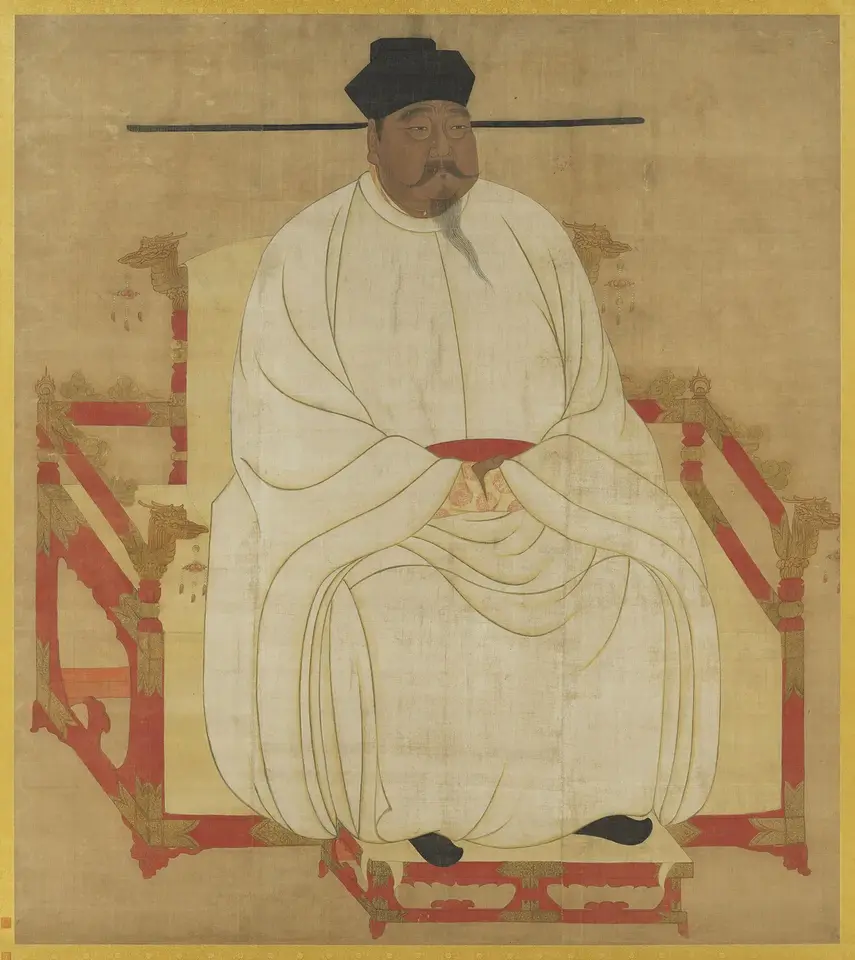
915 CE–973 CE
耶律屋质
Yelu Wuzhi was a paramount imperial statesman, military commander, and premier councilor of the early Liao Dynasty, serving across the five reigns of Taizu, Taizong, Shizong, Muzong, and Jingzong. Descended from the Mengfu branch of the imperial Khitan lineage, he was renowned for his composure, broad scholarship, and unshakeable fidelity. Versed in classical governance and astronomical calculations, he managed royal clan…
Yelu Wuzhi was a paramount imperial statesman, military commander, and premier councilor of the early Liao Dynasty, serving across the five reigns of Taizu, Taizong, Shizong, Muzong, and Jingzong. Descended from the Mengfu branch of the imperial Khitan lineage, he was renowned for his composure, broad scholarship, and unshakeable fidelity. Versed in classical governance and astronomical calculations, he managed royal clan administration as Tiyin under Emperor Taizong. In 947, following Emperor Taizong's death at Luancheng, southern expedition commanders enthroned Emperor Shizong (Yelu Ruan), while Empress Dowager Shulü Ping mobilized imperial armies on the Huang River to seat Prince Li Hu, threatening a fratricidal civil war. Disregarding personal danger, Yelu Wuzhi mediated between the opposing armies, brokering the landmark Hengdu Agreement that averted bloodshed and legitimized Shizong's succession. In 951, when Shizong was assassinated during the Huoshendian Incident, Wuzhi escaped disguised as a commoner, rallied the elite Pishi Army, crushed the usurper Yelu Chage, and enthroned Emperor Muzong (Yelu Jing). Later, as Grand King of the Northern Realm, he relieved the Northern Song siege of Taiyuan through deception. For his peerless contributions, he was invested with the supreme dignity of Yuyue, recognized alongside Yelu Helu as one of the two legendary councilors in Liao history.
Born into the Mengfu branch of the Dila tribe; renowned for his gravity and astronomical knowledge.
Mediated between Empress Shulü Ping and Emperor Shizong across the Huang River, averting civil war.
Investigated and crushed the assassination plot led by Yelu Tiande, Xiao Han, and Yelu Liuge against Shizong.
Escaped the slaughter at Huoshendian, mobilized the Pishi Army, executed usurper Yelu Chage, and enthroned Muzong.
Deployed night deceptions to break the Song siege of Taiyuan; advanced to the supreme dignity of Yuyue.
Passed away at fifty-seven; Emperor Jingzong suspended court audiences for three days; later honored with a shrine at Shangjing.
Yelu Wuzhi belonged to the Mengfu branch, one of the four foundational royal lineages of the Liao Dynasty. Yelu Yundeshi, grandfather of dynastic founder Emperor Taizu (Abaoji), had four sons, of whom the second, Yelu Yanmu, fathered the Mengfu house, sharing close genealogical proximity to the imperial main lineage. Endowed with a calm and reserved disposition, Wuzhi was admired for his broad intellectual capacity and unswerving commitment to his pledged word. In the face of sudden political crises, he maintained absolute composure.
In addition to martial prowess, Wuzhi was versed in Khitan traditional lore, Chinese historical classics, and astronomy. During the Huitong era of Emperor Taizong (Yelu Deguang), he was appointed Tiyin, an exalted office supervising the genealogies, discipline, and legal affairs of the imperial clan.
In April 947 (Datong 1), having conquered the Later Jin Dynasty, Emperor Taizong died of illness at Luancheng while returning north. To prevent political chaos, the southern expeditionary generals bypassed the capital at Shangjing and enthroned Prince of Yongkang Yelu Ruan (son of Abaoji's eldest son Yelu Bei) as Emperor Shizong. Residing at the capital, the formidable Grand Empress Dowager Shulü Ping was infuriated by this unilateral action, intending instead to place her favored youngest son, Prince Li Hu, on the throne. When Li Hu's vanguard suffered a defeat at Taide Spring, he seized the families of Shizong's loyalist ministers in the capital, threatening mass execution.
Empress Shulü Ping personally mobilized imperial troops, establishing encampments on the southern bank of the Huang River (modern Xar Moron River), while Shizong deployed his veteran cavalry on the northern shore. As brothers and kinsmen leveled bows at one another across the waters, a devastating civil war appeared inevitable. Serving in the dowager's retinue, Wuzhi recognized that an internal war would destroy the Khitan state.
Disregarding his personal safety, Wuzhi crossed the river to negotiate with Shizong, convincing the monarch to meet his grandmother. During the historic parley, Wuzhi addressed both camps with impartial candor: he admonished the empress for having disrupted dynastic succession years earlier by favoring a younger son, while rebuking Shizong for assuming imperial power without ancestral sanction. Wuzhi warned that if either side prioritized vengeance over harmony, the Khitan empire would perish. Swayed by his moral force and strategic clarity, both parties signed the celebrated Hengdu Agreement. Empress Shulü Ping yielded her claims and recognized Shizong's ascension. Through his mediation, Wuzhi averted imperial disintegration.
Even after Shizong's enthronement, factional conspiracies persisted among the Khitan nobility. In 948 (Tianlu 2), Yelu Tiande (third son of Emperor Taizong), Xiao Han (brother-in-law to the empress dowager), and princely relatives Yelu Liuge and Yelu Pendu plotted to assassinate the emperor. Alerted by royal clansman Yelu Shila, Wuzhi brought the informant before Shizong. However, the conspirators denied the allegations, and the mild-mannered sovereign hesitated to prosecute them.
Shortly thereafter, Yelu Liuge invited Shizong to observe a dice game, concealing a dagger within his sleeve as he approached to offer a toast. Discovering the weapon, Shizong arrested Liuge, yet remained inclined to accept his oaths of innocence. Wuzhi intervened firmly, arguing: "The treason is manifest; imperial authority rests on law. We must confront Liuge with Shila and conduct a rigorous interrogation!" Assenting to the plea, Shizong placed Wuzhi in charge of the investigation. Confronted with undeniable evidence, Tiande and his conspirators confessed. Tiande was executed, Xiao Han flogged, and their accomplices banished, extinguishing a major conspiracy.
In 949 (Tianlu 3), Prince Yelu Chage (son of Abaoji's younger brother Anduan) coveted the throne. Wuzhi repeatedly cautioned Shizong against Chage's treacherous ambitions; however, Shizong dismissed the warnings, even showing Wuzhi's confidential memorials to Chage himself. Exercising tactical restraint, Wuzhi assumed command as Chief of the Right Pishi Army, maintaining vigilant oversight over the elite imperial guards.
In September 951 (Tianlu 5), Emperor Shizong conducted ancestral sacrifices at Huoshendian (west of modern Xuanhua, Hebei) to honor his deceased father Yelu Bei. Following heavy drinking during the night, Yelu Chage led rebel troops in a surprise assault on the imperial pavilion, murdering Shizong. Recognizing that Wuzhi commanded the formidable Pishi guards, Chage ordered his men to apprehend any official wearing purple robes.
Discarding his purple robes, Wuzhi slipped past rebel patrols in commoner's clothing. Reaching the guard encampments, he immediately mobilized the Pishi regiments and summoned Prince of Shou'an Yelu Jing (eldest son of Taizong). As the prince wavered in terror, Wuzhi admonished him: "Your Highness is the eldest son of Emperor Taizong! If you do not claim the throne and lead the loyalists, the rebels will eliminate you, and the state will be lost!" Persuaded, Yelu Jing took command. At dawn, Wuzhi spearheaded an assault by the Pishi cavalry, executing Chage and his conspirators. Yelu Jing ascended the throne as Emperor Muzong.
Grasping Wuzhi's hands, Muzong acknowledged: "My life and the empire itself have been preserved by your hand!" Muzong placed supreme administrative authority in Wuzhi's hands and offered him the confiscated estates of the rebels, but Wuzhi declined all material rewards.
In 955 (Yingli 5), Wuzhi was appointed Grand King of the Northern Realm, supervising military administration across Shanxi and northern frontiers. In February 969 (Yingli 19), after Muzong was assassinated by personal attendants at Mount Hei, the court enthroned Shizong's second son, Yelu Xian, as Emperor Jingzong.
Early in the Baoning era, Northern Song armies under Emperor Taizu of Song besieged Taiyuan, the capital of Northern Han, a client state of the Liao Dynasty. Desperate appeals reached the Liao court. Emperor Jingzong commissioned Wuzhi to command the relief expedition. Arriving at the strategic defiles of Baimaling, Wuzhi recognized the formidable strength of the Song siege lines. Eschewing a direct frontal assault, he ordered his main cavalry forces to construct decoys while dispatching elite horsemen along hidden mountain paths to positions west of the besieged city. Under cover of night, Wuzhi's advance detachments ignited thousands of torches across the ridgelines while beating war drums. Deceived into believing that the full Liao army had severed their rear communications, the Song commanders abandoned the siege and withdrew under cover of darkness.
For this bloodless victory, Emperor Jingzong invested Wuzhi with the supreme Khitan rank of Yuyue. Within the Liao administrative hierarchy, Yuyue sat above the Three Excellencies as a non-graded title reserved exclusively for figures of transcendent merit. Since the founding era of Yelu Helu, Wuzhi was the only statesman in the entire history of the dynasty to attain this distinction. In 972, when Northern Han ruler Liu Jiyuan presented private gifts of gold and silks to Wuzhi in gratitude, Wuzhi reported the gift to the throne; Jingzong commended his honesty and permitted him to retain the tribute.
In May 973 (Baoning 5), Yelu Wuzhi passed away peacefully at fifty-seven. Grief-stricken, Emperor Jingzong suspended court audiences for three days. During the reign of Emperor Daozong, the court commemorated his services by establishing a state shrine and an imperial stele at the Supreme Capital (Shangjing Linhuangfu).
The History of Liao praised his foundational contributions: "In the elevation of Yelu Ruan, had it not been for Wuzhi's uprightness in counsel, checking the dowager's private desires and subduing Li Hu's violence to forge the Hengdu Agreement, who could have settled the chaos?"
The dynastic chronicle celebrated his character: "Endowed with a calm and unassuming disposition, he possessed great vision and honored his pledges. Facing sudden perils with composure, his thoughts were unfathomable to ordinary men. Erudite and learned, he mastered astronomy."
Traditional and modern historians view Yelu Wuzhi as the indispensable stabilizing force of the early Liao Dynasty. In two dynastic succession crises, his moral authority, strategic clarity, and decisive military command averted catastrophic collapse, cementing the institutional continuity of the Khitan empire.
FIGURES ASSOCIATED WITH THIS DYNASTY