Northern Zhou (557–581) was one of the Northern Dynasties during China's Northern and Southern Dynasties period. Its political foundations were laid by Yuwen Tai, the dominant minister of Western Wei. After Yuwen Tai's death, his nephew Yuwen Hu, another powerful Western Wei minister, supported Yuwen Jue in formally establishing Northern Zhou in 557, with its capital at Chang'an in present-day Xi'an, Shaanxi. Because the state name was “Zhou” and the regime was based in northern China, later…
557 CE–581 CECapital · See entry
ERA OVERVIEW
Northern Zhou (557–581) was one of the Northern Dynasties during China's Northern and Southern Dynasties period. Its political foundations were laid by Yuwen Tai, the dominant minister of Western Wei. After Yuwen Tai's death, his nephew Yuwen Hu, another powerful Western Wei minister, supported Yuwen Jue in formally establishing Northern Zhou in 557, with its capital at Chang'an in present-day Xi'an, Shaanxi. Because the state name was “Zhou” and the regime was based in northern China, later historians called it Northern Zhou. It was also called Yuwen Zhou after the imperial clan, or Later Zhou to distinguish it from Western and Eastern Zhou, although this last name became less common because it could be confused with the Later Zhou of Guo Wei in the Five Dynasties period. Northern Zhou had five rulers and lasted twenty-four years. In 572, the first year of the Jiande era, Emperor Wu Yuwen Yong killed the powerful minister Yuwen Hu and took personal control of the government. In 577, the sixth year of Jiande, he destroyed Northern Qi and unified northern China, confronting the Chen dynasty in the south. Emperor Xuan Yuwen Yun later died after a reign of less than a year, and the young Emperor Jing Yuwen Chan succeeded him while the imperial relative by marriage Yang Jian gained control of government. In 581, the first year of the Dading era, Yang Jian accepted the throne from Northern Zhou and changed the state name to Sui, ending the dynasty. Northern Zhou institutions such as the Fubing system, the equal-field system of land distribution and taxation, and the Six Ministries System formed part of the institutional background inherited by Sui and Tang.
Time span557 CE–581 CE
CapitalSee entry
ERA TIMELINE
(first year of Emperor Xiaomin of
557 (first year of Emperor Xiaomin of Northern Zhou): Yuwen Hu forced Emperor Gong of Western Wei to abdicate and installed Yuwen Tai's son Yuwen Jue as Heavenly King, establishing Northern Zhou as Emperor Xiaomin with the capital at Chang'an.
He poisoned him and installed his younger half-brother Yuwen Yong as Emperor Wu of Zhou.
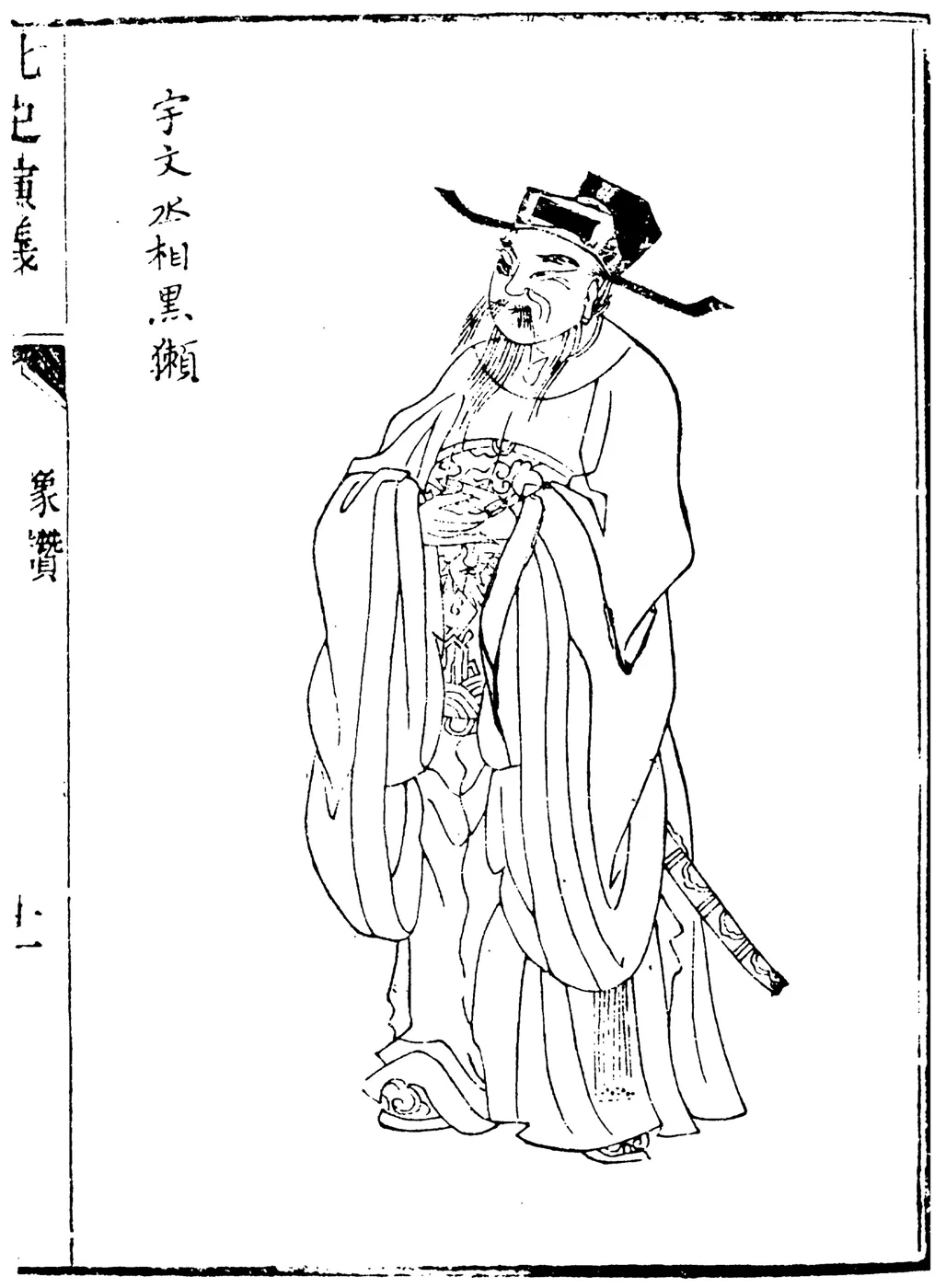
Emperor Wu killed the powerful minister Yuwen Hu and took personal control of government.
Northern Zhou launched a campaign against Northern Qi; in the sixth year of Jiande it destroyed Northern Qi, unified the entire north, reached the height of its territorial and military power, and confronted the Chen dynasty in the south.
After two campaigns against Northern Qi, Northern Zhou destroyed it in the sixth year of Jiande and unified the north.
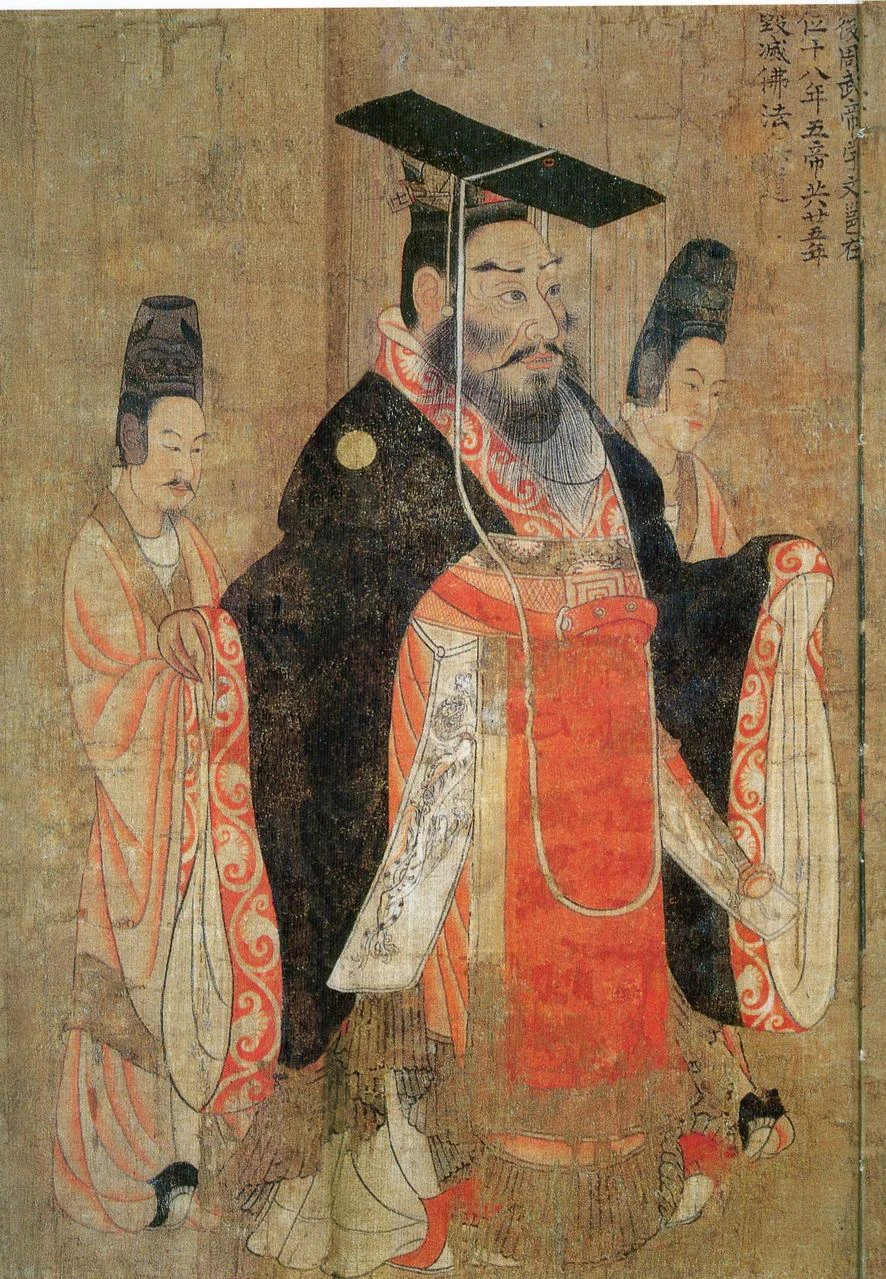
Emperor Wu ordered a suppression of Buddhism and required monks and nuns to return to registered lay status.
Before the planned move to Luoyang was completed, in 580 (second year of Daxiang): Emperor Xuan died; Yang Jian became regent and suppressed Yuchi Jiong's Rebellion.
In the third month, Emperor Jing was forced to abdicate to Yang Jian. Yang Jian accepted the throne, proclaimed himself emperor, changed the state name to Sui, and Northern Zhou came to an end after twenty-four years.
FULL ENTRY
Overview
Northern Zhou (557–581) was one of the Northern Dynasties during China's Northern and Southern Dynasties period. Its political foundations were laid by Yuwen Tai, the dominant minister of Western Wei. After Yuwen Tai's death, his nephew Yuwen Hu, another powerful Western Wei minister, supported Yuwen Jue in formally establishing Northern Zhou in 557, with its capital at Chang'an in present-day Xi'an, Shaanxi. Because the state name was “Zhou” and the regime was based in northern China, later historians called it Northern Zhou. It was also called Yuwen Zhou after the imperial clan, or Later Zhou to distinguish it from Western and Eastern Zhou, although this last name became less common because it could be confused with the Later Zhou of Guo Wei in the Five Dynasties period. Northern Zhou had five rulers and lasted twenty-four years. In 572, the first year of the Jiande era, Emperor Wu Yuwen Yong killed the powerful minister Yuwen Hu and took personal control of the government. In 577, the sixth year of Jiande, he destroyed Northern Qi and unified northern China, confronting the Chen dynasty in the south. Emperor Xuan Yuwen Yun later died after a reign of less than a year, and the young Emperor Jing Yuwen Chan succeeded him while the imperial relative by marriage Yang Jian gained control of government. In 581, the first year of the Dading era, Yang Jian accepted the throne from Northern Zhou and changed the state name to Sui, ending the dynasty. Northern Zhou institutions such as the Fubing system, the equal-field system of land distribution and taxation, and the Six Ministries System formed part of the institutional background inherited by Sui and Tang.
Historical Development
Foundation: In the final years of Western Wei, Yuwen Tai had first entered the Guanzhong region during the Rebellion of the Six Garrisons under the authority of Er Zhurong and later served under Heba Yue. Heba Yue controlled troops in the Guanzhong-Longxi region and, together with Gao Huan, became one of the two major military leaders of Northern Wei, generating mutual suspicion between them. Heba Yue was eventually killed by Houmochen Yue, who had secretly aligned with Gao Huan. Heba Yue's commanders then chose Yuwen Tai as their leader. Yuwen Tai defeated Houmochen Yue and gained effective control of the Guanzhong region. After Emperor Xiaowu of Northern Wei failed in a campaign against Gao Huan and fled west, Yuwen Tai first received him and later had him killed, then installed Emperor Wen of Western Wei and established Western Wei in 535. In the east, Gao Huan installed Emperor Xiaojing of Eastern Wei and moved the capital to Ye, establishing Eastern Wei in 534. Yuwen Tai died in 556, the third year of Western Wei's Emperor Gong. His nephew Yuwen Hu succeeded him as leader of the Yuwen clan and controlled state affairs. In 557 Yuwen Hu forced Emperor Gong of Western Wei to abdicate and installed Yuwen Tai's son Yuwen Jue as Heavenly King, establishing Northern Zhou as Emperor Xiaomin with the capital at Chang'an. During the dynasty's early years, actual authority was held by Yuwen Hu, who was Duke of Jin, Grand Marshal, and Minister of Palace Affairs, beginning a prolonged period of domination by his political headquarters.
Height: Emperor Xiaomin Yuwen Jue resented Yuwen Hu's control and plotted to remove him, but the plan was exposed and Yuwen Jue was killed. Yuwen Hu installed Yuwen Jue's elder half-brother Yuwen Yu as Emperor Ming and later poisoned him in 560, the second year of the Wucheng era, before installing another half-brother, Yuwen Yong, as Emperor Wu. In the third month of 572, the first year of Jiande, Emperor Wu arranged the killing of Grand Preceptor Yuwen Hu, ending the latter's domination and assuming personal rule. Emperor Wu pursued reform and Sinicization and devoted himself to government. In 575, the fourth year of Jiande, he launched a campaign against Northern Qi; in 577, the sixth year of Jiande, Northern Zhou destroyed Northern Qi and unified the entire north. Its territory and power reached their height, and it confronted the Chen dynasty south of the Yangtze.
Turning point: After the unification of the north, Northern Zhou was briefly at the height of its strength, but Emperor Wu died at a relatively young age in 578, the first year of the Xuanzheng era. His son Emperor Xuan Yuwen Yun succeeded him. He reigned for less than a year and began construction and preparations associated with moving the capital to Luoyang, but died in the sixth month of 580, the second year of the Daxiang era, before the plan was completed. The successor, Emperor Jing Yuwen Chan, was still a child, and political stability deteriorated. Emperor Xuan had transferred the throne to his young son before his own death, and power increasingly fell into the hands of imperial relatives by marriage.
Decline: After Emperor Jing's accession, Yang Jian, an imperial relative by marriage, served as Grand Chancellor and regent. He sent important Northern Zhou officials away from the center and increasingly monopolized state power. To consolidate his position he killed members of the Northern Zhou imperial clan, cultivated relations with the Göktürks, and suppressed Yuchi Jiong's Rebellion, jointly launched by Yuchi Jiong, military governor of Xiang Province, Sima Xiaonan, military governor of Yun Province, and Wang Qian, military governor of Yi Province. The foundations of Northern Zhou rule were progressively undermined.
Fall: In the third month of 581, the third year of the Daxiang era, Emperor Jing was forced to abdicate to Yang Jian. Yang Jian accepted the throne, proclaimed himself emperor, and changed the state name to Sui, bringing Northern Zhou's twenty-four-year history to an end. Soon after founding Sui, Yang Jian had most close members of the Northern Zhou imperial clan killed and separately enfeoffed Yuwen Luo as Duke of Jie to maintain sacrifices to Northern Zhou.
Politics and Institutions
In 556, the third year of Western Wei's Emperor Gong, Yuwen Tai created the Six Ministries System modeled on the six offices described in the Rites of Zhou. Northern Zhou retained this structure after its foundation. The system was organized under celestial, terrestrial, spring, summer, autumn, and winter designations. The Minister of Palace Affairs headed the six ministries and held authority broadly comparable to that of a Grand Chancellor; Zhao Gui was the first to hold the post and Yang Jian the last. Northern Zhou government changed according to shifts in supreme political power. From the foundation to 572, the first year of Jiande, Grand Preceptor Yuwen Hu controlled affairs. Thereafter Emperor Wu held personal power; after him Emperor Xuan continued to rule until the unfinished plans concerning Luoyang and his death in 580, the second year of Daxiang; from then until the dynasty's fall, Yang Jian dominated government. Northern Zhou presented moral instruction as primary and law as supplementary. Officials were expected to cultivate themselves through Confucian learning and practice virtues such as benevolence, righteousness, filial piety, fraternal respect, loyalty, trustworthiness, ritual propriety, and frugality, while statecraft was consciously modeled on the Rites of Zhou, giving the official system a strongly archaizing character. Recruitment emphasized ability rather than rigid exclusion by birth. Censorial officials were also maintained, and Emperor Wu's personal rule strengthened control over powerful ministers, imperial relatives by marriage, and military headquarters.
Military and Foreign Relations
Northern Zhou's military system centered on the Fubing system inherited from Western Wei. The Fubing combined military and civilian functions and linked soldiering with farming, while retaining elements of the retainer traditions of the earlier Xianbei tribal order. Emperor Wu reorganized the Fubing and the army, increasing the state's military strength. A northern campaign against Northern Qi in 575, the fourth year of Jiande, initially met setbacks. In 577, the sixth year of Jiande, Northern Zhou campaigned again and, after fighting around Heyin, Pingyang, and other areas, destroyed Northern Qi and unified northern China. Only Gao Baoning, the Northern Qi Inspector of Ying Province, refused to submit and continued resistance while recognizing Gao Shaoyi, a Northern Qi prince who had fled to the Göktürks, as emperor. In foreign relations, Northern Zhou confronted the Chen dynasty in the south and dealt diplomatically with the Göktürks. During Yang Jian's regency, relations with the Göktürks were improved, and Taspar Qaghan turned Gao Shaoyi over to Northern Zhou, easing pressure on the northern frontier.
Economy and Commerce
Northern Zhou inherited the equal-field system of land distribution and taxation and the rent-and-tax system from Western Wei in an effort to stabilize smallholder agriculture and the state's labor and tax base. Emperor Wu's suppression of Buddhism returned large numbers of monastery dependents to lay household registration. The source states that three million monks and nuns were restored to military and civilian status and entered the household registers, increasing the state's registered population and tax base. It quotes the claim that labor burdens on the people became lighter, annual tax receipts increased, and the army grew stronger, providing resources for the destruction of Northern Qi and for military expenditure. According to the source, Northern Zhou had more than three million households in the Daxiang era of Emperor Jing, around 580. After Northern Qi was conquered, its registered population was incorporated into Northern Zhou, further increasing the regime's economic resources. Commercial activity continued in cities such as Chang'an and Luoyang, but the economy largely inherited the conditions of earlier northern regimes and was still recovering from warfare.
Culture and Society
Northern Zhou culture continued the plural social order of Western Wei, in which Xianbei aristocrats and Han Chinese elite families coexisted, and at times it showed an effort to strengthen specifically Xianbei cultural identity. Buddhism was highly developed, with many monasteries concentrated in Chang'an, while the Mogao Caves at Dunhuang preserve murals in Northern Zhou styles. During Emperor Wu's reign, however, the court ordered a suppression of Buddhism. From 574, the third year of Jiande, to 578, the first year of Xuanzheng, Buddhist towers, scriptures, and images created by both government and private patrons were destroyed or confiscated, and monks and nuns were returned to lay household registration. This episode is known as the Suppression of Buddhism under Emperor Wu of Northern Zhou. Although heavily criticized by Buddhist communities, the source attributes an increase in state resources to the policy. Confucian learning remained respected. Northern Zhou rulers used classical texts such as the Rites of Zhou to design offices and ritual institutions, treated Confucian scholars with favor, and established schools, helping preserve the classical tradition. Social status distinctions remained strong, while ethnic and cultural interaction contributed to the later development of the Guanzhong-Longxi cultural region.
> This section explains the position of rulers in the regime's political development; full biographies are provided in the corresponding person entities.
Historical Assessment and Legacy
Contemporary assessments: In discussions of the Suppression of Buddhism under Emperor Wu of Northern Zhou, some contemporaries characterized the policy as a far-reaching strategy and a superior method for strengthening the state and enriching the people, while Buddhist critics condemned it sharply. Contemporary accounts also described Northern Zhou's position as a major northern regime confronting its southern rivals.
Later historical assessments: Later historians often credit Northern Zhou with destroying Northern Qi and unifying the north, ending nearly half a century of political division following the split of Eastern and Western Wei. The resulting reduction in warfare allowed reconstruction of production and increased political, economic, and cultural interaction across northern China, creating conditions that helped Sui reunify the empire. The Fubing system, the equal-field system of land distribution and taxation, the Six Ministries System, and other Northern Zhou institutions are also regarded as important antecedents of Sui and Tang institutions. Northern Zhou is therefore often treated as a transitional regime between prolonged division and renewed unification. Assessments of its specific rulers and policies nevertheless vary and require comparison of sources such as the Book of Zhou, History of the Northern Dynasties, Comprehensive Mirror in Aid of Governance, and modern scholarship.