TL;DR · Core Takeaways
- Material Evidence: Modern tests on cosmetic residues from old elite tombs consistently show basic lead carbonate, mercuric sulfide, and arsenic sulfide.
- Documented Medical Warnings: Early Chinese medical texts warned against these items. Ancient writers and medical scholars, from the Jin dynasty Bowuzhi and the Tang court's Newly Revised Materia Medica to Li Shizhen's Compendium of Materia Medica, cautioned that prolonged use rotted skin, loosened teeth, and darkened the face.
- Status Symbols and the Pathological Cycle: Before modern titanium dioxide, white lead offered unmatched opacity. As lead ruined the skin, women used thicker layers to hide the flaws, trapping themselves in an inescapable cycle.
Spatiotemporal Coordinates
- Chinese Historical Coordinates: 4th century BCE to the 16th–18th centuries CE. Centered on Tang Chang'an, Northern Song Kaifeng (the Eastern Capital), and the craft towns of the Jiangnan basin.
- Western and Mediterranean Coordinates: 4th century BCE Classical Greece, 1st century CE Roman Empire, and the late Tudor court of 16th-century England.
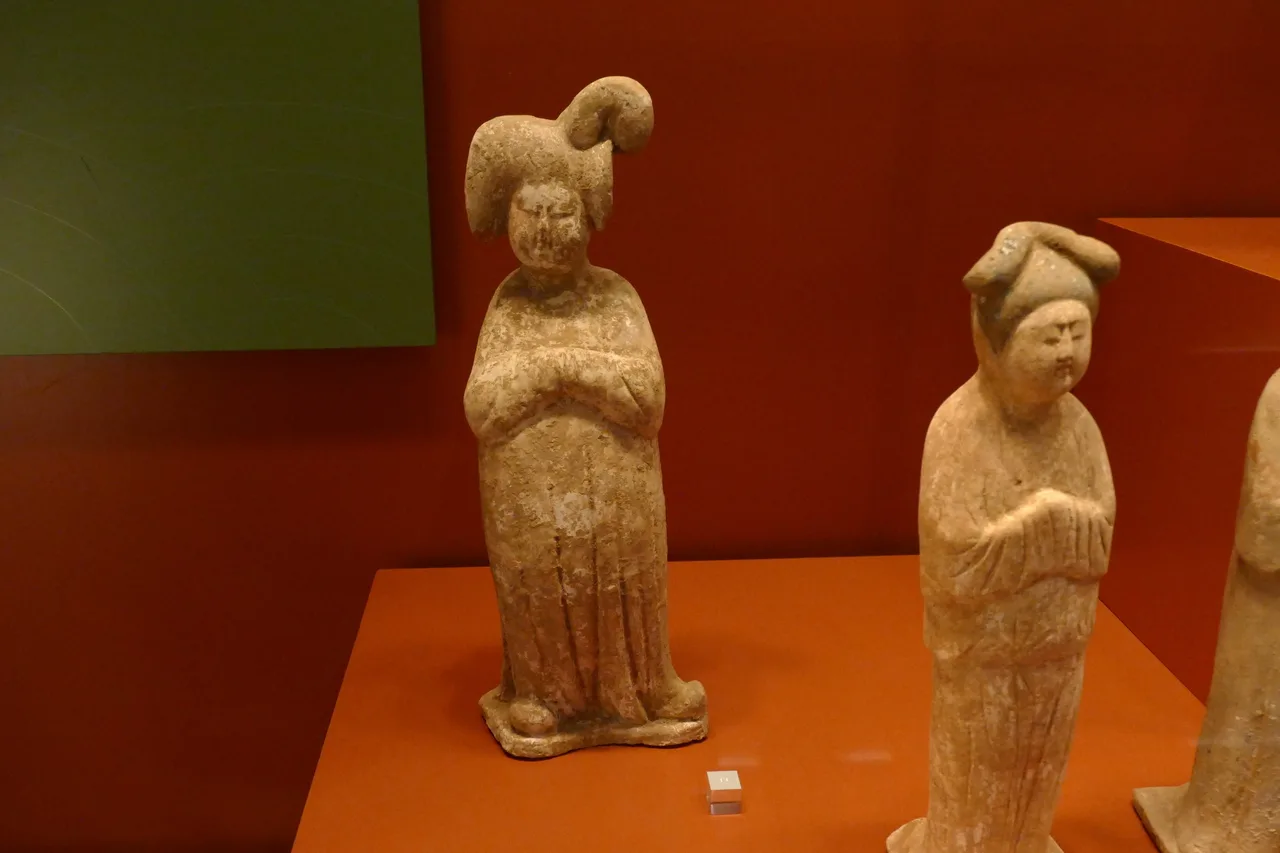
On a damp spring morning in 744 CE, during the Tianbao era, a handmaiden opened a white porcelain box in an elite home in Chang'an. The mistress looked into her bronze mirror. Years of heavy makeup had stained her bare skin with a dull, greenish-gray tint.
The maid took a small scoop of pale paste with a bone spoon. She blended it with three drops of rosewater and patted it across her mistress's face. In seconds, the dark spots and scars disappeared under a smooth, bright sheen. This jar of Dingzhou powder cost several strings of cash. Its main active ingredient was toxic basic lead carbonate.
01. An Alchemical Byproduct: How Fermented Lead Slabs Conquered the Skin
Before modern skin creams and safe powders, getting a pale, smooth complexion was very hard.
Early farming cultures used grain starch. The Han dictionary Shuowen Jiezi noted that people made face powder from rice. Artisans soaked rice or millet in water for weeks until it fermented. Then they washed away the gluten, drained the sediment, dried it in the sun, and ground it into fine flour.
Yet grain powder did not work well. It flaked off easily and plugged pores. Mixed with sweat and skin oils, the starch turned gummy, cracked quickly, and dripped down the neck in chalky streaks.
Between the Warring States period and the Qin-Han transition, workshops solved this issue. Craftsmen hung thin lead sheets over jars of vinegar on wooden racks. They sealed the jars and buried them under warm, rotting manure or straw to vaporize the acetic acid.
The acid fumes, air, and moisture corroded the metal:
$$2\text{Pb} + 2\text{CH}_3\text{COOH} + \text{O}_2 \rightarrow 2\text{Pb(CH}_3\text{COO)}_2 + 2\text{H}_2\text{O}$$
$$3\text{Pb(CH}_3\text{COO)}_2 + 4\text{H}_2\text{O} + 2\text{CO}_2 \rightarrow 2\text{PbCO}_3\cdot\text{Pb(OH)}_2\downarrow + 6\text{CH}_3\text{COOH}$$
This reaction yielded a white crust of basic lead carbonate ($2\text{PbCO}_3\cdot\text{Pb(OH)}_2$). People called it lead powder or official powder.
The tiny crystals of this compound blocked light well and hid flaws completely. Ground with animal fat or plant oil, it made a smooth, waterproof paste. It covered smallpox scars and resisted sweat during long palace banquets.
The Mediterranean world used the same method. In the 4th century BCE, Theophrastus recorded this vinegar process in Greece. Later, Pliny the Elder described it in Rome. By the 16th century, Italian traders sold "Venetian Ceruse" across Europe. Queen Elizabeth I of England used it every day to hide her smallpox scars and keep a porcelain look.
Lip balms and rouges brought equal dangers. Plant dyes from safflower faded fast in sunlight and cost a lot to harvest. To get a bright red that stayed on while eating and drinking, workshops ground raw cinnabar—mercuric sulfide ($\text{HgS}$)—into fine powder and mixed it with beef fat and beeswax. For brow makeup, some prescriptions even added toxic arsenic sulfides to create deep hues.
02. Prices, Daily Routines, and Material Culture
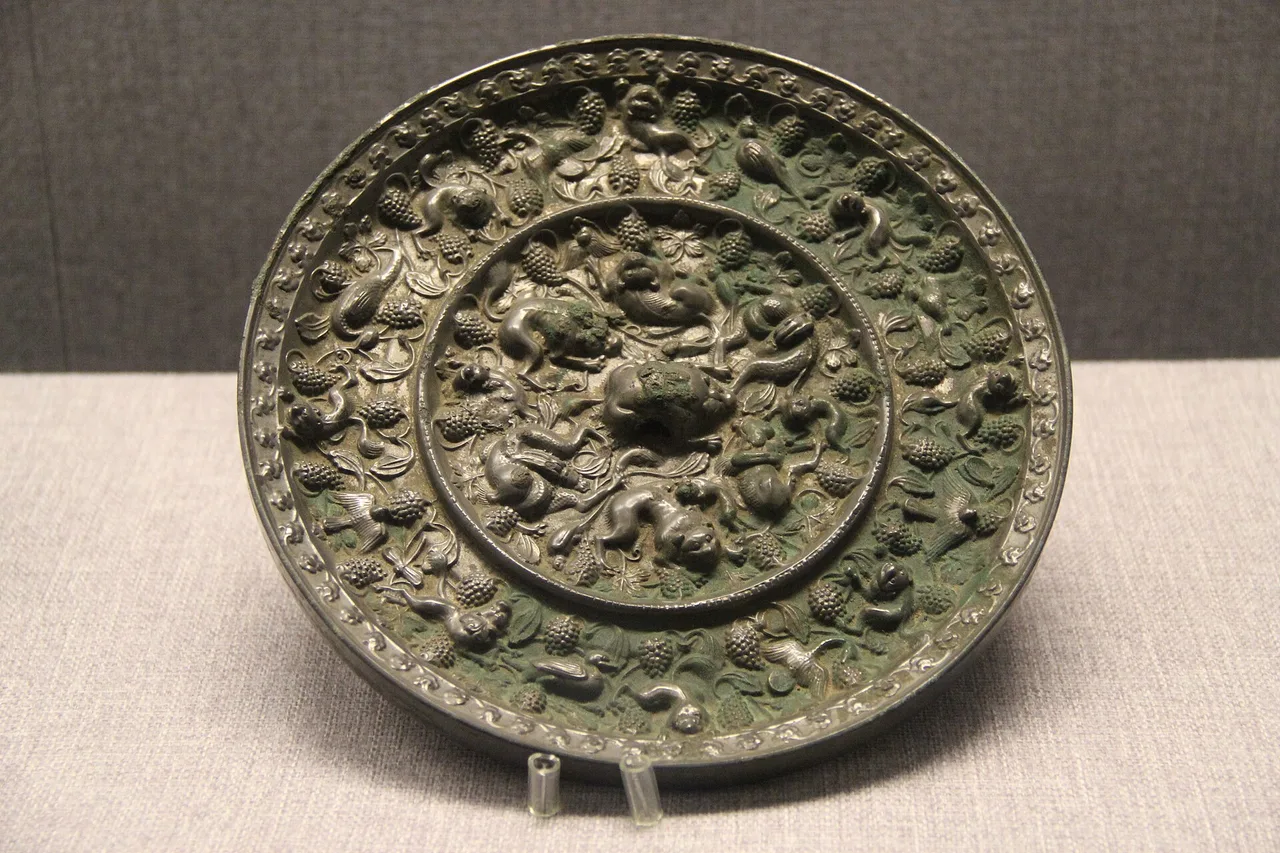
Making lead powder and purifying cinnabar took time, skill, and money. Supervised by state offices like the Chamberlain for the Palace Revenues in early times, or sold by private shops later, these items fetched high prices.
Cross-Dynastic Price and Wage Comparisons
| Era and Period | Cosmetic Item and Packaging | Estimated Market Price | Daily Laborer Wage | Chemical Composition and Toxicology |
|---|---|---|---|---|
| Han Dynasty (1st c. CE) | Imperial Palace Lead Powder (1 ceramic box) | 120–180 wuzhu coins | Day laborer: 20–30 coins (6–9 days of labor) | Basic lead carbonate via vinegar method; traces of free lead acetate |
| Tang Dynasty (8th c. CE) | Chongren Ward Official Powder (1 glazed jar) | 350–500 copper coins | Capital construction worker: 40–50 coins (8–10 days of labor) | White lead with camphor, musk, and sesame oil; high bioavailable lead |
| Song Dynasty (11th c. CE) | Pan Family Vermilion Lip Balm (carved silver case, Bianjing) | 1 string and 200 coins (1,200 copper cash) | River porter/militiaman: 100–120 coins (10–12 days of labor) | Levigated cinnabar (Cinnabar of Chenzhou, HgS) in clove oil and gromwell wax |
| Ming Dynasty (16th c. CE) | Gold-Leaf Lead Compact (fine grade, Suzhou) | 0.35–0.5 taels of silver | Urban silk weaver: 0.03–0.04 taels (10–15 days of labor) | Lead carbonate blended with talc, topped with gold leaf; traces of sublimed calomel |
| Qing Dynasty (18th c. CE) | Dai Chunlin "Cassia Duck Egg" Powder (Yangzhou) | 240–320 copper coins | Silk-reeling worker: 30–45 coins (6–8 days of labor) | Aged lead carbonate blended with four-o'clock seed starch, borneol, and agarwood |
A single jar of fine powder or vermilion lip paste cost one to two weeks of common wages. Poor families could never afford it.
Morning Routine of an Elite Household in Bianjing (1080 CE)
Keeping up appearances in the Northern Song capital took hours of careful grooming each day. City records, classical prose essays, and Song dynasty Miscellanies describe these steps:
[Morning Cosmetic Routine of an Elite Lady in Northern Song Bianjing]
1. Cleansing (06:15)
   - Materials: Warm well water in a bronze basin; herbal soap beans (pig pancreas blended with powdered Angelica dahurica, Atractylodes, and asarum root).
   - Daily Amortized Cost: ~15 copper coins.
   - Purpose: Strip overnight sebum and break down residual wax layers from the previous day.

2. Foundation Layer (07:00)
   - Materials: A half-spoon of Pan Family refined lead powder worked with three drops of distilled rosewater.
   - Daily Amortized Cost: ~30 copper coins.
   - Technique: Patted onto the face with a down puff to leave a smooth film that masked sunspots and blemishes.

3. Forehead and Dimple Accents (07:30)
   - Materials: Pine-soot ink ground in water; yellow gardenia extract or traces of realgar.
   - Daily Amortized Cost: ~5 copper coins.
   - Technique: Painting floral marks between the brows and artificial dimples beside the lips to soften the foundation's stark white hue.

4. Lip Staining (08:00)
   - Materials: Vermilion lip paste containing cinnabar (mercuric sulfide), scooped with an ivory bodkin.
   - Daily Amortized Cost: ~25 copper coins.
   - Technique: Concentrated on the center of the lips to create a small bud shape that resisted drink and wear.

Total Daily Cosmetic Expenditure: ~75 copper coins (the market price of roughly one peck of polished white rice).
03. Early Medical Warnings and the Poison Loop
People today often think ancient buyers did not know these minerals were toxic. But old records tell a different story: Traditional Chinese physicians knew the risks of lead and mercury, and state pharmacopeias warned against them.
During the Western Jin dynasty, Zhang Hua noted in his Bowuzhi that white lead turned back into raw metal when burned. He warned that frequent use harmed the body. In 659 CE, the Tang Imperial Court issued the Newly Revised Materia Medica. It listed lead powder as poisonous, noting that while it killed skin pests, applying it for years poisoned the blood.
Centuries later, Li Shizhen wrote about these dangers in his Compendium of Materia Medica. He warned that white lead hurt muscles and bones, blackened the skin, loosened teeth, and caused belly pain. On mercury balms, he noted that the poison sank into the bones until no herb could cure it, leaving the face like dry earth.
Why did wealthy women keep using these cosmetics despite the warnings?
The answer comes down to lead poisoning. When lead powder sits on warm skin, lead ions enter the pores and reach the blood. The metal prompts excess pigment production and reacts with body sulfur to form lead sulfide. This creates dark, blue-gray stains on the cheeks and gums.
This damage locked users into a harsh cycle:
- Phase 1: A woman wore white lead to get an even, pale face.
- Phase 2: Over time, the lead broke down skin tissue and left dark spots and gray stains.
- Phase 3: Ashamed of these blemishes, she put on thicker layers of makeup to hide the harm caused by the powder itself.
- Phase 4: The heavier makeup sped up poisoning, causing tooth loss, stomach pain, nerve decay, and early death.
Elizabeth I walked the exact same path. Decades of heavy makeup ruined her skin and rotted her teeth. Her Court Eunuch and chamber staff kept visitors away whenever her face was not painted.
04. Class Boundaries and the Fortunate Poor
The use of lead cosmetics was tied to social standing across borders, whether in the Great Li Kingdom or beyond. Even when an Assistant in provincial administration recorded cosmetic supplies, high social status dictated strict display.
In ancient times, pale skin was a badge of wealth. It proved that a woman did not have to labor outdoors under the hot sun. Dark skin marked a life of field work. Whether admired in ancient scholars or court ladies, a painted white face showed freedom from hard physical labor.
Yet high prices protected poor women from these toxic chemicals.
Farm wives, weavers, and street vendors could not afford fine lead powder or cinnabar paste. They washed with lye, pea flour, or soap beans. In summer, country girls crushed seeds from the four-o'clock flower. The white meal inside gave them a safe, starch powder to brighten their skin without risk.
Because they had to use simple plant powders, working women avoided the nerve pains, lost teeth, and lead colic that afflicted the rich.
During the Ming and Qing eras, shops in southern cities began to rethink mineral paints. In coastal trading harbors such as Tamsui, as well as production hubs like Yangzhou and Suzhou, merchants created safer blends.
Makers ground freshwater pearls with soft talc and flower seed meal. They washed the paste in clear well water to take out the grit and pressed it into round cakes. While shops still added small bits of lead for grip until the 1900s, these gentler blends caused far less harm.
The love of white lead and cinnabar grew from social rank, limited tech, and an addictive cover-up cycle. That loop held firm until modern, safe pigments like zinc oxide and titanium dioxide arrived in the twentieth century.
Primary Sources & Historical Bibliography
- Tang Official Pharmacopeia: Su Jing et al., Newly Revised Materia Medica, Vol. 4 ("Jade and Stone: Intermediate Grade"). Records the cold nature, toxicity, and medicinal uses of white lead.
- Ming Materia Medica: Li Shizhen, Compendium of Materia Medica, Vol. 9 ("Metals and Minerals"). Details the systemic poisoning, blackened skin, and tooth loss caused by external lead and mercury prescriptions.
- Song Urban Records: Meng Yuanlao, The Eastern Capital: A Dream of Splendor, Vol. 2 ("Panlou Street and Imperial Way Guilds"). Documents the cosmetic shops and daily commercial life of Northern Song Bianjing.
- Classical Mediterranean Sources: Pliny the Elder, Naturalis Historia, Book XXXIV ("The Natural History of Metals"). Describes the manufacture of white lead (cerussa) using vinegar vapors and notes its health hazards.
- Modern Material and Royal Studies: Anna Riehl, The Face of Queenship: Early Modern Representations of Elizabeth I (Palgrave Macmillan). Examines the role of Venetian ceruse in English court ritual and the construction of the Virgin Queen's image.