Born | Born at the family residence in eastern Tongcheng at the hour of the Ox on the ninth day of the ninth lunar month.
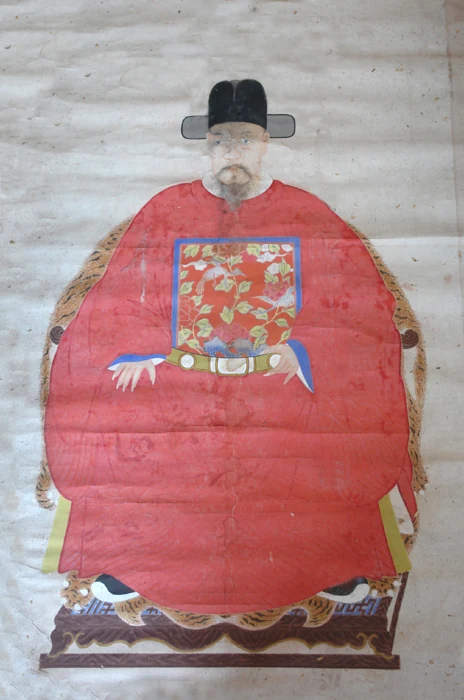
1575 CE–1625 CE
Crown prince
Zuo Guangdou
左光斗
Zuo Guangdou (1575–1625), courtesy names Yizhi, Gongzhi (Gòngzhī), and Gongzhi (Gǒngzhī), art names Fuqiu and Cangyu, was a native of Tongcheng in Anqing Prefecture, Southern Zhili (present-day Tongcheng, Anhui). He was a prominent late-Ming official, hydraulic expert, and one of the “Six Gentlemen of the Donglin Clique.” In 1607, the thirty-fifth year of the Wanli era, he passed the metropolitan examination in the same…
1575 CE–1625 CEMing Dynasty
PROFILE
Zuo Guangdou (1575–1625), courtesy names Yizhi, Gongzhi (Gòngzhī), and Gongzhi (Gǒngzhī), art names Fuqiu and Cangyu, was a native of Tongcheng in Anqing Prefecture, Southern Zhili (present-day Tongcheng, Anhui). He was a prominent late-Ming official, hydraulic expert, and one of the “Six Gentlemen of the Donglin Clique.” In 1607, the thirty-fifth year of the Wanli era, he passed the metropolitan examination in the same cohort as Yang Lian and was appointed Drafter in the Secretariat, later becoming an Investigating Censor. After the death of the Taichang Emperor in 1620, he and Yang Lian helped drive the Palace Relocation Case, forcing Consort Li to leave the Qianqing Palace and supporting the accession of the young Zhu Youxiao; the two men were jointly known as “Yang and Zuo.” In 1625, the fifth year of the Tianqi era, after denouncing the eunuch faction led by Wei Zhongxian, Zuo Guangdou was falsely accused of bribery, imprisoned, tortured, and killed at the age of fifty-one. In 1628 he was rehabilitated and posthumously awarded the offices of Right Censor-in-Chief and Junior Guardian of the Heir Apparent; during the Hongguang regime of Southern Ming he received the posthumous title Zhongyi.
- Courtesy Name
- Gongzhi
- Art Name
- Fuqiu
- Period
- Ming
- Dynasty/State
- Ming Dynasty
- Identity
- Crown prince
- Ethnicity/Ethnic Affiliation
- Not reliably confirmed in historical sources
- Native Place
- Tongcheng, Anqing Prefecture, Southern Zhili (present-day Tongcheng, Anhui)
- Date of Birth
- October 12, 1575
- Place of Birth
- Unknown
- Date of Death
- August 26, 1625
- Place of Death
- Unknown
- Highest Office
- See Biography and Major Achievements
- Major Achievements
- Donglin partisan and censor; joined Yang Lian in impeaching Wei Zhongxian; one of the “Six Gentlemen of the Donglin Clique,” and died under persecution.
LIFE TIMELINE
Age twenty-six | Passed the provincial examination.
Age thirty-three | Passed the jinshi examination in the same cohort as Yang Lian and was appointed Drafter in the Secretariat.
Ages thirty-three to forty-six | Selected as a censor, inspected the capital, and uncovered a large forged-office and forged-seal case.
Age forty-six | After the Guangzong Emperor's death, worked with Yang Lian in the Palace Relocation Case and supported the accession of the Xizong Emperor.
Age forty-seven | Appointed Left Assistant Censor-in-Chief and put in charge of military-agricultural colonies in Zhili; submitted the “Three Principles and Fourteen Proposals.”
Age forty-nine | Promoted to Left Assistant Director of the Court of Judicial Review.
Age fifty | Planned with Yang Lian to impeach Wei Zhongxian, drafted a memorial charging thirty-two capital offenses, and was removed from the official register.
Age fifty-one | Arrested in the third lunar month and committed to the imperial prison; killed on the twenty-sixth day of the seventh lunar month.
Posthumous | Rehabilitated and posthumously awarded the titles Right Censor-in-Chief and Junior Guardian of the Heir Apparent.
Posthumous | Granted the posthumous title Zhongyi.
BIOGRAPHY
Biography
Family Background and Early Life
Zuo Guangdou was born at the hour of the Ox on the ninth day of the ninth lunar month in the third year of the Wanli era (October 12, 1575), at the family residence in eastern Tongcheng. Tradition held that the moon stood near the Big Dipper at the time of his birth, which inspired the name Guangdou and the courtesy name Gongzhi. The Zuo family was a prominent lineage of Tongcheng. His great-grandfather was Zuo Qi, his grandfather Zuo Zhen, his father Zuo Chuying, and his mother was a woman surnamed Zhou. Zuo Guangdou studied under Dai Wan and later married Dai Wan's granddaughter.
He grew up in the river-and-lake environment of the lower Yangzi and Huai regions and became familiar from childhood with irrigation and agriculture. His early education under Dai Wan exposed him to both learning and ideals of integrity. Tongcheng's strong literary culture also helped form his forthright and outspoken character.
Examination Success and Early Service as Censor
In 1600, the twenty-eighth year of the Wanli era, Zuo Guangdou passed the provincial examination. In 1607, the thirty-fifth year, he passed the jinshi examination in the same cohort as Yang Lian and became a Drafter in the Secretariat. He was soon selected as a censor and assigned to inspect the capital. One of his first major actions was to investigate the sale of offices. By the late Ming, corruption had made the buying and selling of ranks common, and a forgery network associated with the Ministry of Personnel produced counterfeit appointments and official seals to defraud people. Zuo Guangdou dismantled the network, seized more than seventy false seals, identified more than one hundred bogus officials, and had the organizer Jin Dingchen arrested and executed. The case shocked the capital and temporarily improved official discipline.
The Palace Relocation Case and the “Yang-Zuo” Partnership
In the ninth lunar month of 1620, the first year of the Taichang era, the Guangzong Emperor Zhu Changluo died. His favored consort, Consort Li, remained in Qianqing Palace and attempted to force the emperor's eldest son Zhu Youxiao to confer on her the title of Empress Dowager. She had not been the emperor's principal wife and was not the biological mother of the heir, yet she occupied the principal palace and sought political influence under the pretext of caring for the young ruler. Zuo Guangdou submitted a forceful memorial opposing her position and warned that failure to act decisively could lead to a repetition of the political domination associated with Wu Zetian. Consort Li was enraged and repeatedly summoned him, but Zuo Guangdou refused, saying that he was an official appointed by the emperor and would not answer any summons not issued by the sovereign. Zhu Youxiao read Zuo Guangdou's memorial and accepted his reasoning, and the relocation was ordered.
At the same time, Wei Zhongxian sought to dominate court politics and favored allowing Consort Li to remain in Qianqing Palace. Zuo Guangdou and Yang Lian worked together to remove eunuch interference, protect the young ruler, and secure the succession. The episode became known as the Palace Relocation Case. The new emperor rewarded Zuo Guangdou with silver, and contemporaries referred to Yang Lian and Zuo Guangdou together as “Yang-Zuo.”
Military Agriculture, Water Control, and Rice Cultivation in the North
In 1621, the first year of the Tianqi era, Zuo Guangdou was placed in charge of military-agricultural colonies in Zhili. He personally inspected the region and saw extensive wasteland, high ground covered with weeds, and lowlands turned to marsh. He argued in a memorial that the central problem of northern agriculture was neglect of water control and that only irrigation and drainage could prevent both drought and flood from becoming disasters.
He submitted the “Three Principles and Fourteen Proposals.” The three principles concerned timing, geographical conditions, and human circumstances. The fourteen proposals addressed dredging waterways, digging canals, diverting water, building dams and sluices, shaping slopes, assessing terrain, constructing ponds, attracting settlers, selecting officials and commanders, organizing military colonies, setting agricultural tax quotas, and granting honors to wealthy contributors. In another memorial, titled roughly “There Is No Better Way to Secure Provisions Than Military Agriculture, and No Better Foundation for Military Agriculture Than Water Control,” he advocated northern adoption of southern hydraulic practices, reclamation of wasteland, military farming, and the introduction of rice cultivation.
Zuo Guangdou appointed Lu Xiangguan as Controller-General to direct irrigation works, recruited southern farming households to teach rice cultivation in the north, encouraged soldiers and civilians to reclaim land, and proposed schools connected with military and agricultural colonies. As a result of his advocacy and direct supervision, extensive water-control works were undertaken around the capital region and rice cultivation spread more widely. Zou Yuanbiao later remarked that thirty years earlier people in the capital did not even know rice straw, whereas rice had since become common and farmers had begun to benefit from wet-field cultivation.
Impeachment of Wei Zhongxian and Death in Prison
In the sixth lunar month of 1624, the fourth year of the Tianqi era, the eunuch Wei Zhongxian dominated the court. Yang Lian submitted a memorial listing twenty-four charges against him. Zuo Guangdou and more than seventy others strongly supported the impeachment, and Zuo Guangdou helped press accusations involving thirty-two capital offenses against Wei Zhongxian and his associates, but the emperor refused to accept them. The hostility between the eunuch faction and the Donglin group intensified after the Palace Relocation Case. Zuo Guangdou assisted Yang Lian in planning the impeachment and joined Gao Panlong in exposing corruption by Cui Chengxiu, drawing intense hatred from Wei Zhongxian's faction.
After Wei Zhongxian had driven Zhao Nanxing, Gao Panlong, and Wei Dazhong from office, he moved against Yang Lian and Zuo Guangdou. Zuo Guangdou drafted a memorial accusing Wei Zhongxian and Wei Guangwei of thirty-two capital crimes and planned to submit it on the second day of the eleventh lunar month of 1624. Anticipating danger, he sent his wife back to their native place. Wei Zhongxian learned of the plan and had Zuo Guangdou and Yang Lian dismissed two days before the memorial could be submitted.
The eunuch faction then fabricated the Wang Wenyan case and implicated Zuo Guangdou. When officers came to arrest him, local elders and villagers clung to the head of his horse and cried so loudly that the fields echoed, moving even the arresting officers to tears. In the capital Zuo Guangdou was imprisoned and severely tortured. On the nineteenth day of the third lunar month of the fifth Tianqi year (April 25, 1625), Wei Zhongxian issued a false imperial order for interrogation and had Xu Xianchun accuse the Six Gentlemen of taking bribes from Yang Hao and Xiong Tingbi. Yang Lian and Zuo Guangdou were each assigned an alleged illicit sum of twenty thousand taels. They were repeatedly tortured every five days, subjected to finger presses, leg clamps, beatings, and other punishments until Zuo Guangdou could no longer kneel and had to lie on the floor during interrogation.
His old friend Sun Qifeng, together with Lu Zheng and Zhang Guozhong, raised funds to rescue him. Students and local supporters responded enthusiastically and collected several thousand taels, but the money could not be delivered in time. Wei Zhongxian, seeing that people were trying to save Zuo Guangdou, again issued a false order requiring Xu Xianchun to torture him every five days for payment and not transfer the case to the regular judicial authorities. On the twenty-sixth day of the seventh lunar month of the fifth Tianqi year, corresponding in the source to late August 1625, Zuo Guangdou was killed in prison at the age of fifty-one.
Posthumous Rehabilitation
Even after Zuo Guangdou's death, the fabricated “restitution” had not been fully collected. Wei Zhongxian ordered provincial authorities to pursue the alleged debt and arrested fourteen members of Zuo Guangdou's family. His elder brother Zuo Guangji died as a result of the persecution, and their mother died of grief after losing two sons. When Wei Zhongxian compiled the Essential Documents of the Three Reigns, the Palace Relocation Case was blamed on Yang Lian and Zuo Guangdou, and there was even a proposal to open their graves and mutilate the bodies, though this was ultimately abandoned after remonstrance.
In 1627, the seventh year of the Tianqi era, the Xizong Emperor died and Zhu Youjian ascended the throne as the Chongzhen Emperor. He moved against the eunuch faction, and Wei Zhongxian committed suicide. The Chongzhen Emperor posthumously awarded Zuo Guangdou the offices of Right Censor-in-Chief and Junior Guardian of the Heir Apparent and appointed one of his sons to office. During the Hongguang regime of Southern Ming, Zuo Guangdou received the posthumous title Zhongyi.
Major Activities
Political Activity
As a censor, Zuo Guangdou worked to strengthen official discipline, broke up the forged-office and forged-seal network, and punished corrupt officials. He became one of the prominent leaders of the Donglin faction and opposed the eunuch faction with unusual firmness. In the early Tianqi years, when the emperor initially relied on Donglin officials, Zuo Guangdou served as Left Assistant Censor-in-Chief and supervised officials, seeking to curb favoritism, abuses of law, and corruption.
Water Control and Military Agriculture
While responsible for military agriculture in Zhili, Zuo Guangdou conducted field inspections and submitted the “Three Principles and Fourteen Proposals” for water management. He argued that northern agriculture lagged because hydraulic works were neglected and that only systematic water control could prevent drought and flood from becoming disasters. He brought southern farmers north to teach rice cultivation and encouraged nobles, merchants, and wealthy households to invest in agriculture. The expansion of rice cultivation contributed to changes in northern farming.
Training and Education
Zuo Guangdou advocated the establishment of military schools and agricultural-colony schools. The military schools were intended to address what he saw as a shortage of capable military personnel, while the agricultural schools were meant to promote reclamation, increase state revenues, and provide poor scholars with new opportunities for advancement.
Palace Relocation Case
After the Guangzong Emperor's death in 1620, Consort Li remained in Qianqing Palace and attempted to influence government. Zuo Guangdou and Yang Lian jointly advocated her removal, exclusion of eunuch interference, and protection of the young Zhu Youxiao's succession. This became known as the Palace Relocation Case, and Zuo and Yang became jointly famous as “Yang-Zuo.”
Impeachment of the Eunuch Faction
In 1624, Zuo Guangdou and Yang Lian planned the impeachment of Wei Zhongxian, while Zuo also joined Gao Panlong in exposing Cui Chengxiu's corruption. After Wei Zhongxian removed Zhao Nanxing, Gao Panlong, and Wei Dazhong, Zuo Guangdou drafted a memorial accusing Wei Zhongxian and Wei Guangwei of thirty-two capital offenses. Wei learned of the plan, had Zuo and Yang dismissed, and later implicated Zuo Guangdou in the fabricated Wang Wenyan case, leading to his imprisonment, torture, and death.
Personal Relations
Family
His father was Zuo Chuying and his mother a woman surnamed Zhou. His elder brothers included Zuo Guangji, who died through implication in the case, as well as Zuo Guangchao, Zuo Guangqian, and Zuo Guangqi; his younger brothers included Zuo Guangyu, Zuo Guangxian, Zuo Guangming, and Zuo Guangbi. His sons were Zuo Guolin, Zuo Guozhu, Zuo Guobing, and Zuo Guocai. He studied under Dai Wan and married Dai Wan's granddaughter.
Teachers, Friends, and Associates
Yang Lian was his fellow jinshi and partner in opposing Wei Zhongxian; the two were jointly called “Yang-Zuo.” Gao Panlong joined him in exposing Cui Chengxiu. Zhao Nanxing, Han Huang, Zheng Sanjun, Li Banghua, and Wei Dazhong were fellow Donglin figures. Sun Qifeng was an old friend who raised funds during Zuo's imprisonment; Lu Zheng and Zhang Guozhong joined the rescue effort and were known with him as the “Three Martyrs of Fanyang.” Shi Kefa was his student and visited him in prison. Zou Yuanbiao praised his hydraulic achievements. Lu Xiangguan served under him as Controller-General directing water projects.
Rulers and Ministers
- Zhu Changluo, the Guangzong Emperor.
- Zhu Youxiao, the Xizong Emperor, whose succession Zuo Guangdou supported.
- Zhu Youjian, the Chongzhen Emperor, who rehabilitated and posthumously honored him.
Conflicts
- Wei Zhongxian: leader of the eunuch faction who used false imperial orders to have him imprisoned and killed.
- Wei Guangwei: member of the eunuch faction impeached by Zuo Guangdou.
- Xu Xianchun: officer of the Embroidered Uniform Guard who tortured Zuo Guangdou.
- Cui Chengxiu: eunuch-faction official whose corruption Zuo exposed.
- Consort Li: forced to move from the palace during the Palace Relocation Case.
- Ruan Dacheng: fellow native of the region who developed hostility over an appointment dispute.
- Fu Kui: was induced to impeach Zuo Guangdou.
- Zhou Yingqiu: censorial official who pursued the fabricated restitution against Zuo's family.
Historical Assessment
Ming / Contemporary
- Zou Yuanbiao said that thirty years earlier people in the capital had not known what rice straw was, whereas rice had become common and farmers were benefiting from wet-field agriculture. (History of Ming, Biography of Zuo Guangdou)
- When Zuo Guangdou was arrested, local people “clung to the horse's head and cried out, their voices shaking the fields, and even the mounted officers shed tears.” (History of Ming, Biography of Zuo Guangdou)
- Sun Qifeng and others later remembered as the “Three Martyrs of Fanyang” organized a fund to rescue him because of the benefits he had brought to the capital region. (History of Ming, Biography of Zuo Guangdou)
Early to Mid-Qing
- Fang Bao's “Anecdotes of Lord Zuo Zhongyi” recounts Zuo Guangdou's recognition of Shi Kefa and presents him as a model of loyalty, courage, and discernment.
- The History of Ming states that “Guangdou and Lian worked with one mind, excluded the eunuch servants, supported the young ruler, and secured the imperial succession; the two men contributed greatly,” emphasizing his importance in the Palace Relocation Case.
- The History of Ming also records that “waterworks greatly flourished, and northerners first learned to cultivate rice.”
Late Qing and Republican Period
- Republican-era historical writings often treated Zuo Guangdou as a representative martyr of the Donglin factional struggle and paired him with Yang Lian as an exemplar of resistance to eunuch domination.
- Tongcheng local gazetteers consistently presented him as an exemplary local worthy and regarded the posthumous title Zhongyi as fitting.
Modern Period
- Modern scholar Yang Xiuju has argued that Zuo Guangdou's political ideas contained reformist elements and that his water-control and agricultural policies made significant contributions to northern agriculture.
- Studies of his military-agricultural thought emphasize that he personally inspected fields, supervised officials, recruited southern farmers to teach rice cultivation, and promoted agricultural development in the north.
- Modern histories of water management often regard his “Three Principles and Fourteen Proposals” as an important late-Ming program for northern hydraulic construction and praise its adaptation to local conditions.
FIGURES ASSOCIATED WITH THIS DYNASTY
Bibliography
- History of Ming, Biography 132, “Biography of Zuo Guangdou”