Birth
Born in Linzi into a commoner scholar family.
前?–126 BCE
主父偃
Zhu Fu Yan (主父偃, c. 162–126 BCE), a native of Linzi (modern Zibo, Shandong), was an extraordinary political strategist, philosopher, and senior counselor to Emperor Wu during the Western Han Dynasty. Originating from humble circumstances and originally studying the classical techniques of political maneuver (Zongheng), he traveled widely among the feudal states of Qi, Yan, and Zhao, but was rejected and ostracized by local…
Zhu Fu Yan (主父偃, c. 162–126 BCE), a native of Linzi (modern Zibo, Shandong), was an extraordinary political strategist, philosopher, and senior counselor to Emperor Wu during the Western Han Dynasty. Originating from humble circumstances and originally studying the classical techniques of political maneuver (Zongheng), he traveled widely among the feudal states of Qi, Yan, and Zhao, but was rejected and ostracized by local scholars. In 134 BCE, impoverished and destitute, Zhu Fu Yan arrived in Chang'an and submitted a direct memorial at the palace gates in the morning; by evening, he was granted an imperial audience by Emperor Wu, who was captivated by his radical vision to consolidate centralized autocratic power. Over the course of a single year, Zhu Fu Yan was promoted four times, rising to Grand Palace Grandee (Zhong Dafu). Most famously, Zhu Fu Yan formulated the historic "Decree of Extending Grace" (Tui'en Ling), which permitted feudal kings to divide their vast hereditary domains among all their sons as independent marquises, peacefully and permanently fragmenting regional separatist kingdoms without provoking civil war. He also engineered the establishment of Shuofang Commandery and the forced relocation of wealthy magnates to Maoling. However, his aggressive eradication of princely corruption and abrasive haughtiness provoked ferocious court enmity; in 126 BCE, following the suicide of King Liyi of Qi, he was framed by Chancellor Gongsun Hong and executed alongside his clan.
Born in Linzi into a commoner scholar family.
Submitted nine reform proposals to Emperor Wu; summoned for an imperial audience on the same evening.
Promoted four times within one year to Grand Palace Grandee.
Formulated and executed the Tui'en Ling, breaking up the regional feudal kingdoms.
Persuaded Emperor Wu to construct Shuofang Commandery along the Yellow River bend.
Proposed relocating powerful provincial clans and wealthy families to Maoling to strengthen central control.
Exposed the incestuous and unlawful conduct of King Liu Dingguo of Yan, leading to the king's suicide and the abolition of his kingdom.
Advised Emperor Wu on inner court security and the supervision of regional feudatories.
Appointed Chancellor of Qi to investigate royal misconduct in his home state.
Following the suicide of King Liu Cichang of Qi, impeached by Chancellor Gongsun Hong for extortion and driving a prince to death.
Commissioned as Chancellor of Qi; King of Qi committed suicide; executed alongside his clan.
Zhu Fu Yan was an intellectual wanderer in his youth, studying the ancient arts of political alliance and diplomacy (Changduan Zongheng Shu) before mastering the I Ching and the Spring and Autumn Annals. Because he was fiercely outspoken and refused to flatter provincial elites, local Confucian scholars in Qi, Yan, and Zhao shunned him, driving him into desperate poverty.
In 134 BCE, unable to afford lodging, Zhu Fu Yan walked to the imperial capital of Chang'an and submitted a bamboo-scroll memorial at the palace gate at dawn. His memorial addressed nine burning geopolitical crises, including border defense against the Xiongnu and the dangerous independence of regional feudal kings. Emperor Wu read the memorial with astonishment and summoned Zhu Fu Yan to his bedchamber that very evening, exclaiming: "Where have you been hiding? Why have we met so late!" Emperor Wu immediately appointed him Gentleman of the Palace (Langzhong), and within a year, elevated him to Grand Palace Grandee (Zhong Dafu).
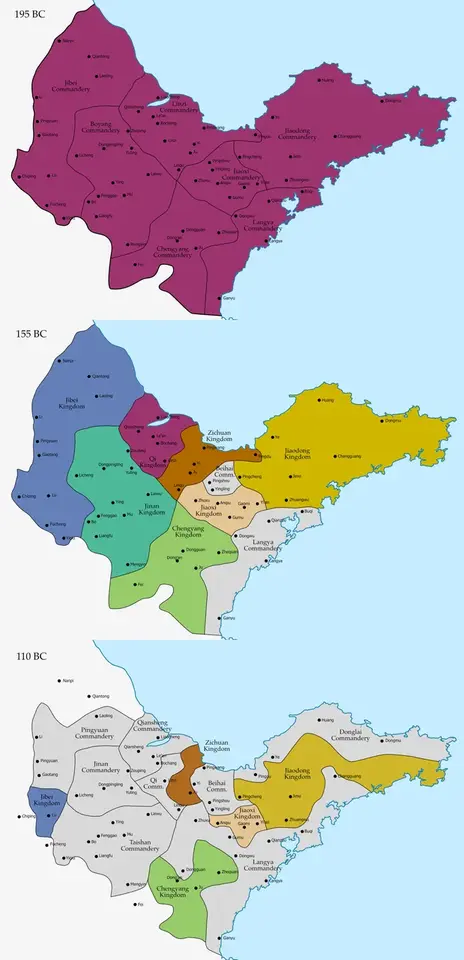
Since the founding of the Han Dynasty, large semi-autonomous kingdoms ruled by imperial princes possessed vast armies, independent tax revenues, and private laws, threatening the central court as demonstrated in the Rebellion of the Seven States. Emperor Wu desperately sought to neutralize these kingdoms without sparking nationwide revolt.
Zhu Fu Yan proposed the immortal "Decree of Extending Grace" (Tui'en Ling): "Under ancient custom, feudal kings pass their entire kingdom exclusively to their eldest son, while younger sons receive not a single foot of land. Today, Your Majesty should command the kings to distribute parts of their territory to all their beloved younger sons as imperial marquises (Liehou). The younger sons will revere Your Majesty's benevolence, while the large kingdoms will automatically divide into dozens of small, powerless counties directly subject to imperial law!"
Emperor Wu enthusiastically promulgated the decree. Thousands of younger princely sons rejoiced, and within a single generation, the colossal feudal kingdoms that had threatened the throne dissolved peacefully into docile commanderies without a single drop of blood being spilled.
Zhu Fu Yan also advised Emperor Wu to compel the richest magnates, merchants, and unruly gentry across the empire to relocate to Maoling, the site of the future imperial mausoleum, stripping the provinces of rebel leaders while concentrating wealth under the imperial eye. In foreign affairs, he passionately championed the establishment of Shuofang Commandery along the Ordos Loop, providing the forward cavalry base from which Han armies repeatedly defeated the Xiongnu.
At the zenith of his power, Zhu Fu Yan's residence was mobbed by thousands of courtiers offering bribes and petitions. When friends cautioned him against such dangerous extravagance, Zhu Fu Yan famously declared: "A true man should either feast from five giant bronze cauldrons (Wuding Shi) in life, or be boiled in five cauldrons (Wuding Peng) in death! My life is short and I have endured fifty years of starvation; I must live my ambitions to the utmost!"
In 126 BCE, Emperor Wu appointed Zhu Fu Yan Chancellor of Qi to investigate allegations of palace incest and corruption within the royal family of his home state. Terrified that Zhu Fu Yan would execute him, King Liu Cichang of Qi committed suicide by drinking poison. Feudal princes and conservative court ministers, led by Prime Minister Gongsun Hong, seized upon the tragedy to submit joint memorials accusing Zhu Fu Yan of extortion, taking massive bribes, and driving an imperial prince to death. Despite Emperor Wu's initial hesitation, Gongsun Hong insisted: "If Your Majesty does not execute Zhu Fu Yan, you cannot appease the anger of the feudal princes!"
Emperor Wu ordered Zhu Fu Yan arrested and executed alongside his clan. When he died, of the thousands of retainers who had crowded his mansion, not a single one dared to claim his body, except for a lone scholar named Kong Che, who buried him with tears on the plains of Henan.
Zhu Fu Yan designed the Tui'en Ling, allowing feudal kings to divide their territories among all their sons as marquises under local commanderies, peacefully dismantling regional princely kingdoms.
Overcoming court opposition, he persuaded Emperor Wu to fortify the fertile Ordos Loop as Shuofang Commandery, creating a strategic staging ground and agricultural base against the Xiongnu.
He proposed moving wealthy clans, local strongmen, and high officials to Maoling near Chang'an, weakening regional separatism while enriching the imperial capital.
By investigating and exposing unlawful conduct by rulers such as the Kings of Yan and Qi, he enforced imperial law across the autonomous princely domains.
His debut memorial synthesized Legalist, Daoist, and Confucian principles into pragmatic policies on frontier logistics, statutory law, and imperial centralization.
Sima Qian in the Records of the Grand Historian evaluated Zhu Fu Yan with mixed awe and sorrow: "Zhu Fu Yan conceived the Tui'en Ling, observing the times to establish enduring laws; he feasted from cauldrons in life, yet died before his time."
Ban Gu praised Zhu Fu Yan's strategic brilliance in resolving the feudal crisis while noting how his unrestrained arrogance and acceptance of bribes gave his court enemies the pretext to destroy him.
Traditional commentators contrasted his extraordinary rise from poverty to imperial confidant with his fatal boast of "eating from five cauldrons or being boiled in five cauldrons," viewing his downfall as a cautionary tale of ministerial hubris.
Political scientists and constitutional historians consider Zhu Fu Yan's Tui'en Ling the most brilliant administrative policy in ancient Chinese statecraft, solving the two-hundred-year-old crisis of regional feudalism through non-violent structural dilution and establishing the permanent administrative unity of the Chinese empire.
FIGURES ASSOCIATED WITH THIS DYNASTY