Birth in Panyu
Born in Panyu as the eldest grandson of Zhao Tuo and son of Crown Prince Zhao Zhongshi.
赵眜
Zhao Mo (died 122 BCE), recorded erroneously in standard received editions of the Records of the Grand Historian and the Book of Han as "Zhao Hu," had his authentic personal name confirmed through the 1983 archaeological excavation of the Western Han Nanyue King Tomb at Xianggang Hill in Guangzhou, which yielded jade seals inscribed "Zhao Mo" alongside gold seals reading "Imperial Seal of Emperor Wen" (Wendi xingxi). He…
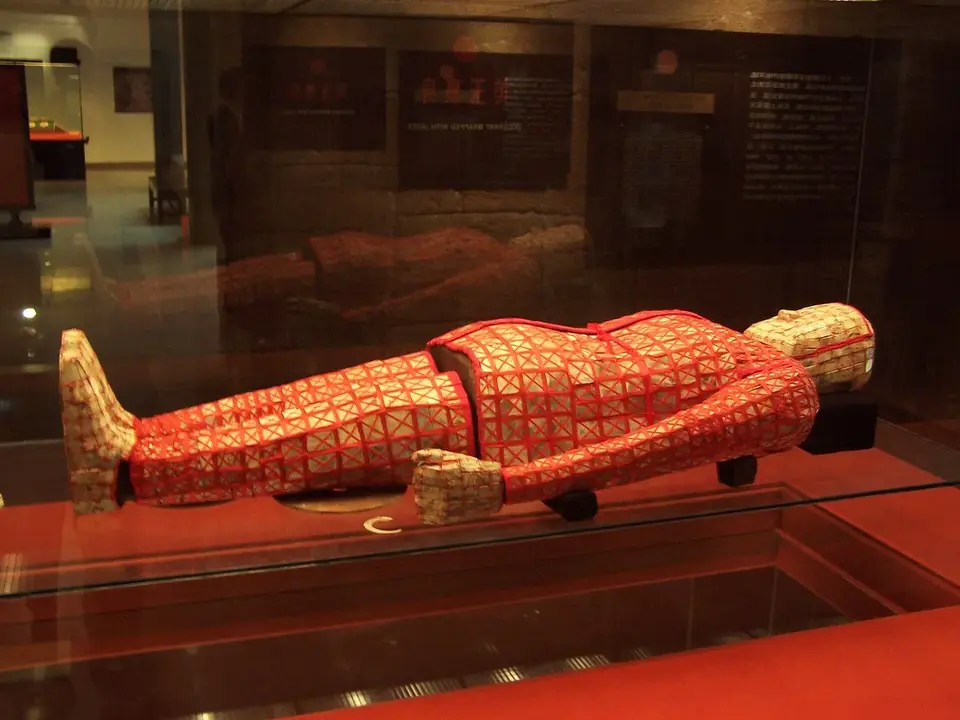
Zhao Mo (died 122 BCE), recorded erroneously in standard received editions of the Records of the Grand Historian and the Book of Han as "Zhao Hu," had his authentic personal name confirmed through the 1983 archaeological excavation of the Western Han Nanyue King Tomb at Xianggang Hill in Guangzhou, which yielded jade seals inscribed "Zhao Mo" alongside gold seals reading "Imperial Seal of Emperor Wen" (Wendi xingxi). He was the grandson of King Wu (Zhao Tuo) and the son of Crown Prince Zhao Zhongshi, reigning as the second monarch of the Nanyue Kingdom from 137 BCE to 122 BCE, holding the posthumous title King Wen (Wenwang) while styling himself Emperor Wen (Wendi) domestically. In 137 BCE (the fourth year of the Jianyuan era), following the death of the centenarian founder Zhao Tuo and the premature death of his father, Zhao Mo ascended the throne as the eldest grandson. In 135 BCE, King Zou Ying of neighboring Minyue launched an invasion against Nanyue's border garrisons. Demonstrating exceptional geopolitical acumen, Zhao Mo refused to engage in unauthorized conflict, appealing to Emperor Wu of Han under the terms of their vassal covenant. Emperor Wu commended his fidelity and dispatched imperial armies under Wang Hui and Han Anguo. Before the Han armies crossed the Nanling Mountains, Minyue nobles executed their king and surrendered. When Han envoy Yan Zhu visited Panyu to convey imperial thanks, Zhao Mo dispatched his crown prince Zhao Yingqi to Chang'an as an imperial bodyguard and hostage. When urged to travel to the capital himself, Zhao Mo heeded his counselors' warnings and feigned chronic illness, preserving Nanyue's regional autonomy. In 122 BCE, following a reign of sixteen years, Zhao Mo died and was buried deep within Xianggang Hill in Guangzhou. His intact stone tomb is the largest and richest early Han stone-chamber tomb found in Lingnan, yielding over ten thousand artifacts—including jade suits sewn with silk threads, inscribed gold seals, bronzes, and overseas glass vessels—providing monumental archaeological evidence of Lingnan's early maritime trade and integration into Chinese civilization.
Born in Panyu as the eldest grandson of Zhao Tuo and son of Crown Prince Zhao Zhongshi.
Succeeded his grandfather Zhao Tuo as second monarch of Nanyue, titled King Wen.
Invaded by Minyue; appealed to Han for aid, resulting in Han intervention and Minyue's capitulation.
Sent Crown Prince Zhao Yingqi to Chang'an; feigned illness to decline visiting the Han court.
Died after sixteen years on the throne; interred at Xianggang Hill; succeeded by Prince Zhao Yingqi.
Zhao Mo was born in Panyu (in modern Yuexiu District, Guangzhou), the capital of the Nanyue Kingdom. His grandfather was Zhao Tuo, the Qin general who unified the Lingnan region and established the independent kingdom of Nanyue during the late Qin, living for over a century. Because Crown Prince Zhao Zhongshi predeceased his father, Zhao Mo became the primary heir.
In 137 BCE, the founding monarch Zhao Tuo passed away. Supported by the royal clan and chieftains, Zhao Mo ascended the throne as the second ruler of Nanyue, known posthumously as King Wen.
Upon his accession, Zhao Mo maintained the dual political system established by Zhao Tuo: toward the Western Han court, he acted as a loyal vassal king, presenting regular tribute of regional pearls, ivory, and exotic birds; within his own realm across Guangdong and Guangxi, he exercised imperial prerogatives, styling himself Emperor Wen (Wendi) and using imperial gold seals and palace protocols. This statecraft allowed Zhao Mo to maintain peaceful diplomatic ties with Chang'an while commanding absolute authority over the diverse Yue populations.
In 135 BCE, King Zou Ying of neighboring Minyue (modern Fujian) took advantage of the death of Zhao Tuo to launch an invasion of Nanyue's eastern border.
Although Nanyue possessed ample treasuries and fortified garrisons capable of armed resistance, Zhao Mo recognized that unauthorized warfare would compromise his standing with the young, ambitious Emperor Wu of Han. Demonstrating astute diplomatic foresight, Zhao Mo dispatched swift couriers to Chang'an with an imperial petition: "Both Nanyue and Minyue are vassal states of the Great Han, forbidden from mutual warfare. Today Minyue violates imperial order and plunders our borders. Mindful of the Son of Heaven's statutes, your servant dares not mobilize armies, pleading for the Emperor's arbitration!"
Emperor Wu and his court praised Zhao Mo's propriety. The Emperor mobilized imperial armies under Grand Herald Wang Hui marching from Yuzhang and Grand Minister of Agriculture Han Anguo from Kuaiji. Awed by the advancing Han forces, Prince Yu Shan of Minyue assassinated King Zou Ying and submitted his severed head to the Han commanders, bringing a bloodless conclusion to the war. By invoking imperial suzerainty, Zhao Mo preserved his military strength and neutralized a dangerous neighbor without losing a single soldier.
Following the victory, Emperor Wu dispatched Grand Palace Grandee Yan Zhu to Panyu to convey imperial praise. Zhao Mo received the envoy with deepest gratitude, declaring: "The Son of Heaven mobilized armies to punish our enemy; even in death your servant cannot repay such imperial grace!"
To demonstrate complete loyalty, Zhao Mo sent his eldest son and legal heir, Crown Prince Zhao Yingqi, to Chang'an to serve as an imperial palace guard and hostage. Furthermore, Zhao Mo promised Yan Zhu: "Our realm has just suffered invasion. Let the envoy proceed; your servant is preparing day and night to travel to Chang'an for an imperial audience!"
However, as soon as Yan Zhu departed, senior ministers and Yue elders remonstrated with Zhao Mo: "The Han army destroyed Minyue ostensibly on our behalf, but in reality to intimidate Nanyue! Our late King Zhao Tuo left strict injunctions: in serving the Han Emperor, observe outward courtesy, but never be lured by pleasing words to enter Chang'an! Once in the capital, the Emperor will detain you, and you will never return—bringing ruin upon our ancestral altars!"
Recognizing the gravity of this counsel, Zhao Mo submitted a memorial claiming severe illness and paralysis of the limbs, pleading that he be allowed to remain in Panyu. Emperor Wu permitted the exemption, and Zhao Mo never left Lingnan for the remainder of his life, successfully preserving the autonomy of his realm.
During his remaining decade on the throne, Zhao Mo focused on domestic reconstruction and regional trade. He promoted iron-smelting, animal husbandry, and advanced wet-rice agriculture introduced from the Central Plains, while cultivating maritime commerce through Panyu's harbor with Southeast Asia and the Indian Ocean.
In 122 BCE, suffering from deteriorating health after a reign of sixteen years, Zhao Mo died in his palace in Panyu. His son Zhao Yingqi returned from twelve years of hostage service in Chang'an to assume the throne as King Ming. Zhao Mo was interred in a stone-chamber tomb carved into the bedrock of Xianggang Hill, north of Panyu.
In 1983, archaeologists excavated Zhao Mo's tomb, uncovering over ten thousand artifacts. The tomb yielded his jade personal seal reading "Zhao Mo," resolving the textual confusion with "Zhao Hu," alongside the supreme gold seal "Imperial Seal of Emperor Wen" and China's earliest intact jade shroud sewn with silk threads. The presence of Persian silver boxes, African elephant tusks, and Western glass plaques confirmed Zhao Mo's capital as a premier terminus of the ancient Maritime Silk Road.
In 135 BCE, Zhao Mo relied on diplomatic adherence to imperial treaties rather than unilateral war to counter Minyue's invasion, prompting Han military intervention that crushed Minyue and secured Nanyue's borders without expending local military resources.
After dispatching Crown Prince Zhao Yingqi as a hostage to Chang'an, Zhao Mo heeded his ministers' warnings and feigned illness to decline visiting the Han court, safeguarding Nanyue's internal independence for sixteen years.
Interred at Xianggang Hill in Guangzhou, Zhao Mo's tomb preserved over ten thousand cultural treasures. The discovery of the "Emperor Wen" gold seal and "Zhao Mo" jade seal verified the historical authenticity of Nanyue's institutions and documented early Maritime Silk Road commerce.
FIGURES ASSOCIATED WITH THIS DYNASTY