Birth in Chu
Born into a knight-errant household in Chu, later moving with his family to Anling near the imperial capital.
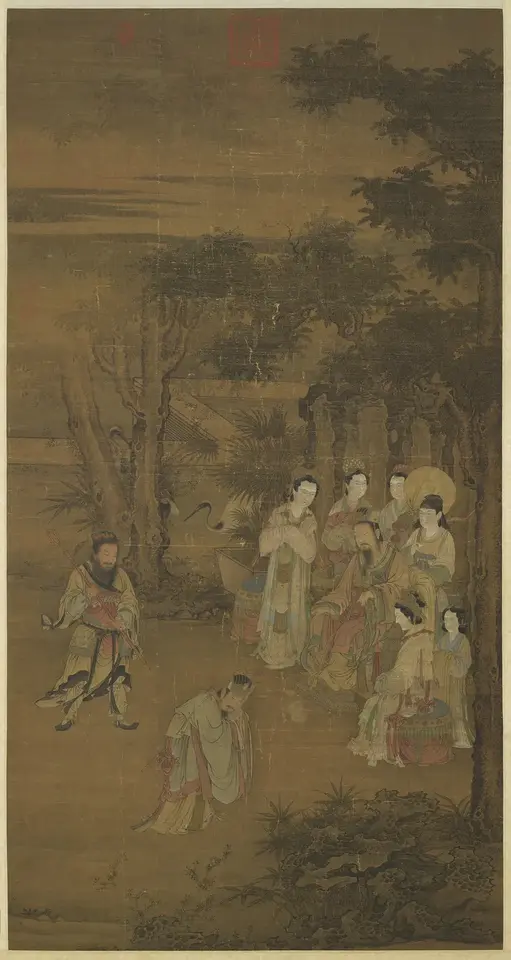
袁盎
Yuan Ang, c. 200–148 BC (袁盎), recorded as Yuan Ang (爰盎) in the Book of Han, courtesy name Si, was a prominent statesman, outspoken political remonstrator, and court counselor during the reigns of Emperor Wen and Emperor Jing of the Western Han dynasty. Originating from Chu and later settling in Anling, he began his career as an attendant under the Lu clan before being recommended as Court Gentleman upon Emperor Wen's…
Yuan Ang, c. 200–148 BC (袁盎), recorded as Yuan Ang (爰盎) in the Book of Han, courtesy name Si, was a prominent statesman, outspoken political remonstrator, and court counselor during the reigns of Emperor Wen and Emperor Jing of the Western Han dynasty. Originating from Chu and later settling in Anling, he began his career as an attendant under the Lu clan before being recommended as Court Gentleman upon Emperor Wen's accession. Throughout his distinguished official service, Yuan Ang served as Leader of the Court Gentlemen, Military Commandant of Longxi, Chancellor of Qi, Chancellor of Wu, Grand Master of Ceremonies, and Chancellor of Chu. Staunchly advocating patriarchal ritual order, hierarchical distinction, and Confucian decorum, Yuan Ang gained widespread renown for his unyielding candor. He curbed the overbearing pride of Chancellor Zhou Bo, cautioned Emperor Wen against recklessly driving chariots down steep bluffs, expelled court eunuchs from sharing the imperial carriage, and adjusted Lady Shen's banquet seating to uphold the Empress's supremacy. During the Rebellion of the Seven States, Yuan Ang urged Emperor Jing to execute Chao Cuo to dismantle the insurgent casus belli and escaped an ambush during his diplomatic mission to Wu. In 148 BC, he vigorously opposed Empress Dowager Dou's initiative to name Prince of Liang Liu Wu as imperial heir apparent, safeguarding the patrilineal primogeniture system. His staunch defense of dynastic protocol provoked the Prince of Liang to dispatch assassins who killed him outside Anling.
Born into a knight-errant household in Chu, later moving with his family to Anling near the imperial capital.
Served as retainer under Lu Lu; recommended as Court Gentleman by his brother Yuan Kuai after Emperor Wen ascended the throne.
Admonished Emperor Wen to uphold imperial dignity by curbing the overbearing attitude of Chancellor Zhou Bo.
Advised the throne to partition the domain of the aggressive Prince of Huainan Liu Chang after the murder of Shen Yiji.
Delivered three consolatory arguments after Liu Chang died in custody, urging imperial enfeoffment for his sons.
Moved Lady Shen's seat back during a banquet at Shanglin Park, citing Lady Qi's tragic fate to assert hierarchical propriety.
Transferred to Military Commandant of Longxi following repeated candid remonstrances, winning the deep devotion of frontier garrison troops.
Served as Chancellor of Qi and subsequently Chancellor of Wu, adopting a policy of restraint to dissuade Prince Liu Pi from rebellion.
During the Rebellion of the Seven States, advised the execution of Chao Cuo, undertook an embassy to Wu, and made a perilous escape.
Appointed Chancellor of Chu following the suppression of the rebellion, later retiring to Anling due to ill health.
Dissuaded Empress Dowager Dou from establishing Liu Wu as heir; assassinated outside Anling by swordsmen dispatched by the Prince of Liang.
Yuan Ang was raised in Anling in the Guanzhong plain, where his father had relocated following a youth spent among roving bandits. Possessing an assertive temperament and natural rhetorical flair, Yuan Ang initially served as a house retainer to Lu Lu, nephew of Empress Dowager Lu. After the purge of the Lu lineage in 180 BC and the enthronement of Emperor Wen, Yuan Ang was recommended for official appointment by his elder brother Yuan Kuai, securing the post of Court Gentleman within the palace guard.
At that time, Marquess of Jiang Zhou Bo enjoyed immense prestige for liquidating the Lu clan and restoring the Liu dynastic line. Serving as Chancellor, Zhou Bo exhibited considerable condescension, while Emperor Wen treated him with deference, frequently walking him out after audience. Yuan Ang intervened, stating that Zhou Bo was merely a meritorious subject who had seized an opportune moment after Empress Lu's demise, rather than an indispensable minister who had risked his life during dynastic peril. He warned that imperial self-abasement subverted rightful monarchical authority. Emperor Wen accepted his counsel, adopting a stern demeanor at court. Zhou Bo initially resented Yuan Ang bitterly, yet when Zhou Bo was later framed for rebellion and imprisoned, Yuan Ang was the sole courtier who fearlessly defended his innocence before the throne. Deeply moved upon his release, Zhou Bo formed an enduring bond of brotherhood with him.
In 177 BC, Emperor Wen's younger half-brother, Liu Chang, Prince of Huainan, arrived in Chang'an for an imperial audience and brazenly bludgeoned Shen Yiji, Marquess of Piyang, to death with an iron flail. Observing Liu Chang's lawless arrogance, Yuan Ang urged the emperor to partition Huainan to avert future rebellion, but his counsel was not heeded. In 174 BC, Liu Chang conspired with Chai Wu's son in treason. Emperor Wen stripped him of his princely rank and ordered him transported in an enclosed prison cart to Yandao in Sichuan.
Yuan Ang warned the emperor that the haughty prince could perish from indignation on the journey, leaving the throne stained with fratricide. His warning proved prescient when Liu Chang starved himself to death at Yong County. Distraught, Emperor Wen refused food. Yuan Ang comforted him by praising his exemplary filial care for Empress Dowager Bo, his perilous journey to stabilize the empire, and his humble deferrals of the imperial throne, while placing the fault on negligent escort officials and urging him to enfeoff Liu Chang's sons as marquesses and princes. Reassured, Emperor Wen adopted his proposals, elevating Yuan Ang's standing at court.
Yuan Ang consistently upheld ritual norms against imperial favoritism. When Emperor Wen toured with his favorite eunuch Zhao Tong sharing the imperial carriage, Yuan Ang stepped forward, prostrated himself before the horses, and declared that only heroic worthies should share the sovereign carriage, demanding the eunuch's removal. Emperor Wen laughed and dismissed Zhao Tong. On an excursion to Baling, the emperor prepared to gallop down a steep slope in his carriage. Yuan Ang grabbed the reins, reminding the monarch that an exemplary ruler must never risk the dynastic altars for reckless sport, convincing the emperor to turn back.
During a garden banquet at Shanglin Park with Empress Dou and imperial consort Lady Shen, attendants placed Lady Shen's seat on an equal level with the Empress. Yuan Ang deliberately pulled Lady Shen's seat back. When Lady Shen refused to sit and the emperor stalked off in anger, Yuan Ang argued that confusing hierarchical distinctions between imperial wives and concubines sowed household ruin, evoking Empress Lu's gruesome mutilation of Consort Qi. Realizing his error, Emperor Wen explained the admonition to Lady Shen, who generously rewarded Yuan Ang with fifty pounds of copper coins.
Because of his relentless criticisms, Yuan Ang was transferred out of the capital as Military Commandant of Longxi. He inspected the frontiers, shared rations with common soldiers, and earned their unreserved devotion. He was subsequently elevated to Chancellor of Qi and then Chancellor of Wu. His nephew Yuan Zhong advised him that Prince of Wu Liu Pi had long contemplated insurrection and counseled him to drink wine, avoid administrative micromanagement, and gently discourage rebellion. Yuan Ang adhered to this pragmatic approach, earning the respect of Liu Pi without falling victim to his suspicions. Upon his retirement, he reprimanded Chancellor Shentu Jia for aloofness, humbling the senior statesman into receiving him as an honored guest.
When Emperor Jing ascended the throne, Censor-in-Chief Chao Cuo embarked on aggressive territorial reductions of the feudal principalities. Chao Cuo and Yuan Ang harbored mutual enmity, never speaking in the same chamber. Chao Cuo instituted judicial proceedings against Yuan Ang for accepting gifts while serving in Wu, causing the emperor to strip Yuan Ang of official rank. In 154 BC, the Rebellion of the Seven States erupted under the banner of executing Chao Cuo. Chao Cuo planned to execute Yuan Ang for alleged complicity, prompting Yuan Ang to seek an emergency night audience through General Dou Ying.
Yuan Ang urged Emperor Jing to execute Chao Cuo and restore seized territories to deprive the insurgents of their righteous pretext. Emperor Jing adopted the proposal, executing Chao Cuo in the eastern marketplace, and appointed Yuan Ang Grand Master of Ceremonies, dispatching him as imperial envoy to Wu. Arriving at the rebel camp, Yuan Ang found that Liu Pi had declared himself emperor. Liu Pi attempted to force Yuan Ang into military command; when Yuan Ang resolutely refused, Liu Pi placed him under armed custody intending to execute him.
A cavalry commandant guarding the perimeter had formerly served as Yuan Ang's clerk and had been forgiven by Yuan Ang after an illicit affair with a household maid. Grateful for Yuan Ang's past mercy, the officer purchased liquor to intoxicate the guards, slashed open the tent under cover of darkness, and escorted Yuan Ang to safety. Yuan Ang walked several miles until encountering Liang cavalry patrols, securing a horse to dash back to Chang'an and report the true scale of the rebellion.
Following the collapse of the seven-state coalition, Yuan Ang was appointed Chancellor of Chu before resigning due to recurring illness and retiring to his estate in Anling. Despite his private status, Emperor Jing routinely sought his strategic advice. In 148 BC, Prince of Liang Liu Wu arrived in Chang'an. Relying on maternal affection, Empress Dowager Dou urged Emperor Jing to designate his younger brother as successor under ancient Shang dynastic customs.
When consulted, Yuan Ang vigorously maintained that the Western Han adhered to Zhou dynastic ancestral laws, which strictly mandated inheritance through the eldest imperial son rather than a younger brother. Audience with Empress Dowager Dou, Yuan Ang recounted the historical precedent of Duke Xuan of Song, whose fraternal succession precipitated five generations of catastrophic civil wars. Swayed by his arguments, the Empress Dowager abandoned her plan. Infuriated by the loss of the heirship, Liu Wu dispatched assassins into Guanzhong. Although the initial assassin relented after witnessing the villagers' reverence for Yuan Ang, subsequent assassins caught Yuan Ang outside the city gate of Anling and stabbed him to death at the age of fifty-three.
Yuan Ang's preeminent political contribution lay in establishing unambiguous hierarchical distinctions for the nascent Western Han dynasty through unflinching, life-risking remonstrance. Emerging from the turbulence of the late Qin and Chu-Han conflicts, early Han courtiers often retained rough plebeian habits, characterized by lax court etiquette and blurred boundary lines between sovereign and subject. Rooted in Confucian canonical tenets, Yuan Ang perceived that the erosion of ritual hierarchy directly compromised imperial centralized governance.
Under Emperor Wen, Yuan Ang curtailed the overweening presumption of senior military commanders like Zhou Bo, consolidating the majesty of the throne. By physically pulling back Lady Shen's seat, he demarcated the absolute separation between the principal Empress and concubines, preventing palace intrigues born of illicit ambition. By driving eunuch favorites from the imperial carriage, he defended the dignity of civil ministers against eunuch encroachment. By halting reckless chariot descents, he elevated dynastic stability above sovereign amusement. His timely admonitions echoed the political insights of Jia Yi and Lu Jia, forming the vanguard of the Han dynasty's structural transition from Huang-Lao non-action toward Confucian ritual governance.
In 148 BC, the Western Han confronted a grave constitutional dilemma regarding the imperial succession. Empress Dowager Dou doted upon her youngest son, Prince of Liang Liu Wu, attempting to revive ancient Shang dynastic fraternal succession to force Emperor Jing to designate his brother as imperial heir. Had this maneuver succeeded, it would have inevitably catalyzed violent succession wars between royal brothers and nephews.
While court ministers remained paralyzed, Yuan Ang stepped into the breach, unfurling the banner of Zhou patrilineal primogeniture. In audience with the Empress Dowager, he challenged her logic by asking who would inherit the throne after Liu Wu, trapping her in an insurmountable contradiction. He then cited historical annals from the Spring and Autumn Annals, showing how Duke Xuan of Song brought five generations of catastrophic war upon his realm by passing the crown to his brother rather than his son. Yuan Ang's unyielding appeal to ancestral precedent dissolved Empress Dowager Dou's designs, securing the legal succession of imperial son Liu Che (later Emperor Wu of Han) and preserving the enduring continuity of unified dynastic power.
Though elevated to ministerial rank, Yuan Ang retained the authentic generosity and knight-errant ethos of the western frontiers. While supervising defensive garrisons as Military Commandant of Longxi, he extended sincere care to common soldiers, personally tending the wounded and sharing meals, earning the boundless devotion of frontier troops. When governing as Chancellor in the south, he governed with clemency, pardoning a wayward clerk and gifting him household assets, an act of grace that subsequently saved his own life when the clerk helped him escape rebel custody.
Following his retirement, Yuan Ang shunned sycophantic grandees in favor of honorable commoners, forging a lifelong brotherhood with the Luoyang knight-errant Ju Meng. He publicly denounced fair-weather opportunists, championing Ju Meng's unwavering reliability in times of peril. Sima Qian extolled his character in the Records of the Grand Historian, praising his fundamental benevolence and impassioned commitment to righteousness, honoring him as an exemplar who harmonized Confucian ministerial duty with the noble virtues of ancient chivalry. Later historical records in Taiping Guangji note that when the Prince of Guangchuan Liu Qu plundered ancient tombs in the late Han era, he opened Yuan Ang's tomb at Anling only to discover a plain earthenware coffin containing nothing more than a single bronze mirror, providing poignant material testimony to the statesman's lifelong personal austerity and incorruptibility.
FIGURES ASSOCIATED WITH THIS DYNASTY