Birth of an Illustrious Thinker
Born in Yingyin, Yingchuan, as the eleventh-generation descendant of Xunzi; exhibited brilliant intellect and immersed himself in canonical lore.
荀淑
Xun Shu (83–149 CE), courtesy name Jihe, was a native of Yingyin County, Yingchuan Commandery (modern Weidu District, Xuchang, Henan). He was an eleventh-generation descendant of Xunzi, the preeminent Warring States philosopher. Active across the reigns of Emperor He, Emperor An, Emperor Shun, and Emperor Huan of the Eastern Han dynasty, he was an illustrious scholar, statesman, and educator who served as Gentleman of the…
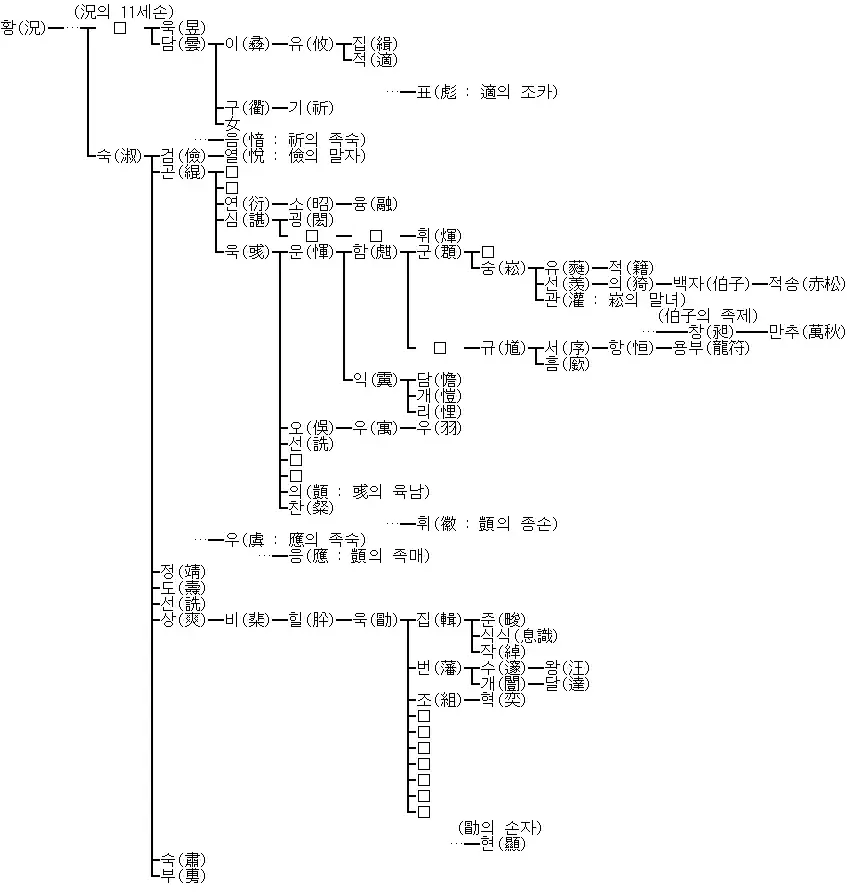
Xun Shu (83–149 CE), courtesy name Jihe, was a native of Yingyin County, Yingchuan Commandery (modern Weidu District, Xuchang, Henan). He was an eleventh-generation descendant of Xunzi, the preeminent Warring States philosopher. Active across the reigns of Emperor He, Emperor An, Emperor Shun, and Emperor Huan of the Eastern Han dynasty, he was an illustrious scholar, statesman, and educator who served as Gentleman of the Palace, Magistrate of Dangtu, and Chancellor of Langling, revered universally throughout the realm as the "Divine Lord" (Shenjun). He was the founding forefather of the prominent Yingchuan Xun clan, one of the foremost aristocratic families of medieval Chinese history. In his youth, Xun Shu demonstrated lofty moral rectitude and vast erudition. In his classical pursuits, he focused on comprehensive comprehension and practical statecraft, disdaining pedantic trivialities and empty rhetorical exegesis, which drew superficial criticism from rigid pedants but earned profound praise from regional leaders for his uncanny ability to discern human character. Under Emperor An, he was summoned as a Gentleman of the Palace and appointed Magistrate of Dangtu, later resigning to return home. Contemporary literati leaders such as Li Gu and Li Ying revered him as an intellectual master and treated him with the deference due to a teacher. During the regency of Empress Dowager Liang, celestial portents of solar eclipses and earthquakes prompted an imperial search for the worthy and upright. Recommended by Chamberlain for the Attendants Du Qiao and Chamberlain for the Palace Revenues Fang Zhi, Xun Shu submitted an unyielding court memorial severely censuring arrogant consort kin led by General-in-Chief Liang Ji. Resentful of his outspoken critique, the consort faction reassigned him away from the court to serve as Chancellor of the marquisate of Langling. In Langling, Xun Shu governed with clarity and benevolence, suppressing corrupt magnates while relieving impoverished commoners, transforming local mores to such an extent that the populace revered him as the "Divine Lord." He soon retired to his native Yingyin, cultivating his moral character and leading his kinsmen in agriculture; whenever clan property expanded, he distributed the surplus to relieve destitute relatives and neighbors. Xun Shu had eight distinguished sons—Xun Jian, Xun Gun, Xun Jing, Xun Tao, Xun Wang, Xun Shuang, Xun Su, and Xun Fu—all endowed with exceptional statecraft talents and celebrated across the realm as the "Eight Dragons of the Xun Clan," with his son Xun Shuang rising to Minister of Works and his grandson Xun Yu serving as chief strategist to Cao Cao. In 149 CE, Xun Shu passed away at the age of sixty-seven; Li Ying submitted an imperial petition to observe three years of mourning for his master, and the citizens of Langling and Dangtu erected shrines in his honor.
Born in Yingyin, Yingchuan, as the eleventh-generation descendant of Xunzi; exhibited brilliant intellect and immersed himself in canonical lore.
Encountered the impoverished fourteen-year-old Huang Xian in an inn, bowing to him with reverence as a personal moral exemplar.
Summoned to court as Gentleman of the Palace and appointed Magistrate of Dangtu; resigned to return home after benevolent service.
Lectured in his native county; foremost statesmen Li Gu and Li Ying came to study under his guidance, revering him as a master.
Recommended for court examinations by Du Qiao, severely denounced consort kin under Liang Ji, and was transferred to Chancellor of Langling.
Presided over Langling with transparent justice, subduing corrupt local clans; acclaimed by the common folk as the "Divine Lord."
Resigned from office to lead his clan in agriculture and charitable relief; Magistrate Yuan Kang renamed his neighborhood "Gaoyang Ward."
Passed away in Yingyin at age sixty-seven; Li Ying observed three years of mourning, and local populations built sacrificial shrines.
| Field | Content |
|---|---|
| Name | Xun Shu |
| Courtesy Name | Jihe |
| Dynasty | Eastern Han |
| Ancestral Home | Yingyin County, Yingchuan Commandery (modern Xuchang, Henan) |
| Date of Birth | 83 CE (8th Year of the Jianchu Era of Emperor Zhang) |
| Date of Death | 149 CE (3rd Year of the Jianhe Era of Emperor Huan) |
| Age at Death | 67 |
| Highest Office | Chancellor of Langling, Magistrate of Dangtu, Gentleman of the Palace |
| Historical Identity | Eminent Eastern Han scholar, Chancellor of Langling, Divine Lord, father of the Eight Dragons, progenitor of the Yingchuan Xun lineage |
Xun Shu was an eleventh-generation direct descendant of Xunzi (Xun Qing), the towering synthesizer of Warring States Confucian philosophy. Following the accession of Emperor Xuan in Western Han, the family changed its surname to Sun to avoid the imperial taboo (Emperor Xuan's personal name being Xun), reverting to the ancestral surname Xun during his grandfather's generation in Yingyin County, Yingchuan Commandery.
During the mid-Eastern Han dynasty, classical scholarship had degenerated into rigid pedantry, with common scholars squandering their lives memorizing voluminous marginal glosses while remaining utterly ignorant of practical statecraft. Xun Shu possessed lofty moral character and read widely across the philosophical masters, yet in his studies he maintained an expansive vision. He intensely disliked empty semantic exercises and mechanical memorization, advocating instead for the intuitive mastery of classical principles and their pragmatic application to statecraft. While conservative academics criticized Xun Shu for departing from rigid conventions, perceptive statesmen and scholars praised him for his spotless virtue and peerless insight into human affairs.
During the reign of Emperor An, Xun Shu was summoned by imperial coach on account of his classical brilliance, appointed a Gentleman of the Palace, and soon promoted to Magistrate of Dangtu in Jiujiang Commandery. In Dangtu, he reduced punishments, simplified tax exactions, and refused to pander to aristocratic interests. However, holding high aspirations that transcended bureaucratism, he soon relinquished his post and returned to Yingchuan to lecture and compose treatises.
Throughout his life, Xun Shu was renowned for his penetrating connoisseurship of human character. Traveling across the commanderies of Henan, he demonstrated an uncanny ability to recognize genius within individuals of tender age or humble social status.
Traveling through Shenyang County in Runan Commandery, he lodged at a roadside inn where he met Huang Xian (courtesy name Shudu), an impoverished fourteen-year-old youth dressed in coarse clothing. Engaging him in discourse, Xun Shu found the young boy's mind to be vast like an ocean, possessing unfathomable profundity. Profoundly moved, Xun Shu straightened his garments and bowed deeply to the youth, spending the entire day in conversation before departing with reluctance. Later, Xun Shu remarked to colleagues that Huang Xian possessed boundless oceanic capacity, declaring him to be a supreme moral model for his own life. On another occasion, Xun Shu noticed the exceptional legal acumen of Li Zhao, an obscure petty clerk, and promoted him to prominence.
During the transition between Emperor Zhi and Emperor Huan, Empress Dowager Liang Na directed the imperial court. The government fell into severe corruption as the consort family monopolized imperial offices, coinciding with widespread solar eclipses and destructive earthquakes. Following imperial conventions, the court commanded ministers to recommend individuals of upright character for policy examinations. Chamberlain for the Attendants Du Qiao and Chamberlain for the Palace Revenues Fang Zhi jointly recommended Xun Shu.
In his court examination responses, facing the formidable presence of General-in-Chief Liang Ji, Xun Shu showed no fear. He delivered an uncompromising indictment of dynastic maladministration, deploying trenchant satire to condemn consort kin for usurping imperial authority. Enraged yet fearful of Xun Shu's formidable popularity among the empire's scholars, Liang Ji arranged to have him transferred far from the capital to serve as Chancellor of the marquisate of Langling (modern Queshan, Henan).
Langling was a complex transit hub where powerful local lineages dominated society. Arriving in office, Xun Shu resolved legal disputes with total fairness, curtailed oppressive magnates, and relieved the distressed populace. Under his transformative rule, corruption vanished, public security flourished, and common folk enjoyed peaceful agrarian pursuits. The inhabitants celebrated his administrative grace, revering him as the "Divine Lord." Contemporaries such as Grand Commandant Li Gu and Director of Retainers Li Ying held Xun Shu in unbounded admiration, honoring him as an intellectual master.
After serving in Langling for a short time, observing that imperial corruption remained intractable under Liang Ji's hegemony, Xun Shu resigned his chancellorship and retired permanently to his ancestral village in Yingyin.
In retirement, Xun Shu cultivated moral tranquility, guiding his household in farming and domestic frugality. Under his prudent stewardship, the family estate flourished. Yet Xun Shu remained generous, regarding benevolence as an absolute duty; whenever family wealth accumulated, he distributed grains, silks, and land to impoverished clan members and struggling friends, winning universal love throughout the region.
Xun Shu's ancestral neighborhood was originally named Xihao. Yuan Kang, the Magistrate of Yingyin and a scholar from Bohai, noted that ancient Emperor Ku Gaoyang had eight brilliant sons (the Eight Kaies), and that Xun Shu's eight sons all possessed extraordinary statecraft talents and empire-wide renown. Consequently, Yuan Kang issued an official decree renaming the neighborhood "Gaoyang Ward." The A New Account of the Tales of the World (Shishuo Xinyu) records a famed gathering: when Magistrate of Taiqiu Chen Shi visited Xun Shu in Gaoyang Ward accompanied by his sons Chen Ji and Chen Shen and grandson Chen Qun, Xun Shu's third son Xun Jing answered the gate, sixth son Xun Shuang poured the wine, the remaining sons served food, and young grandson Xun Yu sat upon his grandfather's knee. At that moment, the Grand Astrologer in Luoyang observed the heavens and reported to the emperor that virtuous sages had assembled and the star of virtue was traveling east.
In 149 CE (the third year of the Jianhe era of Emperor Huan), Xun Shu passed away peacefully in his home at age sixty-seven. Deeply grieved, court scholar Li Ying submitted a memorial requesting leave to observe three years of mourning as a devoted disciple. The grateful populations of Langling and Dangtu erected commemorative shrines to offer sacrifices to the "Divine Lord." The intellectual and moral foundations laid by Xun Shu enabled the Yingchuan Xun clan to endure as a premier noble family for centuries, producing eminent statesmen and literati across the Wei, Jin, and Northern and Southern dynasties.
During the reign of Emperor Zhi, Xun Shu submitted an unyielding court memorial severely censuring the abuses of General-in-Chief Liang Ji, displaying the fearless moral integrity of Eastern Han literati in opposing autocratic tyranny.
Serving as Chancellor of Langling, he suppressed corrupt magnates and established benevolent governance, transforming the social order to such an extent that the populace acclaimed him as the "Divine Lord" and erected lasting shrines in his honor.
Xun Shu emphasized practical statecraft and familial discipline, raising eight brilliant sons known as the "Eight Dragons," with Xun Shuang rising to Minister of Works and grandson Xun Yu serving as Cao Cao's chief strategist, laying the bedrock of the illustrious Yingchuan Xun lineage.
Possessing peerless connoisseurship of human character, he discovered the oceanic genius of the impoverished fourteen-year-old Huang Xian in a roadside inn, advanced Li Zhao from humble obscurity, and served as an intellectual mentor to Li Gu and Li Ying.
FIGURES ASSOCIATED WITH THIS DYNASTY