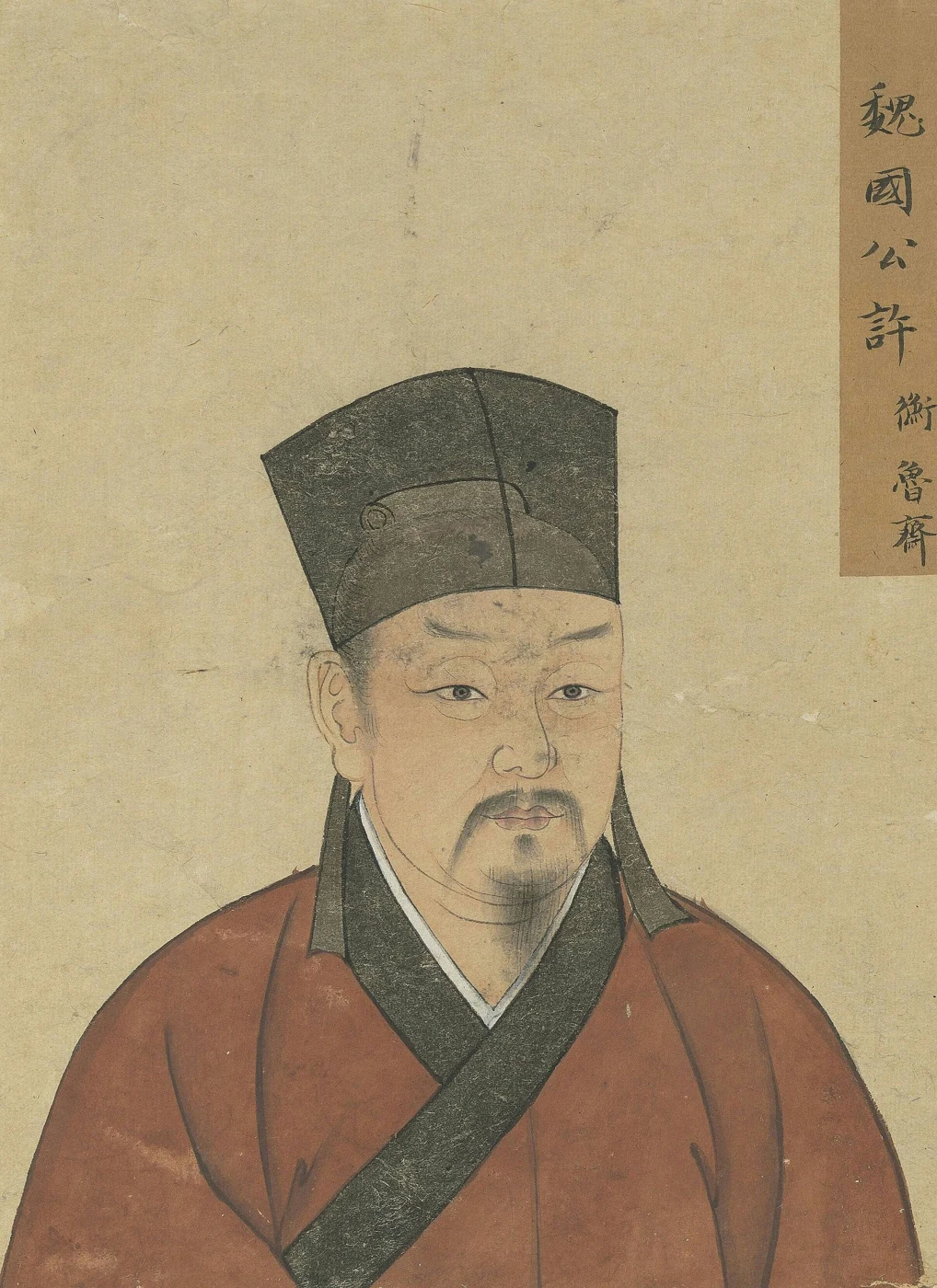
Historical painting or book illustration depicting 许衡; a later artistic interpretation.

1209 CE–1281 CE

Neo-Confucian scholareducatorand official

Xu Heng

许衡

A leading northern master of Neo-Confucian learning, Xu Heng served as the first Chancellor of the Imperial University and helped establish the intellectual basis of Yuan Confucian education and the imperial examination tradition.

1209 CE–1281 CEYuan Dynasty

PROFILE

A leading northern master of Neo-Confucian learning, Xu Heng served as the first Chancellor of the Imperial University and helped establish the intellectual basis of Yuan Confucian education and the imperial examination tradition.

Alternate names
Zhongping; Master Luzhai
Courtesy name
Zhongping
Art name
Luzhai
Period
Yuan
Dynasty/Regime
Yuan Dynasty
Identity
Neo-Confucian scholar, educator, and official
Ethnicity/People
Not reliably established in the historical record
Native place
Henei, Huai Prefecture (present-day Qinyang, Henan)
Date of birth
May 8, 1209
Place of birth
Yanghuanli, Xinzheng County (present-day Xugang Village, Xindian Town, Xinzheng, Henan)
Date of death
March 23, 1281
Place of death
Unknown
Highest office
See Biography and Major Activities

LIFE TIMELINE

Born at Yanghuanli, Xinzheng County, in present-day Xugang Village, XiOpen

Born at Yanghuanli, Xinzheng County, in present-day Xugang Village, Xindian Town, Xinzheng, Henan.

Age twenty-three | Mongol troops captured Xinzheng; Xu was taken prisoOpen

Age twenty-three | Mongol troops captured Xinzheng; Xu was taken prisoner and later released.

Age twenty-four | Crossed the Yellow River from Luoyang via Heyang on Open

Age twenty-four | Crossed the Yellow River from Luoyang via Heyang on his way home and later moved to Wei Prefecture in Shandong.

Age thirty-three | At Liucheng obtained writings by Cheng Yi, Cheng HaOpen

Age thirty-three | At Liucheng obtained writings by Cheng Yi, Cheng Hao, and Zhu Xi from Yao Shu, which redirected his scholarship toward Neo-Confucian learning.

Age forty | Lectured in Daming Prefecture and named his studio “LuzhaiOpen

Age forty | Lectured in Daming Prefecture and named his studio “Luzhai,” thereafter becoming known as Master Luzhai.

Age forty-five | Summoned by Kublai Khan and appointed educational supOpen

Age forty-five | Summoned by Kublai Khan and appointed educational supervisor of Jingzhao Prefecture, where he established schools widely.

Age fifty-one | Kublai Khan ascended the throne, summoned Xu to the caOpen

Age fifty-one | Kublai Khan ascended the throne, summoned Xu to the capital, and appointed him Chancellor of the Imperial University; Xu soon resigned because of illness.

Age fifty-six | Ordered to participate in affairs of the Secretariat; Open

Age fifty-six | Ordered to participate in affairs of the Secretariat; submitted the “Five Matters of Current Affairs,” advocating the implementation of Han-style institutions.

Age sixty | Worked with Xu Shilong to establish court ceremonial and wOpen

Age sixty | Worked with Xu Shilong to establish court ceremonial and with Liu Bingzhong and Zhang Wenqian to determine the official system.

Age sixty-one | Served as Left Vice Director of the Secretariat; afterOpen

Age sixty-one | Served as Left Vice Director of the Secretariat; after disputes with Ahmad Fanakati, asked to be relieved of executive duties.

Age sixty-two | Appointed Grand Secretary of Jixian Hall and concurrenOpen

Age sixty-two | Appointed Grand Secretary of Jixian Hall and concurrently Chancellor of the Imperial University; selected Mongol youths were placed under his instruction.

Age sixty-four | Resigned and returned to Huaimeng because powerful ofOpen

Age sixty-four | Resigned and returned to Huaimeng because powerful officials repeatedly undermined Han-style institutions.

Age sixty-seven | Put in charge of the Astronomical Bureau, where he sOpen

Age sixty-seven | Put in charge of the Astronomical Bureau, where he supervised calendar reform and worked with Guo Shoujing and others on observational instruments and gnomons.

Age seventy-one | The *Shoushi Calendar* was completed and promulgatedOpen

Age seventy-one | The *Shoushi Calendar* was completed and promulgated throughout the empire; Xu returned home because of illness.

Age seventy-three | Died; posthumously granted high honors including MOpen

Age seventy-three | Died; posthumously granted high honors including Minister of Education and given the posthumous title Wenzheng.

Posthumous | Accorded subsidiary sacrifice in the Temple of Confucius.Open

Posthumous | Accorded subsidiary sacrifice in the Temple of Confucius.

BIOGRAPHY

Biography

Family Background and Early Years

Xu Heng was born on the third day of the fourth lunar month in the first year of the Da'an era under the Jin ruler Weishao, corresponding to May 8, 1209, at Yanghuanli in Xinzheng County, now Xugang Village, Xindian Town, Xinzheng, Henan. His father Xu Tong and mother Lady Li originally lived in Henei County, Huai Prefecture, present-day Qinyang, Henan, but moved to Xinzheng to escape warfare. The *History of Yuan*, juan 158, “Biography of Xu Heng,” states: “Xu Heng, courtesy name Zhongping, was a man of Henei in Huai. His family had been farmers for generations. His father Tong took refuge in Henan and in the ninth month of the ninth year of Taihe gave birth to Heng in Xinzheng County.”

Xu Heng's family had farmed for generations, but he was diligent in study from childhood. When he first entered school at age seven, he asked his teacher why people studied. The teacher replied, “To pass the examinations.” Xu asked, “Is that all?” The teacher was astonished. Thereafter, whenever texts were explained, Xu repeatedly pressed for the underlying meaning. Eventually the teacher told his parents, “Your son is extraordinarily intelligent; I am not equal to teaching him. Please find another master,” and left. In this way Xu went through three teachers in succession.

As he grew older, his family was too poor to buy books, so Xu often traveled a hundred *li* to borrow and copy them. At the home of a fortune-teller he once saw a work explaining the *Book of Documents* and stayed overnight to copy it by hand before returning. Later, while fleeing warfare to Mount Culai, he finally obtained Wang Bi's commentary on the *Book of Changes*. Amid war and disorder, Xu continued to read by day and reflect by night, putting what he learned into practice and measuring his words and conduct against moral principle.

Study in a Time of Disorder and Intellectual Transformation

In 1233, the second year of the Tianxing era of the Jin, Mongol forces approached Xinzheng. Xu Heng and others traveled from Luoyang, crossed the river via Heyang, present-day Meng County, and returned home. He later moved to Wei Prefecture in Shandong. People who observed his moral conduct gradually began to follow him. After three years in Wei Prefecture, hearing that the warfare was subsiding, he returned to Huai Prefecture. In weddings, funerals, and other family rites he insisted on observance of ritual and thereby encouraged local people to do the same; growing numbers came to study with him. Because he was poor, Xu worked his own fields. When grain was ripe he ate grain; when it was not, he lived on husks and coarse food without complaint. The sound of his reading carried outside his house like music. Whenever the household had a surplus, he shared it with relatives and poor students. If a gift contained even the slightest element contrary to ritual or righteousness, he refused it.

Xu thereafter traveled between the Yellow River and Luoyang regions. At Liucheng, Yao Shu gave him works by Cheng Yi, Cheng Hao, and Zhu Xi, turning his scholarship decisively toward Neo-Confucian learning. Xu later moved to Mount Sumen in Huixian and often discussed learning with Yao Shu and Dou Mo. Their subjects ranged over the classics and commentaries, philosophical and historical works, rites and music, names and institutions, astronomy and calendars, military and penal matters, state finance, and hydraulic works. Xu once said: “The moral bonds and human relations cannot be abandoned by the state for a single day. If those above do not practice them, we ordinary people must still practice them.”

Teaching and Entry into Government

Xu Heng lectured in Daming Prefecture in Hebei, where many students came to learn from him. He named his studio “Luzhai,” and thereafter became known as Master Luzhai.

In 1254, the fourth year of Möngke Khan's reign, Kublai Khan received a fief in the Qin region. He appointed Yao Shu as agricultural commissioner and summoned Xu Heng to serve as educational supervisor of Jingzhao Prefecture. Young people in the region had endured years of warfare and wanted to study but lacked teachers. When they heard that Xu had arrived, they came in large numbers. Xu established schools throughout the prefectures and counties, and the local population was said to have been greatly transformed by education. When Kublai campaigned south, Xu returned to Huaiqing. The scholars of Jingzhao were unable to persuade him to stay and escorted him as far as Lintong before turning back.

Court Service and the Imperial University

In 1260, the first year of the Zhongtong era, Kublai Khan ascended the throne and summoned Xu Heng to the capital. Wang Wentong was then serving as Grand Councilor and advocated governing through material profit. Xu and his associates believed that righteousness had to be the foundation of government, provoking Wang's resentment. Dou Mo also criticized Wang Wentong's learning before Kublai. Suspecting the three scholars of forming a faction, Wang proposed that Xu be appointed Grand Guardian of the Heir Apparent, Yao Shu Grand Preceptor of the Heir Apparent, and Dou Mo Grand Tutor to the Heir Apparent. The appointments appeared honorific but would have kept them away from Kublai. Xu considered the office inconsistent with proper ritual and joined Yao and Dou in declining it. He was instead appointed Chancellor of the Imperial University, but soon resigned because of illness and returned home.

In 1265, the second year of the Zhiyuan era, Kublai appointed Antong as Right Chancellor and summoned Xu Heng back to the capital to participate in the affairs of the Secretariat. Xu submitted the memorial “Five Matters of Current Affairs,” advocating the adoption of Han-style institutions. Kublai praised and accepted the proposal. Xu normally submitted many memorials but did not keep copies; this is the only one that survived.

In 1269, the sixth year of Zhiyuan, Kublai ordered Xu Heng and Xu Shilong, Minister of the Court of Imperial Sacrifices, to determine court ceremonial, and ordered Xu to work with Grand Protector Liu Bingzhong and Left Vice Director Zhang Wenqian in defining the official system. Xu consulted earlier dynastic institutions and removed offices that had been created only temporarily. He submitted the plan in 1270. Because it affected the interests of powerful men, some people advised him not to alter the existing system. Xu replied, “What I am discussing is the institutional structure of the state; it has nothing to do with private individuals.” Kublai approved his recommendation.

In 1270, the seventh year of Zhiyuan, Ahmad Fanakati became Grand Councilor of the Secretariat and wielded great power. Xu never yielded to him in debate. When Ahmad's son was appointed an assistant official of the Bureau of Military Affairs, Xu alone objected and told Kublai: “The great powers of the state lie in military affairs, the people, and finance. Ahmad already controls the people and finance; if his son also controls military power, that cannot be allowed.” Xu later listed further cases in which Ahmad monopolized power, deceived the ruler, and harmed the state and people. Receiving no response, Xu pleaded illness and asked to be released from executive duties.

In 1271, the eighth year of Zhiyuan, Kublai appointed Xu Grand Secretary of Jixian Hall and concurrently Chancellor of the Imperial University, personally selecting Mongol youths for him to teach. Xu requested that twelve of his own disciples—Wang Zi, Liu Jiwei, Han Siyong, Yelü Youshang, Lü Duanshan, Yao Sui, Gao Ning, Bai Dong, Su Yu, Yao Huodun, Sun An, and Liu Anzhong—be assigned as study companions. Xu cared for the Mongol youths as if they were his own children, while maintaining a strict teacher-student hierarchy comparable to ruler and minister. In addition to reading the classics, the students practiced ritual. Over time, they respected their teachers and applied themselves to learning; even the youngest came to understand the Three Bonds and Five Constant Virtues as principles of human conduct.

In 1273, the tenth year of Zhiyuan, powerful officials repeatedly undermined Han-style institutions, and supplies of grain for the students were interrupted. Xu asked to resign and return home. Wang Pan, a Hanlin academician, told Kublai: “Xu Heng has a method for teaching people. Once his students have learned, they can enter government. This concerns the fundamental structure of the state; do not let him resign.” Dou Mo, however, pleaded on Xu's behalf, and Kublai eventually allowed him to return home, appointing Wang Xun as supervisory official over the National University in his place.

Calendar Reform and Later Years

After the Yuan gained the Central Plains, it used the Jin dynasty's *Daming Calendar*. As the calendar aged, its errors became increasingly apparent. In 1276, the thirteenth year of Zhiyuan, Kublai ordered Wang Xun to prepare a new calendar. Wang argued that ordinary calendar specialists understood numerical techniques but not calendrical principles and petitioned for Xu Heng to return to the capital and take charge of the Astronomical Bureau. Xu worked with the Director of Astronomy Guo Shoujing and others, developing new observational instruments, conducting detailed observations, comparing earlier calendars, and removing errors. In 1280, the seventeenth year of Zhiyuan, the new calendar was completed. Kublai named it the *Shoushi Calendar* and promulgated it throughout the empire.

In 1280 Xu returned home because of illness. He died the following year, 1281, at the age of seventy-three. He was posthumously granted a succession of honors, including Meritorious Official Who Upheld Orthodox Learning and Assisted the Dynasty, Grand Tutor, Commander Unequalled in Honor, and Duke of Wei, and received the posthumous title Wenzheng. In 1313, the second year of the Huangqing era, he was accorded subsidiary sacrifice in the Temple of Confucius.

Major Activities

Transmission of Neo-Confucian Learning

Xu Heng was a leading northern master of Neo-Confucian learning under the Yuan. At Liucheng, Yao Shu gave him works by Cheng Yi, Cheng Hao, and Zhu Xi, after which Xu made the transmission of Cheng-Zhu learning a central purpose of his career. At the Imperial University he used works such as the *Elementary Learning* and Zhu Xi's *Collected Commentaries on the Four Books* as teaching materials. His own works included *Direct Explanation of the Great Learning*, *Direct Explanation of the Doctrine of the Mean*, *Essentials of the Great Learning*, *Chronological Verses*, and *Thousand-Character Text on Investigating Antiquity*. Many Yuan scholars regarded him as an heir to Zhu Xi.

Political Activity

Xu entered and left court service five times. His major political activities included submitting the “Five Matters of Current Affairs” and advocating Han-style institutions; establishing court ceremonial with Xu Shilong; defining the official system with Liu Bingzhong and Zhang Wenqian; and resisting Ahmad Fanakati while serving as Left Vice Director of the Secretariat. He argued that righteousness rather than profit should form the basis of government and maintained his principles without currying favor with powerful men.

Educational Practice

As educational supervisor of Jingzhao, Xu established schools throughout the prefectures and counties. As Chancellor of the Imperial University, he personally taught selected Mongol youths and assigned twelve disciples as study companions and residential supervisors. He adapted instruction to students' abilities. Alongside recitation, students practiced ritual, writing, and arithmetic; younger pupils practiced kneeling, bowing, formal movement, correct responses, archery, and pitch-pot. His teaching methods were continued by disciples including Yelü Youshang, Su Yu, and Bai Dong and helped shape the basic institutional pattern of the Yuan Imperial University.

Calendar Reform

In 1276, the thirteenth year of Zhiyuan, Xu was placed in charge of the Astronomical Bureau and worked with Guo Shoujing, Wang Xun, and others on calendar reform. Through detailed observation and comparison with earlier calendars, the group completed the *Shoushi Calendar* in 1280, the seventeenth year of Zhiyuan. The calendar was highly accurate for its time and remained in use for many years after promulgation.

Travels and Places of Activity

Xu's life took him through Henan, Shandong, Hebei, Shaanxi, Beijing, and other regions. He was born in Xinzheng, took refuge at Mount Culai, lived in Wei Prefecture, lectured in Daming Prefecture, served in Jingzhao, and in his later years lived at Lifeng Village in Henei County on the Huaimeng Circuit. In middle age he also lived at Jingxian Village in Bo'ai.

Personal Relations

Family

  • Father: Xu Tong
  • Mother: Lady Li
  • Son: Xu Shijing

Teachers and Friends

  • Yao Shu: Intellectual guide from whom Xu received the works of Cheng Yi, Cheng Hao, and Zhu Xi; lectured with him at Mount Sumen.
  • Dou Mo: Close friend; taught with Xu and supported him at court.

Ruler and Minister

  • Kublai Khan: Summoned Xu five times and entrusted him with offices including Chancellor of the Imperial University and Left Vice Director of the Secretariat.
  • Antong: Right Chancellor whom Kublai ordered Xu to assist.

Colleagues

  • Liu Bingzhong: Worked with Xu on the official system.
  • Zhang Wenqian: Worked with Xu on the official system.
  • Xu Shilong: Worked with Xu on court ceremonial.
  • Wang Xun: Took over National University affairs and later collaborated on calendar reform.
  • Guo Shoujing: Collaborated on calendar reform.

Conflicts

  • Wang Wentong: Resented Xu because of their disagreement over righteousness versus profit.
  • Ahmad Fanakati: Came into conflict with Xu because Xu opposed Ahmad's concentration of power and objected to his son receiving military authority.

Historical Assessment

Yuan and Contemporary Assessments

  • Kublai Khan “approved and accepted” Xu's memorial and, regarding his proposals for the official system, said, “Xu Heng's words are correct; my own intention is also like this.” (*History of Yuan*, juan 158, “Biography of Xu Heng”)
  • Hanlin academician Wang Pan said, “Xu Heng has a method for teaching people. After the students learn, they can enter government. This concerns the fundamental structure of the state.” (*History of Yuan*, juan 158)
  • Yuan scholars often honored Xu as a successor to Zhu Xi. His writings were collected in the *Surviving Works of Luzhai*.

Ming and Qing Periods

  • Ming scholar Xue Xuan regarded Xu Heng as an orthodox representative of Yuan Neo-Confucianism and believed that he continued the transmission of the Way.
  • Huang Zongxi's *Records of Song-Yuan Scholars* made Xu the central figure of the “Luzhai Scholarly Case” and described him as one who “promoted the learning of Cheng and Zhu in the north.”
  • Quan Zuwang, in his note to the *Records of Song-Yuan Scholars*, wrote: “The learning of Hebei was transmitted from Master Jianghan [Zhao Fu], and Luzhai was its great master.”

Modern Period

  • Chen Yuan, in *A Study of the Sinicization of Western-Region Peoples under the Yuan*, discussed Xu Heng in the context of the spread of Confucian learning under the Yuan.
  • Modern scholars have often approached Xu through educational history and the history of Neo-Confucianism, focusing on his work at the Imperial University and his role in the compilation of the *Shoushi Calendar*.
  • Specialized scholarship has also examined questions of Xu Heng's native place and chronology, including Ma Shizhi's “Discussion of the Question of Xu Heng's Native Place” and Zhao Yongtao's “A Study of Xu Heng's Life before the Zhongtong Era of the Yuan.”

LOCAL NETWORK

Liu Bingzhong↗Linked from this entry

Original note (Chinese): 经刘秉忠等人招纳的大儒

Borjigin Kublai Khan↗Related entry

Original note (Chinese): 元世祖,五次征召许衡,委以京兆提学、国子祭酒、中书左丞等职

Guo Shoujing↗Related entry

Original note (Chinese): 与许衡合作修定《授时历》

许通 · No matching entry available

许衡之父,原居怀州河内,为避战乱迁居新郑

许师敬 · No matching entry available

许衡之子

姚枢 · No matching entry available

许衡从姚枢处得程朱著作,学术转向理学,二人共同讲学于苏门

窦默 · No matching entry available

与许衡共同讲学于苏门,朝中互相支持,曾为许衡恳求允其还乡

安童 · No matching entry available

忽必烈任命安童为右丞相,召许衡辅之

张文谦 · No matching entry available

与许衡共定官制

徐世隆 · No matching entry available

与许衡共定朝仪

王恂 · No matching entry available

接任太学事务,修历时与许衡合作

王文统 · No matching entry available

因义利之争,王文统忌恨许衡,奏请委任虚职以疏远之

阿合马 · No matching entry available

许衡在朝中与阿合马争论坚持原则,反对其子掌兵权,阿合马衔恨

耶律有尚 · No matching entry available

许衡弟子,任伴读,后为助教守许衡教学规矩

姚燧 · No matching entry available

许衡弟子,任伴读

王磐 · No matching entry available

翰林学士,曾劝忽必烈勿放许衡还乡

CONTEMPORARIES

Bibliography

  • *History of Yuan*, juan 158, “Biography of Xu Heng”
  • *New History of Yuan*, juan 170, “Biography of Xu Heng”
  • *Records of Song-Yuan Scholars*, “Luzhai Scholarly Case”