Birth | Born at Taiqingfang, Shanghai County, Songjiang Prefecture, Southern Zhili
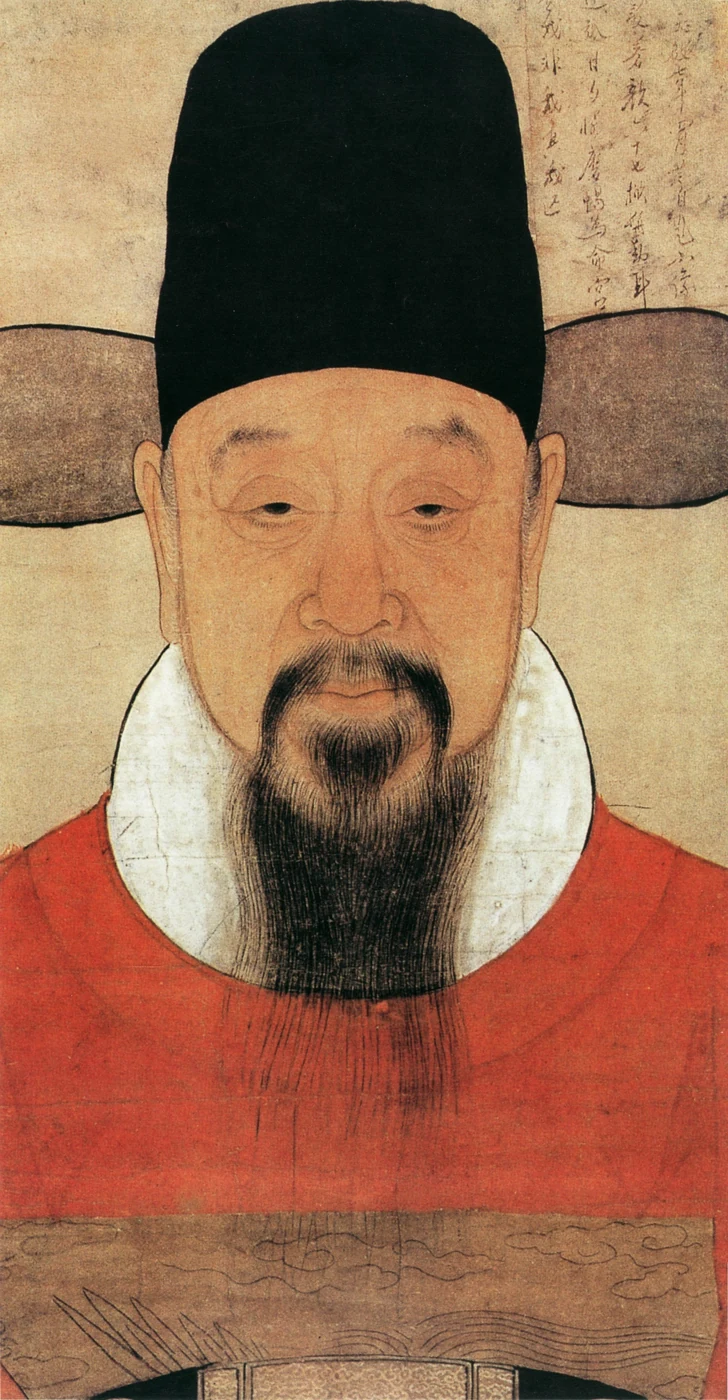
1562 CE–1633 CE
Writer and scholar
Xu Guangqi
徐光启
Xu Guangqi (April 24, 1562–November 8, 1633), courtesy name Zixian, art name Xuanhu, and posthumous name Wending, was a native of Shanghai County, Songjiang Prefecture, Southern Zhili. He was a Ming scientist and statesman. He earned the jinshi degree in 1604, the thirty-second year of the Wanli reign, and during the Chongzhen reign rose to Minister of Rites and Grand Secretary of the Eastern Pavilion, serving as the…
1562 CE–1633 CEMing Dynasty
PROFILE
Xu Guangqi (April 24, 1562–November 8, 1633), courtesy name Zixian, art name Xuanhu, and posthumous name Wending, was a native of Shanghai County, Songjiang Prefecture, Southern Zhili. He was a Ming scientist and statesman. He earned the jinshi degree in 1604, the thirty-second year of the Wanli reign, and during the Chongzhen reign rose to Minister of Rites and Grand Secretary of the Eastern Pavilion, serving as the second-ranking member of the Grand Secretariat; he was posthumously granted the title Junior Guardian. Xu was a central figure in seventeenth-century Sino-Western cultural exchange. With Matteo Ricci he translated the first six books of Euclid’s Elements, introducing “jihe” as a specialized mathematical term in China; he directed compilation of the Chongzhen Calendar, incorporating Western astronomical knowledge; and he wrote the Complete Treatise on Agriculture, a comprehensive synthesis of traditional Chinese agronomy. He made pioneering contributions in mathematics, astronomy, agriculture, and military studies and was later regarded as a forerunner of modern science in China.
- Other names
- Zixian; Xu Zixian
- Courtesy name
- Zixian
- Art name
- Xuanhu
- Period
- Ming
- Date of Birth
- April 24 1562
- Date of Death
- November 8 1633
- Dynasty / Regime
- Ming
- Identity
- Writer and scholar
- Ethnicity / Affiliation
- Not recorded in historical sources
- Native place
- Shanghai County, Songjiang Prefecture, Southern Zhili
- Place of birth
- Not recorded in historical sources
- Major achievements
- Prominent Ming scientist and agronomist; translated Euclid’s Elements, compiled the Complete Treatise on Agriculture, and rose to Minister of Rites and Grand Secretary of the Eastern Pavilion
LIFE TIMELINE
Age 20 | Passed the student examination at Jinshan Guard and married Lady Wu
Age 32 | Went to Shaozhou, Guangdong, to teach and met Jesuit Lazzaro Cattaneo
Age 36 | Placed first in the Shuntian Prefecture provincial examination
Age 39 | Went to Nanjing to visit his teacher Jiao Hong and met Matteo Ricci for the first time
Age 42 | Baptized into Catholicism in Nanjing, receiving the Christian name Paul
Age 43 | Earned the jinshi degree and was selected as a shujishi of the Hanlin Academy
Age 45 | Began translating the first six books of Euclid’s Elements with Matteo Ricci
Age 46 | Appointed a compiler in the Hanlin Academy; returned home to observe mourning after his father’s death
Age 49 | Returned to Beijing and resumed office; collaborated with missionaries on astronomical instruments
Age 51 | Co-translated the six-volume Western Methods of Hydraulics with Sabatino de Ursis
Age 52 | Resigned on grounds of illness and went to Tianjin, where he dug irrigation channels, cultivated rice, and conducted agricultural experiments
Age 55 | Submitted the “Memorial in Defense of Learning” in support of the missionaries
Age 58 | After the Battle of Sarhu, repeatedly memorialized for military training and supervised a new army at Tongzhou
Age 60 | Recalled to Beijing and strongly urged the use of Western-style cannon in city defense
Age 63 | Forced from office by Wei Zhongxian and returned home to compile the Complete Treatise on Agriculture
Age 67 | Recalled to Beijing and restored to office
Age 68 | Promoted to Left Vice Minister of Rites and placed in charge of the calendar-reform bureau
Age 69 | Promoted to Minister of Rites
Age 71 | Served as Minister of Rites and Grand Secretary of the Eastern Pavilion and entered the central decision-making process
Age 72 | Appointed Grand Guardian of the Heir Apparent and concurrently Grand Secretary of the Wenyuan Pavilion; died in office on the seventh day of the tenth lunar month
Eight years after death | Reburied at Xujiahui in Shanghai
BIOGRAPHY
Biography
Family Background and Early Life
Xu Guangqi’s ancestors lived in Suzhou and farmed for a living before moving to Shanghai. His grandfather became wealthy through trade, but by the time of his father Xu Sicheng the family’s fortunes had declined and the household returned to farming. Xu Guangqi was born on April 24, 1562, the twenty-first day of the third lunar month in the forty-first year of Jiajing, at Taiqingfang, now in the Qiaojia Road area of Huangpu District, Shanghai. As a boy he studied at Longhua Temple. After passing the student examination at Jinshan Guard in 1581, he taught in his home district and married the daughter of the local scholar Wu Xiaoxi.
In 1593 Xu went to Shaozhou in Guangdong to teach. There he met the Jesuit Lazzaro Cattaneo, marking the beginning of his contact with Western learning. In 1596 he moved to Xunzhou in Guangxi to teach. In 1597, with the appreciation of examiner Jiao Hong, he placed first in the Shuntian Prefecture provincial examination. He failed the metropolitan examination the following year and returned home to teach.
Middle Years: Examinations and Western Learning
In 1600 Xu went to Nanjing to visit his teacher Jiao Hong and met the Jesuit Matteo Ricci for the first time. In 1603 he was baptized into Catholicism in Nanjing by the Jesuit João da Rocha and received the Christian name Paul. In 1604 Xu earned the jinshi degree and was selected as a shujishi of the Hanlin Academy.
In 1606 he began working with Matteo Ricci on the first six books of Euclid’s Elements, dealing with plane geometry. The translation was completed the following spring, carved, and printed. It was the first systematic translation of a Western mathematical work into Chinese. Terms standardized in the translation—including point, line, plane, right angle, acute angle, obtuse angle, triangle, and quadrilateral—remained in use thereafter. After completing the translation, Xu also translated Principles of Measurement from Ricci’s oral explanations.
In 1607, after completing three years in the Hanlin Academy, Xu was appointed a compiler. His father died in Beijing the same year, and Xu returned home to observe mourning. During the mourning period, he invited Lazzaro Cattaneo to preach in Shanghai, from which time Catholicism gained a foothold there. Xu edited and finalized Principles of Measurement and, comparing it with the Zhoubi Suanjing and The Nine Chapters on the Mathematical Art, compiled Similarities and Differences in Measurement and wrote Principles of the Right Triangle to discuss the theorem attributed to Shang Gao. He also opened the Shuang Garden and a rural estate for experiments in crop introduction and cultivation, producing agricultural writings such as the Memorial on Sweet Potatoes, Memorial on Turnips, Memorial on Cotton, Method for Growing Cotton, and Illustrated Account of Bamboo Cultivation at Dai Garden.
Middle Years: Official Ups and Downs and Agricultural Experiments in Tianjin
In 1610 Xu returned to Beijing and resumed office. Because the Imperial Astronomical Bureau had incorrectly predicted a solar eclipse, he worked with missionaries on astronomical instruments and wrote Account of the Jianping Instrument, Illustrations of the Pinghun Instrument, Illustrations of Sundials, and Illustrations of Night Dials. In 1612 he studied Western hydraulics with the Jesuit Sabatino de Ursis and co-translated the six-volume Western Methods of Hydraulics, systematically introducing Western hydraulic techniques and devices.
In early winter 1613, after disagreements with court officials, Xu resigned on grounds of illness and went to Tianjin. In Fangshan and Laishui counties he dug channels, cultivated rice, and conducted agricultural experiments. He successively wrote Regulations for Reclamation and the draft agricultural work Beigeng lu, laying the groundwork for the Complete Treatise on Agriculture. In 1616 Vice Minister of Rites Shen Que submitted three memorials requesting investigation of Catholic missionaries, in what became known as the Nanjing Persecution. Xu submitted the “Memorial in Defense of Learning,” arguing in defense of the missionaries that Western learning “can truly supplement civilizing governance, assist Confucian learning, and correct Buddhism.” He returned to Beijing that same year and resumed office. The following year he served as Left Assistant in the Left Spring Chamber of the Supervisorate of Imperial Instruction, but soon returned to Tianjin because of illness and wrote Rules for Manuring.
In 1618 Nurhaci, Great Khan of the Later Jin, launched attacks toward Ming territory, and Xu was summoned to Beijing, traveling by night. After the Ming defeat in the Battle of Sarhu in 1619, he repeatedly memorialized for military training. He was promoted to junior supervisor in the Supervisorate of Imperial Instruction while concurrently serving as censor of the Henan circuit, and he supervised a new army at Tongzhou. Difficulties in supplying pay and equipment, however, prevented the training program from proceeding smoothly.
Final Years under the Tianqi and Chongzhen Reigns
In the third lunar month of 1621 Xu memorialized to return to Tianjin for medical leave. After Liaoyang fell in the sixth lunar month, he was recalled to Beijing and strongly urged the use of Western-style cannon in city defense. Because he disagreed with Minister of War Cui Jingrong, he again resigned in the twelfth lunar month. In 1624 he was promoted to Right Vice Minister of Rites while concurrently holding a Hanlin academic post. Wei Zhongxian dominated the court at the time, and Xu refused to assume the post; the following year he was slandered, impeached, and removed from office.
Back in Shanghai, Xu systematically expanded, reviewed, annotated, and arranged the agricultural materials he had accumulated over many years, producing the Complete Treatise on Agriculture. He also worked with Francesco Sambiasi to translate Aristotle’s On the Soul as Lingyan lishao, and he collected his military writings into the printed work Xu Family Military Observations.
In 1628, the first year of Chongzhen, Xu was recalled to Beijing and restored to office. In 1629 he was promoted to Left Vice Minister of Rites. After another inaccurate eclipse calculation by the Imperial Astronomical Bureau, the Chongzhen Emperor approved Xu’s proposal to direct a bureau for calendar reform. The same year, Hong Taiji led tens of thousands of troops toward the capital region. The emperor summoned his ministers for discussion on the palace terrace, and Xu responded on questions of warfare and defense. In 1630 he was promoted to Minister of Rites. Beginning in the fourth year of Chongzhen, he successively presented numerous volumes of calendar works that together formed the Chongzhen Calendar. In 1632 he became Minister of Rites concurrently Grand Secretary of the Eastern Pavilion and participated in central affairs. In 1633 he was appointed Grand Guardian of the Heir Apparent and concurrently Grand Secretary of the Wenyuan Pavilion. On the seventh day of the tenth lunar month, November 8, he died in office and received the posthumous name Wending. In 1641 he was reburied at Xujiahui in Shanghai.
Xu Guangqi, courtesy name Zixian, style Xuanhu, baptismal name Paul, was a native of Shanghai in Songjiang prefecture of the southern metropolitan region, born on 24 April 1562. A late Ming scholar versed in Confucian learning, Western learning, astronomy, mathematics, waterworks, agronomy and military science, he was one of the pioneers of Sino-Western cultural exchange and of modern science in China. He favored practical learning and was pivotal in the eastward spread of Western knowledge, in introducing Western firearms to strengthen the Ming artillery against the Later Jin, and in the introduction and spread of the sweet potato and improved rice as high-yielding and hardy crops; under Chongzhen he rose to be minister of rites and grand secretary of the Wenyuan Pavilion and died in office at Beijing with the posthumous name Wending.
His astronomical achievement centers on the compilation of the Chongzhen calendar treatise and the memorials he wrote for calendar reform. There he introduced the spherical earth and the concepts of longitude and latitude, and produced the first all-sky star map based on Tycho's catalogue and the traditional Chinese ones, which became the basis of Qing star catalogues; in computation he introduced the accurate formulas of spherical and plane trigonometry and was the first to apply corrections for parallax, atmospheric refraction and the equation of time. Besides supervising the whole work he took part in the compilation of such parts as the Summary of Observing the Heavens, the Great Measure, the Guide to the Sun's Motion, the Complete Meaning of Surveying and the Tables of the Sun's Motion.
In mathematics his greatest contribution was the translation, with Matteo Ricci, of the first six books of Euclid's Elements; he set out the practical idea of the "study of degrees and measures" and wrote the Meaning of the Pythagorean Relation and the Similarities and Differences in Surveying, and was the first to use "geometry" as a technical term in Chinese. The translation greatly changed the habits of mathematical study and research in China and is a landmark in the history of Chinese mathematics, though only in the early twentieth century, with the abolition of the examinations and the rise of schools, did elementary geometry based on the Elements become a required secondary subject. In his memorials on the calendar he set out in detail the application of mathematics to ten fields — astronomy and the calendar, water engineering, music, weapons and military engineering, accounting and finance, building, machine making, geographical surveying, medicine and the making of clepsydras — and proposed separate research in each.
In agronomy he wrote the Complete Treatise on Agricultural Administration and works on the sweet potato, on miscellaneous agricultural matters and on Western water methods. The draft of the Complete Treatise was left unrevised because he was busy with the calendar and was edited after his death by his pupil Chen Zilong and printed in 1639; in twelve sections and sixty chapters, more than half a million characters, it covers farm fundamentals, land systems, farm work, waterworks, tools, planting, sericulture, livestock, manufacture and famine relief — the last taking eighteen chapters — embracing the whole of ancient Chinese farming and rural life, with the idea of agricultural administration running through it.
In military affairs his thought centered on precision and substance: he called for the utmost in seeking real talent for use, in making practical weapons for defense and attack, in selecting and training picked troops for certain victory, in building the great bastion of the capital for lasting security, and in sending commissioners to supervise Korea to link up with external strength. He paid special attention to the making of artillery, memorializing repeatedly for the introduction of cannon technology, and explored the use of firearms in city defense, in siege work and in cooperation with infantry and cavalry. His drill manuals and codes — the Hundred-Character Formula for Selection and Training, the Rules for Selection and Training, the Rules for Company Order and others — are among the earliest such manuals in modern China. The Xujiahui district of Shanghai, originally Fahua Hui, was renamed in his memory, and his tomb stands in the Guangqi Park there.
His association with Matteo Ricci began in the Wanli years; after meeting him at Nanjing he was baptized and thereafter took a long part in translating Western books and spreading Western learning. Besides the Elements he collaborated with the missionaries on works on surveying and on Western water methods, and these translations together with his own books on agriculture and the calendar form major results of the eastward spread of Western learning in the Ming. He held that to surpass one must first master, and to master one must first translate — an attitude rare in his day and a reference point for later understanding of Sino-Western scholarly exchange.
In the Wanli and Tianqi years, as the Ming suffered repeated defeats in Liaodong, Xu Guangqi memorialized repeatedly for the introduction of Western cannon and the training of new troops, and was once ordered to drill soldiers at Tongzhou and Changping. His attention to firearms and military technology matched his lifelong insistence on substance and makes him one of the few late Ming figures to think about national defense in technical terms. Court politics and finances kept these proposals from being fully carried out, but the books he compiled and the manuals he left remain important material for the study of late Ming military technology.
In his last years, as a grand secretary, he still directed the calendar bureau; at his death in 1633 the treatise was unfinished and was completed by Li Tianjing and others. Though never promulgated under the Ming, it served the Qing calendar and became the basis of the astronomical transition at the turn of the dynasties.
His writings and translations were reprinted repeatedly under the Qing, and since the twentieth century the study of him has become an important subject in the history of Sino-Western exchange and of science and technology.
The earlier agricultural writings and materials on northwest waterworks gathered in the Complete Treatise give it value as a compilation as well, much of that material being preserved only through it.
In calendar reform he insisted on both observation and calculation, grounding every argument in measured data — an attitude notably new for his time.
His proposals for research by discipline and for applied mathematics were not fully carried out in his day but are regarded in the history of Chinese science as an early systematic statement.
His tomb and memorial hall are a cultural site in Shanghai today, his memory preserved along with the place name Xujiahui.
At the calendar bureau he took part in observations and computations himself, and his working methods and insistence on evidence greatly influenced calendrical study at the turn of the dynasties.
His cooperation with the missionaries was not one-way reception but selection by comparison, both his agricultural and calendrical works showing a combination of Chinese tradition with Western methods.
He advocated learning for practical use and opposed empty talk of mind and nature, an orientation held by few of his contemporaries and giving his scholarship a distinctly practical cast.
The terminology he used in translating the Elements is largely still current, his method of rendering and naming having a direct influence on the formation of modern Chinese scientific vocabulary.
Among Ming scholars he was known for both breadth and practicality, his pupils and successors carrying on his style of learning.
His tomb and the place names about Xujiahui are the memorials to him still visible in Shanghai today.
Major Activities
Contributions to Mathematics
Xu Guangqi’s greatest mathematical contribution was his joint translation with Matteo Ricci of the first six books of Euclid’s Elements. He was the first to use the term “jihe” as a specialized term for geometry, and the Chinese terms established for point, line, plane, right angle, acute angle, obtuse angle, triangle, quadrilateral, and other concepts remained in use. The translation profoundly affected established Chinese practices of learning and researching mathematics, altered the direction of mathematical development in China, and became a major event in the history of Chinese mathematics.
Xu advocated a practical “science of measurement and number,” arguing that mathematics should be widely applied to ten areas: astronomy and calendrical science, hydraulic engineering, musical pitch, weapons and military methods and engineering, accounting and finance, architecture, machinery, cartographic surveying, medicine, and timekeeping devices. He recommended specialized research in each of these fields. He also wrote Principles of the Right Triangle and Similarities and Differences in Measurement, comparing Western surveying methods with traditional methods in the Zhoubi Suanjing and The Nine Chapters on the Mathematical Art.
Astronomy and Calendrical Science
Xu’s achievements in astronomy and calendrical science centered on the compilation and translation of the Chongzhen Calendar and his memorials advocating calendar reform. The work introduced the concept of a spherical Earth and the ideas of longitude and latitude. Drawing on Tycho Brahe’s star catalogue and traditional Chinese star catalogues, Xu provided the first all-sky star chart, which became a foundation for Qing star catalogues. In computational methods, the work introduced accurate formulas for spherical and plane trigonometry and, for the first time in China, corrections for parallax, atmospheric refraction, and the equation of time.
In addition to overall editorial responsibility for the Chongzhen Calendar, Xu directly participated in compiling and translating works such as Outline of Celestial Measurement, Great Measurement, Principles of the Solar Motion Calendar, Complete Principles of Measurement, and Tables of Solar Motion. The Chongzhen Calendar comprised forty-six works in 137 juan and systematically introduced the theories and methods of classical Western astronomy, especially the Tychonic system. It represented the culmination of Ming calendar reform.
Agricultural Achievements
Xu was deeply versed in agronomy and wrote extensively, including the Complete Treatise on Agriculture, Memorial on Sweet Potatoes, Miscellaneous Agricultural Memorials, Draft Agricultural Treatise, and Western Methods of Hydraulics. After completing a first draft of the Complete Treatise on Agriculture, Xu became occupied with calendar revision and could no longer devote sufficient attention to it. After his death his disciples, including Chen Zilong, revised the work, and it was carved and printed in 1639, the twelfth year of Chongzhen.
The work was divided into twelve categories and sixty juan and contained more than 500,000 Chinese characters. The twelve categories were: foundations of agriculture, 3 juan; land systems, 2; agricultural operations, 6; water conservancy, 9; farm tools, 4; horticulture, 6; sericulture, 4; expanded categories of sericulture, 2; planting, 4; animal husbandry, 1; manufacturing, 1; and famine relief, 18. It thus covered nearly every major aspect of traditional Chinese agricultural production and daily life. Running throughout the book was a concern with “agricultural governance,” or governing the state and people through agriculture, rather than agricultural technique alone. Xu’s rice-growing experiments in Tianjin and his introduction and promotion of high-yield, resilient crops such as sweet potatoes and improved rice varieties had important practical relevance to contemporary food problems.
Military Thought
“Seeking precision” and “demanding practical results” were central to Xu’s military thought. He proposed “seeking the best genuine talent for preparedness,” “producing the most practical weapons and equipment for defense and warfare at home and abroad,” “selecting and training elite soldiers to secure complete victory,” “constructing permanent platforms, or artillery fortifications, for the capital so that it may remain secure for all time,” and “sending envoys to supervise and protect Korea in order to link external support.”
Xu paid particular attention to artillery manufacture and repeatedly memorialized in favor of importing cannon-making technology. He examined the practical use of firearms, the relationship between firearms and city defense, their role in sieges, and coordination between firearms, infantry, and cavalry. His Hundred-Character Formula for Selection and Training, Regulations for Selection and Training, Regulations for Training Skills, Regulations for Unit Organization, Regulations for Formations and Signals, Essentials of Fire Attack, Method for Making Gunpowder, and other rules and codes were among China’s earlier bodies of military regulations approaching the modern period.
Sino-Western Cultural Exchange
Xu Guangqi was a central figure in seventeenth-century Sino-Western cultural exchange. Beyond co-translating Euclid’s Elements with Matteo Ricci, he personally collaborated—or organized others to collaborate—with Catholic missionaries in China on a series of Chinese translations of Western works. He supported practical learning and played a key role in the transmission of Western learning to China.
Xu’s attitude toward Western learning preceded and differed from later Qing formulations such as Wei Yuan’s idea of “learning the superior techniques of the barbarians in order to control them” and Feng Guifen’s concept of “Chinese learning as substance and Western learning for practical use.” He not only sought humbly to learn and use valuable achievements of Western civilization but also proposed a developmental sequence: “To seek to surpass, one must first achieve integration; before integration, translation is required.” He hoped Christian faith in “cultivating the self and serving Heaven” could remedy contemporary problems, “supplement Confucianism and replace Buddhism,” and improve Chinese culture. Xu was a leading Catholic layman and apologist in the early establishment of the Church in China and was known as the foremost of the “Three Pillars of Chinese Catholicism.”
Personal Relations
- Xu Sicheng: father
- Lady Wu: wife
- Xu Ji: son
- Xu Erjue (Xu Erjue), Xu Erjue (Xu Erjue), and Xu Erdou: grandsons
- Jiao Hong: teacher
- Matteo Ricci: collaborator
- Lazzaro Cattaneo: introduced Xu to Western learning
- Sabatino de Ursis: collaborator
- João da Rocha: priest who baptized Xu
- Francesco Sambiasi: collaborator
- Chen Zilong: disciple
- Li Zhizao: colleague
- Wanli Emperor and Chongzhen Emperor: rulers
- Shen Que: political opponent
- Cui Jingrong: official with whom Xu disagreed
- Wei Zhongxian: official who pushed Xu out of office
- Matteo Ricci, Lazzaro Cattaneo, João da Rocha, Sabatino de Ursis, and Francesco Sambiasi: Jesuits
Historical Assessment
Ming / Contemporary Assessments
After Xu Guangqi’s death, the Chongzhen Emperor suspended court for one day, bestowed the posthumous name Wending, and posthumously granted him the title Junior Guardian. While revising the Complete Treatise on Agriculture, his disciple Chen Zilong wrote that Xu’s “learning throughout his life broadly investigated Heaven and humanity, yet was always directed toward practical use.” His colleague Li Zhizao said that Xu’s learning was “subtle yet broad, leaving nothing unexplored.”
Early to Mid-Qing
The Qing scholar Ruan Yuan wrote in Biographies of Astronomers and Mathematicians: “Since Matteo Ricci came east, among those who received his transmission in astronomy and mathematics, Xu Guangqi understood it most deeply.” He regarded Xu as the first person to integrate Chinese and Western calendrical mathematics. The General Catalogue of the Siku Quanshu highly praised the Complete Treatise on Agriculture, saying that “both root and branches are fully covered, ordinary conditions and exceptional changes are all provided for. He clearly devoted sustained attention to the people’s livelihood and had long investigated it, which is why his words are so concrete and exact.”
Late Qing and Republican Period
Late-Qing reformers regarded Xu as a pioneer of Sino-Western synthesis. In Intellectual History of China during the Last Three Hundred Years, Liang Qichao called him “the first person in the late Ming to introduce Western civilization,” arguing that he “brought the methods of Western science into China and opened the way for the later evidential scholarship.” Republican-era scholar Zhu Kezhen described Xu as a forerunner of modern science in China, whose scientific spirit “deserves to shine in the historical record.”
Modern Assessments
Contemporary scholarship generally regards Xu Guangqi as a “forerunner of modern science in China” and a “bridge of Sino-Western cultural exchange.” British scholar Joseph Needham mentioned Xu’s contributions repeatedly in Science and Civilisation in China and regarded him as occupying an important place in the history of science. Around 2010, the causes for the beatification of Matteo Ricci and Xu Guangqi were respectively reopened, reflecting Xu’s continuing importance in religious and cultural history. Shanghai’s Xujiahui district is named in commemoration of Xu Guangqi; his tomb is now in Guangqi Park and is a nationally protected major cultural heritage site.
FIGURES ASSOCIATED WITH THIS DYNASTY
Bibliography
- History of Ming*, “Biography of Xu Guangqi”
- Liang Qichao, Intellectual History of China during the Last Three Hundred Years