Ruling the Corridor
Pastures his herds across Wuwei and the Xiutu Lake basin, controlling trade along the Silk Road.
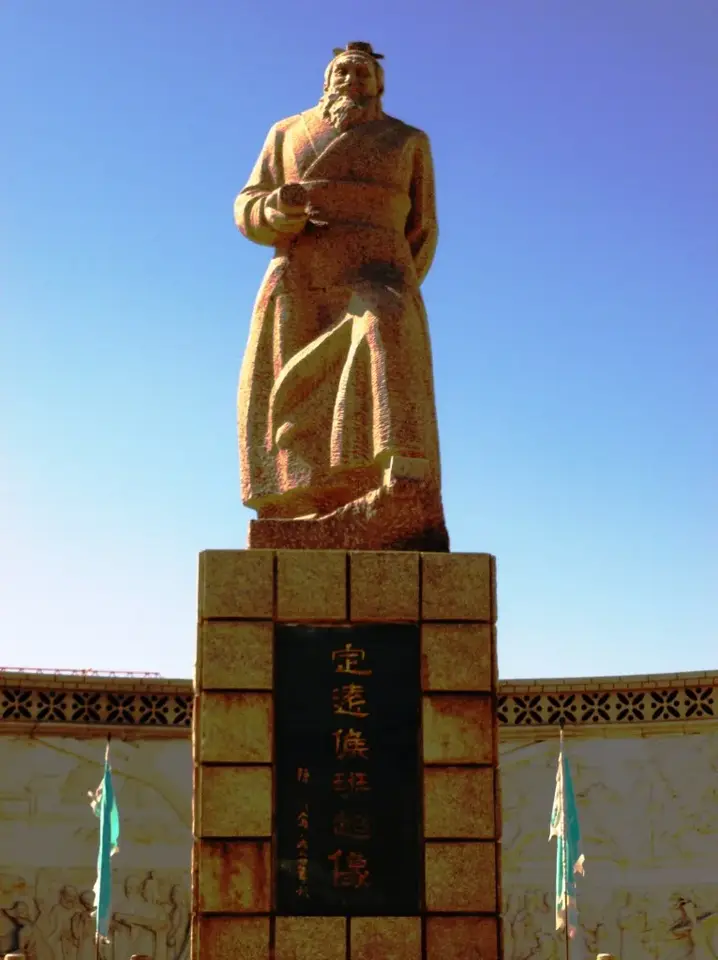
休屠王
King Xiutu (died 121 BC) was a prominent hereditary monarch of the right wing of the Xiongnu Empire during the reign of Emperor Wu of the Western Han Dynasty, governing the eastern reaches of the Hexi Corridor around modern Wuwei, Gansu, and serving alongside King Hunxie as the strategic bulwark safeguarding Xiongnu domination over the Western Regions. In the spring and summer of the second year of the Yuanshou era (121 BC),…
King Xiutu (died 121 BC) was a prominent hereditary monarch of the right wing of the Xiongnu Empire during the reign of Emperor Wu of the Western Han Dynasty, governing the eastern reaches of the Hexi Corridor around modern Wuwei, Gansu, and serving alongside King Hunxie as the strategic bulwark safeguarding Xiongnu domination over the Western Regions. In the spring and summer of the second year of the Yuanshou era (121 BC), Emperor Wu dispatched General of Agile Cavalry Huo Qubing on two successive expeditions into the Hexi Corridor. Leading light cavalry deep behind enemy lines around Mount Gaolan and the Qilian Mountains, Huo Qubing routed the Xiongnu right wing, taking tens of thousands of captives. During the spring campaign, Han forces launched a surprise assault on King Xiutu's royal encampment, inflicting heavy casualties and capturing the sacred "Golden Statue for Worshipping Heaven," a golden cultic relic venerated by the steppe nomads. Facing the wrath of Chanyu Yizhixie, who intended to execute both King Xiutu and King Hunxie for their successive defeats, the two kings conspired to surrender their combined host of over forty thousand subjects to the Han Empire. Emperor Wu accepted their submission, ordering Huo Qubing to meet them at the Yellow River. However, as the Han cavalry approached, King Xiutu grew terrified of foreign subjugation, hesitated, and attempted to renege on the surrender pact. Fearing that his hesitation would expose the defection to Han encirclement, King Hunxie launched a preemptive strike, assassinating King Xiutu within his tent and annexing his entire tribal cavalry. King Hunxie then led the combined host across the frontier under Huo Qubing's escort. Following King Xiutu's murder, his queen and eldest son, fourteen-year-old Midi, were reduced to state bondservants in the imperial palace stables. Recognizing Midi's exceptional integrity, Emperor Wu freed him, bestowed upon him the surname Jin, and elevated him as Jin Midi, who eventually served as a regent alongside Huo Guang during the minority of Emperor Zhao. King Xiutu's death accelerated the Han incorporation of the Hexi Corridor, paving the way for the opening of the Silk Road.
Pastures his herds across Wuwei and the Xiutu Lake basin, controlling trade along the Silk Road.
Huo Qubing launches a surprise raid across the Hexi Corridor, routing Xiutu forces and capturing the sacred Golden Statue.
Huo Qubing crushes the Xiongnu right wing; Chanyu Yizhixie summons Xiutu and Hunxie to face execution.
Terrified of the Chanyu's vengeance, King Xiutu and King Hunxie negotiate a collective defection to Han.
Hesitates on the verge of surrender and is slain by King Hunxie; his son Jin Midi enters Han service.
King Xiutu was a hereditary ruler of the right wing of the Xiongnu confederation. Following Chanyu Modu's expulsion of the Yuezhi and Wusun at the dawn of the Han Dynasty, the fertile oasis grasslands of the Hexi Corridor were incorporated into the Xiongnu Empire. Administratively, the territory was divided between two princely domains: King Hunxie governed the central and western pastures around modern Zhangye and Jiuquan, while King Xiutu ruled the eastern sector centered at Guzang (near modern Wuwei, Gansu).
King Xiutu's domain encompassed the fertile Xiutu Lake basin (modern Minqin oasis), extending eastward to Mount Wushao. Commanding tens of thousands of mounted archers, his pastoralists supplied horse cavalry to the Chanyu's royal court while severing Han communications with the Western Regions and the southern Qiang tribes.
Within the Xiutu royal encampment stood the sacred "Golden Statue for Worshipping Heaven." Cast from pure gold, this ancestral idol served as the supreme spiritual conduit through which the tribe sacrificed to Heaven, seeking military fortune and herd fecundity. As the high priest of these rites, King Xiutu derived immense sacred authority from the custody of this relic.
In the spring of 121 BC, Emperor Wu launched an offensive to sever the Xiongnu hold over the northern trade routes. He appointed the twenty-year-old Huo Qubing as General of Agile Cavalry, deploying ten thousand elite horsemen across the passes of Longxi. In a rapid offensive, Huo Qubing bypassed conventional defenses, advanced past Mount Wushao, and engaged the Xiongnu near Mount Gaolan.
Huo Qubing directed a flying column directly against King Xiutu's encampment. The Han cavalry routed the defenders, taking over eight thousand heads and prisoners, including the princes and high chancellors of neighboring tribes. The Han forces penetrated the inner sanctuary, capturing the sacred Golden Statue for Worshipping Heaven. This was the first time Han armies had seized the highest religious artifact of a Xiongnu royal house. Emperor Wu celebrated the prize, placing the statue in Ganquan Palace for imperial veneration. Stripped of his army and ancestral idol, King Xiutu retreated westward.
In the summer of the same year, Huo Qubing launched a second expedition alongside Marquis Gongsun Ao, maneuvering deep into the desert around Lake Juyan before striking south into the Qilian Mountains. The Han cavalry destroyed the main army of the Xiongnu right wing, capturing over thirty thousand enemy combatants alongside royal consorts and ministers. Disheartened, the displaced nomadic pastoralists lamented their expulsion in popular song: "Losing our Qilian Mountains leaves our herds sterile; losing our Yanzhi Mountains robs our women of their beauty."
The collapse of the Hexi defenses infuriated Chanyu Yizhixie. Holding King Xiutu and King Hunxie responsible for the loss of territory and the capture of the sacred statue, the Chanyu dispatched court inquisitors summoning both kings to the northern royal tent to face execution.
Aware of the Chanyu's ruthlessness, King Xiutu and King Hunxie conferred in Guzang. Realizing that answering the summons meant death, they resolved to lead their surviving forty thousand subjects across the frontier in surrender to Emperor Wu. Eager to incorporate the Hexi Corridor into the imperial domain, Emperor Wu dispatched Huo Qubing with an army of horsemen to receive the defecting host on the banks of the Yellow River.
In the autumn of 121 BC, Huo Qubing's vanguard arrived opposite the Xiongnu encampment. Beholding the orderly formations and armored ranks of the Han forces, King Xiutu was seized by sudden doubt. He feared that surrendering his nomadic heritage would invite treachery and execution once they entered Chinese territory. King Xiutu assembled his clan chieftains, proposing to abort the submission, break camp, and retreat into Central Asia.
Informed of this vacillation, King Hunxie was terrified. With forty thousand pastoralists massed on the riverbank, any hesitation would provoke a preemptive assault from Huo Qubing's archers. Desperate to ensure his own survival, King Hunxie led his personal guard into King Xiutu's tent, assassinating him on the spot.
Following the murder, King Hunxie absorbed King Xiutu's cavalry, executed dissenters, and surrendered to Huo Qubing, who rode into the camp to restore order. Over forty thousand Xiongnu pastoralists were safely escorted across the frontier, opening the Hexi Corridor to Han administration.
Following the pacification of Hexi, Emperor Wu established the Four Commanderies of Hexi—Wuwei, Zhangye, Jiuquan, and Dunhuang—securing the passage to Central Asia.
Though King Xiutu perished, his lineage achieved prominence within the Han Empire. His queen (the Yanzhi) and his two sons—fourteen-year-old Midi and his younger brother Lun—were taken as prisoners of war and assigned as bondservants to the imperial horse stables in the Weiyang Palace.
Years later, during an imperial banquet, Emperor Wu reviewed the palace horses. While other grooms stared openly at the sovereign, Prince Midi, standing over eight feet tall, led his well-groomed steed forward with stoic discipline, keeping his eyes respectfully lowered. Intrigued by his dignified bearing, Emperor Wu inquired into his background and learned he was the eldest son of the deceased King Xiutu. Deeply impressed, the Emperor emancipated him, bestowed upon him the surname Jin (meaning "gold," in honor of the captured golden statue), and appointed him Supervisor of the Horse.
Jin Midi served with unwavering fidelity, eventually foiling an assassination attempt on Emperor Wu by Ma Heluo. On his deathbed, Emperor Wu named Jin Midi as one of the four co-regents alongside Huo Guang to guide the young Emperor Zhao, enfeoffing him as Marquis of Tuo. The Jin clan remained one of the preeminent aristocratic houses of the Western and Eastern Han dynasties for seven generations, demonstrating how the lineage of King Xiutu became woven into the fabric of the imperial elite.
King Xiutu's domain anchored Xiongnu hegemony over the eastern Hexi Corridor for decades. Governing the oases of Wuwei and the Xiutu Lake basin, his cavalry secured the steppe empire's western flank while denying Han armies access to the overland routes to Central Asia.
King Xiutu was the hereditary guardian of the Golden Statue for Worshipping Heaven, the most celebrated cultic artifact in ancient Eurasian steppe history. The capture of this sacred emblem marked a watershed moment in Han-Xiongnu warfare, symbolizing the ideological and physical eclipse of nomadic power along the Silk Road.
FIGURES ASSOCIATED WITH THIS DYNASTY