Marriage as Crown Princess
After her mother Elder Princess Guantao Liu Piao helped Consort Wang's son Liu Che become Crown Prince, Lady Chen married Liu Che as Crown Princess.
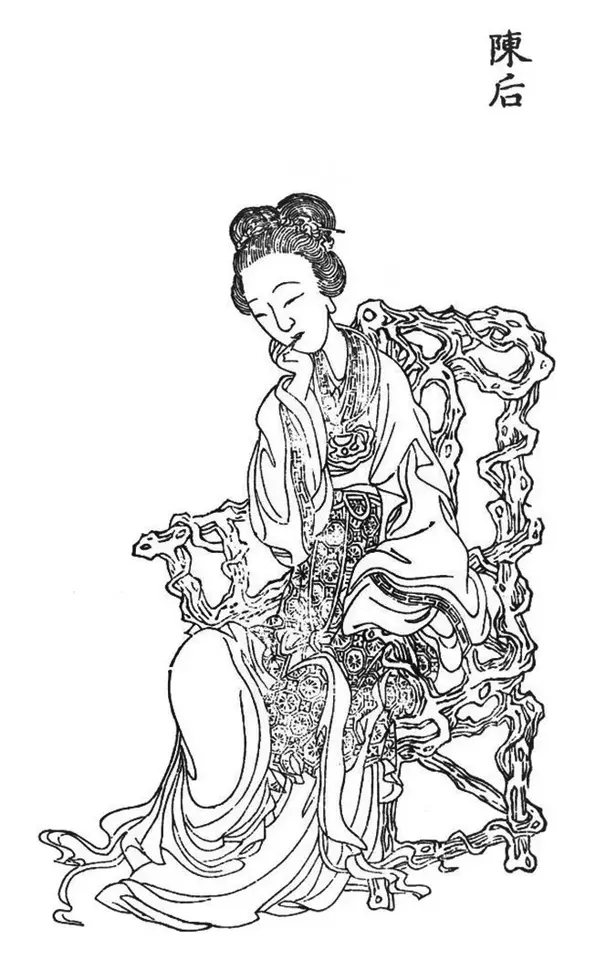
?–前?
陈阿娇
Empress Chen of Emperor Wu, popularly known in later eras as Chen Ajiao (陈阿娇), was a native of Dongyang County in Donghai Commandery and the first Empress (皇后) of Emperor Wu of the Western Han (西汉) dynasty, Liu Che. Standard dynastic histories do not record her given name; the name "Ajiao" originated from the anecdote "storing Ajiao in a golden house" found in the six-dynasties tale collection *Stories of Emperor…
Empress Chen of Emperor Wu, popularly known in later eras as Chen Ajiao (陈阿娇), was a native of Dongyang County in Donghai Commandery and the first Empress (皇后) of Emperor Wu of the Western Han (西汉) dynasty, Liu Che. Standard dynastic histories do not record her given name; the name "Ajiao" originated from the anecdote "storing Ajiao in a golden house" found in the six-dynasties tale collection Stories of Emperor Wu of Han (Hanwu Gushi). She was the great-granddaughter of Chen Ying, Marquis An of Tangyi and a founding merit-minister of the Western Han, the daughter of Chen Wu, Marquis Yi of Tangyi, and the daughter of Liu Piao, Grand Elder Princess Guantao (daughter of Emperor Wen and Empress Dou). During the reign of Emperor Jing of Han, Elder Princess Guantao formed a political marriage alliance with Consort Wang, helping Consort Wang's son Liu Che replace Liu Rong as Crown Prince; Lady Chen consequently married Liu Che as Crown Princess. Upon ascending the throne in 140 BCE, Emperor Wu installed her as Empress. Because her mother had played a decisive role in securing his succession, Empress Chen was arrogant and monopolized imperial favor for over a decade, yet never bore a son. After the singer Wei Zifu entered the palace and won Emperor Wu's favor, Empress Chen repeatedly threatened suicide out of jealousy and eventually resorted to love magic and witchcraft curses with the sorceress Chufu. When the affair was exposed in 130 BCE, Emperor Wu commissioned Attendant Censor Zhang Tang to prosecute the case, confiscated Empress Chen's imperial seal, and deposed her to Changmen Palace, where she died several years after her parents' deaths and was buried east of Langguan Pavilion at Baling.
After her mother Elder Princess Guantao Liu Piao helped Consort Wang's son Liu Che become Crown Prince, Lady Chen married Liu Che as Crown Princess.
Upon ascending the throne as Emperor Wu of Han, Liu Che formally installed Lady Chen as Empress.
Emperor Wu favored the singer Wei Zifu at Princess Pingyang's residence and brought her into the palace; Empress Chen grew furiously jealous and repeatedly attempted suicide.
After Wei Zifu became pregnant, Empress Chen's mother Grand Elder Princess Liu Piao seized Wei Zifu's brother Wei Qing intending to kill him, before he was rescued by Gongsun Ao.
Her maternal grandmother Grand Empress Dowager Dou died, depriving Empress Chen and her mother of their strongest political patron.
Exposed for practicing love magic and witchcraft curses with the sorceress Chufu, Empress Chen was investigated by Zhang Tang, stripped of her Empress title in the 7th month, and confined to Changmen Palace.
Her father Chen Wu, Marquis of Tangyi, died and was succeeded by her elder brother Chen Xu, marking the further decline of the Chen family.
Her mother Grand Elder Princess Liu Piao died; her brothers Chen Xu and Chen Jiao committed suicide after committing crimes during mourning, and Lady Chen died at Changmen Palace several years later.
Lady Chen came from a prominent family combining founding military nobility and imperial consort kin of the Western Han. Her great-grandfather Chen Ying had served as a county clerk in Dongyang at the end of the Qin dynasty before leading more than twenty thousand men to join Xiang Liang as Pillar of State of Chu. After Xiang Yu's fall, Chen Ying submitted to Liu Bang, pacified Yuzhang and Zhejiang, and was enfeoffed as Marquis of Tangyi with a fief of 1,800 households, receiving the posthumous title Marquis An. His son Marquis Gong of Tangyi, Chen Lu, passed the marquisate to his son Chen Wu. In the third year of Emperor Wen (177 BCE), Chen Wu inherited the title of Marquis of Tangyi and married Princess Guantao Liu Piao, eldest daughter of Emperor Wen and Empress Dou. The couple had two sons, Chen Xu (courtesy name Jixu) and Chen Jiao, and one daughter, Lady Chen.
In the fourth year of Emperor Jing's former era (153 BCE), Emperor Jing appointed his eldest son Liu Rong as Crown Prince. Elder Princess Guantao Liu Piao initially wished to marry her daughter Lady Chen to Crown Prince Liu Rong, but Liu Rong's mother Consort Li was fiercely jealous. Because Liu Piao frequently presented beautiful women to Emperor Jing who won his favor and surpassed Consort Li in honor, Consort Li resented the princess and flatly rejected the marriage proposal. Angered by the rebuff, Liu Piao turned to Consort Wang, mother of Emperor Jing's young son Liu Che, Prince of Jiaodong, who readily agreed to the betrothal.
Thereafter, Liu Piao constantly criticized Consort Li before Emperor Jing, accusing her of ordering attendants to spit and curse behind the backs of favored consorts while practicing sorcery. Earlier, when Emperor Jing had fallen ill and asked Consort Li to care for his other sons after his death, Consort Li had angrily refused with disrespectful words, leaving Emperor Jing deeply displeased. Meanwhile, Liu Piao praised the intelligence and virtue of Liu Che daily, while Consort Wang secretly prompted a court minister, the Director of Guests, to memorialize that Consort Li be made Empress. Furious, Emperor Jing executed the minister, deposed Liu Rong from the position of Crown Prince to Prince of Linjiang in 150 BCE, installed Consort Wang as Empress, and named the seven-year-old Liu Che Crown Prince. Lady Chen subsequently married Liu Che as Crown Princess.
In 141 BCE, Emperor Jing died and Crown Prince Liu Che ascended the throne as Emperor Wu of Han. In the first year of the Jianyuan era (140 BCE), Lady Chen was formally invested as Empress, and her mother Liu Piao was honored as Grand Elder Princess (popularly known as Grand Princess Dou). Because Grand Elder Princess Liu Piao had been instrumental in securing Emperor Wu's elevation as heir apparent, Empress Chen relied on her mother's merit and the backing of her maternal grandmother Grand Empress Dowager Dou to act with haughty arrogance in the palace, while Liu Piao made endless demands on the young emperor.
Although Empress Chen monopolized imperial favor in the inner court for more than ten years, she remained childless. Desperate to bear a son, she bestowed a total of ninety million cash upon physicians for fertility treatments, yet still failed to conceive. In the spring of the second year of Jianyuan (139 BCE), while returning from a sacrifice at Bashang, Emperor Wu visited the residence of his elder sister Princess Pingyang. Knowing that the emperor had no heir, Princess Pingyang had selected over ten women from respectable families to attend him, but none pleased him until the singer Wei Zifu performed during the banquet. Emperor Wu favored Wei Zifu on the spot and brought her into the imperial palace.
Learning that Wei Zifu had won the emperor's favor, Empress Chen flew into a rage and repeatedly attempted suicide to vent her fury, which only deepened Emperor Wu's displeasure toward her. In the third year of Jianyuan (138 BCE), Wei Zifu became pregnant. Sympathizing with her daughter's resentment and jealous of Wei Zifu, Grand Elder Princess Liu Piao sent men to seize Wei Zifu's younger brother Wei Qing, who was then an obscure attendant at Jianzhang Palace, intending to murder him. Wei Qing's friend, the Cavalier Attendant Gongsun Ao, led brave men to rescue him from captivity. Outraged upon hearing of the plot, Emperor Wu appointed Wei Qing Supervisor of Jianzhang Palace and Palace Attendant, elevated Wei Zifu to the rank of Consort, and promoted the Wei family and Gongsun Ao, causing Empress Chen's favor to decline sharply. Only after Empress Dowager Wang cautioned the newly enthroned emperor against offending both the Grand Empress Dowager and the Grand Elder Princess did Emperor Wu resume showing superficial courtesy toward Empress Chen and her mother.
In the fifth month of the sixth year of Jianyuan (135 BCE), Empress Chen's maternal grandmother Grand Empress Dowager Dou died, removing the Chen family's most powerful political shield at court. As Wei Zifu successively bore three daughters and a son for Emperor Wu while Empress Chen remained barren, Empress Chen grew increasingly desperate. Seeking to regain the emperor's affection and eliminate her rival, she consorted with a sorceress named Chufu to perform love magic, sacrificial rituals, and witchcraft curses inside the palace.
In the fifth year of the Yuanguang era (130 BCE), Empress Chen's practice of love magic and sorcery came to light. Emperor Wu ordered a thorough investigation, entrusting the case to Attendant Censor Zhang Tang. Zhang Tang relentlessly pursued all accomplices, proving that Chufu and others had conducted witchcraft sacrifices and curses on behalf of the Empress—an offense classified as "great treason and immorality." More than three hundred people implicated in the case were executed, and the sorceress Chufu was beheaded and her head displayed in the marketplace. On the Yisi day of the seventh month of that autumn, Emperor Wu sent officials with an imperial edict declaring that the Empress had lost proper order and been deluded by sorcerers and prayers, making her unfit to uphold the Mandate of Heaven. Her imperial seal and ribbon were confiscated, she was deposed as Empress, and she retired to Changmen Palace.
Following Empress Chen's deposition, Grand Elder Princess Liu Piao repeatedly reproached Princess Pingyang, complaining that the emperor could never have ascended the throne without her help yet had now abandoned her daughter. Princess Pingyang replied that Empress Chen had been deposed solely because she had no son. In the sixth year of Yuanguang (129 BCE), Lady Chen's father Chen Wu died, and her elder brother Chen Xu inherited the marquisate of Tangyi. In the first year of the Yuanding era (116 BCE), her mother Grand Elder Princess Liu Piao died; during the mourning period, her brothers Chen Xu and Chen Jiao committed adultery and fought over the family inheritance, and both committed suicide to avoid execution, abolishing their marquisates. Several years later, the deposed Empress Chen died in solitude at Changmen Palace and was buried east of Langguan Pavilion at Emperor Wen's Baling Mausoleum. Although the tales of "storing Ajiao in a golden house" and "buying a rhapsody with a thousand pieces of gold" in Stories of Emperor Wu of Han and the preface to Rhapsody on the Tall Gate (Changmen Fu) turned her into an enduring literary symbol of palace lament, those anecdotes are later literary embellishments rather than standard historical records.
FIGURES ASSOCIATED WITH THIS DYNASTY