Steppe Birth
Born in the Xiongnu royal encampment, son of Huhanye Chanyu and the Great Yanzhi.
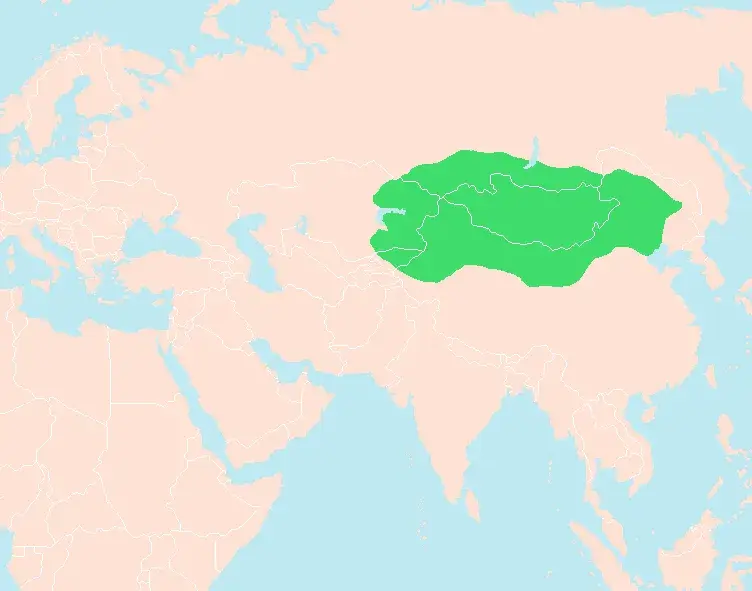
20 BCE–12 BCE
且麋胥
Qiemixu (c. 55 BC – 12 BC), historically designated as Souxie Ruodi Chanyu (搜谐若鞮单于), was the supreme ruler of the Xiongnu Confederation during the late Western Han dynasty. He was a son of Huhanye Chanyu and the Great Yanzhi, and the younger full brother of Fuzhulei Ruodi Chanyu (Diao Tao Mo Gao). In 20 BC, upon Fuzhulei's demise, Qiemixu inherited the supreme seat in rigorous observance of the fraternal succession pact…
Qiemixu (c. 55 BC – 12 BC), historically designated as Souxie Ruodi Chanyu (搜谐若鞮单于), was the supreme ruler of the Xiongnu Confederation during the late Western Han dynasty. He was a son of Huhanye Chanyu and the Great Yanzhi, and the younger full brother of Fuzhulei Ruodi Chanyu (Diao Tao Mo Gao). In 20 BC, upon Fuzhulei's demise, Qiemixu inherited the supreme seat in rigorous observance of the fraternal succession pact established by their father. He retained the regal title "Ruodi" ("filial") to reaffirm the nomads' tributary loyalty to the Han imperial court and ancestral piety to the royal house. Immediately upon accession, Qiemixu demonstrated admirable institutional constancy by designating his younger brother Qiemoche as Wise Prince of the Left, thus cementing the orderly rotation of royal power and extinguishing factional intrigue. Simultaneously, he dispatched his eldest son, Prince Quliushihou of Left Zhuduhan, to Chang'an as an imperial hostage, reinforcing mutual geopolitical trust with Emperor Cheng. Throughout his eight-year reign, Qiemixu maintained unwavering dedication to peaceful coexistence: he disciplined nomadic patrols along the Great Wall, promoted extensive cross-border barter trade, and preserved an uninterrupted era of agricultural and pastoral security. In 12 BC, inspired by deep reverence for the Han imperial court, Qiemixu personally embarked on a journey to Chang'an to offer New Year greetings to Emperor Cheng, but tragically succumbed to sudden illness along the northern frontier. He was succeeded by his brother Qiemoche (Cheya Ruodi Chanyu).
Born in the Xiongnu royal encampment, son of Huhanye Chanyu and the Great Yanzhi.
Brother Fuzhulei took the throne; Qiemixu was created Wise Prince of the Left.
Inherited the supreme seat upon brother's death; sent his son to Chang'an as hostage.
Invested younger brother Qiemoche as Wise Prince of the Left, securing the succession line.
Disciplined tribal raiding and fostered vibrant border market exchanges along the Great Wall.
Embarked on journey to pay homage to Emperor Cheng; died of illness before entering the passes.
Qiemixu was born around 55 BC on the Mongolian Plateau into the ruling Luandi house. During the eleven-year reign of his elder brother Fuzhulei Chanyu, Qiemixu governed the eastern nomadic tribes as the Wise Prince of the Left, serving as heir apparent under the fraternal succession system instituted by their father, Huhanye Chanyu. In 20 BC, when Fuzhulei passed away, Qiemixu peacefully assumed the leadership of the confederation as Souxie Ruodi Chanyu. In alignment with dynastic precedent, he maintained the title "Ruodi," publicizing his devotion to interstate peace and filial duty to nomadic elders.
Upon ascending the throne, Qiemixu moved decisively to preclude internal power struggles. He formally created his younger full brother Qiemoche as Wise Prince of the Left, reaffirming that the crown would rotate laterally among the sons of the Great Yanzhi rather than descending to his own heirs. Furthermore, to deepen diplomatic intimacy with the Han empire, Qiemixu dispatched his son, Prince Quliushihou of Left Zhuduhan, to reside at the imperial court in Chang'an as a royal hostage, maintaining the traditional diplomatic mechanism that guaranteed bilateral security.
Throughout his eight-year reign, Qiemixu pursued an enlightened policy of peaceful commercial engagement. He strictly prohibited nomadic clans from staging cross-border predatory forays into Han territory, while stationing trusted marshals along the northern outposts to guarantee the safe operation of frontier markets. Nomadic pastoralists traded horses, cattle, and furs for Han silk garments, grain, and metalwork. Under his prudent stewardship, the frontier between the Gobi Desert and the Central Plains enjoyed continuous tranquility, with generations of herdsmen and garrison farmers coexisting without fear of border skirmishes.
In the autumn of 12 BC, moved by deep reverence for the peace and material prosperity facilitated by the Western Han dynasty, Qiemixu resolved to lead a grand embassy of steppe princes to Chang'an to participate in the imperial New Year court assembly. However, during the arduous journey across the Gobi Desert, the Chanyu was stricken with acute illness. He died in his traveling camp outside the northern Great Wall passes before he could enter Han territory. In accordance with his wishes, his brother Qiemoche was peacefully enthroned as Cheya Ruodi Chanyu. Qiemixu's unblemished fidelity to fraternal succession and interstate friendship earned universal praise across both nations.
Souxie Ruodi Chanyu's eight-year reign reinforced the longest unbroken period of peace in the history of ancient Sino-nomadic relations. By subordinating dynastic ambition to the fraternal succession compact, he eradicated succession violence within the royal court, while his rigorous enforcement of border discipline ensured the flourishing of the Silk Road and transformed the northern frontier into an enduring bridge of mutual economic interdependence.
FIGURES ASSOCIATED WITH THIS DYNASTY