Birth and Childhood
Sima Yun was born in the imperial palace of Luoyang to Emperor Wu of Jin and Lady Li.
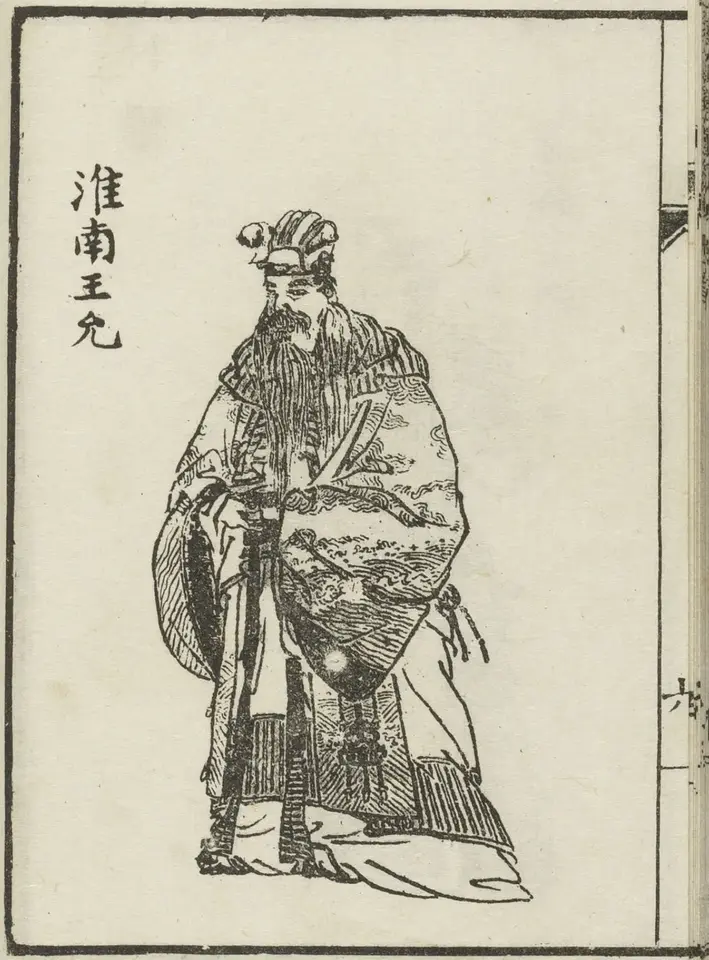
272 CE–300 CE
司马允
Sima Yun (司马允, 272–300), courtesy name Qindu, was a prominent imperial prince and general of the Western Jin Dynasty, hailing from Wen County, Henei Commandery (modern Wen County, Henan). He was the sixth son of Emperor Wu of Jin (Sima Yan) and a younger half-brother of Emperor Hui of Jin (Sima Zhong). Initially enfeoffed as the Prince of Puyang, he was later re-enfeoffed as the Prince of Huainan. Sima Yun was renowned for…
Sima Yun (司马允, 272–300), courtesy name Qindu, was a prominent imperial prince and general of the Western Jin Dynasty, hailing from Wen County, Henei Commandery (modern Wen County, Henan). He was the sixth son of Emperor Wu of Jin (Sima Yan) and a younger half-brother of Emperor Hui of Jin (Sima Zhong). Initially enfeoffed as the Prince of Puyang, he was later re-enfeoffed as the Prince of Huainan. Sima Yun was renowned for his resolute demeanor, exceptional courage, and mastery of military affairs, commanding profound loyalty and admiration among the palace imperial guards. In 289, Sima Yun was granted the imperial talisman to govern Shouchun as Senior General Who Guards the East, supervising military affairs across Yang and Jiang provinces. During his decade-long regional tenure, he reformed administrative governance, settled displaced populations, and trained an elite retinue of more than seven hundred Huainan swordsmen and death-sworn retainers. His benevolent governance brought stability to southeastern China and laid crucial administrative groundwork for the eventual southern migration of the Jin court. Recalled to the imperial capital Luoyang during the late Yuankang era, Sima Yun served as Palace Protection Commander and Supervisor of the Northern Army, wielding key command over the imperial guards. When Prince of Zhao Sima Lun and his confidant Sun Xiu seized imperial power and plotted to usurp the throne, Sima Yun perceived their treason, feigned illness, and secretly rallied loyalists. In 300, Sima Lun attempted to strip his command by promoting him to Grand Commandant. Sima Yun led his seven hundred elite retainers in an audacious assault against Sima Lun's chancellery, routing rebel battalions and cornering Sima Lun. However, on the brink of victory, Sima Yun was deceived by a counterfeit imperial edict and assassinated by Sima Lun's hidden operatives at the age of twenty-nine. Following Sima Lun's downfall, Sima Yun was rehabilitated, posthumously awarded the rank of Minister of Education, and granted the posthumous title Prince Zhongzhuang.
Sima Yun was born in the imperial palace of Luoyang to Emperor Wu of Jin and Lady Li.
Enfeoffed as the Prince of Puyang at age six during Emperor Wu's extensive enfeoffment of imperial princes.
Created Prince of Huainan and appointed Senior General Who Guards the East, commanding Yang and Jiang provinces at Shouchun.
Recalled to the capital to serve as Palace Protection Commander and Supervisor of the Northern Army.
Refused collaboration after Sima Lun seized power; feigned illness and prepared private retainers for righteous rebellion.
Refused the bogus Grand Commandant appointment and led seven hundred swordsmen to assault the chancellery.
Deceived by a blank fraudulent imperial decree and struck down by assassin Fu Yin at age twenty-nine; rehabilitated in 301 as Minister of Education and Prince Zhongzhuang.
Sima Yun was the sixth son of Emperor Wu of Jin (Sima Yan), born to Lady Li. From his youth, Sima Yun displayed a commanding martial presence, sharp intelligence, and a quiet, steadfast temperament. Unflinching in character and careful with promises, he earned both the deep affection of Emperor Wu and high esteem within the imperial clan. Following the founding of the Western Jin, Emperor Wu sought to shield the dynasty by assigning vast feudal appanages to imperial princes. In 277, the six-year-old Sima Yun was granted the title of Prince of Puyang with several thousand households, surrounded by classical scholars and military instructors to study statecraft and martial arts.
In the eleventh month of 289, Emperor Wu restructured strategic border postings to reinforce royal control over the southeastern heartland along the Huai and Yangtze rivers. Seventeen-year-old Sima Yun was transferred to become the Prince of Huainan, invested with imperial credentials and appointed Senior General Who Guards the East and Commander-in-Chief of Military Affairs in Yang and Jiang provinces, stationed at Shouchun. Shouchun was a fortress of preeminent military importance connecting northern and southern transport corridors.
Upon reaching Shouchun, Sima Yun demonstrated political acuity well beyond his years. Instead of indulging in princely leisure, he traveled across towns and rural outposts to investigate public distress. The recent conquest of Eastern Wu had left southeastern society fraught with friction between regional magnates and displaced northern refugees. Sima Yun enforced rigorous military discipline, checked aristocratic abuses, sponsored state-run agricultural colonies, and reclaimed thousands of fertile acres. Concurrently, he established halls of reception to recruit both northern emigre scholars and southern talents. Through generous patronage, he assembled a dedicated guard of over seven hundred skilled swordsmen and battle-tested retainers. Over his ten-year tenure, the Huai region enjoyed prosperity and civil harmony, creating a socio-political base that proved essential decades later during the founding of the Eastern Jin Dynasty.
During the late Yuankang era of Emperor Hui's reign, fierce factional strife paralyzed the imperial court in Luoyang. Empress Jia Nanfeng dominated governance, ruthlessly executing upright ministers and alienating the imperial lineage. Seeking to bolster court defenses with trustworthy kin and maintain equilibrium between political rivals, the central court summoned Sima Yun back to the capital.
In Luoyang, Sima Yun was appointed Palace Protection Commander, Front General, and Supervisor of the Northern Army, placing him in control of central garrison troops and palace guards. Dignified, upright, and rigorous in military discipline, Sima Yun personally inspected military barracks every day, shared rations and hardships with common soldiers, and applied rewards and punishments with total impartiality. Devoid of princely arrogance, he commanded genuine reverence throughout the ranks, who regarded him as a pillar of integrity.
In the twelfth month of 299, Empress Jia framed and deposed Crown Prince Sima Yu, confining him to Jinyong City before having him poisoned. The Crown Prince's murder provoked universal fury across the empire. Prince of Zhao Sima Lun and his key strategist Sun Xiu seized this opportunity to incite imperial guards into executing Empress Jia and purging her clique, thereby monopolizing supreme authority. However, Sima Lun proved tyrannical and incompetent, while Sun Xiu sold offices and plundered state coffers, steadily pushing forward an overt scheme to usurp the throne.
Sima Yun was appalled by Sima Lun's unbridled ambition and refused to compromise his principles. He declared illness, withdrew from court audiences, and closed his gates to visitors. Within his residence, he quietly gathered weapons, trained his elite swordsmen, and established secret liaisons with loyal court ministers to prepare an armed uprising that would eradicate the usurpers and restore dynastic authority.
Sima Lun and Sun Xiu grew increasingly apprehensive of Sima Yun's military prestige and direct command over the palace guard battalions. In the eighth month of 300, Sima Lun orchestrated a political trap by submitting an imperial petition promoting Sima Yun to Grand Commandant, the premier honorific among the Three Excellencies. While ceremonial status was elevated, the post lacked direct troop authority. Seeing through the scheme, Sima Yun firmly declined on grounds of continued illness.
Infuriated by his defiance, Sima Lun dispatched an imperial censor accompanied by two court secretaries to the Prince of Huainan's residence, intending to intimidate Sima Yun into submission and arrest his princely staff. Upon taking the decree, Sima Yun closely inspected the calligraphy and recognized the distinct handwriting of Sun Xiu. Enraged by the deceit, Sima Yun ordered the immediate execution of the secretaries, while the terrified imperial censor fled by scaling the compound wall.
Drawing his sword before his personal retinue, Sima Yun cried aloud: "The Prince of Zhao plots high treason against our ancestral altars; today we exterminate the traitors and preserve our dynastic house!" Gathering his domestic guards and seven hundred elite Huainan swordsmen, Sima Yun led his fully armored force out of the mansion to march on the palace and the chancellery.
Sima Yun initially intended to enter the imperial palace to present his case directly to Emperor Hui, but Assistant Director Wang Yu barred the East Yeke Gate under Sima Lun's instructions. Without hesitation, Sima Yun redirected his troops to encircle Sima Lun's fortified chancellery. The Huainan retainers possessed fierce martial skill and fought fearlessly. Sima Yun personally oversaw frontline engagements from his war chariot, cutting down enemy counterattacks. The Huainan force broke through multiple defensive cordons, killing over one thousand rebel soldiers. Sima Lun's main garrison collapsed in panic, and the usurper was hemmed into a corner of the main hall, trembling in terror.
With the chancellery teetering on the verge of capture and Sima Lun's capture imminent, sympathetic court officers inside the palace prepared to open gates. However, Sima Lun's son Sima Qian, serving as Palace Attendant, recognized the mortal peril and rallied death-sworn palace cavalry with promises of marquisates. Sima Qian ordered Cavalry Commander Fu Yin to lead four hundred horsemen carrying a blank wooden board disguised as an imperial edict, racing out of the palace gates while loudly proclaiming that they brought an imperial decree authorizing the Prince of Huainan to punish the usurpers.
Amidst clouds of dust and martial clamor outside the chancellery, Sima Yun saw imperial horsemen holding high an imperial missive and mistook them for royal reinforcements. He halted archery volleys, allowed Fu Yin's cavalry into his perimeter, and descended from his war chariot to bow in reception of the imperial decree. At that unguarded moment, Fu Yin concealed a dagger in his sleeve and drove it into Sima Yun's chest. Sima Yun collapsed and died instantly at the age of twenty-nine.
Deprived of their commander, the isolated Huainan force was encircled and slain after fierce resistance. Initial rumors in Luoyang had spread news that Sima Lun was dead, sending citizens rejoicing into the streets; when news arrived that Prince Sima Yun had been murdered, soldiers and commoners wept openly in grief. Emboldened by his escape, Sima Lun executed Sima Yun's three young sons and slaughtered several thousand retainers and civilian sympathizers across the capital.
In 301, Prince of Qi Sima Jiong and Prince of Chengdu Sima Ying launched a coalition campaign that crushed Sima Lun. Entering Luoyang, Sima Jiong promptly submitted a memorial vindicating Sima Yun, noting: "The late Prince of Huainan served with boundless loyalty and filial devotion, forgetting himself for the realm. On the verge of vanquishing treason, he met misfortune through foul treachery; the empire weeps for his cruel sacrifice." Emperor Hui issued an imperial decree ordering a state burial, posthumously granting Sima Yun the rank of Minister of Education and the posthumous title Prince Zhongzhuang. Sima Chao was designated heir to succeed the Huainan title, securing enduring memory for this heroic imperial martyr.
During his ten years commanding Shouchun and supervising Yang and Jiang provinces, Sima Yun showcased exemplary civil and military leadership. Following the Western Jin conquest of Eastern Wu, southern subjects remained deeply alienated from the northern government.
As an imperial prince endowed with supreme regional authority, Sima Yun avoided harsh oppression, choosing instead benevolent and accommodating governance. He sheltered displaced refugees, reduced burdensome taxes, and developed extensive state farm colonies, restoring vitality to areas scarred by decades of warfare.
Throughout his tenure, Sima Yun welcomed upright scholars and trained loyal retainers. His decade of virtuous administration won immense goodwill across the southeastern realm, creating vital human and institutional foundations for the later establishment of the Eastern Jin at Jiankang.
Sima Yun's armed strike against Sima Lun in 300 stands as one of the most valiant and tragic episodes of the early War of the Eight Princes. Confronting the usurpation of Sima Lun and Sun Xiu, Sima Yun chose righteousness over self-preservation.
At a dark hour when senior ministers cowered in silence, Sima Yun marshaled merely seven hundred Huainan swordsmen to attack the fortified chancellery defended by thousands of imperial guards. Fighting on the front line with composed resolve, he shattered successive enemy waves with extraordinary assault tactics and personal bravery.
Sima Yun's desperate strike brought the rebel regime to the edge of ruin. Had he not been ambushed by Fu Yin's forged edict, the devastating descent into the War of the Eight Princes might have been radically altered.
Throughout his life, Sima Yun upheld loyalty and righteousness as core principles. Amidst an era of moral degradation and self-serving princes, his integrity shone brightly. He rejected the grand title of Grand Commandant and struck down corrupt emissaries, demonstrating uncompromised princely virtue.
His tragic sacrifice drew collective mourning from both common citizens and imperial guards in Luoyang, proving his widespread popular support. Subsequent official histories and Prince of Qi Sima Jiong's eulogies immortalized him as one of the most noble and heroic imperial figures of the Jin Dynasty.
FIGURES ASSOCIATED WITH THIS DYNASTY