Age 1 | Born in Luoyang, Henan; his father Sang Gong served as a retainer-general under Henan governor Zhang Quanyi
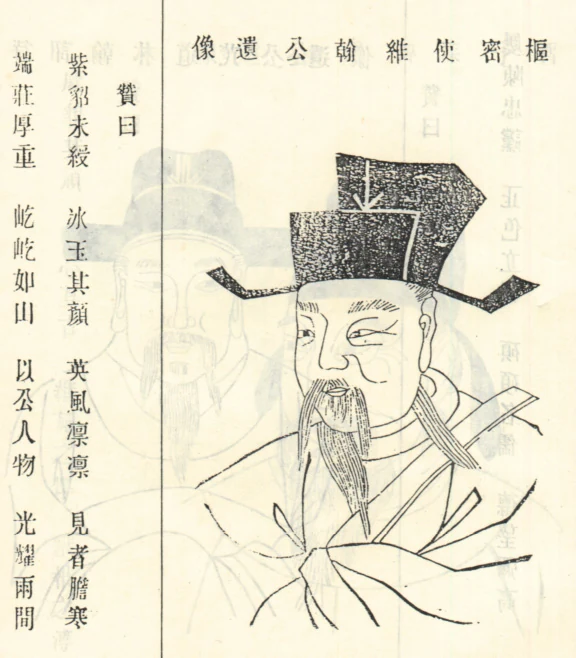
898 CE–947 CE
Grand Councilor
Sang Weihan
桑维翰
Sang Weihan (898–January 12, 947), courtesy name Guoqiao, a native of Luoyang in Henan, was a Grand Councilor of the Later Jin during the Five Dynasties and Ten Kingdoms period. He was short and considered unattractive, but held great ambitions and passed the jinshi examination with the resolve expressed in the phrase “wear through an iron inkstone.” He later joined Shi Jingtang and became a trusted strategist. He strongly…
898 CE–947 CELater Jin
PROFILE
Sang Weihan (898–January 12, 947), courtesy name Guoqiao, a native of Luoyang in Henan, was a Grand Councilor of the Later Jin during the Five Dynasties and Ten Kingdoms period. He was short and considered unattractive, but held great ambitions and passed the jinshi examination with the resolve expressed in the phrase “wear through an iron inkstone.” He later joined Shi Jingtang and became a trusted strategist. He strongly advocated an alliance with the Khitan against the Later Tang and drafted the famous Memorial Declaring Vassalage to the Khitan, helping bring about the establishment of the Later Jin. He rose to Secretariat Director and Military Affairs Commissioner and was enfeoffed as Duke of Wei. Skilled in writing and political strategy, he later fell into conflict with Shi Chonggui's favorites Feng Yu and Li Yantao over political power and was ultimately strangled by the rebel general Zhang Yanze shortly before the fall of Later Jin. His career remained highly controversial: he was condemned for the cession of the Sixteen Prefectures of Yanyun, yet later writers also lamented his political talent and his death while refusing to flee.
- Courtesy name
- Guoqiao
- Period
- Later Jin
- Dynasty / regime
- Later Jin
- Identity
- Grand Councilor
- Ethnicity / ethnic affiliation
- Not reliably confirmed in the historical sources
- Native place
- Luoyang, Henan
- Date of birth
- 898
- Place of birth
- Luoyang, Henan
- Date of death
- 946
- Place of death
- Place of death not known
- Highest office
- See Biography and Major Activities
- Major achievements
- Founding Grand Councilor of the Later Jin; advocated alliance and a heqin-style relationship with the Khitan and urged the Shi house to claim the throne; noted for literary ability and political strategy
LIFE TIMELINE
Age 28 | Placed second in the jinshi examination
Age 34 | Joined Shi Jingtang, Military Commissioner of Heyang, and became administrative secretary
Age 39 | Strongly urged Shi Jingtang to rebel and drafted the Memorial Declaring Vassalage to the Khitan; after the Later Jin was founded, appointed Hanlin Academician, Vice Minister of Rites, and acting Military Affairs Commissioner; in the intercalary eleventh month appointed Grand Councilor as Vice Director of the Secretariat, Participant in Determining Government Matters, and Military Affairs Commissioner
Age 40 | Submitted a policy program advocating conciliation of military governors, deference to the Khitan, improvement of military preparedness, promotion of agriculture and sericulture, and encouragement of commerce; helped suppress the rebellions of Fan Yanguang and Zhang Congbin
Age 41 | Removed from concurrent service as Military Affairs Commissioner in October and granted the title Minister of War
Age 42 | Sent out in the intercalary seventh month as Military Commissioner of Zhangde
Age 43 | Transferred to serve as Military Commissioner of Taining
Age 44 | Submitted a memorial listing “seven reasons why an attack on the Khitan was impossible” and advised Shi Jingtang to travel to Yedu for defense
Age 45 | In June transferred to the Jinchang military governorship; Shi Jingtang died that month and Shi Chonggui succeeded; in August granted the additional honorary title of acting Grand Tutor
Age 46 | Recalled to the central government in March as Palace Attendant and supervisor of the compilation of the dynastic history
Age 47 | After a Khitan invasion and the political decline of Jing Yanguang, promoted in June to Secretariat Director, again made Military Affairs Commissioner, and enfeoffed as Duke of Wei
Age 48 | Feng Yu appointed Military Affairs Commissioner in February, dividing Sang's authority; Sang's proposal in May to remove Du Wei was rejected; in December he was dismissed to become prefect of Kaifeng
Age 49 | In the twelfth month the Khitan destroyed Later Jin and Zhang Yanze entered the capital; Sang Weihan was strangled
BIOGRAPHY
Biography
Family Background and Early Years
Sang Weihan was born in 898, the fifth year of the late-Tang Qianning era, in Luoyang, Henan. His father Sang Gong served as a retainer-general under Zhang Quanyi, governor of Henan, and the family was not prominent. Sang was intelligent from childhood and skilled in literary composition, but was described as physically short, broad-faced, and unattractive. The Old History of the Five Dynasties records that after reaching adulthood he often looked in a mirror and lamented, “How can a body seven feet tall have a face only one foot long?” This reportedly strengthened his ambition to become a chief minister.
In 925, the third year of the Later Tang Tongguang era, Sang took the jinshi examination. Because the surname Sang sounded like the word for “mourning,” an examiner disliked his surname, and some people advised him to pursue another path into office. Sang insisted on taking the examination and composed the Rhapsody on the Sun Rising over the Fusang Tree to express his determination. According to Zhang Qixian's Old Accounts of Luoyang Gentlemen, Sang's father had asked Zhang Quanyi for assistance. After meeting Sang, Zhang regarded him as exceptional, treated him with great respect, and strongly recommended him to learned officials. Sang ultimately placed second in the examination.
Joining Shi Jingtang and the Founding of Later Jin
In 931, the second year of Changxing, Shi Jingtang, son-in-law of the Later Tang emperor Mingzong, became Military Commissioner of Heyang. Sang joined his staff as administrative secretary. When Shi was later transferred to Hedong, Chengde Circuit, and other commands, Sang continued to follow him and became one of his closest strategists.
In May 936, the third year of Qingtai, the last Later Tang emperor Li Congke became suspicious of Shi Jingtang and ordered him transferred to Tianping Circuit. Shi gathered his advisers. Duan Xiyao advocated rejecting the order, Zhao Ying advised compliance, while Liu Zhiyuan and Sang Weihan urged rebellion and a bid for the throne. Sang proposed an alliance with the Khitan, urging Shi to “serve Yelü Deguang with complete sincerity and humility.” Sang drafted the Memorial Declaring Vassalage to the Khitan, proposing to treat the Khitan ruler as a father and cede the Sixteen Prefectures of Yanyun in exchange for support. Its language was so submissive that even Liu Zhiyuan considered it excessive, but Shi adopted the plan.
In August Taiyuan was besieged by Zhang Jingda, and in September Yelü Deguang personally led fifty thousand cavalry to relieve the siege. In November Yelü Deguang invested Shi Jingtang as emperor, establishing the Later Jin. Sang was appointed Hanlin Academician, Vice Minister of Rites, and acting Military Affairs Commissioner. In the intercalary eleventh month, Zhao Dejun secretly contacted the Khitan and sought to have himself installed as emperor. Sang knelt before Yelü Deguang's tent from morning until evening, weeping and arguing his case, and finally persuaded Yelü to abandon Zhao Dejun and maintain his support for Shi Jingtang. After the Later Tang fell, Sang composed a text commemorating Yelü Deguang's “merit and virtue.”
Grand Councilor, Jealousy, and External Appointments
In 937, the second year of Tianfu, Sang served as Grand Councilor and concurrently as Military Affairs Commissioner. He proposed a governing program summarized as: sincerely conciliate and set aside grievances with military governors; use humble language and generous gifts in serving the Khitan; train soldiers and repair equipment to strengthen military preparations; attend to agriculture and sericulture to fill granaries; and encourage merchants to enrich material resources. The Chinese source credits the program with stabilizing the Central Plains. The same year Fan Yanguang and Zhang Congbin rebelled and the capital Daliang was shaken. Sang remained composed in directing military affairs and persuaded Shi Jingtang not to flee to Taiyuan.
In 938, the third year of Tianfu, Yang Guangyuan, the principal commander in the suppression campaigns, had repeatedly had excessive requests blocked by Sang. Encouraged by Liu Churang, Yang submitted accusations against him. Because Shi Jingtang depended on Yang's military power, Sang was removed from his concurrent office as Military Affairs Commissioner. In 939 Yang again accused Sang of unfair appointments and of operating residences and shops in both capitals in competition with the people. Sang was sent out as Military Commissioner of Zhangde and later served as Military Commissioner of Taining and Jinchang.
In 941, the sixth year of Tianfu, An Chongrong, Military Commissioner of Chengde, requested an alliance with the Tuyuhun against the Khitan. Sang submitted a memorial setting out “seven impossibilities” of attacking the Khitan and advised Shi Jingtang to travel to Yedu as a defensive precaution. An later did rebel and was suppressed.
Return to Power and Death at the Fall of the Dynasty
Shi Jingtang died in June 942, the seventh year of Tianfu, and his adopted son Shi Chonggui succeeded him. In March 943 Sang was recalled to the central government as Palace Attendant and supervisor of the compilation of the dynastic history. Real power, however, was held by Jing Yanguang, who favored breaking relations with the Khitan. Sang repeatedly urged peace, but his proposals were rejected.
In 944, the ninth year of Tianfu, the Khitan invaded southward. Although their army was repelled, Jing Yanguang was blamed for command failures. Sang used the opportunity to push Jing aside and had supporters tell Shi Chonggui that “no one but Sang Weihan can manage the situation.” Sang was restored as Secretariat Director and Military Affairs Commissioner and enfeoffed as Duke of Wei. During this second period in power, Shi Chonggui “entrusted every matter, great or small, to him.” Sang once redeployed fifteen Military Commissioners to guard against the Khitan, and none dared disobey. The source also states that he accepted bribes widely and “accumulated wealth in the tens of thousands,” provoking criticism.
Sang became hostile to Shi Chonggui's favorites Li Yantao and Feng Yu. In February 945, the second year of Kaiyun, Feng Yu was made Military Affairs Commissioner and divided Sang's authority. In May Sang proposed removing Du Wei but was refused, after which he claimed a foot ailment and stopped taking part in government. In December, Feng Yu and others accused Sang of harboring plans to change the succession, and Shi Chonggui dismissed him to become prefect of Kaifeng.
In the twelfth month of 946, the third year of Kaiyun, the Khitan destroyed the Later Jin. Yelü Deguang sent Zhang Yanze into the capital and asked whether Sang Weihan and Jing Yanguang were present. Because Shi Chonggui had rejected Sang's policy of peace with the Khitan, he did not want Sang to meet Yelü and hinted that Zhang should eliminate him. Sang refused to flee. Sitting calmly in his residence, he told Zhang Yanze, “I am a great minister of Jin and am prepared to die for the state.” Zhang reportedly did not dare look directly at him. That night he sent men to strangle Sang, placing silk around his neck and falsely reporting that Sang had hanged himself. When Yelü Deguang heard the report, he said, “I had no intention of killing Weihan; why did Weihan bring this on himself?” The body was examined and the strangulation discovered. It was returned to Sang's family, although Zhang Yanze had already plundered the household property.
Major Activities
Political Activities
The Chinese source describes Sang as the leading founding minister of the Later Jin. He strongly advocated allying with the Khitan against the Later Tang and drafted the Memorial Declaring Vassalage to the Khitan, helping Shi Jingtang claim the imperial title. After becoming Grand Councilor he offered a systematic governing program: conciliate the military governors, maintain deference toward the Khitan, strengthen military preparedness, promote agriculture and sericulture, and encourage trade. During the rebellions of Fan Yanguang and Zhang Congbin he remained calm and persuaded Shi Jingtang not to flee, buying time for suppression. After returning to power late in his career, he redeployed fifteen Military Commissioners at once to prepare for the Khitan, demonstrating substantial political authority.
Literary Contributions
Sang was described as intelligent and gifted in rhapsodies and prose. His Rhapsody on the Sun Rising over the Fusang Tree expressed his ambition in forceful language. His Memorial Declaring Vassalage to the Khitan became notorious for its submissive tone, yet the source describes it as fluent and tightly reasoned and as an important diplomatic document of the Five Dynasties period. He also composed a text celebrating the “merit and virtue” of Yelü Deguang; although written for political purposes, it was cited as evidence of his literary skill.
Travels and Places of Service
Sang's principal places of activity included Luoyang, Taiyuan, Kaifeng, Xiangzhou, Yanzhou, and Jingzhao. He studied and took the examinations in Luoyang, then followed Shi Jingtang through Heyang, Hedong, and Chengde. As Grand Councilor he lived in Daliang. During periods of external appointment he served at Xiangzhou, Yanzhou, and Jingzhao. He later returned to Daliang and died in Kaifeng.
Relations with Contemporaries
Sang and Liu Zhiyuan were both leading strategists for Shi Jingtang, but Liu disapproved of Sang's proposal that Shi treat the Khitan ruler as a father. Sang served alongside Zhao Ying as Grand Councilor and apparently maintained workable relations with him. He became an enemy of Yang Guangyuan in a struggle over power and was sent out after Yang's accusations. In his later years he clashed with Feng Yu and Li Yantao and was removed after their accusations. He worked for many years with Li Song and, shortly before death, is said to have told Li, “You will just watch me go alone to my death,” leaving Li ashamed and unable to reply.
Personal Relations
Family
- Father: Sang Gong, a retainer-general under Zhang Quanyi
- Son: Sang Tan, identified in one account in the History of Song as Sang Weihan's son
Patrons and Colleagues
- Zhang Quanyi: governor of Henan who recommended Sang in the examination system
- Liu Zhiyuan: fellow adviser to Shi Jingtang, later Emperor Gaozu of Later Han; differed with Sang on policy
- Li Song: colleague and Grand Councilor who had interceded for Sang when he was demoted
Rulers
- Shi Jingtang: Emperor Gaozu of Later Jin, Sang's ruler and patron
- Shi Chonggui: Emperor Chu of Later Jin, Sang's ruler in later years who became suspicious of him
Conflicts
- Yang Guangyuan: military commander who accused Sang during a struggle for power
- Feng Yu: favorite of Shi Chonggui who helped bring accusations against Sang
- Li Yantao: favorite of Shi Chonggui who helped bring accusations against Sang
- Jing Yanguang: advocate of breaking relations with the Khitan whose policy conflicted with Sang's
Historical Assessment
Five Dynasties / Contemporary Assessments
- Shi Jingtang trusted Sang deeply and, according to the source, told Yelü Deguang before his death not to abandon Sang without serious cause.
- Yelü Deguang reportedly said after Sang's death, “I had no intention of killing Weihan; why did Weihan bring this on himself?” The source treats this as recognition of Sang's ability.
- Zhang Yanze was said to become fearful on seeing Sang and not dare raise his eyes, later saying that he had not known what Sang was like until seeing him and finding his bearing so intimidating.
Song and Yuan Periods
- Xue Juzheng's Old History of the Five Dynasties described Sang as intelligent and skilled in literary composition, but criticized the strategy of “ceding territory to seek aid,” arguing that the resulting Khitan disaster spread into the Central Plains and that Sang bore responsibility.
- Ouyang Xiu's New History of the Five Dynasties included Sang among those who died for principle, praising him for refusing to escape when disaster came, while also criticizing him for urging Shi Jingtang to acknowledge the Khitan and cede territory.
- Sima Guang's Comprehensive Mirror in Aid of Governance recorded Sang's career, criticized the territorial cession, but also acknowledged his strategic ability.
- Wang Fuzhi, in juan 28 of Du Tongjian Lun, criticized Sang for handing the authority of China to the northern peoples and judged his guilt even greater than Shi Jingtang's.
Ming and Qing Periods
- Gu Zuyu, in Dushi Fangyu Jiyao, discussed the loss of the Sixteen Prefectures of Yanyun through Sang's actions and argued that his responsibility could not be escaped.
- Wang Mingsheng, in Critical Discussions of the Seventeen Histories, praised Sang's determination expressed by the “wearing through the iron inkstone” story while rejecting his political choices.
Modern Assessments
- Fan Wenlan, in Concise General History of China, called Sang a representative “traitor” and described the territorial cession as one of the darkest episodes of the Five Dynasties.
- Lü Simian, in History of the Sui, Tang, and Five Dynasties, wrote that although Sang was talented, his acceptance of territorial cession as good policy enabled Khitan power to grow and made him a principal source of disaster for the Central Plains.
- The source states that scholars including Deng Guangming, when discussing the Sixteen Prefectures of Yanyun, often treat Sang as one of the key responsible figures.
FIGURES ASSOCIATED WITH THIS DYNASTY
Bibliography
- Old History of the Five Dynasties, juan 89, Jin History, Biography 4
- New History of the Five Dynasties, juan 29
- Fan Wenlan, Concise General History of China
- Lü Simian, History of the Sui, Tang, and Five Dynasties